

Every time I go to Madrid, I try to see Las Meninas (1656) by Diego Velázquez. For me, just seeing Las Meninas is worth the price of admission to the Prado Museum. It is a painting that overwhelms me every time I see it. In March of last year, I went to Madrid to meet with a friend from Mexico who was visiting Spain. I didn’t have much time, and I went one evening during the free hours (from 18:00 to 20:00 every day).
I was inside for less than an hour, which is very little time for such a large museum. But since it was the only moment I could go in, and it was free, I thought the best thing was to go straight to the point: the Velázquez rooms. I took my time in front of Las Meninas (instead of running through the whole museum to see everything) and I wandered calmly through just three or four galleries. This post was born from that experience, and all the ideas that came to me during the museum’s visit.
Share Pigments, Colors & Other Stories
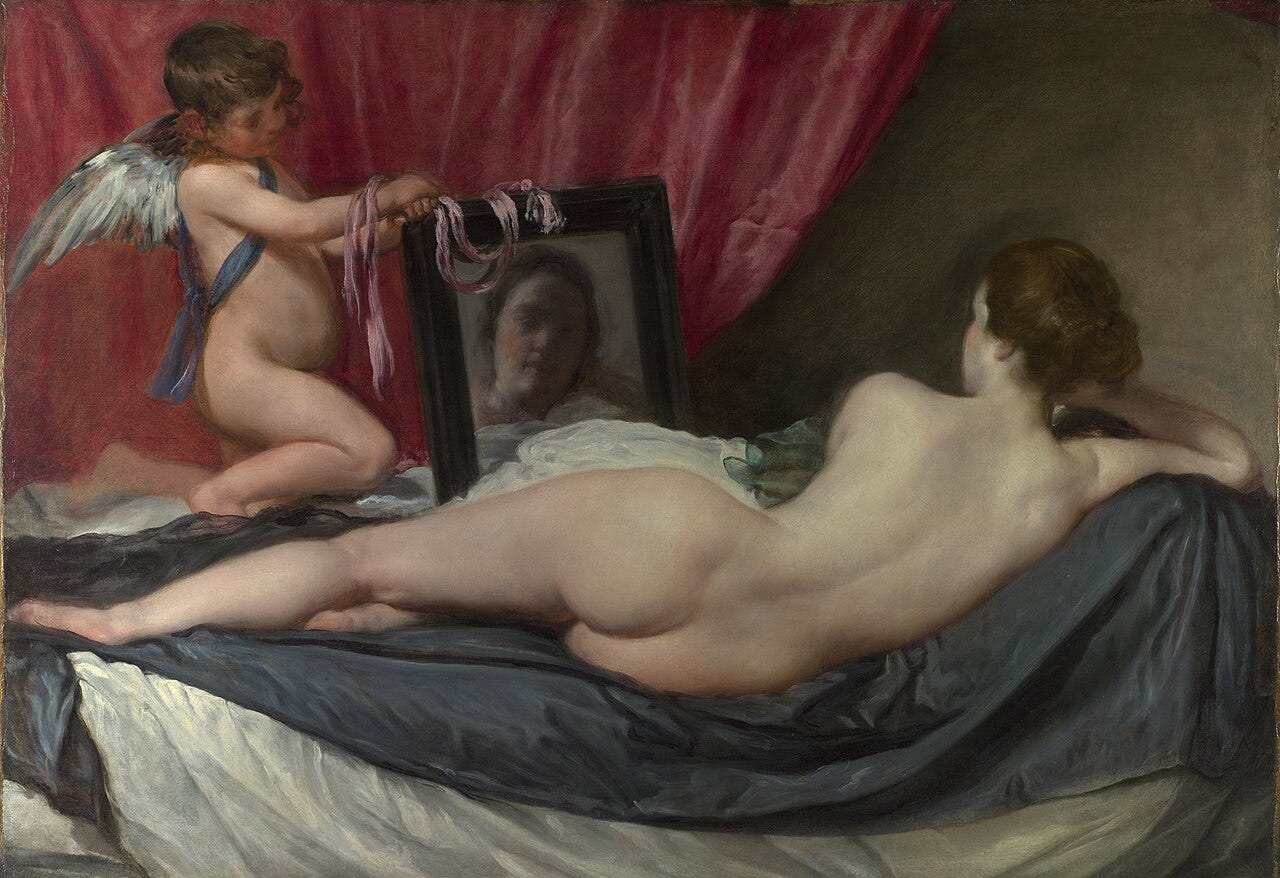
One of the things I was thinking about while walking through the galleries—and I’ve thought this at other exhibitions too—is that wall labels never include information about pigments, even though they are the most important material in a painting. Usually, we’re told about the binder: oil (meaning the pigments were mixed with an oil, usually linseed oil), watercolor (the binder is generally gum arabic), or tempera (egg yolk or casein).
The second piece of information we’re given is what kind of surface was the work painted on—usually canvas or wood. In other words, we’re told about the surface and the binder, but the most interesting part is left out: how the colors were actually made.
In many cases, this information isn’t included because it isn’t known. Analytics are usually required to confirm the use of specific pigments. For that to happen, the painting must have gone through some restoration work that required a detailed analysis of its chemical composition, so nothing is cleaned or repainted with materials that might “clash” with the original ones. It’s necessary to know the pigments, partly to remain as faithful as possible to the original, and partly because mixing certain elements can cause the paint to darken, or other issues.
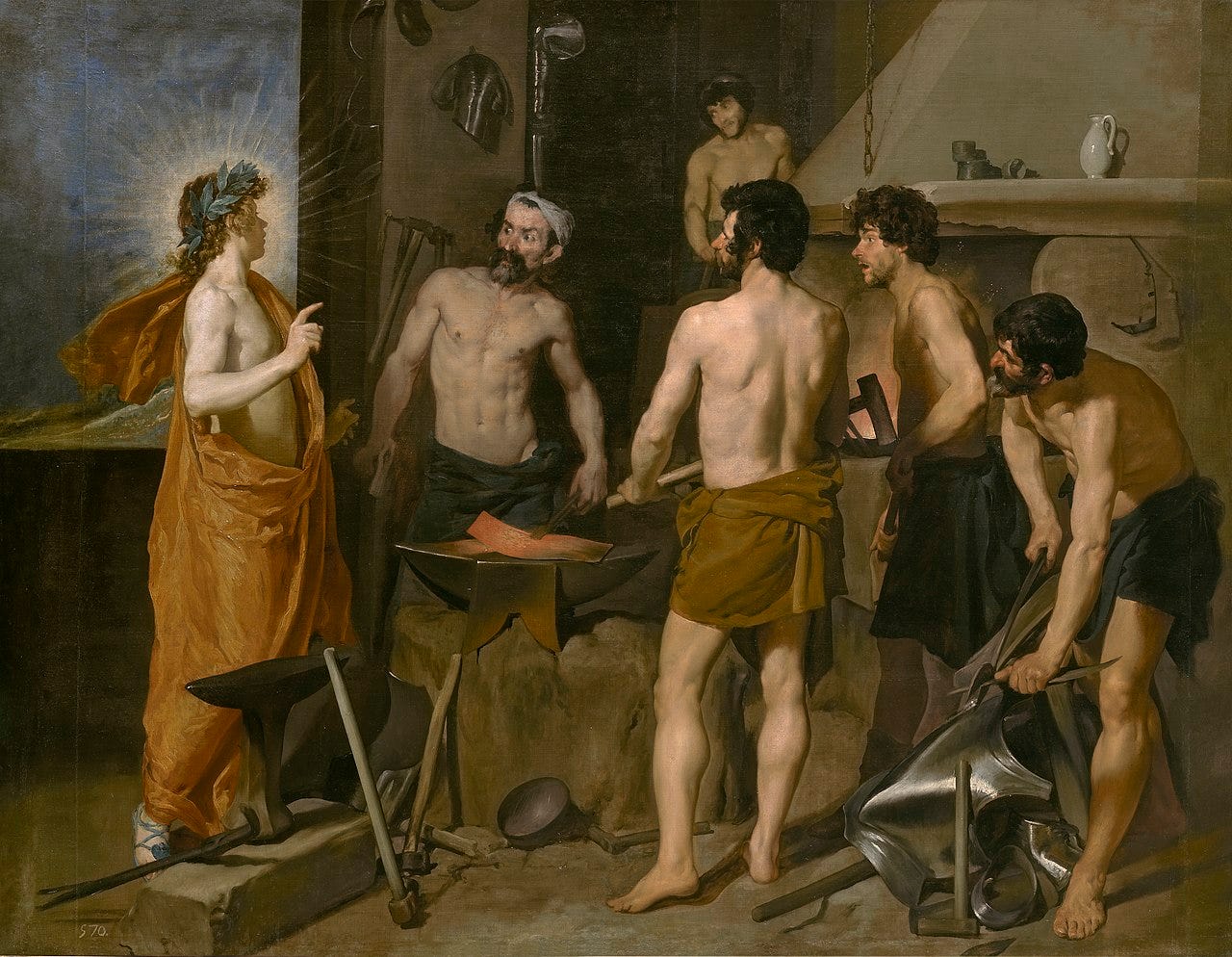
Aside from whether analyses have been carried out or not, pigments in general have only recently become a topic of discussion because they didn’t seem particularly relevant. The fact that we don’t know how the colors of anything around us (clothes, furniture, appliances, etc.) are made is a consequence of the Industrial Revolution.
Up until that point, everyone knew about dyes and pigments because colorants were scarce, and extremely valuable. Colors as abstract ideas didn’t exist as such; color was tied to the material it came from. For example, purple wasn’t a color per se; it was a dye extracted from certain types of sea snails, and the resulting shade varied greatly. Tyrian purple could be violet, burgundy, or eggplant. This dye wasn’t a color, it was a material—something that, in the twenty-first century, is hard for us to grasp.
With the Industrial Revolution, all of that changed. When new synthetic dyes and pigments were discovered and made increasingly affordable, color completely lost its materiality and became merely a visual characteristic. You probably have no idea how the black dye in your shirt was manufactured, or how manufacturers get the color to be uniform and long-lasting after repeated washing. For us, colors have only aesthetic and emotional value, but we don’t know where they come from, how they’re produced, or whether some are more expensive than others (or why).

Comments
Nothing yet. Say the first thing.
Sign in to join the conversation.