
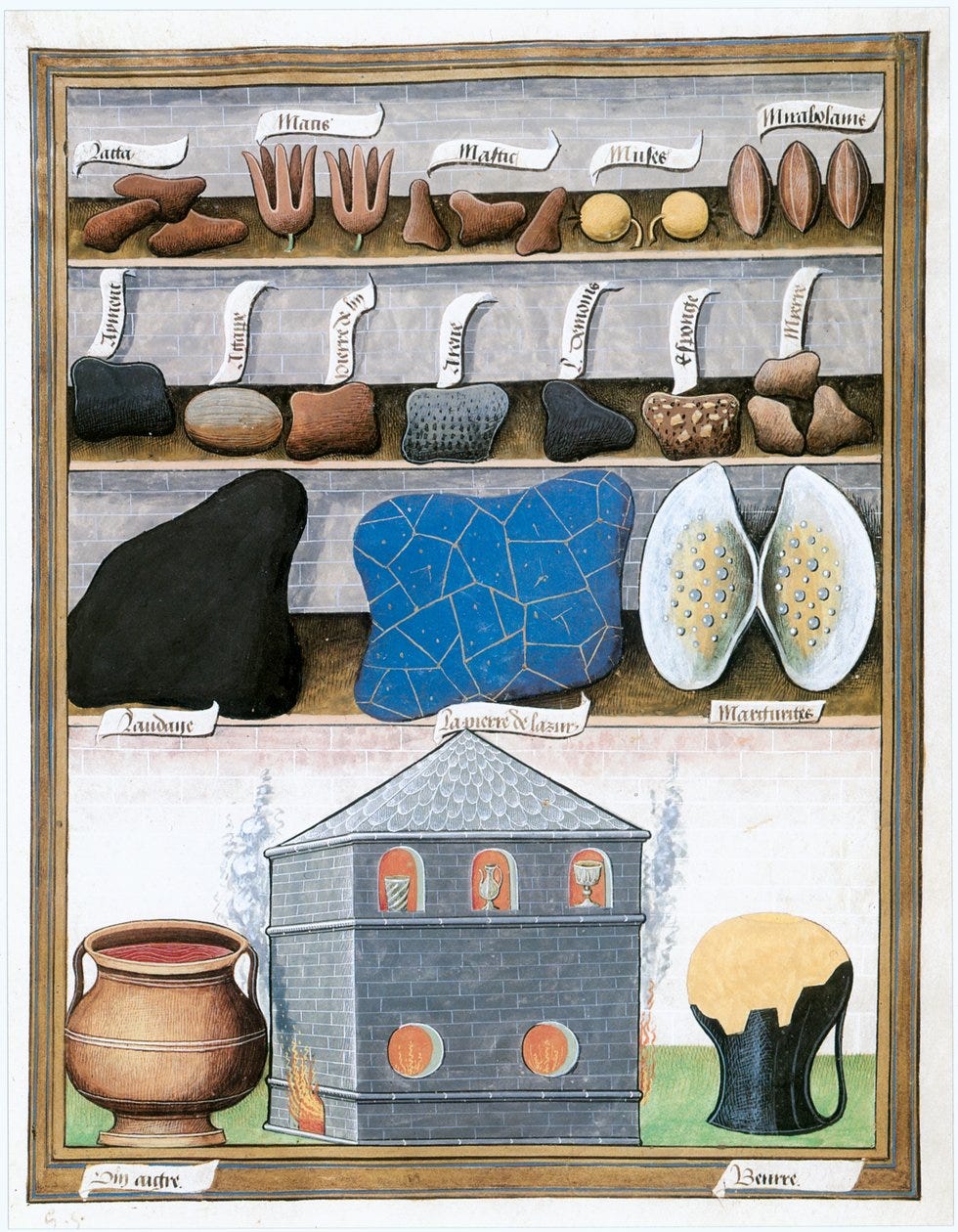
I’ve written countless stories about pigments over the years, and ultramarine blue is, without question, everyone’s absolute favorite. There are several reasons for this. First, blue is the rarest color in nature, which is precisely why it fascinates us so deeply. Scarcity is one of the key elements in our appreciation of beauty. What is common, by contrast, rarely captures our imagination. Not only is blue relatively scarce in nature—appearing only occasionally in flowers, feathers, or scales—but there are also very few natural sources of blue pigments.
Egyptian blue, a calcium copper silicate, is considered the first synthetic pigment in history, precisely because the lack of natural blue sources made it necessary to invent a way of producing one. It was the principal blue pigment throughout the Mediterranean during Antiquity, but both its use and the recipe for making it virtually disappeared after the fall of the Western Roman Empire.
The shortage of blue pigments was especially severe in Europe, although elsewhere in the world other recipes for synthetic blue pigments had already been developed. In addition, indigo was available in America and Asia, offering far greater dyeing power than the woad that grew across northern Europe.

Throughout the Middle Ages, blue pigment was obtained primarily from azurite, a basic copper carbonate. Although azurite is a relatively abundant mineral, it has a tendency to darken over time when used as a pigment. Moreover, the blue it produces has a greenish or grayish cast rather than a pure blue hue. As a result, the undisputed king of blue pigments in painting until the 19th century was lapis lazuli, from which ultramarine was made.
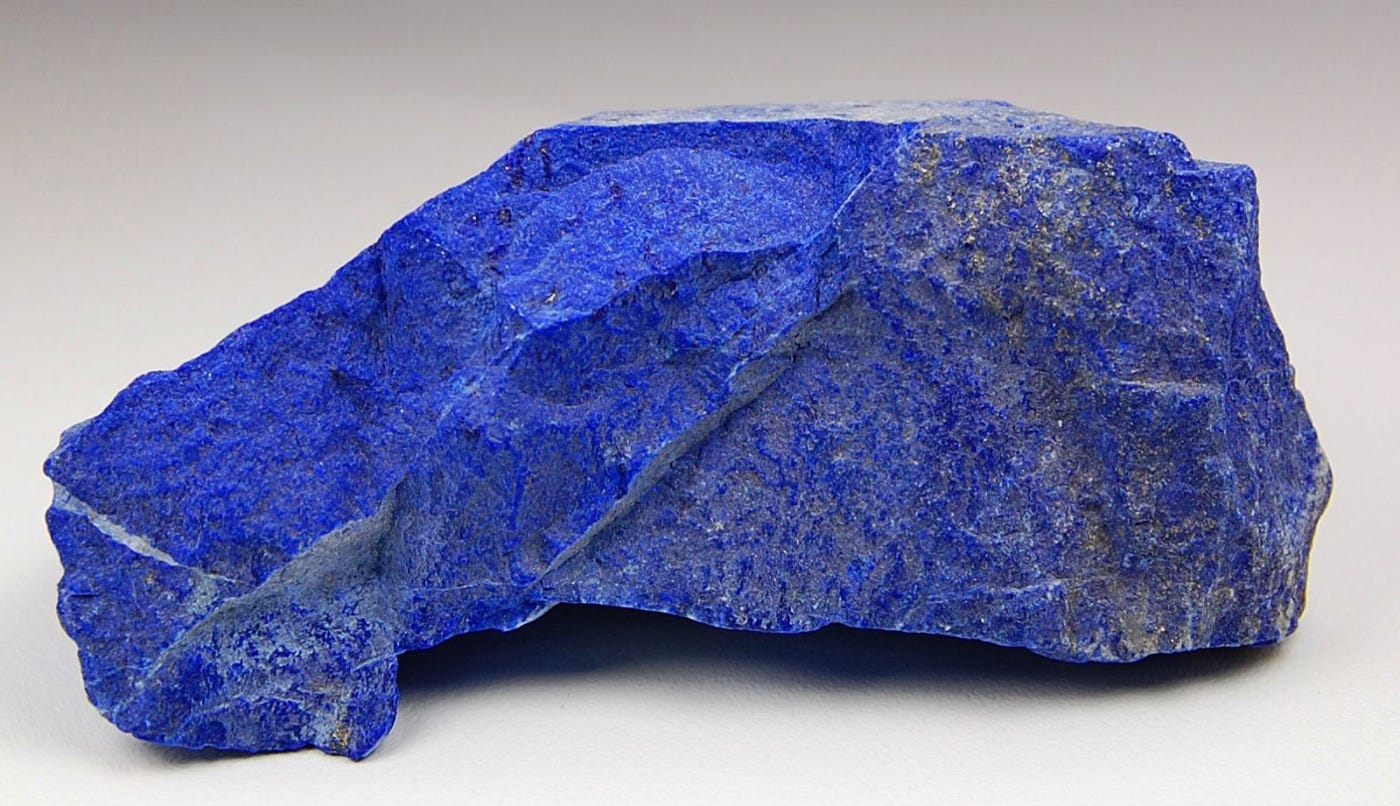
There are very few lapis lazuli deposits in the world. The lapis used as a pigment in medieval Europe was imported from Afghanistan. Today, deposits are also mined in places such as China and Chile, but these sources were unknown in the past. Even now, Afghanistan continues to export lapis lazuli as a semiprecious gemstone for jewelry (unfortunately, the country’s lapis mines are under Taliban control, and the group profits from the sale of this precious mineral).
The name ultramarine literally meant that the pigment came from “beyond the sea.” According to legend, Marco Polo was the first European to see the lapis lazuli mines in the 13th century—or at least, the first to leave a written description that has survived. As with most pigments arriving from beyond Europe, people had little idea where lapis lazuli came from or even what it really was, so visiting the mines must have been a remarkable experience for the Venetian merchant.

The pigment reached Venice from Syrian ports along the Silk Road, where it became highly prized by artists. Most ultramarine appears in Italian paintings, especially in the Venetian tradition. I have often thought that the reason the Venetian Painting School became known as the “School of Color,” in contrast to Rome’s “School of Drawing,” during the 16th century was simply that Venetian painters had access to better and more abundant pigments than almost anyone else in Europe. When you have the finest colors available, it is only natural that your artistic emphasis shifts toward color rather than draftsmanship.
Lapis lazuli was used as a pigment in Asia long before it reached Europe. Just as with oil painting, the earliest known example of its use in painting can be found in the 7th-century murals of the Bamiyan Buddhas, an important stop along the Silk Road caravan routes. Although the murals have suffered extensive damage over the centuries—and especially after the Buddhas themselves were destroyed with dynamite in 2001—the blue remains the most strikingly preserved pigment. That is because ultramarine possesses extraordinary properties: it is a true blue, almost entirely free of undertones, though it leans ever so slightly toward violet.
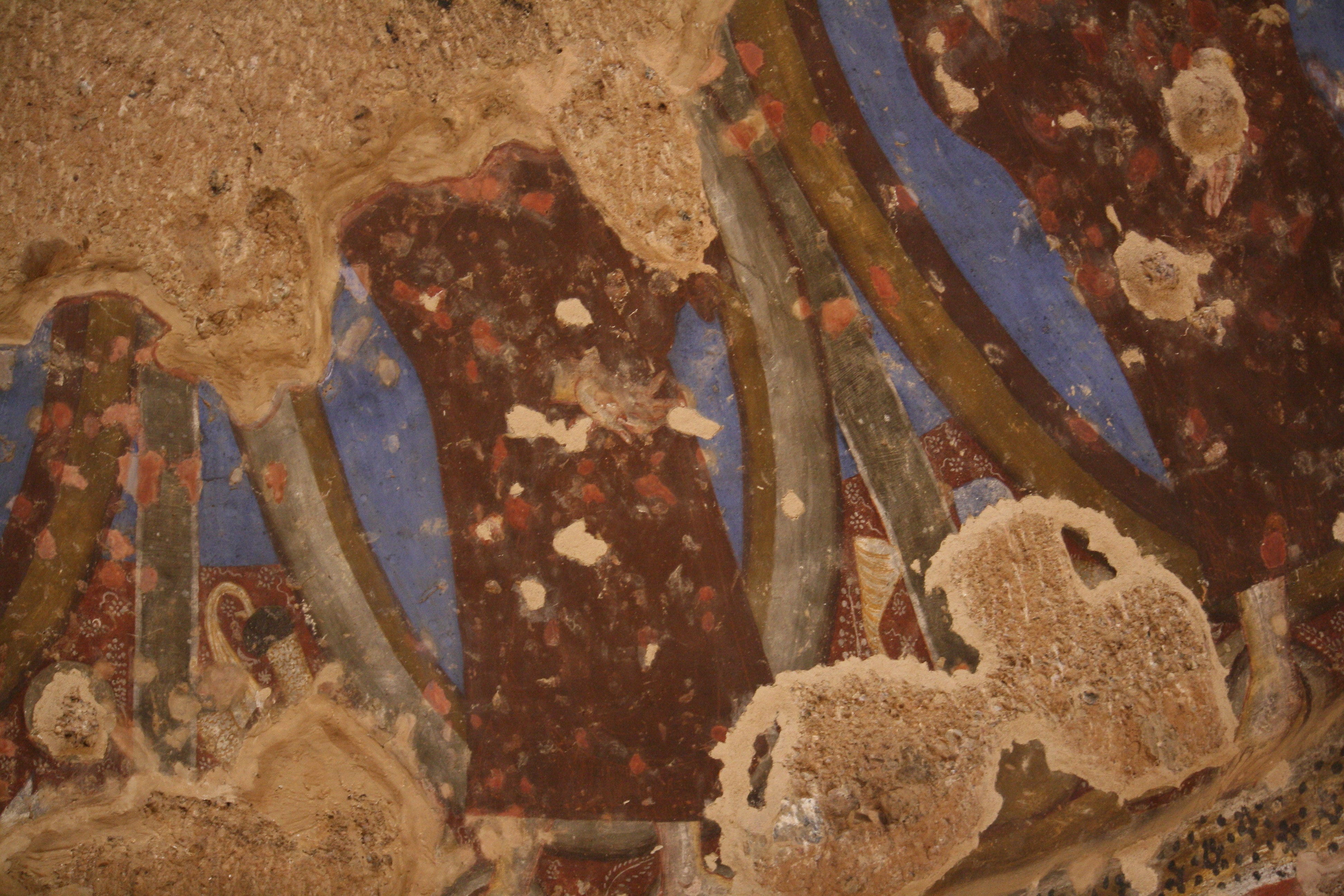
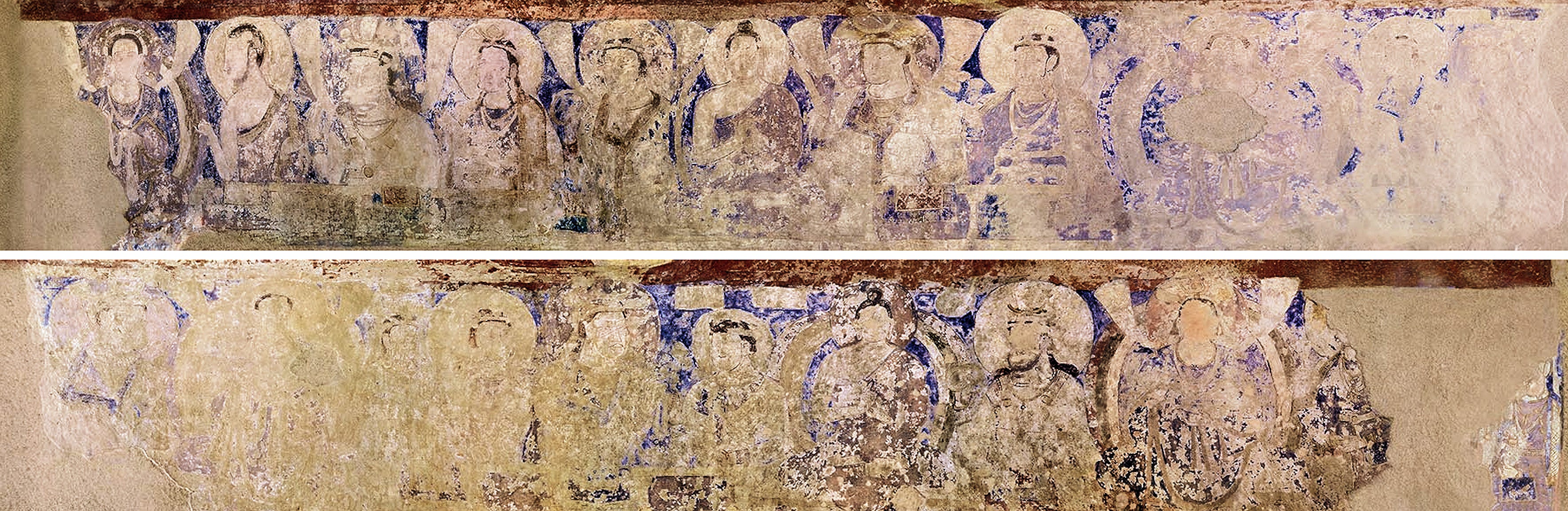
It produces a brilliant, highly saturated color that neither fades in light nor deteriorates with the passage of time. Very few natural pigments possess these qualities, and when combined with its rarity, its great distance from Europe, and the complexity of processing it into a usable pigment, they made ultramarine one of the most expensive pigments in history. At certain points, it was worth even more than precious metals such as silver and gold.
Turning the stone into pigment required a remarkably complex process designed to separate the blue component from its impurities. Lapis lazuli is not a single mineral but rather a rock composed of several minerals: lazurite, which gives it its blue color; pale gray and white silicates; and pyrite, responsible for its distinctive golden flecks. This means that, unlike ochre, it cannot simply be crushed into powder and used as a pigment. The silicates and pyrite must first be separated from the lazurite. Otherwise, the resulting color is dull and grayish rather than the rich blue artists sought.
To obtain the purest possible blue pigment, the lapis lazuli was first ground into a fine powder using a mortar and pestle. The powder was then mixed with pine resin, gum mastic, and wax. The artisan coated their hands with linseed oil before kneading the mixture into small balls, which were left to rest and then kneaded again over the course of several days. These balls were later immersed in a lye solution, allowing the blue pigment to separate from the rest of the material. The pigment was washed repeatedly until the blue powder was completely free of impurities.
Because ultramarine reached most European countries only in tiny quantities, it was reserved for the most prestigious and exclusive commissions. Patrons often specified whether a painting should include ultramarine, and exactly how much they were willing to purchase for a particular work. Counterfeiting and fraud were widespread, so they closely monitored how artists used this precious pigment.
In Spain, ultramarine eventually became almost exclusively associated with painting the cloak of the Virgin Mary, as this was considered the only subject sacred enough to justify using the most expensive and exclusive pigment available. The Immaculate Conception, one of the defining icons of the Spanish Baroque, invariably depicts the Virgin wearing a cloak of ultramarine blue.

Because natural ultramarine was so expensive, the 19th century saw several attempts to synthesize the pigment so that it could be manufactured industrially at a much lower cost. In 1826, the Société d’Encouragement pour l’Industrie Nationale (Society for the Encouragement of National Industry) offered a prize of 6,000 francs to anyone who could devise an economical method for producing an ultramarine comparable to that made from lapis lazuli.
The process was developed independently and almost simultaneously by the French industrial chemist Jean-Baptiste Guimet in 1826 and the German chemistry professor Christian Gmelin in 1828. It consisted of firing a mixture of clay, sulfur, sodium carbonate, and charcoal. Guimet received the prize and became the first to manufacture the pigment on an industrial scale in France, although he kept his production method secret. That same year (1828), Gmelin published his own process, laying the foundations for the artificial ultramarine industry in Germany.
In the 20th century, the artist Yves Klein sought to take the process one step further. He wanted his blue paint to retain the remarkable intensity of dry pigment, so he collaborated with chemists at the pharmaceutical company Rhône-Poulenc. They developed a special polyvinyl acetate binder that allowed the pigment to remain suspended while preserving an unprecedented brilliance and luminosity.
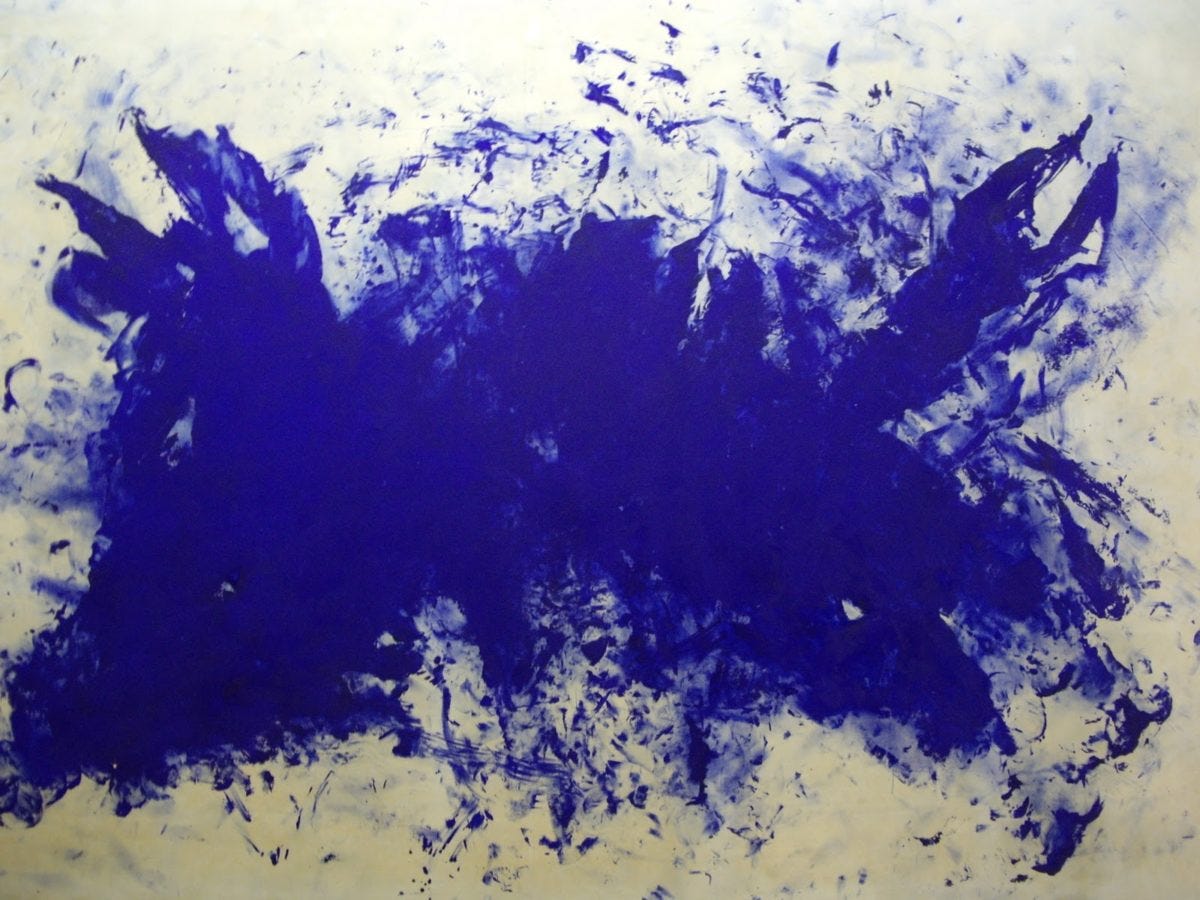
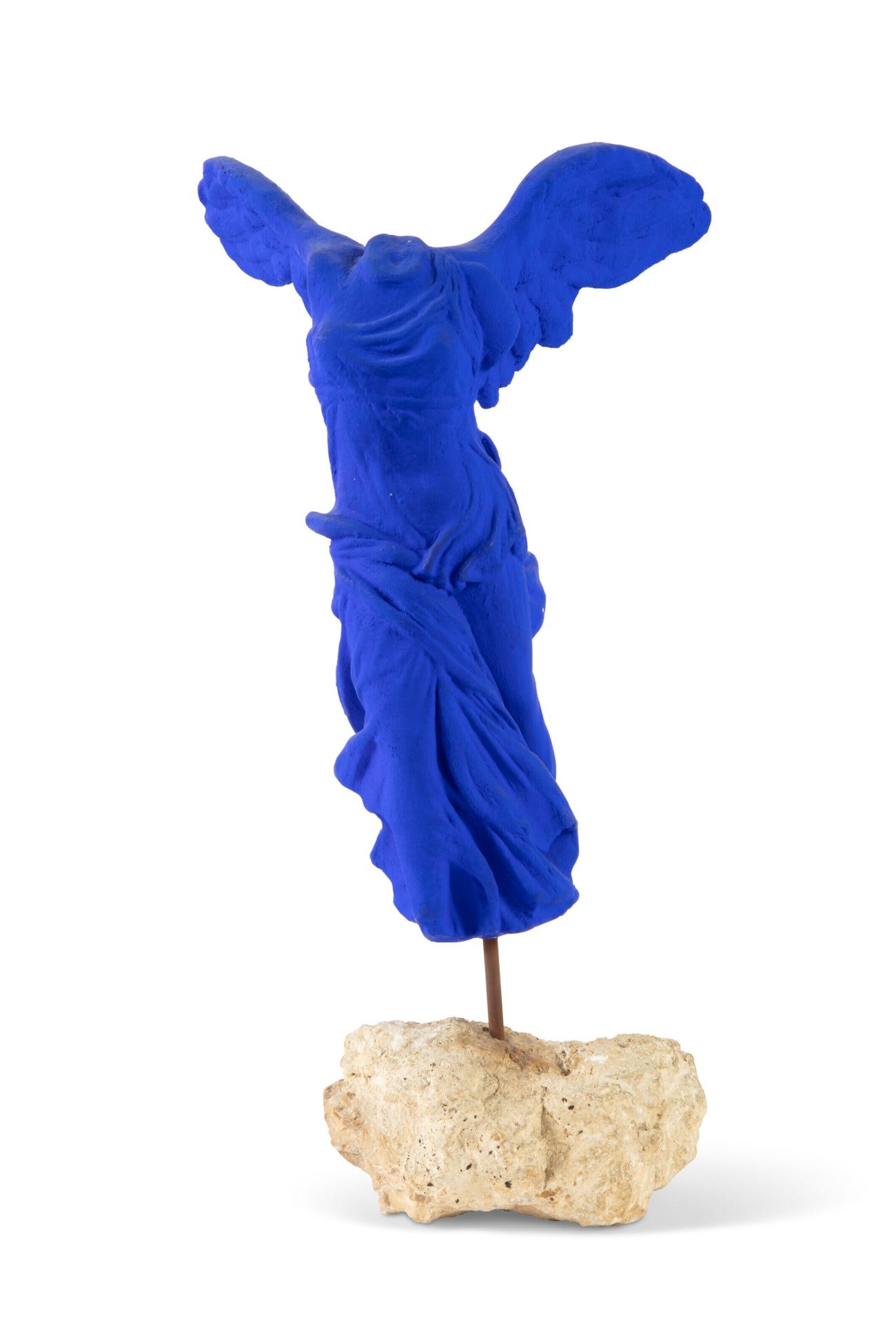
Because of this unique binder, Klein Blue became known for its velvety texture and extraordinary intensity, even though the pigment itself was essentially the same synthetic ultramarine developed during the 19th century. Yves Klein became inseparable from this color, which he patented under the name International Klein Blue (IKB) and used throughout many of his most celebrated works.
Among the best known are the canvases created using the bodies of models coated in the vivid blue paint. Once covered in pigment, the models rolled across canvases spread on the floor, leaving behind a variety of body impressions and traces of movement. Klein also produced works inspired by classical Greek sculpture using this astonishing pigment. These sculptures seem almost to emit blue light, combining technological innovation with the sculptural traditions of Europe.
Today, this shade is still commonly known as International Klein Blue. Yet the truth is that the color of International Klein Blue remains the very same ultramarine that was once worth as much as gold—the pigment that 17th-century Spanish painters obtained only in the smallest quantities and guarded so carefully for the blue cloak of their Immaculate Conceptions (although Klein used the synthetic, much cheaper version).
Currently, gold costs more than ten times the price of high quality ultramarine (Kremer sells 100g of ultramarine for 2,358€) but the lapis lazuli pigment is much more costly than silver (only 200€ per 100g), which still makes ultramarine the most expensive pigment in the world. And undoubtedly, one of the most beautiful.
Share Pigments, Colors & Other Stories
This article is free for everyone to read, but my posts take a lot of time to research and write, and all the ideas are original, and mine. If you would like to leave me a tip, you’d help my research and I’ll be immensely grateful to you.
More reading about blue pigments:
Blue: the most elusive pigment
·
August 4, 2025

In 1969 an anthropologist and a professor of linguistics together published a book named Basic Color Terms: Their Universality and Evolution. The authors, Brent Berlin and Paul Kay, affirmed that the vocabulary for colors followed a pattern in every language
Comments
Nothing yet. Say the first thing.
Sign in to join the conversation.