
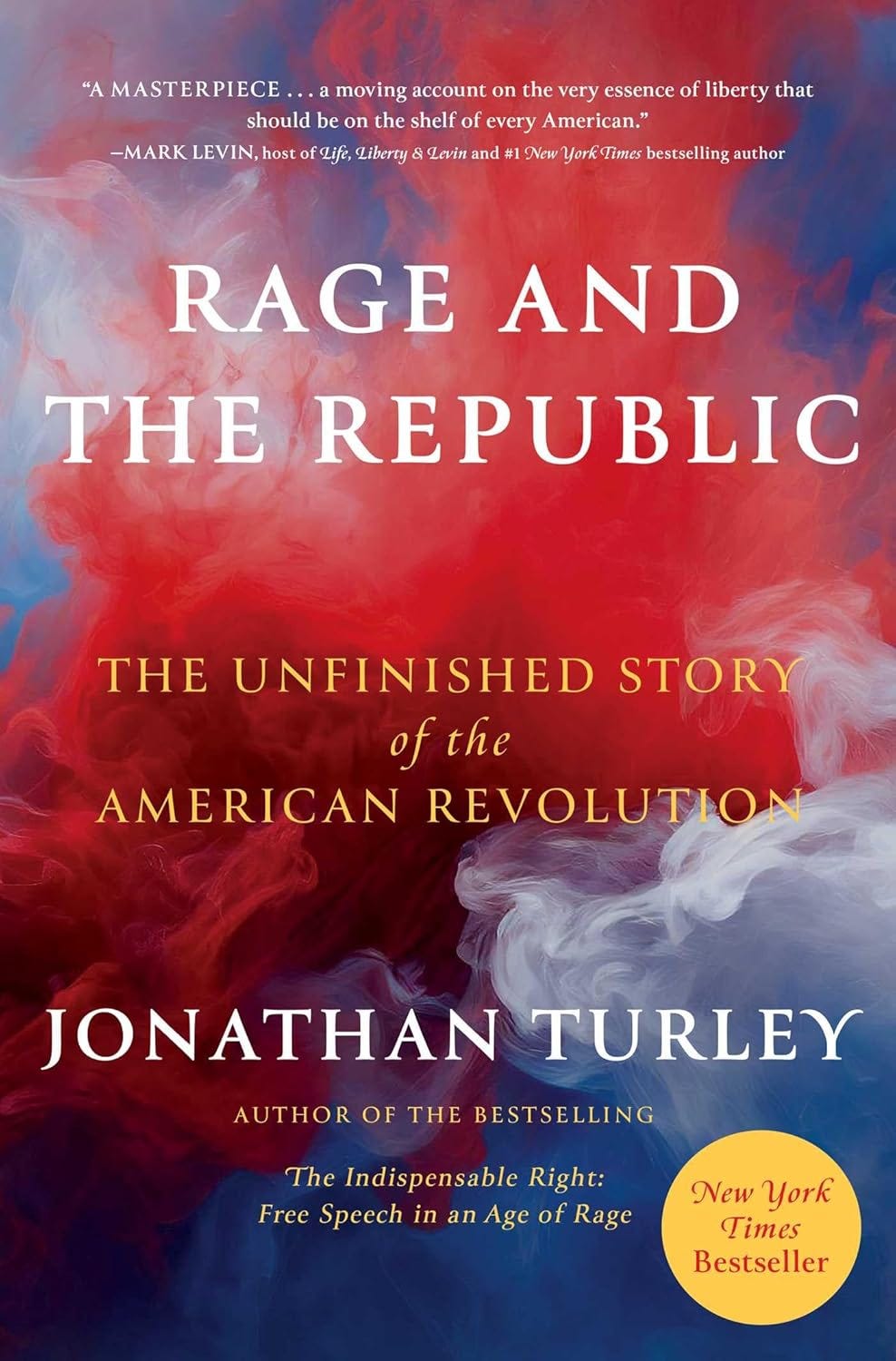
This semiquincentennial morning, I finished listening to Jonathan Turley’s Rage & the Republic: The Unfinished Story of the American Revolution. It is such a pertinent title to commemorate the 250th birthday of the United States, I decided to make it the second entry in my Elucidating Excerpts series. Here’s the first if you missed it:
Justice Clarence Thomas’s April 15, 2026, speech on the Declaration of Independence pairs well with Rage & the Republic. Both reflect on the distinctively elevating principles enshrined in the Founders’ freeing formulation as well as the gradual defection from those grounding values over the ensuing centuries, particularly by traitorous cruelites like Woodrow Wilson.
In a stupendous historical synchronicity, Thomas Jefferson and John Adams both died exactly 200 years ago on July 4, 1826—the fiftieth anniversary of the Declaration they had coauthored and the nation they had fathered together. Today, let us remember with gratitude and solemnity the rugged figures who made this republic possible—and fight to keep it.
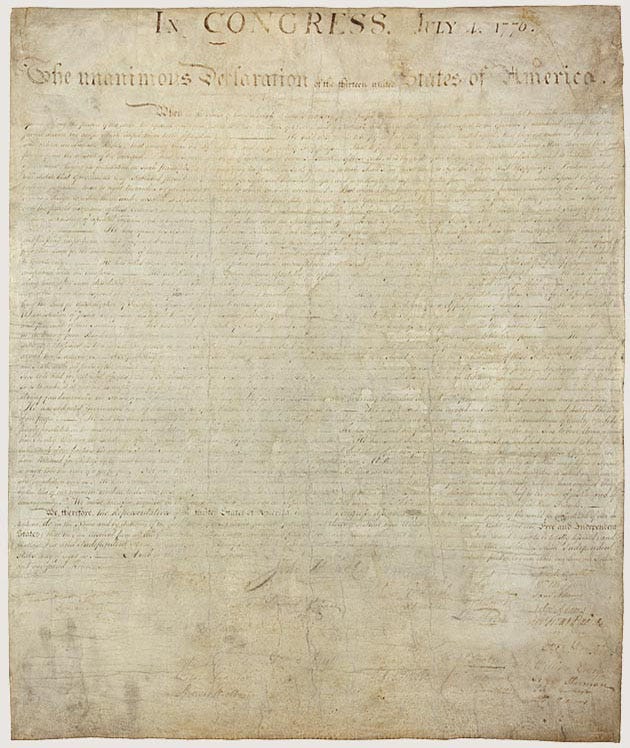
Where the Declaration was the ultimate expression of American values, the Constitution was the ultimate expression of American pragmatism. It was written not to inspire but to last. Madison took us for what we are and designed a system that could not only attain our loftiest values but also withstand our lowest impulses.
—Jonathan Turley, Rage & the Republic: The Unfinished Story of the American Revolution
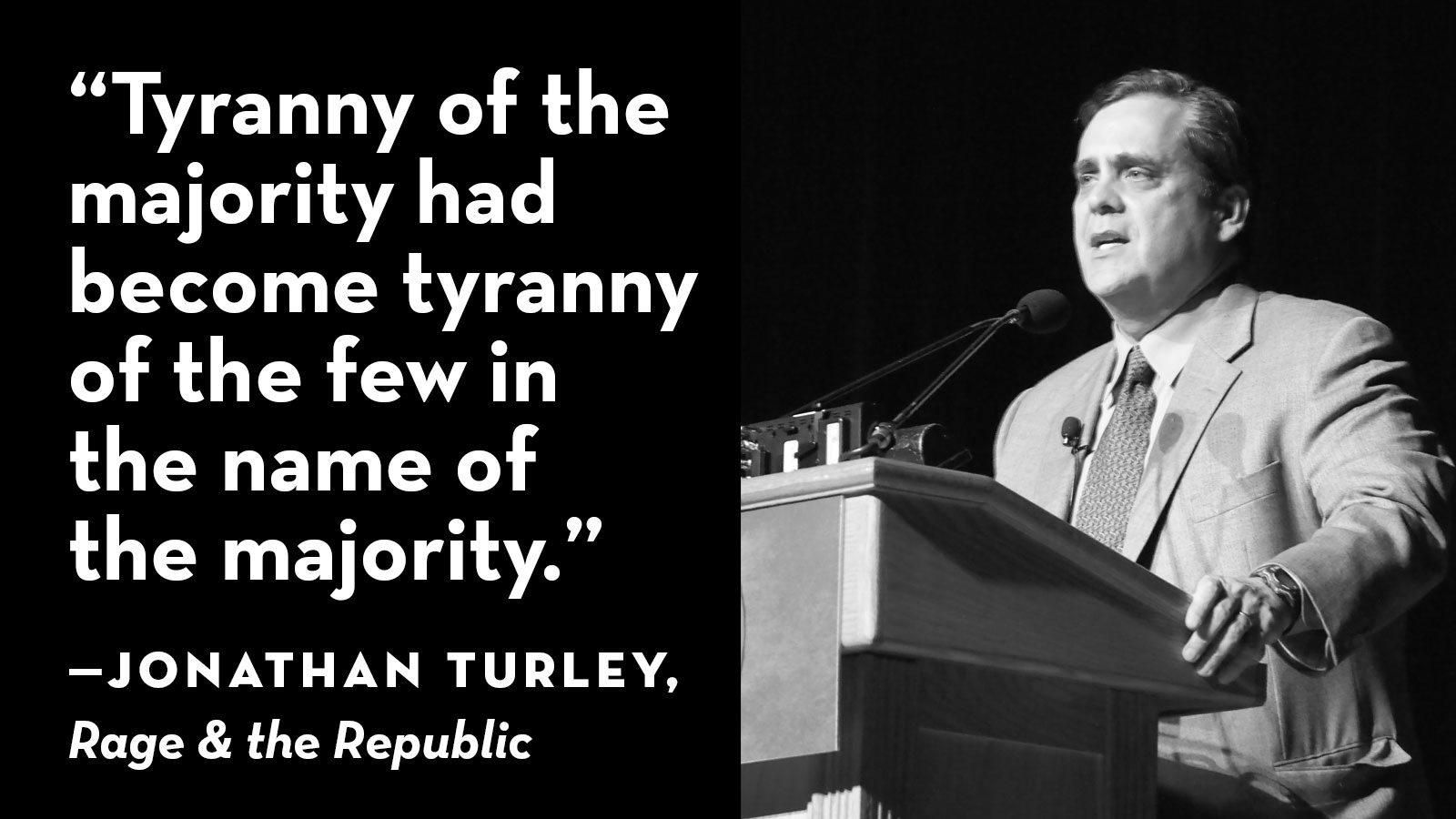
As we in the United States celebrate the 250th anniversary of our Declaration of Independence, this is an opportune time to contemplate why and how the American Revolution eschewed the Saturn-devouring-his-children cycle that had plagued its sister revolutions—including and especially the blood-drenched French Revolution in which “tyranny of the majority had become tyranny of the few in the name of the majority,” as Jonathan Turley observes.
Just as Earth falls into the Goldilocks Zone of necessary conditions required for life, so did the exceedingly rare convergence of individuals, circumstances, and opportunities make possible the founding of a more perfect union in 1776.
Turley pinpoints the two figures most responsible for achieving this unprecedented feat:
In a time of giants, two figures stand out in directing the course of the American republic, and this was the moment of their divergence. The first was Paine, called “the father of the American Revolution.” The second was James Madison, called “the father of the American Constitution.” The former knew what it would take to turn a nation into a rebellion while the latter knew what it would take to turn a rebellion back into a nation.
Paine, as you will see when you read Rage & the Republic, was a complex figure alternately hailed and reviled across multiple countries over the course of his comitragic life.
Not long before Paine’s death, a visitor told him, “Mr. Paine, here you sit, in an obscure, uncomfortable dwelling, powdered with snuff and stupefied with brandy; you, who were once the companion of Washington, Jay, and Hamilton, are now deserted by every good man, and even respectable deists cross the streets to avoid you.”
Paine replied with characteristic defiance, “I care not a straw for the opinions of the world.”
As Turley notes, Paine could have been describing himself when he wrote in The American Crisis:
I love the man that can smile in trouble, that can gather strength from distress, and grow brave by reflection. ’Tis the business of little minds to shrink, but he whose heart is firm, and whose conscience approves his conduct, will pursue his principles unto death.
This passage also encapsulates the spirit of America itself. The Stoic individualism embodied by our Founders and embedded in the documents they painstakingly penned is what has carried Americans through both tragedy and triumph, adversity and transcendence.
America may have been plagued by corruption, hypocrisy, and ascendant tyranny during the two and a half centuries since its inception, but the originators’ ideas remain unassailable beacons of liberty. It is only by reclaiming, reasserting, and reestablishing those ideas that we Americans can restore the luster of our tarnished nation.
Comments
Nothing yet. Say the first thing.
Sign in to join the conversation.