
On Thursday, I rebuilt our website using one of the latest frontier models by Anthorpic, Fable.
By Friday, access had been pulled after U.S. national security concerns over who should be allowed to use this level of capability.
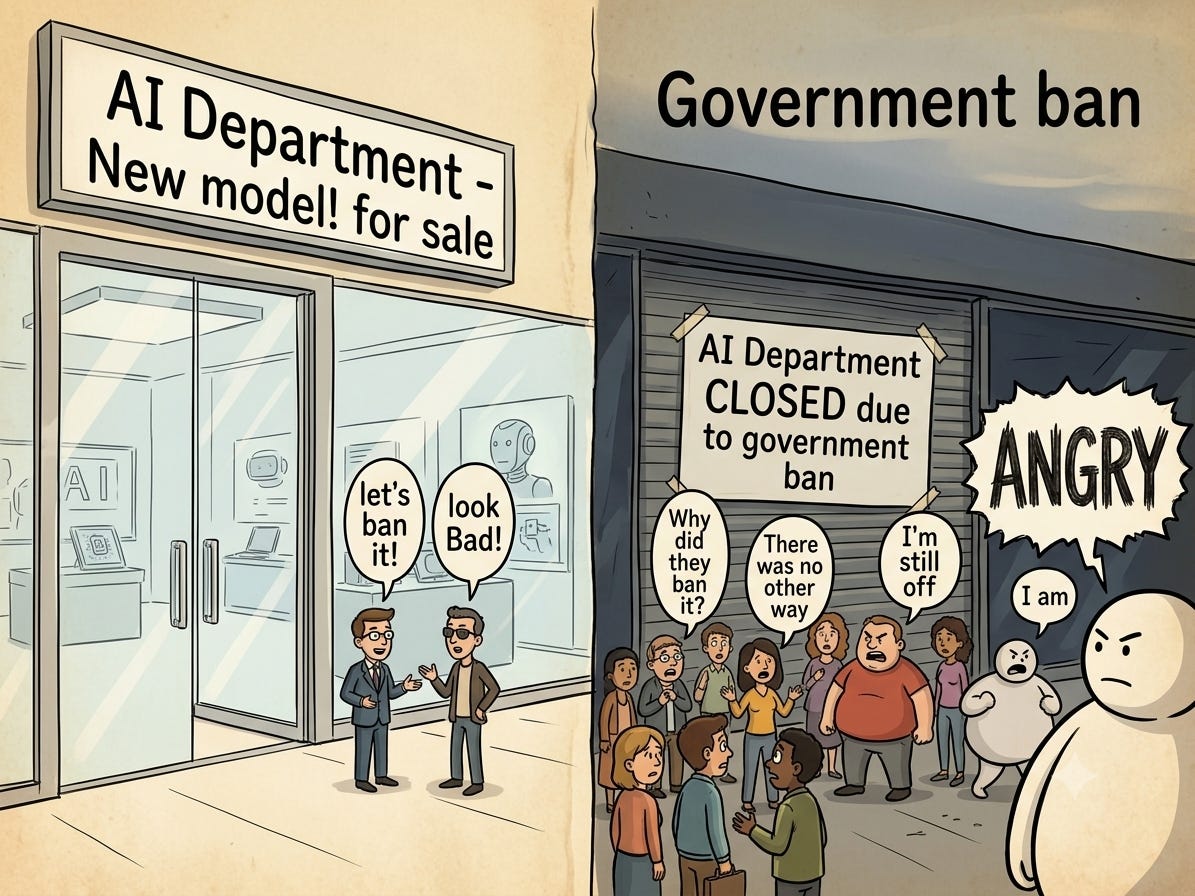
The era of "move fast and break things" with workplace AI is drawing to a close.
269 pages is a lot for anyone to go through, so we did it for you and pulled out the main points in relation to AI’s impact on the workforce.
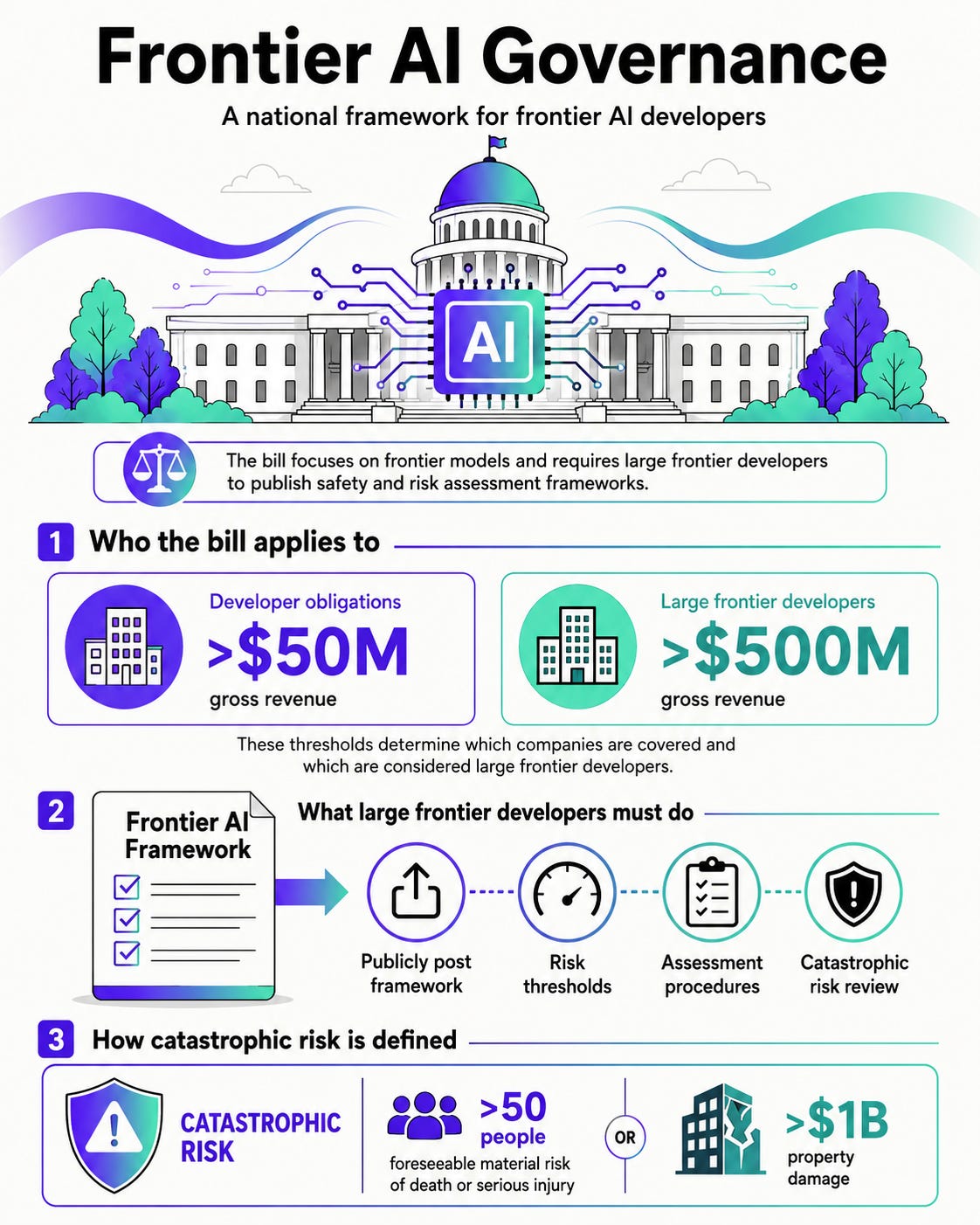
AI governance stopped being a board-slide topic this week.
The lesson is not “stop using AI.” It is the opposite.
Businesses need to understand where capabilities, costs, regulations, and controls are moving.
I.e You do not need a rocket-scientist-level model to run payroll, recruiting operations, or back-office workflows.
But you do need to understand how frontier AI will reshape work, who controls access, and what governance will mean for the future of jobs.
As Washington moves to standardize AI accountability, EQ gives CEOs and leaders the exact tools they need to stay ahead of the curve:
It blocks state and local laws from enforcing laws that specifically regulate AI model development, so you need flexibility and visibility to use all the models.
Go faster with EQworkers - get your free AI assessment here worth $1500.
Don't wait for a draft bill to become a costly federal mandate. Secure your workforce equilibrium today.
While it expressly does not preempt laws of general applicability, common law remedies, or laws regulating AI use or deployment, the bill states that any state or local government is prevented from enforcing laws that specifically regulate:
Text within this block will maintain its original spacing when published
“AI model development as the US believes development of these models is a matter of national economic significance and international competitiveness.”If I were to recommend you read any of this bill in it’s entirety, it would be the section Title II.
It states the federal government should analyze AI’s workforce impact, run scenario planning, and generate policy insights.
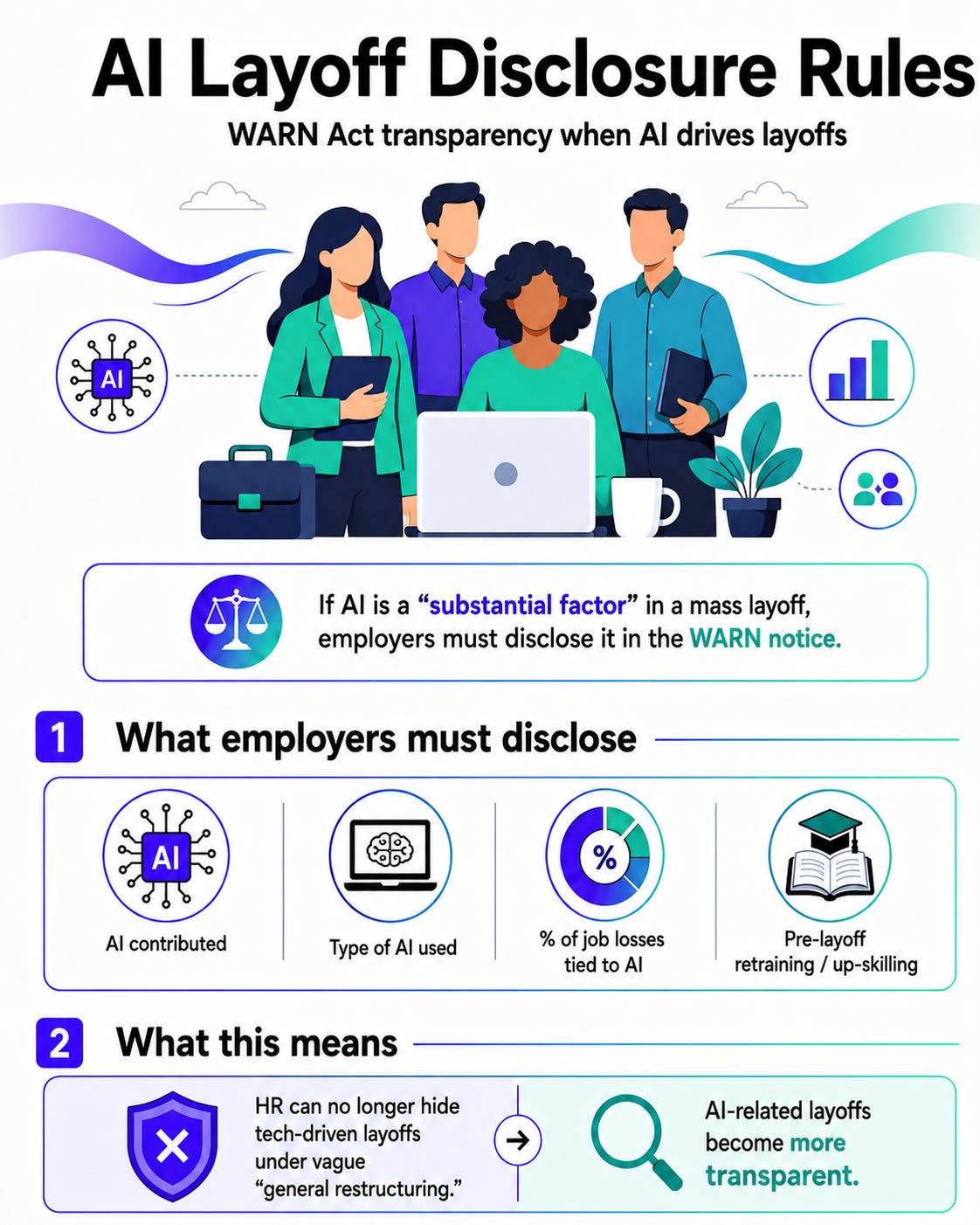
The bill amends the WARN Act so that when AI is a “substantial factor” in a qualifying mass layoff, employers’ 60-day notices must say AI contributed.
Text within this block will maintain its original spacing when published
Meaning: HR will no longer be able to bundle tech-driven layoffs under the vague umbrella of "general restructuring."
Organizations will need precise, defensible data mapping exactly how much a job displacement was caused by AI versus standard economic factors.
For staffing firms, recruiters, and HR leaders, this bill will shape how talent is managed in the future.

My view is that we are entering The Great Redistribution.
Work will be redistributed among People & AI workers.
Regulation may determine how fast that happens, who can access the most powerful capabilities, and what level of governance businesses need before they can scale.
My POV: leaders have two choices.
Wait for the market to move around them.
Build a proactive redistribution strategy now.
As always, I’m here to support and looking forward to helping more of you figure out how to transform with confidence.
Have a great week!
Comments
Nothing yet. Say the first thing.
Sign in to join the conversation.