
Qusra continued to make news in Israel today. The army succeeded in removing the settlers who had been blocking access to the Palestinian home after sending a Golani infantry battalion to the area. Tonight the settlers returned and the army is once again working to remove them

.
In a remarkable display of tone-deafness, the army initially ordered residents of the surrounding houses to leave their homes so that it could carry out an operation in the village. The order was subsequently overturned by Central Command, which instructed the soldiers to use only unoccupied houses.
The episode also shows how little some commanders in the field seem to understand the world beyond the immediate operation in front of them. Dozens of foreign news crews are in the area, watching what has unfolded over the past few days and reporting a story that is deeply damaging to Israel’s image abroad—and that’s an understatement. Yet in the midst of all that, commanders on the ground issue an order telling Palestinians to temporarily leave their homes.
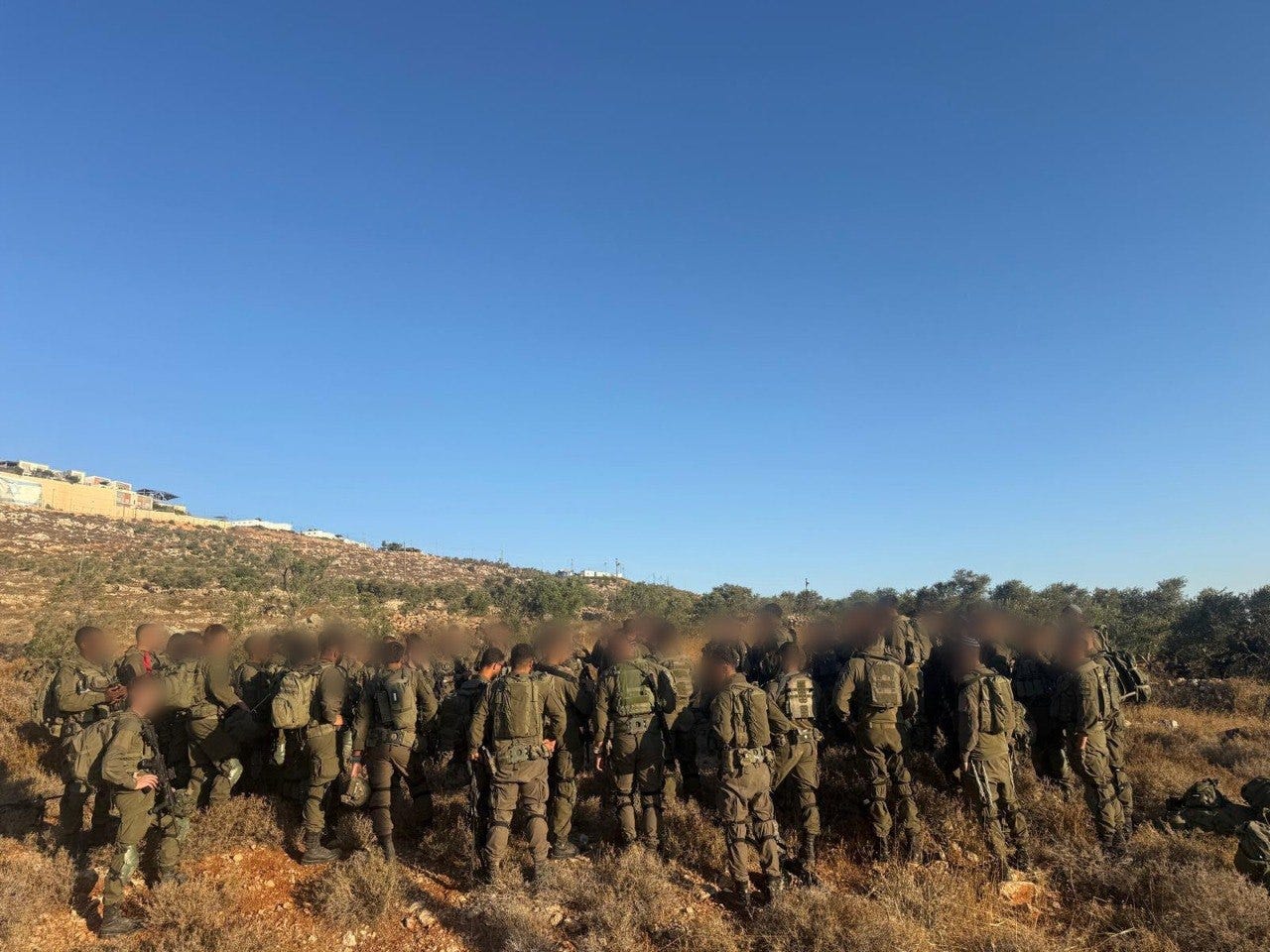
People of my generation often have an outdated picture of who Israel’s younger army officers are. In our day, many came from the kibbutzim and the social and political milieu they represented. In contrast, a significant proportion of today’s IDF officers come through the national-religious seminaries or live in the territories. Their political outlook often differs sharply from mine and, more importantly in a situation like Qusra, they may have a very different understanding of the rights of Palestinians living under their authority.
It is worth noting that the situation reached the point where Ambassador Huckabee, one of the most pro-Israel and pro-settlement American ambassadors ever, publicly criticized the Israeli government for failing to act against people he described as Israeli terrorists. It was only after Huckabee intervened that the army finally took action. There was, however, another important detail: the Palestinian owner of the house is an American citizen.
Qusra is not an isolated case. There are believed to be at least six or seven other places where settlers are attempting to force Palestinians from their homes.
A JEWISH NUMBER TWO FOR RA’AM?
In one of the most interesting developments in Israeli politics, former Yesh Atid MK Yoav Segalovich met yesterday with Ra’am leader Mansour Abbas. Both said negotiations were moving forward, and according to reports, the emerging deal would place Segalovich number two on the Ra’am list. He would be free to vote independently on questions of personal status; an important concession given that Segalovich is a strong supporter of gay rights while Ra’am, an Islamist party, is not.
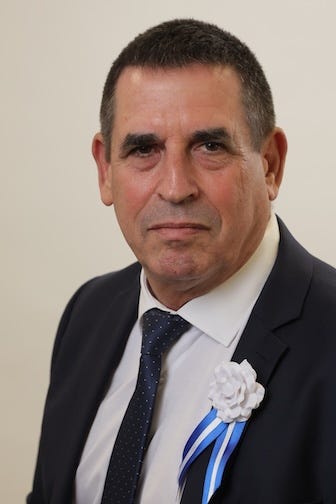
Segalovich’s joining Ra’am could have two significant effects. First, it will clearly bring the party additional votes in the Arab-Israeli community. Segalovich was responsible in the previous government for leading the effort to combat violent crime in Arab communities, and that effort was beginning to show impressive results. He has a reputation as someone who can get things done. Putting a Jewish former minister in the number-two spot could also reinforce Abbas’s argument that Ra’am is a pragmatic party focused on delivering results.
The second effect could be even more important politically. Having Segalovich near the top of the ticket could make it considerably easier for Ra’am to participate in the next government. And if the opposition can count on Ra’am’s support, its path to forming that government becomes considerably easier.
A RECORD DAY AT BEN GURION, AND A ROUTE THAT WON’T TAKE OFF
We are at the height of the summer travel season. A record 150,000 passengers passed through Ben Gurion Airport today, remarkable when you consider that there are still almost no tourists coming to Israel. The overwhelming majority are Israelis traveling abroad, and with many foreign airlines still not flying here, the planes that are operating are leaving at an average 95% load factor. In other words, nearly full planes and airlines making a great deal of money carrying Israelis in and out of Ben Gurion.
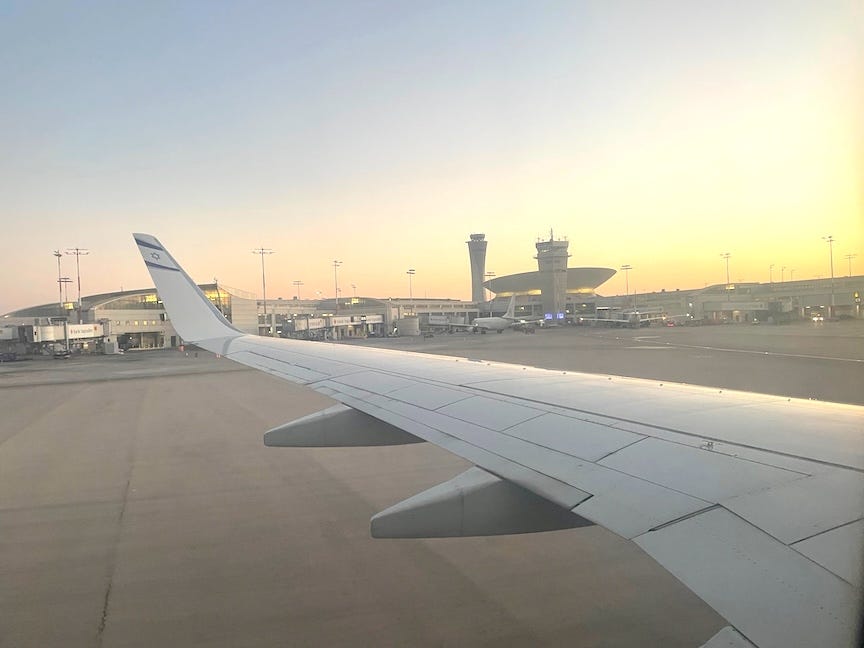
El Al, however, has been forced to cancel its planned new route to Vietnam. The airline had announced direct service beginning in October, and according to reports, tens of thousands of Israelis have already bought tickets. El Al has now concluded that it cannot meet the security requirements imposed by the Israeli government on Israeli airlines.
The problem appears to be that Vietnamese authorities will not permit an armed Israeli security contingent to operate in the country, although that has not yet been officially confirmed as the reason for the cancellation.
RECOVERING FROM A TRAUMA THAT HASN’T ENDED
A new study of the research conducted since October 7 offers a broader picture of what two years of collective trauma have done to Israelis. The systematic review, published in Frontiers in Psychiatry, examined sixty-eight studies published between the attack and its second anniversary, selected from an initial search of 4,588 records.
Its central conclusion is that experiencing trauma is only part of the story. What matters is how intense the exposure was, how long it lasted, what other pressures accumulated around it, and what personal and social resources people had to draw on as they tried to cope. Bereavement, displacement, financial hardship and continued exposure to war can matter alongside the original traumatic event.
The review was led by Dr. Michal Cohen and Prof. Mario Mikulincer of the Israel Center for Addiction and Mental Health at the Hebrew University, together with doctoral student Maor Daniel Levitin. It is the first attempt to bring together the full body of Israeli research on post-traumatic stress, anxiety, depression and addiction since October 7.
What the sixty-eight studies show is that Israelis did not respond to October 7 in any single way. Symptoms declined over time in some populations and remained high in others, with the difference tied less to whether people had experienced trauma than to the nature and intensity of that exposure.
Post-traumatic stress was concentrated among those with direct, repeated or role-related exposure, such as first responders and reservists. Anxiety and depression were associated with a much broader set of pressures, many of which are not trauma in the clinical sense at all: bereavement, displacement, lost income, food insecurity, prolonged threat and heavy consumption of war coverage.
Persistent symptoms were most common among people living with continuing danger and accumulating strain. The implication is important for a country that has been at war for nearly three years: what wears people down may be less the memory of one terrible day than the gradual exhaustion of their ability to cope. The clearest protective factor was other people. Those who felt supported by friends and partners consistently reported lower levels of post-traumatic stress.
For Israel’s health system, the practical implication is clear: the need for mental-health care is not evenly distributed, and a system that treats it as though it were will inevitably miss some of the people who need help most. Screening that takes into account how long someone was exposed, whether they were displaced, what they lost financially and what support they have around them could direct scarce clinical resources more effectively than a uniform national response. And because these pressures frequently occur together, integrated care may be more effective than separate programs built around individual diagnoses.
The review also cautions against treating declining symptom scores as evidence of recovery. Anxiety and depression were associated with impaired daily functioning and reduced quality of life. Whether someone can work, care for a family and participate in a community is a different measure of recovery, and ultimately the one that will determine what this war costs Israel over the coming decade.
The authors are candid about what they still do not know. Most of the evidence comes from screening questionnaires rather than clinical diagnoses, most of the studies capture only a single point in time, and only three of the sixty-eight examined addiction at all.
The review followed PRISMA 2020 guidelines and searched four major databases for studies of Israeli populations published between October 7, 2023, and October 7, 2025. No meta-analysis was attempted because the studies differed too widely in their populations, definitions of exposure and methods to combine their results reliably.
There is also a more fundamental problem. Conventional trauma research assumes an event that ends, followed by an aftermath in which recovery can begin. Israel has not been given that structure. This review is an early attempt to understand what happens to a population expected to recover while many of the conditions producing the fear are still in place.
FROM TEL AVIV TO THE SAHARA; THE MISSILE THAT HAD TO BE TESTED ABROAD
A cargo aircraft belonging to a carrier that specializes in moving weapons landed in Israel on August 3, loaded equipment, and set down the next day at Tan-Tan in southwestern Morocco, on the edge of the Western Sahara. Two business jets followed from Israel with the crews.
On August 6, the equipment turned out to be a cruise missile called Anthem, built by Covenant Industries, and the U.S. Army photographed the whole thing. The company was founded in 2024 by Michael Kaufman, an American who moved to Israel after working in investment in the United States, including at a Peter Thiel fund, and it has raised hundreds of millions of dollars from Founders Fund, Lux Capital, 8VC, Andreessen Horowitz and Lightspeed while telling the public almost nothing.
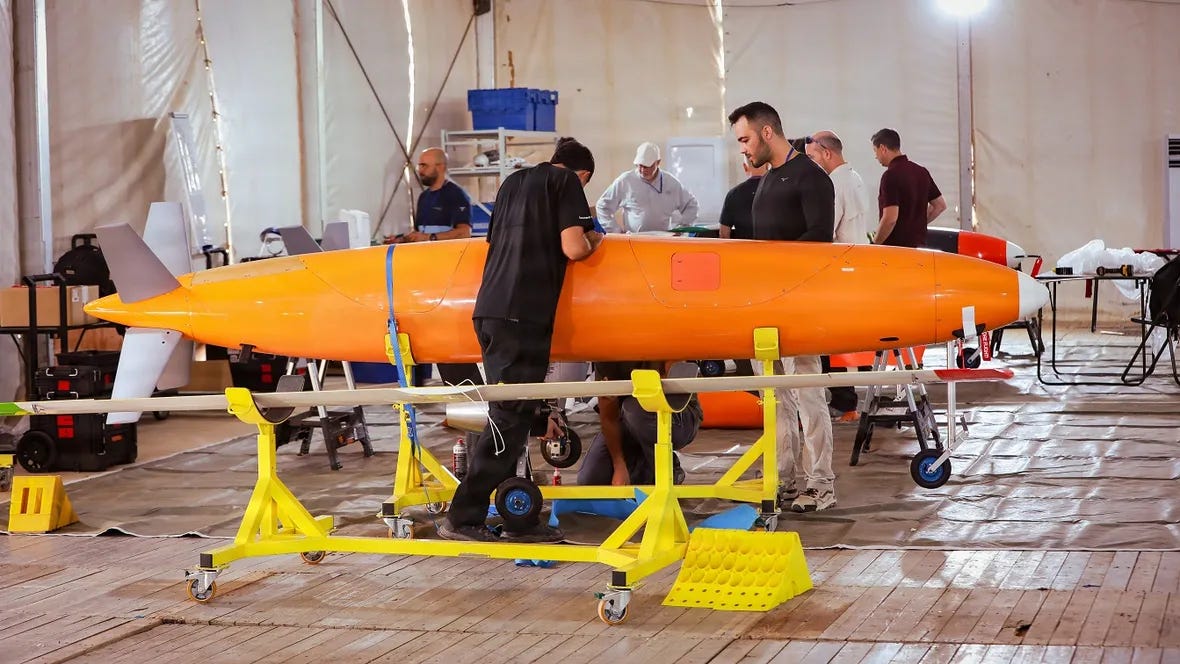
It is registered in America, with subsidiaries in Israel and Germany, and staffs its Tel Aviv development operation with veterans of the Israeli defense establishment. US Africa Command’s own account of the launch declined to name the company or give the missile’s range, speed or cost. The photo caption named it anyway.
The test was the first live fire at the Africa Multi-Domain Training and Experimentation Center, a facility the U.S. Army has been standing up near Tan-Tan under a memorandum signed with Morocco in July. American and Moroccan personnel built an expeditionary firing site from nothing and worked alongside Covenant’s engineers, checking communications, watching how the wings and launch trolley behaved in the field, and gathering weather and targeting data.
What that test was really demonstrating became clear the following day. Army Secretary Dan Driscoll told reporters at Camp Grayling in Michigan that the service is opening five ranges to private weapons companies that hold no military contract, promising access within thirty days of a request placed through a marketplace that went live that morning. The current wait can run eighteen months.
Covenant was the first company through the door, and Morocco is the only range on the list outside the United States. Abby Denburg, Covenant’s president, told reporters that the launch proved a repeatable pathway now open to any company, which is a fair description of what the Army was buying.
The commercial logic is straightforward. American stockpiles were drawn down by the war with Iran, a Tomahawk costs what a Tomahawk costs, and there is a market for something long-range and cheap that can be built quickly and in quantity. Politico reported in June that the German Defense Ministry is evaluating Covenant as it looks for alternatives to dependence on American systems, and TheMarker reports that MAFAT, the Israeli Defense Ministry’s research and development directorate, is conducting a staff study on acquiring long-range cruise missiles cheaper than those offered by the large arms manufacturers, at a scale that could reach hundreds of millions of shekels. Denburg has said the company expects to begin delivering production-ready components in early 2027.
Details here come from TheMarker’s reporting by Sagi Cohen, Africa Command’s release and Army photographs, the Associated Press account of Driscoll’s announcement, and Calcalist’s coverage of the test. Covenant declined to comment.
The part worth sitting with is geographic. An Israeli-staffed company cannot fly a long-range cruise missile anywhere in Israel, so it flew its hardware to the Sahara to shoot it over Moroccan sand under American supervision, at the same moment Israel’s own Defense Ministry is studying whether to buy the category.
The Abraham Accords were signed for many stated reasons: diplomacy, trade, tourism, security cooperation and the promise of a different kind of relationship between Israel and the Arab world. Turning the Moroccan desert into a testing ground for an Israeli-staffed company’s cruise missile was not among them.
BUSINESS
Israel Aerospace Industries (IAI)
Israel Aerospace Industries reported the best half-year in its history on Thursday. Net profit for the first six months came to $449 million, up 40 percent from $320 million a year earlier, and the second quarter alone produced $229 million against $156 million. Revenue reached $4.275 billion for the half and $2.189 billion for the quarter, the latter up from $1.618 billion. The order backlog, which is the number that actually forecasts anything, climbed to $35 billion from $27 billion in a single quarter. The Missiles and Space Division, which builds Arrow, passed a billion dollars in sales for the first time, growing 38 percent. Operating profit rose 35 percent, all four divisions turned a profit, and exports accounted for two-thirds of sales, with the foreign business growing faster than the domestic one even as domestic orders rose.
Boaz Levy, who became chairman of the board in May after five years as chief executive, said the long-discussed public offering is closer than ever. The obstacles being cleared are the sort that only a state-owned arms manufacturer faces. A confidentiality order is being negotiated with the Defense Ministry so that reporting requirements on sensitive transactions do not expose classified material, and the Israel Securities Authority is finalizing language. The harder conversation comes next, with the Finance Ministry, over how the proceeds get divided between the state and the company. That is not a technicality. Reuters has reported that privatization proceeds from IAI and Rafael are earmarked for the defense budget under the government’s plan for an additional 350 billion shekels over a decade, which means the treasury has a direct interest in the company keeping as little of the money as possible. The listing is planned for Tel Aviv at roughly 20 percent of shares, down from the 25 to 30 percent Globes reported in April, against a valuation previously estimated near $20 billion that Levy expects to be revised upward.
Levy made two other remarks worth separating from the earnings. He said IAI depends on neither French nor Spanish suppliers and has developed Israeli substitutes for nearly everything, which is a statement about the European arms restrictions of the past two years rather than about procurement, though he conceded that raw materials remain a problem. He also noted that IAI ranks second among Israeli employers in workplace surveys, behind Nvidia, which in a market where every defense firm is fighting the same shortage of engineers is a competitive claim rather than a pleasantry.
Remepy
Remepy, a Ramat Gan company with about sixty employees, closed a $36 million Series A on Wednesday, bringing the total it has raised to $62 million. O.G. Venture Partners led the round alongside M Ventures, the strategic venture arm of Merck KGaA of Darmstadt, with NFX, Vine Ventures, Qumra Capital, TechAviv, 97212 Ventures, Fresh Fund, PsyMed Ventures, Tadmor Group, Key1 Capital and IT-Farm all taking part. The money goes toward co-development deals with drugmakers and toward a global Phase III trial of the company’s lead program, scheduled to begin in the fourth quarter of this year.
What Remepy sells sounds at first like a category error. A doctor writes one prescription and the patient receives two things, a molecule and a piece of software, each meant to do half the work. The company calls these Hybrid Drugs and describes the software as adaptive, pushing physical tasks and cognitive exercises calibrated to the patient alongside the pharmacology. Its lead program, Hybridopa, targets Parkinson’s disease; Remepy reports that Phase IIa results showed improvement in motor and non-motor symptoms, with peer-reviewed papers examining the mechanism behind the effect. Hybridopa remains investigational and unapproved by the FDA. A separate development agreement with Merck KGaA begins with rare tumors. The founders will be familiar to Israeli readers: Michal Tsur, who co-founded Cyota with Naftali Bennett in 1999 and later Kaltura, serves as co-CEO with Or Shoval, and Prof. Amir Amedi of Reichman University’s Baruch Ivcher Institute for Brain, Cognition and Technology is the third founder. Bennett joined the board in February 2024.
Prescription software has been declared the future before, and the last attempt ended badly. Pear Therapeutics won FDA clearance for software treating insomnia and substance use disorder, then filed for bankruptcy in April 2023 after insurers declined to pay for it. The problem was never whether the software worked, but that nobody in the American reimbursement system knew which budget line a software prescription came out of. Remepy’s structure answers that directly by attaching its software to a drug and a pharmaceutical partner, inheriting a payment pathway instead of building one, and inheriting the drug’s regulatory clock along with it. Figures and the investor list here come from Remepy’s August 12 announcement and Meir Orbach’s report in Calcalist Digital the same day. For a country whose pharmaceutical reputation still rests on Teva and on generics, a Ramat Gan company telling Merck what belongs inside a prescription is an unfamiliar posture, and Phase III will decide whether it was the right one.
Google has opened a new front in its Israeli silicon operation, and it staffed it by picking up the pieces of a company that failed. According to TheMarker, the company has formed a group in Israel to design AI chips for edge devices, processors that run models locally inside robots, vehicles and autonomous systems rather than sending the work to a data center. Guy Kaminitz, until recently vice president of R&D at Hailo, announced on LinkedIn two weeks ago that he had joined Google to lead the effort, and a number of Hailo hardware engineers came with him. The group is hiring dozens more. Separately, Ido Bukspan joined last month to run data-center networking silicon. Google built its Israeli chip operation in 2021 inside Google Cloud under Uri Frank, and it now employs an estimated 700 engineers in Tel Aviv and Haifa. Its flagship is Axion, the ARM-based server processor announced in 2024, the first CPU Google designed itself, alongside networking components for the TPU accelerators.
The provenance of the new hires is the story. Hailo raised somewhere above $340 million, passed a billion-dollar valuation, then ran short of cash, cut staff, watched a planned SPAC merger collapse as its valuation fell under $500 million, and took emergency loans from Delek Automotive, which has said it will write off most of its investment. Microchip Technology signed an agreement to buy the company on July 24 and expects to close by the end of September, pending regulatory approval. Google, in other words, is acquiring the expertise without acquiring the company, and it is doing so while the sale is still open. Kaminitz and his engineers spent years building precisely the thing Google now wants, edge AI accelerators for what the industry has started calling physical AI, and Google’s job listings for the group ask for autonomous systems, computer vision and sensor experience.
Bukspan’s route is the more revealing one, because it runs in a circle. He spent more than twenty years across Mellanox and Nvidia, rising to senior vice president of chip design, then became CEO of Pliops. In February, Astera Labs bought Pliops’s assets and intellectual property, paying roughly $70 million against the $210 million the startup had raised and hiring about half its hundred employees. Astera Labs put its new Israeli center under Guy Azrad, who had until months earlier run communications chip development at Google Israel. Bukspan was to work for Azrad and left within months, taking at Google approximately the job Azrad had vacated. Details here come from TheMarker’s report, from Microchip’s July announcement, and from Calcalist’s and Globes’ coverage of the Astera Labs transaction. Israel has perhaps a few hundred people who can lead a chip organization at this level, most of them formed at Mellanox or its descendants, and they are now circulating among a small number of American employers faster than any of those employers can train replacements.
∞–––∞–––∞–––∞–––∞–––∞–––∞–––∞–––∞–––∞–––∞–––∞–––∞
TODAY IN JEWISH HISTORY
2020 The Abraham Accords Announced
The Israeli government had wanted to annex parts of the West Bank and thought it had the support of the Trump administration, but to its surprise, an agreement on annexation failed to materialize. What emerged from that failure would transform the Middle East. On July 1, 2020, on the drive home from Reagan Airport after returning from Israel, Berkowitz received a phone call from Yousef Al Otaiba, the UAE’s ambassador to Washington.
Al Otaiba had an idea to save the situation: How about the UAE recognizing Israel in return for Israel agreeing not to annex any part of the West Bank? Berkowitz responded: “I had the same idea.”
The United States had been quietly exploring the possibility of UAE-Israel normalization for months. However, the proposal linking normalization directly to an annexation freeze turned an abstract concept into an actionable deal. Work moved quickly. By mid-July, the main points had been agreed upon. It took another month to formalize the announcement, delayed in part because Netanyahu repeatedly got cold feet, fearing the political consequences of abandoning his annexation promise.
On August 13, a three-way call between President Trump, Abu Dhabi’s Crown Prince Sheikh Mohammed bin Zayed, and Prime Minister Netanyahu produced a joint statement:
This historic diplomatic breakthrough will advance peace in the Middle East region and is a testament to the bold diplomacy and vision of the three leaders and the courage of the United Arab Emirates and Israel to chart a new path that will unlock the great potential in the region.
The UAE issued a separate statement clarifying that Israel had agreed to suspend all discussion of annexation. The normalization agreement was comprehensive: full diplomatic relations, extensive trade and tourism, mutual air links. Implementation required overflight rights from Saudi Arabia and Oman, which were eventually granted, enabling not only flights to the UAE but also significantly shortening travel times between Israel and the Far East.
The agreement with the UAE was soon followed by Bahrain, then Sudan, then Morocco. Together, they became known as the Abraham Accords. In doing so, the accords overturned a foundational assumption of Middle Eastern diplomacy: the longstanding belief that Israel could not achieve normalization with Arab states without first resolving the Palestinian conflict. The Arab Peace Initiative of 2002 had made Palestinian statehood an explicit precondition. The Abraham Accords bypassed that premise entirely.
For Netanyahu, the transformation was remarkable. Having campaigned on annexation only months earlier, he now agreed to freeze it in exchange for peace. He recast himself not as the architect of permanent conflict, but as the builder of regional integration. Critics warned that the agreements risked encouraging Israeli complacency on the Palestinian issue, removing the pressure for a two-state solution while the occupation continued. The Palestinians felt abandoned by their Arab allies.
Nevertheless, there was no denying the historic significance. Four Arab nations had recognized Israel in a matter of months. Commercial flights now connected Tel Aviv to Dubai. Israeli tourists flooded Abu Dhabi. Business relationships that had existed quietly for years could now operate openly. The Middle East had changed. Whether the change would ultimately benefit or harm the prospects for Palestinian self-determination remained to be seen.
Comments
Nothing yet. Say the first thing.
Sign in to join the conversation.