
This is the second instalment in my monthly location series. One Saturday each month, I take you somewhere worth pointing a camera at—and worth visiting even if you leave the camera at home.
Last month, we went to Istria. This month, we cross the Adriatic to Venice.
I have photographed Venice for years, and the question I’m asked more than any other is where to find the hidden city.
The honest answer is that Venice is not hidden.
It is simply operating on a different timetable.
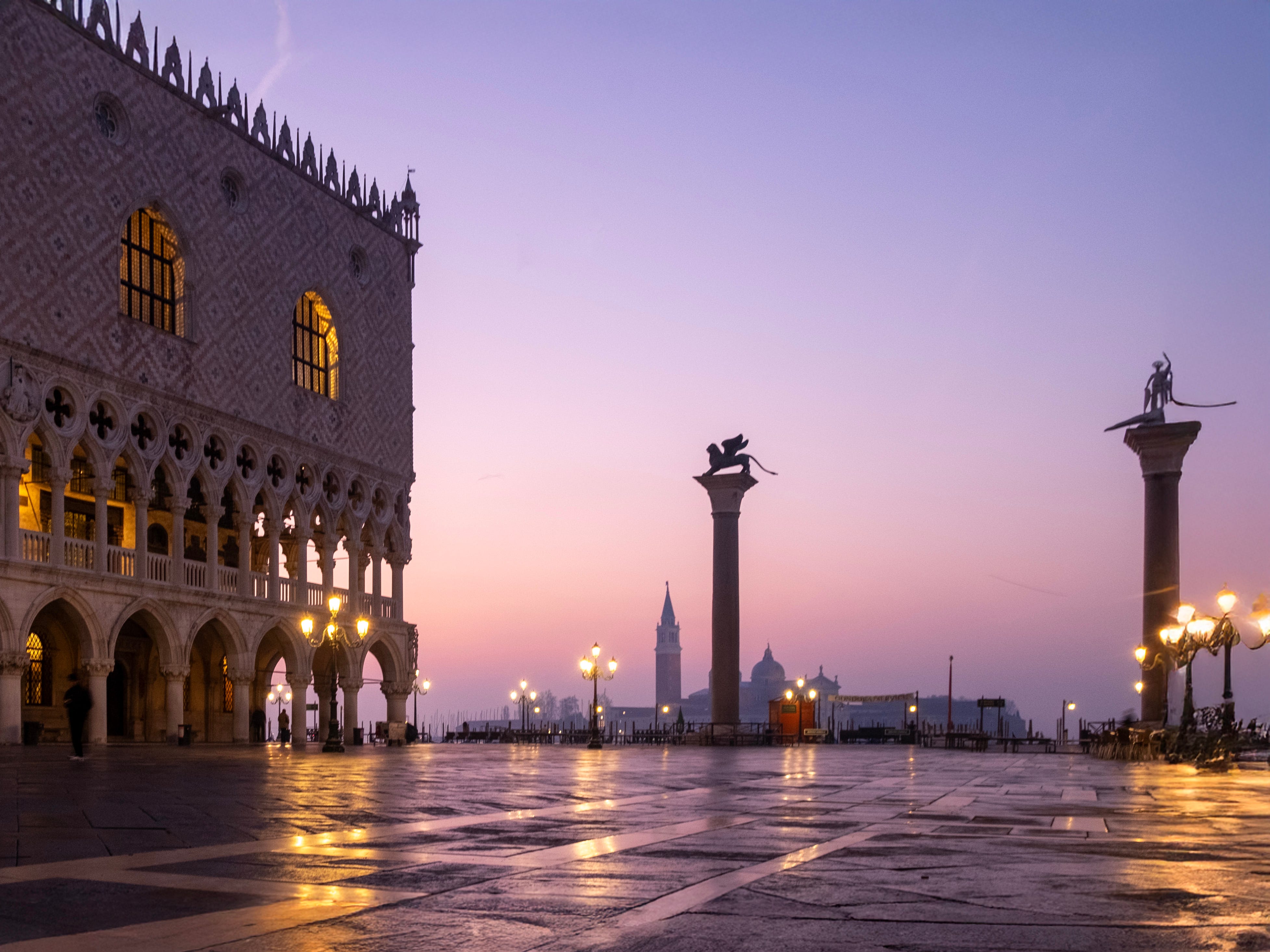
At eleven in the morning, the route between Rialto and Piazza San Marco can feel almost impossible. Follow the same streets shortly after sunrise and you hear delivery carts, shutters opening, footsteps under the porticoes and the first conversations coming from the bars. Stay out after dinner and the city changes again. The day visitors disappear, reflections settle on the canals and entire squares become quiet.
This is the first thing to understand about photographing Venice: choosing when to stand somewhere usually matters more than discovering a secret location.
The famous places are famous for a reason. Piazza San Marco at dawn can still be extraordinary. The Grand Canal from Rialto can still produce a photograph worth keeping. A gondola turning into a narrow canal can still stop you in your tracks.
The challenge is to photograph these things without simply repeating the picture you have already seen a thousand times.
This will be another long one. As with Istria, I’m dividing my attention between photography and practical travel because the two are impossible to separate. In Venice, where you sleep affects whether you can reach the waterfront before sunrise. The season affects not only the weather but the character of the streets. Even the direction from which you approach a square can determine whether you see daily life or a wall of visitors.
I run private Venice photography workshops and a more personal experience called The Venice I See for people who want to explore this way of looking at the city with me.
It may seem strange to choose one of the most photographed cities in the world for a series about seeing places more deeply.
That is exactly why Venice belongs here.
A lesser-known destination gives you the advantage of surprise. Venice gives you the harder—and ultimately more useful—challenge of finding your own response to something everybody already recognises.
You cannot depend on novelty. You have to depend on attention.
Venice also changes more dramatically than most visitors realise. Fog can erase half the lagoon. Rain turns the paving stones into mirrors. Winter lowers the sun into the streets and gives shape to passages that feel flat in summer. Acqua alta temporarily redraws the city. At dawn, the waterfront belongs to workers and gulls; a few hours later, it belongs to the world.
The city is not a fixed backdrop. It is a sequence of conditions.
Learning to photograph Venice means learning to notice those conditions before thinking about subjects.
Most first-time visitors experience Venice along a narrow corridor running from the railway station to Rialto and then to Piazza San Marco. That route contains some magnificent things, but it gives a distorted impression of the city.
Venice is divided into six sestieri, each with its own rhythm.
San Marco contains the monuments and the most recognisable views. San Polo gives you Rialto, the markets and some of the oldest commercial parts of the city. Dorsoduro opens toward the Giudecca Canal and tends to feel more spacious. Cannaregio still carries a great deal of everyday residential life. Castello stretches from the crowded streets beside San Marco to quiet neighbourhoods near Sant’Elena. Santa Croce is less immediately dramatic but rewards photographers interested in ordinary Venice rather than architectural theatre.
Then there is the lagoon: Giudecca, Murano, Burano, Torcello, the Lido and the smaller islands. These are not optional decorations around Venice. They are part of the place’s geography and history, and they change the visual pace of a trip completely.
If you have three days, stay within Venice and choose your neighbourhoods carefully.
If you have five, give at least one full day to the lagoon.
Let us begin with the place many photographers pretend they are too original to photograph.
Piazza San Marco is magnificent.
The mistake is not photographing it. The mistake is arriving at the same time as everyone else and expecting the square to do all the creative work for you.
Arrive before sunrise. Not five minutes before, but early enough to watch the artificial lights begin to lose their strength against the morning sky. Start around the Piazzetta, where the columns frame the water and San Giorgio Maggiore sits across the basin.
This is a strong place for long exposures, particularly when boats are beginning to move. But do not become so occupied with smooth water that you miss the human layer: workers crossing the square, deliveries arriving, people arranging chairs and the city preparing itself for another day.
The classic view across the water toward San Giorgio is only the beginning. Turn back toward the arcades. Look at how figures move through repeating columns. Watch the reflected light under the Procuratie. When the square is damp, the pavement can hold fragments of the architecture rather than giving you one perfect reflection.
The strongest window is often the transition between darkness and morning, not sunrise itself.
Once the square begins to fill, move on. Venice is telling you that the photograph has changed.
Rialto works differently.
The bridge is beautiful, but the area makes more sense photographically when treated as a working district rather than a viewpoint.
Arrive while the market is setting up. Watch boxes being moved, shutters opening and produce arranged. The Grand Canal is already active here, giving you boats, porters, traders and commuters against one of the most recognisable architectural backgrounds in the city.
From the bridge itself, a longer focal length can help isolate relationships along the canal: a vaporetto crossing behind a gondola, figures waiting at a landing stage, or morning light picking out a façade while everything around it remains in shadow.
Then leave the bridge.
The streets around the market and the quieter lanes of San Polo offer more layered pictures than the central crossing. This is where a 35mm lens becomes useful. You can place people within doorways, passages and market structures without losing the environment that gives the photograph meaning.
Be respectful. Rialto is not a theatrical set. People are working, buying food and moving through their normal morning. A photograph is rarely improved by obstructing someone’s path.
Cannaregio is where I would send someone who wants to understand that Venice is still inhabited rather than preserved under glass.
The northern part of the sestiere opens into long fondamente beside broad canals. The compositions are cleaner here, the pace slower and the presence of ordinary life more visible. Children go to school. Neighbours stop to talk. Shopping is carried home. Boats deliver everything a city without roads still requires.
The Jewish Ghetto offers a different kind of architectural space. Its unusually tall buildings, enclosed campo and complicated history deserve more than a quick photographic stop. Walk slowly and avoid treating the area as visual exotica.
Further east, around the quieter canals beyond the main routes, Cannaregio becomes particularly good for black-and-white work. The ingredients are simple: walls, water, bridges, doorways and passing figures. The challenge is arranging them.
This is where waiting becomes more valuable than walking.
Find a background with good structure and allow life to enter the frame. Venice rewards anticipation. A figure crossing a bridge, a boat appearing beneath an arch or a curtain moving in an open window can turn an architectural study into a photograph about the city.
Castello begins beside some of the busiest streets in Venice and gradually loosens as you move east.
The area around the Arsenale gives you monumental brick architecture, open water and a different sense of scale from the centre. Continue toward Via Garibaldi and you find a broad, lived-in street with shops, bars, market stalls and residents using the city rather than posing in front of it.
Beyond that, Venice becomes quieter again around Sant’Elena.
For street and documentary photography, Castello may be the most generous part of the city. There is enough activity to produce moments, but usually enough room to observe them. During the Biennale, the neighbourhood acquires another layer as visitors, artists and local residents share the same spaces.
Do not try to cover all of Castello in an hour. It is too large and changes too much from one end to the other. Give it half a day and allow yourself to reach the point where you stop checking the map.
Dorsoduro offers some of the cleanest relationships between architecture, open water and sky.
The Zattere faces south across the Giudecca Canal and works particularly well when the weather is changing. Boats pass against a broad background rather than disappearing instantly behind buildings. Winter sun can create long shadows across the fondamenta. In summer, the area becomes a place for evening life rather than quiet photography.
Punta della Dogana is one of the places I return to in difficult weather. Fog, rain and low cloud can simplify the view across the basin until the city becomes a collection of shapes and tones. Some mornings, Venice gives you little more than grey sky and the ghost of a boat.
Those are often the mornings when the best photographs happen.
Nearby, the Accademia Bridge provides one of the classic Grand Canal views. Photograph it if the conditions are right, but then explore the smaller streets behind it. Dorsoduro is full of abrupt changes between large cultural institutions, residential corners, workshops, students and quiet canals.
The postcard and the lived city sit unusually close together here.
The islands should not be treated as a checklist completed in one rushed afternoon.
Burano is visually immediate. Its colour makes composition appear easy, but too many photographs rely on colour alone. Look for relationships between painted walls, laundry, doorways and the people who live there. Go early or remain after the largest groups have left.
Murano is more restrained and more industrial. The glass furnaces and workshops provide a connection to making and trade that is often missing from the centre of Venice. Photographing craftspeople requires permission and patience, but it can produce a more meaningful story than another row of colourful façades.
Torcello is about space, silence and the origins of the lagoon settlements. It offers fewer obvious frames, which is part of its value. It asks you to work with landscape, distance and atmosphere.
Giudecca is the easiest island to integrate into a short visit. It gives you a view back toward Venice and enough separation to see the city as a whole. It is especially useful in the evening when the façades across the canal begin to hold the last light.
Choose one or two islands and spend time there. The lagoon punishes haste just as effectively as Venice itself.
Light. Venice is not automatically a golden-hour city. Overcast weather can be excellent, particularly for street work, architectural detail and black and white. Bright summer sun creates deep contrasts in the narrow streets, which can either become a compositional tool or a technical problem.
Best seasons. My preference is from autumn through spring. Late autumn and winter bring lower light, mist, fewer visitors and a more atmospheric city. Early spring can be excellent before the main season intensifies. Summer means early starts, late finishes, heat and heavy pedestrian traffic through the centre.
Fog. You cannot order it, but you can be ready for it. When fog arrives, resist the urge to cover the whole city. Choose open water, landing stages, bridges and familiar structures that can disappear gradually into the mist.
Rain. Bring a simple cover for the camera and continue working. Wet paving stones, umbrellas, reflected lights and boats emerging through rain can be far more interesting than an empty blue sky.
Gear. A small camera and one or two lenses are enough. A 24–70mm equivalent covers most situations, while a 35mm or 50mm prime encourages a slower and less conspicuous approach. A short telephoto helps with layered canal scenes. Bring a tripod if you are committed to twilight or long exposures, but do not carry one all day simply because Venice is photogenic.
Shoes. This matters more than an additional lens. You will walk much farther than you expect and cross more bridges than you remember.
Courtesy. Venice is not an abandoned film set. People live behind those shutters, carry shopping over those bridges and commute on those boats. Do not block narrow streets or bridges for a tripod composition. Do not photograph people at close range as though their daily life were a costume. Curiosity is useful. Entitlement is not.
Getting there. The railway remains the most dramatic way to arrive. You walk out of Santa Lucia station, and the Grand Canal is simply there. From the airport, public boats, buses and water taxis serve different budgets and arrival styles. Whatever you choose, pack so that you can manage your luggage over steps and bridges.
Where to stay. If photography is your priority, stay in Venice rather than commuting from the mainland. The advantage is not luxury; it is access to the city before the first morning arrivals and after the evening departure rush.
Cannaregio is practical for the station and good for everyday street life. Dorsoduro is quieter and well placed for the southern waterfront. Castello works well for people who want residential Venice and do not mind walking. San Marco gives immediate access to the monuments but also places you inside the busiest part of the city.
Among the places I have previously recommended are Hotel Flora for its hidden garden and central location, Hotel Al Ponte Mocenigo for a quieter historic atmosphere, and Ca’ Maria Adele for a more indulgent stay in Dorsoduro. Check current rates and conditions directly before booking.
Eating. Avoid restaurants displaying photographs of every dish beside the busiest routes. Walk several streets away, look for a short seasonal menu and remember that Venetian food is strongly connected to the lagoon.
Cicchetti and a small glass of wine in a bacaro are part of the rhythm of the city rather than a formal meal. Cantina Do Mori near Rialto is the historic reference point. For something more substantial, places I have recommended in the past include Giardinetto da Severino in Castello, Anice Stellato in Cannaregio, Antiche Carampane in San Polo and Alle Testiere in Castello. Reservations are sensible, particularly for small dining rooms.
The access fee. Venice’s 2026 trial access-fee period ended on 26 July. As of this August, no fee or exemption registration is required. Future arrangements may change, so day visitors should check the official Venice access-fee website rather than relying on old travel articles.
Day one: Arrive, leave the bags and walk without trying to photograph everything. Explore the neighbourhood around your accommodation. Finish beside open water at blue hour.
Day two: Begin at San Marco before sunrise. Move toward Rialto while the market is waking up, then continue into San Polo. Rest during the busiest part of the afternoon. Return to the streets for evening and night photography.
Day three: Start in Cannaregio and work slowly through the northern canals. Continue east into Castello, Via Garibaldi and the Arsenale. Finish around Sant’Elena or return along the waterfront after dark.
Day four: Choose one part of the lagoon rather than attempting every island. Burano and Torcello work naturally together. Murano deserves more time if glassmaking and working life interest you. Alternatively, remain closer and combine Giudecca with Dorsoduro and Punta della Dogana.
If you have a fifth day, do not add another list of landmarks. Return to the place that gave you the strongest possibilities and photograph it again under different conditions.
Repetition is not wasted time. It is often when the real work begins.
If I had to choose one period for a first photography-focused visit, I would choose late November through January, avoiding the busiest holiday dates.
The days are shorter, but that is not necessarily a disadvantage. Sunrise arrives at a civilised hour, the sun remains low, twilight comes early and night photography does not require staying out until midnight. There is also a better chance of mist and atmospheric weather.
Venice in summer can still be beautiful, but you must organise your day around the heat and crowds. Work at dawn, stop during the busiest hours and begin again toward evening. August Venice at midday and January Venice at eight in the morning are almost two different cities.
Venice does not need another photograph proving that it is beautiful.
We have enough of those.
What it continues to offer is something more difficult: the chance to examine how beauty, daily life, history, tourism and fragility occupy the same narrow space.
The best photographs here do not necessarily come from finding a secret bridge. They come from recognising when a familiar place has become briefly unfamiliar—a reflection disturbed by a delivery boat, a figure crossing an empty square, a façade disappearing into fog or a quiet conversation beneath architecture seen by millions.
Venice rewards photographers who stop trying to possess it.
Arrive early. Stay late. Walk away from the direct route. Return to the same place. Wait long enough for the city to stop performing.
That is usually when Venice begins to reveal itself.
I run private photography workshops in Venice for photographers who want to work more deliberately with light, timing, composition and visual storytelling.
For travellers interested in experiencing the quieter, lived-in city—with or without a professional camera—there is also The Venice I See, my personal exploration of the Venice that exists beyond the usual checklist.
And if you prefer to explore independently, my curated Venice guide brings together hundreds of locations, timing notes and practical suggestions gathered over years of photographing the city. Marco’s Venice.
Comments
Nothing yet. Say the first thing.
Sign in to join the conversation.