
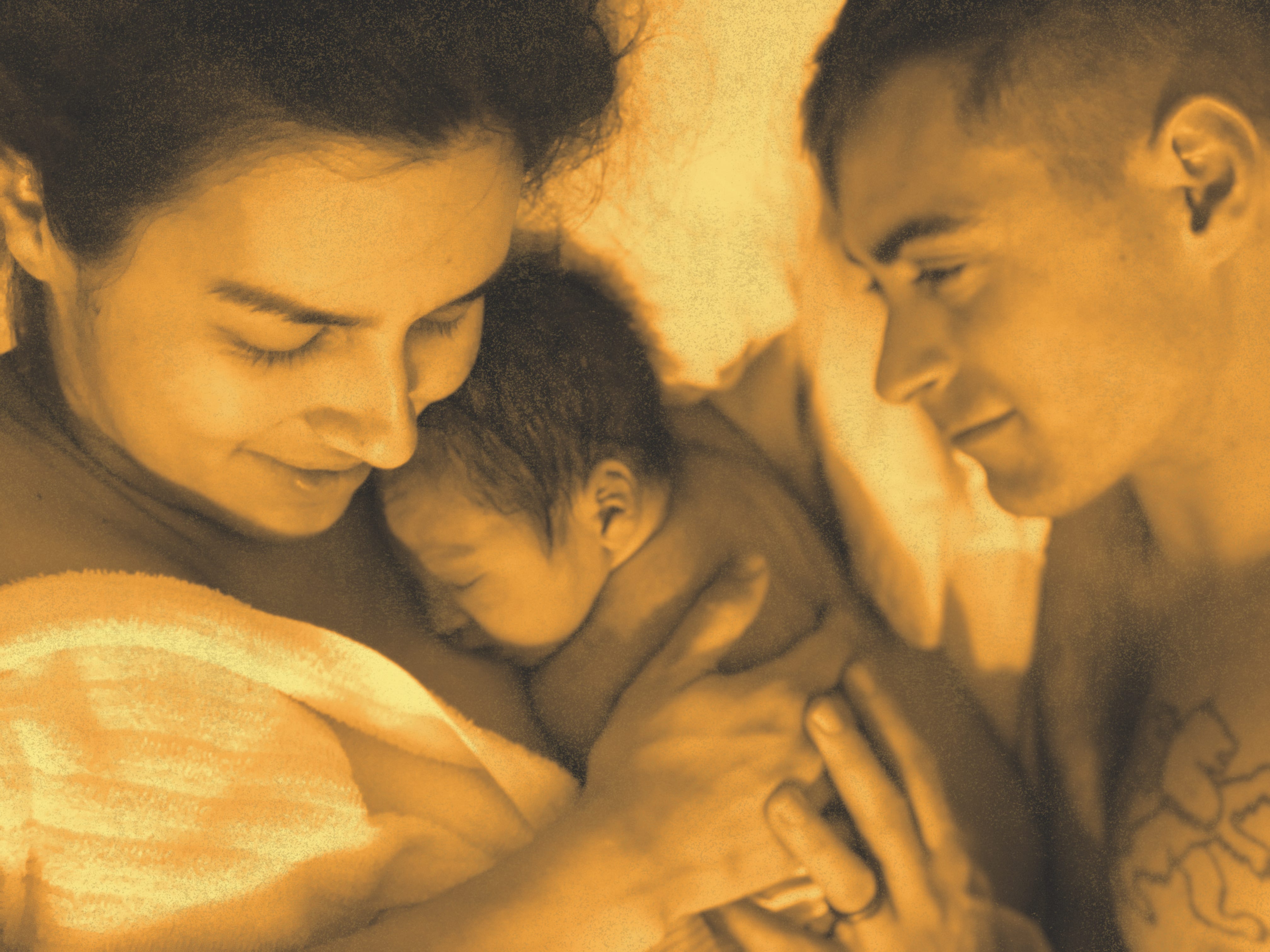
In 2019, my wife and I experienced a miscarriage.
It was our first pregnancy, and the pain of that loss was strange and profound. We had written letters to our baby, imagining the future we would share. But before we could meet her, we had to give her a name and lay her to rest.
We named her Aurora, after the Greek goddess of the dawn, whose tears wet the earth in dew.
That was one of the few times in my life I’ve come face to face with death. The hole this dark thief leaves behind is a wound in reality itself—one that cannot be filled.
I wrote a song for her:
“The flame it laps
These twigs they smoke and crack
From Dust to dust
From ash we fall to ash
But oh the light
with-in you won’t grow dark
It bathes us all
in resurrections spark.
Nine months later, God blessed us with our son, Marcellino. Yet, Aurora’s loss has left a permanent mark on me. Since then, I haven’t been able to watch a film where a parent loses a child without tears. That experience changed me.
And now, at Christmas, we celebrate another child’s birth.
A boy born to defeat death. A boy born to tear the veil between the living and the lost.
We celebrate. We enjoy. We treasure the moments. We create the best memories we can.
But there are holes all around us.
Last Christmas, Pop Pop and Nana were still with us. Michaela—my brother’s fiancée—was in the hospital, and we still had hope she would recover. We thought my brother might get his happily ever after.
And Luke. Luke would have dropped by for cake, but a few years ago, he hit a stone wall with his car and never came home.
Those who suffer know the paradox of this season. This celebration is more than a season of remembrance. It’s more than looking back at a moment when heaven and earth gave birth to God.
It’s a yearning.
It’s a longing for the second coming of the King.
The King who crushed the tail of the dark serpent beneath his heel but has not yet crushed his head. The light of the world, born in the darkest time of the year.
The paradox of this season is that it is a celebration of hope.
But what is hope?
Hope is the pain of wanting. It is the ache of desiring something that has not yet come to pass.
The thing about hope is that it hurts. It’s easier to avoid that ache. It’s easier to let the cheap tinsel, the presents, and the food be all that Christmas is—as thin a thing as the 25-cent wrapping paper it came wrapped in.
But hope—the kind of hope that yearns for the return of the King who promised he’d come back again and make all things right—is almost unbearable. It’s been 2000s years, after all.
And yet, to steel our hearts against that hope is to close them to joy as well.
Kahlil Gibran wrote:
“But if in your fear you would seek only love’s peace and love’s pleasure,
Then it is better for you that you cover your nakedness and pass out of love’s threshing-floor,
Into the seasonless world where you shall laugh, but not all of your laughter, and weep, but not all of your tears.”
To hope is to embrace the full spectrum of human experience: to weep all your tears and to laugh all your laughs.
Christ will come again.
Our reunions will be sweet. He will turn our tears of mourning into shouts of joy.
This is what we cling to.
We mourn. We laugh. And we wait for the day when every tear will be wiped away, and all will be right again.
Christ will come again.
Comments
Nothing yet. Say the first thing.
Sign in to join the conversation.