
The past week, compared to previous ones, has not been marked by a large number of liberated or captured settlements. The troops are clearing liberated areas' terrain within their zones of responsibility, saturating them with holding units, conducting rotations, and creating a network of dispersed ammunition and logistics storage facilities. All of this activity is necessary before conducting operations to seize large enemy defense areas. This lull is very deceptive. In fact, on most operational directions and sectors, significant changes are occurring, the analysis of which allows for assumptions about preparations for broad operational-strategic actions by the Russian Armed Forces.
Firstly: there is methodical, daily combat work underway to destroy the fuel-energy and industrial structure of the Ukrainian Armed Forces in the operational and strategic depth of Ukrainian territory. The ports of Odessa and Odessa Oblast, through which the main flow of resource support for the Ukrainian Armed Forces passes, have been practically blockaded. Ukrainian tankers and dry cargo ships are being destroyed at sea. In the operational depth of the Ukrainian defense, fuel and lubricant storage facilities and refueling points are being destroyed; fire strikes are being delivered against the transport network; and rolling stock and traction equipment on the railways are being put out of action. Reconnaissance, detection, and destruction of command posts and UAV control points of the enemy are ongoing.
Secondly: indirect, fragmentary information (the normal state of information in the "fog of war") cautiously hints at a regrouping of the Russian Armed Forces on practically all fronts of the Special Military Operation.
Thirdly: the past week has been characterized by the advance of the Russian Armed Forces over vast areas of the theater of operations. Salients in the line of contact are being cut off, and areas of terrain between settlements are being brought under control; bridgeheads and distributed starting areas are being prepared on them. This is aimed at ensuring the rapid and inconspicuous (to the enemy) exit of Russian units from these areas to their starting lines for simultaneous coordinated actions in accordance with the command's plan to split the enemy's defense and envelop its defensive lines.
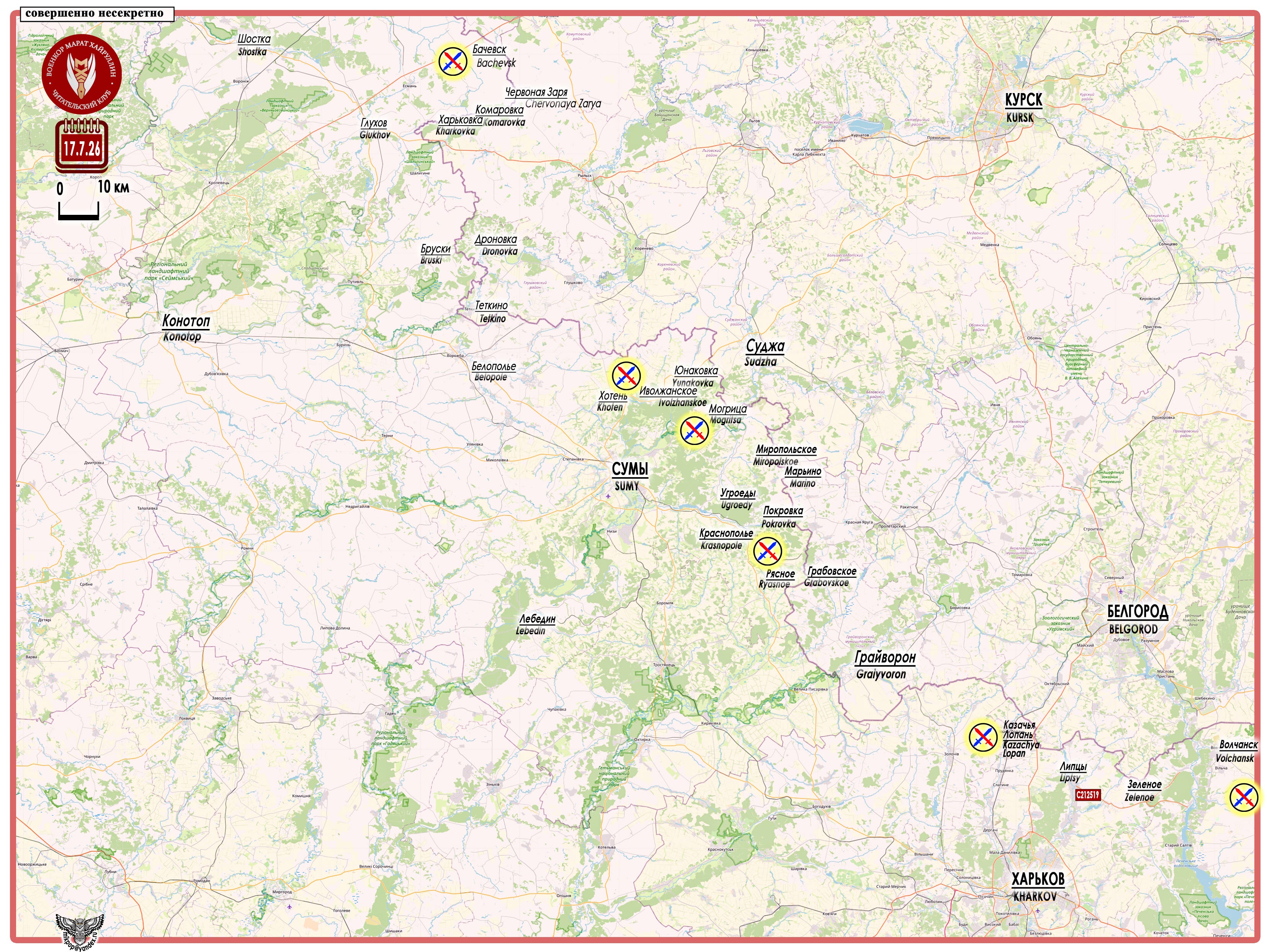
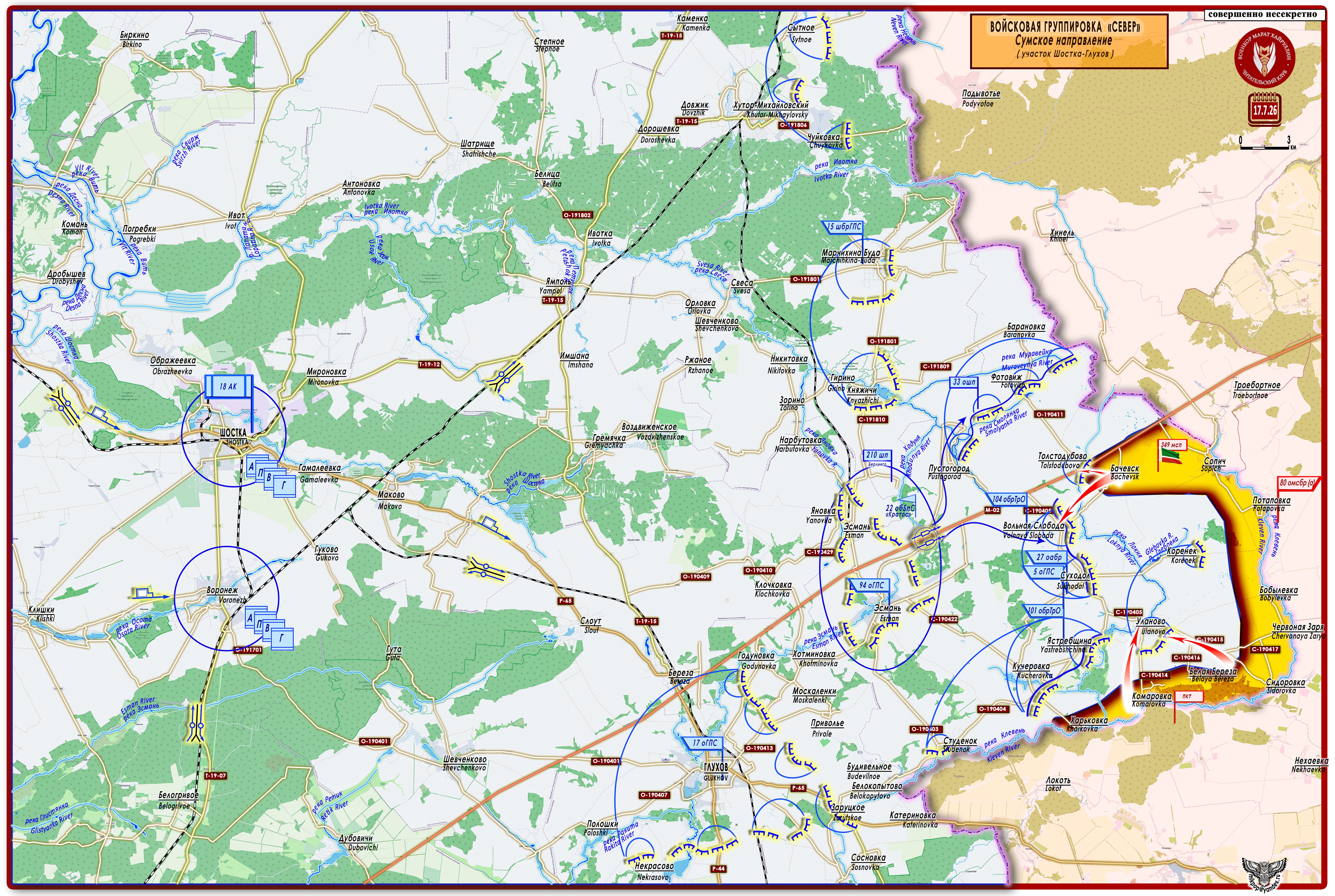
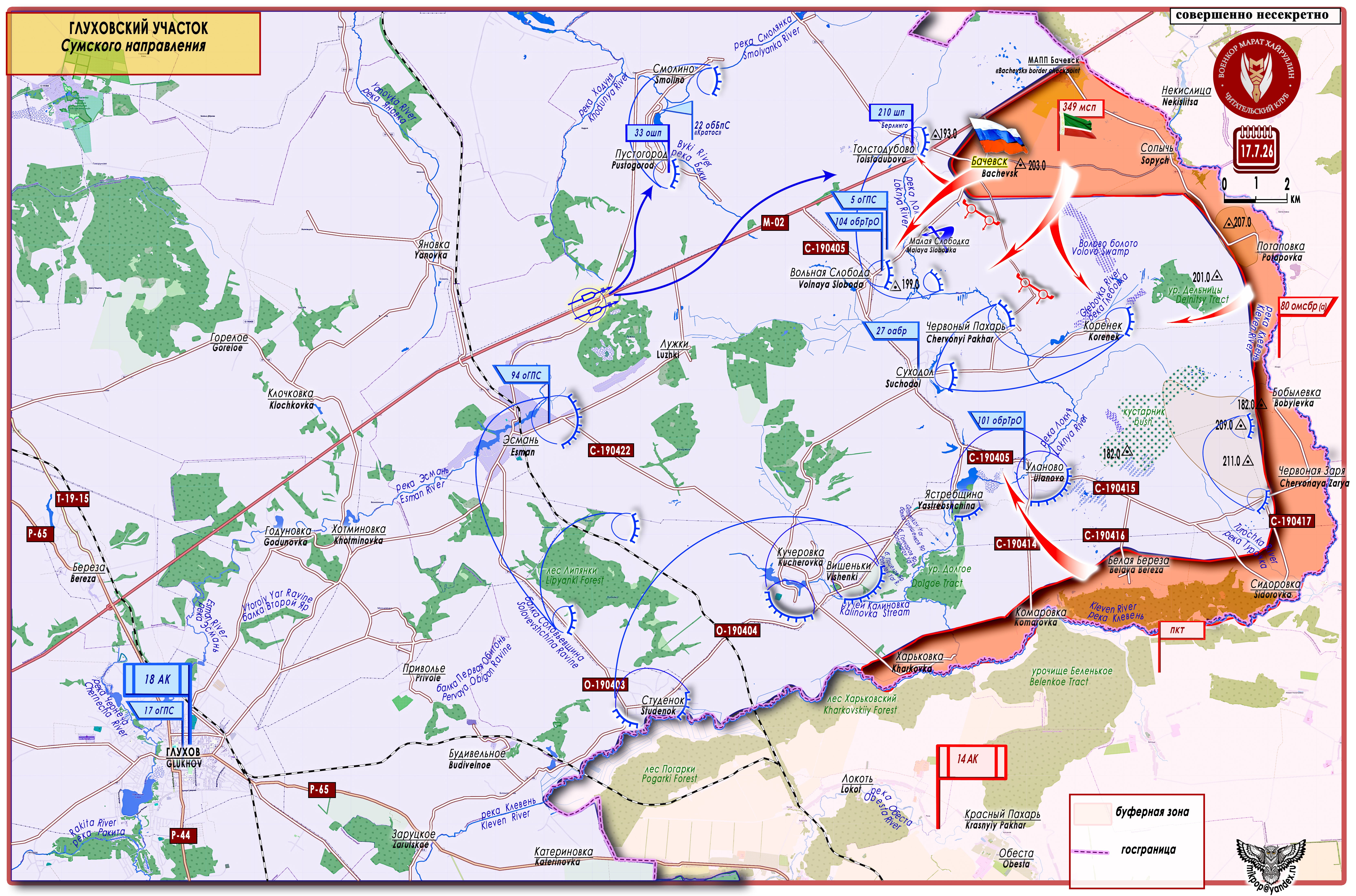
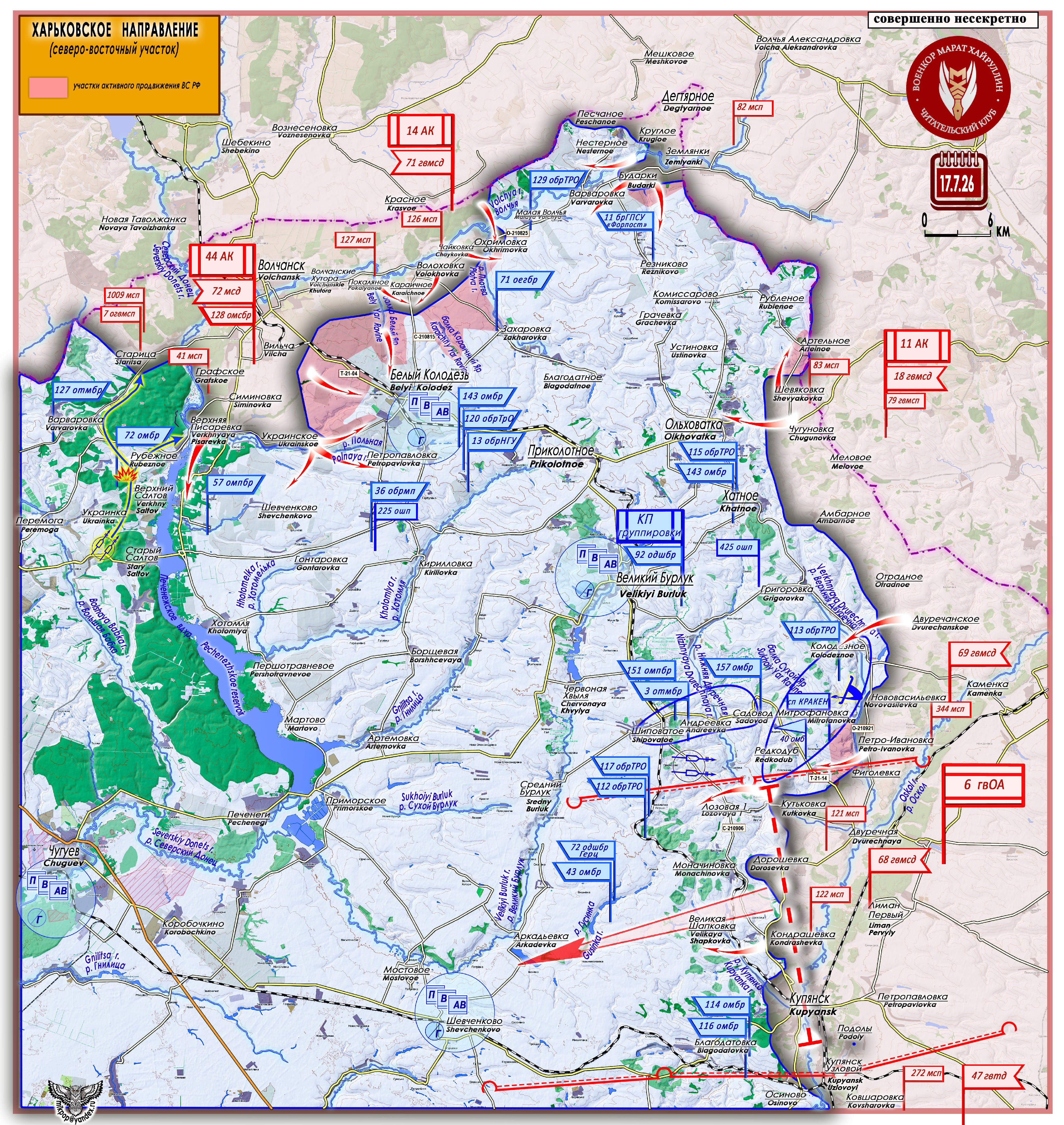
Sectors across the entire line of control of the "North" group are active. Through these actions, the group's formations are expanding the area of the buffer zone while simultaneously creating tension in the enemy's nodal defense areas, forcing them to reduce their activity on other sectors and constantly move forces and assets along the line of contact over long distances. For the Ukrainian command, such maneuvers are already becoming a problem due to the combined issues with the railways and the fire impact of Russian aviation and UAV units on radial routes and rocades (rocades run parallel to the line of contact and radial routes intersect the line of contact) in both the strategic and operational-tactical depth of the Ukrainian Armed Forces' disposition and distribution of forces and assets.
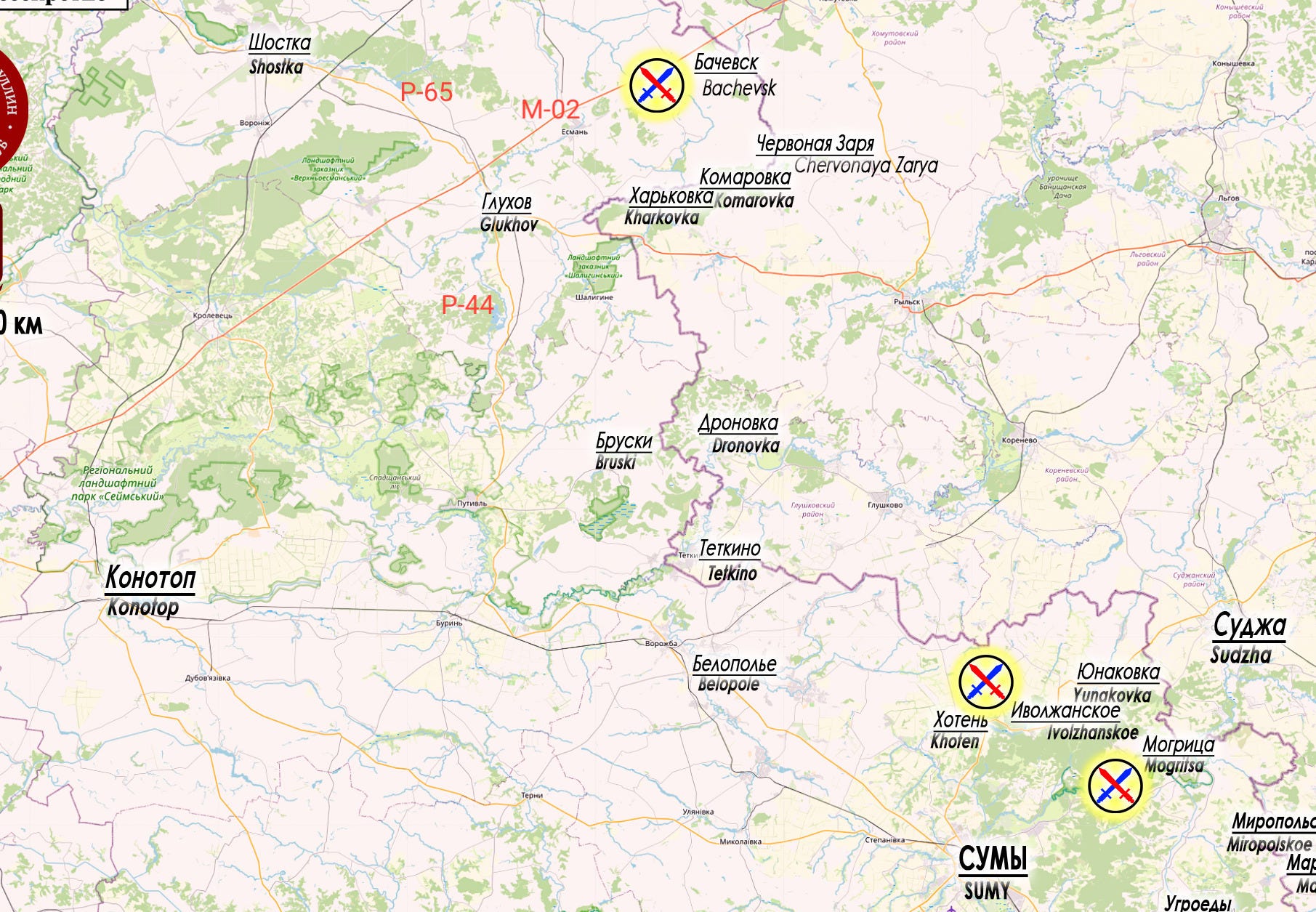
On July 11, on the farthest sector of the right flank of the "North" Group (Sumy direction, Shostka-Glukhov sector), the settlement of Bachevsk was liberated.
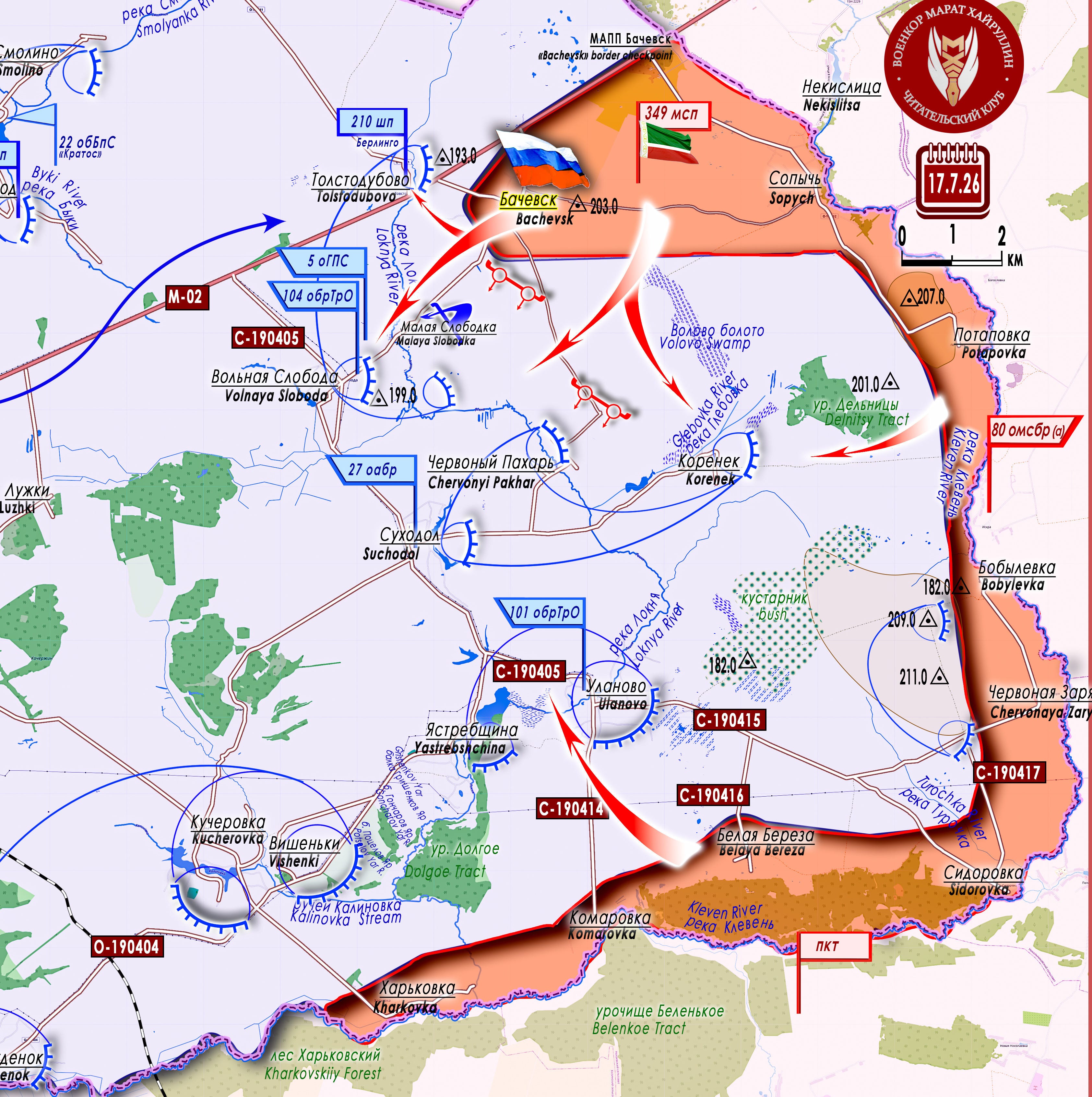
Having regrouped its forces, the group's command began the elimination of a number of Ukrainian Armed Forces defense areas in this sector: from the Bachevsk bridgehead, pressure began on the Ukrainian Armed Forces' defense area of Tolstodubovo to secure its right flank, while simultaneously advancing along the Bachevsk - Malaya Sloboda - Volnaya Sloboda axis, enveloping the left flank of the Ukrainian defense sector of Volnaya Sloboda - Sukhodol, which is an integral part of the enemy's defensive line of Tolstodubovo - Sukhodol - Ulanovo - Kucherovka. Russian assault units have entered the settlement of Malaya Sloboda and are conducting its clearance. Simultaneously, assault operations are underway in the settlement of Ulanovo. Thus, Russian Armed Forces units are splitting the enemy's defense and forcing them to withdraw units from the territory of the operational salient of Volnaya Sloboda - Korenek - Yastrebishchina.
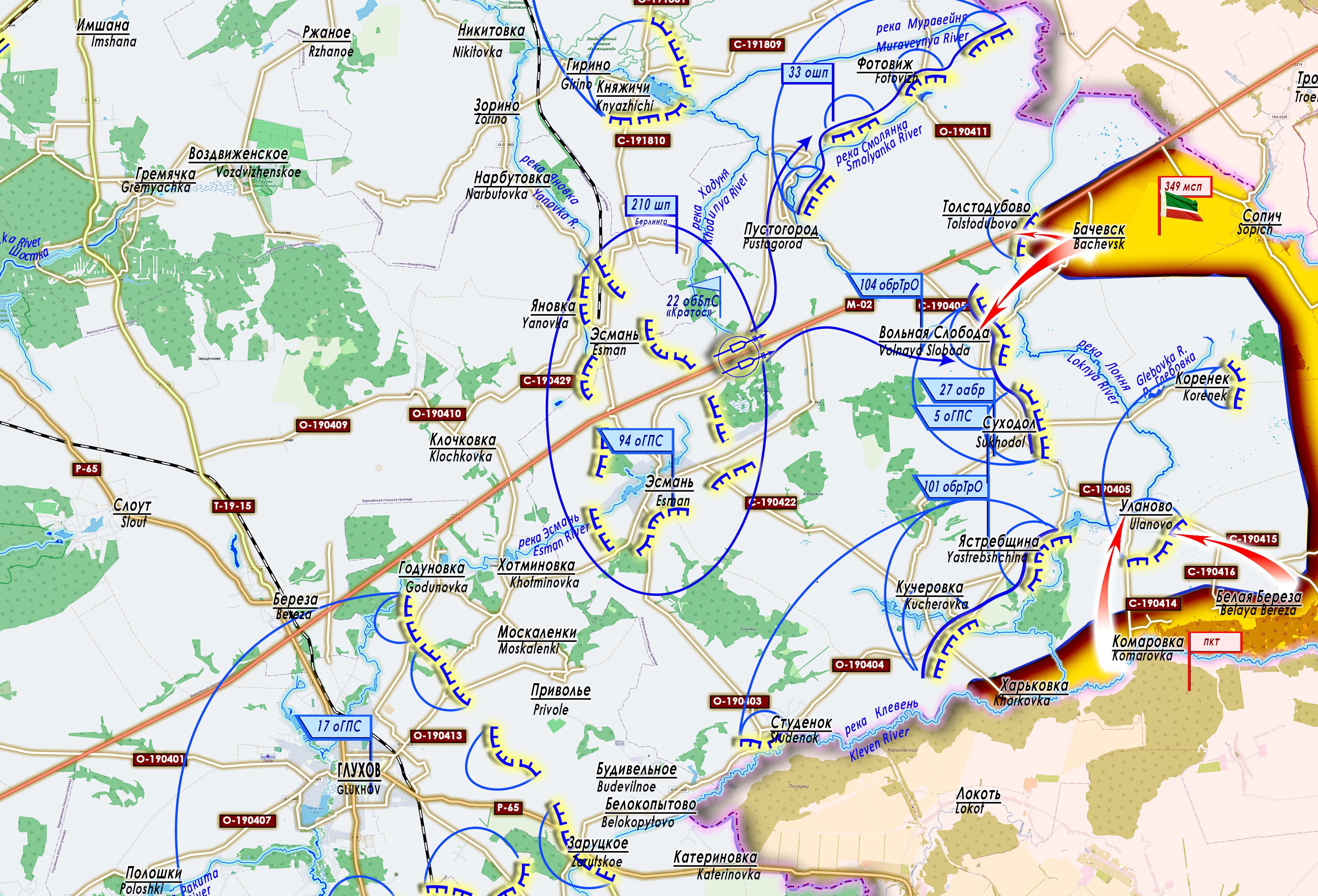
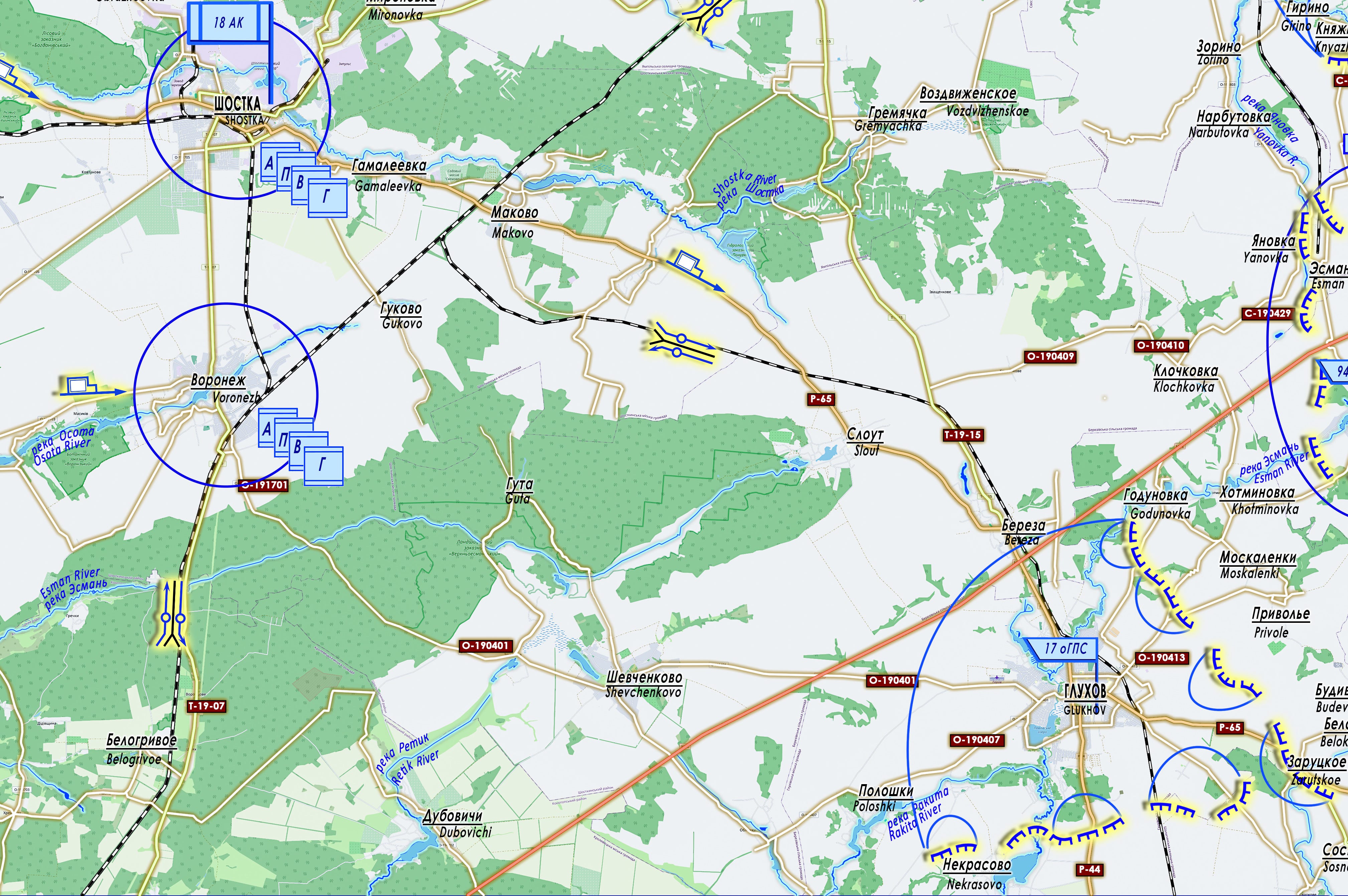
The advance of Russian units to the P-44 highway, which in the city of Glukhov transitions into the P-65 and continues further northwest to the city of Shostka, will allow the cutting of the strategic component rocade connecting Chernigov, Sumy, Kharkov, and Poltava Oblasts of Ukraine. Cutting it in the Glukhov area will create problems for the Konotop operational transport hub of the Ukrainian Armed Forces. After this (and possibly during the process), movement is likely to begin in the Tetkino - Ryzhevka salient area, where in 2025 the Ukrainian Armed Forces unsuccessfully attempted to break into the territory of Kursk Oblast.
Understanding the importance of this sector, the Ukrainian command was forced to transfer part of its forces and assets to the Glukhov area to reinforce the Marchikhina Buda - Esman - Studenok defensive line, which protects the forefield of the Glukhov transport-logistics hub.
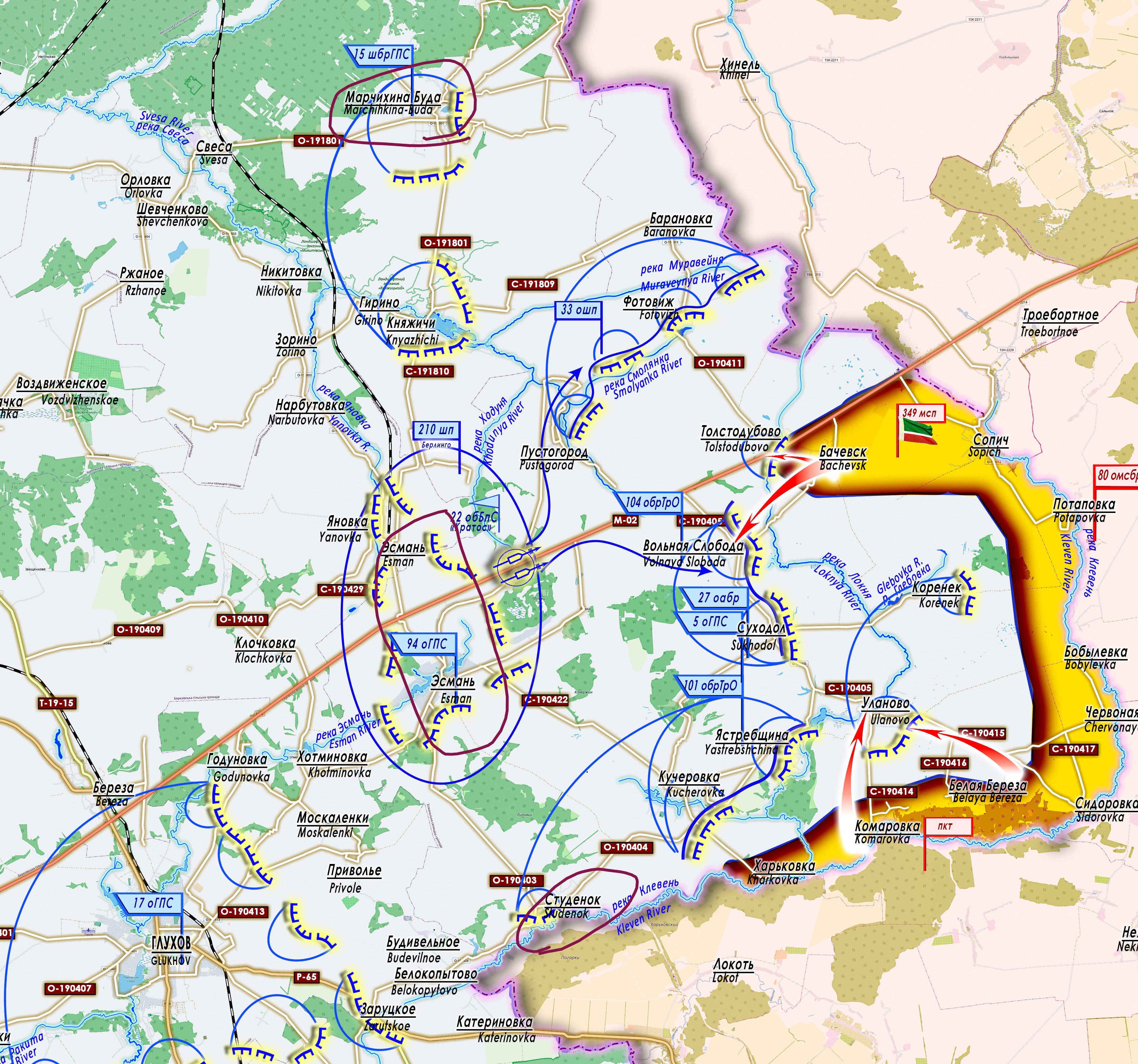
In this area, units of the 33rd Separate Assault Regiment, the 210th Assault Regiment ("Berlingo"), and the 22nd Separate Battalion of Unmanned Forces ("Kratos") have been spotted. In addition, the command of the 18th Army Corps of the Ukrainian Armed Forces is sending units of local territorial formations to reinforce the 104th Separate Territorial Defense Brigade.
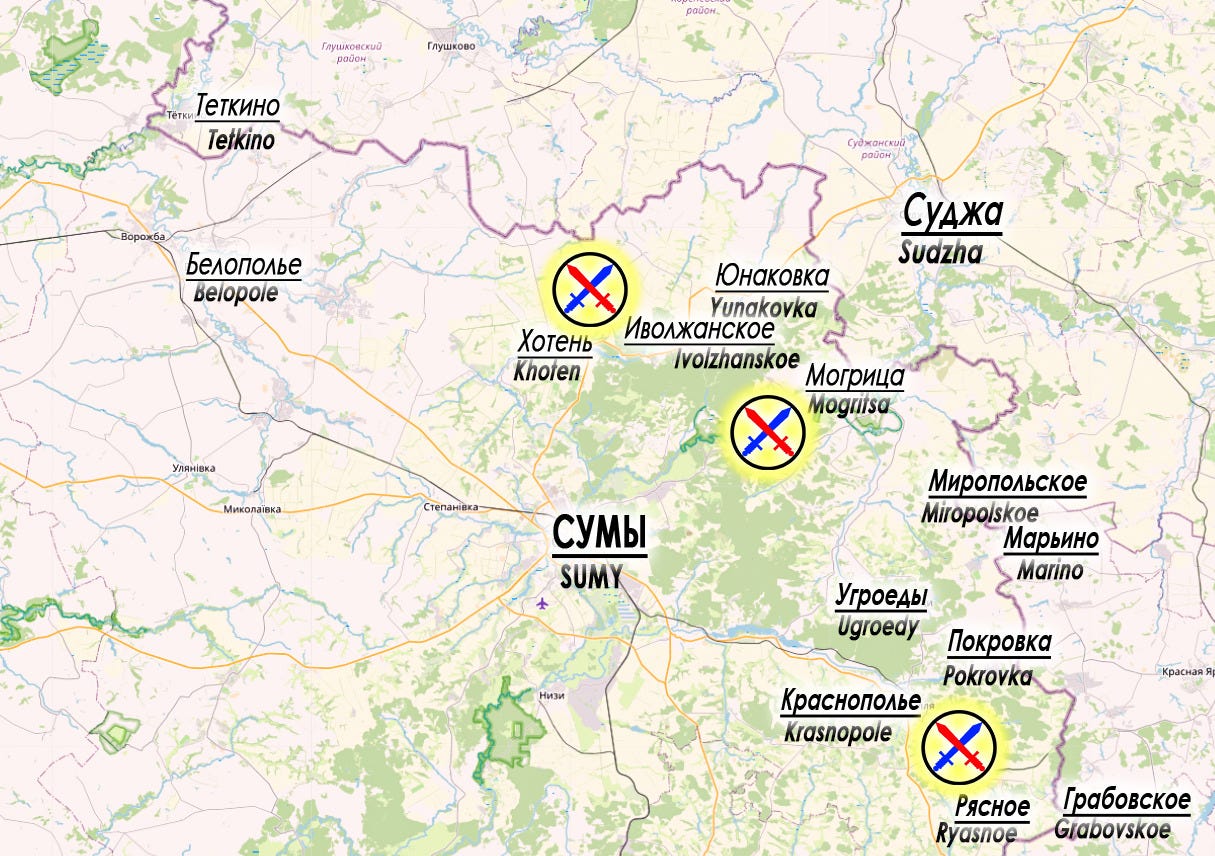
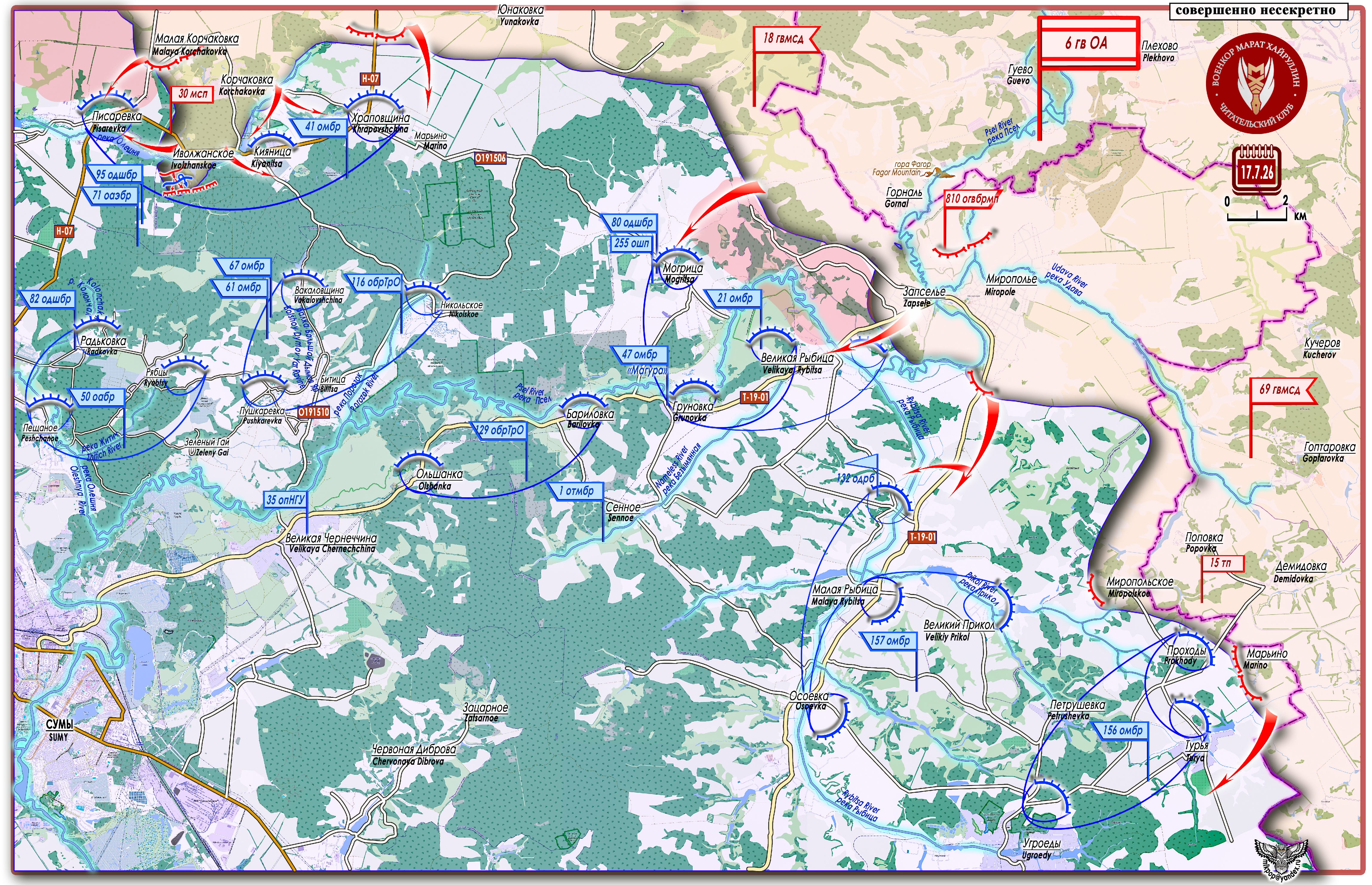
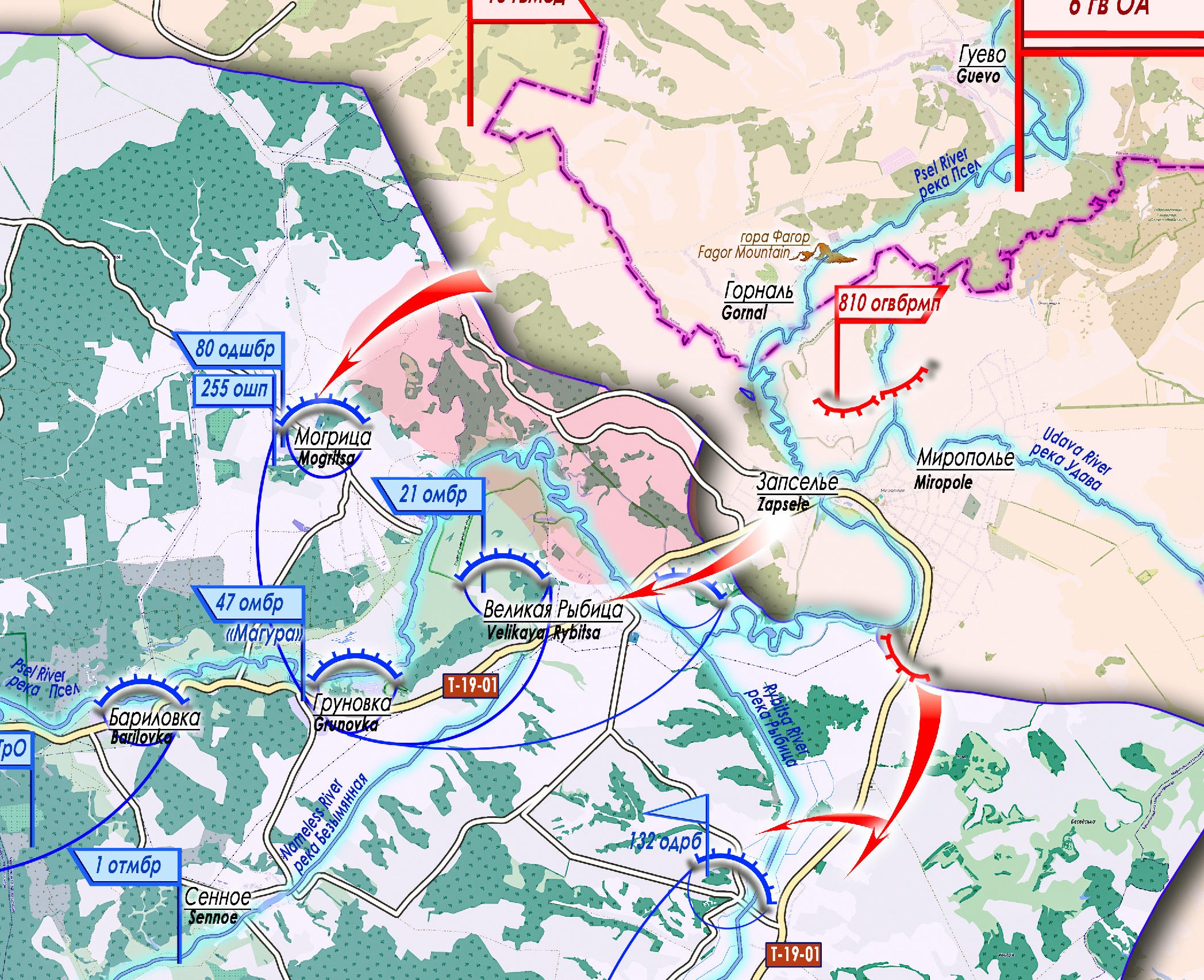
In the center of the Sumy direction, active operations are ongoing in the areas of Khoten, Pisarevka, and further east on the Mogritsa - Velikaya Rybitsa line. Here, Russian units are reaching the forefield of the city of Sumy and forming an eastern envelopment of the Sumy defensive hub. The enemy is forced to reinforce its grouping by pulling units from other sectors.
On the neighboring Kharkov direction, all sectors of the buffer zone are also active. Russian Armed Forces units are consolidating in the settlement of Kazachya Lopan.
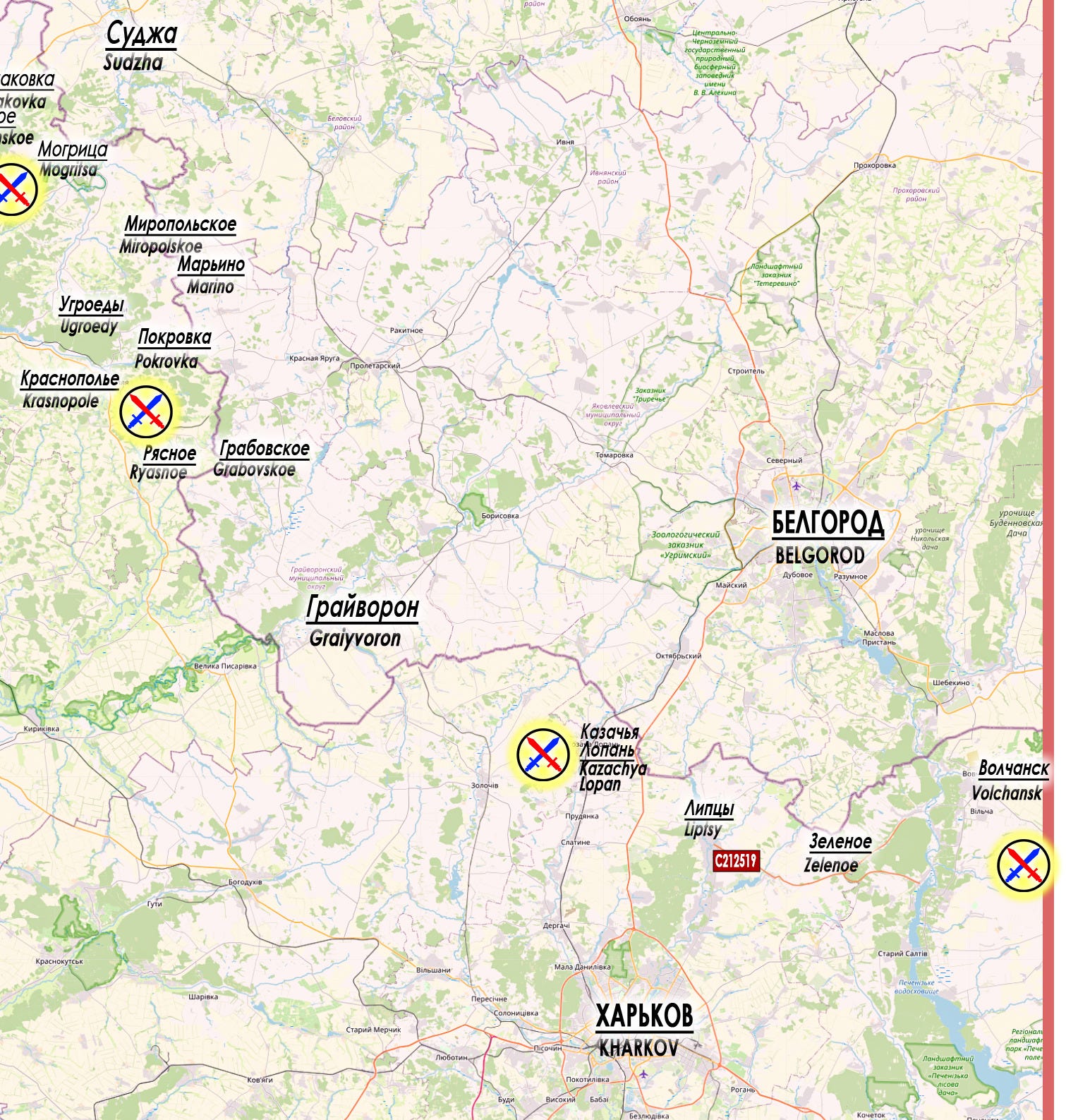
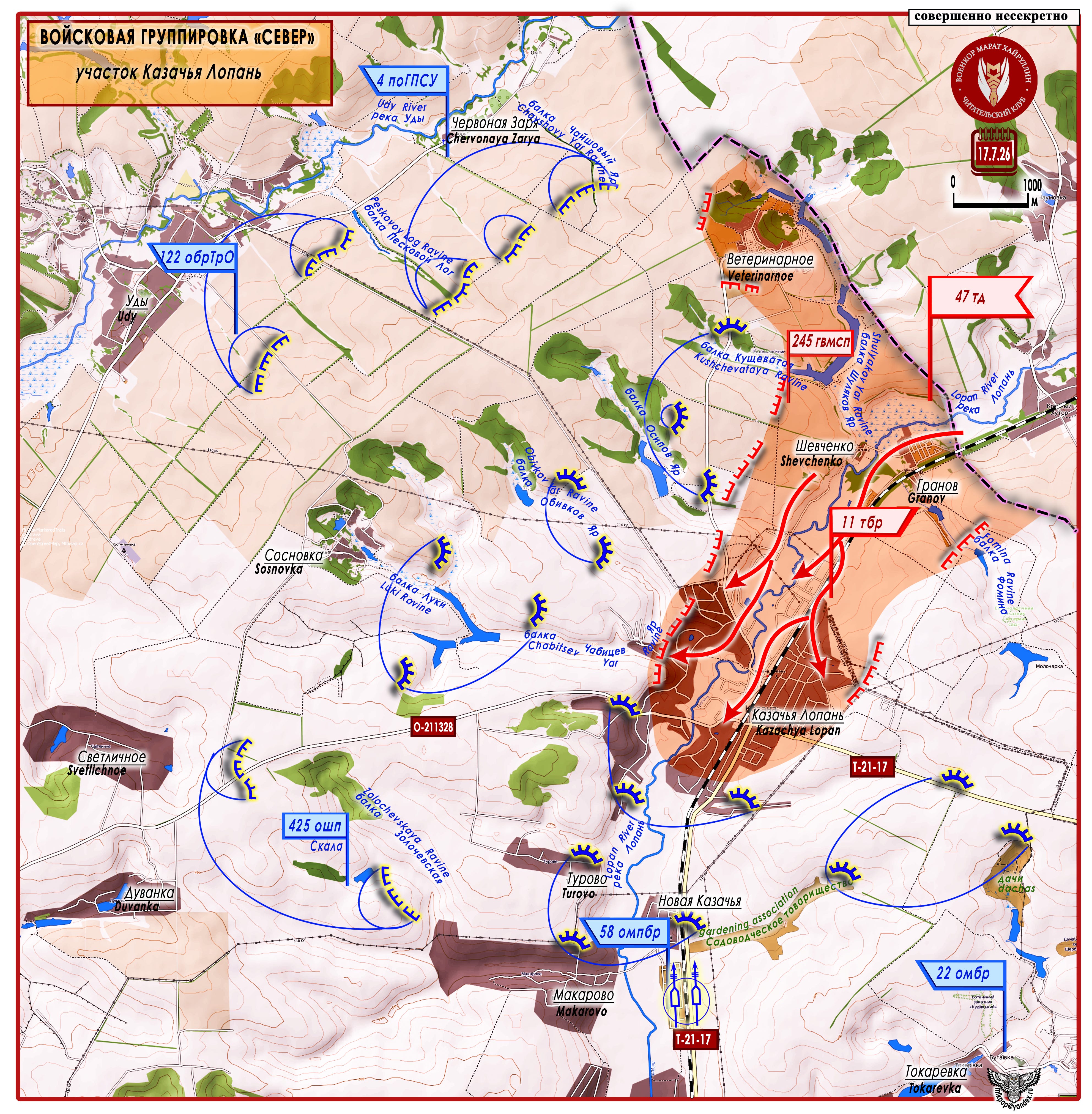
To reinforce its grouping in this area, the Ukrainian command transferred the 58th Separate Motorized Infantry Brigade from the Bely Kolodez area, where units of the "North" Group are developing an offensive on the Bely Kolodez transport-logistics hub from three directions.
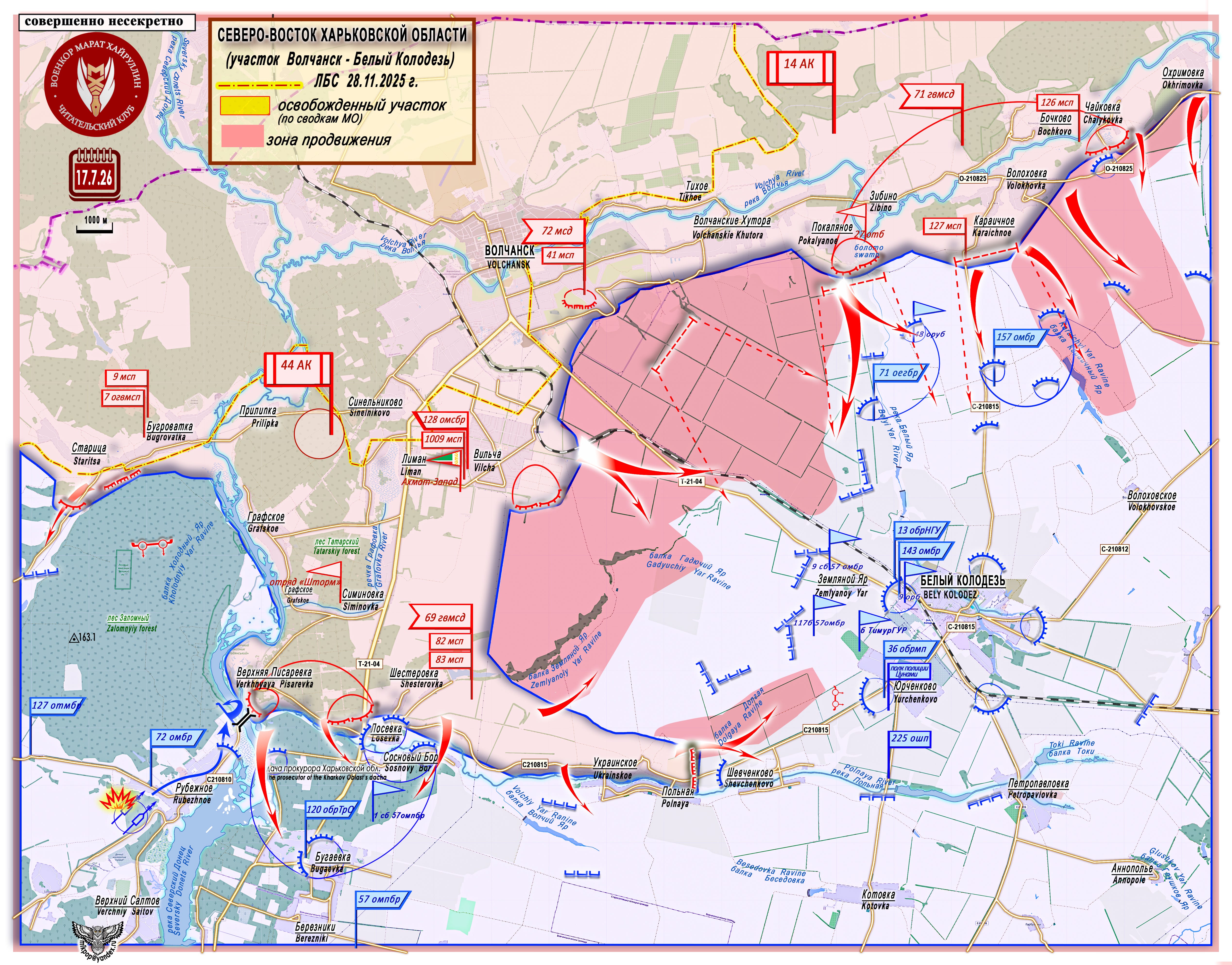
Simultaneously, an offensive is underway from the settlements around Volokhovka toward Zakharovka, splitting the enemy's defense into pockets of resistance. Forward Russian units are in the settlement of Zakharovka and are fighting for its complete liberation.
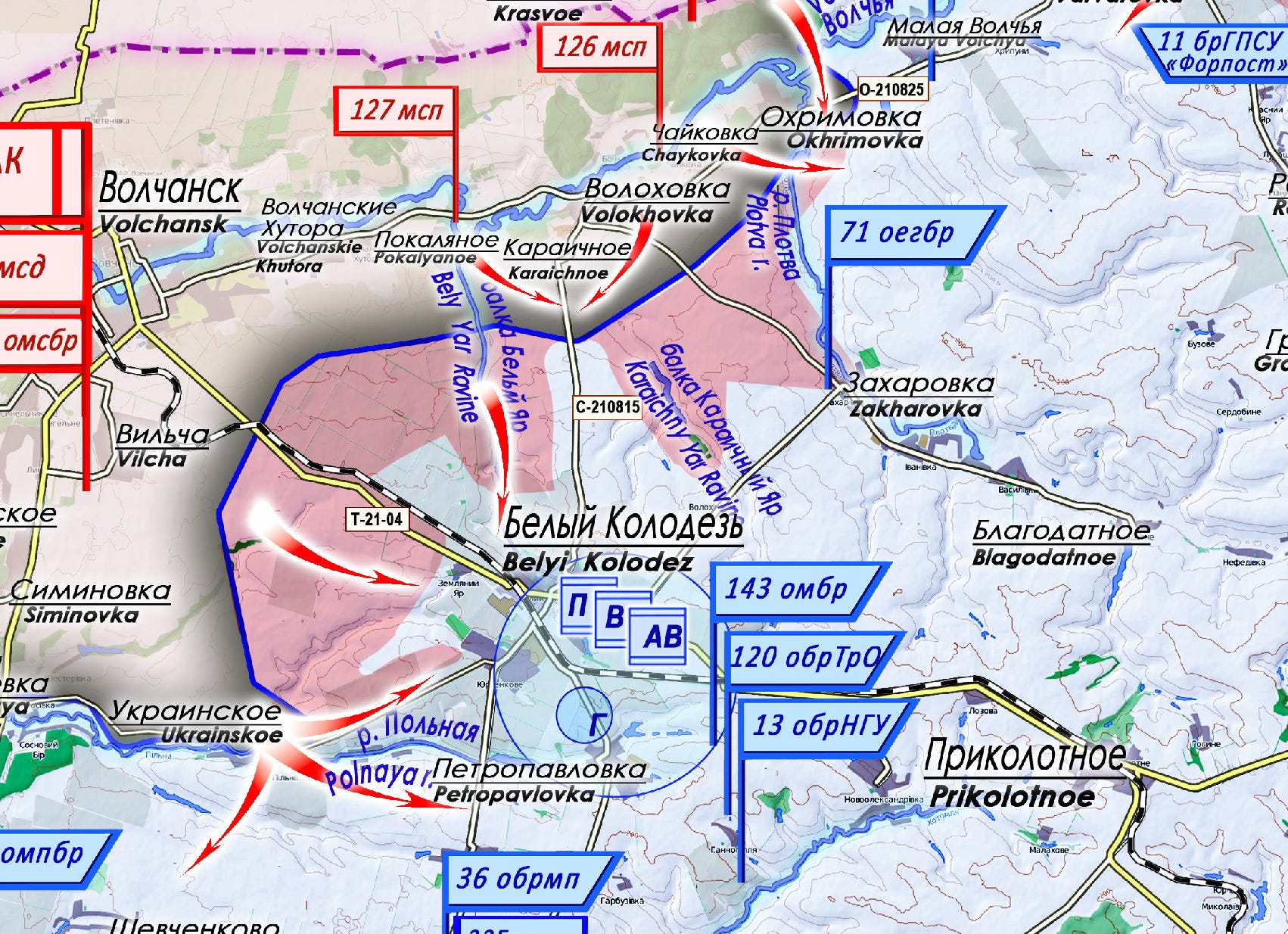
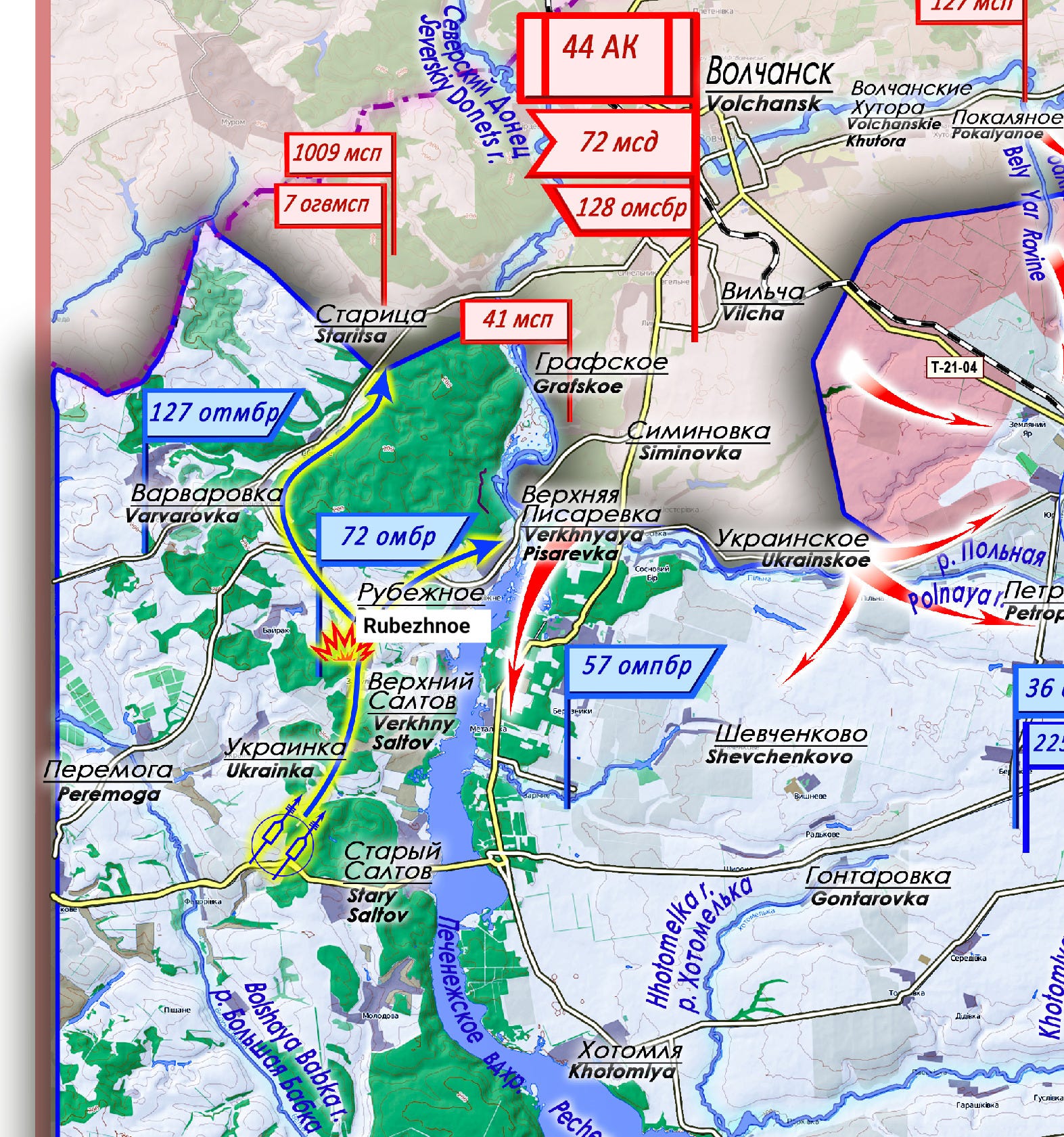
The Ukrainian command attempted to transfer part of its forces and assets from the settlement of Stary Saltov to the Rubezhnoe - Staritsa area for a counterattack against the Russian right flank in this sector. Ukrainian units were partially destroyed on the march and scattered south of the settlement of Rubezhnoe.
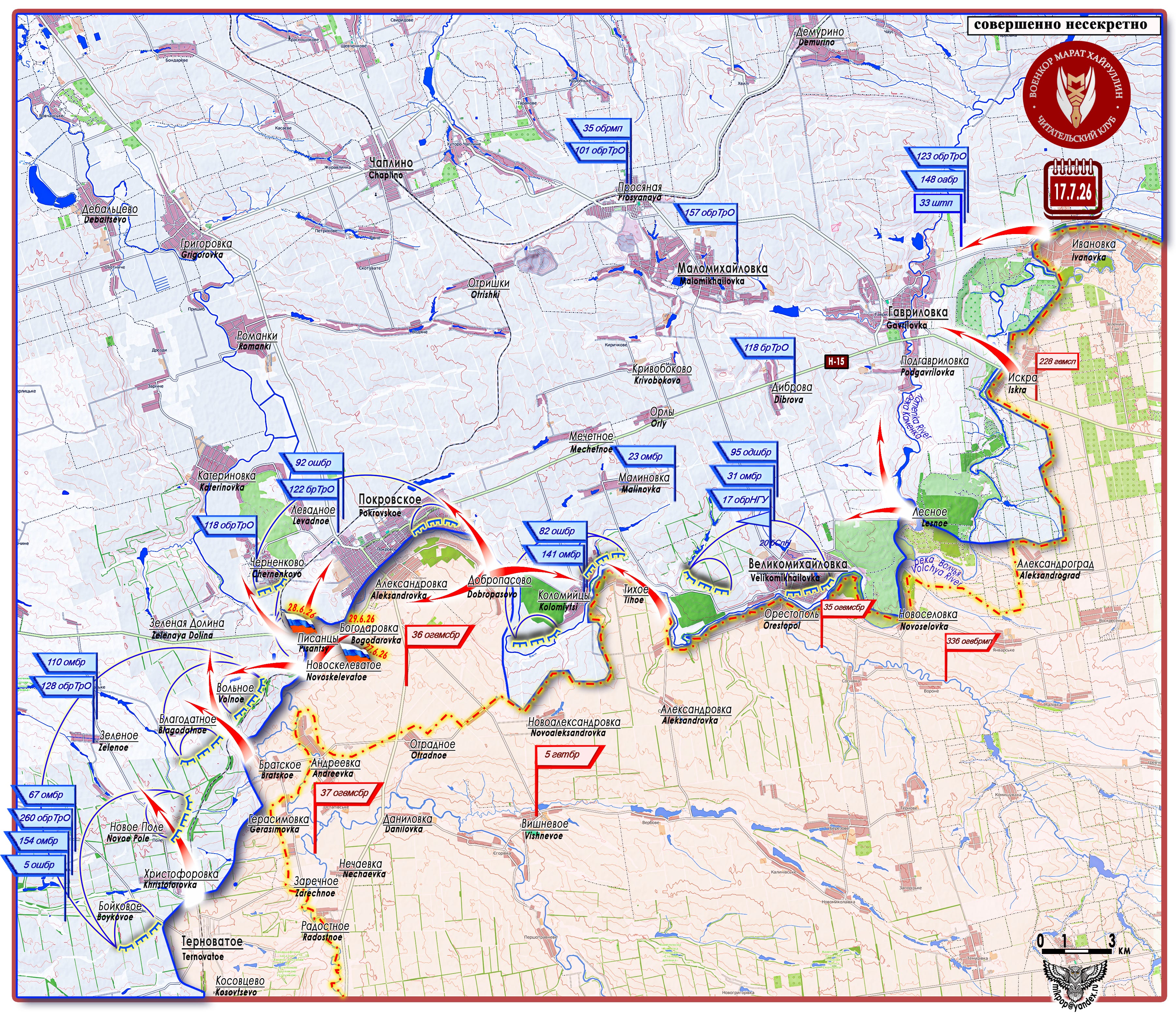
The activity of the "North" Group on the Sumy and Kharkov directions, the "West" Group in the Krasny Liman area with the threat of a northern envelopment of the enemy's Slavyansk defensive hub, and the "South" Group on the eastern forefield of the city of Kramatorsk, where the liberation of the settlement of Vasyutinskoye is being completed, are forcing the Ukrainian command to react and "patch the holes in its defense." After inspecting the Pokrovskoe - Gavrilovka area, the Commander-in-Chief of the Ukrainian Armed Forces, Syrsky, halted the Ukrainian "counter-offensive" in this sector, leaving only a minimum of forces to contain units of the "East" Group, and is regrouping part of its forces and assets to the Sumy and Kharkov directions. It is quite likely that the Russian command will take advantage of this.
Information has appeared that the Ukrainian Armed Forces have begun forming five new brigades. With whom, with what, and with what quality they will create them (and by what deadlines) — we can only guess…
General conclusion: The Russian Armed Forces have exhausted the enemy in active defense in the center and southern part of the line of contact. Through active operations in the buffer zone sectors and in the Slavyansk-Kramatorsk agglomeration area, they have forced the enemy to conduct a large-scale regrouping into the zones of responsibility of the Russian "North," "West," and "South" Groups. Simultaneously, they are disrupting the supply and support of the Ukrainian Armed Forces in the operational-strategic zone, pinning down their maneuver.
We will see the results of these actions and their objectives in the near future.
Comments
Nothing yet. Say the first thing.
Sign in to join the conversation.