
Lately, I’ve noticed how much of the conversation around technology revolves around learning how to manage it.
How do we protect our attention? How do we stay mentally healthy in a world of constant notifications? How do we use AI ethically? How do we make sure technology serves us instead of the other way around? And, how do we preserve our humanity?
These are important questions, and I’m grateful for the wisdom people share. But when all our energy goes toward managing, optimizing, and guarding ourselves against technology, it’s technology that remains the center of our focus. We stay stuck reacting to the digital world rather than simply living in the real one.
Perhaps that’s why all this management can leave us feeling anxious, weary, and exhausted.
What if preserving our humanity isn’t about learning how to cope, but returning to what has always made us human?
Technology will continue to change. New devices will appear, and life will keep moving fast. Whether we welcome it or adapt to it, much of it is simply the landscape we now live in. But preserving our humanity was never meant to be another system to manage or problem to solve. It’s about refocusing our attention to the things that have always sustained us.
When I ask myself what human beings have actually spent their time doing for thousands of years, the answer isn’t complicated.
We have always gathered around food.
Whether through foraging and hunting, tending gardens, baking bread, or preparing a simple meal after a long day, making food has never been just about meeting our physical needs. Making a meal, setting the table, lighting a candle, and lingering in conversation long after the plates have been cleared nourishes not only our body, but our mind and soul as well.
We have always gathered around a fire.
Long before individual screens began pulling our attention into separate worlds, a fire served as a central place of warmth, safety, and community. Gathering around a fire invites us to linger, listen, laugh, and tell stories.
We have always told stories.
Storytelling is as old as time itself. It helps us learn about the world, make sense of where we came from, and pass down values, identity, and love across generations.
We have always been creative beings.
Whether we are painting, writing, or using our hands to build something physical, engaging our creativity shifts our mind from consumption to contribution, from what we can gain to what we can offer the world.
And when life becomes too loud, we have always known where to go.
We seek out nature.
We walk among the trees.
We sit beside a lake.
We slow down long enough to notice instead of produce.
Deep down, I think we already know what makes us human.
A meal shared around a table.
A walk in the woods.
A fire that gathers people close.
Our hands covered in flour, paint, or soil.
Stories passed from one generation to the next.
Perhaps preserving our humanity isn’t another problem to solve.
Perhaps it begins by simply returning to the ordinary rhythms that have shaped humanity all along.
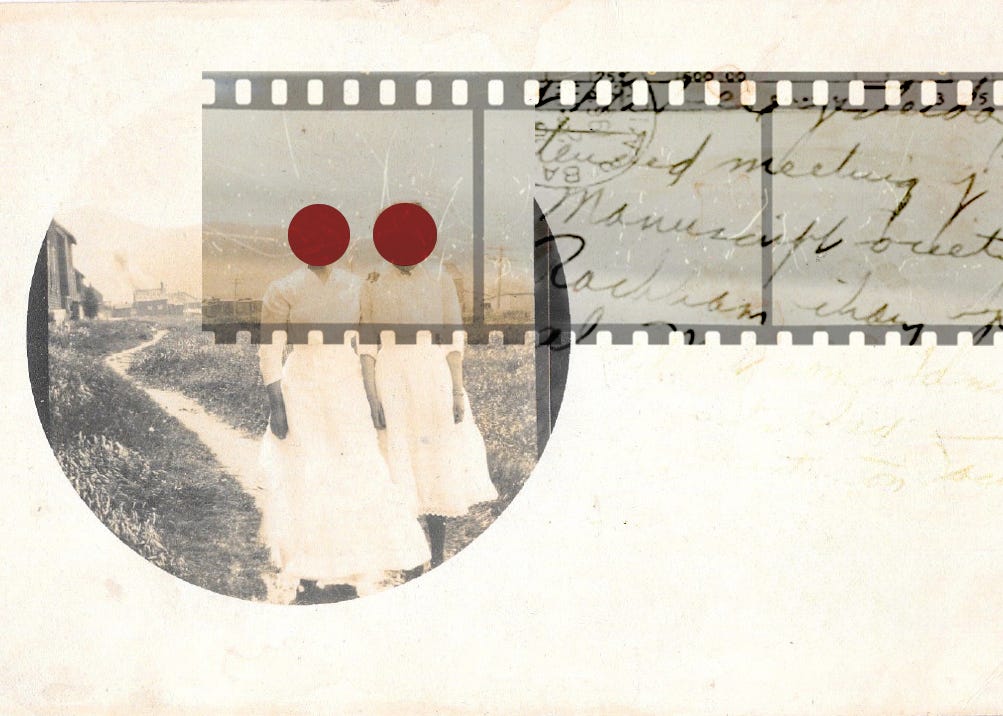
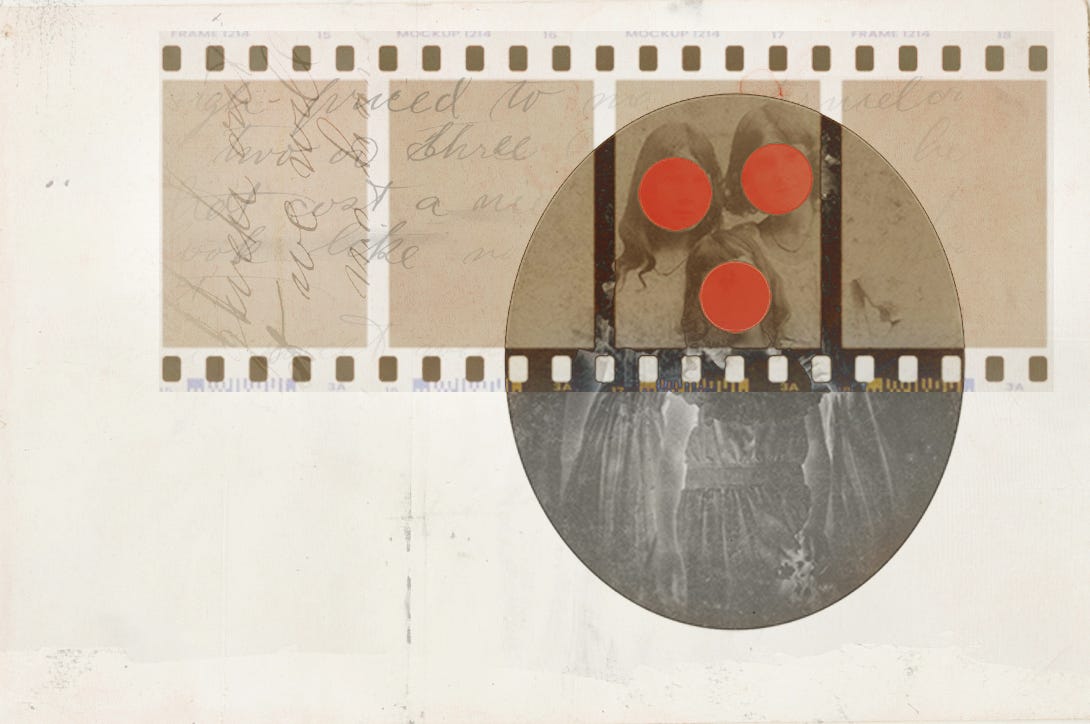
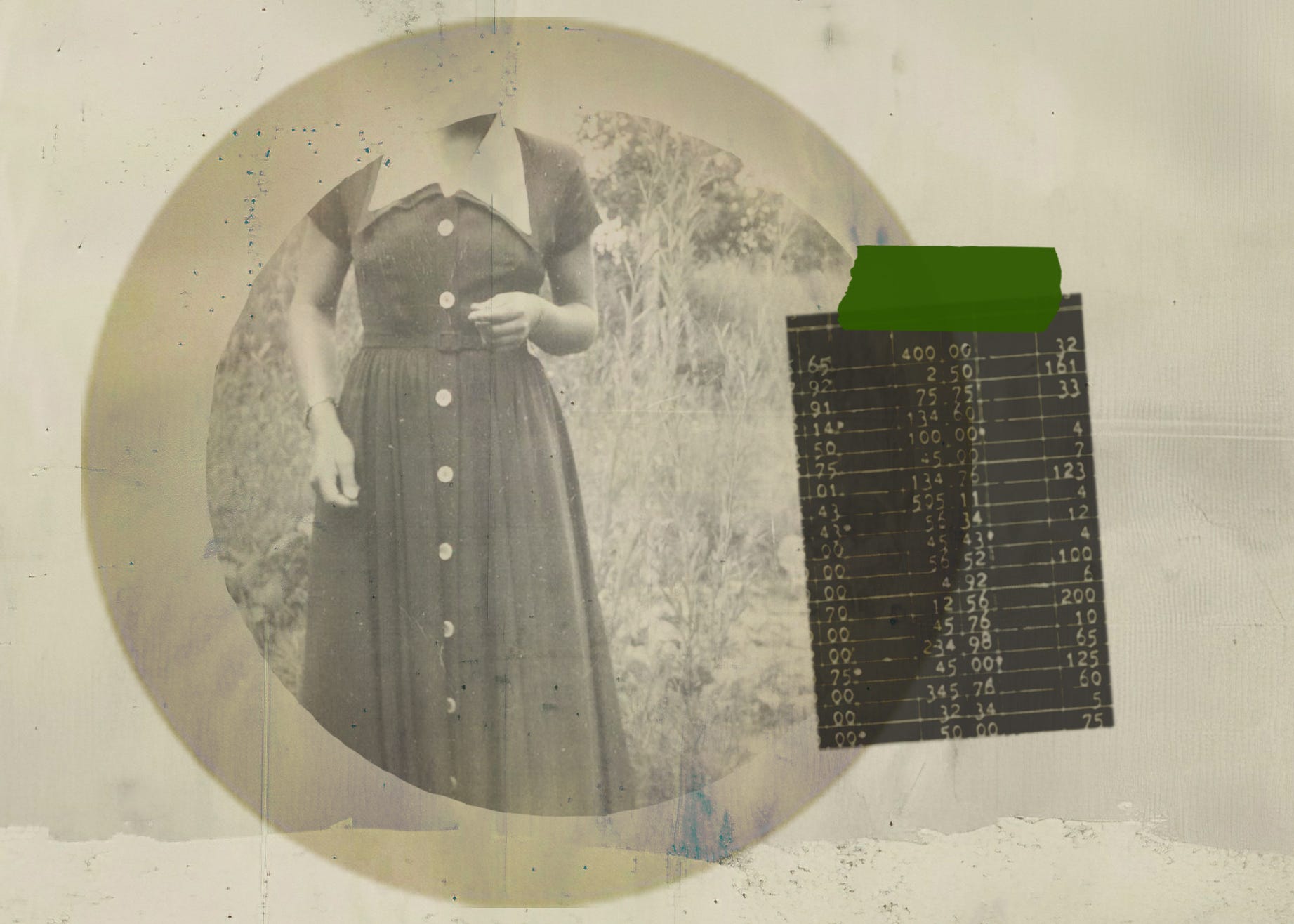
The images above are part of an emerging series titled Colors Blur, Memories Fade, Truth Remains.
Combining vintage ephemera, film strips, and found photographs, I explore the space between memory and the present moment.
By obscuring the faces of individual figures, I intentionally shift the focus away from personal identity and toward our shared human experience.
The film strips act as fragments of memory, offering glimpses into the past without revealing the full story, while recurring circular shapes reflect the rhythms and cycles of life. Though time blurs details and memories fade, the deeper truths of our shared humanity remain.

Though I’ve taught multiple exposure photography many times, this course continues to evolve and grow right along with me.
This fall, I’m offering a revised six-week format. By meeting just once a week on Zoom for two hours, you’ll have more time and breathing room to dive into the assignments and truly embrace the experimental, playful nature of this technique.
Class Details:
When: Thursdays, starting October 1
Time: 11:00 AM – 1:00 PM Central
Where: Zoom
Comments
Nothing yet. Say the first thing.
Sign in to join the conversation.