
As far as the players were concerned and treated, a long and distinctly unproud record of administration characterised South African cricket until around 2003 when the World Cup was staged in the country for the first time.
In the pre-isolation era players were commodities, no more and no less, treated like the amateurs they were, barely being paid sufficient cash to cover expenses and subject to the whims of parochial selectors who granted favours to friends from preferred backgrounds.
Apartheid politics only began to feature in the mid to late 80s when Eddie Barlow was at the forefront of modest protests which drew the ire of the blinkered men in suits. Others, like Vince van der Bijl, grimaced and bore the reality, doing what they could towards a semblance of fairness and integration behind the scenes.
But they played the game, like Black and Coloured cricketers, purely for the love of the game, albeit in immeasurably greater comfort and privilege. Bizarrely, there was precious little sense of equality between the games’ bosses and the players in any part of the racial divide.
Then an even stranger thing happened. The divide between players and the administrators remained even after unity and the formation of the United Cricket Board of South Africa in 1994. The assumption that “players play and administrators do everything else” transcended generations and cultures.
The first generation of ‘new era’ internationals were institutionalised not to question anything. Dave Richardson, a partner in a PE law firm, was one of the few qualified to think of ‘business’, recalled: “We were told what we would be paid before the 1994 tours to Australia and England, and it was clear that we should be grateful.
“I thought ‘that doesn’t seem like very much’ but there were no thoughts of rocking the boat. Everybody was just so excited and it was more money than we’d ever been paid before.” There were no discussions, never mind negotiations, regarding fees or any other conditions.
It was far more stark at domestic level where contracts between players and unions, if they existed, weren’t worth the paper they were written on - because mostly they weren’t written on anything. A handshake from the president would have to suffice.
Even by the turn of the century players were routinely discarded in the event of serious injury or when deemed surplus to requirements. The spectre of directionless, abandoned sportsmen in their early 30s was a grim reality. No matter how much they had won, joy they had provided or money they generated for their teams.
Today South Africa’s professional cricketers are amongst the safest and secure in the world, on a legal par with those in England and Australia and well ahead of, say, the average state cricketer in India. Players in the rest of the world are still attempting to catch up.
Professional cricketers in South Africa have medical aid, a pension, access to legal and financial aid and, for over a decade, guidance from experts in gaining academic and career qualifications before their playing days are over. The country’s mainstream population may still be in denial about the taboo topics which have plagued cricketers for over a century - addiction, depression and family strains - but it’s cricketers are counselled and supported on a daily basis. Every single player has access to one of 14 full-time Development Officers.
The revenue generated in a digital world has increased exponentially in recent years. Until 20 years ago it provided a cash mountain for employers, especially from global events like World Cups. It was, and always should have been, paid to the players. Only at the very tip of the international pyramid did players and their agents have individual image rights agreements. Now, every Proteas squad shares as much as R20 million at a World Cup.
All of this progress, every single step towards fairness and equality, happened because of the formation of the SA Cricketers Association. The most challenging, occasionally brutal and often dispiriting battle took place 25 years ago between SACA and Cricket SA when the inaugural Memorandum of Understanding was, eventually and begrudgingly, signed by CSA. It guaranteed that the players’ collective voice would be heard, for the first time ever.
The belligerent Percy Sonn was CSA chairman back then. In many ways he was a progressive man who fought for human rights and liberties in his legal career - but was vehemently against the prospect of cricketers’ rights. Eventually, thanks to the perseverance of one man, Percy finally saw the sense in working with the players rather than against them. What he instinctively and angrily perceived to be a threat finally became SA cricket’s greatest asset.
There are two purposes to this column: the first, lesser one is to explain that SACA’s strength and the confidence it breeds in every single player embarking on a professional career in the game is the single greatest reason that the Proteas teams, men and women, are as successful as they are. Without wishing unnecessary disparagement on the leadership qualities of their employers from time to time over the last 25 years, the players have always known they have a quiet giant in their corner.
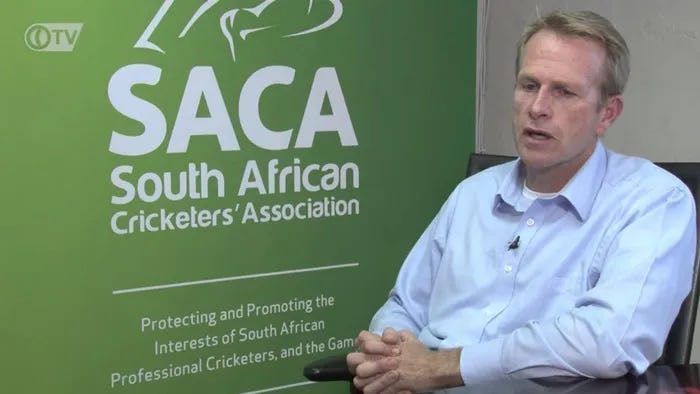
The second purpose is a nod of recognition to the man who, single-handed lay in the early years, built that giant. I watched throughout the 2000s as he was ‘attacked’ in a variety of ways by nervous, suspicious, sometimes angry CSA men. Rumours and innuendo about his motives were carefully planted, often questioning his intentions and attempting to pit the different races against him and each other. Divide and conquer.
But he came from a family which fought for justice and equality. His sister, Jenni Irish-Qhobosheane, was an esteemed crime researcher, conflict specialist and police consultant. She passed away tragically in a car accident in Johannesburg in April last year having concluded some crucial work at government level.
Tony Irish was an outstanding hockey player who might well have been an Olympian in a different time. He was a more than useful club cricketer but his legal career soon took precedence. It was only when he saw, first hand, what a raw deal the country’s professionals were getting that cricket came to dominate his life. It wasn’t so much that he chose cricket - it was the other way around.
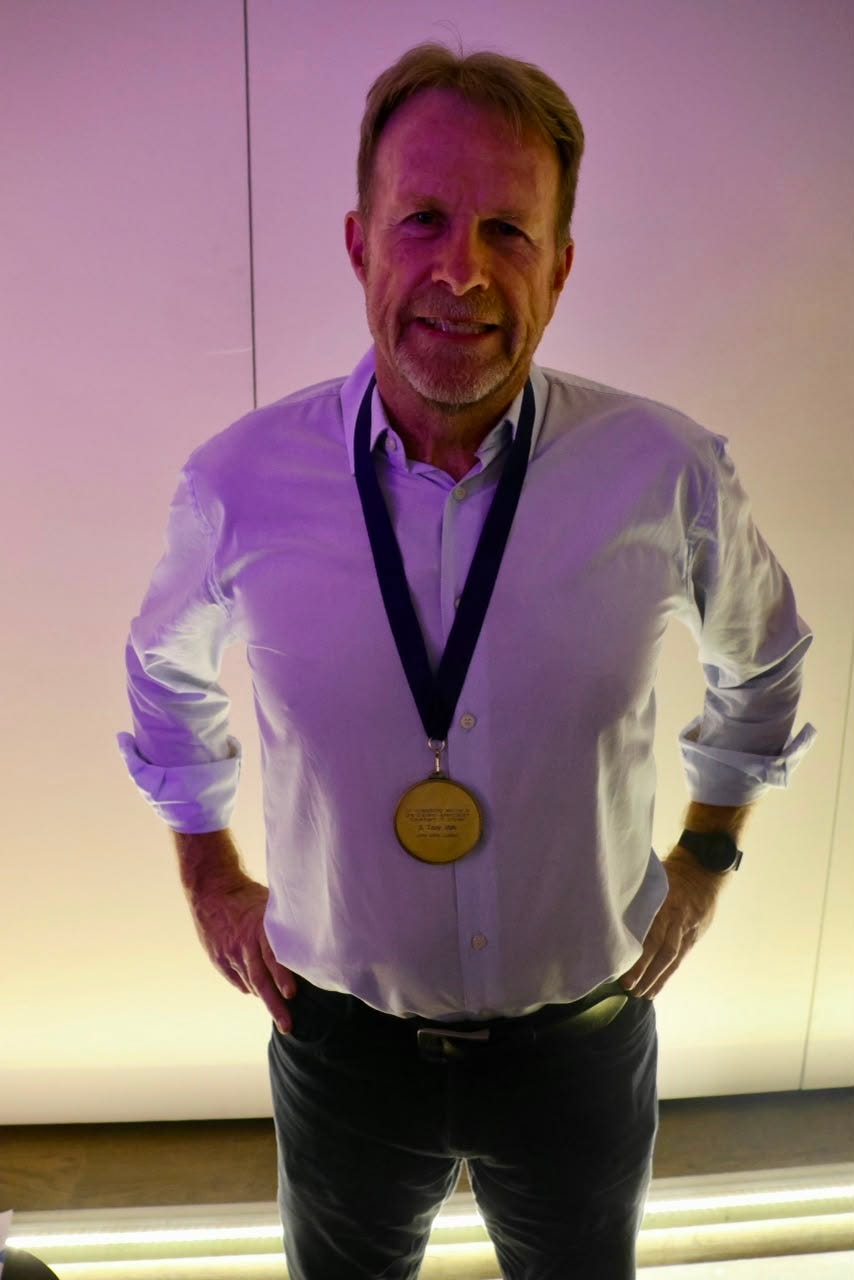
Last week Irish was awarded the Tim May medal by the World Cricketers Association for outstanding services to the global game There is no recognition quite as sweet or rewarding as that which comes from your peers, from around the world in this instance.
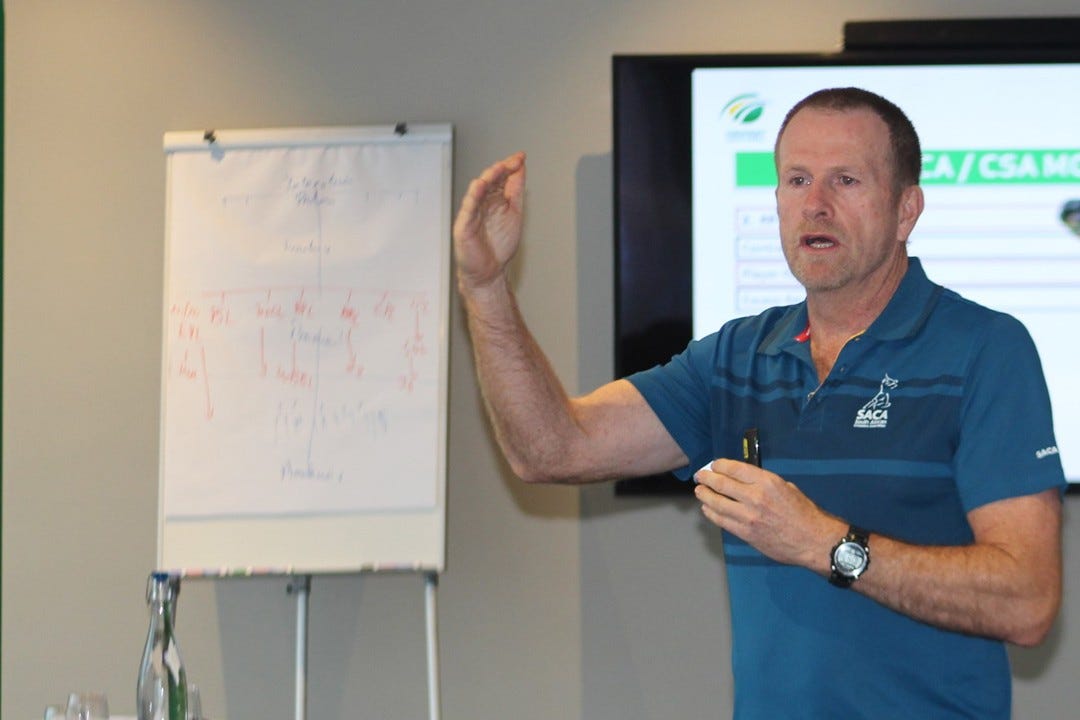
Most of the current crop of players in SA have no idea how fortunate they are, and many won’t know Tony’s name. But he is the giant who built the organisation which protects them. SACA is now in the hands of a man every bit as driven, determined and brilliant as Irish. It always seemed a great portent for the future when Irish, briefly and amusingly, appeared threatened by the man he appointed to take over from him, the incumbent SACA CEO, Andrew Breetzke.
Irish remains heavily involved in world player affairs with the WCA and also consults regularly with SACA’s rugby and Springbok counterparts, the MyPlayers group, as they establish a commercial model to mirror SACA’s, with player welfare to the fore.
There may be (a little) more time for golf these days and for the often absent Dad to see Lilly and Grace through their Varsity careers after decades of a punishing work schedule beyond the realms of all but the most dedicated.
Irish didn’t do it for recognition and he certainly didn’t do it for money. He refused point-blank to fly in anything but the cheapest economy seats or stay in a hotel with more than three stars when on SACA business. But he should derive a quiet satisfaction from knowing that he improved the lives of many hundreds of cricketers, and will ensure a better quality of professional existence for thousands more in the future.
No posts
Comments
Nothing yet. Say the first thing.
Sign in to join the conversation.