
If you find value in #ComplexityThoughts, consider helping it grow by subscribing and sharing it with friends, colleagues or on social media. Your support makes a real difference.
→ Don’t miss the podcast version of this post: click on “Spotify/Apple Podcast” above!
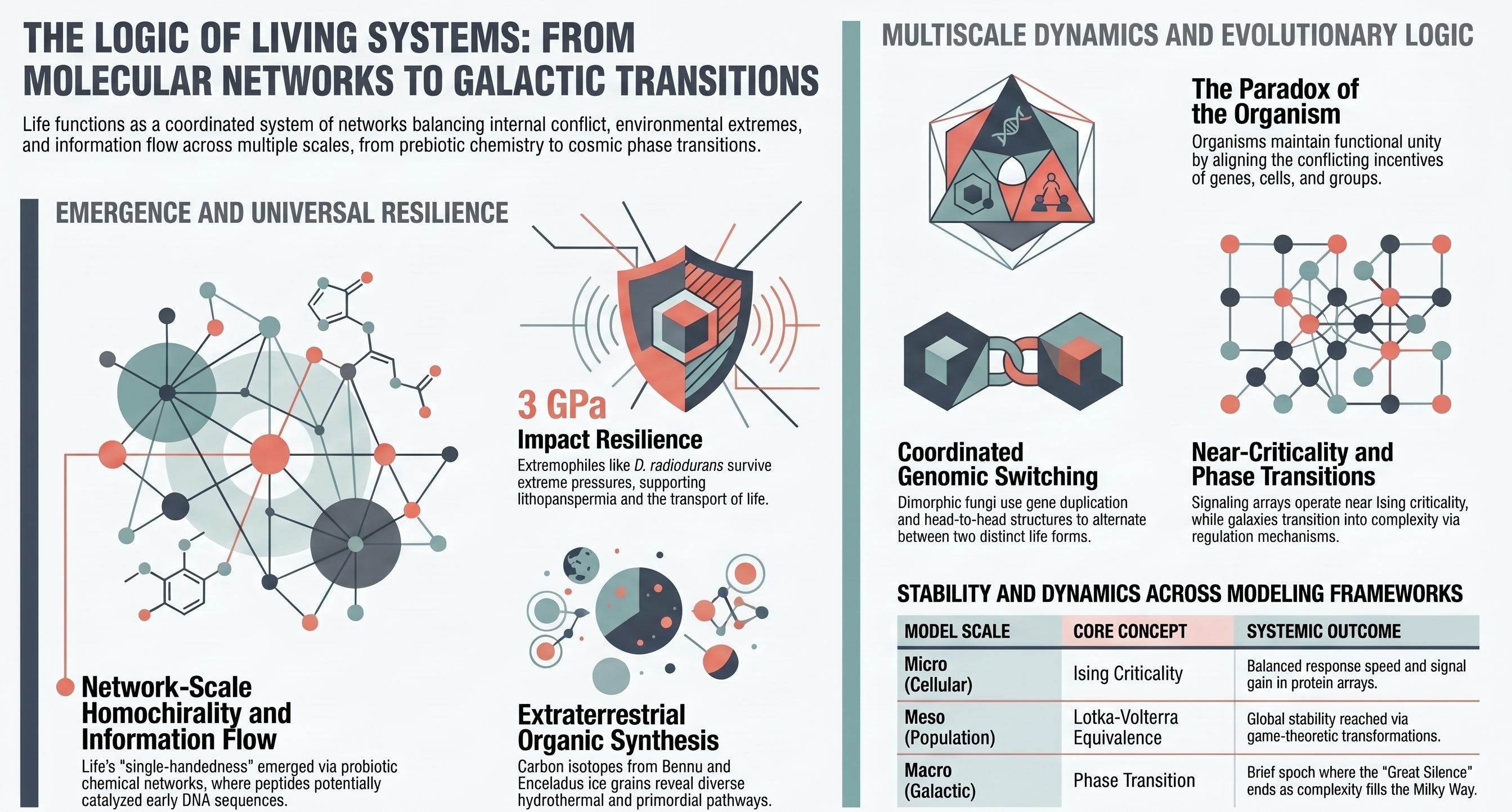
Life’s homochirality: Across a prebiotic network
homochirality must have originated on Earth, during prebiotic chemistry, enabling the efficient and selective synthesis of functional polymers like nucleic acids—which were likely essential for life’s emergence
For centuries, scientists have been puzzled by the mystery of life’s biomolecular homochirality—the single-handedness of biological compounds. Sugars and nucleic acids are right-handed, while amino acids are left-handed in biological systems. Likewise, certain metabolites are homochiral, though their handedness varies. However, efforts to address the homochirality problem have often focused on a single compound, a single molecular class, or invoke an extraterrestrial origin. Here, we emphasize the importance of achieving homochirality across an entire prebiotic chemical network and explore a terrestrial pathway for its emergence. This pathway is supported by recent experimental results from several independent studies, as well as analyses of pristine asteroid materials. Our analysis identifies the genome as a key site for achieving network-scale homochirality on early Earth and addresses the opposite handedness of D-nucleic acids and L-peptides in biology through nonenzymatic, stereoselective coded peptide synthesis.
Extremophile survives the transient pressures associated with impact-induced ejection from Mars
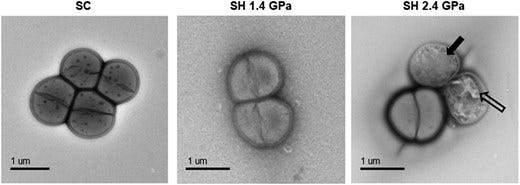
Large-scale impacts are ubiquitous in the solar system, and the likelihood of survival of organisms after an impact event plays a key role in planetary protection, the search for extraterrestrial life, and the assessment of the panspermia hypothesis. Impacts generate very high stresses for short times, resulting in extreme pressures and high rates of loading. Can microorganisms survive such extreme conditions? Directly assessing the resilience of microorganisms subjected to impact stresses has been difficult because of challenges in experimental design for these extreme conditions, together with the choices of biological model system. Here, we describe an experimental approach that allows us to subject microorganisms to controlled extreme pressures for short times, recover these impacted microorganisms, and then assess their rates of survival, structural damage, and their molecular response to these extreme events. We focused on Deinococcus radiodurans, an extremophile that is known to survive space-like conditions. Our results suggested that microorganisms can survive much more extreme conditions than previously thought, potentially surviving conditions that result in the formation of ejecta that can move across planetary systems. We demonstrated that the extremophile D. radiodurans has remarkably high survivability and viability after being subjected to pressures of up to 3 GPa. As the pressure increases, D. radiodurans exhibited indicators of increased biological stress, as determined by the transcriptional analysis of impacted samples. The work has significant consequences for considerations of planetary protection, spacecraft mission design, our understanding of where we might find extraterrestrial life, and lithopanspermia.
Detection of organic compounds in freshly ejected ice grains from Enceladus’s ocean
Saturn’s moon Enceladus ejects a plume of ice grains and gases originating from a subsurface ocean via fractures near its south pole. The chemical characterization of organic material in such ice grains was previously conducted via the analysis of mass spectra obtained in Saturn’s E ring by Cassini’s Cosmic Dust Analyzer at impact speeds below 12 km s−1. Here we present a comprehensive chemical analysis of organic-bearing ice grains sampled directly from the plume during a Cassini fly-by of Enceladus (E5) at an encounter speed of nearly 18 km s−1. We again detect aryl and oxygen moieties in these fresh ice grains, as previously identified in older E-ring grains. Furthermore, the unprecedented high encounter speed revealed previously unobserved molecular fragments in Cosmic Dust Analyzer spectra, allowing the identification of aliphatic, (hetero)cyclic ester/alkenes, ethers/ethyl and, tentatively, N- and O-bearing compounds. These freshly ejected species are derived from the Enceladus subsurface, hinting at a hydrothermal origin and involvement in geochemical pathways towards the synthesis and evolution of organics.
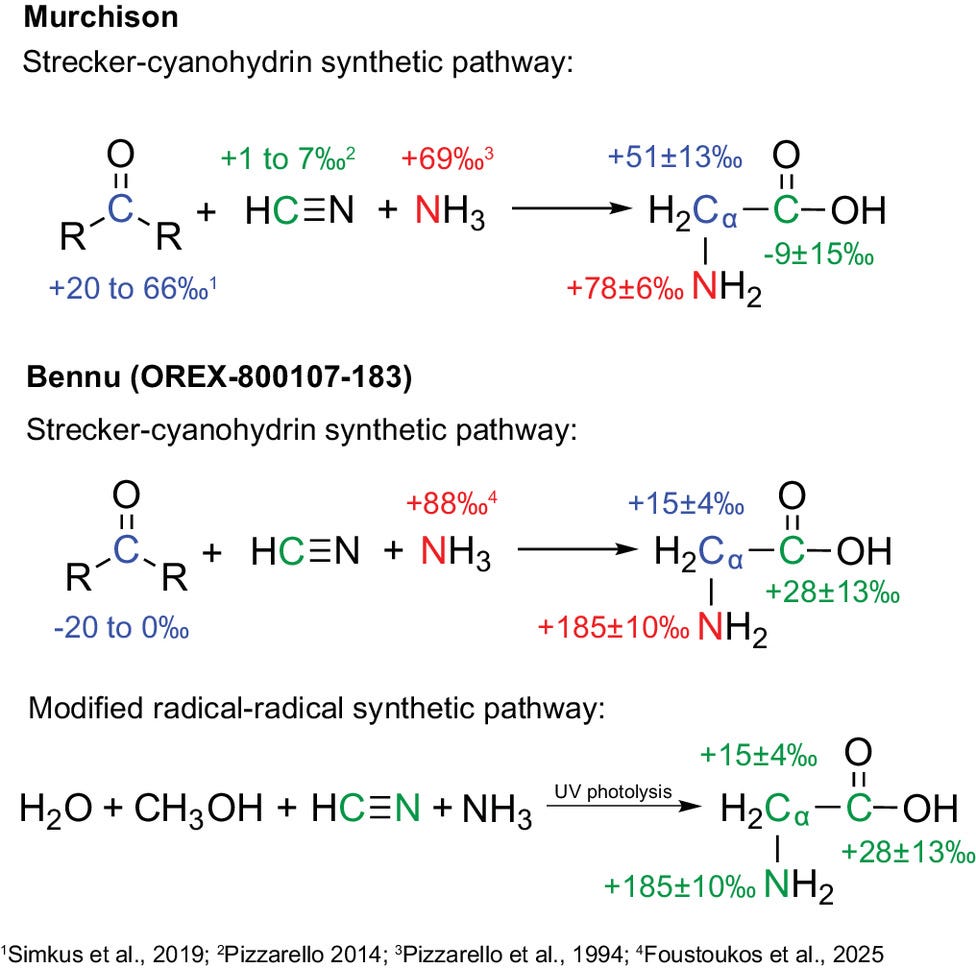
Meteorites, asteroids, and comets can host prebiotic organic compounds produced by a range of processes occurring before, during, and after accretion of parent bodies. Stable isotopic measurements of these compounds provide insights into these processes, which link how planets and life developed. We measured stable isotope values of amino acids, aldehydes, and ketones extracted from samples of asteroid Bennu retrieved by NASA’s OSIRIS-REx mission. Carbon isotope values suggest that Bennu’s glycine formed mostly in primordial ices entrained in the early Solar System, whereas glycine in Murchison, a compositionally similar meteorite, formed under mild, aqueous conditions in a protoplanetary body. Additionally, nitrogen isotopes imply that the enantiomers (mirror-image molecules) of glutamic acid in Bennu samples experienced distinct formation or alteration conditions.
Astrobiological Phase Transition: Towards Resolution of Fermi’s Paradox
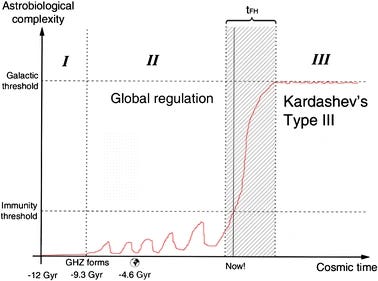
Can astrophysics explain Fermi’s paradox or the “Great Silence” problem? If available, such explanation would be advantageous over most of those suggested in literature which rely on unverifiable cultural and/or sociological assumptions. We suggest, instead, a general astrobiological paradigm which might offer a physical and empirically testable paradox resolution. Based on the idea of James Annis, we develop a model of an astrobiological phase transition of the Milky Way, based on the concept of the global regulation mechanism(s). The dominant regulation mechanisms, arguably, are γ-ray bursts, whose properties and cosmological evolution are becoming well-understood. Secular evolution of regulation mechanisms leads to the brief epoch of phase transition: from an essentially dead place, with pockets of low-complexity life restricted to planetary surfaces, it will, on a short (Fermi–Hart) timescale, become filled with high-complexity life. An observation selection effect explains why we are not, in spite of the very small prior probability, to be surprised at being located in that brief phase of disequilibrium. In addition, we show that, although the phase-transition model may explain the “Great Silence”, it is not supportive of the “contact pessimist” position. To the contrary, the phase-transition model offers a rational motivation for continuation and extension of our present-day Search for ExtraTerrestrial Intelligence (SETI) endeavours. Some of the unequivocal and testable predictions of our model include the decrease of extinction risk in the history of terrestrial life, the absence of any traces of Galactic societies significantly older than human society, complete lack of any extragalactic intelligent signals or phenomena, and the presence of ubiquitous low-complexity life in the Milky Way.
Coordinated gene family evolution shapes the genome of dimorphic Mucorales
Can a biological system acquire the capacity to generate two distinct life forms from one genome?
Some fungi live with a built-in capacity to change form, growing either as single yeast-like cells or as filamentous networks depending on their surroundings. In dimorphic Mucorales, this flexibility depends on one genome producing two sharply different body plans, raising a central question about how the same genetic material can support alternative ways of life. The authors shows that repeated evolutionary solutions have shaped hundreds of gene families associated with dimorphism. Many of these families contain duplicated genes that have specialized into yeast- or mycelium-linked roles, while related genes are often arranged face-to-face in the genome, a layout that helps coordinate opposing expression programs. The authors also identify two regulatory genes, dkl and dfl, whose disruption breaks this coordination and erases normal dimorphic switching. Because these genomic features appear across dimorphic species and are missing from close monomorphic relatives, the findings suggest that fungal dimorphism evolved through the integration of gene duplication, genome organization and regulatory control.
Dimorphic organisms possess the remarkable genome capacity to alternate genetic information between two distinct life forms. In dimorphic Mucorales, lineages can reversibly transition between yeast and mycelium as a function of environmental stimuli. However, how genetic information produces two divergent life evolves in a single genome remains unresolved. Here, we report hundreds of gene families exhibiting convergent evolution for dimorphism. This adaptation involves paralog functionalization and the coordination of expression, with yeast and mycelium-specific paralogs. Though these gene families have distinct functions, all their paralogs are convergently adapted to produce yeast and mycelium morphologies. In addition, dimorphic gene families with related functions form head-to-head structures, coordinating differential expression. This coordinated regulation is controlled by two new genes, dkl and dfl. Loss of function of these genes results in global dysregulation of gene expression and loss of dimorphism. Dimorphic gene families, head-to-head marker loci, and the dfl gene are conserved across various dimorphic species but are absent in closely related monomorphic species. Our findings identify an evolutionary mechanism that integrates and optimizes the genetic information required for two distinct life forms within a single organism.
This is a short Commentary, about another paper:
From peptides to DNA: All required steps can be catalyzed
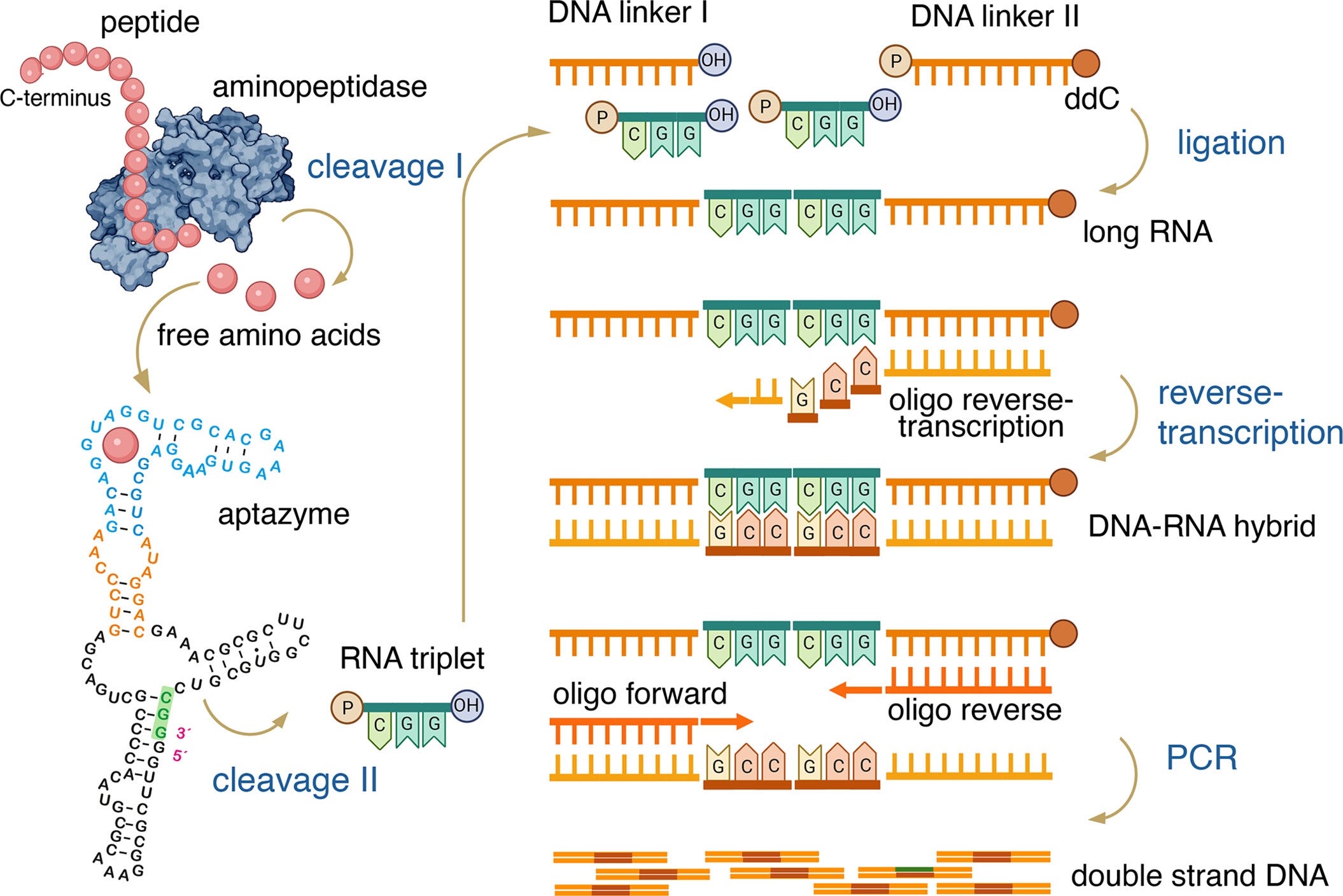
Our understanding of the transition from prebiotic to biotic evolution and the formation of living cells is incomplete. Some theories propose that RNA molecules with catalytic properties were the key in this transition, ensuring that early cells can catalyze metabolic reactions and transmit genetic information. Alternative theories propose that peptides were the first catalysts, but peptides do not have the capacity to transmit genetic information. In this study, we demonstrate that genetic information can conceivably be transmitted from peptides to DNA, by using the existing molecular catalysts, both RNA and peptide based. Our results do not offer proof for any of the theories, nor do they challenge any of them. They merely contribute to assessing which scenarios are possible.
Ensuring information flow (heredity) and metabolic processes (catalysis) are two important prerequisites for early evolution. The widely accepted “RNA world” theory proposes that ancient RNAs ensured both heredity and catalysis during the transition from prebiotic to biotic evolution. However, alternative hypothetical molecules and processes have also been proposed, suggesting that catalytic peptides may have existed before polynucleotides, and that their sequences were later reverse translated into genes. Our objective was to experimentally address these alternative theories by asking whether the steps required for the hypothetical conversion of peptide sequences into DNA could be catalyzed by the existing molecular kit. The reactions we tested comprise i) step-wise degradation of peptides by a processive amino peptidase, sequentially releasing amino acids, ii) matching the identity of released amino acids to codons by aptazymes (RNA adapters that recognize amino acids and self-cleave and release specific codon triplets in response), and iii) ligating codon triplets into longer RNAs that can be reverse-transcribed into DNA. In a hypothetical processive system based on these reactions, the resulting DNA sequence would match the sequence of amino acids in the starting peptide. Our results suggest that all these steps can be catalyzed, and therefore the possibility of reverse translation occurring at some point in early evolution should not be disregarded.
Evolutionary dynamics within and among competing groups
Individual incentives seldom align with the collective incentives of an entire group. Mechanisms to resolve this tension have produced major transitions in evolutionary history, including the origin of cellular life, multicellular life, and even societies. Failure to relieve this tension often results in pathology or social dysfunction. To understand this tension, we present an evolutionary theory of competition at two scales: individuals compete within a group, while groups compete against other groups. We reconsider mechanisms known to favor cooperation within a group, and we find qualitatively different effects when competition occurs at multiple scales. This multiscale model can address problems ranging from the composition of microbial communities to the management of resources in human societies.
Life is intrinsically social at all scales. — Cooney et al
Biological and social systems are structured at multiple scales, and the incentives of individuals who interact in a group may diverge from the collective incentive of the group as a whole. Mechanisms to resolve this tension are responsible for profound transitions in evolutionary history, including the origin of cellular life, multicellular life, and even societies. Here, we synthesize a growing literature that extends evolutionary game theory to describe multilevel evolutionary dynamics, using nested birth–death processes and partial differential equations to model natural selection acting on competition within and among groups of individuals. We analyze how mechanisms known to promote cooperation within a single group—including assortment, reciprocity, and population structure—alter evolutionary outcomes in the presence of competition among groups. We find that population structures most conducive to cooperation in multiscale systems can differ from those most conducive within a single group. Likewise, for competitive interactions with a continuous range of strategies we find that among-group selection may fail to produce socially optimal outcomes, but it can nonetheless produce second-best solutions that balance individual incentives to defect with the collective incentives for cooperation. We conclude by describing the broad applicability of multiscale evolutionary models to problems ranging from the production of diffusible metabolites in microbes to the management of common-pool resources in human societies.
Adaptation in the face of internal conflict: the paradox of the organism revisited
The paradox of the organism is that it is not torn apart by its conflicting replicators but stays together and works as a purposeful entity, apparently on behalf of all of them. Not only is not torn apart; it functions as such a convincingly unified whole that biologists in general have not seen that there is a paradox at all! They have wrongly taken the organism for granted as the unit about which questions of adaptation should be asked.’ (Dawkins, 1990, p. S64)
The paradox of the organism refers to the observation that organisms appear to function as coherent purposeful entities, despite the potential for within-organismal components like selfish genetic elements and cancer cells to erode them from within. While it is commonly accepted that organisms may pursue fitness maximisation and can be thought to hold particular agendas, there is a growing recognition that genes and cells do so as well. This can lead to evolutionary conflicts between an organism and the parts that reside within it. Here, we revisit the paradox of the organism. We first outline its conception and relationship to debates about adaptation in evolutionary biology. Second, we review the ways selfish elements may exploit organisms, and the extent to which this threatens organismal integrity. To this end, we introduce a novel classification scheme that distinguishes between selfish elements that seek to distort transmission versus those that seek to distort phenotypic traits. Our classification scheme also highlights how some selfish elements elude a multi-level selection decomposition using the Price equation. Third, we discuss how the organism can retain its status as the primary fitness-maximising agent in the face of selfish elements. The success of selfish elements is often constrained by their strategy and further limited by a combination of fitness alignment and enforcement mechanisms controlled by the organism. Finally, we argue for the need for quantitative measures of both internal conflicts and organismality.
Global stability of ecological and evolutionary dynamics via equivalence
Price and Maynard-Smith applied game theory—the mathematical study of strategic interactions—to biology, from mating contests in animals to the spread of mutations in a population. They refined Nash Equilibria to take into account the emergence of mutants and the effect of natural selection. In many cases, evolutionary dynamics lead to “evolutionarily stable strategies” that resist invasions from mutants. However, dynamics could converge to strategies that are not evolutionarily stable. Here, we show that dynamically (but not evolutionarily) stable strategies may become both dynamically and evolutionarily stable in an equivalent game obtained by transformations that do not alter the qualitative dynamics. This also allows us to advance the study of Lotka–Volterra dynamics, the oldest model in community ecology
The replicator and the Generalized Lotka–Volterra equations are closely related, foundational models in evolutionary game theory and community ecology, respectively. The concept of evolutionary stability and its relationship with dynamic stability has received significant attention: In the replicator equation, an evolutionarily stable strategy is also dynamically globally stable—i.e., will be reached by any trajectory originating from positive conditions. Intriguingly, the converse is not true: There are replicator equations yielding dynamically stable strategies that are not evolutionarily stable. Here, we consider two classes of equivalence (i.e., transformations that do not alter the qualitative dynamics) for the replicator equation, to determine whether a globally stable, but not evolutionarily stable strategy maps into an equivalent state that is evolutionarily stable—and show that this is the case for the examples that have been put forward so far. We derive the same two classes of equivalence for the Generalized Lotka–Volterra model, obtaining the same conditions for stability as for the replicator equation, and show that in this way we can characterize stability when other methods fail. By unifying the approach to proving stability for the replicator equation and Lotka–Volterra models, we bring these foundational equations even closer together.
Spontaneous switching in a protein signalling array reveals near-critical cooperativity
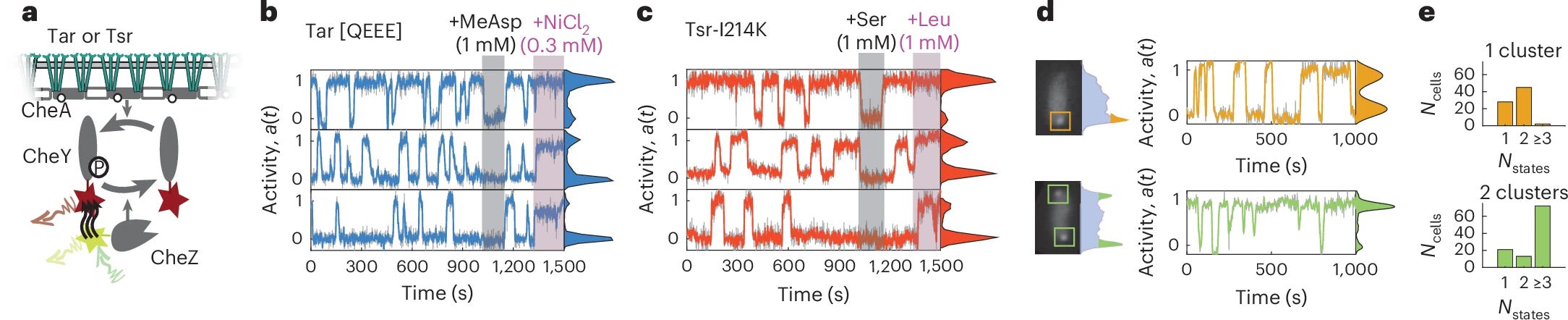
Cooperative interactions within large protein assemblies are crucial for cellular information processing. However, direct observations of cooperative transitions have been limited to compact molecular assemblies. Here we report the in vivo measurements of spontaneous discrete-level transitions in the activity of an entire Escherichia coli chemosensory array—an extensive membrane-associated assembly comprising thousands of molecules. Finite-size scaling analysis of the temporal statistics reveals nearest-neighbour coupling strengths within 3% of the Ising phase transition, indicating that chemosensory arrays are poised at criticality. We also show how E. coli exploits both static and dynamic disorder, arising from chemoreceptor mixing and sensory adaptation, respectively, to temper the near-critical dynamics. This tempering eliminates detrimental slowing of response while retaining substantial signal gain as well as an ability to modulate physiologically relevant signal noise. These results identify near-critical cooperativity as a design principle for balancing the inherent trade-off between response amplitude and response speed in higher-order signalling assemblies.
→ Please, remind that if you find value in #ComplexityThoughts, you might consider helping it grow by subscribing, or by sharing it with friends, colleagues or on social media. See also this post to learn more about this space.
Comments
Nothing yet. Say the first thing.
Sign in to join the conversation.