
You’ve probably heard “awareness” pitched as a warm bath. I think I have been guilty of sharing this version myself. Breathe deep, soften into the room, feel the space and embrace you. Nice image, but it’s not the complete truth.
Anthony de Mello, the Jesuit priest whose book Awareness cracked this open for me, didn’t sell awareness as comfort. He called the unaware life “mechanical,” “programmed,” “not worth living”. It’s a powerful way to describe how many of us are living.
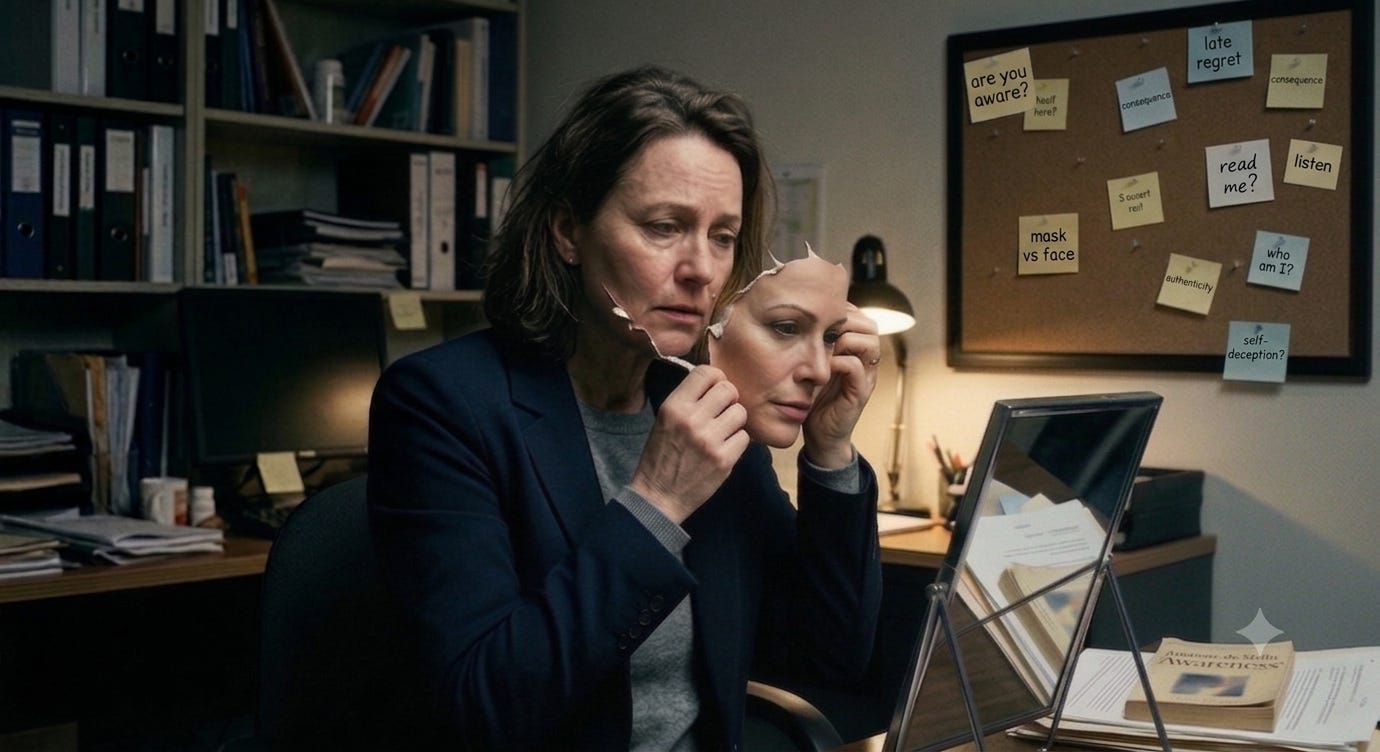
De Mello’s actual claim was harsher than “notice your breath.” He said the self you’re protecting, the job title, the reputation, the identity you’ve spent decades building, is mostly fiction. It’s a costume you are wearing. When you strip it off, he argued, you suffer, but only because you’d mistaken the costume for your skin.
De Mello made a point worth considering: trying to fix the world, or fix other people, before turning that same unflinching attention inward tends to multiply suffering rather than ease it. This lands especially hard for the helpers among us, the team leads, the parents holding a household together, the healthcare workers who’ve built careers on showing up for other people’s pain. The urge to help first and self-examine later feels efficient and noble, but looking inward isn’t a detour from helping others effectively. It’s what makes effective helping possible.
Regret isn’t a knowledge gap. It’s an awareness gap
I keep hearing the same confessions from people further down the road than me. Not taking care of their health. Chasing money instead of spending time and making memories with family. Avoiding making the one phone call where they said, “I’m sorry”.
What’s important to note here is that none of those people lacked information. They knew their health mattered. They knew their kids noticed when they missed the recital. Regret isn’t a knowledge gap. It’s an awareness gap. They were present in the room and absent from the moment.
So try this, but drop the incense-and-soft-voice version. De Mello’s actual method is closer to surveillance than serenity: identify the negative feeling, recognize it’s coming from inside you and not from the world, refuse to let it define your identity, and remember it will pass whether you manage it or not.
That’s not self-soothing. That’s self-interrogation. It asks you to stop blaming your spouse, your job, your patients, or your inbox for the tightness in your chest and admit the tightness is yours to own.
You can also try a body-and-space exercise. It starts with you paying attention to your body and the space around it at once. Then you pay close attention to feel the line between them dissolve. But don’t mistake the calm that follows for the point. The point is what the calm reveals: how much of your daily suffering you manufacture, and how little of it is actually being done to you.
Here’s a question worth contemplating, perhaps with someone else, in silence, without fixing it for each other: where in your life do you feel the hardest line between “me” and “everything out there”? That line is usually where your ego has built a wall to protect an identity that isn’t even accurate.
De Mello’s provocation was that the wall itself is the problem, not the thing on the other side of it. Most of us spend our lives defending a border that was never real to begin with. When your identification with self is so strong, this border creates self-inflicted suffering.
If you’re a healthcare professional and you’ve been taught breathwork as a relaxation technique, that’s fine; it works. But don’t let the physiology talk you out of the harder use of the breath: as an interruption to autopilot. Every time you catch yourself reacting instead of noticing, and use the breath to force a half-second of actual awareness, you’re doing something closer to what de Mello meant. You’re refusing the ‘mechanical’ life, and instead claiming the space between stimulus and response as your own.
This is a fight against decades of conditioning that trained you to run on autopilot because autopilot is efficient and awareness is inconvenient.
Real awareness will cost you something. It’ll cost you the excuse that other people or circumstances are responsible for your suffering. It’ll cost you the identity you built to avoid feeling exposed. It’ll cost you the belief that you have more time than you do.
De Mello bet that this cost is worth it, because the alternative is arriving at the end of your life having never actually been present for it. Not because you were busy. Because you were asleep, and called it living.
The question isn’t whether you have five minutes for a breathing exercise. It’s whether you’re willing to find out how much of your life you’ve been sleepwalking through, and whether you’d rather know that now or regret it.
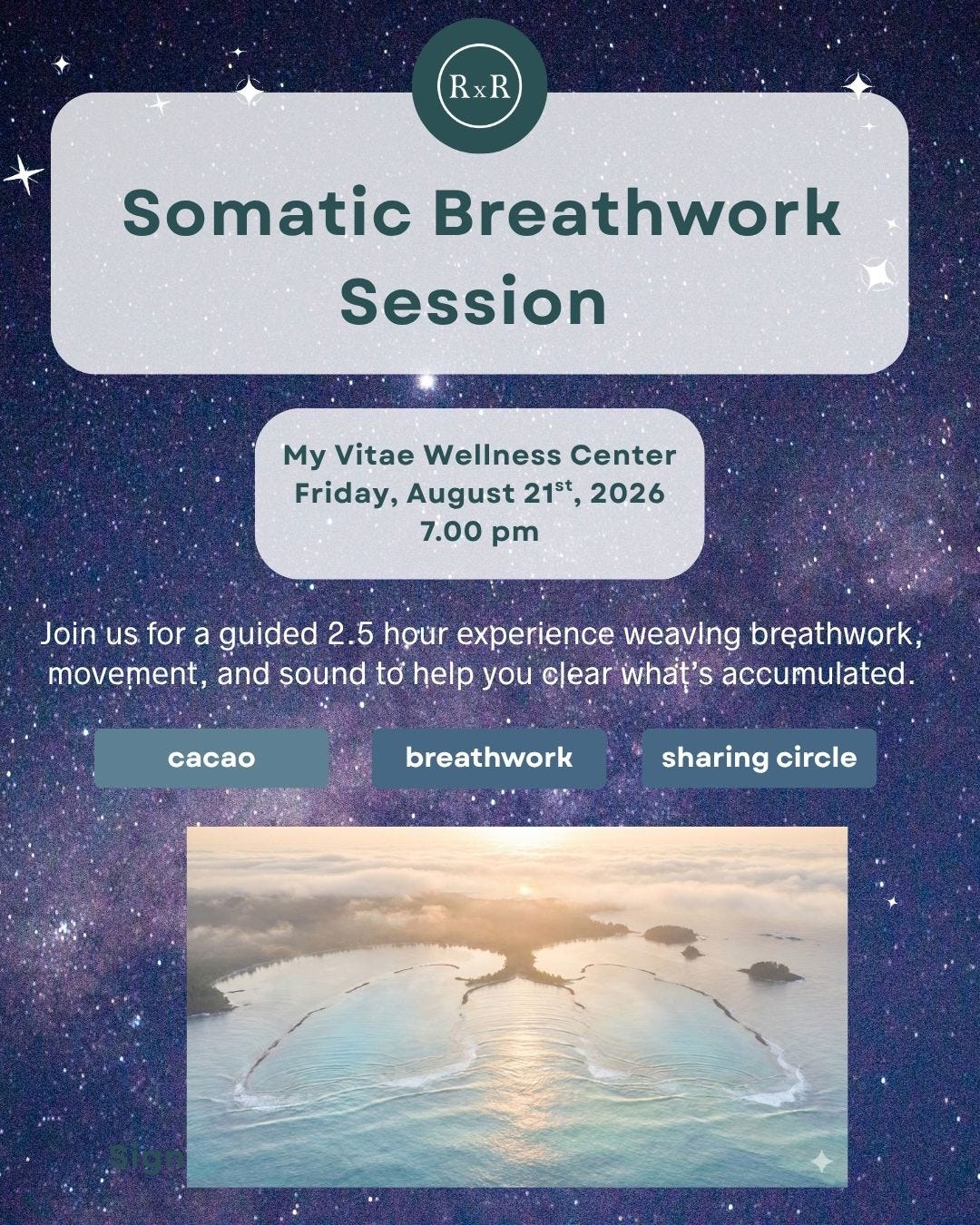
There are a few spots still available for our upcoming Somatic Breathwork Journey on Friday, August 21st, at My Vitae. Check out registration details HERE.
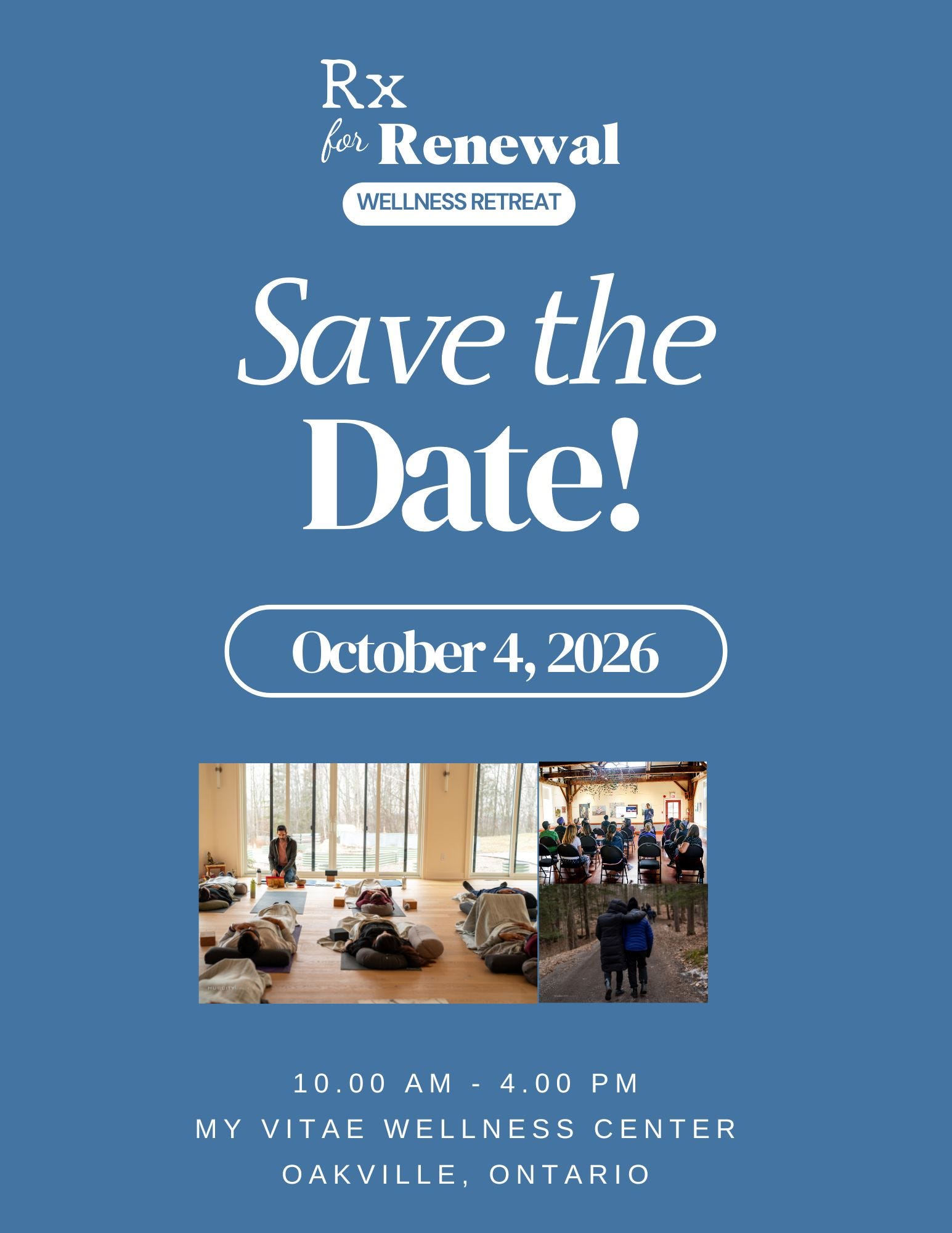
We are also in the final stages of planning for our 8th offering of the Rx for Renewal Day Retreat slated for Sunday, October 4th. Details to come, but in the meantime, be sure to save the date to your calendars.
Manjit Hansra is the founder of Rx for Renewal. Through keynote speaking, 1:1 coaching, and curated retreats, I share evidence-based tools to help professionals prevent and manage burnout. Check my offerings HERE and book a complimentary call to improve your mental fitness HERE.
Thanks for reading Prescribing Awareness! This post is public so feel free to share it.
Comments
Nothing yet. Say the first thing.
Sign in to join the conversation.