
For the People was a little-watched, lightly reviewed legal drama that ran for two ten-episode seasons, March to May in 2018 and 2019. It had some cachet from its production company, Shondaland, of the much more popular Grey’s Anatomy, Scandal, and How to Get Away with Murder fame, and that connection showed in the pretty cast, the sharp dialogue, and the abundant use of meaningful montages set to pop music. But the trappings were familiar, the plots were formulaic, and it struggled to differentiate itself from any other story focused on lawyers and the law. Its impact was minimal. Blink, and you’ll never know it was there to miss.
All of the above, however, make it a perfect comfort watch.
Almost seventy years post Perry Mason, and with nearly thirty years of the Laws and Orders not only in primetime but on heavy rotation in weekend marathons, we know how to watch a trial show. We’ve learned the language, we’re aware of the process, we understand the beats. The tropes provide a foundation. The music cues activate our emotions. The cozy views of NYC set the stage. It all allows us to pay more attention to the meaning and the purpose. We’re primed to look for motive and intent. Not for the crimes, that’s merely the plot, and the characters are players. For the scenes. For the story. For the series.
For the People is centered on the Southern District of New York, called the ‘mother court’ because it was the first court established in the United States of America, predating even the Supreme Court. The series showcases both sides of the cases with the cast split between federal prosecutors and public defenders, and is especially interested in how they entwine. With only twenty episodes total, I don’t find it necessary to come up with a top five or ten to play up. Rather, I recommend watching the whole thing. There’s an arc, maybe rushed due to cancellation, but clear. If you want to go in unspoiled, stop now1. If you want to know why I keep coming back, keep reading.
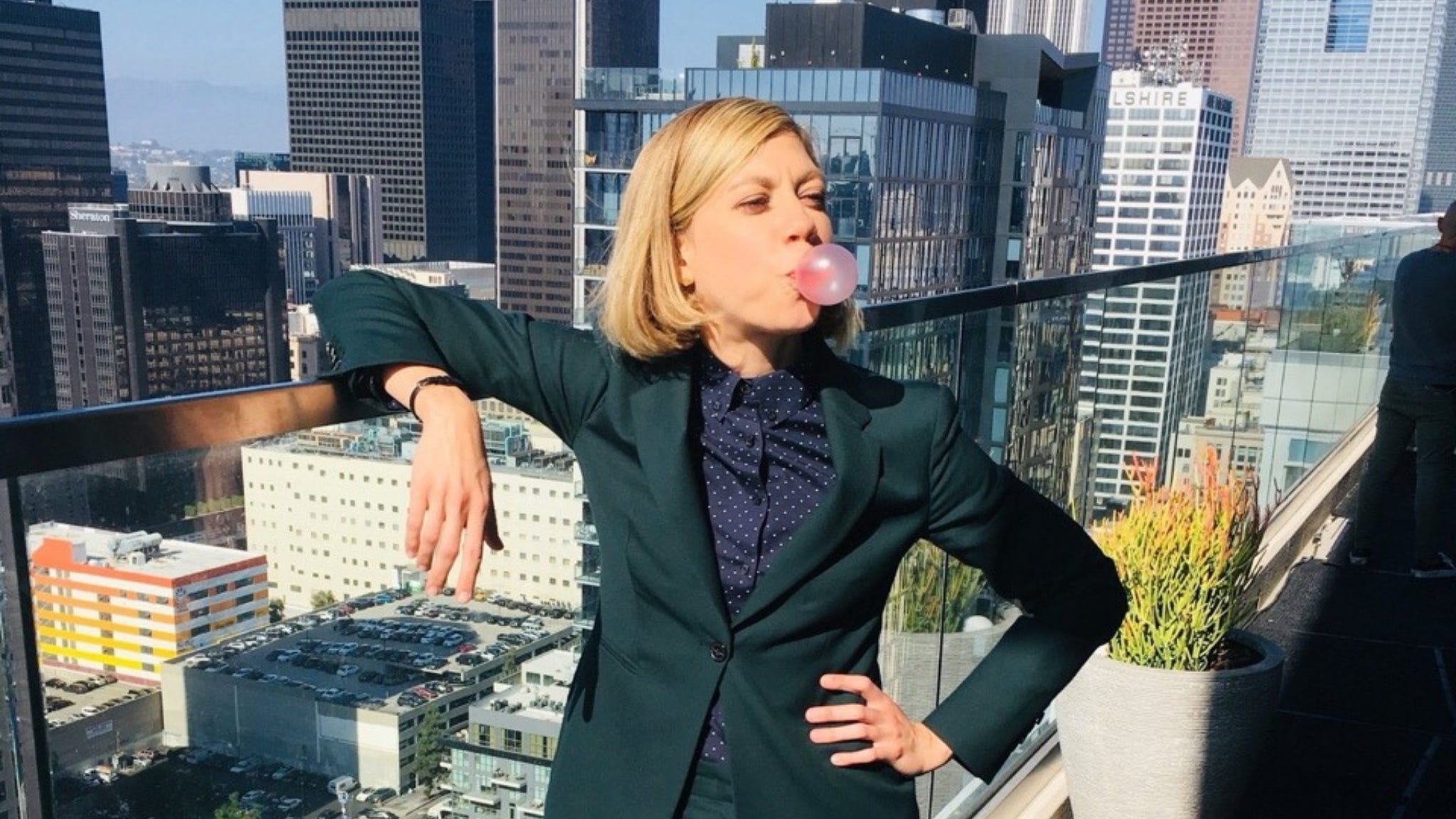
Kate Littlejohn (Susannah Flood) is the best and most important character in the show, and it is not even close. There are plenty of good characters and good character arcs, but we’ve seen them before. Allison (Jasmin Savoy Brown) is a child of privilege trying to use it to help the marginalized and generally Do Good, but her family doesn’t understand her choices2. Seth (Ben Rappaport) is a middle-of-the-road white man with next to nothing going for him who fails up but hopes to Be Better. Jay (Wesam Keesh) is an immigrant who wants to believe in the American Dream of equality and prosperity that he was raised to idealize. Leonard (Regé-Jean Page) is an arrogant overachiever, a young and hungry Black Republican from Texas, who is determined to make history but doesn’t fully understand what it means or why it matters to others or to himself. Sandra (Britt Robertson) is a restless workaholic whose impoverished childhood and tragic losses drive her ambitions to fight a system that protects the rich and powerful.
Kate is different. Kate appears to be a by-the-book taskmaster and know-it-all with no interest in a social life. She appears to be calculating, detached, incurious. She appears to value the letter of the law more than its effects. Its consequences. Kate appears to be a bright, shiny, dispassionate representation of the system Sandra wants to take down. She’s Goliath, she’s Dredd, she’s law and order personified. Or so she appears.
Kate is meticulous and reserved, yes, but she is also the beating heart of the show. Kate is kind. Kate is whimsical. Kate is self-aware and self-assured. Kate is a natural mentor. She inspires people to improve, and she does it all without calling any attention to her work or herself.
When the series was cancelled, Flood took to Twitter to post her thanks and thoughts.
“[W]hen I think of Kate Littlejohn … I think about a person passing through desire, ambivalence, disappointment, failure, self-sabotage, confusion, the gray areas of human experience to arrive at a vision of justice complicated and deepened by living and encountering other people.”
Kate’s world is neither a black and white chessboard, like Leonard’s, nor messy shades of grey, like Sandra’s. Kate’s world is brightly colored post-it tabs that delineate space for all facets of the law and of life.
Again, watch the whole series, but here are the top episodes for Kate.
1.1 “Pilot”— This has all the problems of a pilot, but it provides the setup and showcases both Kate’s talent and her philosophy: “I don’t celebrate people going to jail.”
1.3 “18 Miles Out of Roanoke” — The first episode in which Sandra and Kate square off. Kate’s final monologue solidifies her complexity and point of view: “Injustice isn't only felt by the loudest person complaining about it.”
1.6 “Everybody's a Superhero” — Kate’s first sting and a kiss.
2.4 “The Vast, Immovable Object” — Kate’s second sting and first team-up with Sandra.
2.5 “One Big Happy Family” — Kate’s second team-up with Sandra.
2.9 “Who Are We Now?” — Kate and Sandra’s friendship falters under pressure.
2.10 “A Choice Between Two Things” — Kate’s ascension.
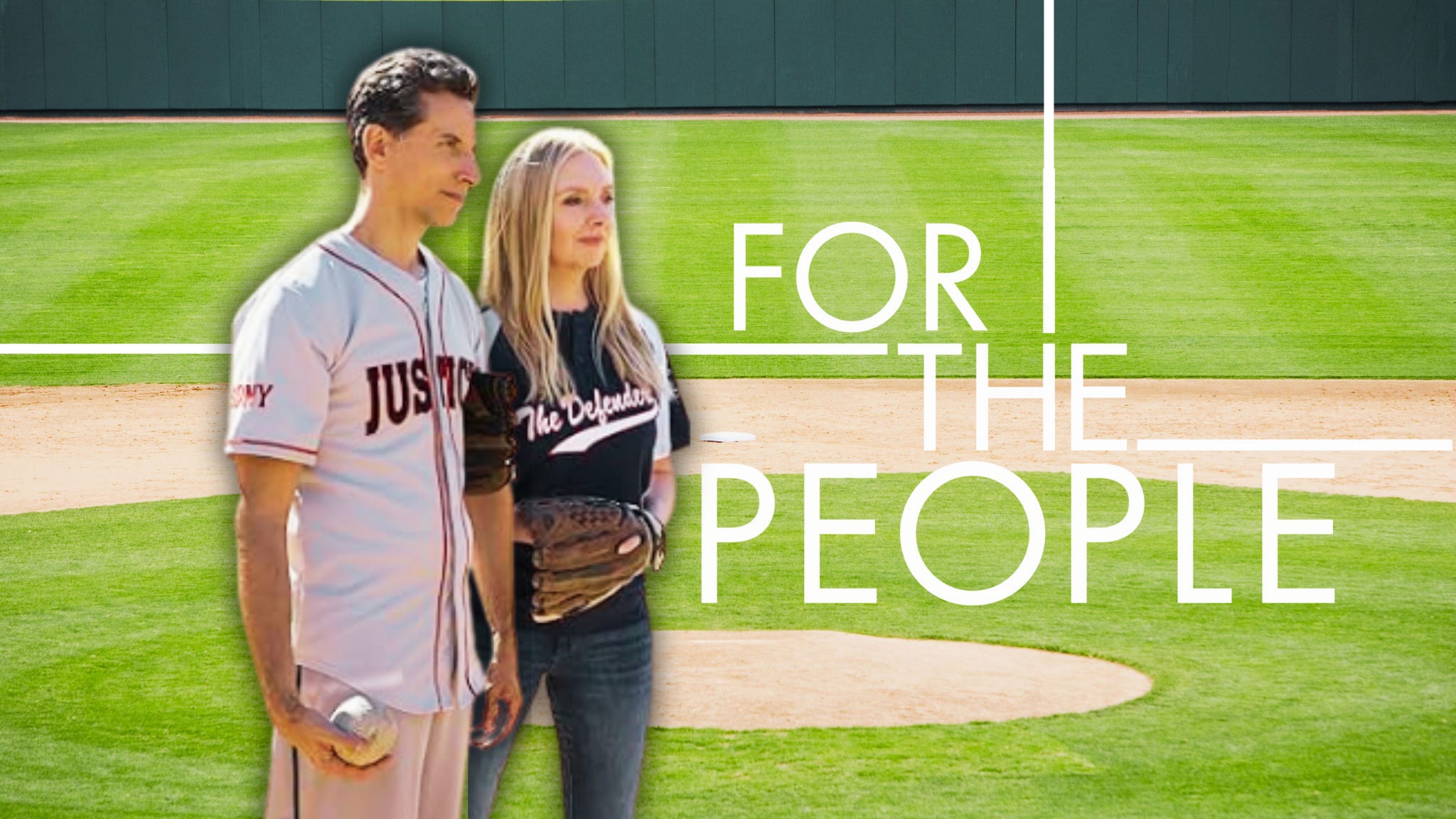
Chief of the Criminal Division Roger Gunn (Ben Shenkman) and Federal Public Defender Jill Carlan (Hope Davis) are the bosses and mentors for our young main cast. Despite working on opposite sides of the court, they are longtime friends who become closer over the course of the series. Their relationship is everything to me.
There are all sorts of romantic feelings and sexual shenanigans between the hot young cast members. Allison, Seth, Leonard, and Kate each have more than one entanglement over the course of the two short seasons. Jay has a cute flirtation with a clerk, and a love interest for Sandra is added to the main cast for season two. None of the above holds my interest the way Roger and Jill do.
Roger and Jill hit so many of my favorite tropes. They were friends first, and rivals, too. Because of their positions opposite the aisle, they have to hide the romance and are called out a few times for even being friends. Their positions also muddle the balance of power; they are peers, but the prosecution has more cachet, influence, money, and control. There’s the suggestion of a lopsided balance of feelings; Roger is devoted, while Jill is more reserved. Most importantly, Roger and Jill have history, both with each other and individually. They are full-ass adults with long careers and failed relationships. They know who they are, and they know what they want. I was invested in Roger and Jill from the very beginning, and their finale is everything I want for my OTPs.
Again, again, watch the whole series, but here are the top episodes for Roger and Jill’s relationship.
1.7 “Have You Met Leonard Knox?” — Roger and Jill negotiate their friendship for the sake of Yankees season tickets.
1.8 “Flippity-Flop” — Roger and Jill argue over both sides of a case.
1.9 “Extraordinary Circumstances” — Roger and Jill spend the day together.
2.1 “First Inning” — Roger and Jill spend the night together.
2.7 “The Boxer” — Roger and Jill square off and get caught.
2.9 “Who are we now?” — Roger is ready to move forward; Jill is confronted with the truth.
2.10 “A Choice Between Two Things” — And they lived happily ever after.
Like any good (or any bad) legal drama, For the People explores real-world legal issues, and it aired in a particularly fraught time. 2018 and 2019 were after the initial rise of MAGA and Trumpism, but before the pandemic, the George Floyd protests, and the fall of Roe. There was a sense of danger, of anger, of a turn toward something dark, but still a sense of hope, of trust in the rule of law.
In the final episode, Jay’s newly naturalized immigrant parents are prevented from voting by harassment and intimidation. He calls Kate, and they find evidence that a wealthy political action committee paid the harasser, and many like him, all across the country. Roger, Kate, and Leonard prosecute the wealthy founder of the PAC for fundraising under false pretenses and election interference. The title of this post is taken from Kate’s closing argument, the last of the series.
“That is this case. Mr. Spiller created a sophisticated operation to deprive Americans of their existential right to participate in self-government. It is flagrantly undemocratic, but what is so pernicious and insidious about this operation is that it pretends to preserve the democratic government that it undermines. ‘Oh, we’re just rooting out fraud; we’re just trying to protect the vote. We care about the integrity of the election.’ These are lies. And, these are dangerous lies because the greatest threat to democracy is making it meaningless. Hollow. Dysfunctional. If you live in an authoritarian government and some of you have I’m sure, there’s always the promise of democracy; there is hope. But, if it appears to be a democracy and it doesn’t work, what is there left to hope for? There is here, now, something left to hope for.”
I literally started crying typing that quote into this post. The Republican majority currently in control of the presidency, Congress, and the Supreme Court is doing everything it can every single day to make voting harder and less fair. Including harassment and including convincing people there’s nothing they can do to fix it. If it appears to be a democracy and it doesn’t work, what is there left to hope for? That’s the whole ball game.
So, I watch this silly little wisp of a show from the before times, this alternate universe where the most morally good person is a prosecutor3, and fighting for justice matters even in the face of impossible odds. I watch the judge wrestle with his responsibility. I watch the lawyers and politicians work together to make the system better. I watch poisonous corporations and for-profit prisons lose. I watch the clerk, judge, lawyers, investigators, and marshals stand between ICE and a child and refuse to move until he’s reunited with his father. I watch a middle-aged white man give up the job he’s wanted his whole adult life for love of the girl across the street. I watch the happy endings over and over because they give me something to hope for.
Again, again, again, watch the whole series, but here are the episodes that strive to make us think and feel about the law.
1.5 “World's Greatest Judge” — Chief Judge Byrne is confronted with mandatory minimums in sentencing.
2.2 “This is America” — Clerk of the Court Tina Krissman hides a child from ICE.
2.4 “The Vast, Immovable Object” — Jill defends a man coerced into confessing to a crime he didn’t commit.
2.5 “One Big Happy Family” — Sandra and Kate team up to prove a judge was bribed to send children to a for-profit prison.
2.6 “You Belong Here” — Leonard is confronted with racism.
2.8 “Moral Suasion” — Allison scrambles to get a client released without the bail he can’t afford.
2.10 “A Choice Between Two Things” — Jay’s parents are intimidated into not voting.
If you look at my three lists of episodes together, you see that I list almost every episode, so truly, watch them all. If you look at my three lists of episodes together, you see that the series finale is on all of them. This is a show that ends well. Is it a fairy tale? Yes. But we all need something to believe in. We all need something to hope for.
For the record, I don’t think anything is gained by being spoiler-free. I can only think of two instances that might benefit from being a surprise. But I have a perhaps strange relationship to spoilers and second watches, so ymmv.
Cough, John Carter, cough.
My copaganda post is coming, I swear!
No posts
Comments
Nothing yet. Say the first thing.
Sign in to join the conversation.