
By Dr Manas Chakrabarti, FRCOG
Senior Gynaecological Oncologist, Kolkata
In brief: Fibroids are the most common tumour in women worldwide. Most women will have them at some point. But several of the key risk factors are within your control - and understanding them clearly is the first step. Read this once. Then share it with someone who needs it.
Picture the departures hall at Heathrow Airport - every gate, every queue, every coffee queue. If every woman in that terminal agreed to an ultrasound scan, research suggests that roughly 70 in every 100 would show fibroids on the image. Some would already know. Many would have no idea at all.
Fibroids are the most common tumour found in women, affecting populations from London to Tokyo and everywhere in between. They are also the leading cause of hysterectomy in women who do not have cancer. That is not a frightening statistic - it is an argument for knowing more.
Fibroids can cause a surprisingly wide range of problems - from heavy, painful periods and pelvic pressure to bladder symptoms and, in some cases, difficulties conceiving. They do not always cause symptoms at all. The challenge is that many of these symptoms overlap with other conditions, which is why fibroids are so often missed or misattributed for years.
Before we discuss prevention, it helps to understand the mechanism. Most women are told fibroids “just happen” - but the picture is more specific than that. Several identifiable, addressable factors drive their growth.
The risk increases significantly after the age of forty. But age is only one part of the story - and it is the part you cannot change. The factors below are ones where your daily choices genuinely matter.
Here is what most general health writing leaves out: fibroids are not simply a hormonal problem. They are, at a fundamental level, a problem of chronic inflammation and what that inflammation does to your DNA.
Chronic inflammation has an extraordinary and underappreciated capacity. It can damage and destabilise the genetic structure of your cells - a process called mutation. When this continues over time, cell division accelerates and tumours can form. Some of those tumours may eventually become cancerous.

In the case of fibroids specifically, research has identified mutation of the MED12 gene as a significant causal factor.
The key insight: chronic inflammation is not an abstract concept. It is a measurable, modifiable process - and several everyday habits either feed it or reduce it.
Constant, unrelenting stress - at home, at work, or both - triggers chronic inflammation throughout the body. When stress leads to sustained weight gain, the body begins producing elevated levels of various metabolic chemicals, which compounds that inflammatory process further.
This is a cycle, not a single event. Breaking it at any point - whether through reducing the source of stress or managing weight - has measurable downstream effects on your inflammatory profile.
Your skin is one of the most efficient factories on earth for producing vitamin D - but only when it has access to sunlight. Across India, despite an abundance of sunshine, vitamin D deficiency is found in an astonishing proportion of households. The reason is almost always the same: people avoid the sun.
Vitamin D plays a direct role in regulating the body’s inflammatory response. A consistent deficiency removes one of your body’s most effective natural checks on chronic inflammation.
A practical threshold: brief, regular exposure to gentle morning sunlight or late-afternoon sun is sufficient. The quality of vitamin D that your skin can synthesise cannot be replicated in a laboratory.
The human body contains approximately 37 trillion human cells - and an estimated 82 trillion microbial organisms. These microbes colonise every surface: skin, mouth, scalp, fingertips. Their greatest concentration, however, is inside the gut.
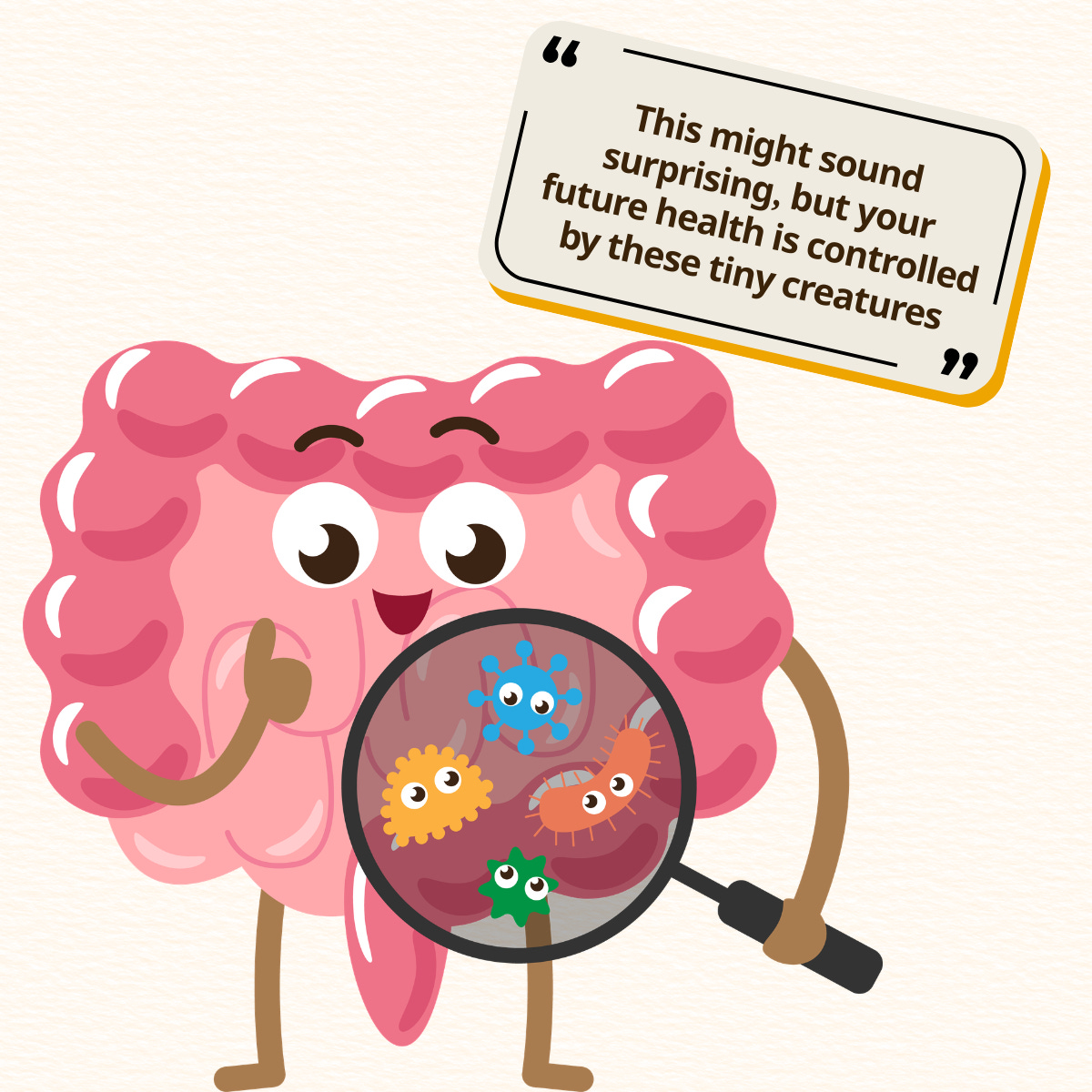
This community of microorganisms is called the microbiota, and its influence on long-term health is one of the most consequential findings in modern medicine. When you consume large quantities of ultra-processed food, the chemical additives systematically deplete the beneficial members of this community - and chronic inflammation rises accordingly.
A class of chemical compounds known as endocrine-disrupting chemicals, or EDCs, can be found in a wide range of everyday products: hair spray, perfume, pesticide residues on fresh produce, bread improvers, and the packaging of processed foods.
‘Endocrine’ refers to the body’s hormonal system. EDCs interfere with hormonal balance and have been implicated in the formation of various tumours, including fibroids. The topic is complex and a full discussion deserves its own article - but the practical rule is straightforward.

The ingredient test: if you cannot read every ingredient on a food label comfortably and recognise what it is, treat that as a signal to reconsider the product. Trust home-cooked food and fresh produce above all else.
The link between elevated blood pressure and fibroids is well established. Research indicates that women with hypertension are approximately five times more likely to develop fibroids than women with normal blood pressure.
Monitoring and managing blood pressure is therefore not only a cardiovascular matter. It is directly relevant to fibroid prevention.

This connection is not discussed nearly enough. Studies have consistently shown that women who experience higher rates of abuse - physical or psychological - have elevated rates of fibroid development. The body does not distinguish neatly between physical and emotional harm; both activate the same inflammatory stress pathways.
A toxic environment, whether at home or at work, is a measurable health risk. Mental self-defence is not a luxury. It is a clinical priority.
Three to four hours of moderate to vigorous exercise per week has been shown to reduce systemic inflammation meaningfully. This applies regardless of season - cold mornings and humid afternoons included.
Do not avoid gentle morning sunlight or the softer light of late afternoon. Brief, regular skin exposure is sufficient to support the body’s natural vitamin D synthesis.

Daily mindfulness practice - even five to ten minutes - has measurable effects on the body’s stress-response systems. Meditation does not require silence, solitude, or ceremony. It can be practised with eyes open, in a moving vehicle, or while cooking. The commitment to stillness matters more than the setting.
Maintaining a healthy body weight is one of the most modifiable risk factors for fibroids. Excess adipose tissue generates oestrogen and pro-inflammatory compounds. Keeping your weight within a healthy range removes two of the key drivers of fibroid development simultaneously.
Not all chemical food additives are harmful. However, the burden of proof should fall on the product, not on you. Seek out impartial sources of nutrition and food-safety information. If you have concerns about a specific ingredient or additive, your national food-safety authority is a legitimate and underused resource.

Better food regulation - of fertilisers, preservatives, and prepared food standards - requires engaged citizens. A small increase in food prices in the short term reliably reduces healthcare costs over time.
Lifestyle modification - regular exercise, a whole-food diet, and effective stress management - reduces the risk of fibroids, as well as cardiovascular disease and certain cancers.
Oral contraceptive pills may help delay fibroid development in some women. However, they are best avoided in those who do not require contraception at a young age. Once fibroids have formed, the evidence on whether oral contraceptives are effective at limiting their growth remains genuinely divided.
Dairy and soya consumption: some studies report an association between high intake of milk or soya-based products and increased fibroid risk; others find no significant connection. What is established is that both dairy and soya can carry additional oestrogen, which fibroids use as a growth signal. Moderate, mindful consumption is a reasonable precaution.
The bottom line: some risk factors for fibroids - age, genetics - cannot be changed. Many others can. The sooner you understand which category a risk falls into, the sooner you can act on the ones that are genuinely within your control.
Article by Dr Manas Chakrabarti, FRCOG - Senior Gynaecological Oncologist, Kolkata.
Dr Chakrabarti is an ExCochrane author and practising evidence-based clinician. His patients travel from across India, the Middle East, and Europe for complex gynaecological and gynaecological-oncological surgery.
Understanding Fibroids: Symptoms, Diagnosis, and Treatment Options - Dr Manas Chakrabarti
What Are EDCs and Why Should You Care? - Dr Manas Chakrabarti (Coming Soon)
The Gut Microbiome and Women’s Health - Dr Manas Chakrabart (Coming Soon)
Masterclass: Fibroid
Fibroid Treatment Guide: 9 Steps Before Going to Doctor
This is an impartial, unsponsored health information. For public awareness and not a replacement of Medical Advice.
No posts
Comments
Nothing yet. Say the first thing.
Sign in to join the conversation.