
I have been thinking about whether my parents would like me if i wasn’t their daughter. now, I don’t mean love me. i mean whether they would actually enjoy me as a person. if we met through work, or at somebody’s house, or got stuck beside each other on a long flight, would conversation come easily? would we find each other funny? would we exchange numbers? would we ever use them? i thought the interesting part of this question would be that we don’t choose our families. then i realised i’ve heard that thought so many times it barely means anything anymore.
However, the stranger possibility is that my parents might like me more if i weren’t their child. think about how differently a quality can look when you aren’t responsible for the person carrying it. a twenty-something-year-old moving across the world alone sounds adventurous. if she is your daughter, suddenly there are visas and rent and strange cities and unanswered phone calls to worry about. quitting a stable job for something uncertain can look brave from across a dinner table. it probably feels considerably less charming when you spent years hoping your child would eventually have some stability.
And I strongly believe that independence is easiest to admire when it doesn’t involve becoming less dependent on you. i wonder how many qualities parents worry about in their own children that they would admire immediately in somebody else’s. it works the other way too. i have spent years being annoyed by things my parents do that i might find perfectly harmless in a stranger. a habit becomes unbearable partly because you have witnessed it 4000 times. familiarity makes love deeper, but it also gives irritation an extraordinary amount of rehearsal.
I guess we would all make excellent first impressions on one another but i have never had a first impression of my parents. that feels weird to say. i have no memory of meeting them. there was never a period when i was deciding what i thought of them. by the time i could form opinions about people, they were already the people against whom everyone else was being understood.
They have something even stranger with me. they remember meeting me, but i don’t. there are years of my own life for which they are better sources than i am. i know almost nothing about the person i was at two. apparently she had preferences and fears and favourite things. she reacted to people. she got angry. she laughed at particular things. she had little relationships with the world every day and i have no access to any of it. there is a point somewhere in childhood where my autobiography finally lets me in. everything before that belongs to other people.
But, i find that slightly unsettling because we spend so much time trying to figure ourselves out, digging through memories for evidence that we have always been a certain way, when some of the earliest evidence is sitting inside somebody else’s head.
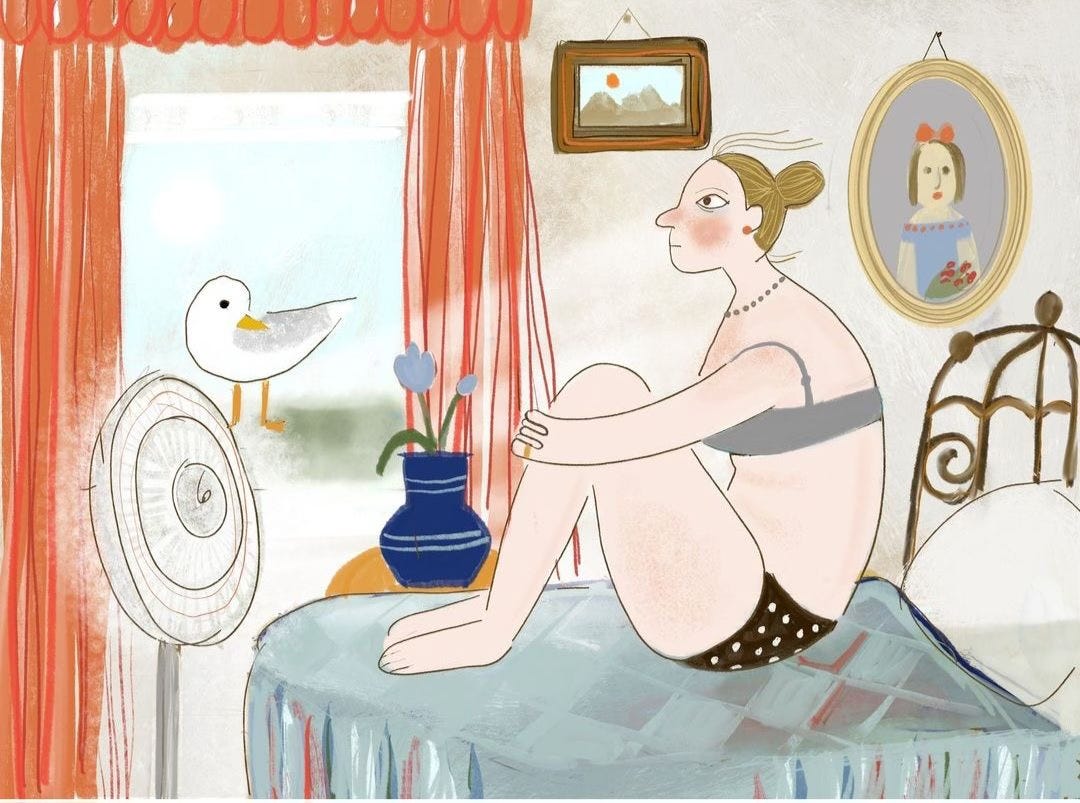
My parents know things about me that i can never independently verify. maybe i really was fearless or i hated everybody or i was generous or maybe i was an absolute nightmare and the family has collectively agreed on a kinder version of events. i have to take their word for it.
There are photographs, of course, but photographs are terrible witnesses bro. a photograph can prove i was wearing a yellow dress at four. it cannot tell me whether i had been crying ten seconds earlier because i hated the yellow dress.
My parents can.
Which means some of my own history exists only as stories they have decided to keep and they have watched me forget things they still remember. i think this might be one of the strangest parts of raising a person. there must have been days when i was the biggest thing happening in my parents’ lives that do not exist in my memory at all. a fever that frightened them while i slept through most of it. a first day somewhere that made them nervous while i was busy looking at everything else. a sentence i said once that became a family story. an ordinary afternoon they remember for reasons i never noticed.
Or maybe there was a night when one of them stayed awake worrying about something involving me and by breakfast i had already moved on. so, just imagine being central to a memory you don’t possess. there are moments from my own life that technically belong to me and yet i am probably the only person involved who cannot remember them and now the opposite has started happening.
I have whole days my parents know almost nothing about. there are jokes they weren’t there for, people they have never met, conversations that changed my mind about something, tiny mishaps i fixed before mentioning them at home. sometimes they hear about an important event after my friends already know every detail.
And you know what, this shift happens so gradually that nobody notices it. at the beginning, parents know almost everything. they know what you ate, where you went, who you spoke to, why you cried, what time you slept. they know the name of the child you suddenly hate this week and probably that child’s mother too.
Then, very slowly, they begin receiving summaries. “how was your day?” “good.”
an entire life reduced to one word. i wonder what that feels like. parenting begins with almost complete access to another human being and, if everything goes roughly according to plan, ends with that human being becoming increasingly unknowable and that might be one of the few jobs where doing it successfully means gradually becoming less necessary.
A baby needs you to stay alive. a child needs you to get almost anywhere. a teenager starts closing doors. an adult buys a plane ticket before telling you. we celebrate that as independence from one side. i’m not sure what the same process looks like from the other. maybe this is why parents sometimes ask questions that feel strangely specific. where exactly are you going? who is coming? when will you be back? did you eat?
Because some of it is simply habit. for years, knowing was part of the job. then one day the information stops arriving automatically. there is something almost funny about this reversal. when you are little, your parents know things about you that you don’t know yourself. then you become an adult and start knowing things about yourself that they may never know and somewhere during all of this, we are apparently supposed to figure out whether we like each other. that question gets complicated by another thought i can’t shake: i don’t know whether i have ever met my parents outside the role of being their child.
i know what they are like with me. that isn’t necessarily the same thing as knowing what they are like. i’ve seen the transformation that happens when a parent is talking to somebody else’s child. suddenly an opinion that would cause a forty-minute debate at home is “interesting.” a questionable career decision is “bold.” travelling alone is “such a good experience at your age.” i find this hilarious but i also understand it.
Another person’s choices are ideas. your child’s choices have consequences you can already imagine yourself worrying about at 2 a.m. and the same trait can honestly look different depending on your relationship to the person. maybe this is why asking whether my parents would like me as a stranger is impossible.
A stranger would not make them worry in the ways i do.
I would not know exactly which of their habits gets on my nerves. nobody would be carrying 20+ years of evidence into a ten-minute conversation. we might all be delightful. there is another version of this question i find even more uncomfortable.
Would my parents think i was impressive if i belonged to somebody else?
Dude parents are terrible impartial judges of their children. they are supposed to be. a drawing made by your child is never simply a drawing. there is a whole person attached to it. an achievement comes with the memory of everything that happened before it. they remember the failed attempt, the panic, the phase when you wanted to quit, the ridiculous childhood version of the same ambition. parental pride has context that no fucking stranger could possibly have because they have literally watched the manufacturing process. i think children do this too.
There are things my parents do that feel more meaningful because they are my parents doing them. food can become better because it tastes like a particular house. an ordinary phrase becomes funny after being repeated for twenty years. care that would look completely unremarkable from the outside can become one of the things you remember most.
So, love has terrible quality control man. it makes ordinary things priceless and irritating things unforgivable, sometimes on the same afternoon and, by the way, liking your parents is impossible to separate from all of this accumulated meaning. i can’t meet them neutrally anymore. then there is the part nobody really prepares you for: one day some of the verbs begin changing direction.
You start asking whether they ate. you tell them to take their medicine. you explain something on their phone and become irrationally annoyed when they press the exact button you told them not to press. you ask them to message when they reach. you worry when they don’t answer. the person who once knew where you were at every moment can become the person whose location you are asking for. the person who remembered your medicine becomes the person whose medicine you remember. there is no official handover as nobody sits the family down and says that the direction of care has started changing. it just does. maybe that is another reason the question of liking each other feels inadequate.
friendships and romantic relationships usually begin somewhere close to equal. family begins with one person completely dependent on another, spends decades rearranging that dependence, and sometimes ends with parts of it pointing the other way.
How are you supposed to separate personality from all of that? i started wondering whether my parents would like me if they weren’t my parents because i imagined there was a clean answer hiding somewhere. yes, we would have been friends. no, we would have found each other unbearable.
I don’t think either answer works anymore. the people we would meet as strangers would not be these people. without years of worrying about me, my parents would have been changed in ways i cannot calculate. without being raised by them, so would i. even the versions of ourselves we dislike in one another might only exist because of the relationship. i can behave completely differently around my parents than i do around everybody else and spend years assuming that means they see the real me. maybe they simply see the me that exists with them and that distinction matters.
There are people whose company makes being yourself feel effortless. there are others around whom you become a version of yourself you don’t particularly enjoy. perhaps part of liking somebody has always been liking who you are when they are nearby.
Family complicates that because you don’t meet each other once. you meet each other thousands of times. you meet your parents when you are five and fifteen and twenty-five. they meet a different child every few years and continue calling all of them by the same name. the relationship keeps changing while everybody involved insists it is the same relationship. maybe one day i will know my parents mostly as people rather than as authorities, caretakers or the people waiting for me to come home. maybe they will know me without automatically seeing every age i have been before this one.
Or maybe families never quite get there. either way, i keep returning to one thought. there are days from my life that my parents remember and i don’t. there are days from my life now that i remember and they will never know happened. somewhere between those two facts is the entire story of growing up. and i still have no idea whether we’d like each other as strangers. the stranger question now is how we ever became strangers to parts of each other at all.
Comments
Nothing yet. Say the first thing.
Sign in to join the conversation.