

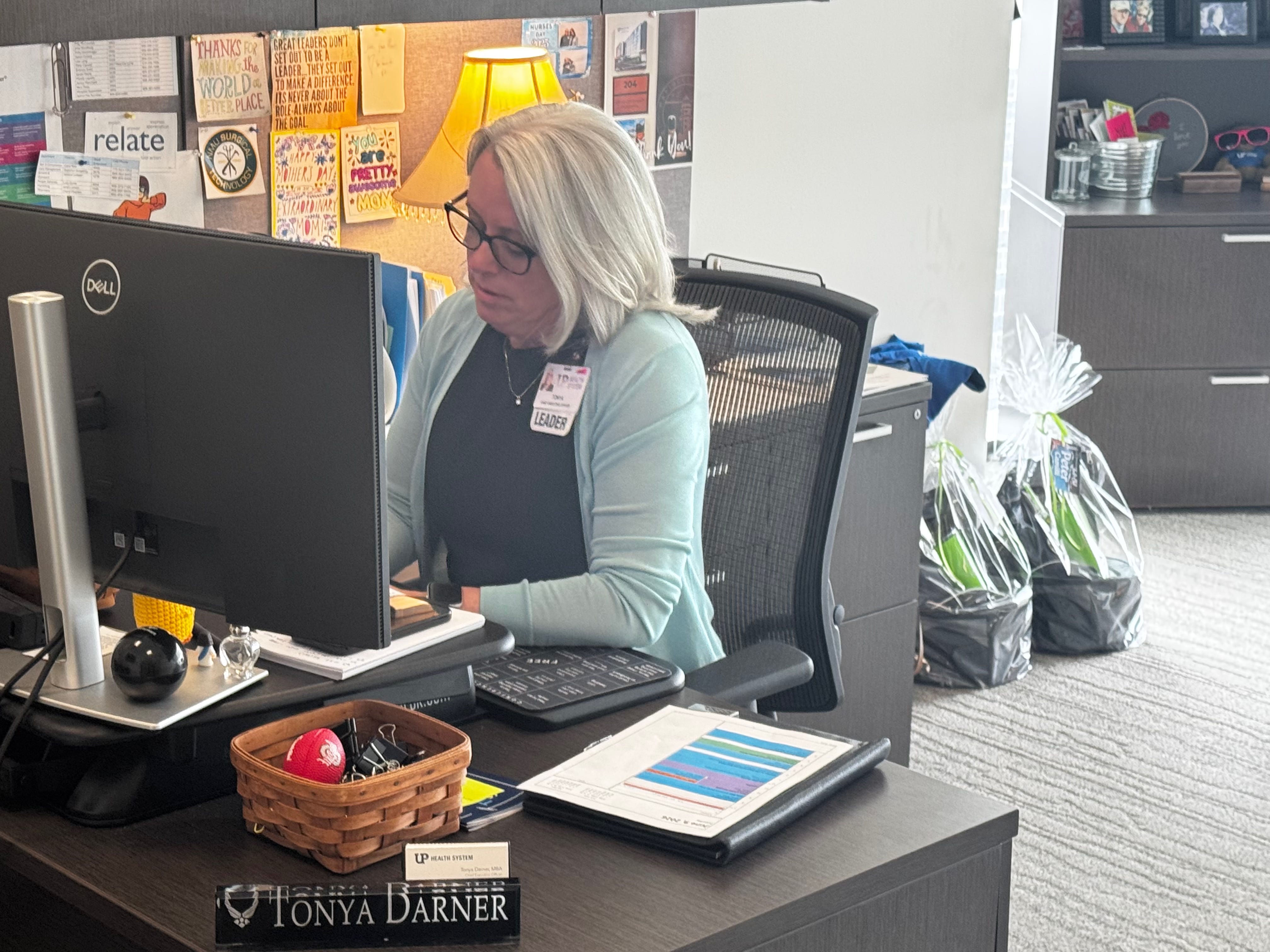
IT’S BEEN TWO-AND-A-HALF years since CEO Tonya Darner took the reins of UPHS-Marquette, an institution that, not entirely fairly, had been criticized for heavy staff turnover, poor morale, an unstable Emergency Department, long wait times, inefficiencies, and a lack of connection with the community.
So, has much much changed during these last 2 1/2 years? By some metrics, absolutely.
Boarding times (how long it takes for an Emergency Department patient to be sent upstairs for more specialized care) has been reduced 30% so far this year compared to last year.
Emergency Department walkaways, those patients who left without being treated, has been cut in half—from 1.5% to .8%. Three years ago, it was 3.5%.
Registered Nurse turnover now stands at 12% per year. The average at hospitals nationwide is nearly double that.
Hospital safety, as measured by the respected Leapfrog Hospital Safety Grade, is improving. “We’ve maintained a B for the last three grading cycles,” Darner says, “but our collective score has continued to increase to get us closer to that A category.” About 30% of all hospitals nationwide rate an A in this category, 25% get a B. Clearly, a B is nothing to write home about, but not too long ago, UPHS-Marquette was getting dismal C’s, so….progress.
PATIENT EXPERIENCE
Darner insists that what she’s hearing personally from patients is far more positive than it was a couple of years back. However, the standard measurements for patient satisfaction are more nuanced.
The US News and World Report ratings look like this: 85% of UPHS-Marquette patients report they are satisfied with the hospital. The national average is 88%
Medicare ratings give UPHS-Marquette three stars out of five. Would Medicare patients recommend the hospital? 61% say yes. Nationally, the figure is 71%.
Press Ganey, a healthcare performance company used by hospitals nationwide, provides slightly more promising results, with an overall rating of 3.7 out of 5, an increase of 16% in the last year…Patients in the survey praised the hospital staff and overall treatment, but criticized the billing and claims process, and the customer service responsiveness.
STAFFING
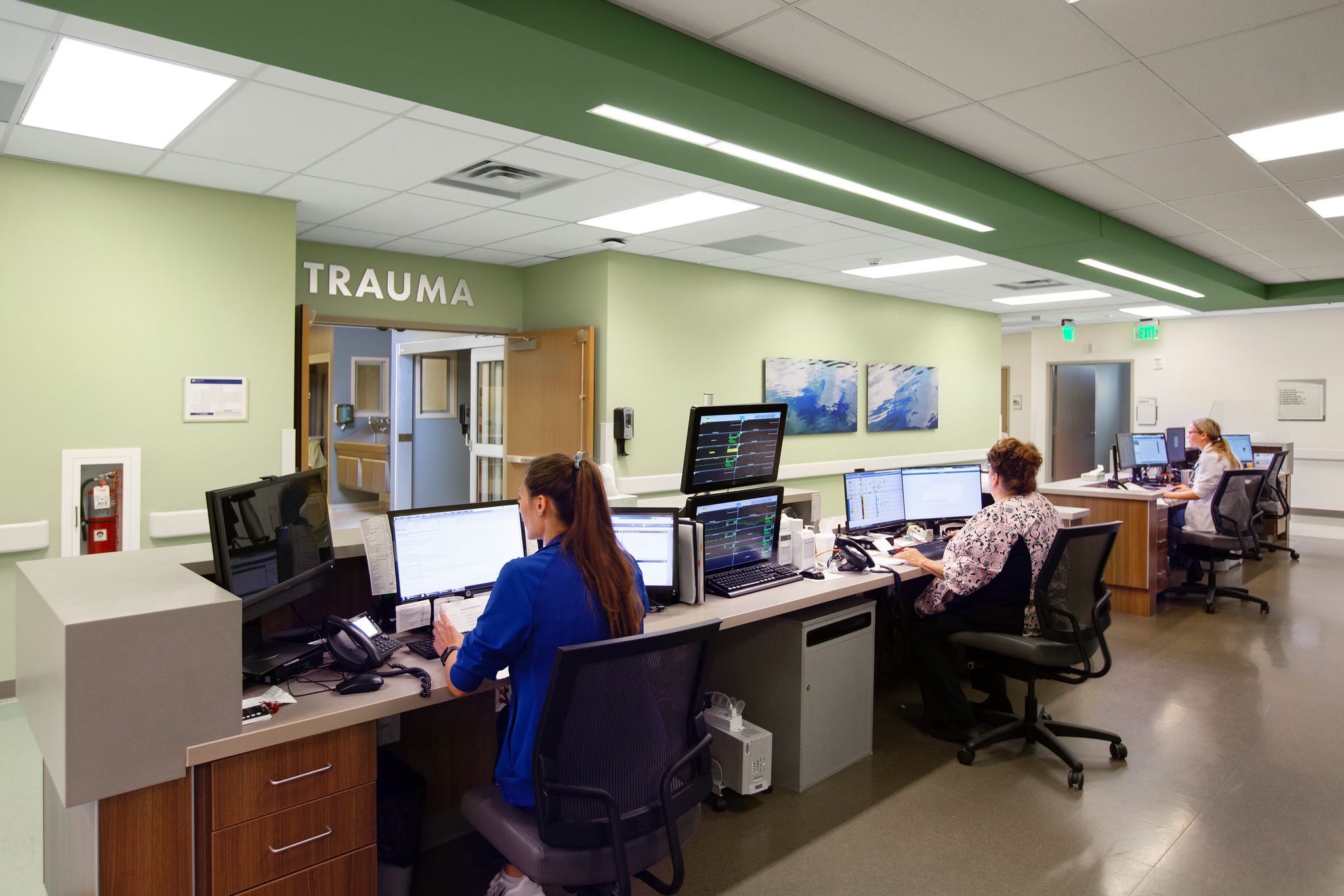
The hospital has 1665 employees, and about 150 openings. The number is a little higher than it was a year ago, but Darner claims that’s because the hospital staff has grown. As always, the hospital is looking for doctors—in infectious disease, cardiology, urology, neurology, electro physiology, and others. It’s a fact of life in all hospitals: doctors move on.
But still, Darner is upbeat. “The last year has been one for the books,” she says. “We’ve been able to fill some hard-to-fill vacancies that had been sitting vacant for a while.”
The Emergency Department, which had been the center of turmoil and turnover a few years ago, has remained mostly stable. “We will have some locum coverage (temporary doctors and nurses) over the summer to cover some maternity leaves,” Darner explains, “but that’s outside of our control. They’re expanding their families and that’s a happy time. And we’re going to have another ED provider starting this summer who’s a UP native. We’re having a lot of success bringing providers back to the region where they’re from.”
That’s a key—finding employees who are from this region or who truly want to live here, in spite of the long winters and the remoteness.
Another key—the housing situation. “There’s a number of candidates that we don’t even get an opportunity to talk to because they’ve researched the housing market before they even apply,” Darner says. And modestly price homes, for lower salaried prospective employees, are scarce and the subject of fierce bidding wars.
“It especially affects our ability to recruit certain specialties that have to be on call 24/7,” she continues. “They have to live within a certain radius which can limit their housing options.”
She’s been lobbying local, state and federal legislators for help, telling them, “You’re not going to have good health if you don’t have good housing.”
COMMUNITY OUTREACH
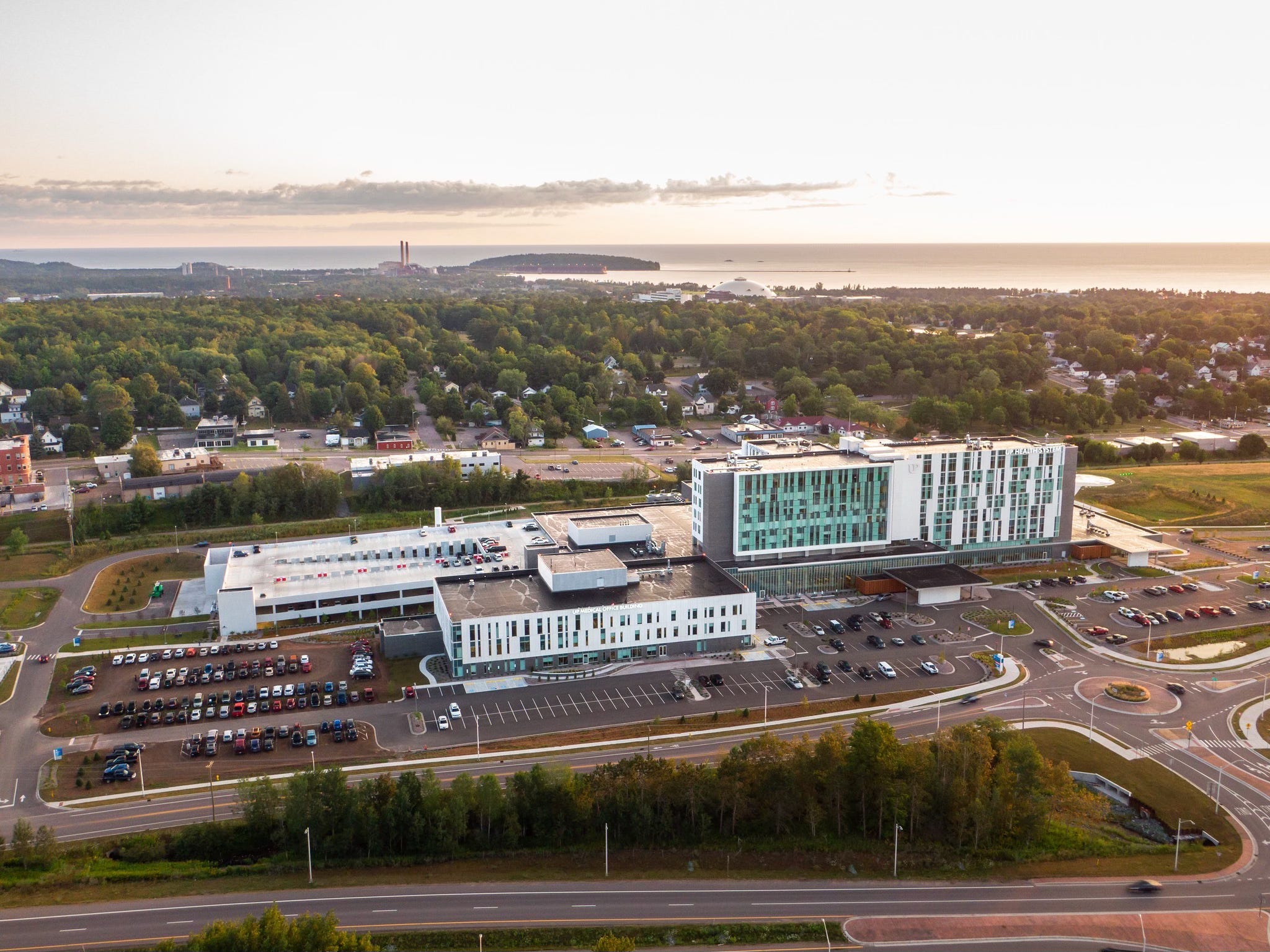
UPHS-Marquette contributes annually to at least twenty local organizations, including the YMCA, the Beacon House, the Trillium House, Start the Cycle, Girls Fast Pitch Softball, the Ore 2 Shore, Hope Starts Here, and the Marquette Marathon. Darner says she, personally, gives a lot more because this is her town, these are her people.
“If I’m at the grocery store, people will come up to me,” she says. “I’m approachable. If they have questions, I get the information from them, and I have people get back to them.” She regularly receives phone calls, emails, and letters from residents in the community.
CHALLENGES AHEAD
Darner says the months ahead will present new challenges for hospitals nationwide—in particular, the cutbacks for patients who’ve been covered by Medicaid and the Affordable Care Act.
“There’s still a lot of unknowns,” she explains. “As work requirement pieces come into play, we need to make sure that people who aren’t eligible for Medicaid benefits know the new process to make sure they don’t lose those benefits. We anticipate there will be people who will fall off and are no longer eligible. What will happen is people will delay care, and then show up in your emergency room.”
There’s been criticism that some of those uninsured and under-insured patients can’t get accurate estimates from the hospital of what certain services—such as labs and imaging—are going to cost them out-of-pocket. “All hospitals struggle with that,” Darner says. “If you get an estimate and you don’t agree with it, you need to speak to one of our financial counselors.”
She adds that the hospital offers payment plans for its services. But, of course, no one wants to pick up medical debt on top of everything else.
And for the hospital itself, with increased inflation, life will get more difficult. “We’re going to see increased supply costs,” Darner says, “and reduced reimbursements whether it’s through Medicaid or the other payers…There could be an increase in denials where there weren’t denials before. So you’ve created additional strain on your staff.”
As if that weren’t enough, there’s now concern about what’s happening overseas. “My concern is tariffs,” Darner continues. “I don’t think there’s a true understanding of the amount of hospital pharmaceuticals and supplies that are manufactured overseas, especially in China. So, we’re not sure whether it’s a tariff today or a tariff tomorrow, or is it maybe going to be a tariff?…How do you budget that? It’s impossible.”
“And people need to understand what’s happening in the Straits of Hormuz,” she adds. “There were supply components that were held up that were impacting latex glove production. I’m all for Made in America, but how about you start making it in America before you cut yourself off at the knees?”
Darner’s not frustrated or angry; she just wishes there were a little more common sense and clarity provided to her as a hospital administrator.
One final challenge: What to do with the hospital’s eighth floor which remains empty? Nothing decided yet, and it likely won’t happen within the next two years. Her preference—at this point, at least— would be to turn it into a long-term care facility.
HOSPITAL CULTURE
Darner believes there’s been a significant change in the culture in the last couple of years. Hospital employees seem happier (not everybody, of course), more satisfied with their jobs, more appreciated, more “heard.” Darner holds quarterly town halls where she directly answers questions from the staff. They’ve been well attended.
There’s labor peace—two unions have four-year contracts, the third has no new negotiations scheduled until the end of 2027.
Capital expenditures at the hospital are way up: from $800,000 in 2024 to $1.7 million in 2025, and trending even higher in 2026. If something breaks, it gets fixed or is replaced.
So…bottom line, conditions at UPHS-Marquette have changed, for the better—for both the patients, who are reporting better experiences, and for the staff. “They work hard every single day,” Darner concludes, “and when they were seeing nothing but negative, negative, negative, that was hard on them. This is all of their work that is changing the community’s perception of their hospital.”
It hasn’t been a 100% turnabout, but it has been improvement. That’s something we can applaud.
QUOTE OF THE WEEK
“The nurse is temporarily the consciousness of the unconscious, the love of life of the suicidal, the leg of the amputee, the eyes of the newly blind, a means of locomotion for the newborn , knowledge and confidence for the young mother, a voice for those too weak to speak, and so on.”
—Virginia Henderson.
No posts
Comments
Nothing yet. Say the first thing.
Sign in to join the conversation.