
Last week we walked through the bones of the barn (The Barn Raised by Hand) — the loft, the four years it took to raise, the hands that helped build it. This week, we’re going back inside to meet who actually lives there: the chickens, the goats, and a little corner still waiting on rabbits.
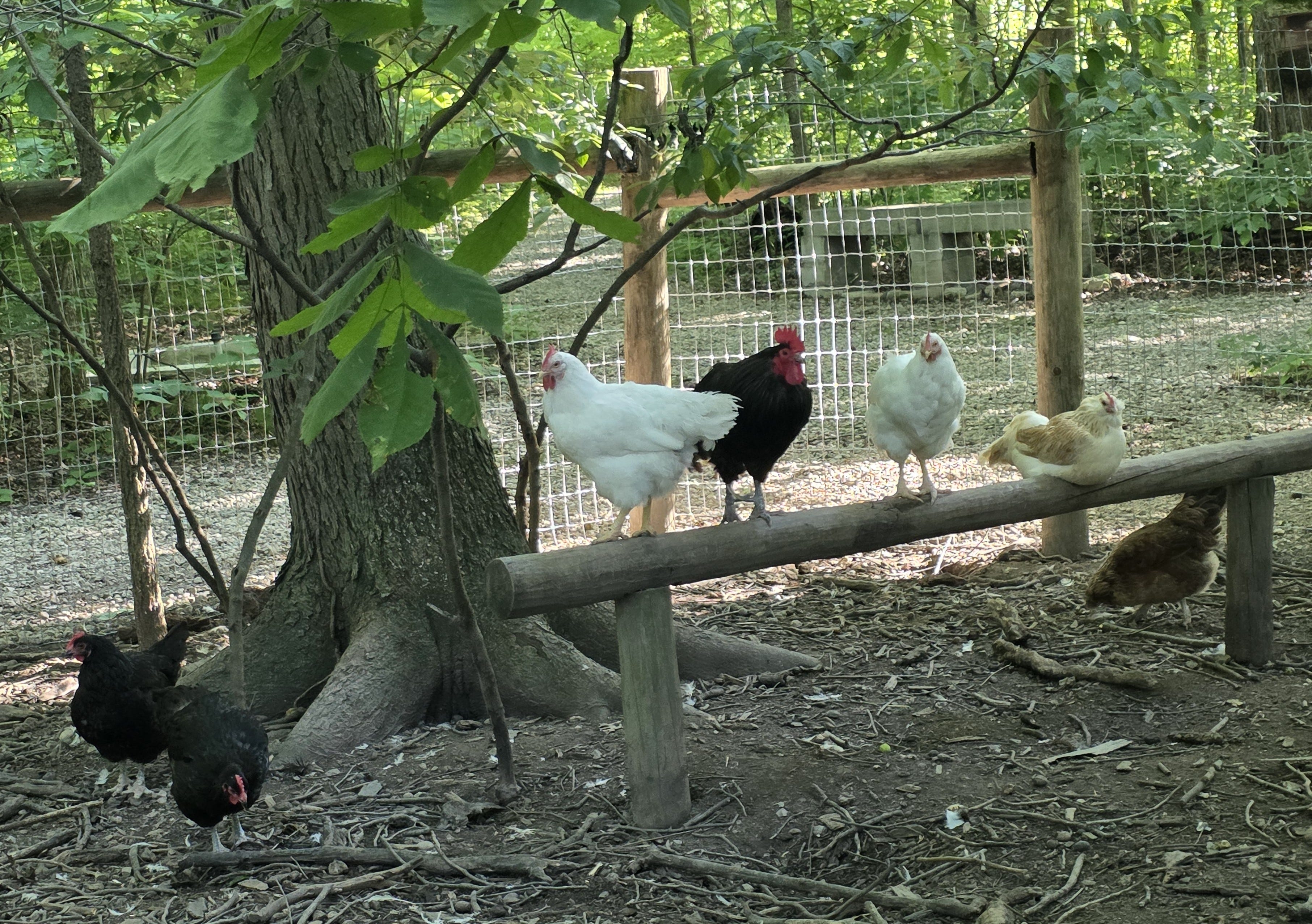
We chose Australorps and Buff Orpingtons to start our flock because both are dual-purpose birds, excellent layers and good meat birds. They are also known for being friendly, easygoing breeds. That friendliness has made all the difference in a flock that has included small children among its caretakers.
Over the years we’ve added other breeds: Rhode Island Reds; White Leghorns; and Mottled Cochin Bantams (reliably goes broody and hatches eggs the rest of the flock won’t sit on). Golden Buffs, who lived long, full lives and simply weren’t replaced when they passed and Golden Laced Wyandottes, a friendly, but more fragile breed that didn’t hold up as well here.
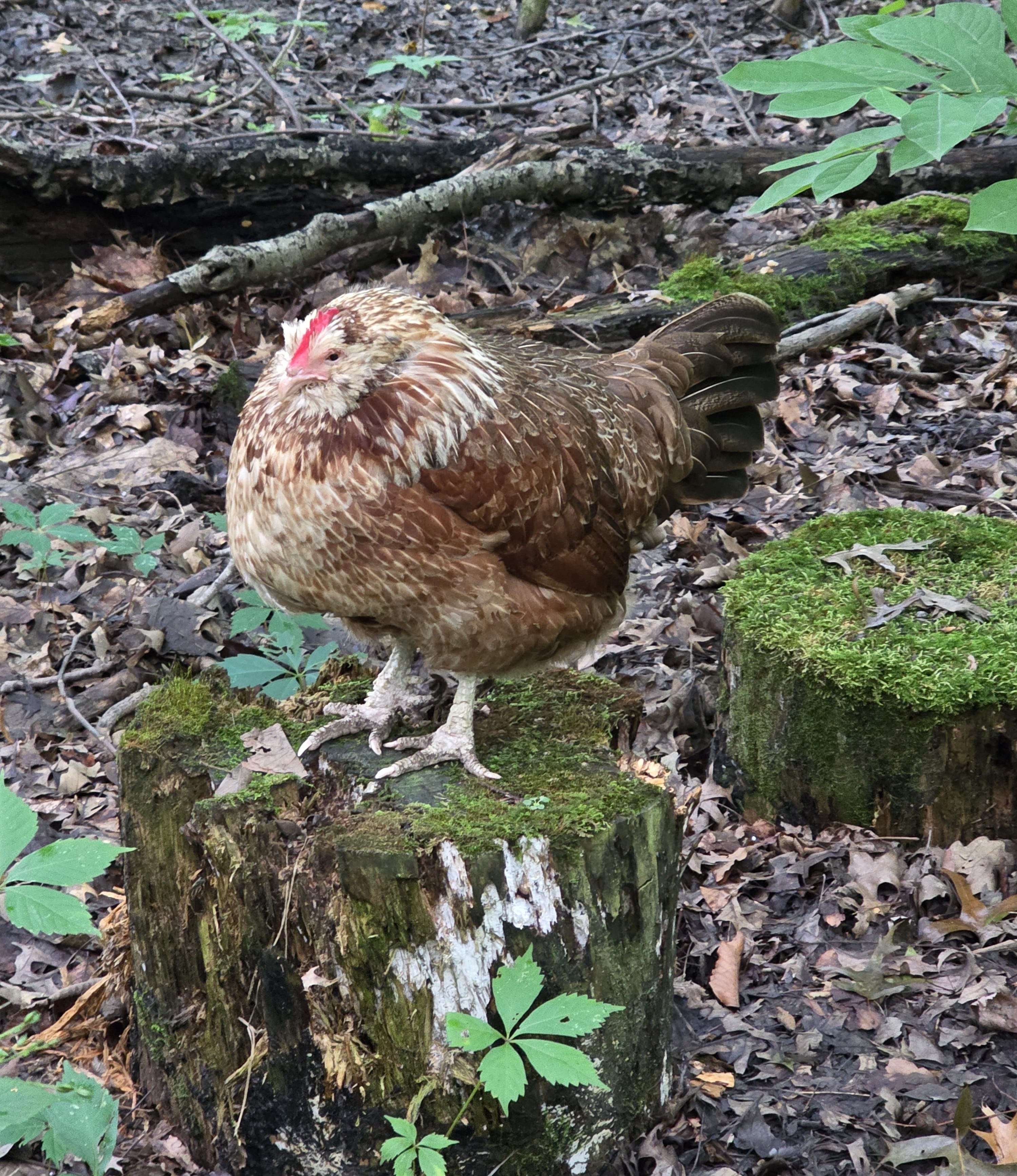
And then there’s the Green Queens by far the most adventurous and most affectionate of the bunch. They love being picked up, and they’ll fly the coop just to be near whoever’s outside, or to scratch through the compost pile. One of them made her escape and had to be carried back to the run seven separate times in a single day, trotting straight up to us each time like it was part of the routine.
Meet the Green Queen A hybrid breed developed as a new variety of the Easter Egger, bred for prolific egg-laying, up to 310 eggs a year, and known for their green eggs and varying feather colors. They’re also known for being some of the friendliest chickens you’ll keep.
Our biggest struggle with chickens has been predators. A hawk problem was solved with wire mesh strung over the top of our 4-foot woven horse fence, spaced every two feet in a grid pattern, enough to keep them from diving in.
Raccoons took more work: the barn itself had to be built sturdy enough that they simply can’t break in, and the chicken door has a latch no raccoon hands can figure out. Every night, the barn is locked down tight like Fort Knox, every animal safely inside.
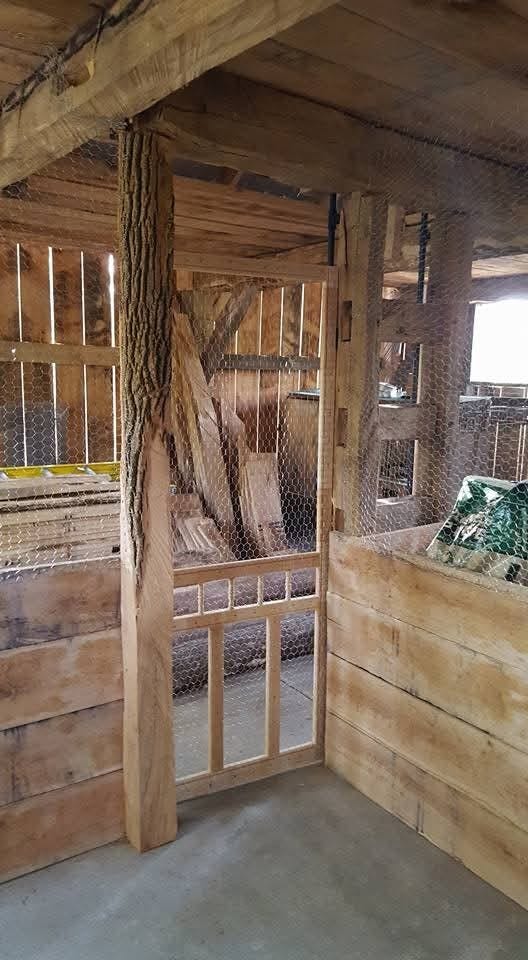
The coop itself is really two spaces working together. The main coop is 10 feet by 12 feet, roomy enough for 20 to 30 chickens, and sits right next to a smaller second coop, 10 feet by 6 feet, which we use for raising chicks and isolating any bird that might be sick. A 4-foot wooden wall wraps around both coops and the space between them, with chicken wire running from the top of that wall to the ceiling, just enough to keep the birds contained while still letting air and light through.
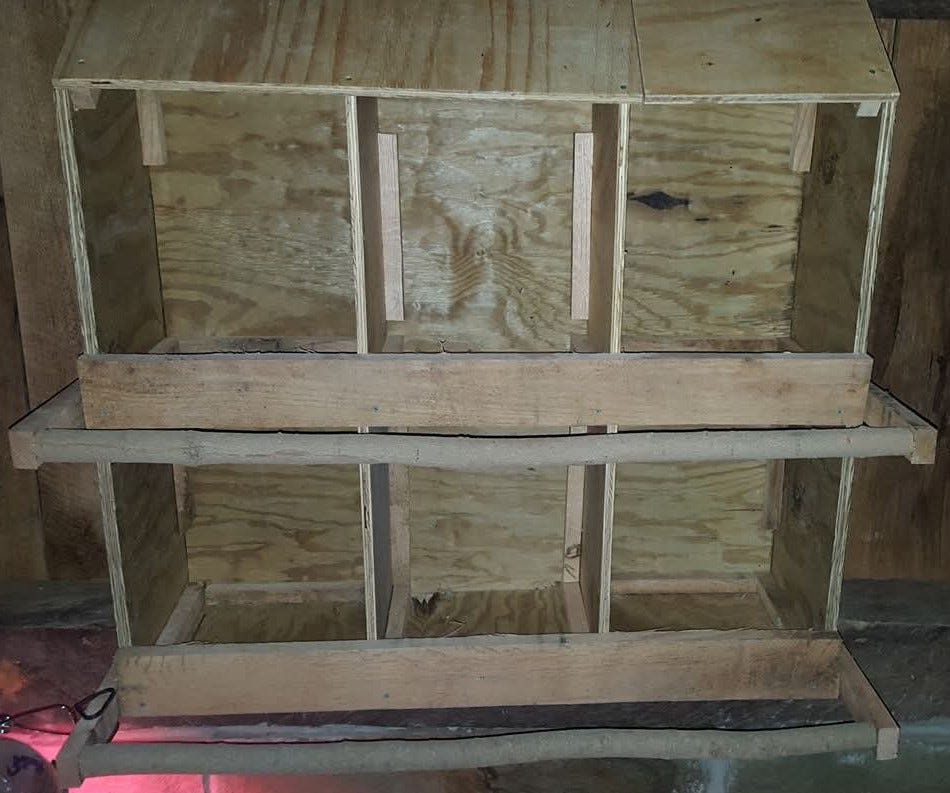
Inside the main coop, six nesting boxes line one side, each about a foot cubed, with a 2-inch lip on the front to hold the straw in place. A perch made from a natural branch sits four inches in front of the boxes, giving the hens somewhere to land before settling in. Three roosts span the main coop, two six feet long, the other ten, all three made from natural branches, bark still on, about an inch and a half thick, just right for the chickens’ feet to wrap comfortably around.
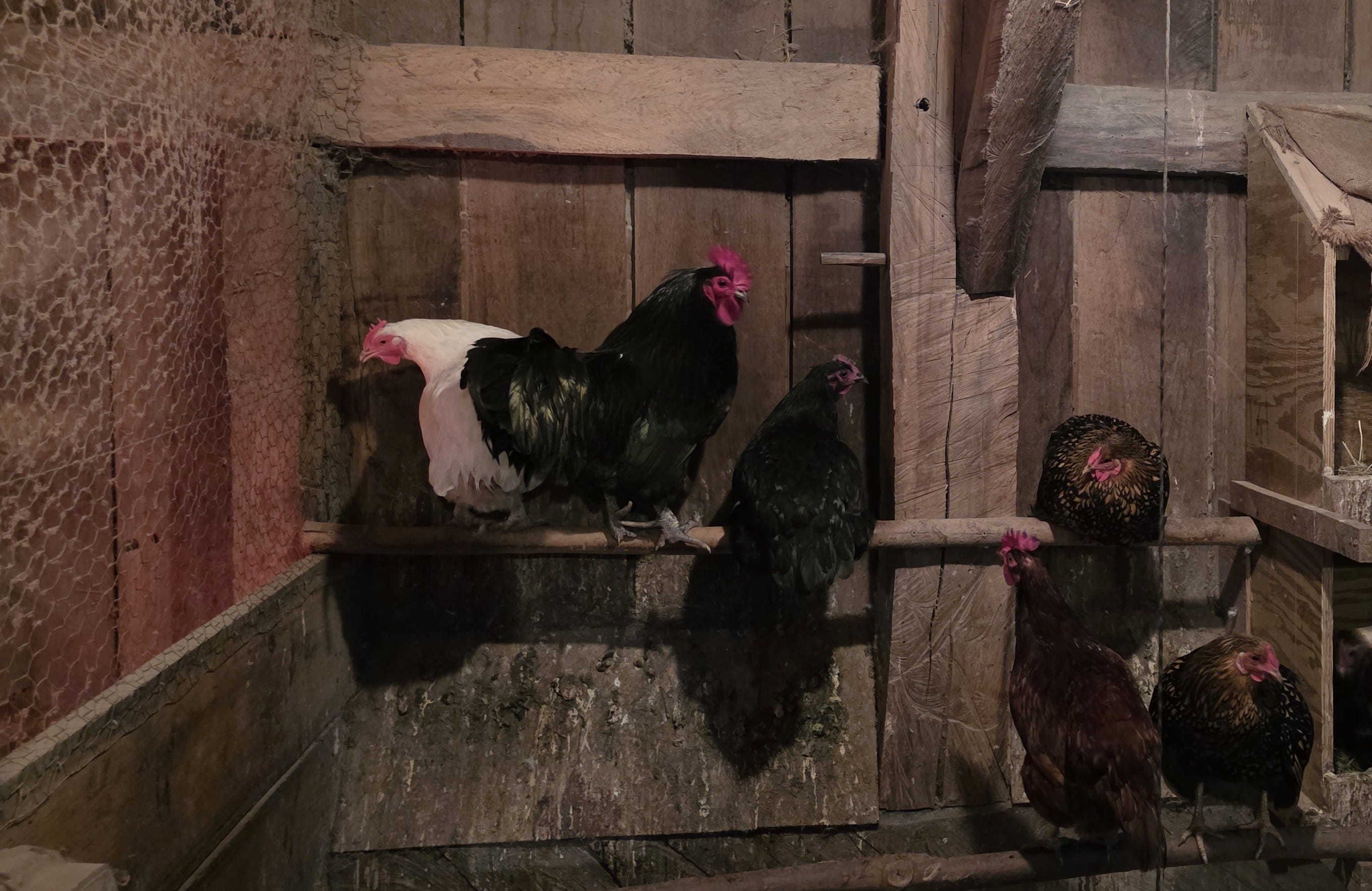
The smaller coop keeps it simple with two nesting boxes of its own. A perch made from a natural branch sits four inches in front of the boxes.
The chickens also have a swing in their coop made from a natural branch hung with 550 paracord thread through holes drilled in the stick. It’s about 18-inches wide. They love to perch on the swing to get a better view and yes, they actually rock back and forth to get it going a little. It’s really fun to watch.
Access to the run is through a small door, 8 inches wide and 9 inches tall, with a ramp leading down to the ground. The door is hinged at the top, so it swings shut and stays closed on its own, with a stick to prop it open. The run itself is fenced with 5-foot woven metal horse fencing for optimum security.
Today we keep Nigerian Dwarf goats, and if you ask us, they’re basically pets with benefits. They’re friendly and affectionate, even the males are gentle with kids, and they love being hand-fed and petted. They produce some of the richest milk you can get, around 8% milkfat, and are a size that’s easy to manage. They herd easily, too, and stay put behind fencing with almost no effort on our part. No escapees here.
We used to keep Angoras as well, but those were my daughter’s goats, and she’s since grown and moved out. Nigerian Dwarf has become our breed of choice.
Controlling parasites has been our biggest challenge with the goats. We treat with Ivermectin every six months, spring and fall, or as needed, and we manage grazing carefully: rotating pasture, avoiding wet grass and morning dew, and letting them browse plants known to help fight parasites naturally.
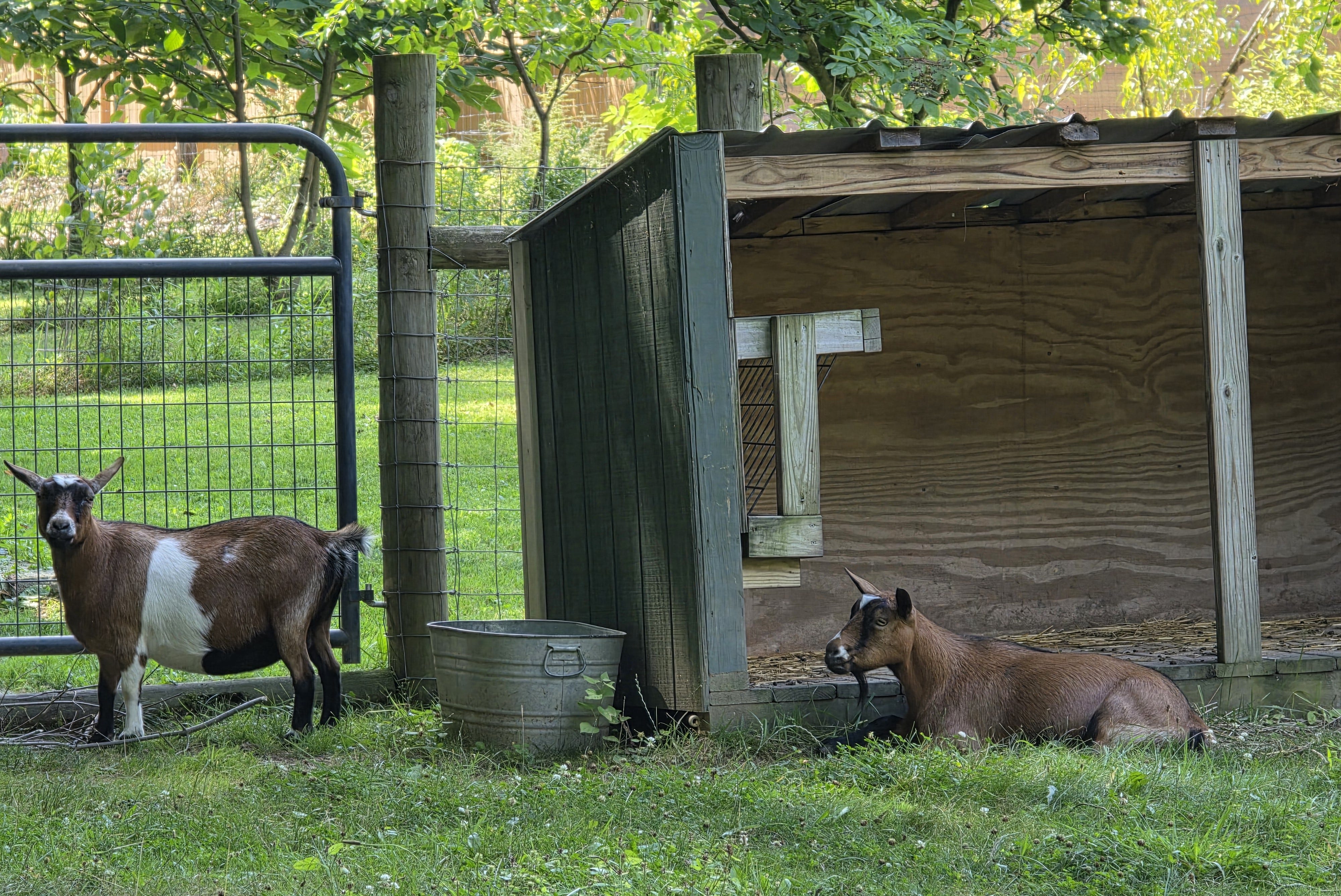
Two of our goats, Naomi and Ruth, have a story worth telling on their own. We brought home two unrelated does from the same farm, planning for a wider gene pool for future breeding. A week later, the farmer called and one of the does’ baby had been standing in the pasture crying for her mother ever since we took her, and would barely eat or drink. So we went back for her. She cried the whole ride home, but the moment we set her in the stall with her mama, they touched noses, snuggled in, and the crying stopped instantly.
We named them Naomi and Ruth, after the Biblical pair, not a perfect match (they were in-laws, not mother and daughter), but it felt right. Mother and daughter both carry the Myotonic, or “fainting,” gene, and to this day they get so excited running in from pasture for a special treat that they’ll actually fall over mid-stride. Funny, and not funny, at the same time.
The goats have two stalls in the barn across the aisle from the chickens, each measures 8 feet by 10 feet, with 4-foot tall walls with boards spaced 2 inches apart, close enough to keep them contained, open enough that goats in neighboring stalls can still see each other. The boards are far enough apart to hang a water bowl from the edge. The doors latch from the outside, with no gaps a clever goat could work open, so there’s no letting themselves out.
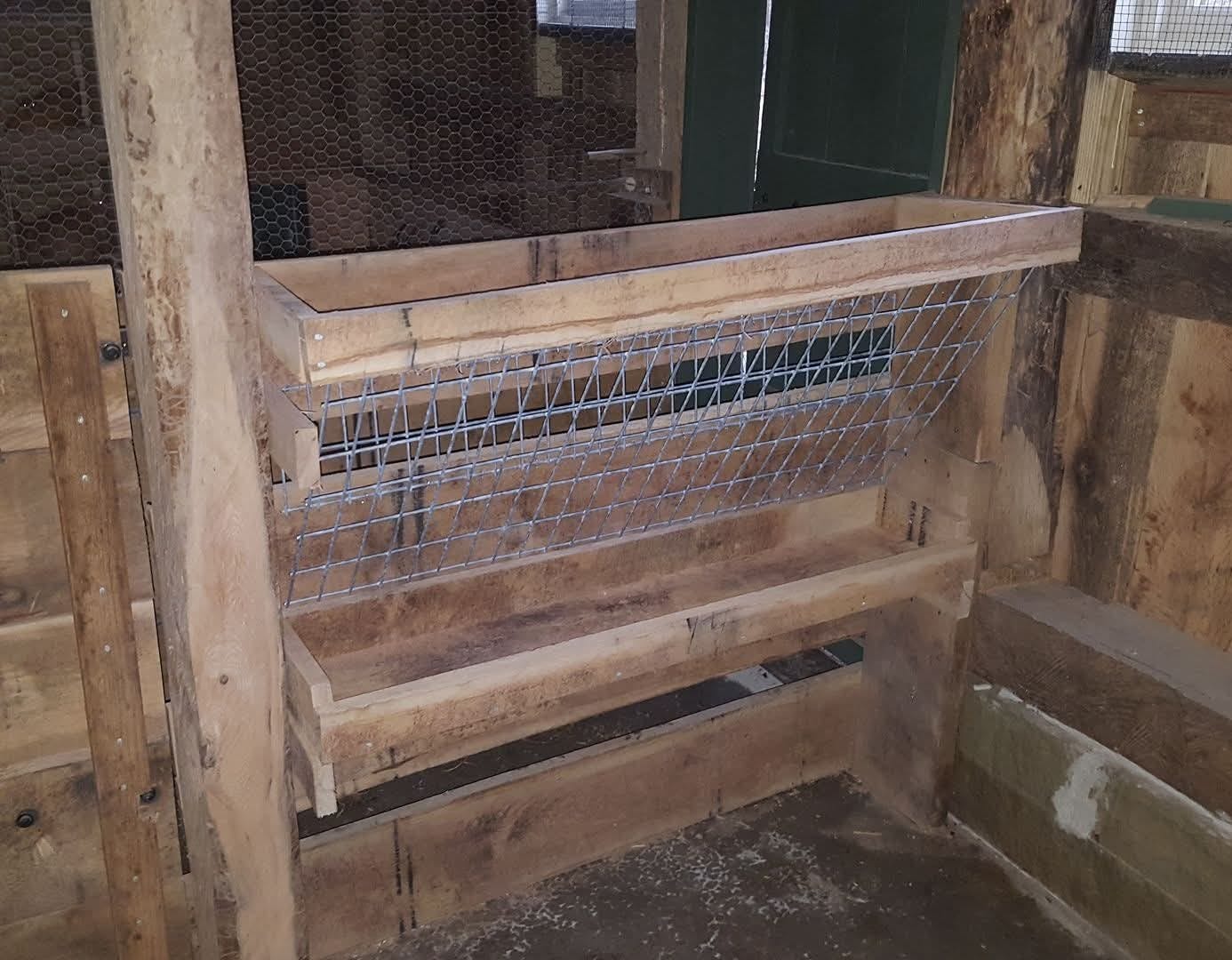
Each stall has a hay feeder built from hog panels, with spaces that are 2 by 4 inches so the goats can pull hay through easily, with a wooden tray at the bottom to catch what falls and to hold a bit of extra feed.
The goats have two pastures each about 30 feet by 50 feet with a metal watering trough and a goat shack. The shacks are simple, but sturdy. They are built on two 4x6, 8-foot long beams being four feet wide and sided on three sides with the fourth left open. It is topped with a metal roof, and fitted with a small hay feeder on the short end. Both shacks face east and away from the prevailing winds and storms; so, the goats always have a dry, wind-blocked place to shelter.
We keep the males and females separated by gender except during breeding, and once a month we trade the two groups between pastures. This keeps things interesting for them, evens out the grazing, and this is the part that matters most for the parasite struggle we mentioned earlier, because it helps break the parasite cycle. We also let the goats browse freely on acorns, young hickory nuts, and the leaves of those trees, since the tannins in them make a goat’s gut a harder place for parasites to survive. The goats seem to know how much they need to eat. Plus, free-choice mineral is always available to them as well.
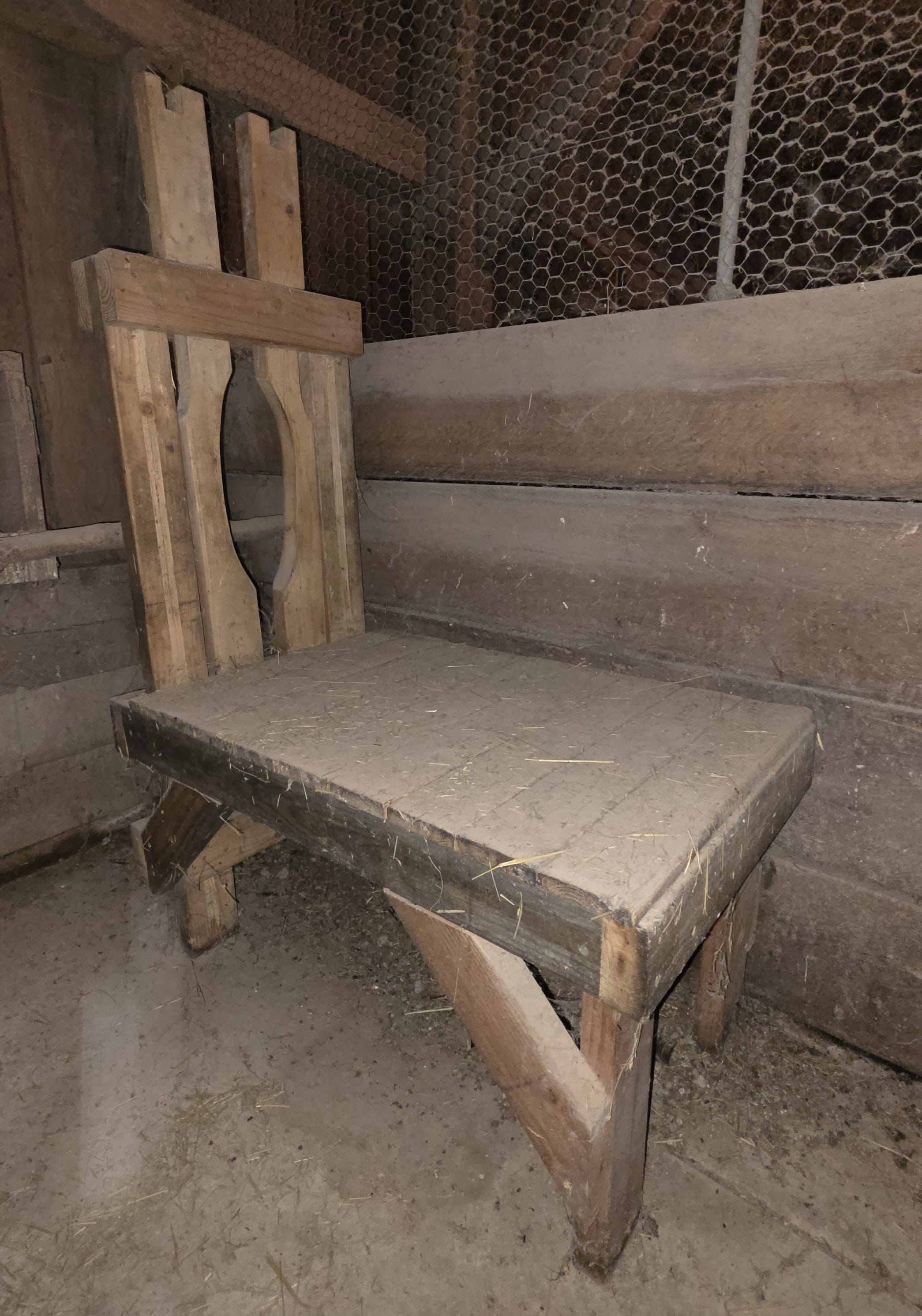
The Milking Stand Built entirely from recycled pallets, the stand’s four legs raise its floor about two feet off the ground, with a head gate at one end to hold the goat still while milking. The gate itself is just two boards, pivoting at the floor of the stand and held together with an old piece of rope — simple, sturdy, and it’s held up for years.
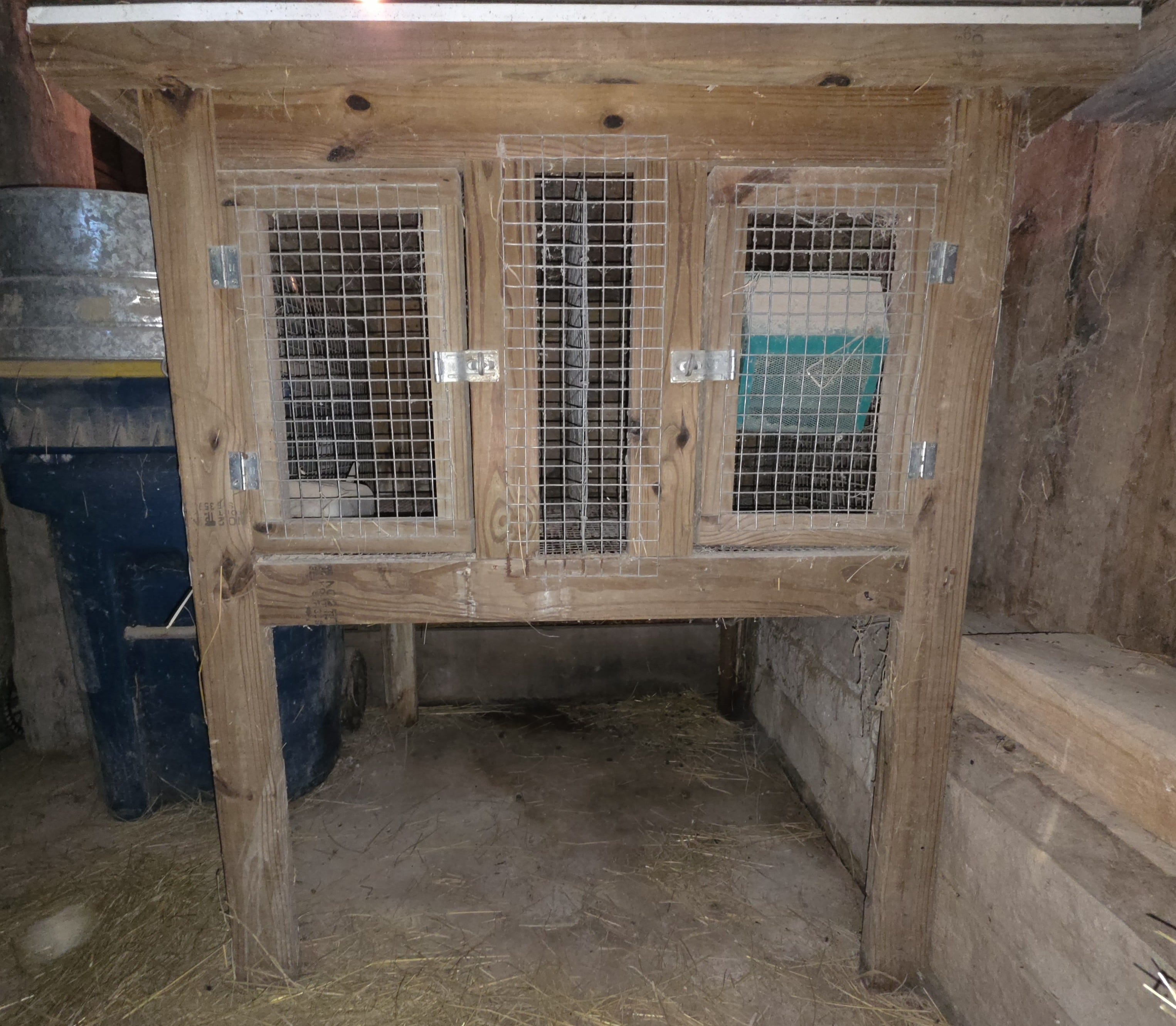
We’ve also kept rabbits over the years, a mix of breeds, all as pets and beloved companions to our kids. Each lived a long, good life here on the homestead. These days the Amish-made hutch in the back of the barn sits empty, though it’s ready whenever we decide to bring rabbits back to the homestead. Right now, it just feels like the right season to not take on another animal to care for.
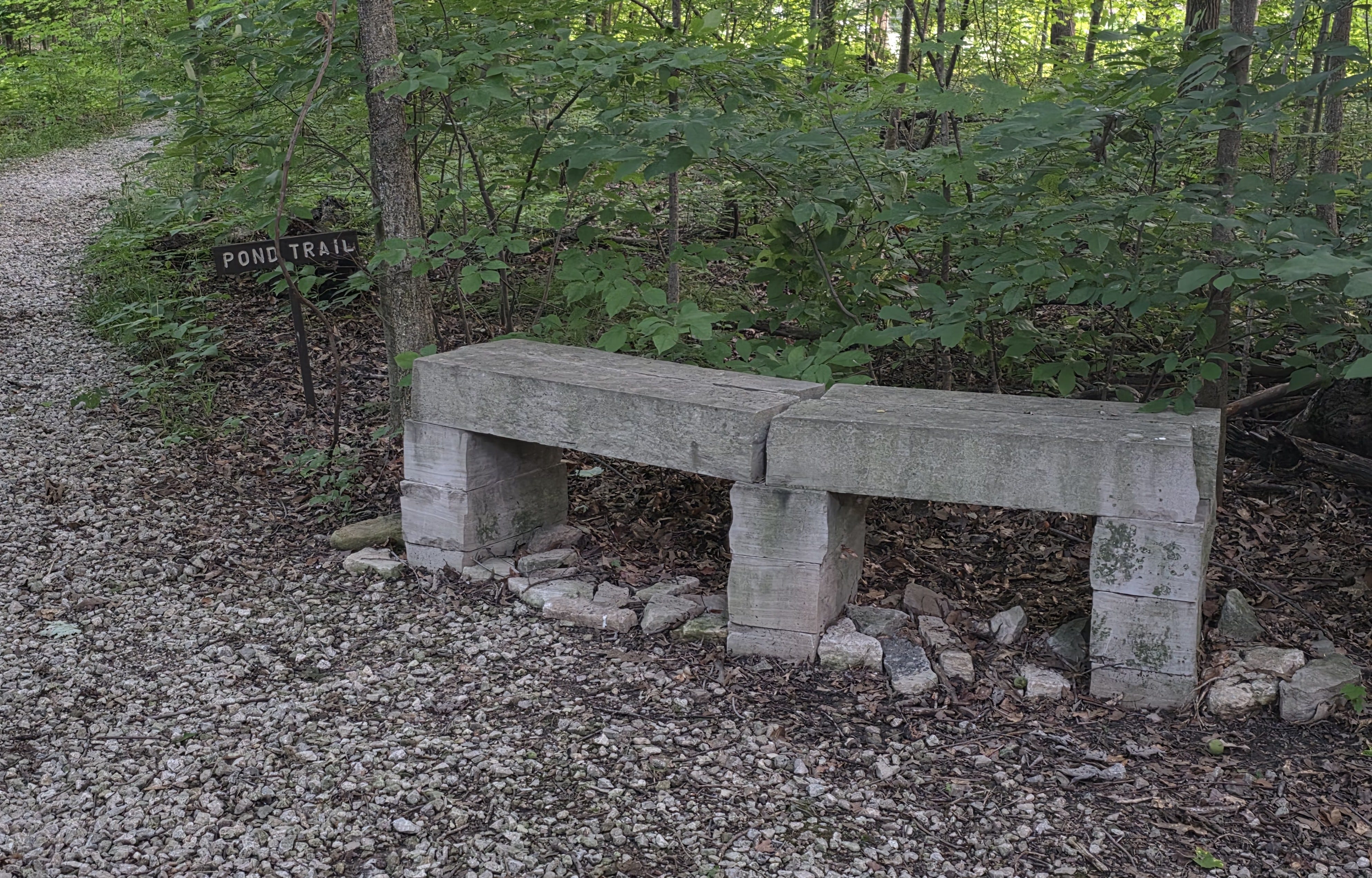
Just across the path from the barn and chicken run sits one of our “thoughtful spots,” a simple stone bench, placed for no reason other than to invite you to stop and stay a while. It’s become one of our guests’ favorite places to land in the evening, especially after they’ve helped herd the goats into the barn for the night just before dusk.
From the bench, you can watch the chickens make their own way up the ramp one by one, unhurried, until each on has settled onto a perch inside the barn for the night. It’s a small, quiet kind of magic, and it’s one of the ways we invite guests to do more than just look at this place and to actually take part in it. Guests also enjoy helping with evening chores, feeding and learning to milk the goats.
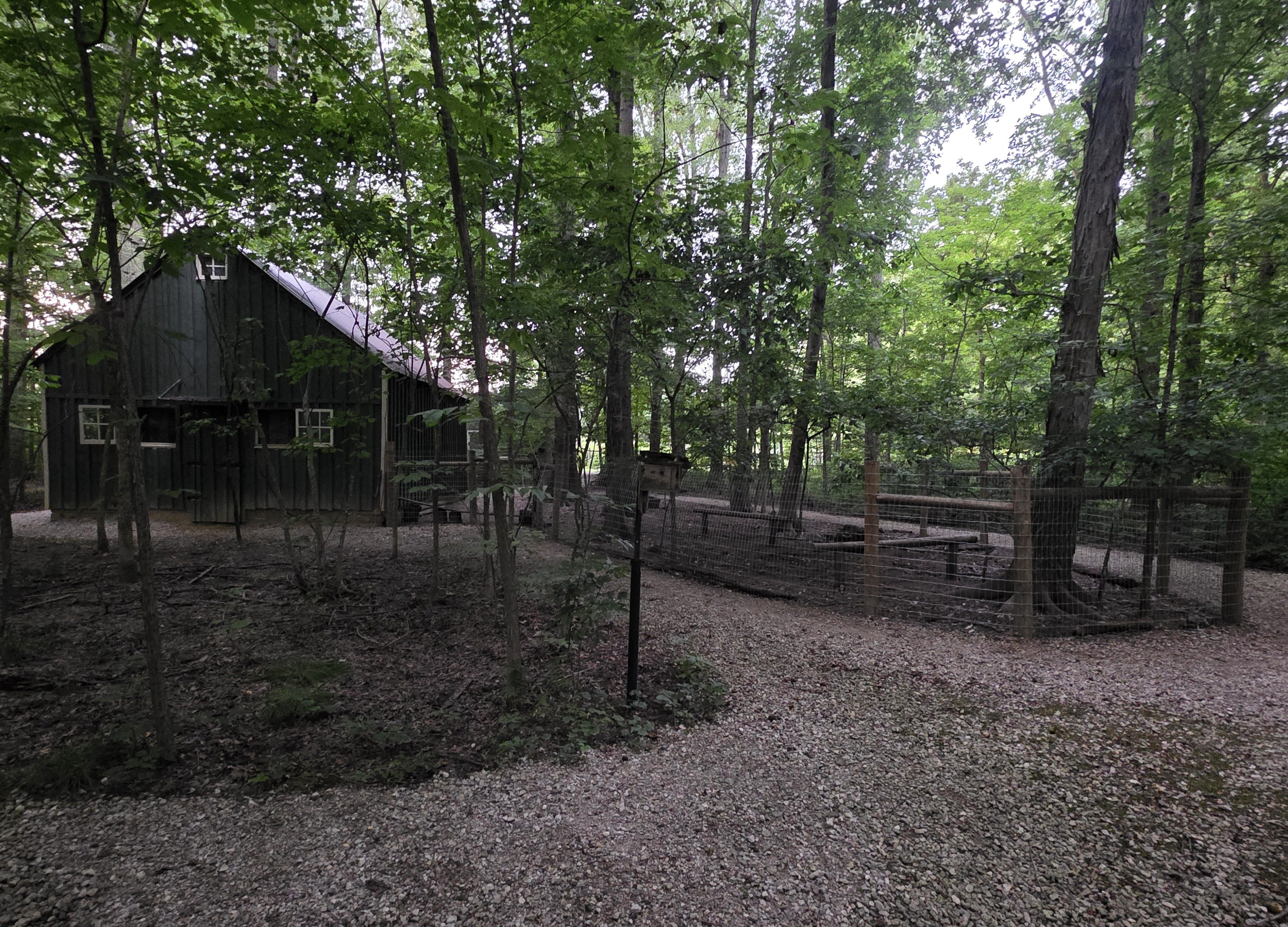
This barn has become exactly what we hoped it would be: a place built not just to shelter animals, but to give them a good life, and to give the people who visit a reason to slow down and be part of it too.
We’re endlessly grateful for the four years of hands that helped raise this barn, for the animals who fill it now, and for guests like you who take the time to sit on a stone bench and watch a chicken go to roost. It’s a small thing, and somehow it’s everything.
Next week, we’ll leave the barn behind and step into the Permaculture Orchard, another part of the homestead built slowly, season by season, with its own story to tell. I hope you’ll keep walking this tour with me.
Warmly,
— Nelle, Mama’s Homestead
Rooted. Gathered. Passed Down.
Thanks for reading Mama's Homestead by Nelle! This post is public so feel free to share it.
P.S. — If someone you love has been quietly longing for this kind of life, will you share this with her? Forward this email. Send her the link. Sometimes all a woman needs is for someone to say — there is a place for you here.
P.P.S. — Thank you for being here! We are just getting started. The best is ahead. Stay close.
Comments
Nothing yet. Say the first thing.
Sign in to join the conversation.