
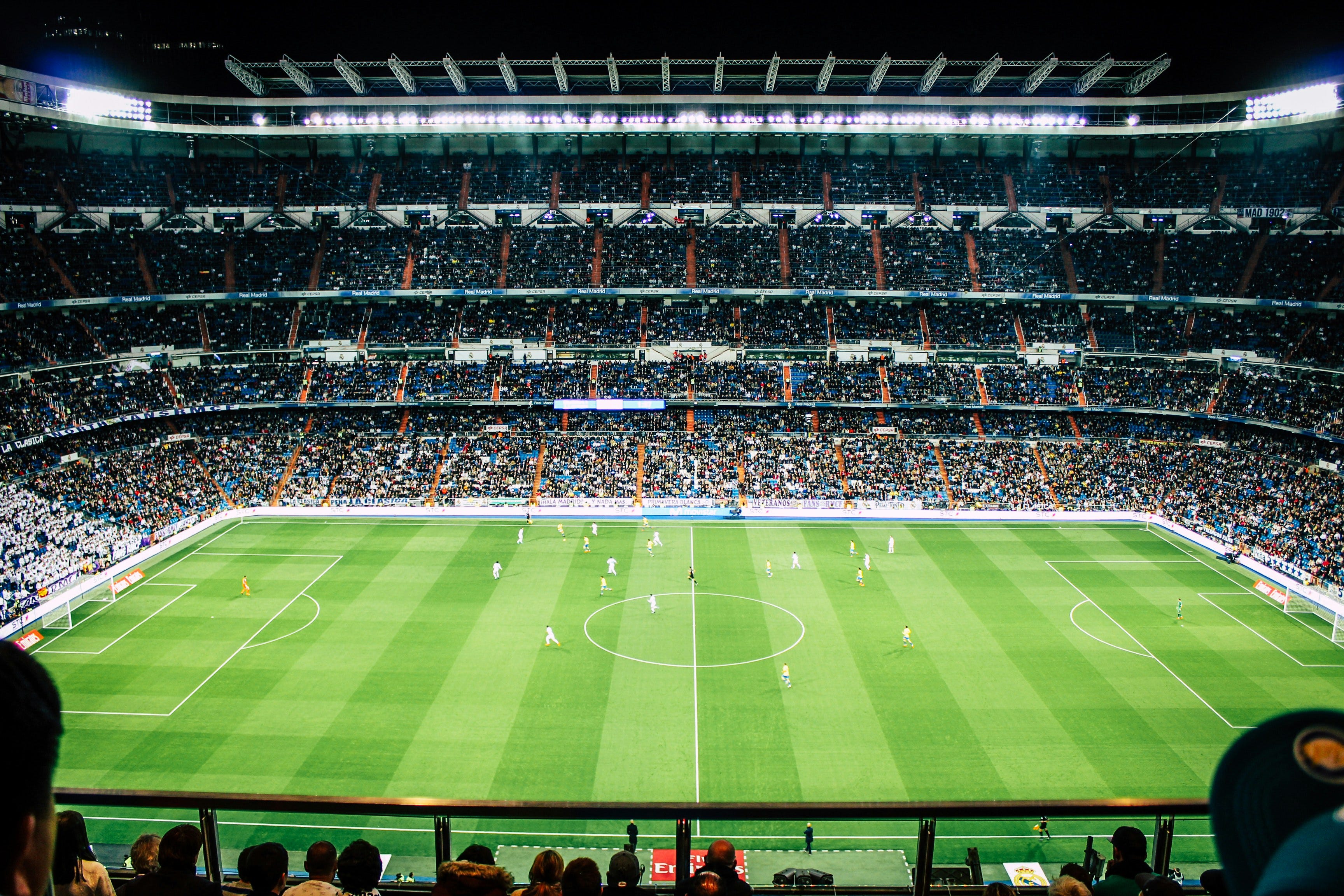
As Arsenal secured its first Premier League title in 22 years last week, the last of the PL matches played with our beloved Fulham going out with a win despite the previous week’s disappointment, and as the the world prepares for the start of the FIFA World Cup in a few weeks, it is fitting to write about sports today, mostly football with a brief look back at the Olympics. If you are not a sports/football fan, stay with me, I promise it will, as it always does, lead to language.
I have a newsletter in my drafts folder from a few months ago that begins with two athletes: Eileen Gu and Matty Cash. Gu is the most decorated female freestyle skier in Olympic history, was born and raised in the U.S. by her Chinese mother and grandmother (her father is American but his identity is not publicly known). Gu is fluent in Mandarin having spoken it at home growing up in the U.S. and spent most of her childhood summers in Beijing. She competes at the Olympics for China.
Matty Cash, the England-born, Slough raised Aston Villa right-back is a second-generation Pole who had never been to Poland before he joined the Polish National team in 2021. Cash qualifies for Poland through his mother, Barbara and you can read more about his grandfather’s immigration to England here. Cash is not fluent in Polish and has noted in interviews he knows very little except a few phrases he needs while on the pitch with Polish teammates.
In professional sports, there are many layers to all this including financial (sponsorships), especially for Gu, and perhaps for Cash, his only chance to play in a World Cup since it is unlikely he could make the England team. (Note: Poland did not make this year’s World Cup so Cash is out of luck anyway.) Beyond all that, my interest, which comes as no surprise to anyone, is how language plays into a heritage identity and the judgements people make.1 For example:
Do you belong “more” to a community and to a country if you are fluent in that country’s language(s)?
Should linguistic competence be a prerequisite or at least something to strive for when you claim nationality, especially in the public eye?
What does it mean to be “half” of a culture/heritage/language, particularly if you spend considerable time in a specific place?
During the Olympics, the media focused on the good/bad immigrant portrayal of Gu and figure skater Alysa Liu but that’s just the norm to pit two successful women against one another so I do not have much to add to the “immigration Olympics” talk (a.k.a. whose family suffered more to get to the U.S. and again what does that mean in the context of being a good/bad immigrant?)
I never published the newsletter a few months ago because I got stuck. I wasn’t sure how to come full circle with these ideas of athletes competing for certain countries, their language proficiencies in the languages of those countries questioned, praised or both, and if it was simply another example of nationalism and what Ingrid Piller calls, “the territorial principle” where languages are mapped onto territories without the considerations of diverse linguistic repertoires. In these instances, linguistic repertoires become markers of inclusion or exclusion and that may perpetuate a multitude of linguistic injustices.
But I was thinking a lot about language and sports today in the context of football because of the upcoming World Cup so I wanted to share the unfinished thoughts about Gu and Cash because maybe you have ideas or answers to how language and heritage identity co-exist, especially on a world-stage like professional sports.
Now, back to football. We are not Arsenal fans but after their PL win, I did fall down a rabbit hole of googling Arsenal manager Mikel Arteta’s polyglotism. He is fluent in seven languages:
I have written about football and language before here, here, and here. It is a sport that has provided my kids and our family the opportunity to learn about multilingualism, multiculturalism, geography, history, nationalism (for better and for worse) and so much more. We have discussed everything from flags to names that depict certain heritages and players who learn the language of the clubs where they play all around the subject of football.
With my older child, we have also discussed corruption, fascism, communism and so much more in the context of the sport and its history. It is amazing how a passion for a sport, or anything, can lead to something “educational” when considered in a larger context and why we should follow our children’s leads whenever possible—perhaps a child-led education fan newsletter for another time. It is also fascinating to hear which country children support in world-wide tournaments and during the Olympics when there are multiple heritages in the family and the child may feel differently culturally and/or linguistically than their parents. (A form of the territorial principle is often at play here in the context of a birth country.)
Most recently, we watched the Adidas Backyard Legends advert together. If you have yet to watch the $67-million advert, I highly recommend as there is some serious celeb power, and the best part in my opinion is the translanguaging. Timothée Chalamet flexes his multilingualism throughout the commercial and there are a handful of cameos with big-name football stars all saying a sentence or two in their first language: French, Spanish, Brazilian Portuguese and German. (It would have been nice to see a larger range of languages, especially minoritized and underrepresented ones and not only the “big” or “official” ones, but it is still worth a watch.)
As for the World Cup starting in a couple of weeks, there will be 48 teams from six continents, happening in three countries (U.S., Canada, Mexico), 104 matches over 39 days in 30 “official” languages but in reality, many more…
Comments
Nothing yet. Say the first thing.
Sign in to join the conversation.