
I never thought I’d write a piece with the first person and “explosive diarrhea” in the same headline, but that changed when my latest freelance piece was published.
The piece — titled “There are People Trying to Get the ‘Explosive Diarrhea’ on Purpose. I Know Exactly What They’re Thinking” — was published on Slate’s homepage last Wednesday. In it, I talk about how social media has been teeming with posts from people saying they wanted to contract cyclosporiasis to lose weight.
After the piece was published, I found myself reflecting on how it came together. I’m sharing 10 related tips for anyone who’s curious about the behind-the-scenes process of getting a freelance story published.
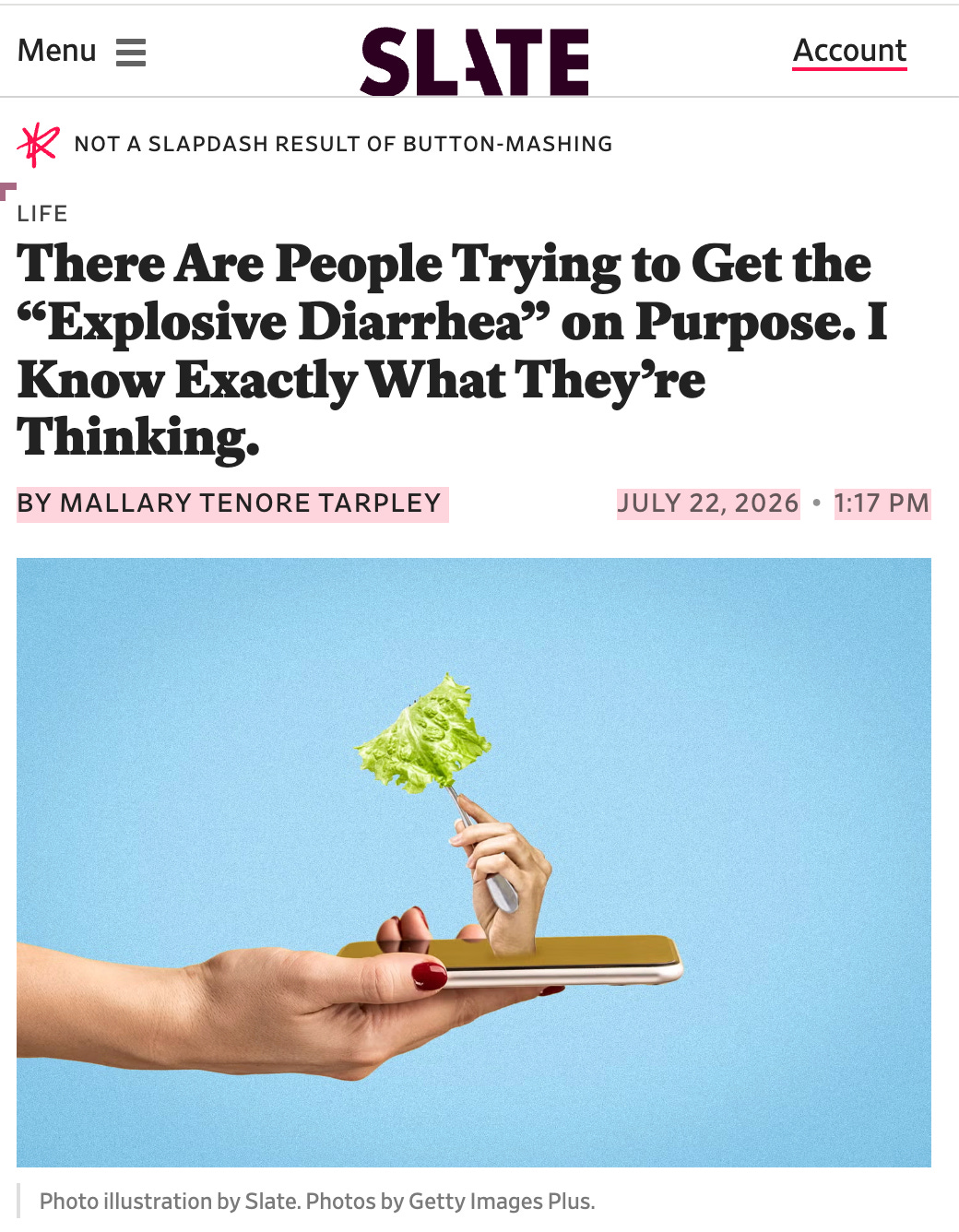
If you want to get better at pitching news outlets, get into the habit of asking yourself: Do any of the week’s top news stories relate to the themes in my book or other projects I’m working on? Is there an angle to these stories that hasn’t been covered much, if at all?
When the cyclospora outbreak started making headlines, and news stories began advising people to stay away from bagged lettuce and berries, I felt immediate discomfort. The warning was an important public service, but given my history with anorexia, I’m sensitive to any messaging around what not to eat.
I didn’t think there was necessarily a story to be told there, but then I went on TikTok — a platform I’ve been starting to frequent more as I think through my next book idea. That’s when I started seeing posts about people running to Taco Bell to eat Taco Supremes with extra shredded lettuce, and flocking to the grocery store to buy Taylor Farms salad bags, all so they could “get skinny” for the summer. I knew I had something to say about this, and I hadn’t seen other mainstream media outlets publish stories about it yet, so I decided to craft a pitch built off the news. It got accepted within hours. By contrast, the piece I pitched before this one took months to place.
I had previously interacted with the editor I was reaching out to, so I was able to keep my pitch pretty short, without the need for introductions. I’ve copied the pitch here and bolded words and phrases that I think work especially well in pitches based off the news. They focus on the following (in this order): timeliness, topic, angle, approach, and exclusivity:
Hi X,
Hope your summer’s going well! I’m writing to see if you’d be interested in a quick turnaround piece about how the Cyclospora outbreak has led to a slew of memes and social media posts from people saying they hope they get Cyclospora so they can lose weight and “get skinny” for the summer. Influencers are even encouraging followers to buy berries and salad bags to get sick and lose a few pounds. It may seem funny or innocuous, but it’s a prime example of how diet culture seeps into so many aspects of our lives, making us believe we need to lose weight at any cost.
I’d like to write a reported commentary about this from the perspective of someone who has lived experience with anorexia and is in ongoing recovery. (I’m also considered an expert in the eating disorder field as the author of the memoir SLIP, published last year.) I could speak to what’s happening and provide my own insights alongside quotes from eating disorder psychologists and dietitians who have taken to social media this week to push back against some of the messaging.
I think it would make for an interesting piece that I haven’t really seen covered elsewhere (at least not yet)! I haven’t pitched this to anyone else yet and would love to see it published in Slate.
Look forward to hearing your thoughts,
~Mallary
I had pitched this editor on another piece about a month ago, but it wasn’t the right fit for Slate. (The other pitch wasn’t timely, and it ended up finding a good home on another site that will publish it next month.) I thought the cyclospora piece would be a better fit, so I reached out again with hopes of getting a positive response. When the editor said yes, it was a reminder that one “no” doesn’t mean “never again.”
I like to challenge myself to get bylines in a range of publications. I had never before written for Slate, so I read a few of the site’s recent stories to get my ear acclimated to the publication’s voice. This exercise can help you keep voice top of mind when writing your story.
Ask yourself: What does the publication’s voice sound like? What are some adjectives that I would use to describe it? How can I harmonize with the choir (the publication’s voice), while also leaving an impression as a soloist (through your own voice)?
For this story, I had to seek out weight-loss content — aka the very type of content that I actively try to avoid as someone in eating disorder recovery.
I don’t get triggered easily, but I knew that viewing posts about people trying to get sick to lose weight would upset me. So I created protective barriers and was intentional about looking but not lingering. I set a 15-minute timer whenever I was searching for videos on TikTok and Instagram. There were so many related videos that it didn’t take long to find them, and four 15-minute blocks of time were long enough to get what I needed.
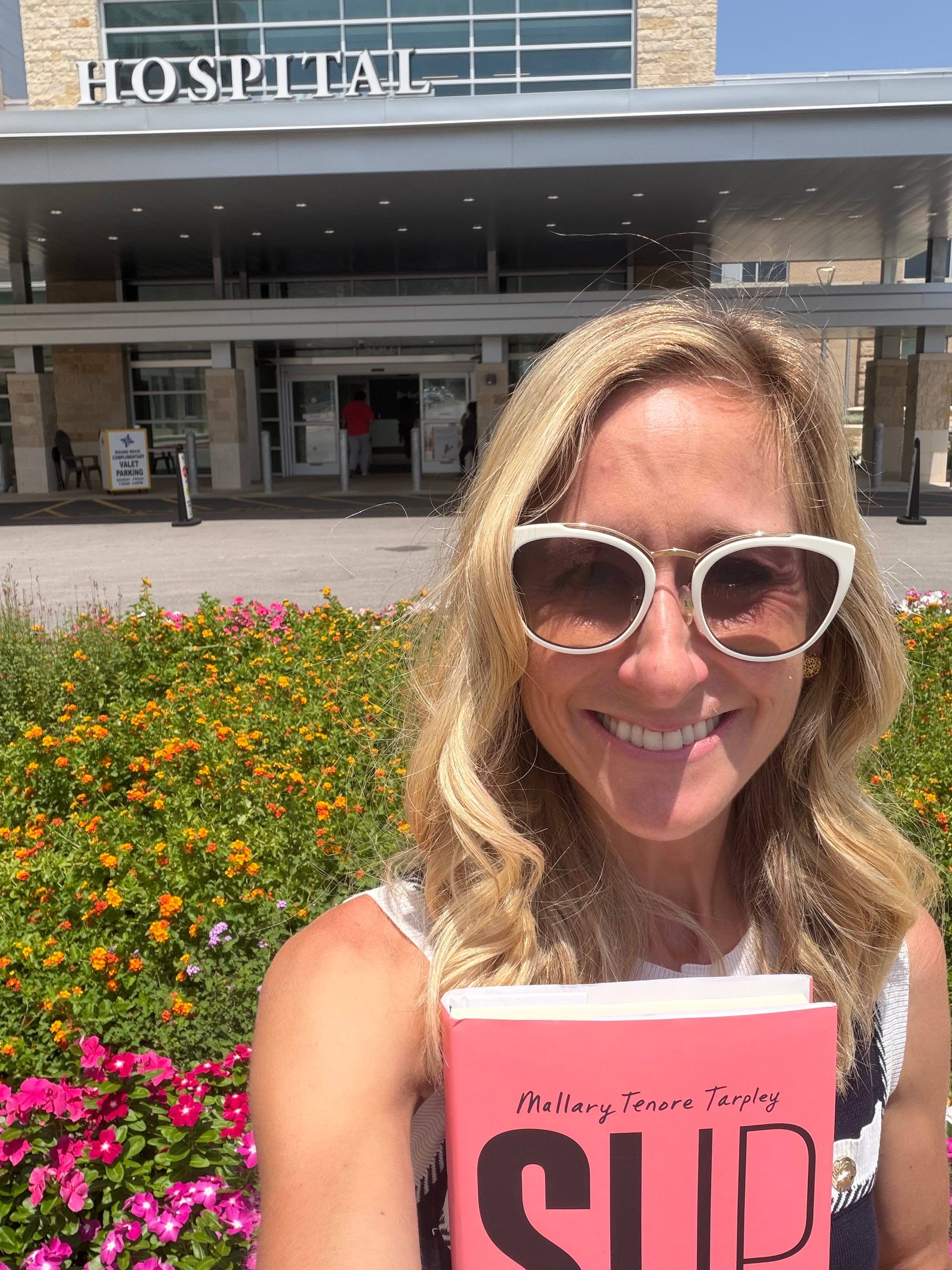
When writing a personal essay or commentary, it always helps to do some reporting to broaden your scope of understanding and include different voices in your piece. Since I have a lot of contacts in the eating disorder and anti-diet space, I was able to quickly reach out to a few sources and seek their input.
Stories for news sites are typically not much longer than 1,200 words, so there’s never a whole lot of room for quotes, but even one or two quotes can diversify the perspectives in a piece and deepen readers’ understanding.
Whenever seeking sources, I ask myself: In what ways might my own privileges or biases be clouding my judgment, and who can help me identify blind spots? Who has expertise that I don’t? Who speaks conversationally enough about this topic to provide me with thoughtful but accessible insights? (Some experts are incredibly smart, but they aren’t necessarily adept at speaking to the media and explaining their expertise in a way that general audiences can understand.)
Sometimes sources get cut from stories, meaning the quotes you included from them in your draft may not end up in the final piece.
This is always painful, especially when they’ve taken the time to respond and share their input. The cuts aren’t personal; sometimes a particular quote just doesn’t fit what an editor is looking for.
One thing I did when writing my memoir (and that I try to do when writing essays) is to say something along the lines of: “I’m not yet sure how or whether everyone I’m interviewing will appear in the book/story, but every interview broadens my scope of understanding and has value. So, I really appreciate you taking the time to talk with me.” This helps temper expectations early on, and it also adds a layer of transparency on the front end that can avoid letdown on the back end.
When writing this piece, I thought a lot about people with eating disorders because I knew that including images of the social media posts I was describing could be triggering. I’ve written before about the importance of avoiding images that glamorize eating disorders or perpetuate harmful stereotypes about them, and I wanted to follow my own advice.
In this case, my editor and I found a good middle ground: linking to the social media posts as a form of journalistic sourcing but not including screenshots of them. I was happy we were able to leave the images out.
When writing a freelance story, always inquire about images and headlines; those elements help shape a story, so try to provide editorial input on them whenever possible — especially when writing about vulnerable populations.
Publishing a story doesn’t have to be the end of the process. Think about ways to extend its reach by interacting with the publication on social media and creating additional content around it.
I shared the Slate story in my usual spots — Instagram, Facebook, LinkedIn, and Substack — but I also created a TikTok video, since so many of the posts I wrote about came from that platform. The video, which I recorded from my car after getting home from a long day of public speaking, ended up becoming my most-watched TikTok yet. (Always be open to experimentation, and remember that sometimes the least-produced videos are the ones that perform best.)
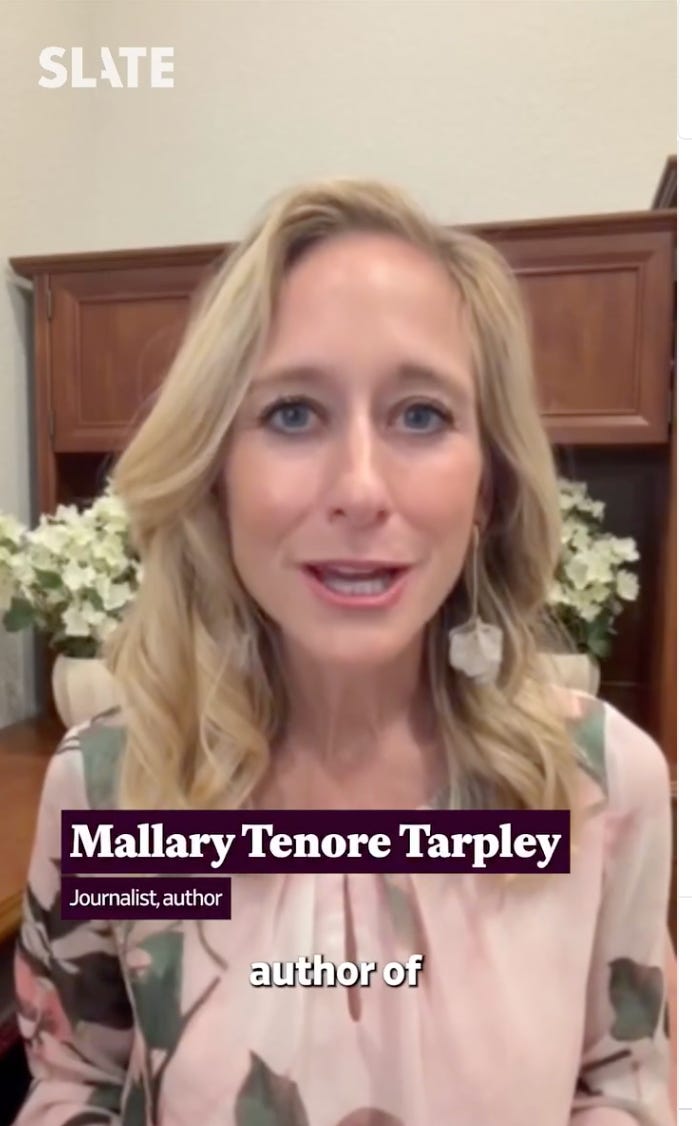
I also tagged Slate in my posts and messaged its Instagram account to let the team know I’d love to be tagged or invited as a collaborator if they shared the story. The next day, Slate’s social video editor asked whether I’d be willing to record a companion video. After dropping my kids off at camp, I squeezed the recording in between calls. It became another opportunity to promote both the article and my book.
(The video does include some images of the content creators, but they flash across the screen pretty quickly.)
During the writing and editing process, always keep an outtakes document — a place where you can save the copy that you or an editor cut. It may end up working for another story later on, or it could spark ideas for future personal essays or social media posts.
Reader responses can also be great fodder for social media posts. After reading my piece, some readers said the people in their network are “smart enough” to know not to try getting cyclosporiasis to lose weight. I understood what they were saying, but I also thought about how when you’re sick with anorexia, you’ll go to almost any length to lose weight because these disorders have nothing to do with intelligence. I decided to use this as a teaching moment, and I created a related social media post that mentions both my Slate story and my book SLIP.
When you create content that raises awareness or provides a teaching moment without being too didactic, your work can be of great service.
✦ ~~~~~~ ✦ ~~~~~~ ✦ ~~~~~~ ✦ ~~~~~~ ✦
I’d love to hear from you! Feel free to share questions, reactions, or pointers of your own in the comments.
Earlier this week, I did a Substack Live with Rebecca Morrison, author of the young adult novel The Blue Dress. We talked about our writing process and the overlapping themes in our books: mother-daughter relationships, eating disorders, body image, and more. You can watch the replay here.
No posts
Comments
Nothing yet. Say the first thing.
Sign in to join the conversation.