
We made our last scan this month. It is so easy to get heads down and focus on a goal but not looking up means you miss seeing how others can help you and how you can help others. It’s not really what we want to do either. We want to keep feeding back into the Los Angeles art engine. So, after trying to push beyond the technical edges of the scanner and under the extreme scrutiny we put the files under, we talked to Kyle from LA Drum Scanning to get a drum scan of a reflective, original art work. And while drum scans are usually used for transparencies like film, it’s possible, said Kyle — and I sat back while he speed dialed the manufacturer and then broke off into a beautiful conversation about the technical aspects of making this scan. Then, like watching a proton pack and ghost trap reverse out a paranormal entity we watched an image appear.
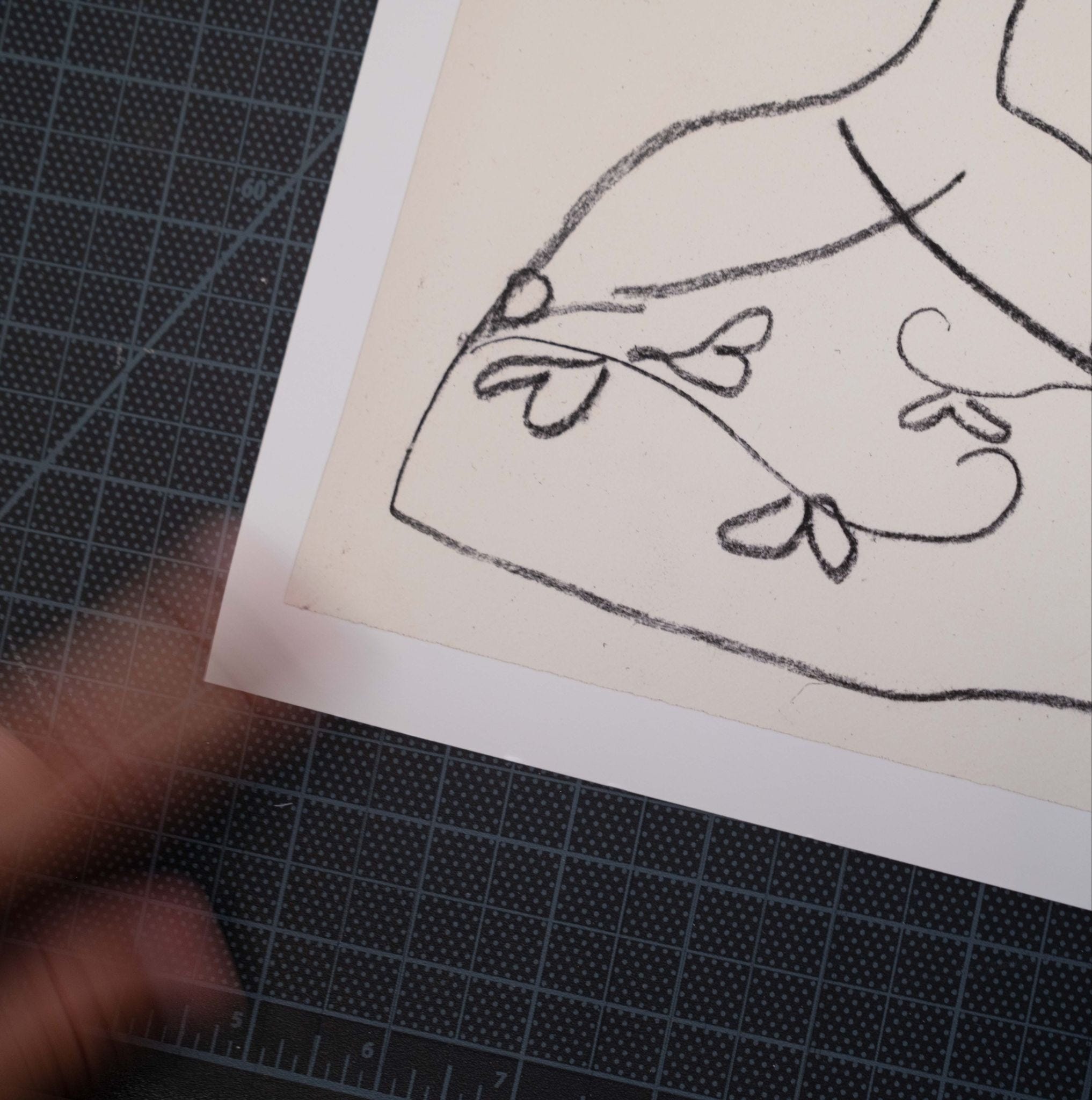
It was all for a simple — but no less threatening — charcoal drawing, the outline of an inverted chalice by Natalie Lerner for Liz and Joshua of 839 (we also recently made a another deeply reverberating print for them of Andrés Janacua‘s work) who are holding a limited edition print run of the piece. But also, it’s a watermark from the paper, it’s a pinhole mark on the paper it’s drawn on. It’s the off white and surprisingly colorful bits of fibers of the eggshell paper, and the specs of dust and debris accumulating of its surface over time.
Photography — in this case a flat scan — can do that, it will take everything that is before it and present it back out. And here, it’s in the print. The illusion created by the paper and the 4 trillionth of a liter sized dots of pigment ink, and the exacting work of taming a massive scan and all of its information, and the extreme resolution of a real life reverse ghostbuster manipulating the apparatus to create a proper drum scan.
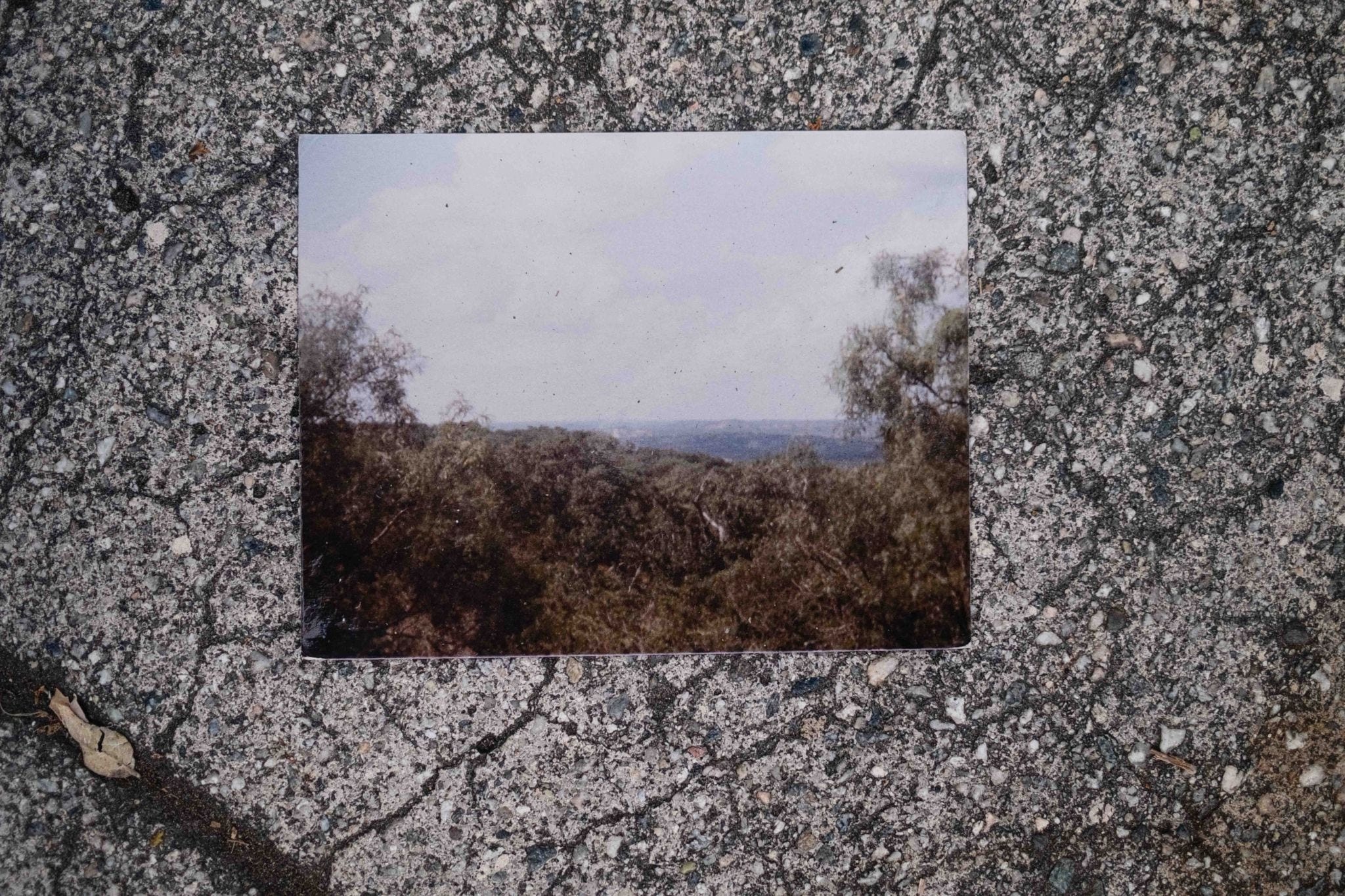
On the wall this month, there has been a print we made of a photograph of a photograph on gravel, when we saw the file it was immediately heartbreaking. It was a piece by Josh Villalobos. Josh and I talked sizes and surface quality and detail, paper and color, but really the whole thing could have happened quietly. Never speaking a word, because the photograph did it all, and said it all. It held all of it, the what it felt like, the why, the hope. The print will be making its way across the country for a show in September.
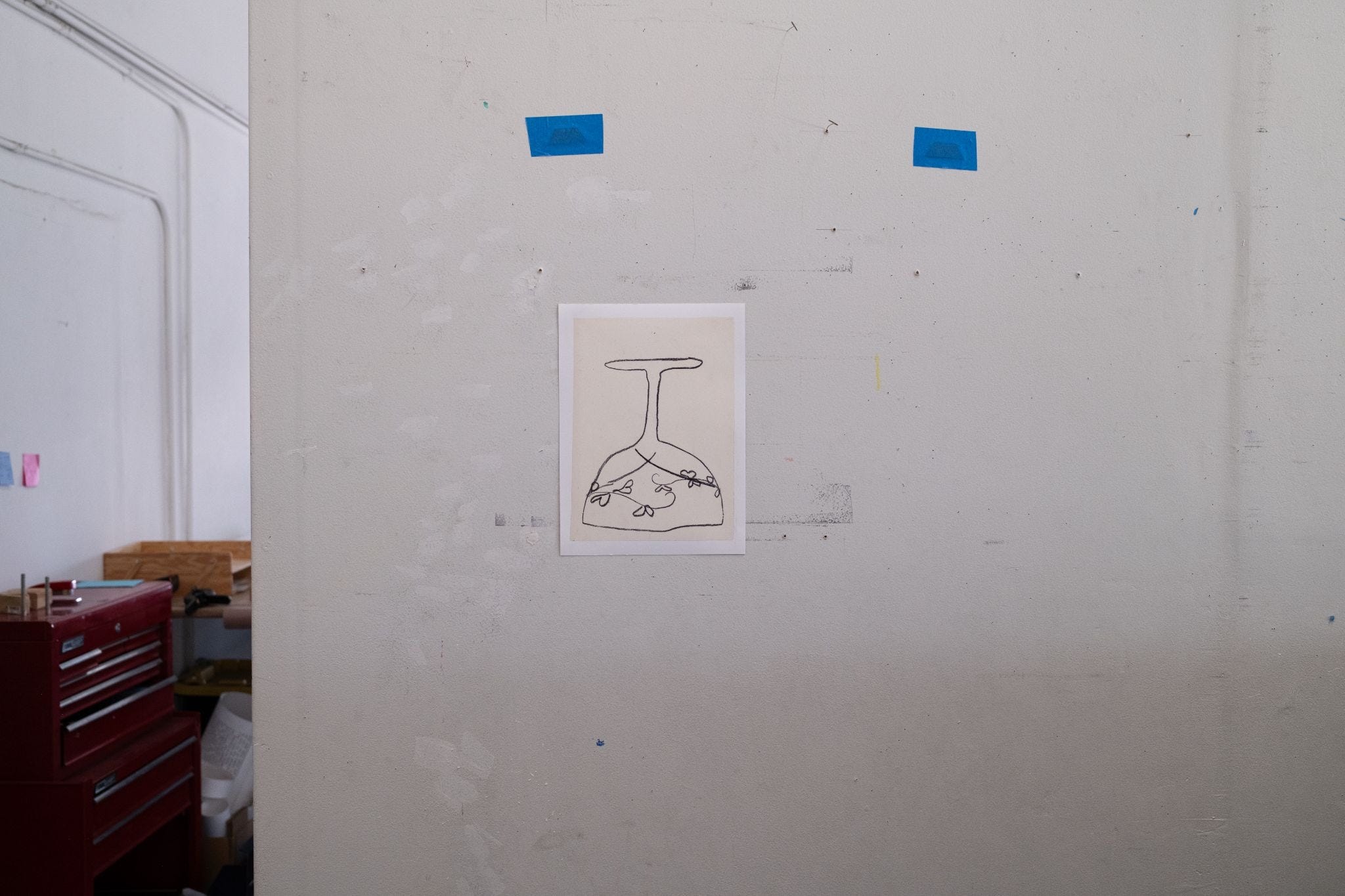
We put on the wall the print we made of Natalie’s Chalice, knowing that it itself is an illusion of the illusion of two dimensional objecthood of the object depicted by the artist. They are very similar, but each stage of mediation points at what the previous pointed at plus a new reference point each time. Natalie’s original “Clover’s Chalice” (2026) is currently on view in at 839 through August 22.
And after a long and challenging week, we clicked on this not knowing what to expect and we sat and half stood on our way to the other room, for 10 and half minutes, not actually making it to the other room but making it to somewhere new. I hope you do to.
Here at the print shop, on unceded colonized land, in so-called los angeles, we operate on a sliding scale for artists, and pay-the-list-rate for those with capital or power (you can also help fund it here or on Venmo).
Come visit us and see how fucking good your work looks printed. Reply to this email or DM us on Instagram.
Thanks for reading Making Art at the End of the World — this post is public so feel free to share it.
Comments
Nothing yet. Say the first thing.
Sign in to join the conversation.