
I’m back from my unintended hiatus caused by the all-consuming revision of my book, which is finally done and being printed as I type!
I have some experiments and discoveries to share about this, and I would also love to hear what topic(s) you’d like me to return to in priority.
But in the meanhile I have to address the reality I can’t pretend isn’t happening, even if I try to keep it from encroaching into my writing and work.
I grew up during a civil war, but this is the first time in my life I watch my country being existentially threatened. Suprematist colonisers who demonstrate daily their contempt for all human life outside their own tribe are ethnically cleansing large parts of the territory, deliberately obliterating villages and historical sites – all traces of our presence and long history in the land – and poisoning the land itself to make it an inhabitable wasteland. They have announced their intention to annex the whole of the country, and as the rest of the world seems to feel it’s an acceptable outcome, there is nothing to stop them. Without divine intervention, this will continue until all of Lebanon goes the way of Gaza and falls into their hands.
This is the reality I can’t sugarcoat, that presses down on me every day when I try to get out of bed and why I’ve not managed to produce anything other than the book edits the past two months.
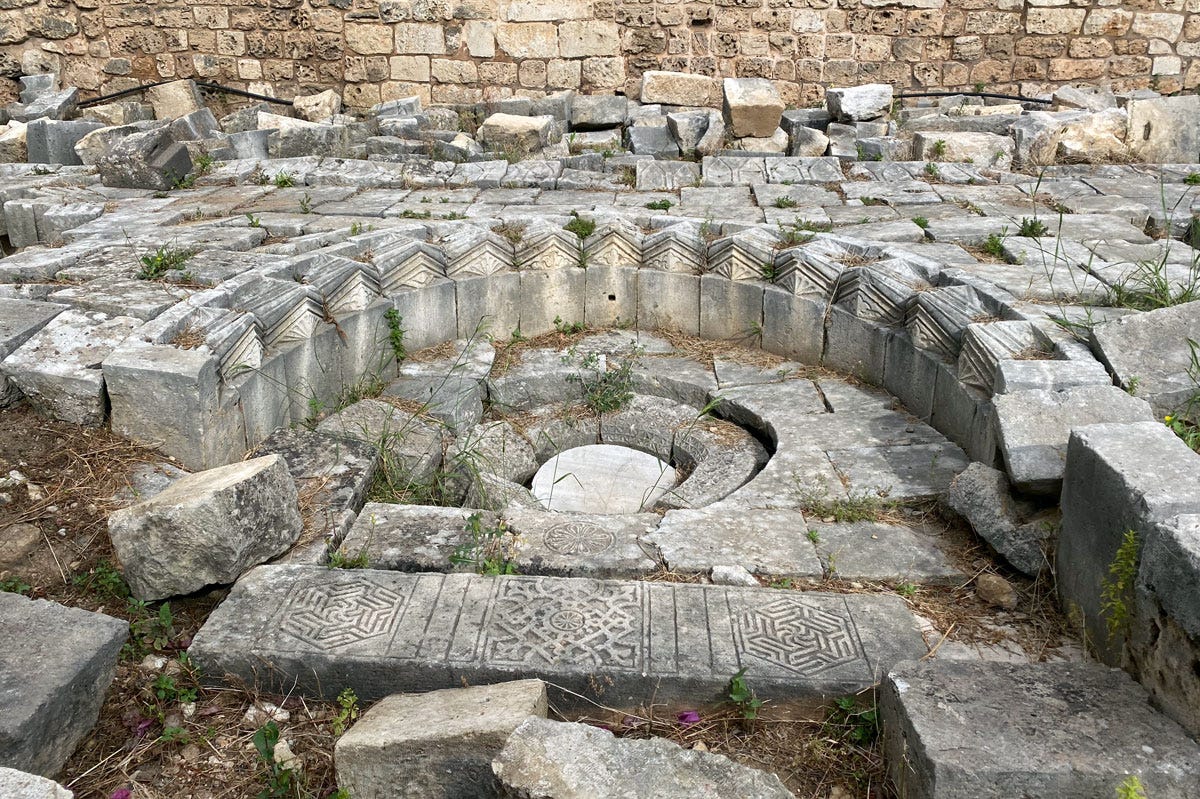
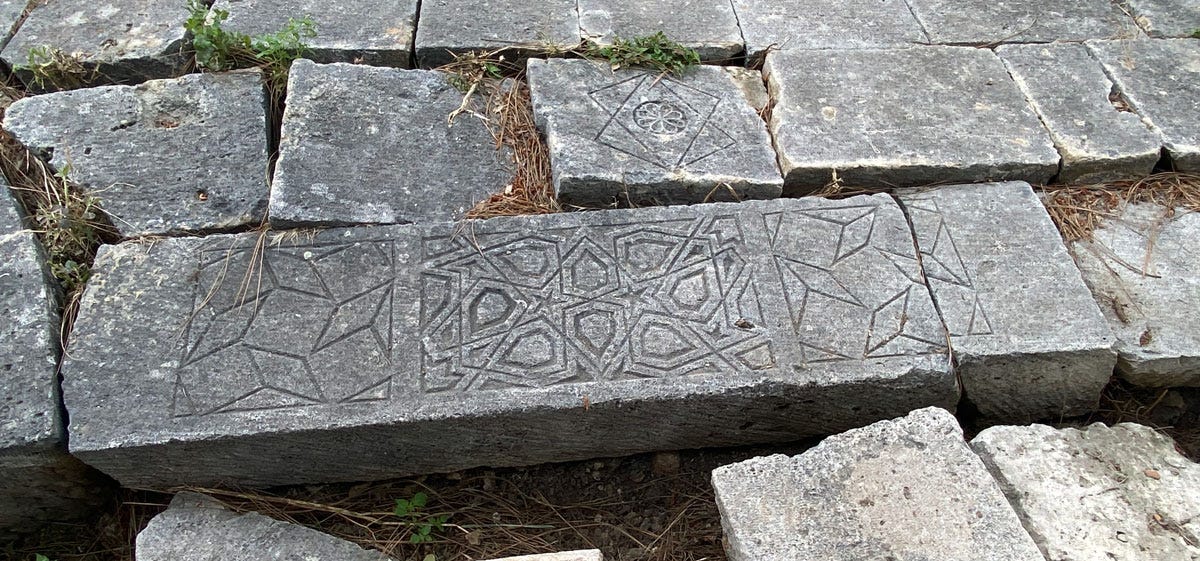
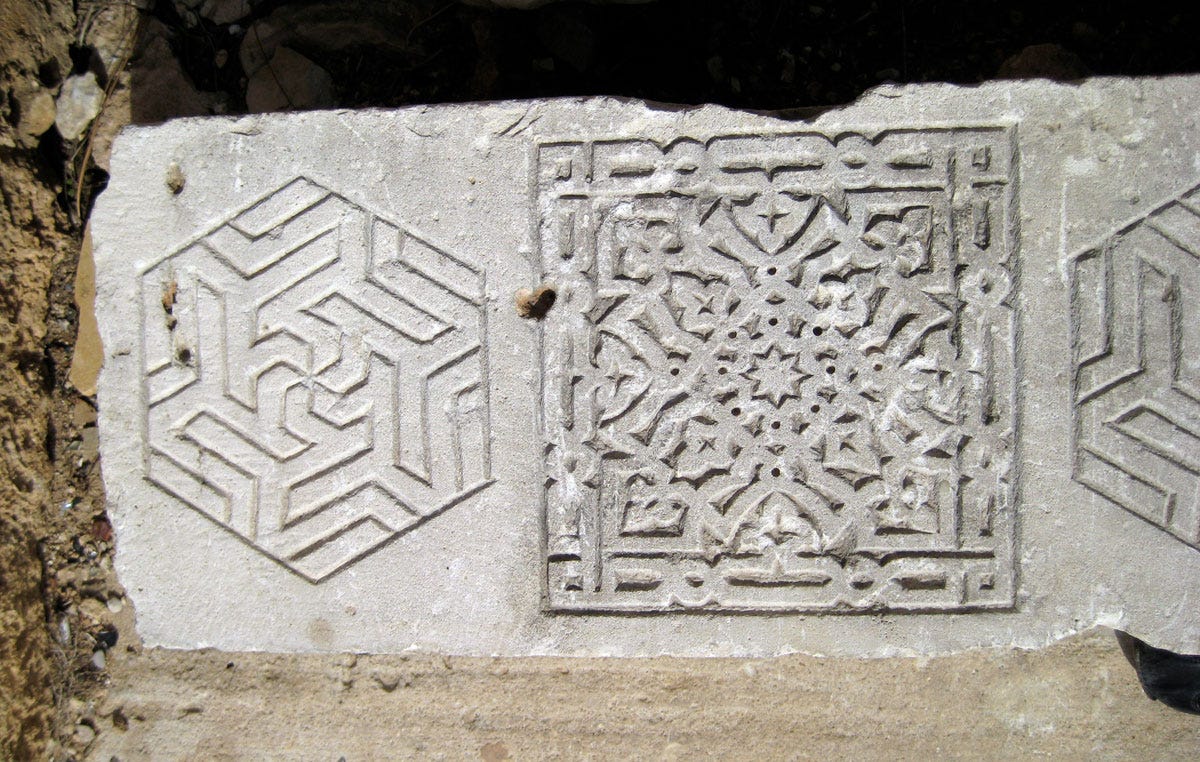
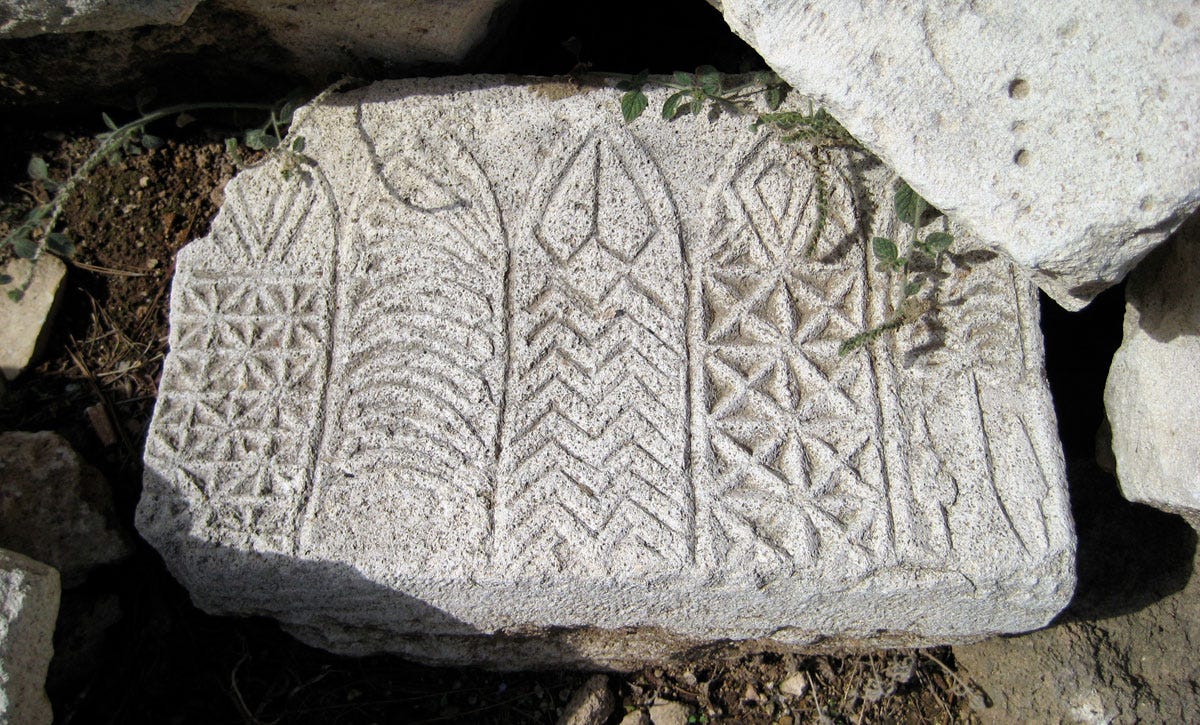
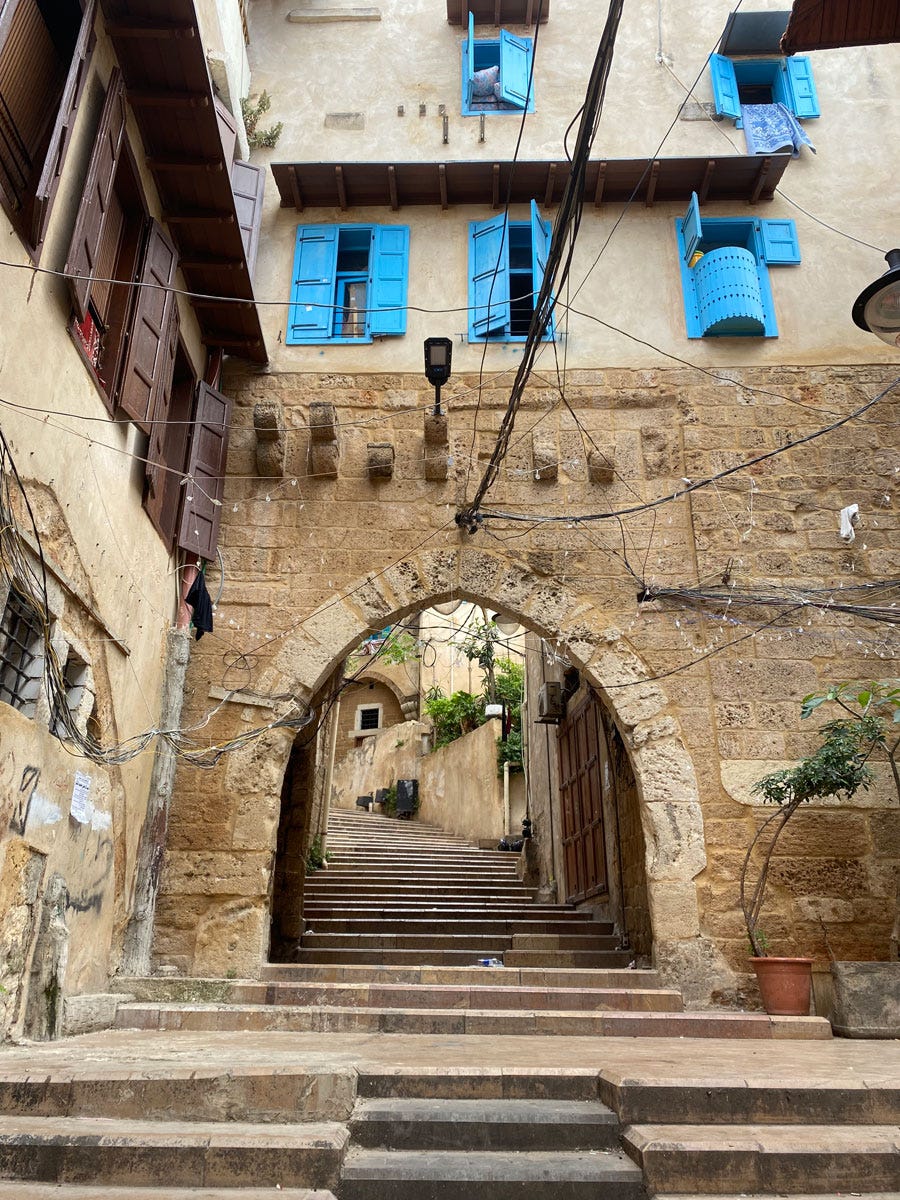
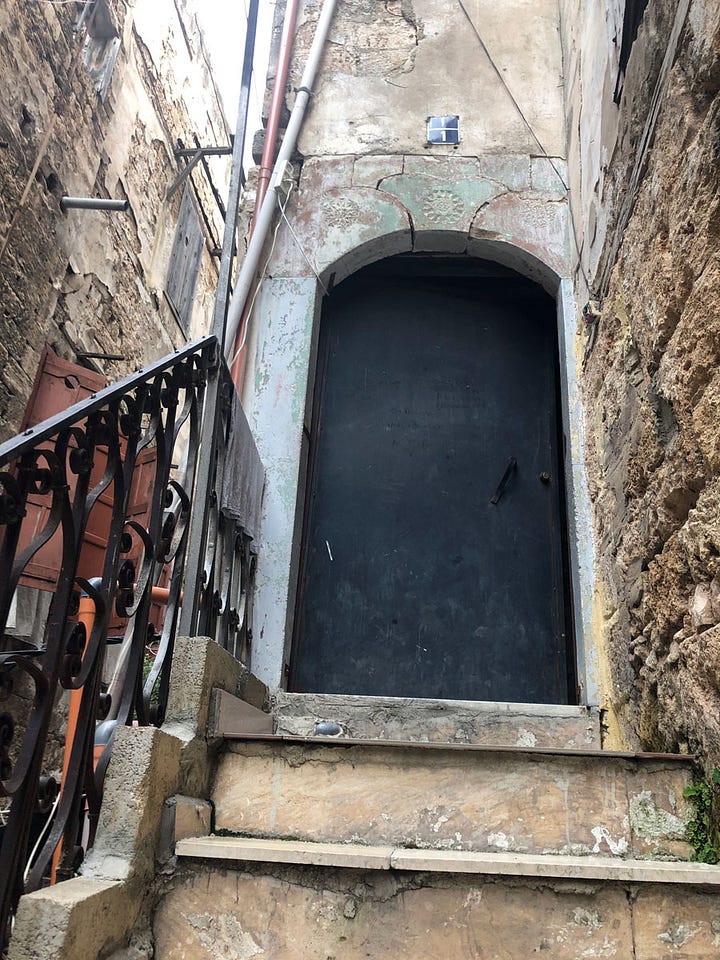
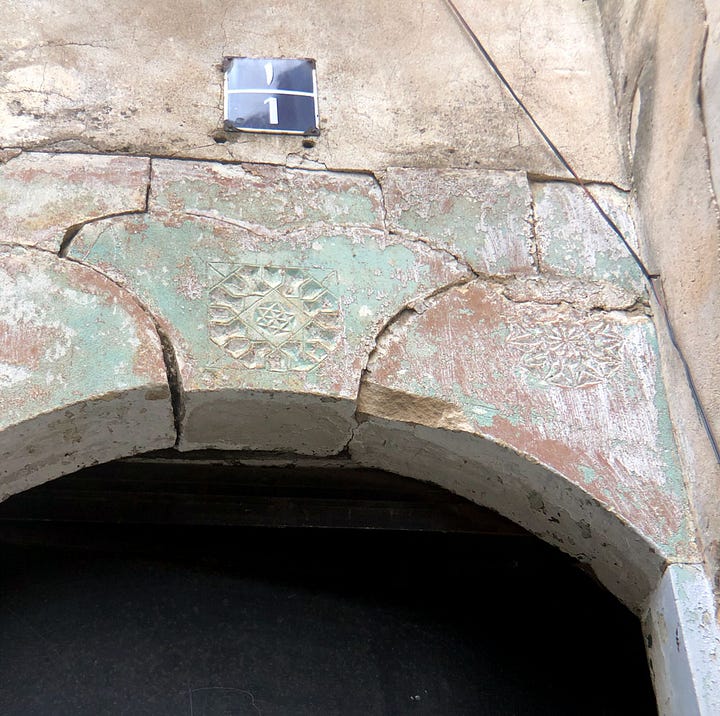
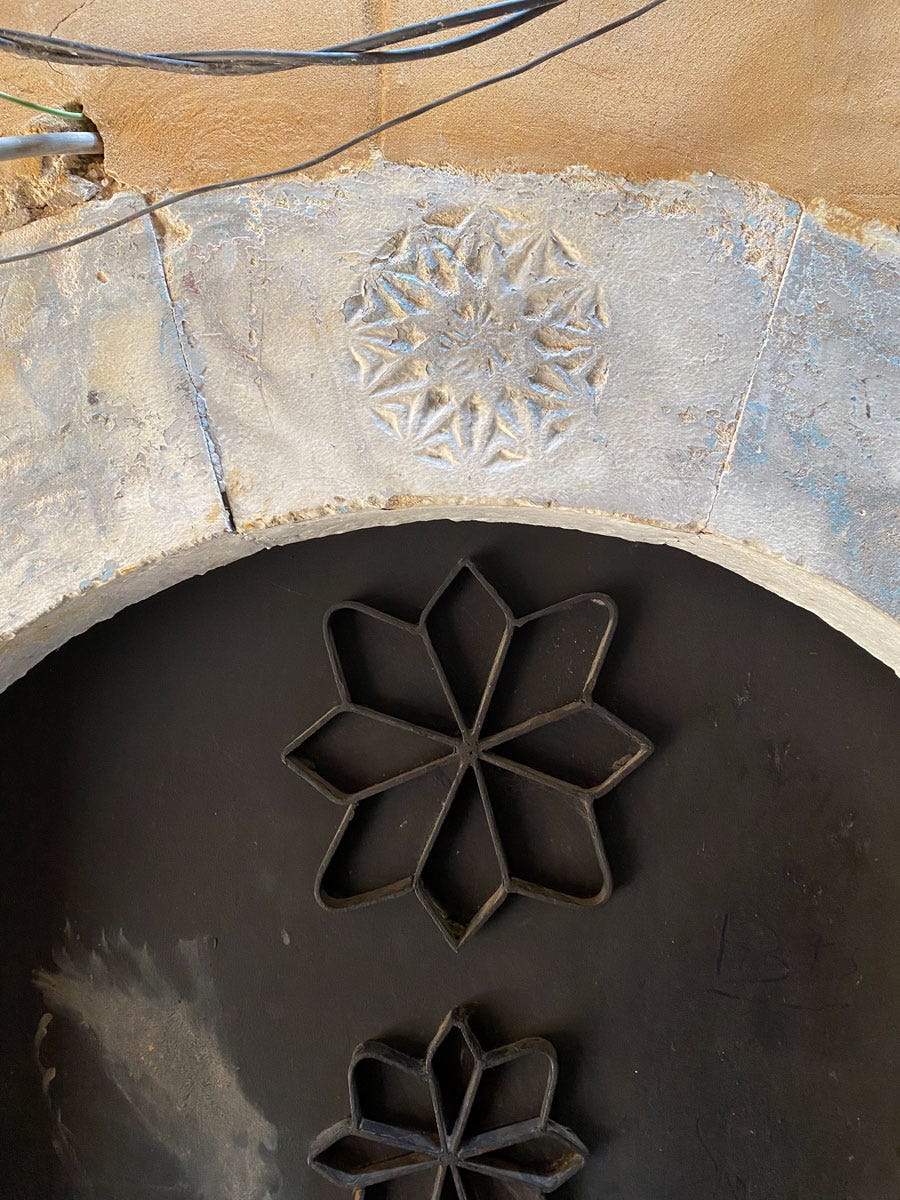
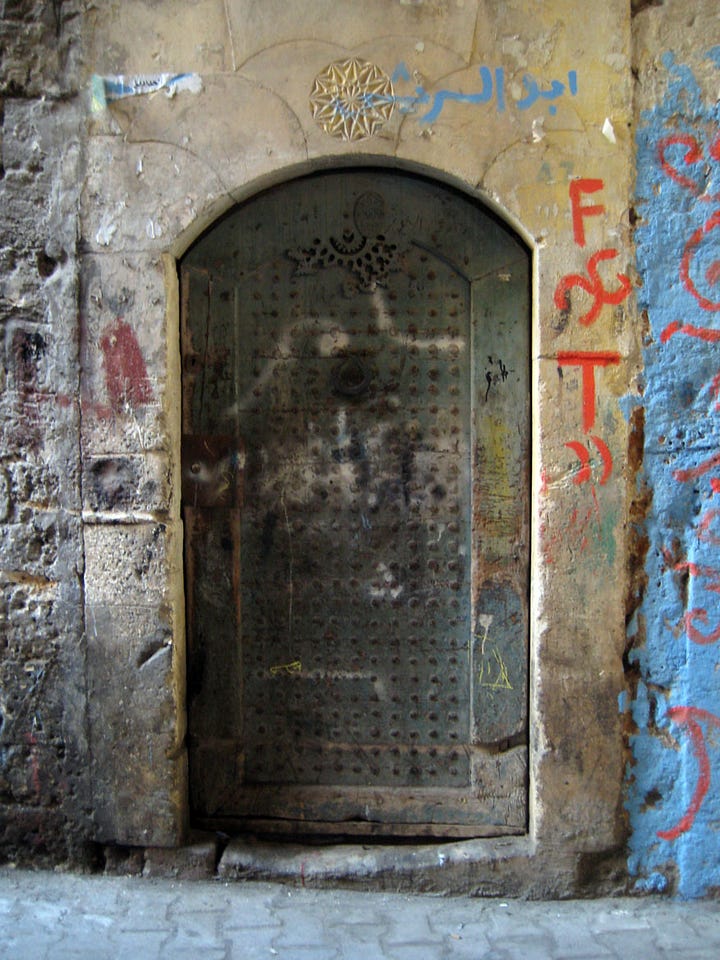
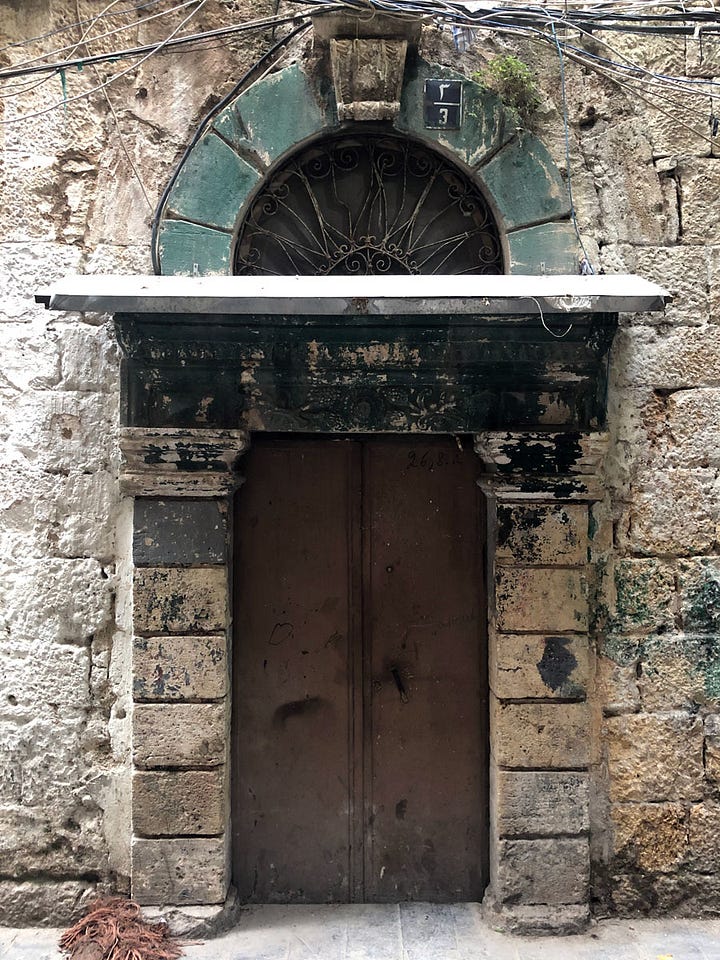
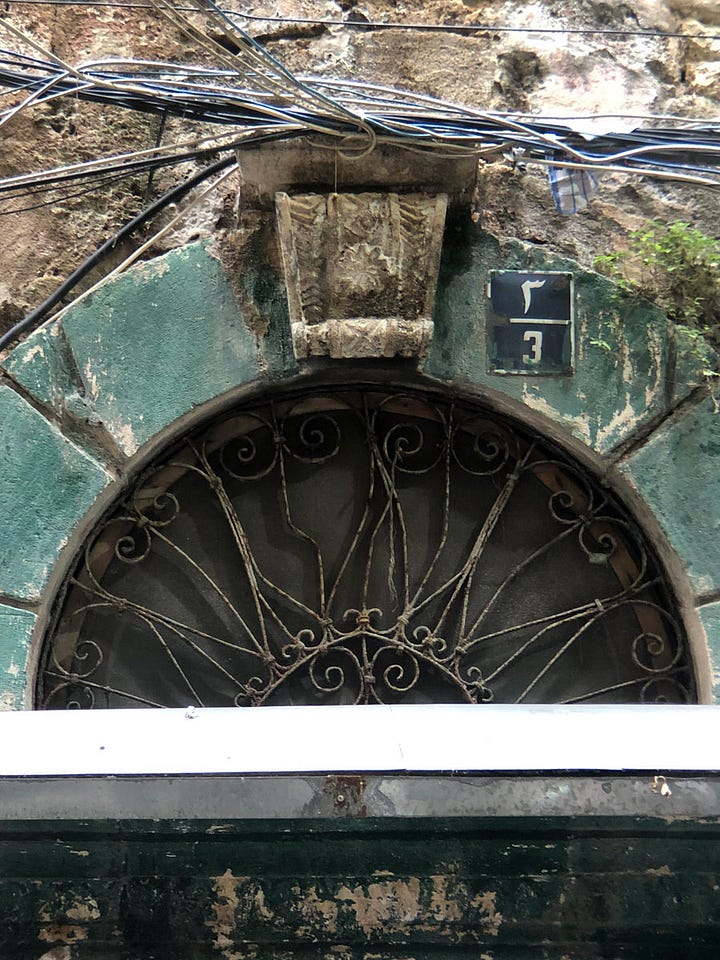
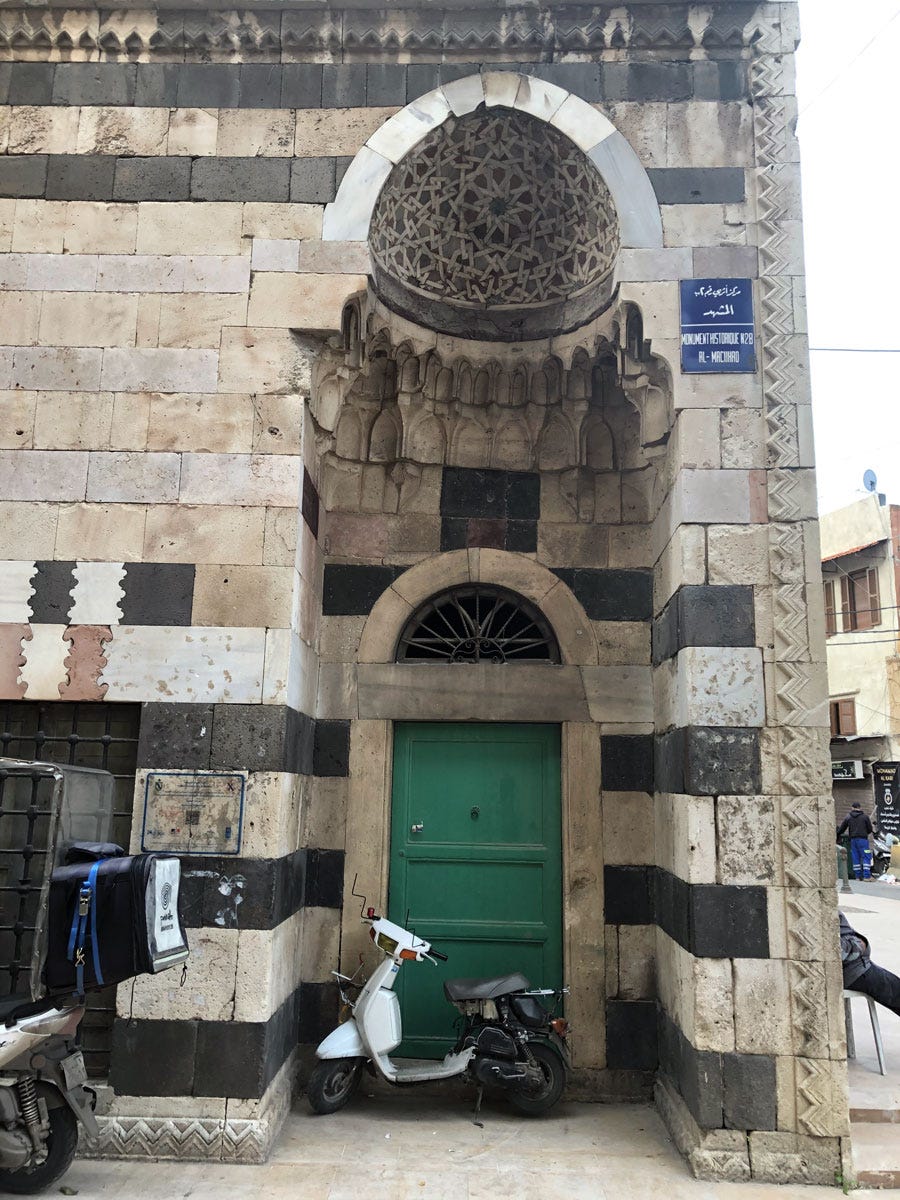
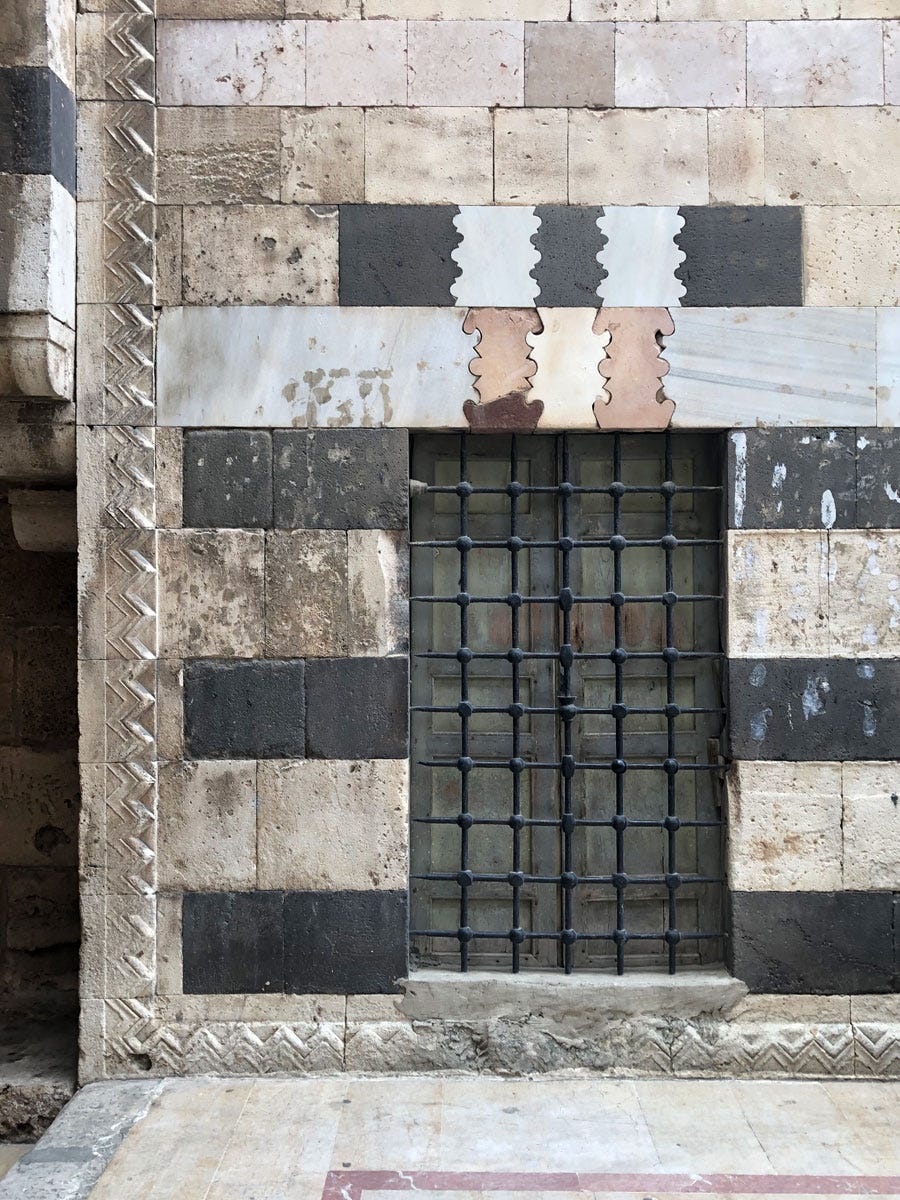
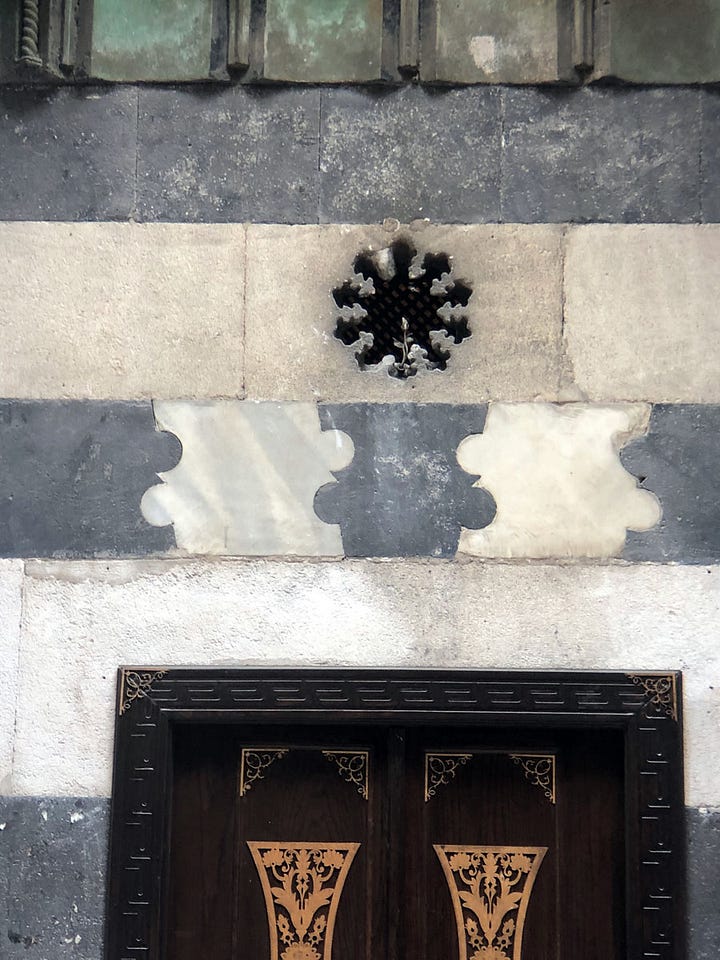
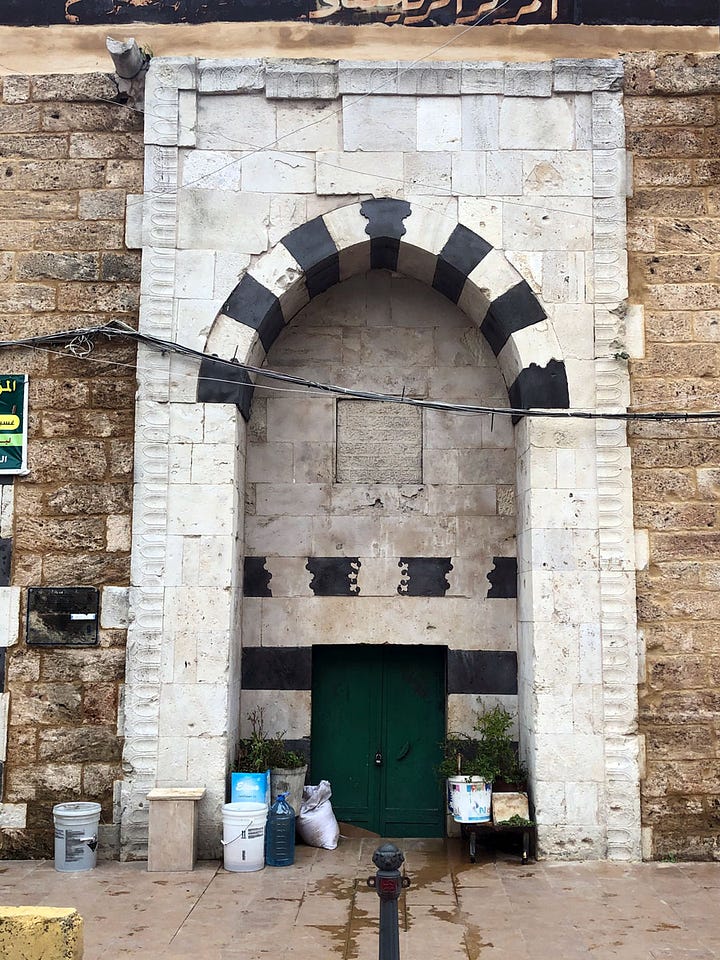
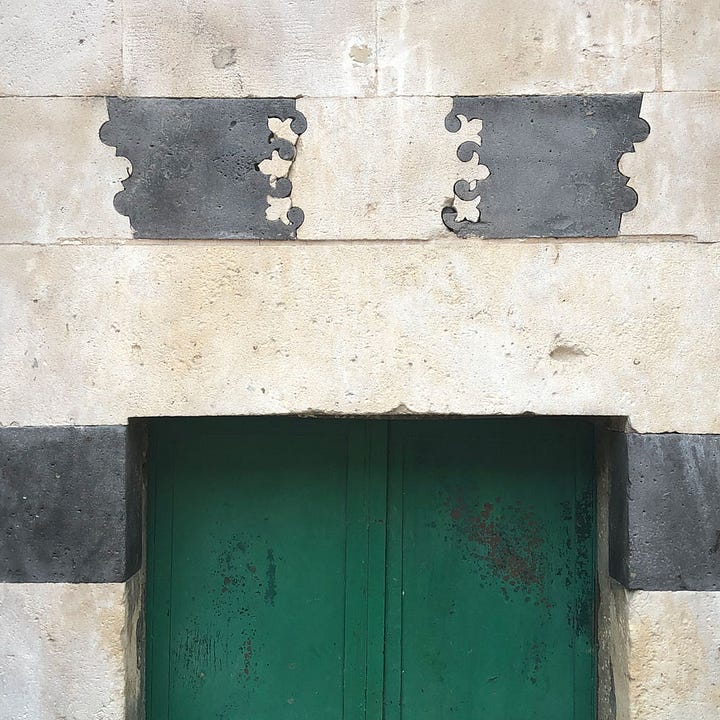
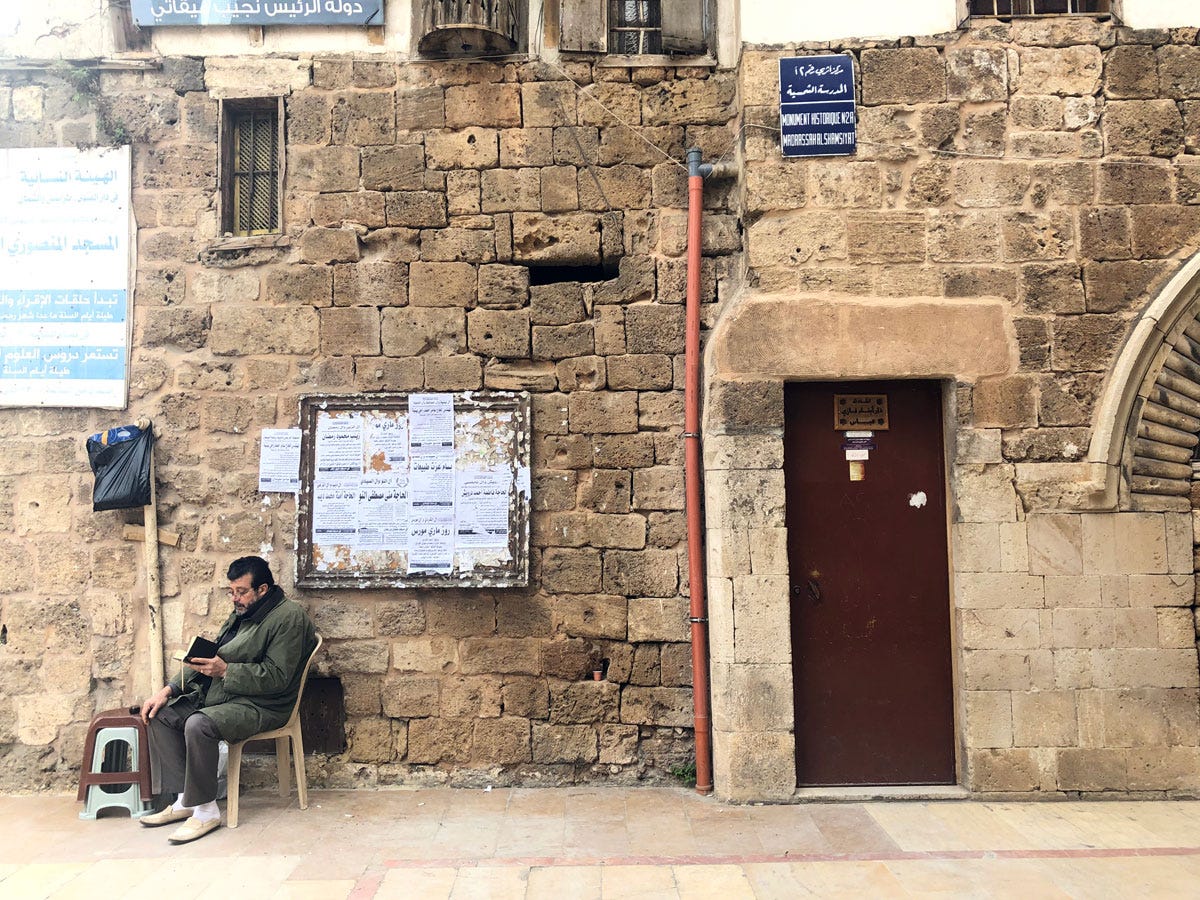
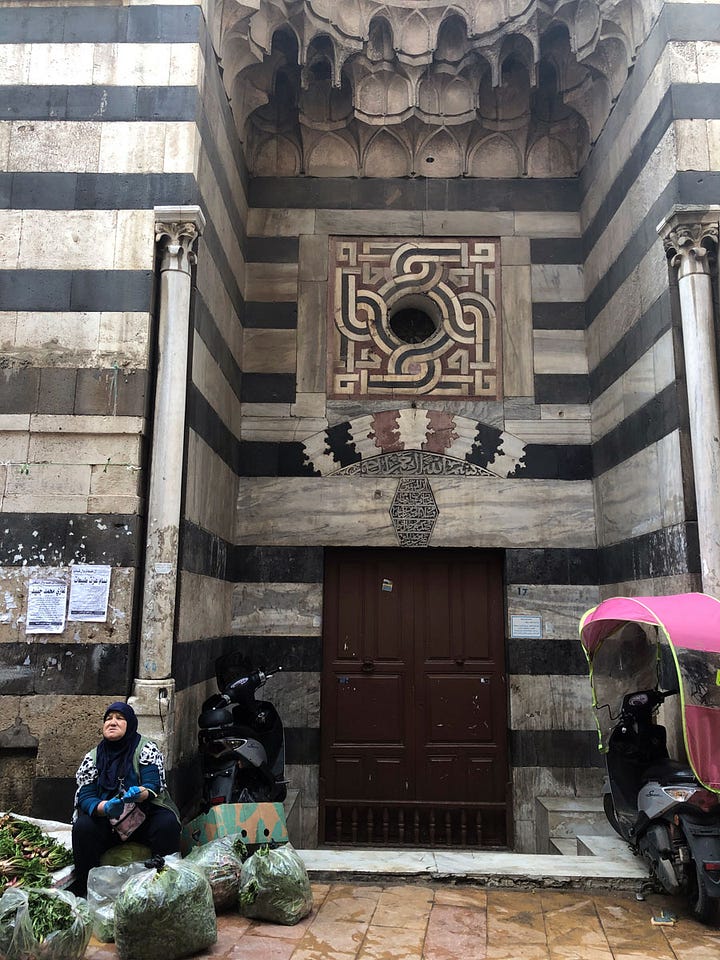
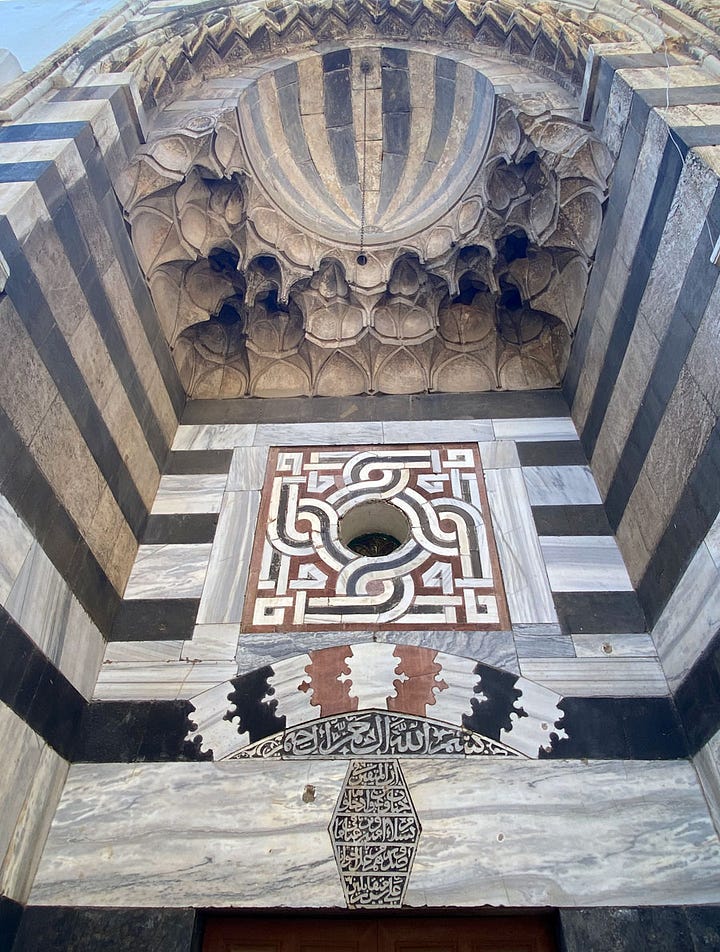
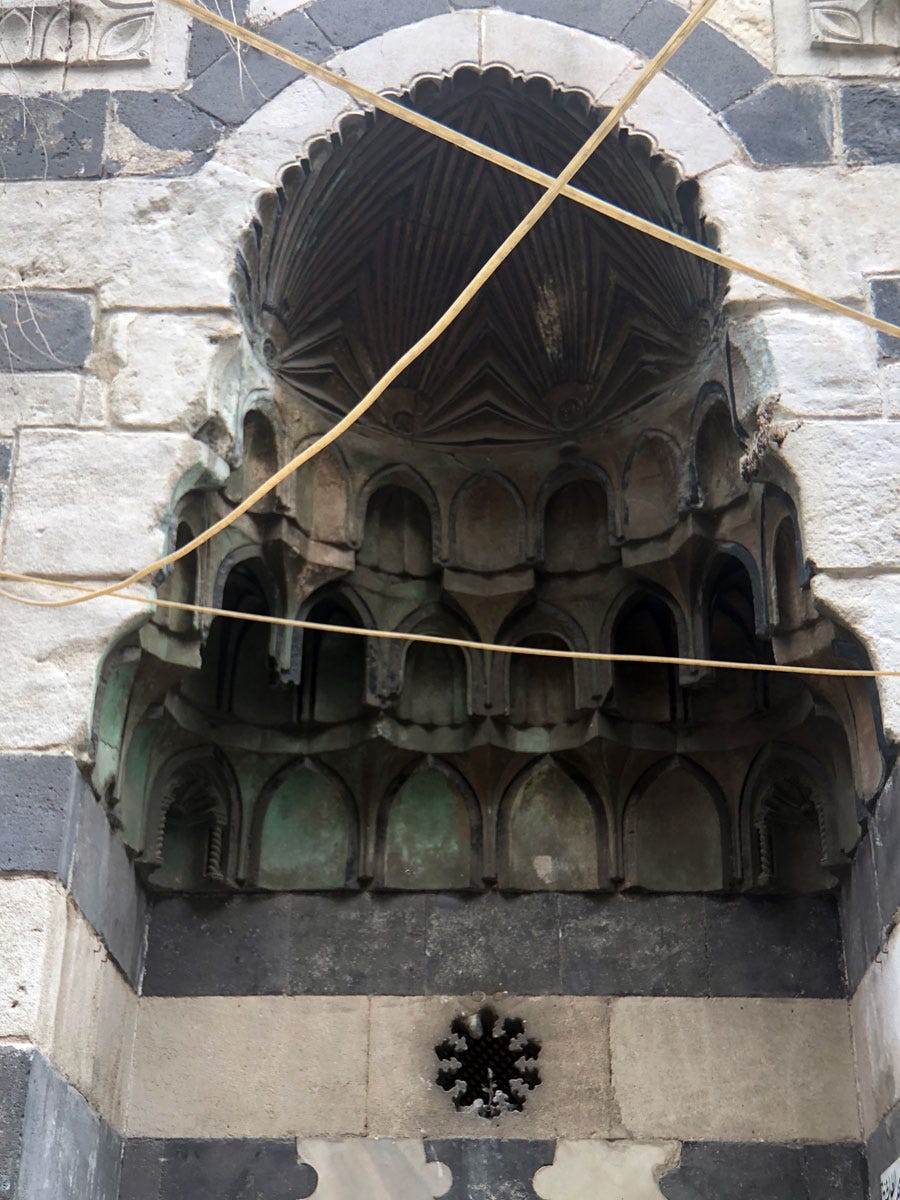
Before I can publish anything more, I feel the need to visually affirm we have always been here, we have built our well lived-in cities over millenia, have tended our groves for just as long, and no propaganda or Lebensraum can change that. Some of the following sights may not exist much longer, if they’re not already gone, but they will not go unwitnessed.
Though I couldn’t help including some street life, I was originally going to focus on architectural details and decorative motifs. Some of these may have meanings, most of them do not. I’m very skeptical of the last century’s obsession with looking for meaning and symbolism in everything, which always seems to originate in European observers, and that I therefore consider a form of Orientalism (I’ve written about this previously, in Zafimaniry Geometry). The most likely reality is craftsmen exploring the creative possibilities of their medium, not to send any message, but for the sake of beauty.
So come with me and walk the old streets of Lebanese cities while we can…
(Some of these photos date to the early days of digital photography and some even older, hence varying quality.)
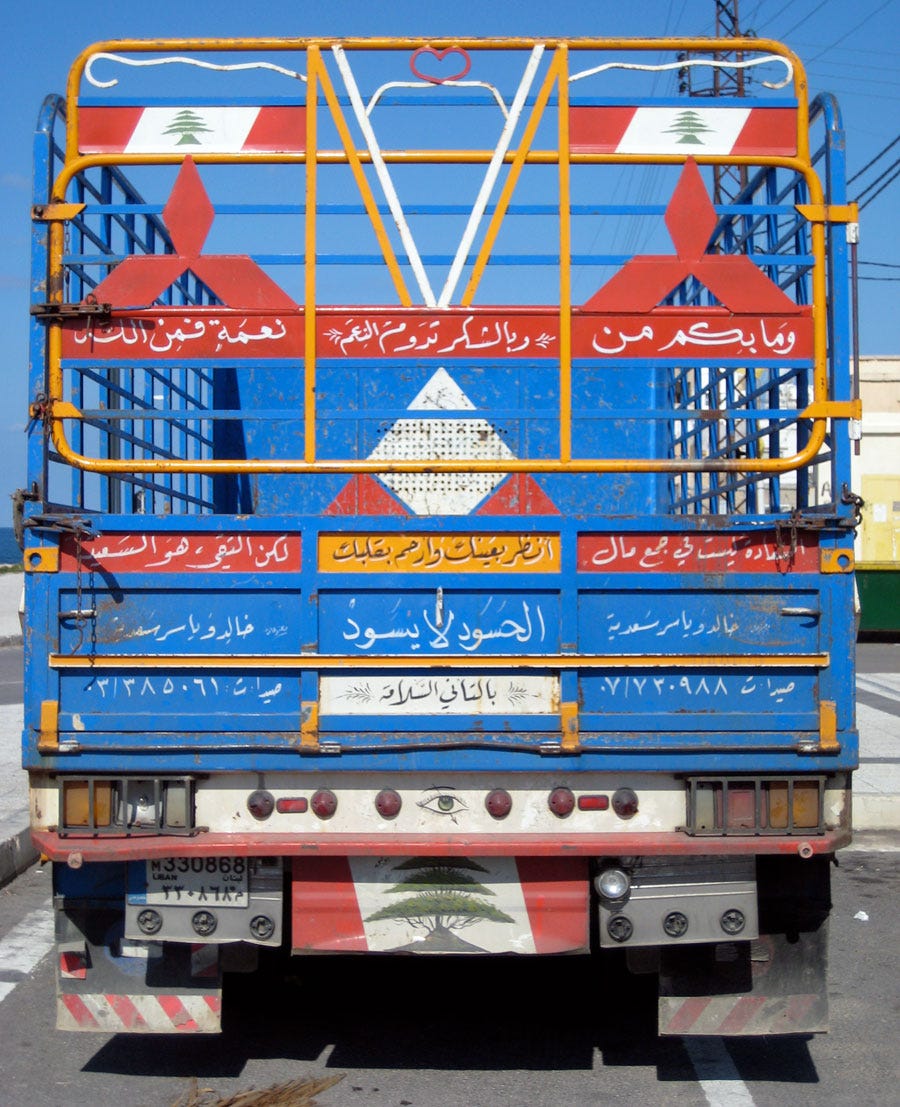
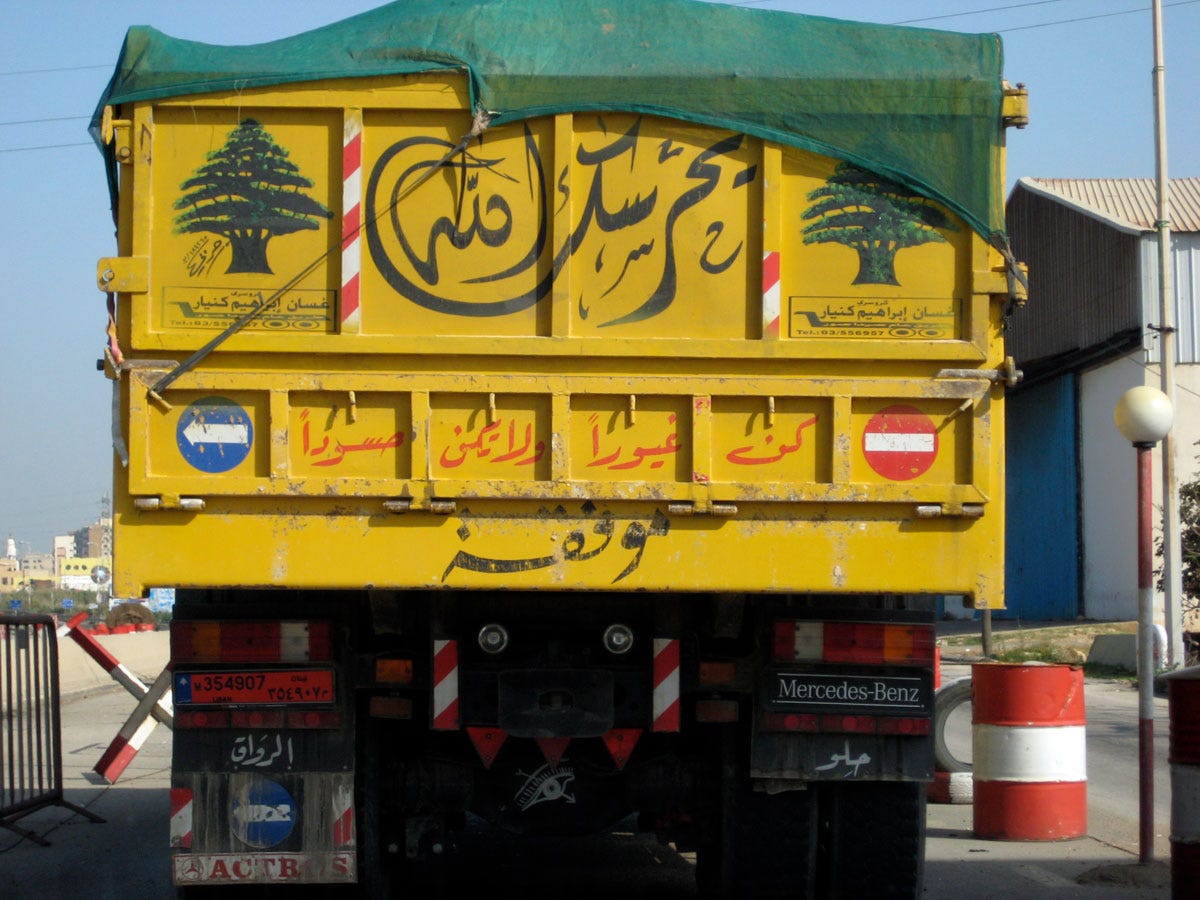
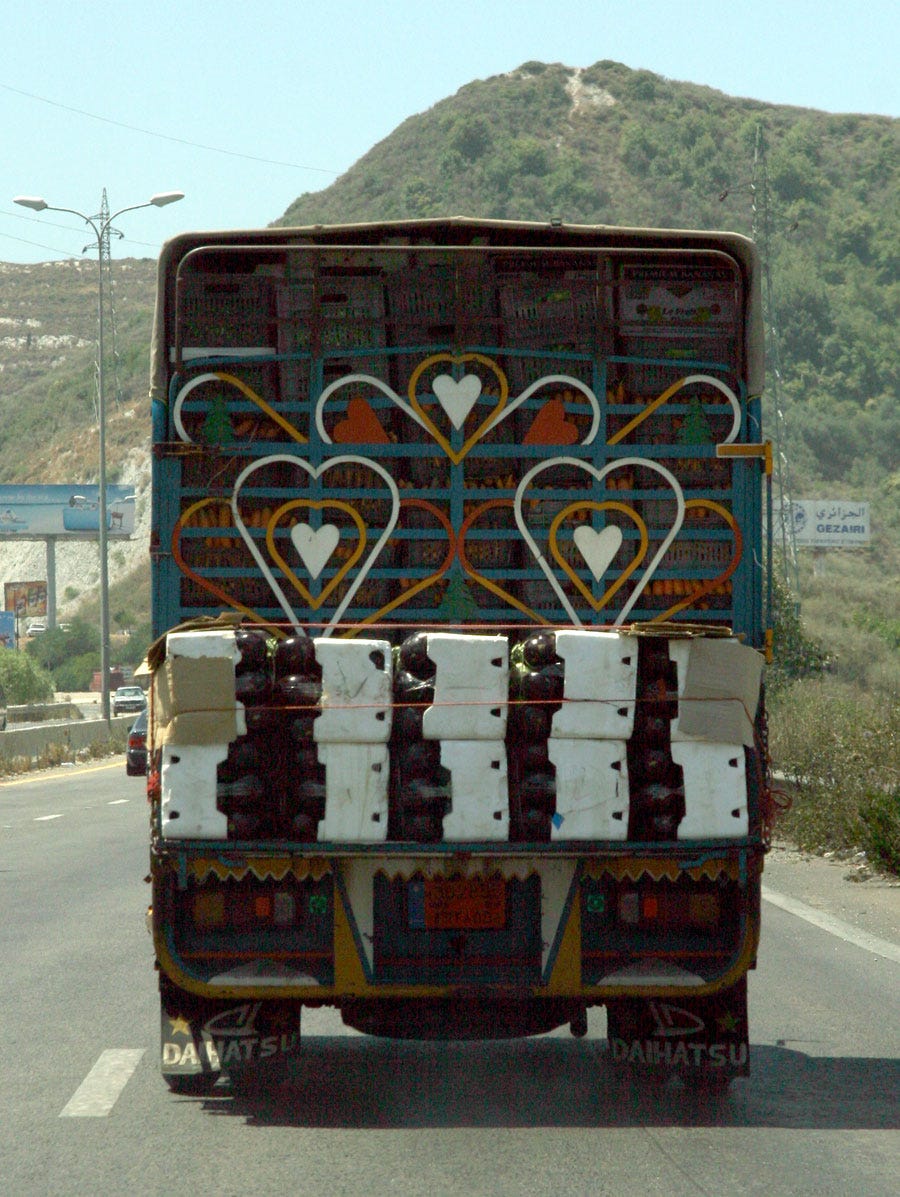
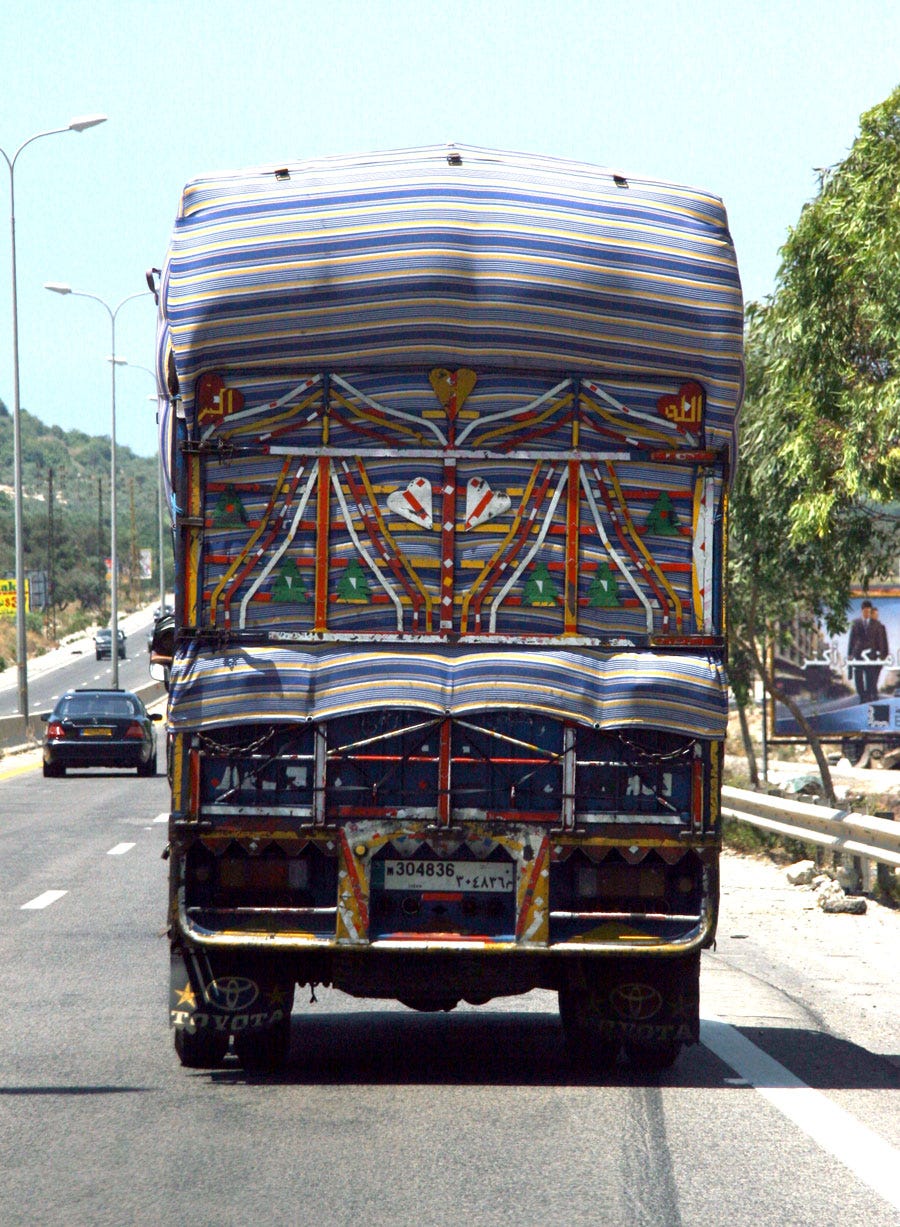
On the road we go, often stuck behind a truck for a while. Although they do offer some reading material: aphorisms, prayers, and protective sayings.
We start at the southernmost city in the country, the Biblical Tyre, birthplace of Europa.
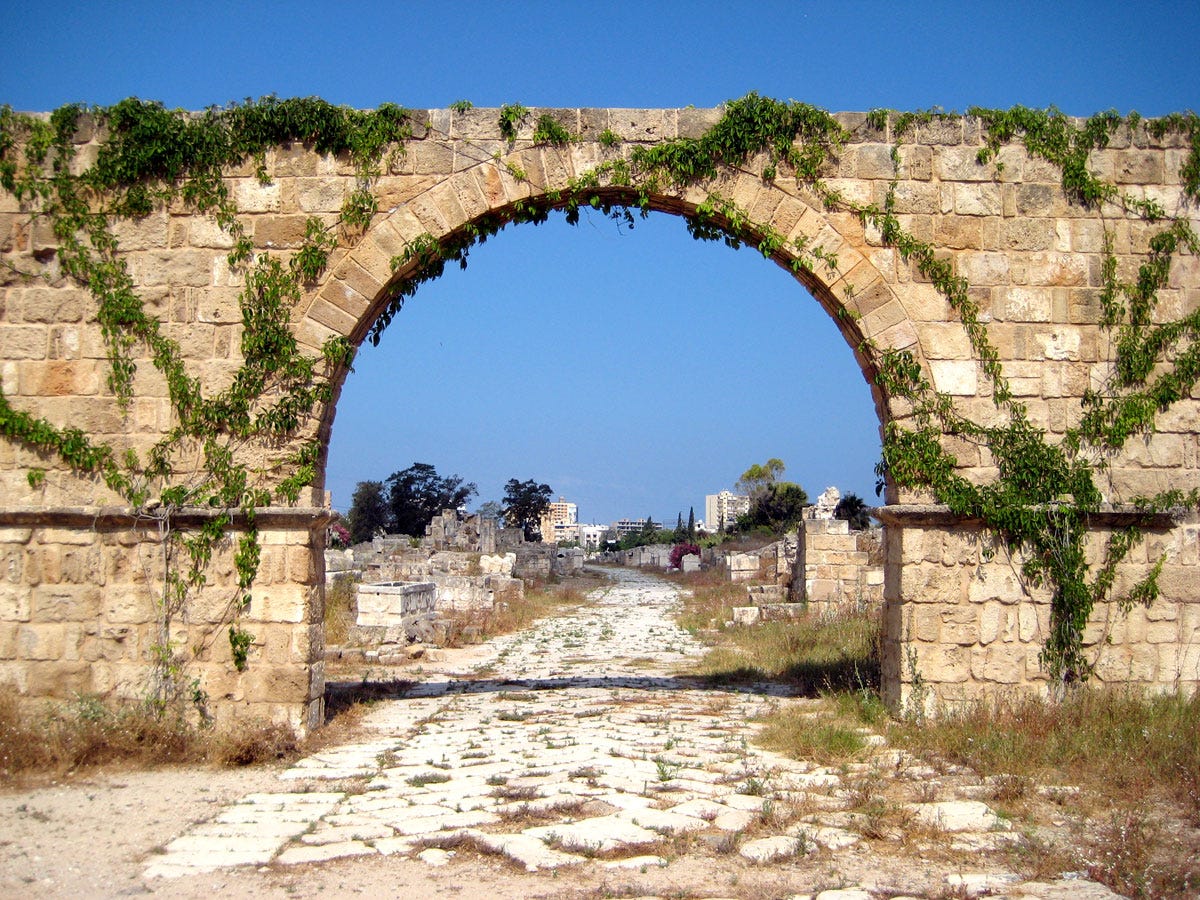
The archaeological sites of Tyre are both so vast I won’t attempt to show them here, comprising among other things an entire hippodrome, a necropolis, a glassmaking furnace that (if I recollect correctly) is the largest every found – the coastal cities of Lebanon provided blocks of raw glass to the glassmaking workshops of the entire Roman empire, but that’s a story for another day.
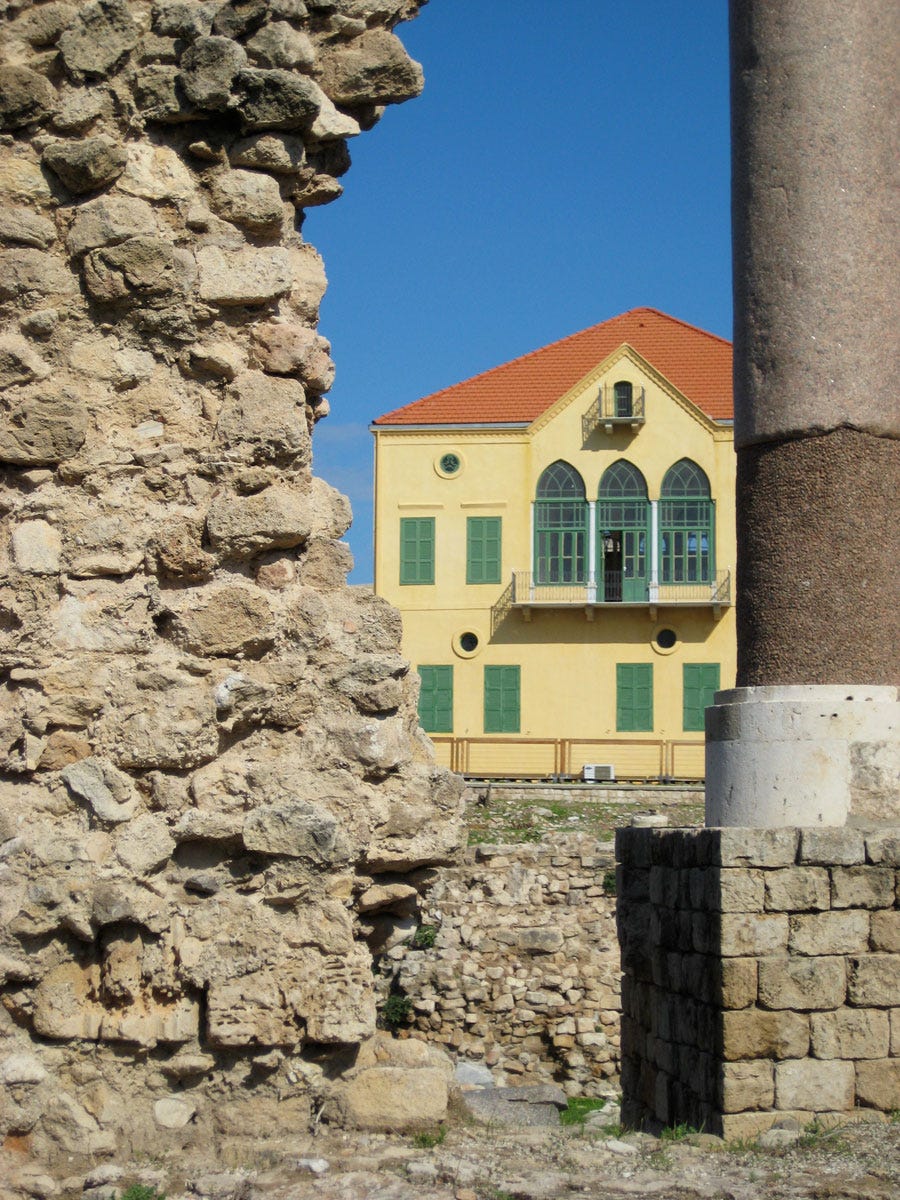
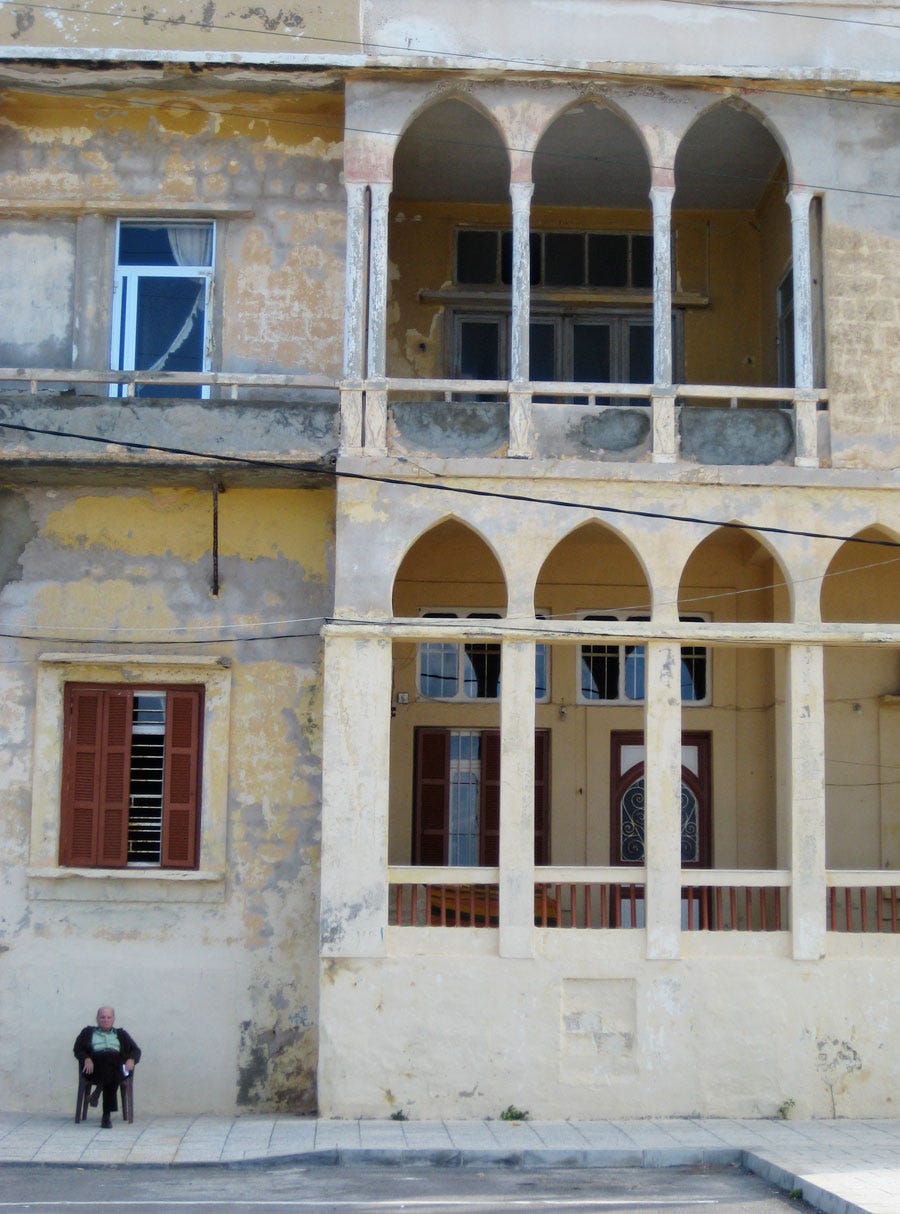
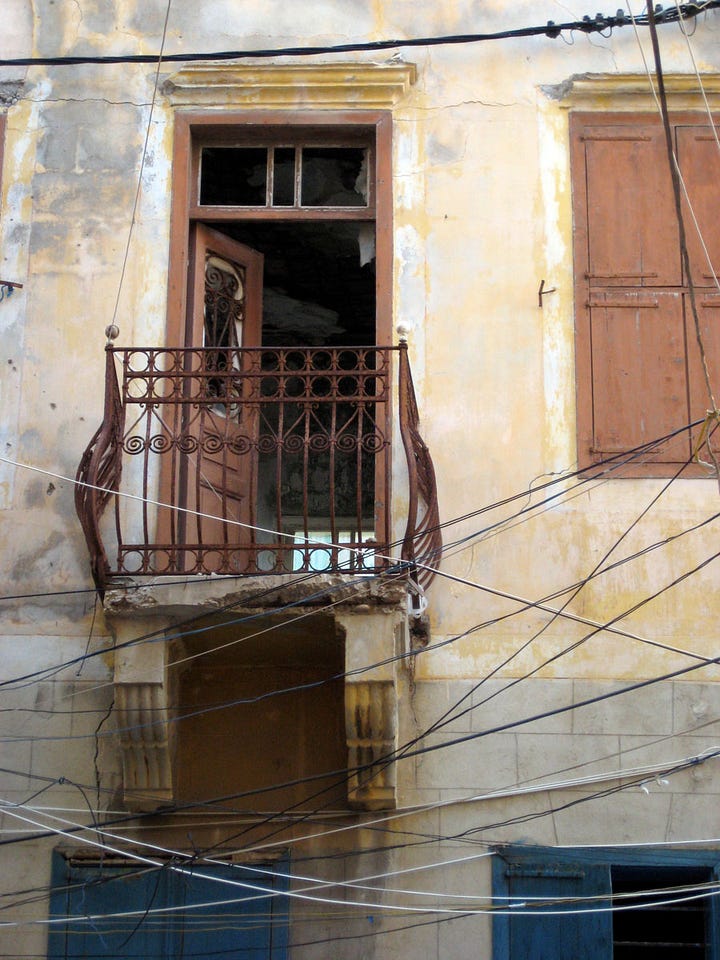
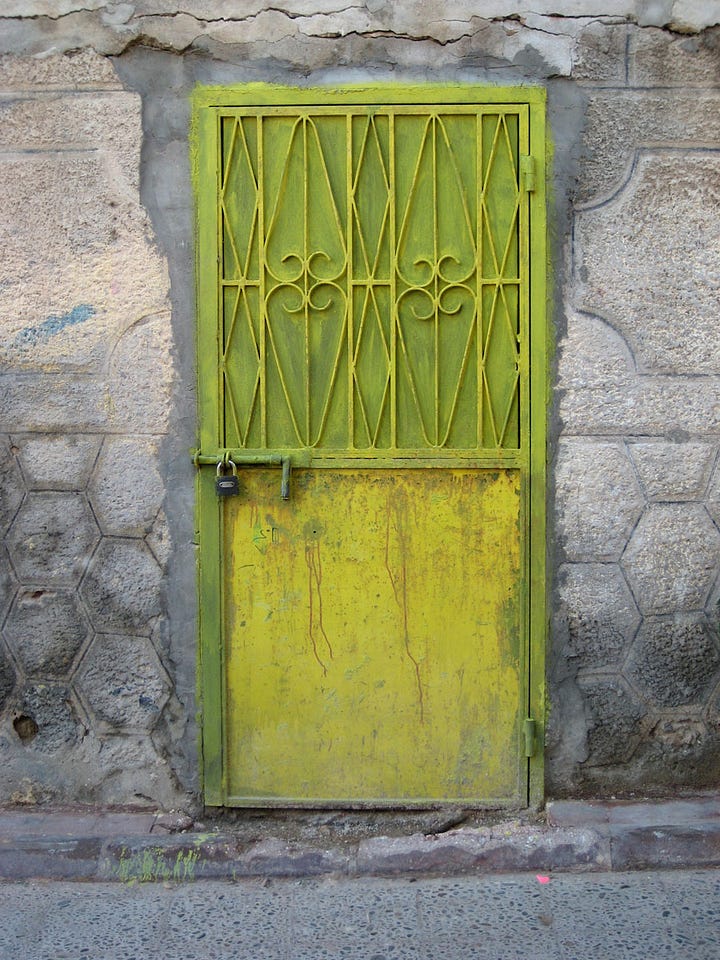
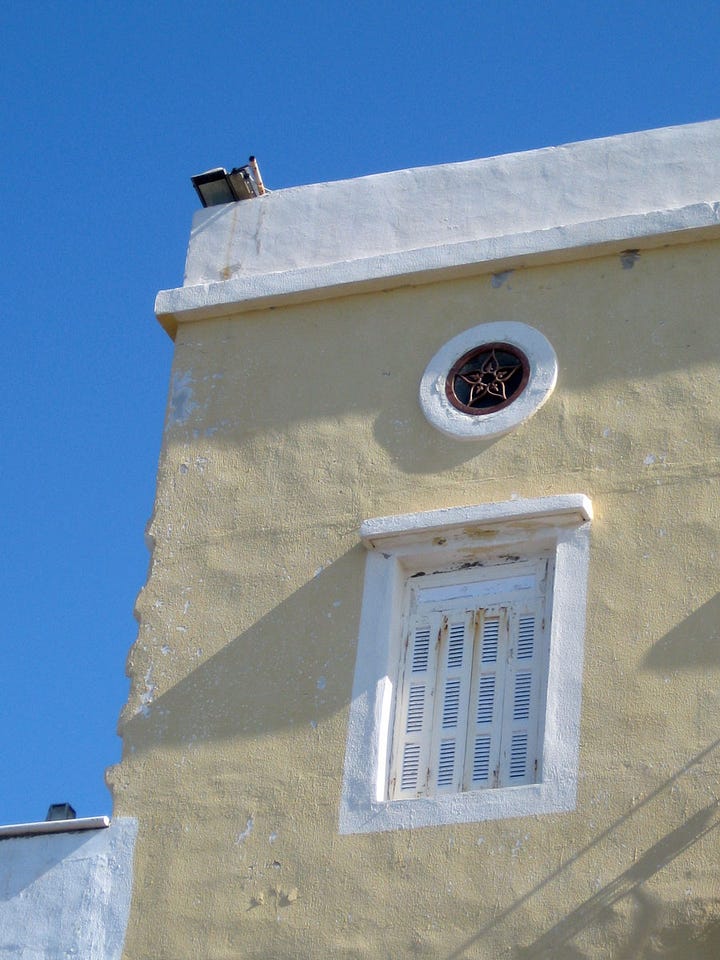

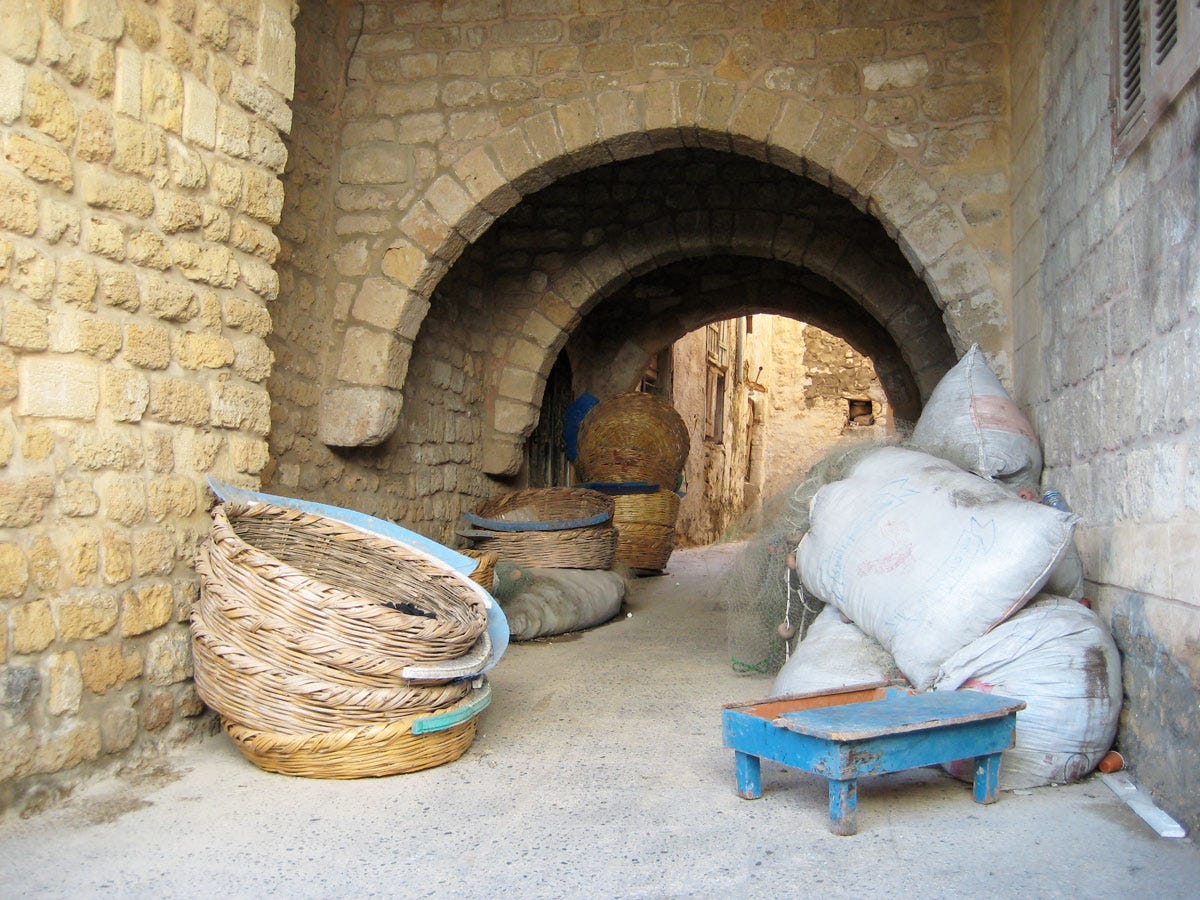
No Tyre without sea, no sea without fishermen…
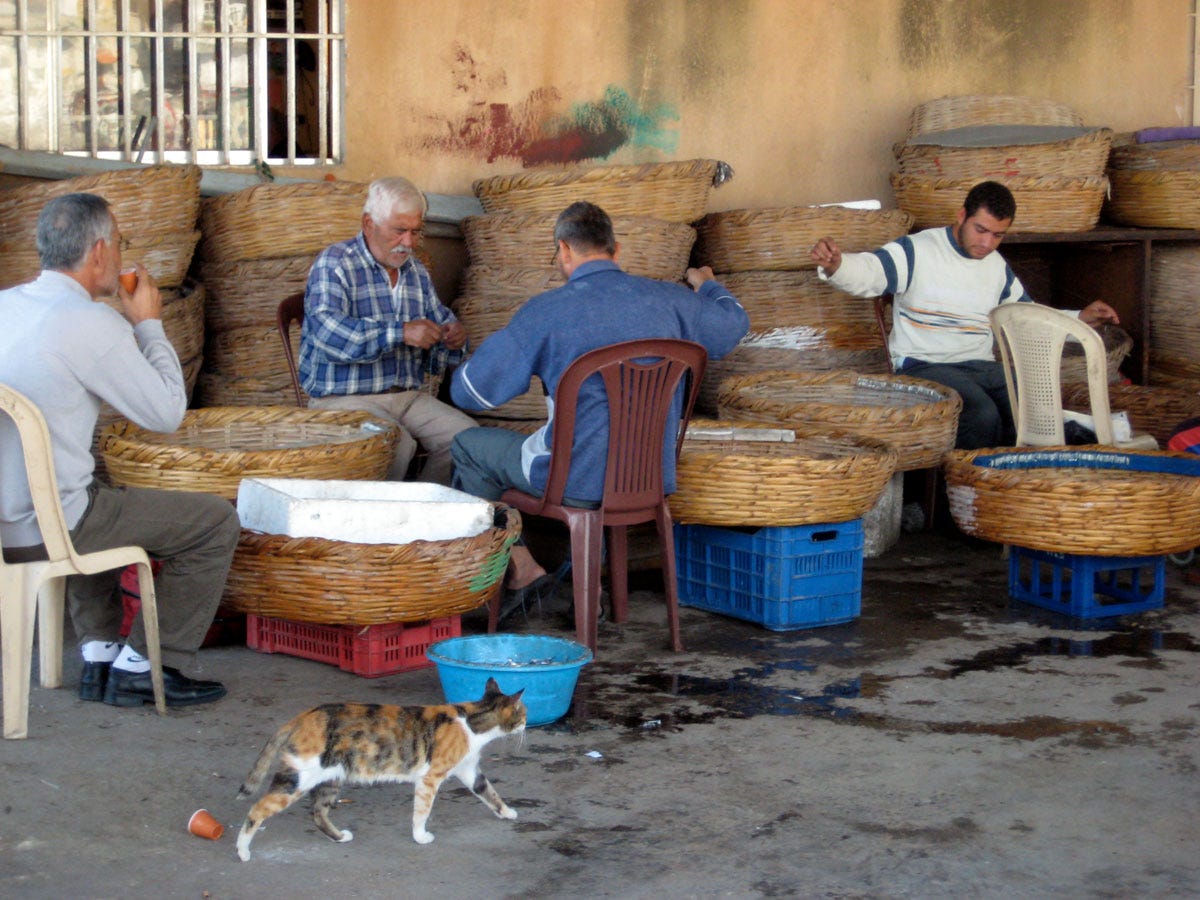
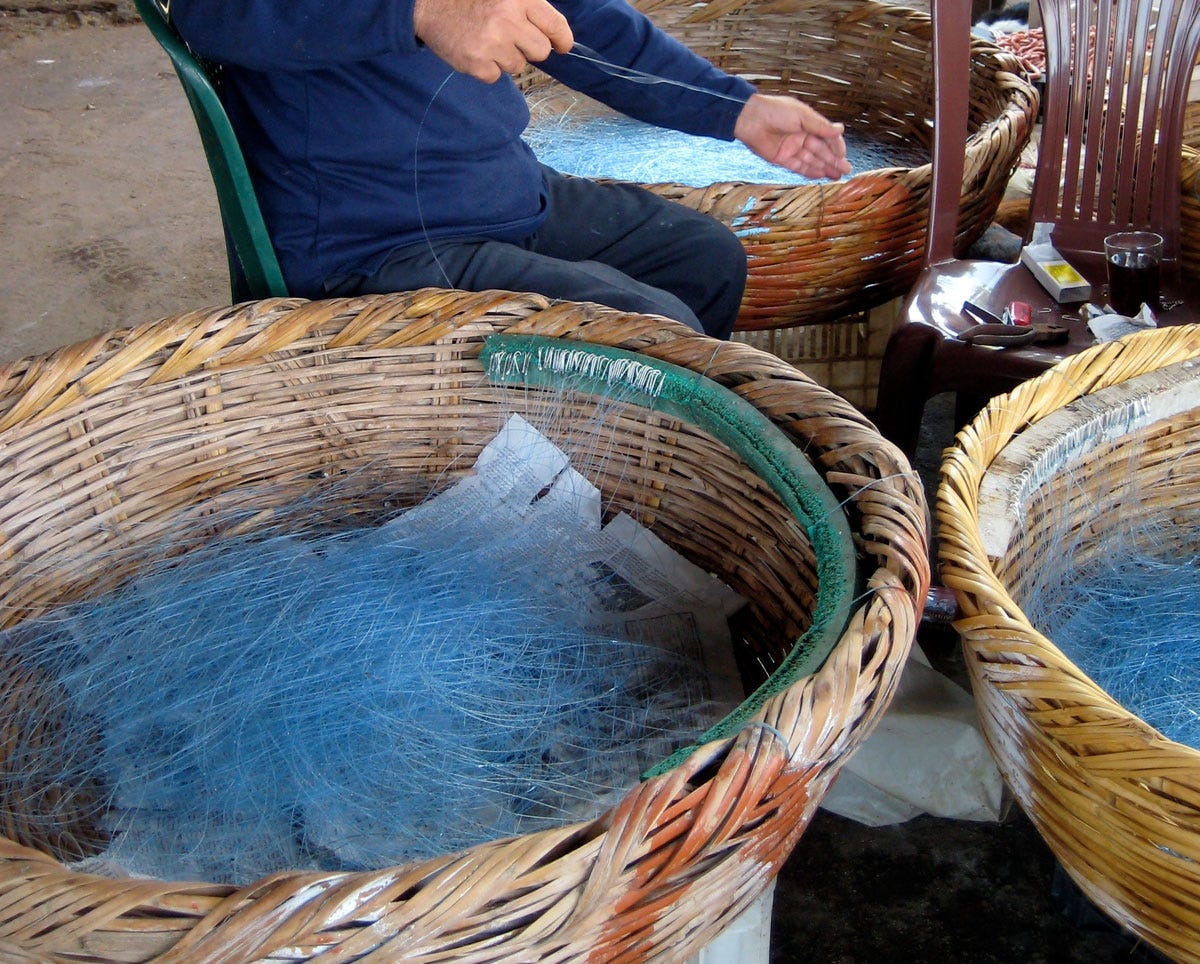
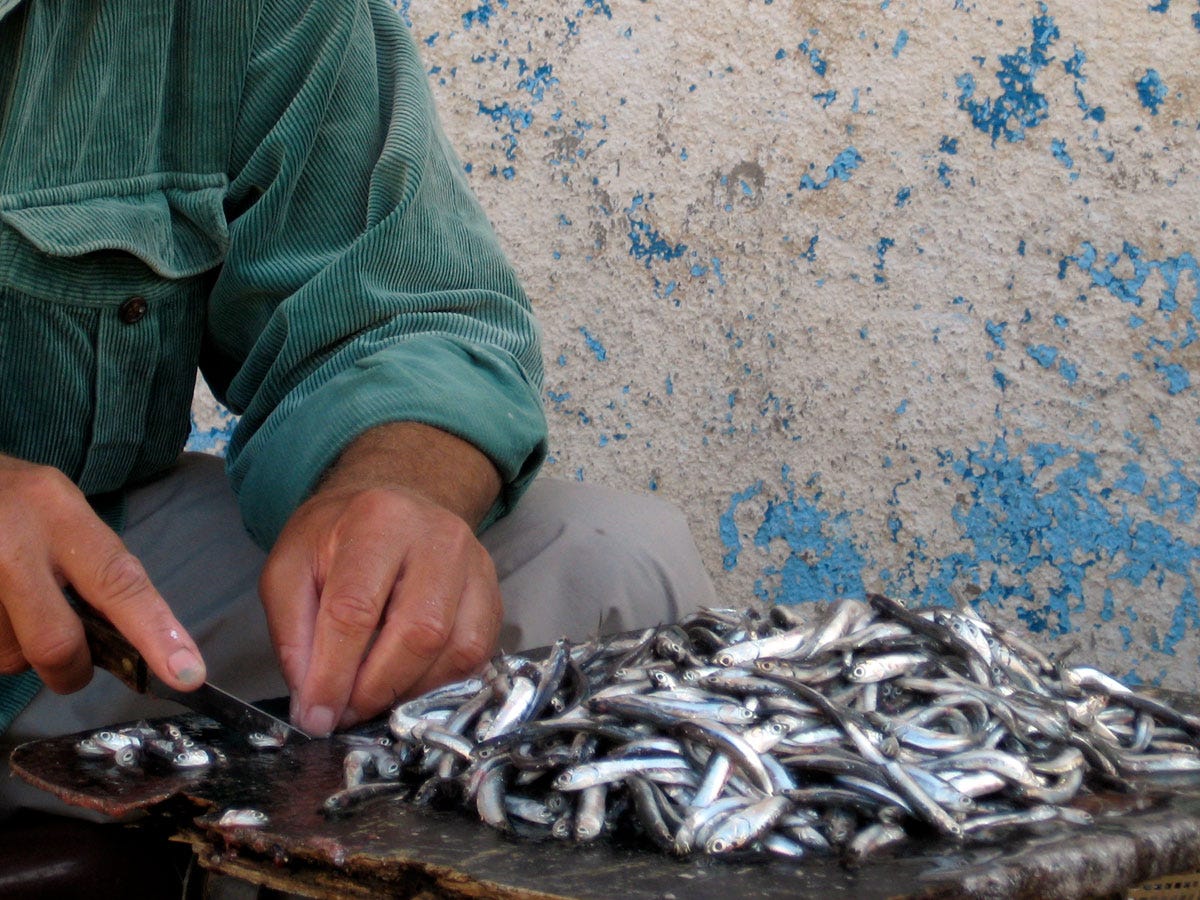
On the road again…
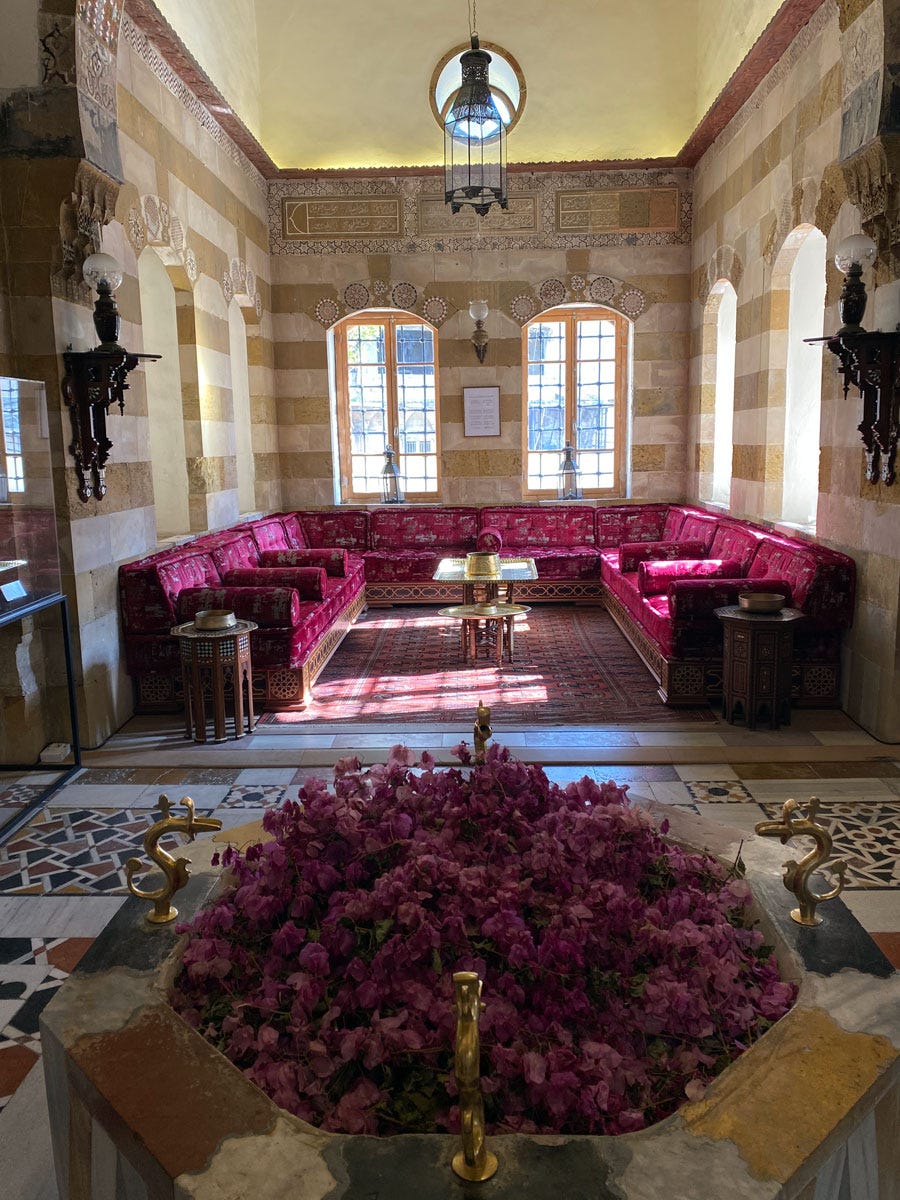
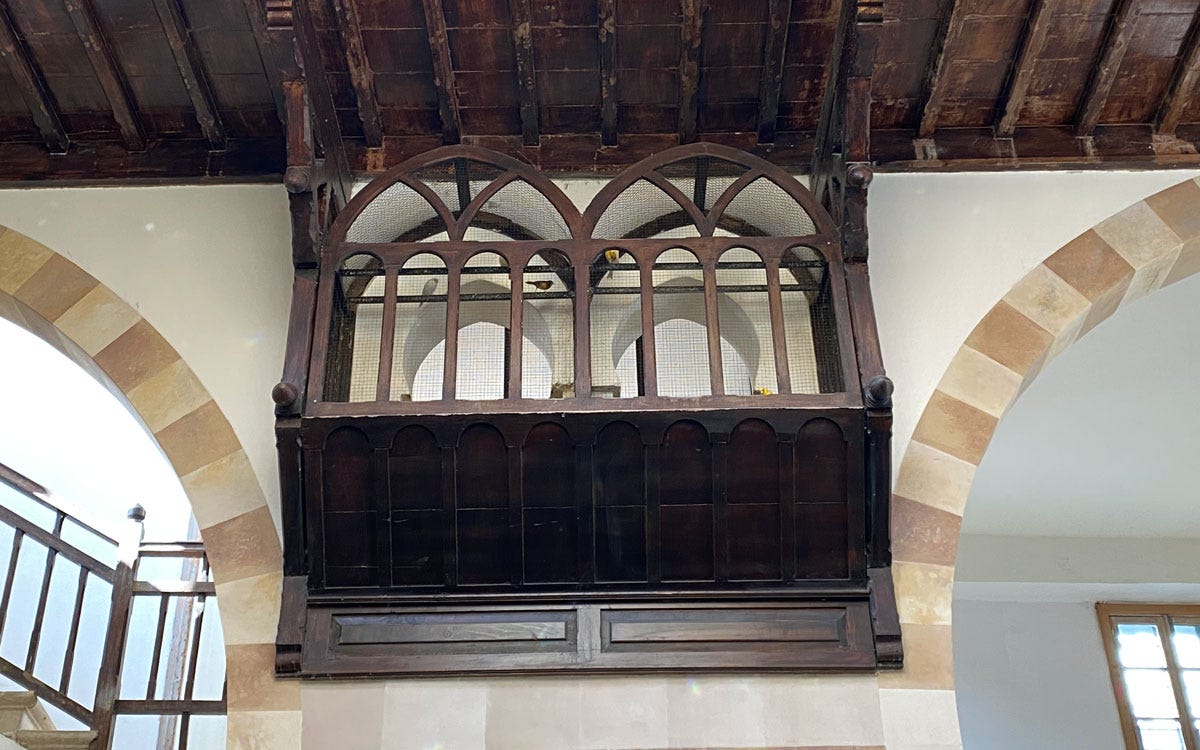
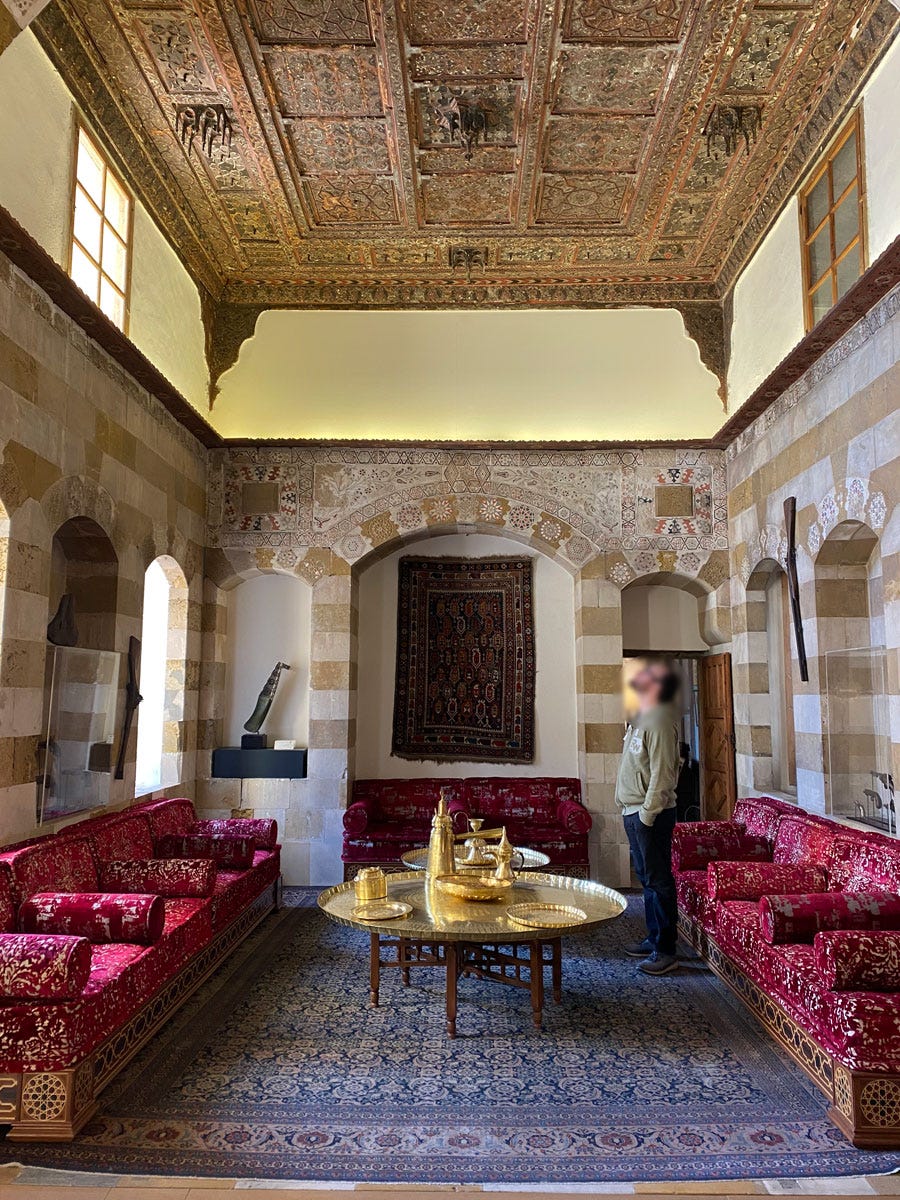
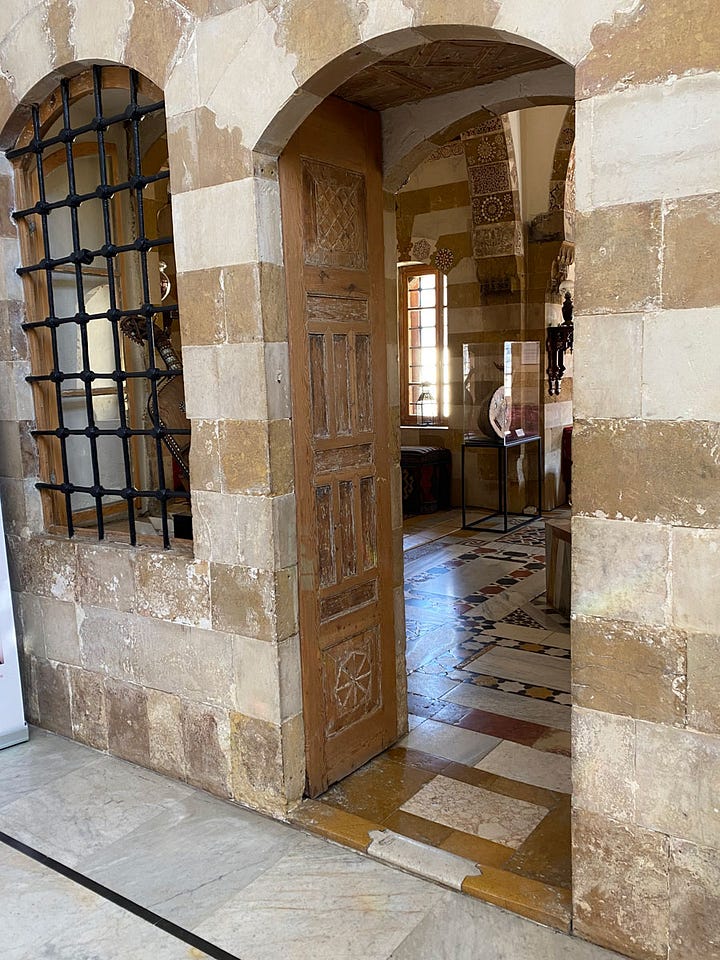
I’ve shared glimpses of this city, which once rivalled Tyre as mistress of the sea, not long ago. Here we step through a doorway in that busy souk straight into a palace, once built by the city’s governor and still inhabited by his descendants (though it’s also open to visitors).
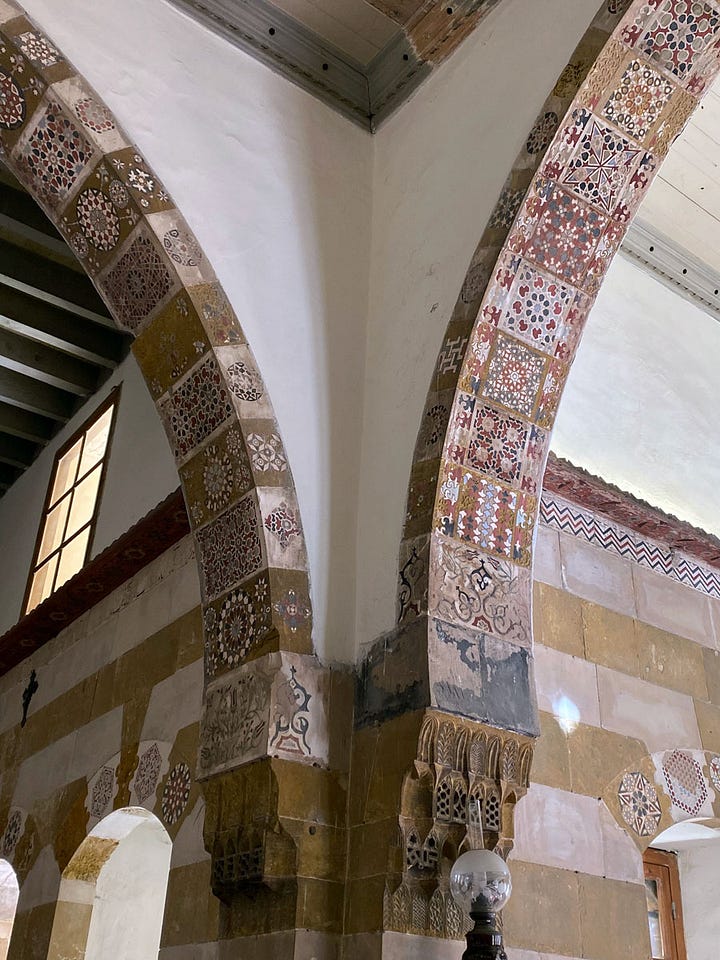
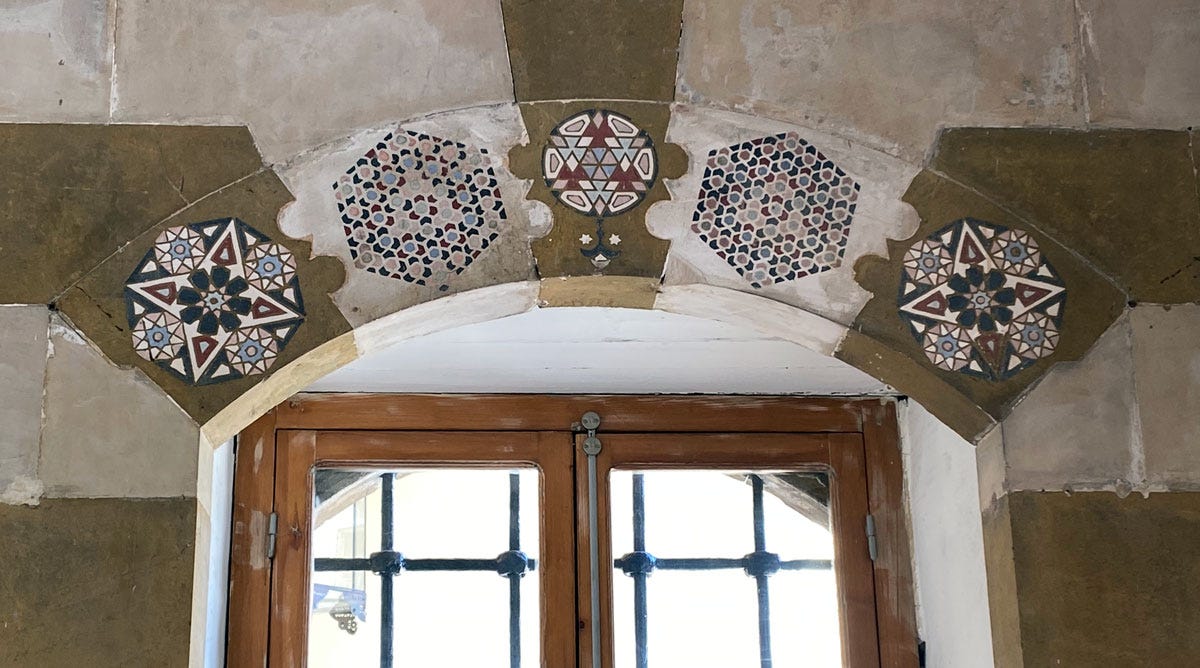
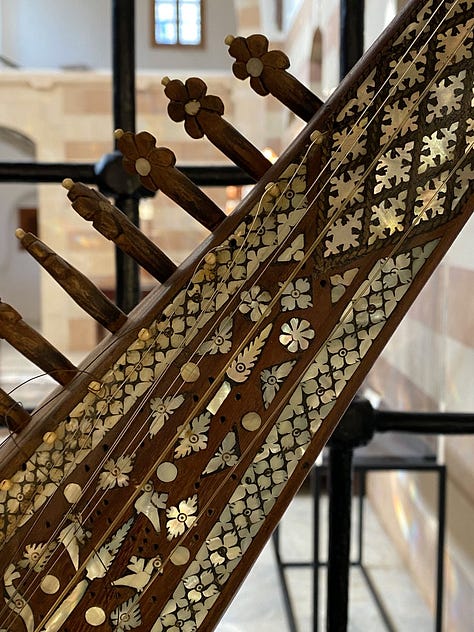
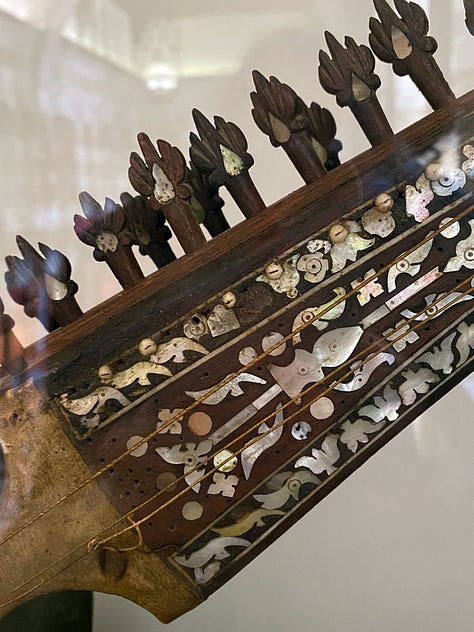
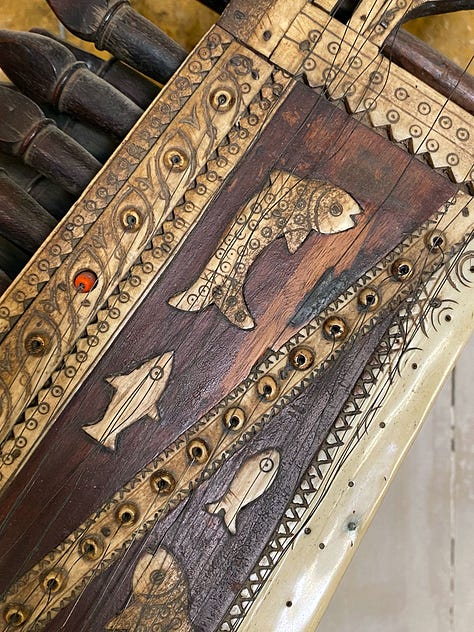
On we go, past Beirut for now as I have too many photos for it alone…
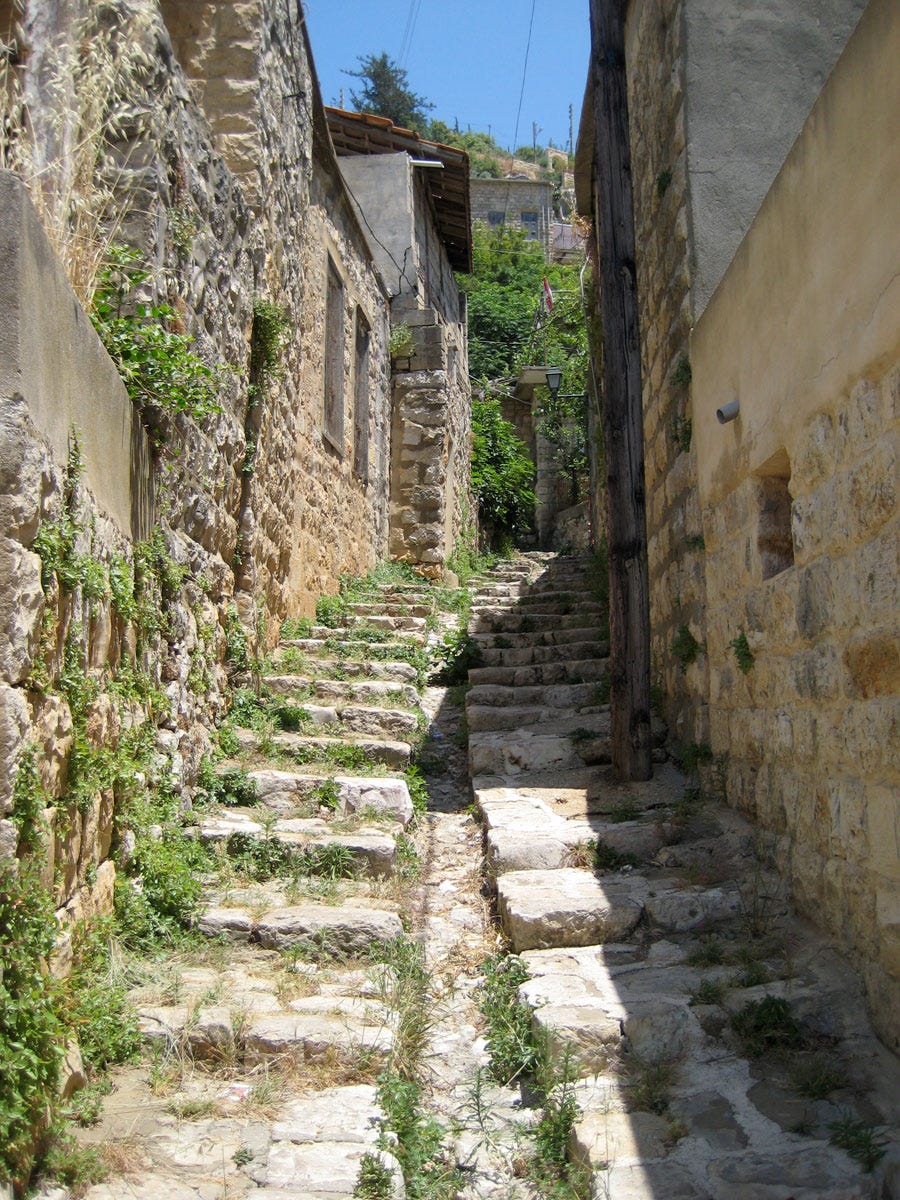
Nipping by a couple of Shuf villages…
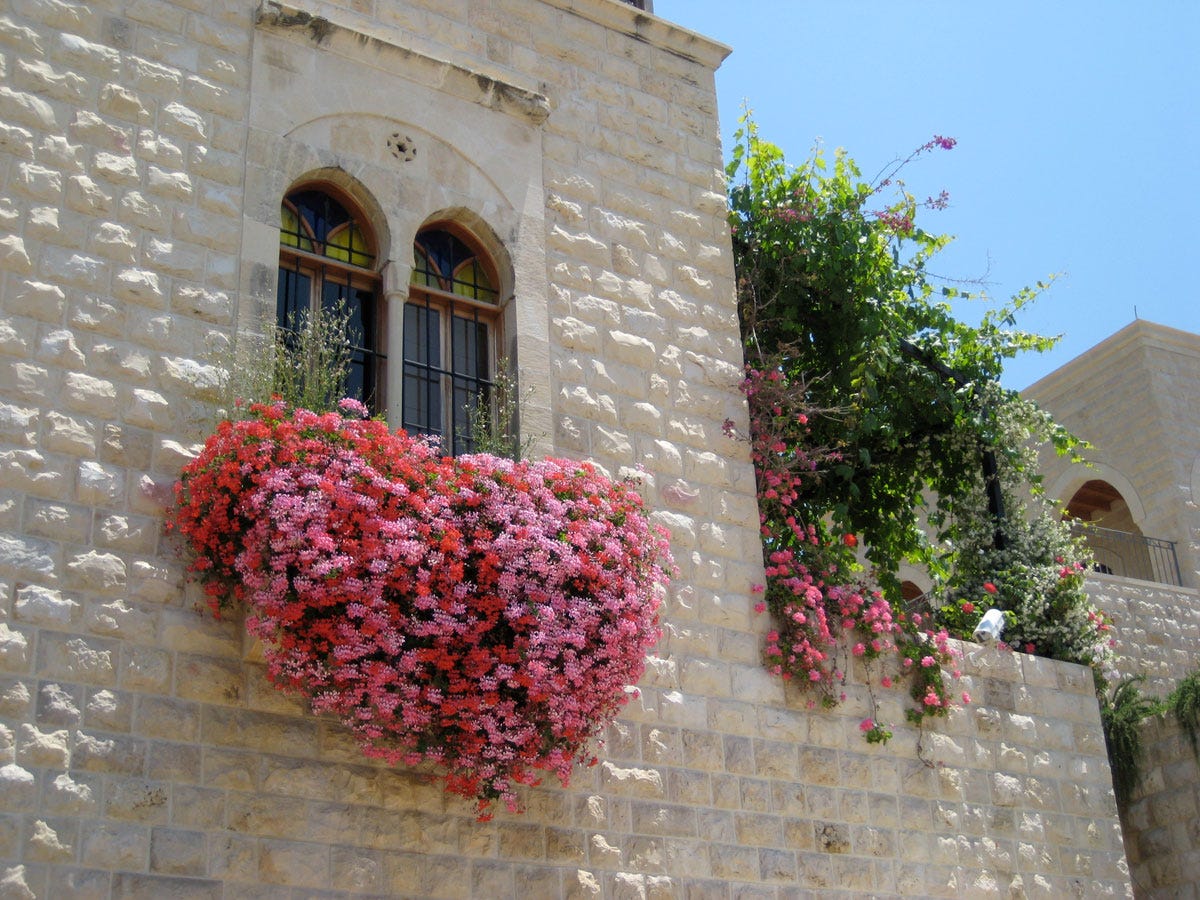
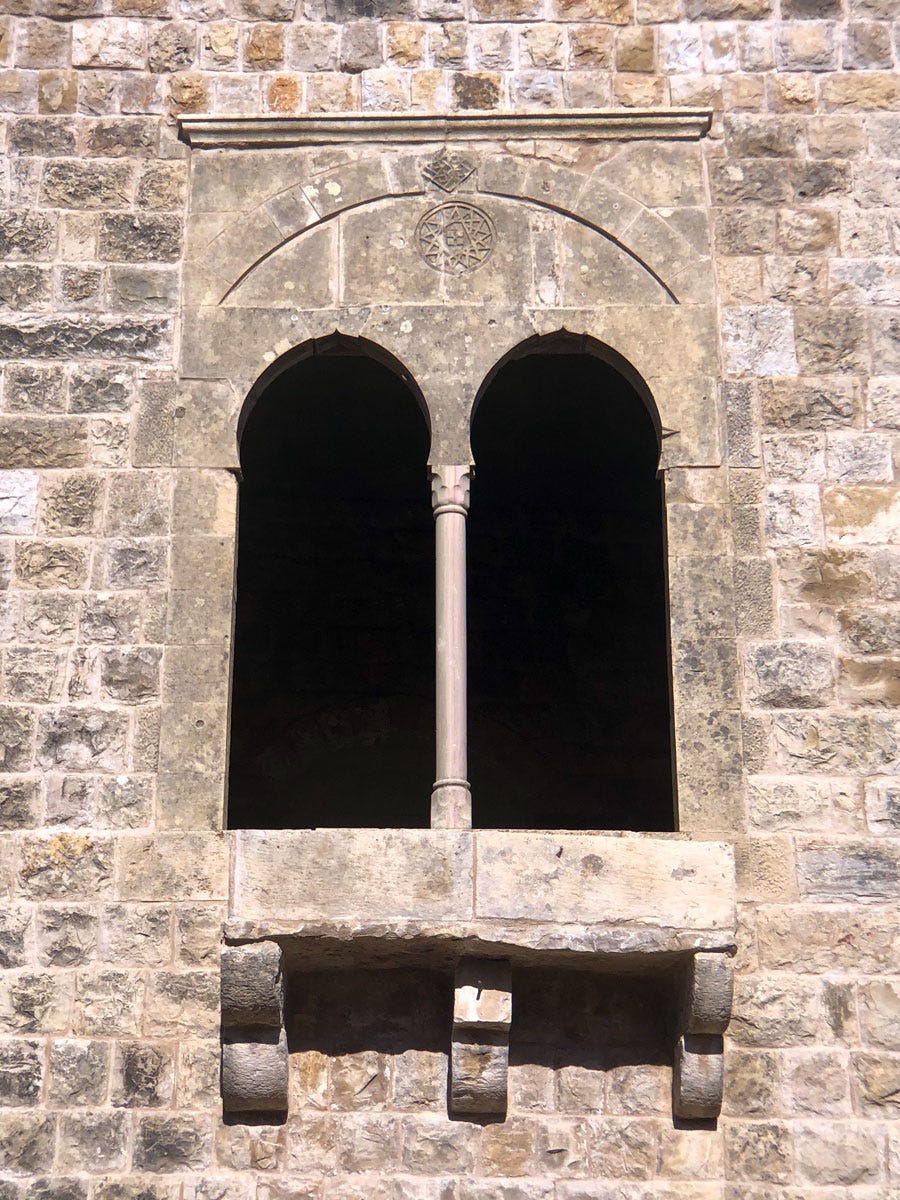
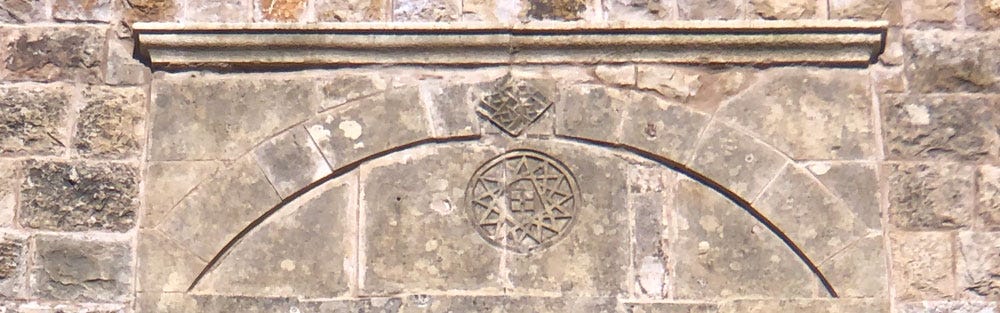
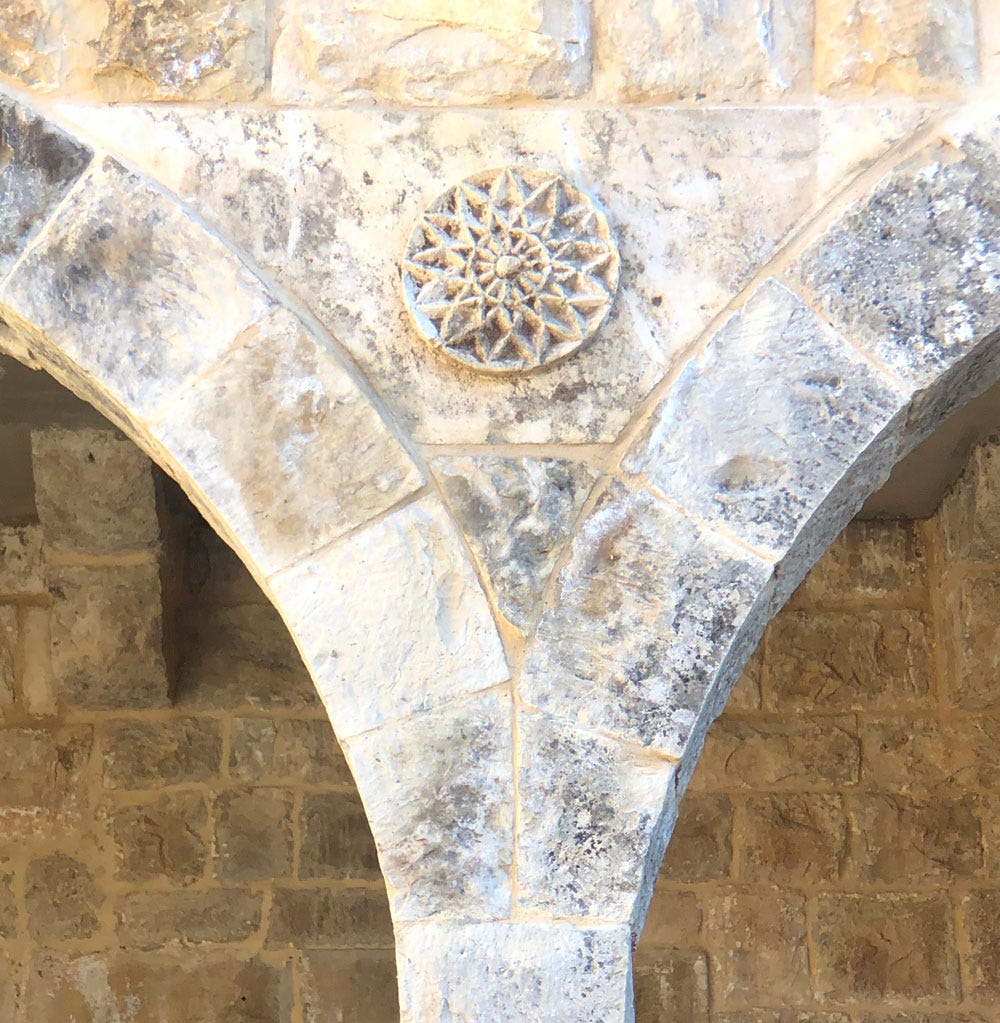
The twinned windows, separated by a small column, are the mandalūn, another characteristic architectural feature of the Lebanese house. Above and between them is typically a small round window or ventilation openings, around which an ornamental shape is carved, though the latter can also be blind and purely decorative.
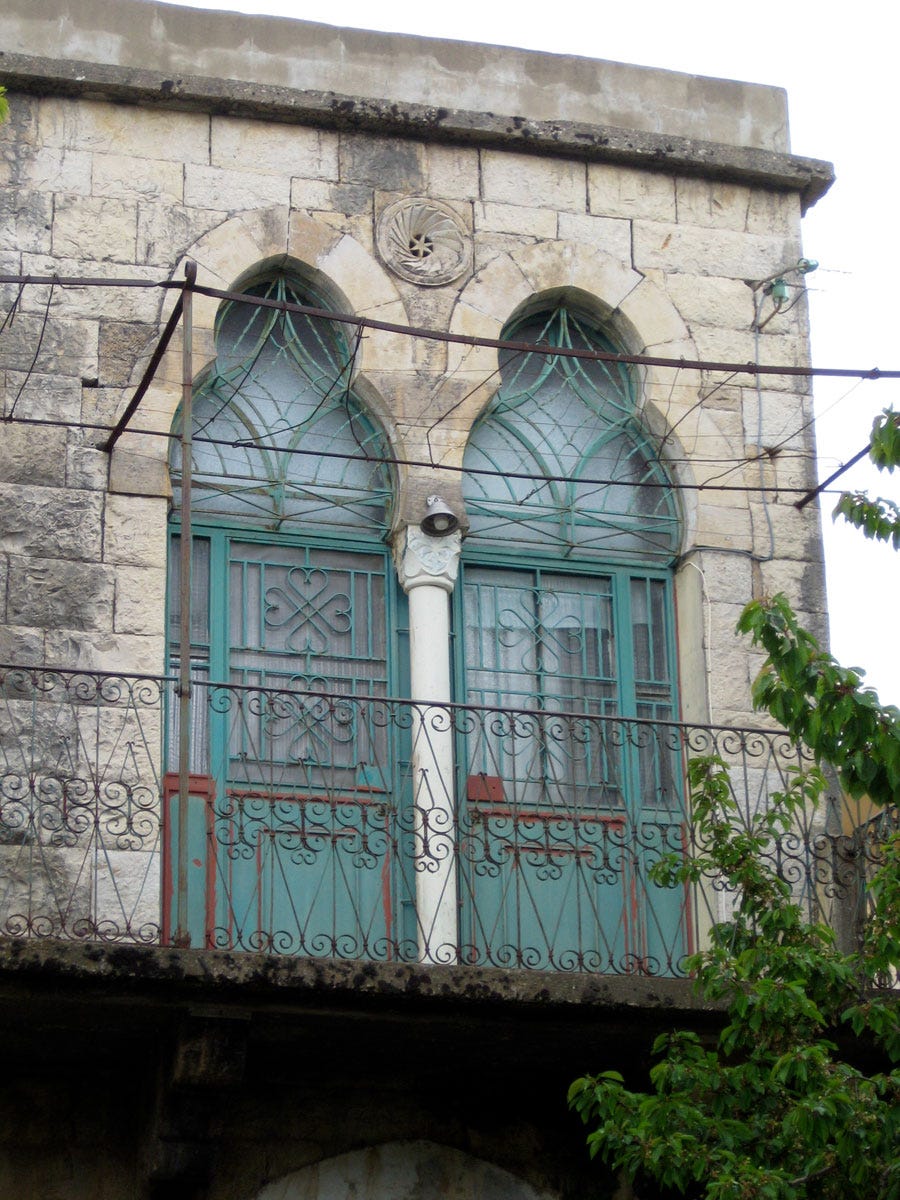
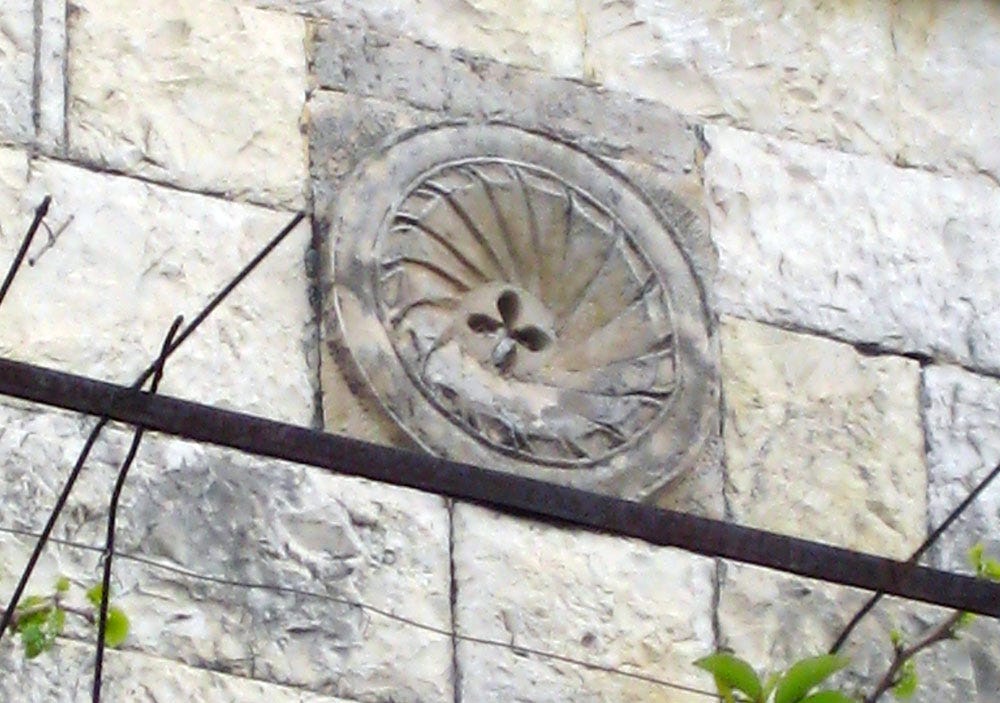
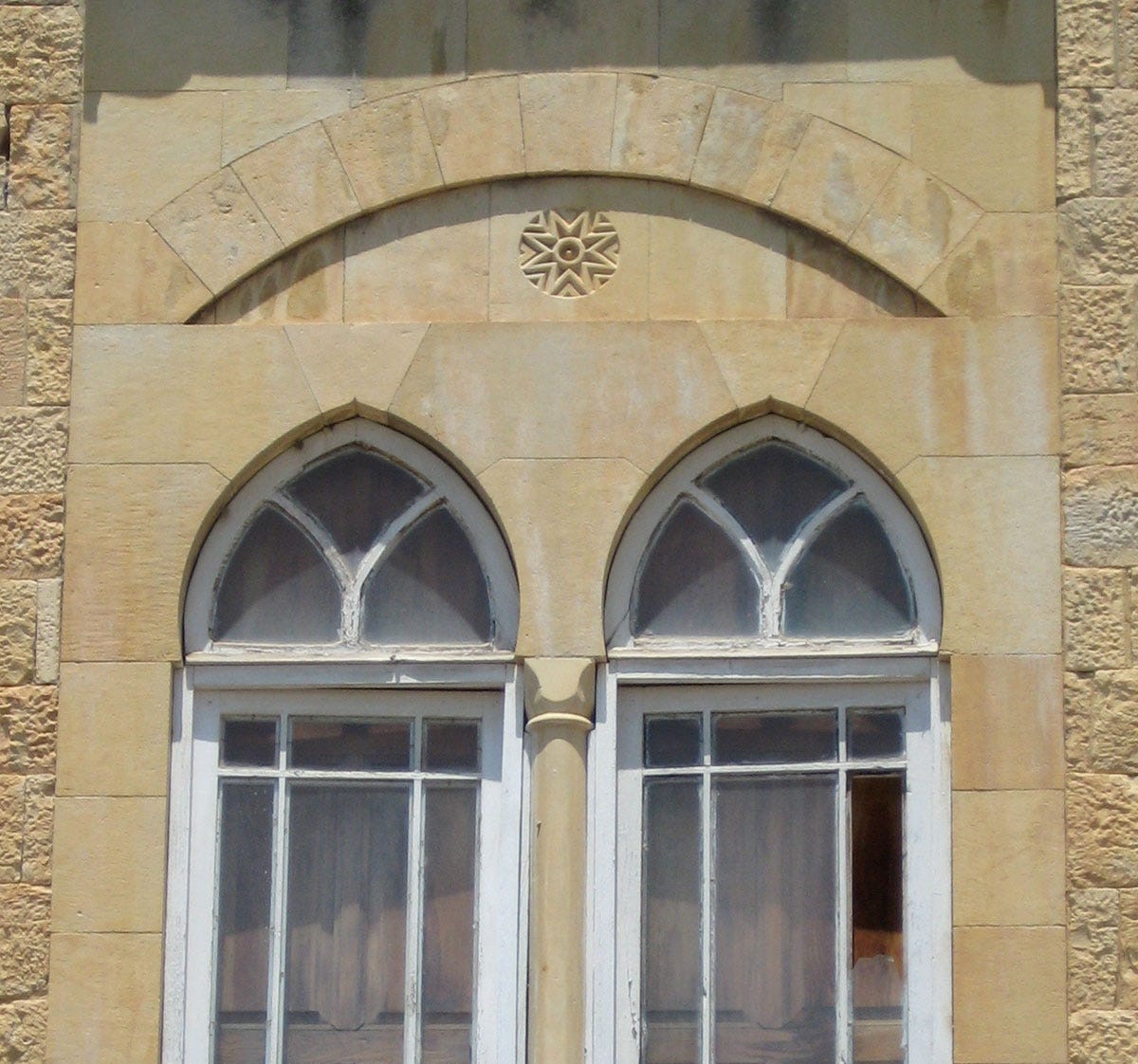
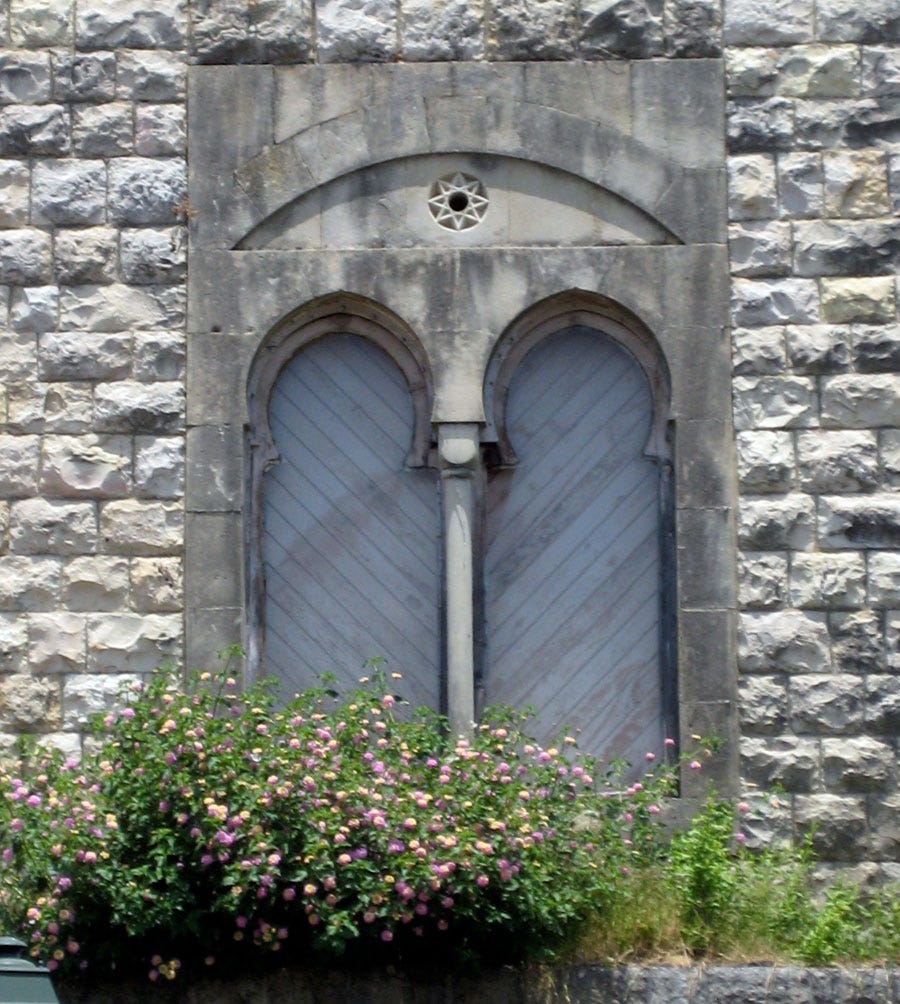
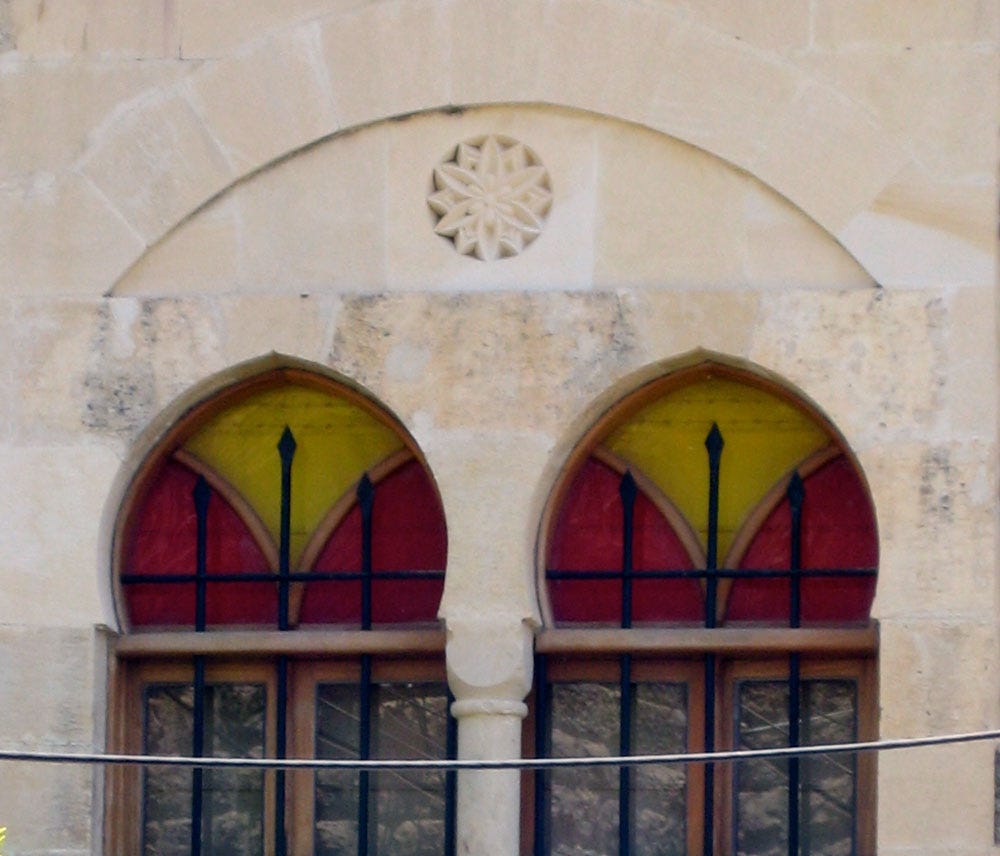
The stars above are 6-, 8- and 12-pointed, all standard geometric constructions. Below are 13-pointed stars, the only two I’ve come across. I’ve always been intrigued by them because 13 is a much more deliberate and complicated construction. Is it the signature design of a particular stonecutter? Is it associated with a particular family? Does it have an esoteric significance (which in Druze country is not impossible)? I haven’t been able to find any information. about it.
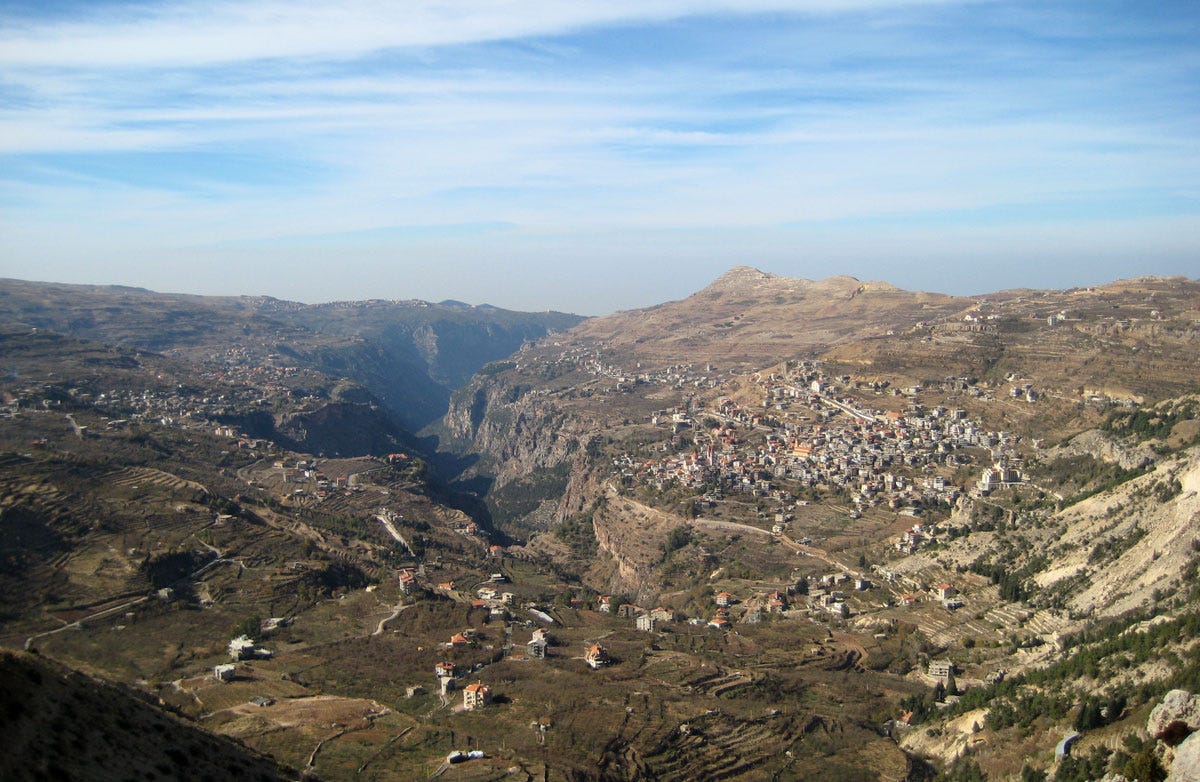
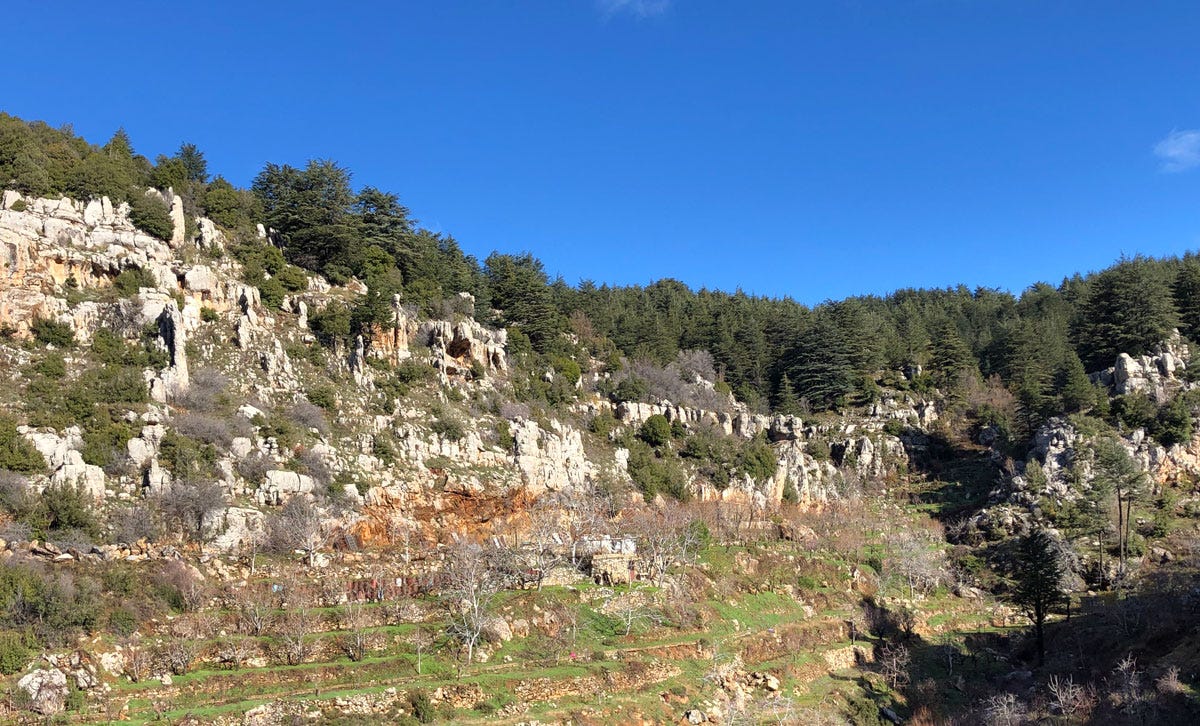
On to the Qadisha, the Holy Valley, with its small villages dotted on steep mountain slopes (on the right, below, is Bsharre, birth place and final resting place of one Kahlil Gibran, to use the foreign rendering of his name.)
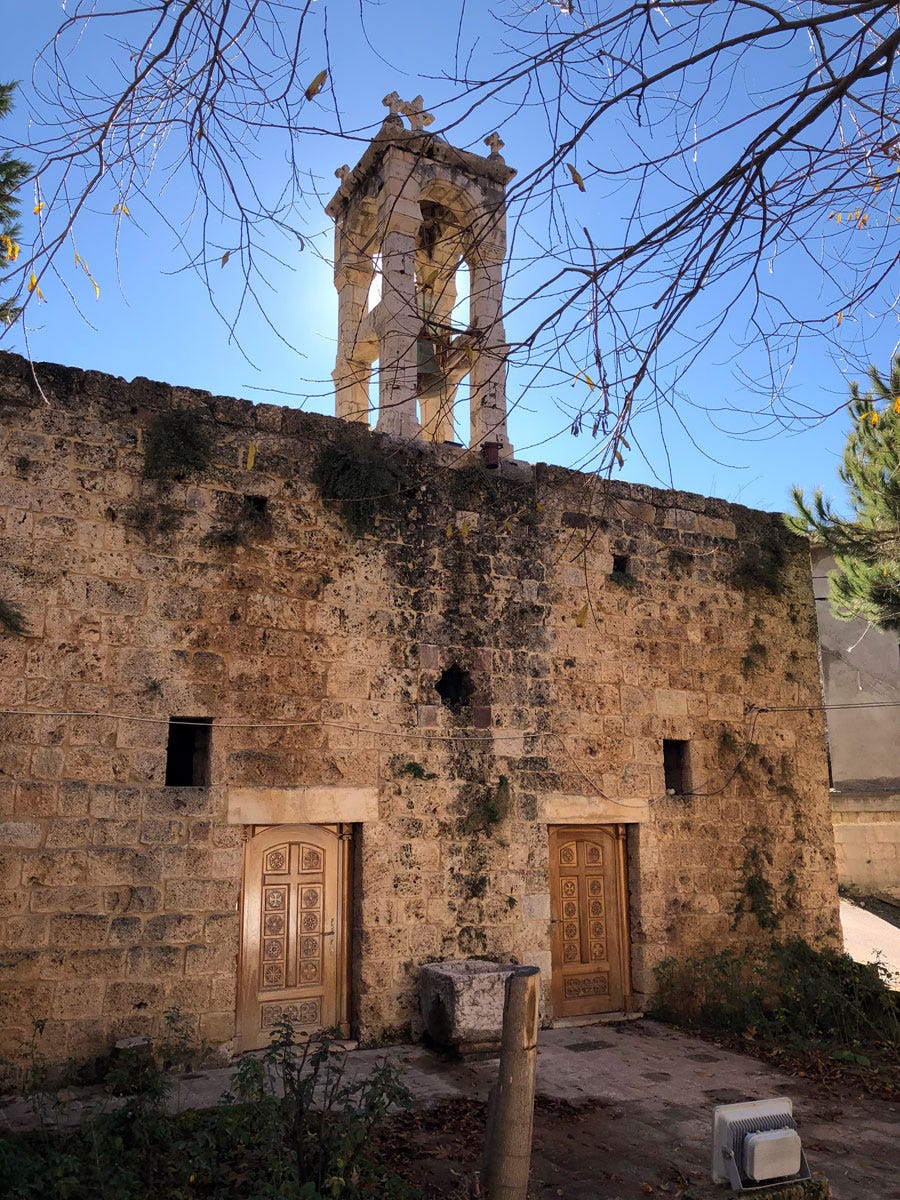
This typical mountain church (a cube of stone with a belltower) belongs to the village of Tannourine. The doors are modern, but based on the much older, intriguing carvings inside.
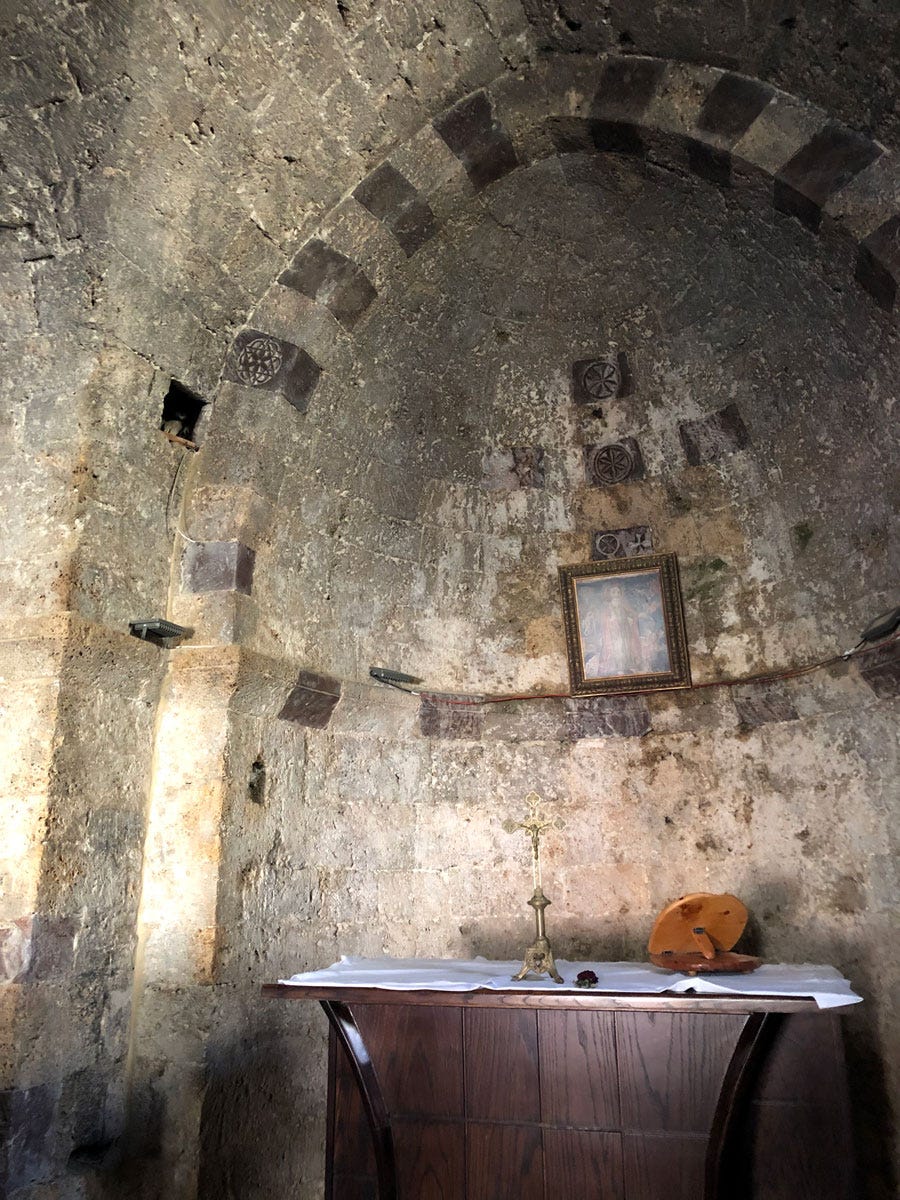
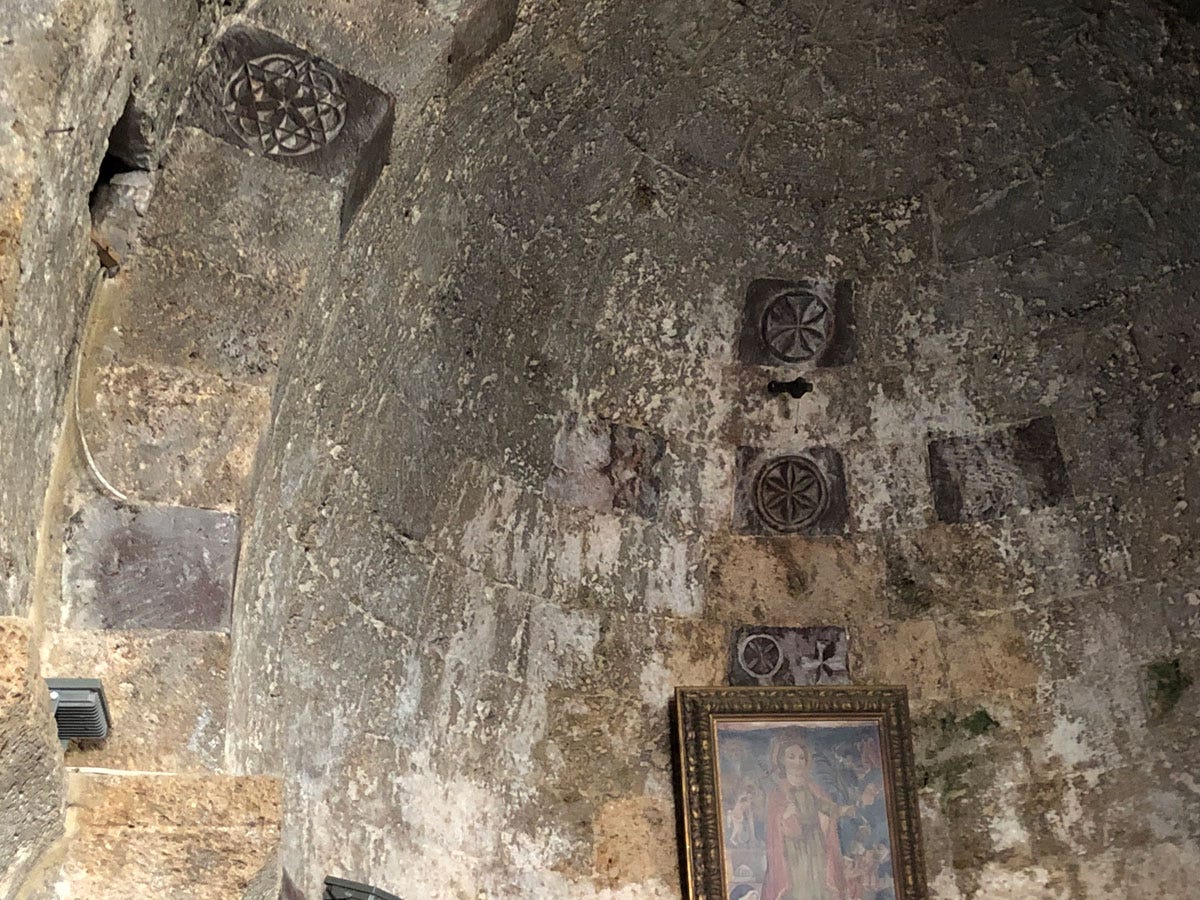
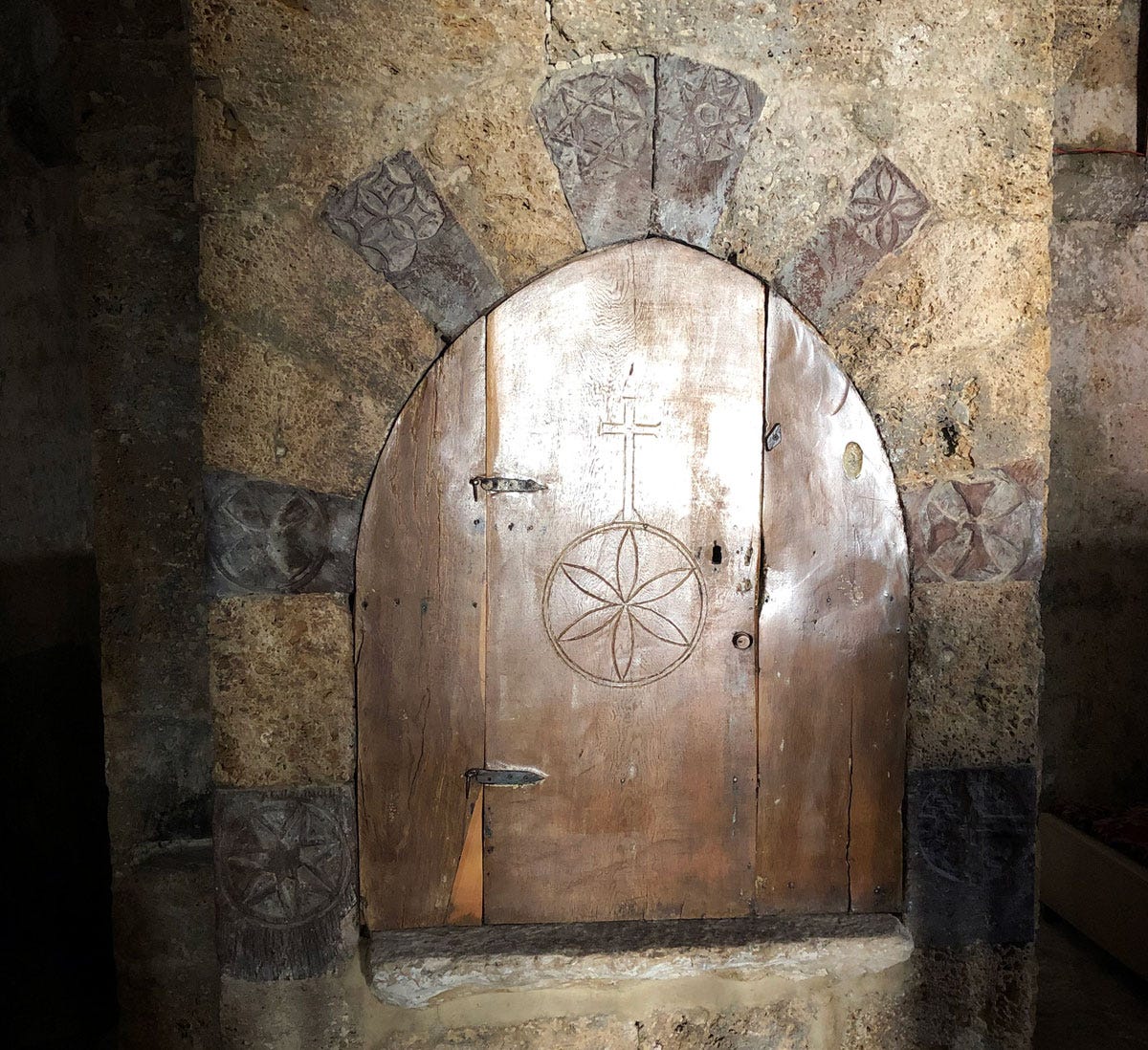
I have no information at all on these symbols; I’m aware some of them are used for protection in other cultures, and it would make sense here as well but I just don’t know. I don’t even know how old the church is.
On to our last stop, at the North end of the country.
Our northernmost city, the second largest in the country, Tripoli is unique in that the old city dating back to the Mamluks (who did destroy everything that preceded them, as religious zealots do) still stands today, at the foot of the hill on which the citadel of St Giles still stands; instead of replacing it the modern Tripoli was built around it.
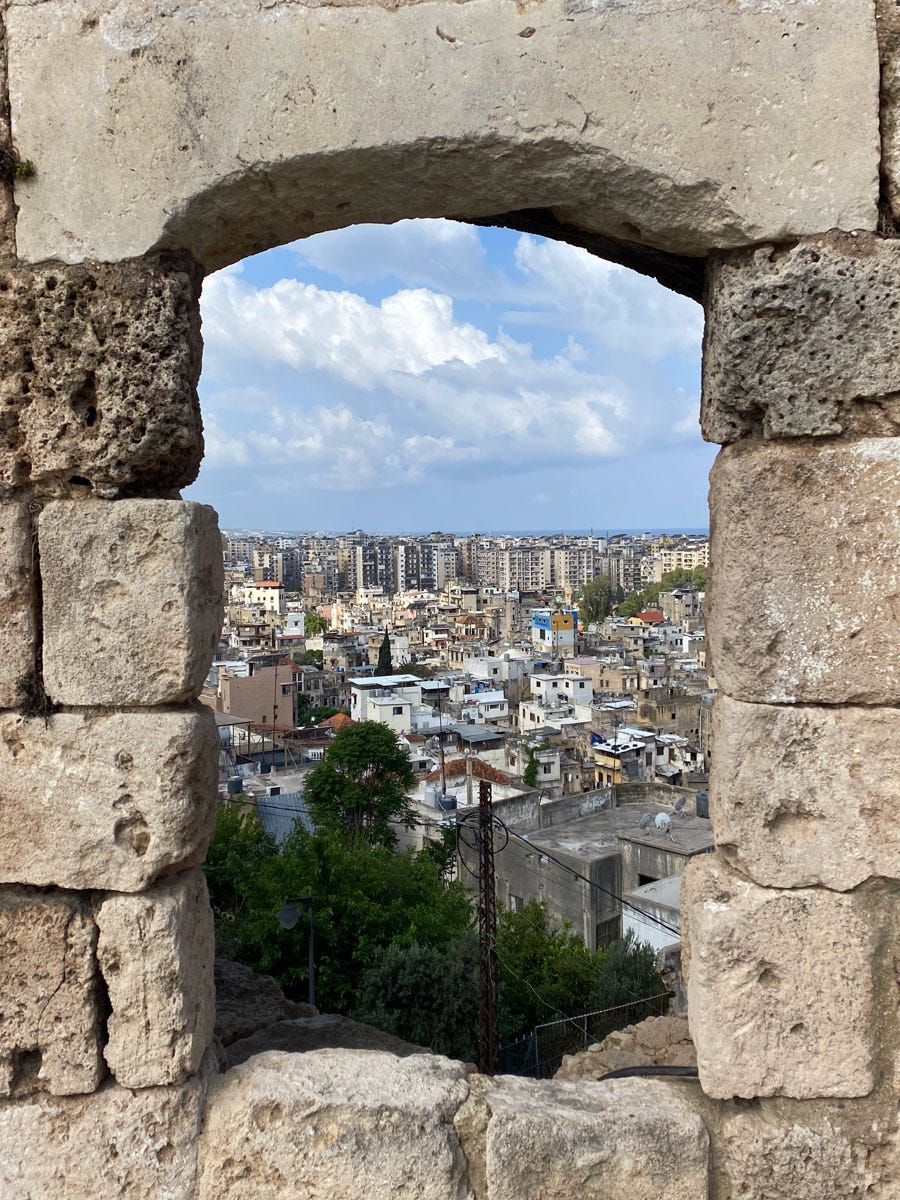
Stepping right down into the old city, whose maze of streets constitutes the souk. Despite the city’s povert, this is a welcoming and friendly place that is constantly making efforts to scrub up.


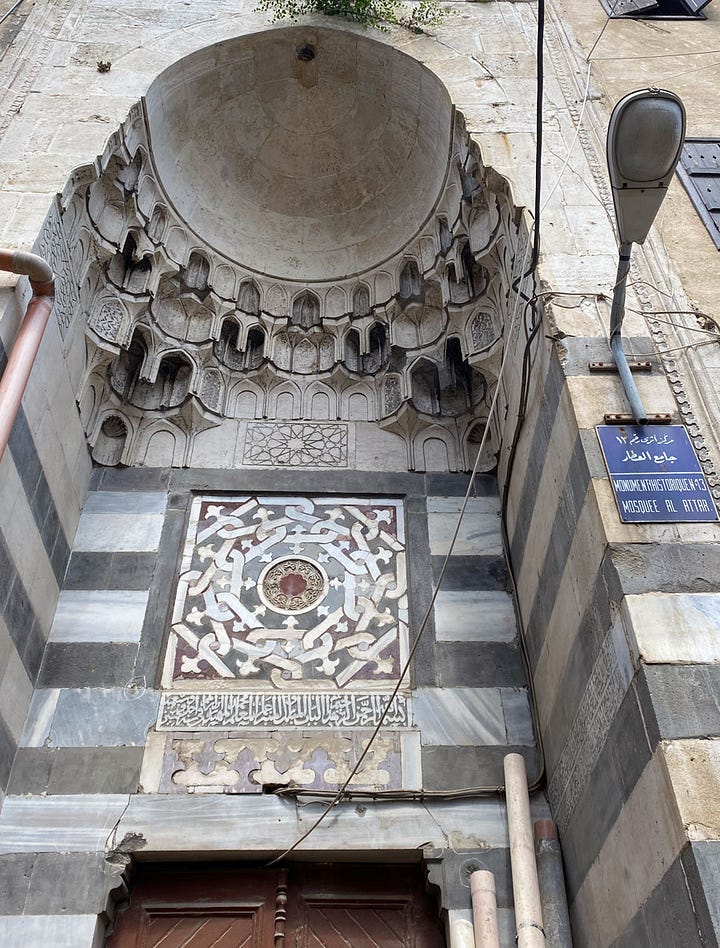

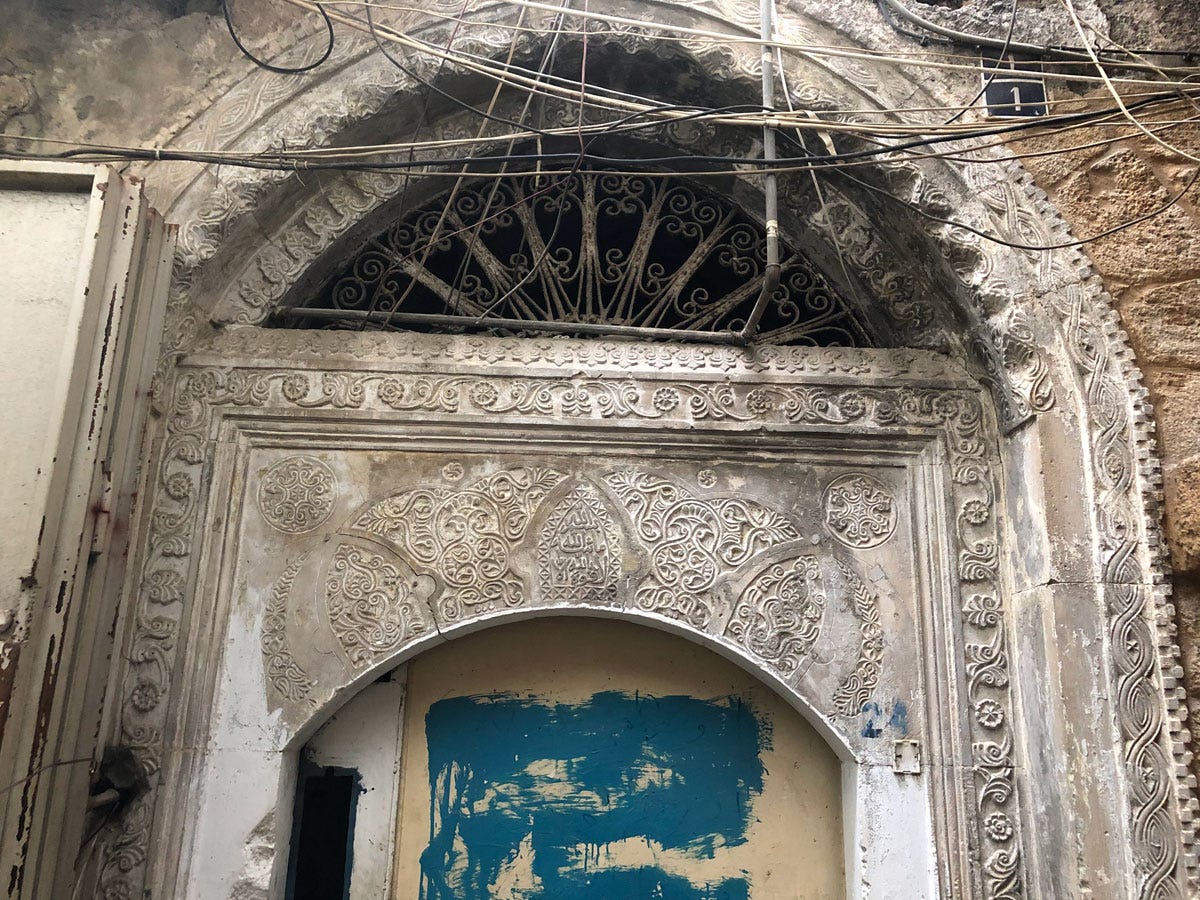
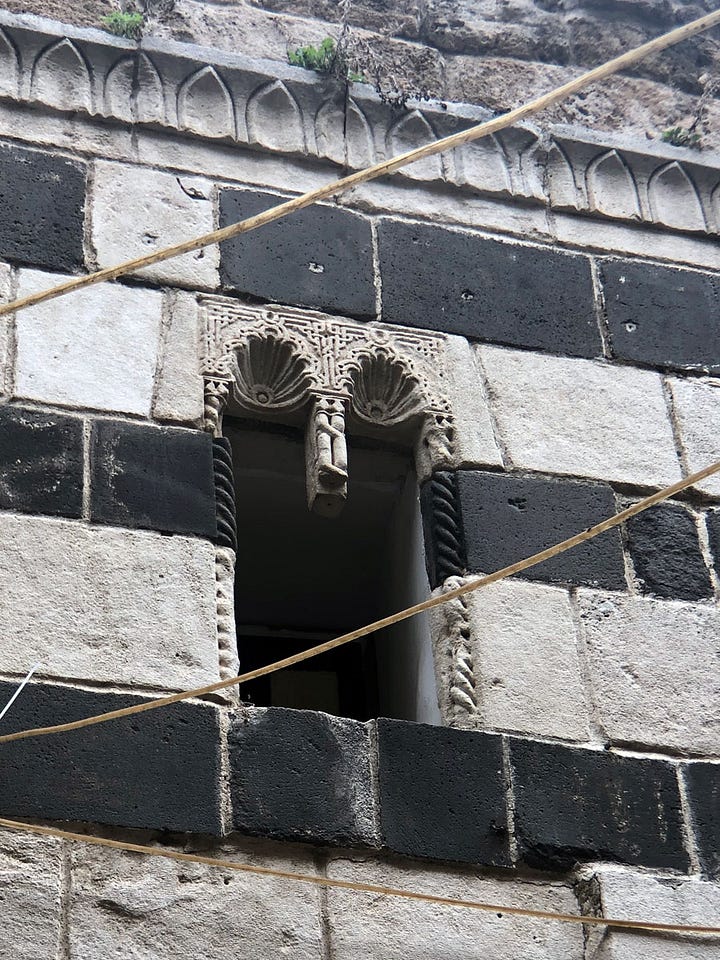
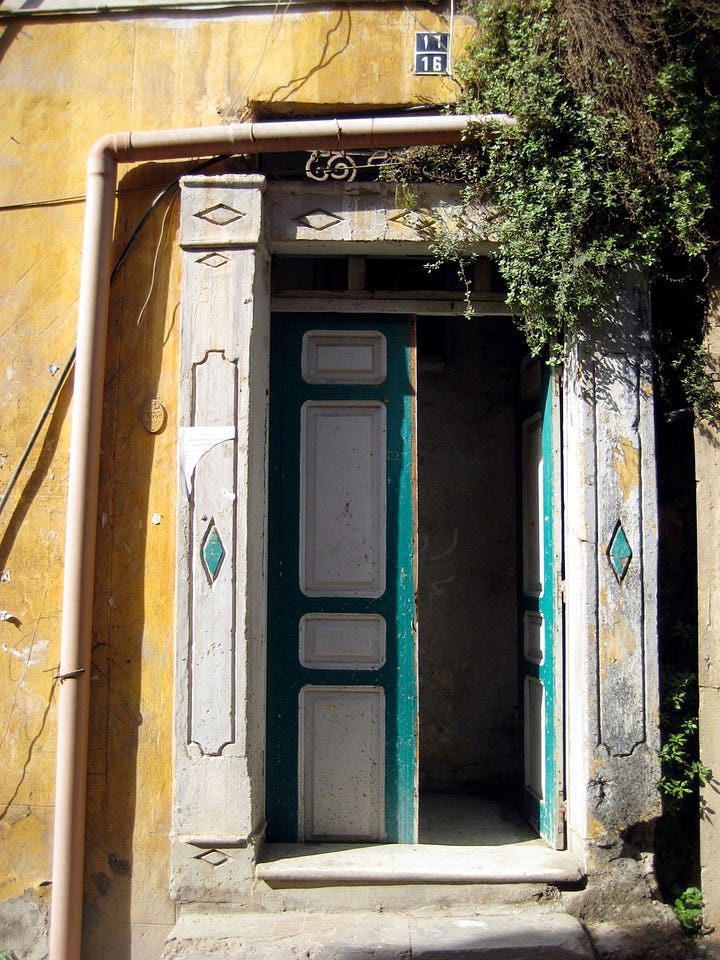
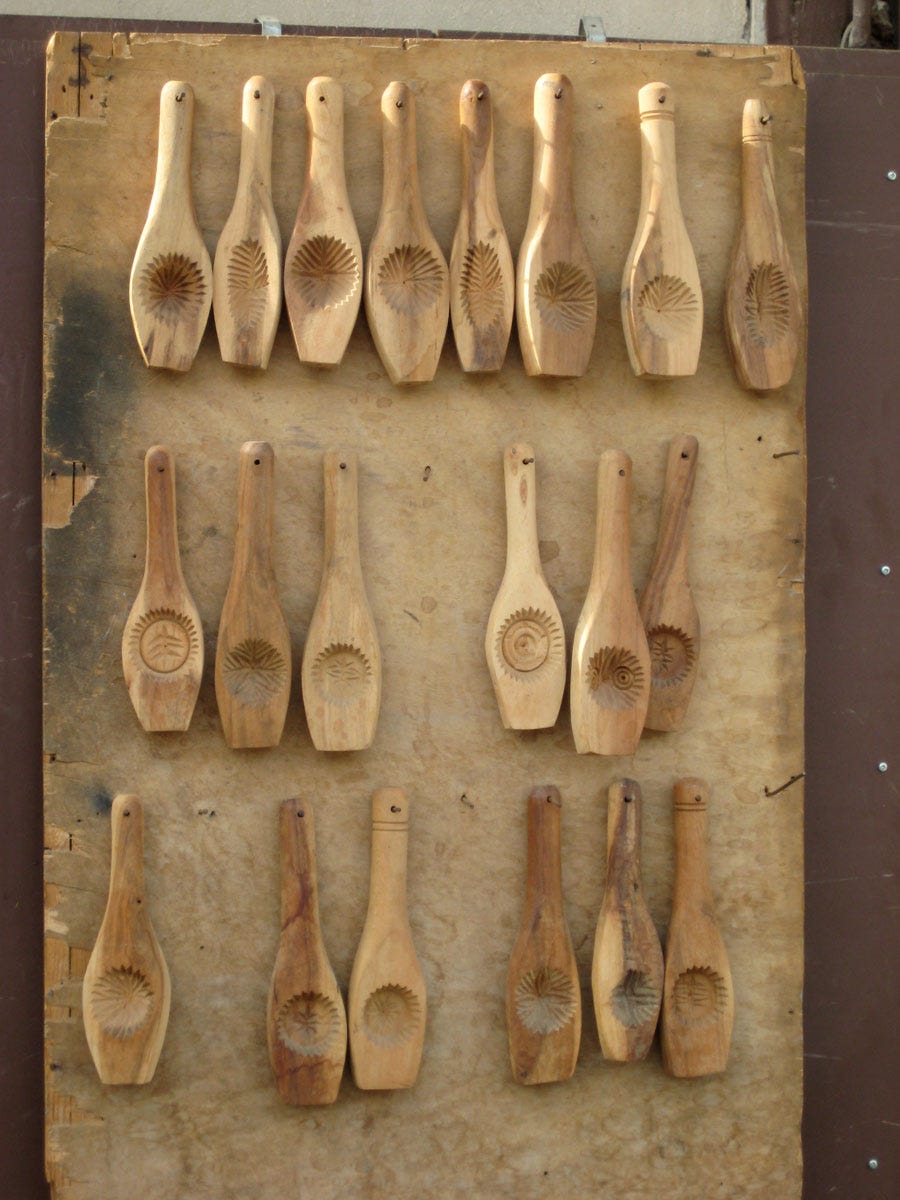
Out to the modern city, the inner ring of which dates ot the early twentieth century…
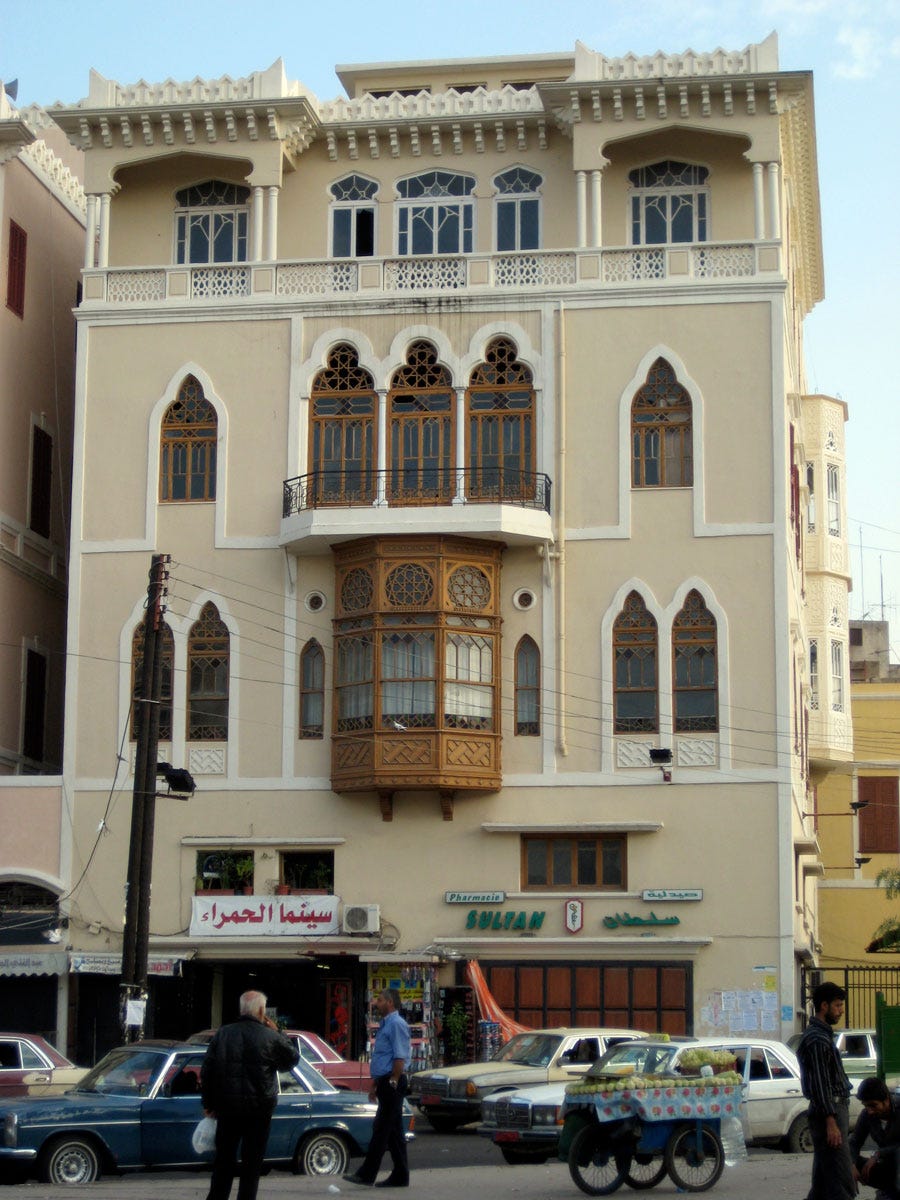
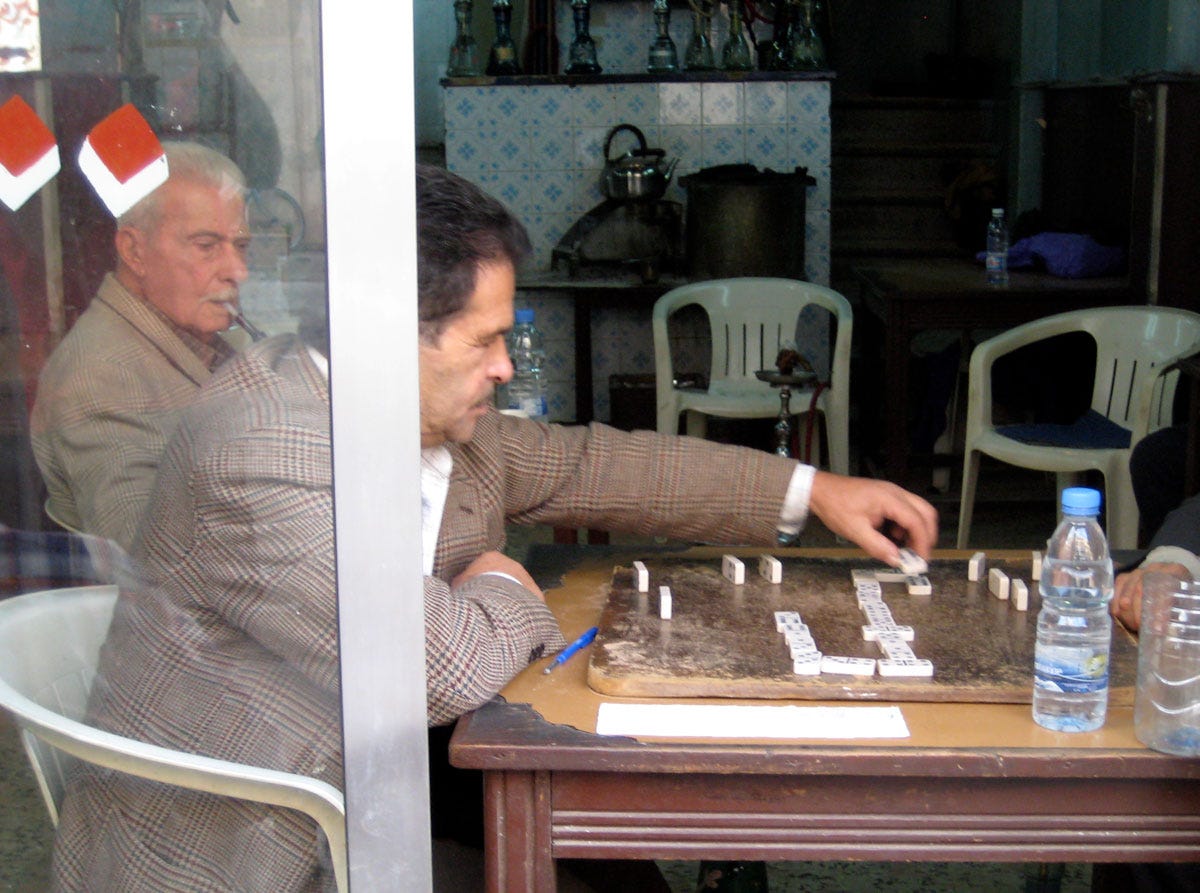
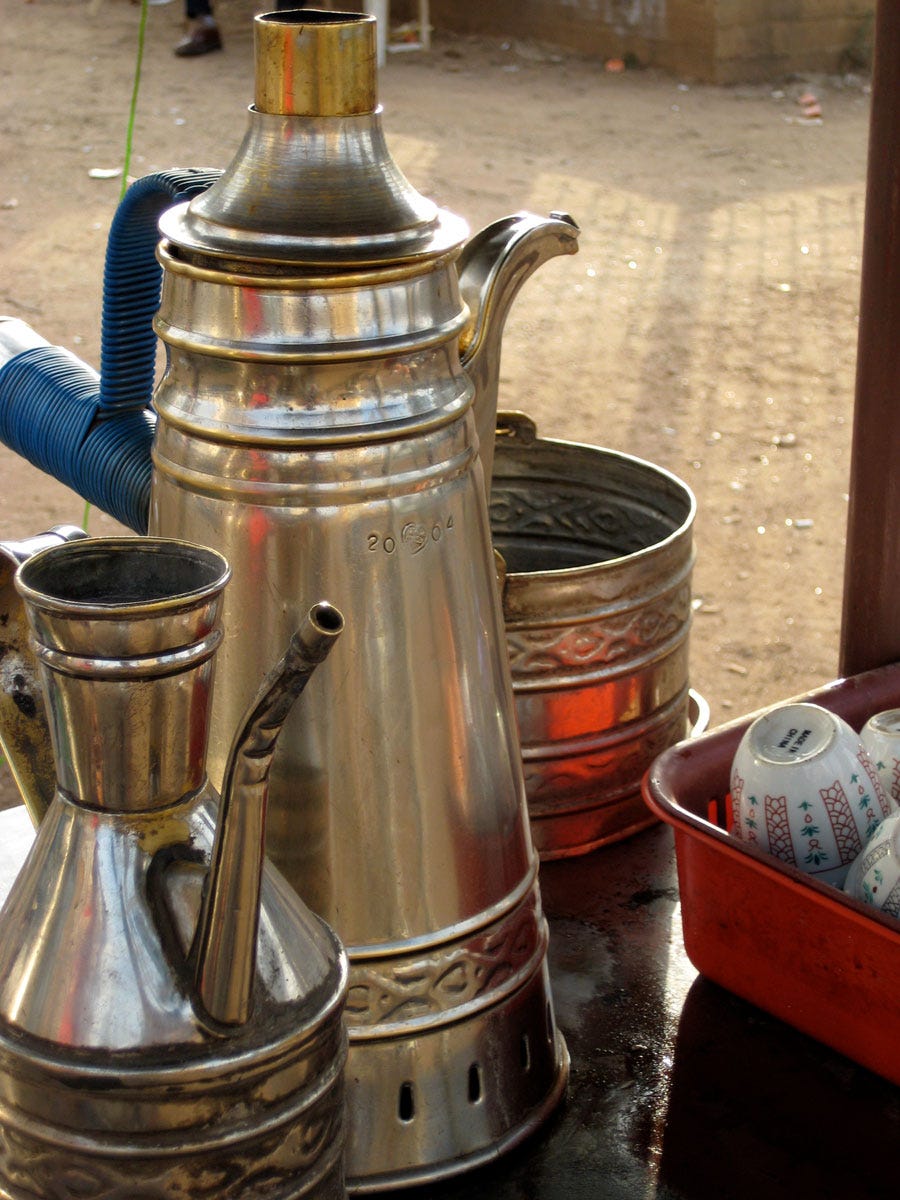
A quick coffee for the road? We’ve covered the entire length of the country, a mere 200 km in a straight line. Some deem it not worth protecting from those who are willing to commit mass murder to steal it.
I don’t have words of wisdom to conclude this. I join the ranks of all those who have through history had to watch from afar as their home is put to the torch and their people to the sword by barbarians on the rampage.
Comments
Nothing yet. Say the first thing.
Sign in to join the conversation.