
Luxury is often built on volume, in image, voice, and prestige. Jacquemus builds its brand on tone.
Without shouting, without saturation, without over-branding, it manages to move millions. Its power lies in the quiet confidence of emotional design, not as a campaign tool, but as a philosophy.
Every gesture is designed to make people feel something: joy, nostalgia, warmth, or surprise. It's not a moodboard. It's a memoir. A poetic one.
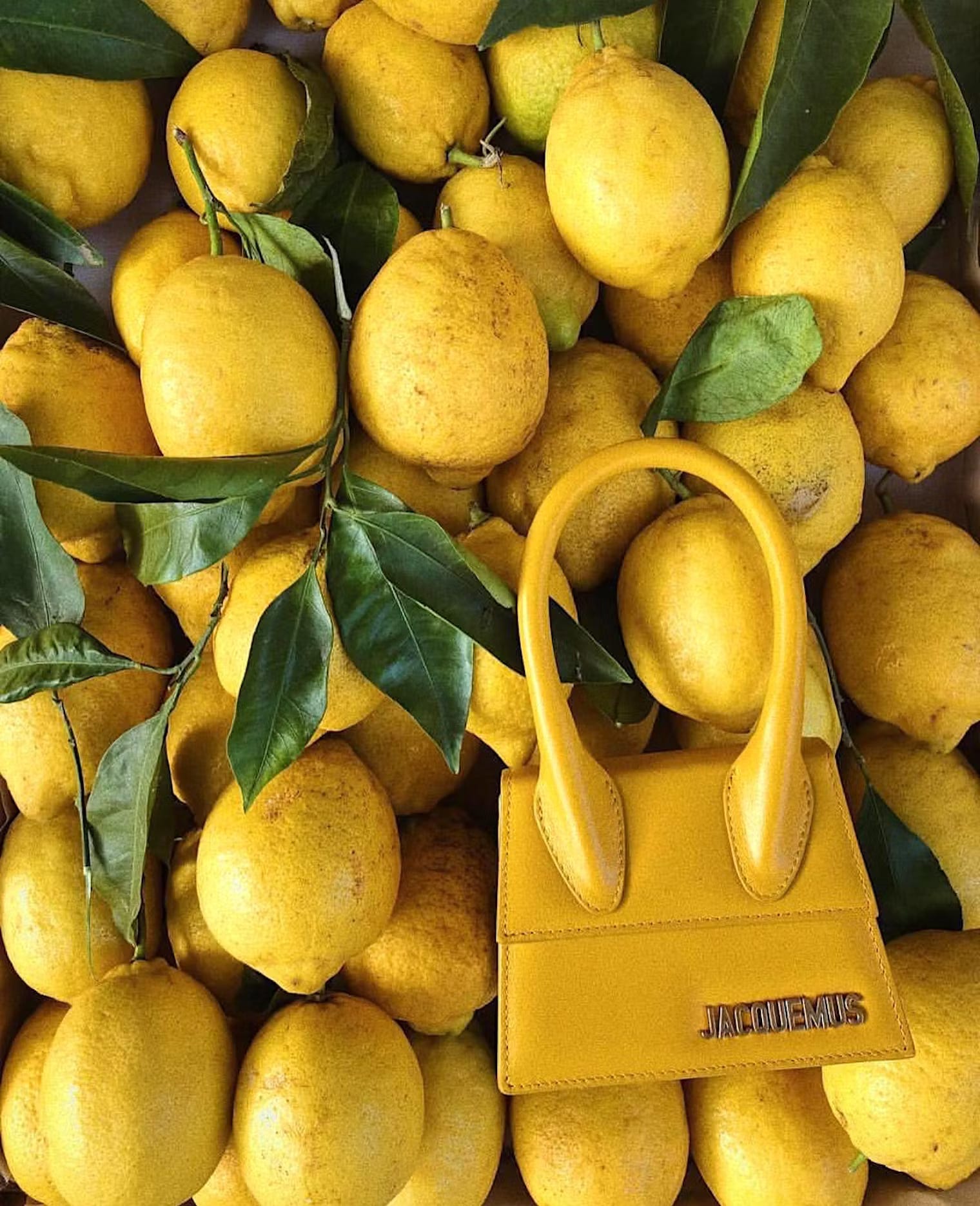
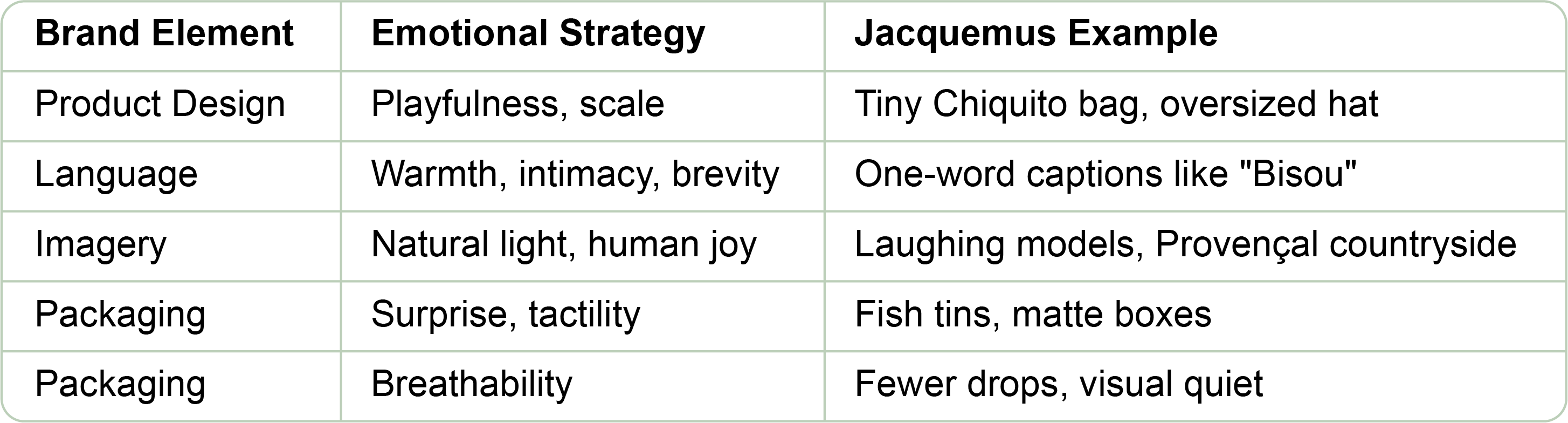
What defines Jacquemus isn't consistent visual identity, it's consistent emotional undercurrent:
Joy: Playful scale, colour, casting (Tiny bags, smiling models, AI lemons)
Nostalgia: Rural settings, childhood references, sunlight (Lavender fields, open-air dining)
Intimacy: Personal captions, unpolished charm, restraint (Simon's own posts, handwritten touches)
Lightness: Simplicity, silence, humour (Fish tin packaging, pastel palettes)
Campaigns don't feel staged. They feel like fragments from someone's summer memory. The laughter is unforced. The beauty is effortless. The light always soft and golden.

Jacquemus has redefined luxury's emotional tone by making it more human. It doesn't treat humour as beneath fashion, it treats it as the secret ingredient.
There's joy in every frame:
A micro handbag balanced on a baguette
A surreal hat too wide to fit through a doorway
Lemons bouncing across a beach in a digital dream
These aren't gimmicks. They're gestures. They make people smile. And in doing so, they make people remember.
Look closely and you'll see what Jacquemus doesn't do:
No campaign slogans
No purchase urgency
No taglines cluttering the image
Instead, the brand lets emotion carry the message. A single object, a sun-washed scene, or a moment of whimsy is given space to breathe. That simplicity feels like luxury.
This is what makes the brand emotionally resonant: it connects on a sensory level, often without needing to explain itself. The experience is designed to be felt before it's decoded.

Even in its most surreal or tech-driven moments, Jacquemus holds emotional clarity. The AI-generated video of giant Bambino bags rolling through Paris wasn't cold or conceptual. It was joyful, strangely tender, as if a child's daydream had been animated.
This shows that emotion isn't medium-dependent. Even synthetic content can feel soulful when grounded in human storytelling.
What emotional aftertaste does your brand leave?
Could your content communicate without words or logos?
Where is there space for surprise or delight?
Is your experience aspirational or affectionate?
Are you using emotion to differentiate, or just to decorate?
Jacquemus teaches us that emotional connection isn't earned through high production value or brand authority. It's earned through emotional presence.
Whether it's a moment of humor, a visual whisper, or intimacy that transcends the screen, what we remember isn't the product, it's how it made us feel.
In a crowded marketplace, that emotional echo is everything. Luxury doesn't need to be loud. It just needs to linger.
Next week: How Jacquemus designs for the feed without chasing algorithms—and why the best content doesn't ask for shares, it earns them.
No posts
Comments
Nothing yet. Say the first thing.
Sign in to join the conversation.