
☀️Good morning, Maine Startups Insider Community!
Today we step back and look at the ecosystem from a different angle: public private partnerships. Often overlooked, they carry outsized influence on how things actually get built. Our conversation with GPCOG Executive Director Kristina Egan, an operator who approaches systems the way founders approach companies, offers a clear window into how they work. And, Startup Maine Week is here!
Let’s get into it!
Please follow us on LinkedIn or subscribe to our newsletter below.
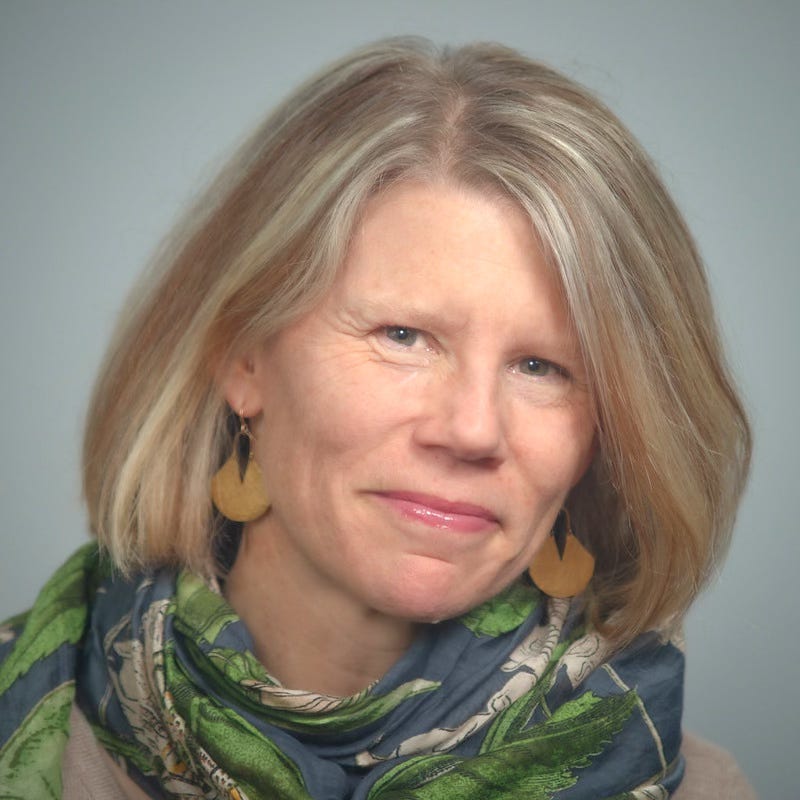
At GPCOG, Kristina Egan is using soft power and long-range thinking to shape what Maine becomes next.
Kristina Egan talks like someone who has spent enough time inside systems to know where they bend, where they break, and where a small shift can change the whole trajectory. She has an ease about her. A cool customer. Grounded in Maine, shaped by a much wider lens.
When we sat down at the Greater Portland Council of Governments (GPCOG), the conversation moved from Bangkok to Manila, from election monitoring in El Salvador to zoning in southern Maine, from bike paths and asthma to climate migration and startup capital. That range is part of the point. Egan has built a career moving between policy and execution, translating ideas into outcomes. She sees connections where other people see silos.
Long before she was helping Maine communities think through housing, transportation, permitting, and public private partnerships, she was a young project manager working across nine Asian countries on energy and environmental issues. The work gave her a close view of how prosperity actually functions on the ground. Safe streets matter. Clean air matters. Access to jobs matters. A government’s structure matters. Community buy-in matters even more.
That worldview sharpened early. As a young election observer in El Salvador, there for the first elections after the civil war, she watched fraud and intimidation unfold in plain sight. The experience left a mark. It also clarified something. If input into a broken system could be ignored so easily, then maybe the real work was finding a way inside the machinery itself.
Since then, Egan has spent roughly half her career in government and half outside it, moving between policy and execution. That toggling has become central to how she thinks. Policy without ground truth can drift into abstraction. Implementation without policy can leave people solving the same problem over and over with one hand tied behind their back.
At GPCOG, the organization she now leads, Egan has turned a low-profile planning body into a soft-power hub. The organization sits in a kind of strategic middle. It does not command hard power in the way a city hall or statehouse might. It convenes. It scans the horizon. It helps structure deals. It deploys funding. It brings together municipalities, state partners, federal agencies, nonprofits, universities, and businesses. Egan describes herself as a weaver, someone who listens for common ground, tension, and the energy inside disagreement. It is one of those descriptions that sounds soft until you realize how much leverage it can create.
A lot of GPCOG’s work happens out of public view. Egan said one of the organization’s biggest jobs is looking twenty, thirty, forty years ahead and asking what Maine needs to prepare for now. Transportation funding shortfalls. Flooding. Extreme rain events. Climate migration. The strain those forces will place on land use, infrastructure, housing, and local government capacity. Public attention usually arrives in the moment of crisis. Planning has to arrive earlier.
That instinct to look around corners also shapes how she thinks about entrepreneurship and growth. Asked how she brings people along when the idea arrives before the market is ready, Egan came back to fundamentals. You start with a clearly defined problem. Then you talk to people until you know whether they see the world the way you do. After that, you test it.
At GPCOG, that often means demonstration projects. In one recent case, the organization deployed equipment on streets where serious crashes had been happening to see whether speeds could be brought down. The team tracked data, asked people how it worked, and used that learning to judge whether permanent installation made sense. The language belongs to public planning. The logic sounds a lot like a startup.
Housing offered another example. Years ago, GPCOG helped surface a crucial part of Maine’s housing problem by examining how little land in the region was zoned for multifamily housing. The figure was striking. Only four percent. That work helped move the conversation, gave local leaders and lawmakers something concrete to react to, and opened a deeper examination of what was really constraining supply. Zoning turned out to be one piece, with construction costs, interest rates, land availability, and infrastructure also shaping the outcome. Still, defining the problem clearly changed the debate.
This is where Egan becomes especially interesting as a voice in Maine’s economic future. She has the planner’s patience, the operator’s appetite for execution, and the reformer’s impatience with habits that have calcified into dogma.
Asked where Maine could be more aggressive, she did not hesitate. The state, she argued, spends a great deal through tax credits and incentives without enough scrutiny over whether that money is being allocated in the smartest way. In her view, those public dollars should be examined with the same seriousness applied to the rest of the budget and coordinated more deliberately to support business growth at every stage, from startup through scale.
She also wants a more coherent welcome mat for investors and companies. Right now, too much of the process lives in fragments. One agency handles one piece, another agency handles another, local needs sit somewhere else, and the burden of stitching it all together lands on the business itself. Egan sees a more coordinated model, one where state agencies, regions, and municipalities come together around sites, infrastructure, housing, zoning, and business needs in a way that feels intentional rather than improvised.
Her critique of Maine’s economic development orthodoxy gets sharper from there. She is skeptical of the cluster-based approach that has shaped so much state thinking over the years. Government, in her view, is not especially good at predicting which sectors will win. Maine should spend less energy trying to pick winners and more energy supporting startups and growth companies across industries, then giving them the capital and connective tissue they need to expand. She believes Maine should be teaching entrepreneurship and financial literacy much earlier and much more deliberately. The next generation wants to build. What’s missing is the practical education to do it well.
That connective tissue comes up again and again in her answers. Maine has talent. It has ideas. It also has an economy built heavily around small businesses, which she sees as one of the state’s great strengths. What it lacks is a more coherent strategy for helping those businesses find customers, mentors, markets, and capital.
One of the more practical ideas she raised was simple matchmaking. She recalled reading applications from companies seeking pandemic-era support to expand their markets and seeing strong ideas that could have gone further with better guidance, better communication, and stronger bridges to established players. Her point was clear. Early companies often do not need magic. They need access. They need introductions. They need somebody willing to say, here are five organizations that will pilot this, here are three people who can help you sharpen the pitch, here is a financing structure that closes the gap.
That last piece matters. GPCOG administers revolving loan funds and often serves as the gap financer in a capital stack, taking a subordinate position that allows projects to move when private capital alone would stop short. Egan speaks about that role with real pride. It lets public dollars absorb some risk in service of broader economic activity. In her telling, Maine needs more of that kind of capital in the market. Demand is there. The need is there. The capital still falls short.
She is more optimistic than cynical about government itself. Founders, she said, often misunderstand how approachable the right public partners can be. Government always has a face. Many of those faces belong to people who entered public service because they want to help. Find the right guide, and the system can become much easier to navigate.
Still, she knows where it drags. Local development processes can slow projects, especially when public sentiment hardens late in the game. Even legally sound proposals can run into a wall when opposition grows at the eleventh hour. In a state where attachment to place runs deep, any visible change can trigger anxiety. Egan understands that instinct. She also thinks Maine will have to evolve past it. The coming decades will demand adaptation, whether the pressure comes from weather, demographics, or migration.
That is where her long view becomes most vivid. Asked what a thriving, innovative Maine looks like ten to fifteen years from now, she did not describe some glossy tech fantasy. She described walkable neighborhoods, housing people can afford, sewer and sidewalks, daycare, public transportation, and communities planned well enough to absorb growth gracefully. If the public side gets the infrastructure and planning right, she said, the economy gets stronger almost everywhere else.
There is a kind of civic realism in that answer. Maine’s future, in Egan’s telling, will be shaped by many of the same forces entrepreneurs care about: talent, trust, speed, capital, demand, and whether the system makes room for what wants to emerge.
She would also like the state to open itself more readily to ideas from elsewhere. One of the gifts of working across countries and regions, she said, is seeing how many different ways there are to solve a problem. Maine can be too quick to say that a successful idea somewhere else would never work here. Egan hears that as a failure of imagination. She is not interested in making Maine look like Dallas, as she joked. She is interested in giving Maine permission to borrow, adapt, and improve. She wants communities to get more comfortable with a future that will not look exactly like the past. She wants young people to learn how to build businesses, manage money, and create something of their own.
By the end of the conversation, another quality came into view. For someone whose natural style is cooperative and upbeat, Egan is clear-eyed about toughness. A colleague in the room offered an observation that landed. People see the warmth, the smile, the empathy. They may miss how tough she can be when the situation calls for it. She laughed, then agreed. Over time, she said, she has learned when to put on the tough-gal hat in order to protect the people and communities she serves.
That combination may be exactly what this era requires. Maine does not need more noise. It needs more people who can hold complexity, build trust, and still push for change with clarity. Egan has spent her career doing precisely that.
That feels like the right note to end on. Kristina Egan is a consensus builder, but she is not soft about the stakes. She believes Maine can think bigger. She believes public dollars can work harder. She believes government can be more useful, entrepreneurship can be better supported, and communities can become more open to change without losing what makes them feel like home.
In a state where the loudest conversations often happen at the point of friction, Egan has built a career around what happens before that. She listens early. She looks ahead. She maps the system. Then she starts pulling people toward a future Maine still has every chance to build.
A new analysis from the University of Maine and the Maine Department of Marine Resources tracks more than 20 years of change in the Gulf of Maine, offering one of the clearest pictures yet of how quickly the region’s marine ecosystem is moving.
The data shows species shifting northward and into deeper waters as ocean temperatures rise. Some species that have long defined Maine’s coastal economy are becoming less predictable in where and when they appear. Others are moving in, changing the composition of what can be caught, processed, and sold.
The effect lands directly on Maine’s working waterfront.
For founders and operators, this is a market signal. Supply chains tied to historic patterns are becoming less reliable. New species create openings for product development, processing, and export. Established industries face pressure to adapt faster than their infrastructure was designed to handle.
The work from University of Maine and the Maine Department of Marine Resources turns a long-discussed shift into something measurable. It gives companies a clearer view of where the ocean economy is heading, not where it has been.
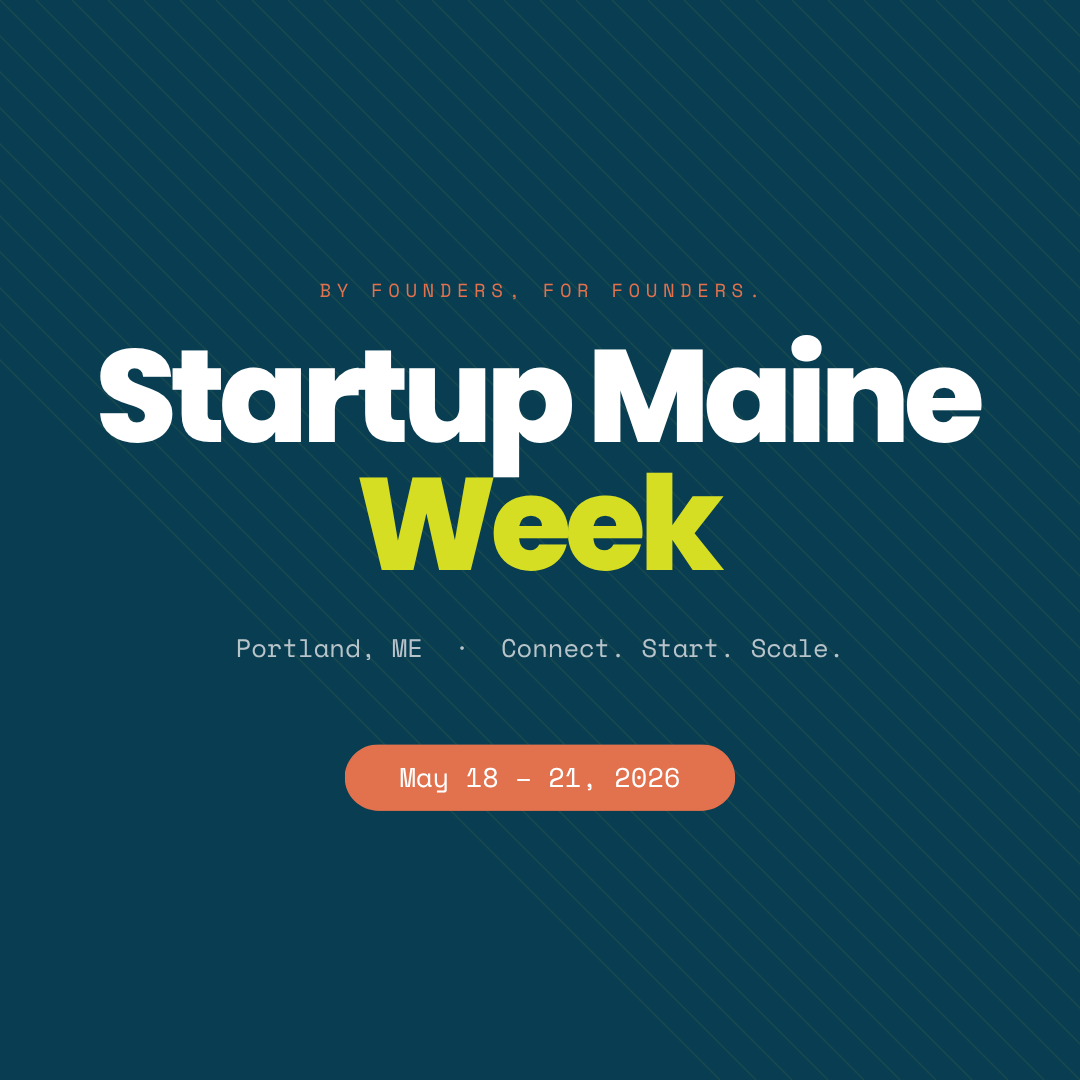
Startup Maine Week will be in Portland from May 18–21, bringing four days of programming that continues to evolve alongside the state’s growing startup ecosystem.
This year’s structure leans into clarity. Three tracks anchor the week and reflect where founders and operators are in their journey. Connect opens the door wide, drawing in everyone from first-time founders to investors and the community builders who keep the ecosystem moving. Start focuses on the early decisions that shape a company, from finding customers to building a team. Scale moves into the harder questions that come with growth, including capital, hiring, and what comes next when the first version of the business starts to work.
The speaker lineup blends national perspective with local credibility. Kate Brodock (General Partner, W Fund) and Clarence Bethea (Managing Partner, What VCs Won't Say), as well as local startup leaders such as Phil Coupe (Co-founder, ReVision Energy).
Early bird tickets are set at $129 through Friday, April 17, before moving to $199 for general admission. A five-pack priced at $549 gives teams a way to attend together. All tickets include lunch each day and access to all programming.
Registration below. The window for early pricing is closing. startupmaineweek.regfox.com/2026.
Until next time, Maine Startups Insider Community, keep grinding. This is the way.
-Whit Richardson & Chris Philbrook
No posts
Comments
Nothing yet. Say the first thing.
Sign in to join the conversation.