
☀️Good Morning, Maine Startups Insider Community:
A new year in Maine never really feels like a reset. The roads thin out. The noise fades. The work sharpens. Winter has a way of forcing clarity, or chaos, if your child’s school is canceled and you’re suddenly managing the workday with Paw Patrol and Gabby’s Dollhouse on repeat in the background. We went to school in far worse weather, but that’s a debate for another day.
Founders raised approximately $285 million across 62 deals in 2025, according to recent investor data, with most of that capital flowing into biotech, aquaculture, outdoor tech, and food innovation. In a national market that has grown more cautious, that’s real momentum.
Key details from the data:
Ecosystem Depth: The report notes that Maine “punches above its weight” in life sciences, thanks to institutions like the Jackson Laboratory and the MDI Biological Laboratory.
Average Deal Size: The average seed round in Maine for 2025 was $1.6 million, which is noted as being slightly below the national average but exceptionally high for a rural state.
Active Investors: There are currently 20–25 active investors in the state who regularly write checks over $250,000.
***ELLTY, the source for this data, provides one-stop shopping for startups looking to raise capital in Maine. All the key details, players, questions, and answers are in one place.***
The shift is visible in who is showing up and what they are building. After a pandemic-era surge in new business filings, the ecosystem has moved from volume to depth. In his 2025 year-end review, Maine Venture Fund Managing Director Joe Powers noted a clear turn toward scaling, not just starting.
That shows up in the pipeline. The Maine Startup Challenge now draws a higher share of second-stage founders who are past the idea phase and working toward seed, Series A, or early growth.
Follow-through is becoming the real signal. Companies like HighByte and Orange Bike Brewing are often cited not for launching well, but for building the operational backbone needed to survive a tighter capital environment.
Money is still moving, but it is moving differently. With interest rates staying higher through 2025, Maine’s investor groups have pulled back from speculative, pre-revenue bets. Much of the $285 million raised last year flowed to companies that could clearly explain their Maine advantage.
That advantage is often physical and structural. Proximity to deep-water ports. Access to forest products. Embedded relationships in regulated markets.
Public dollars are shifting as well. Programs run through Maine Technology Institute and FAME’s Grow Maine are increasingly tied to outcomes. The questions founders hear most now are simple and direct. Who is paying you? What problem are you solving? Why does this business belong here?
Portland still matters, but it is no longer the default. Housing costs in Greater Portland hit new highs in late 2025, accelerating a trend that was already underway. According to relocation surveys shared by Maine Venture Fund, remote work is now the primary enabler for most new residents.
As a result, startup activity is spreading. Waterville through Dirigo Labs. Brunswick at TechPlace. Biddeford and the Midcoast for manufacturing and maritime tech.
Geography has become a strategic choice. Founders are choosing places based on talent and infrastructure, not just lifestyle.
Maine’s most durable growth continues to come from science-driven, regulated industries. Blue economy companies. Life sciences. Climate and energy. These sectors move slowly, require precision, and demand trust.
That friction is part of the appeal. Companies like TimberHP in Madison and spin-outs connected to Jackson Laboratory show why high barriers can lead to long-term resilience. These businesses do not chase trends. They execute multi-year roadmaps that attract institutional capital from outside the state.
The ecosystem itself has grown up. Knowing who to call is no longer the main challenge. Organizations like Startup Maine and the Roux Institute have built connective tissue that did not exist a few years ago.
That matters most in the middle years. Historically, years three through seven were where many Maine startups stalled. Today, more support exists for companies in that stretch.
As a result, the focus in 2026 is execution. Hiring carefully. Managing cash. Building sales teams that can compete nationally while founders stay rooted in Maine. It is quieter work. It is harder to celebrate. And it is where strong companies are made.
If there is a throughline to 2026 in Maine, it is alignment. Between ideas and execution. Between public goals and private effort. Between what people say they want to build and what they are willing to commit to over time. Progress here is rarely loud, but it compounds.
We start the year with a conversation with Hannah Pingree about life, policy, innovation, and what it takes to deliver results in a small state with big ambitions.
Alright, let’s get into it.
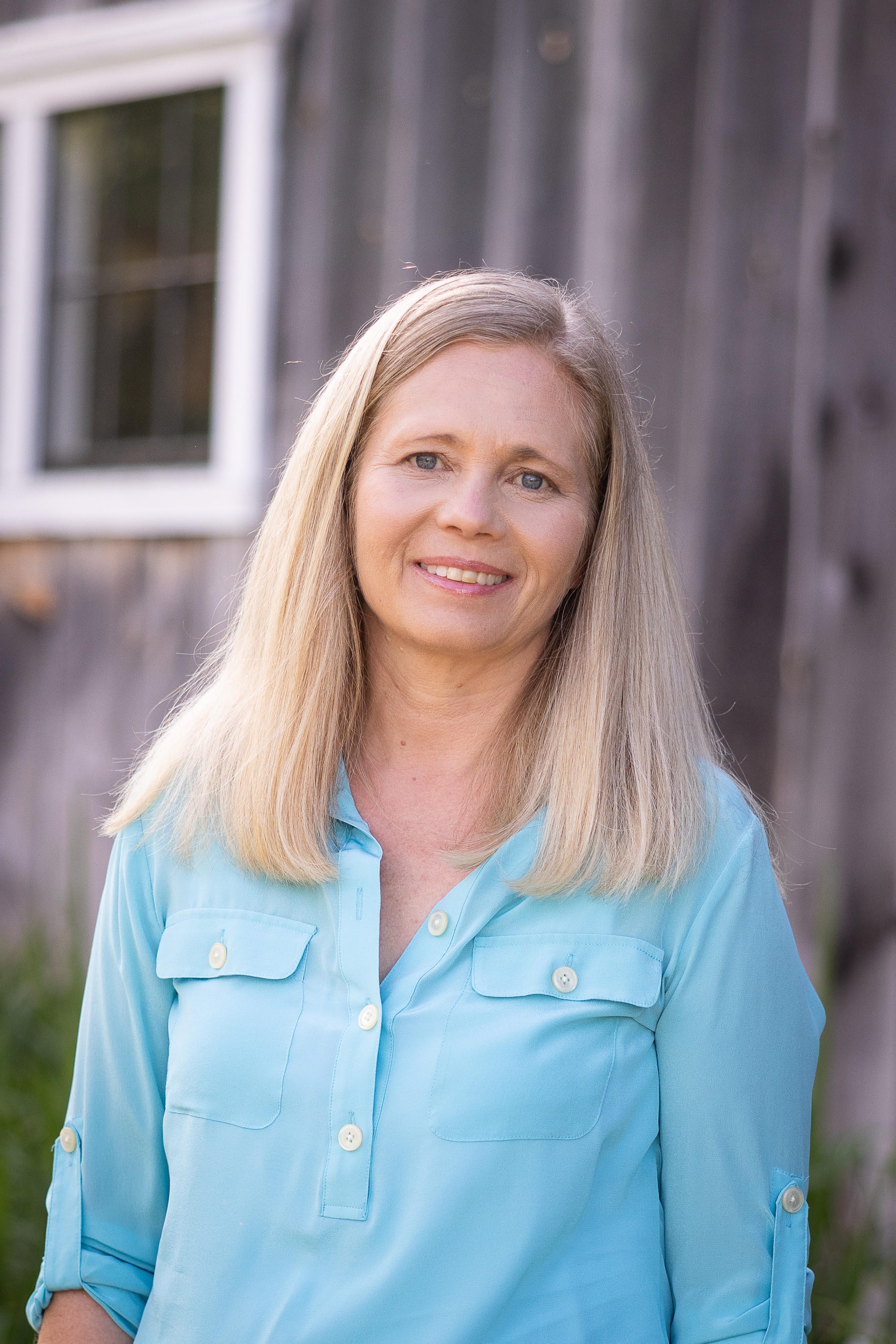
On a weekday morning in Portland, Hannah Pingree is talking about parenting her daughter and son, visiting mobile home parks, entrepreneurship, artificial intelligence, and why her husband recently became a volunteer firefighter. None of it sounds rehearsed. All of it feels connected.
Her daughter is fourteen. Smart. Detailed-oriented. The kind of kid who asks the same question ten times because she needs to be sure. Pingree understands that instinct. She lives with it every day, at home and in public life. There is homework. There are basketball practices. There is the quiet recalibration that happens when responsibility meets reality.
Watching her kids play basketball, she says, is one of the small things that brings her outsized joy. It is also where public life fades fastest. On the bleachers, none of the titles matter.
This is the rhythm of her life now. After public office, but not removed from public work. It is not all that different from the rhythm of the place that shaped how she thinks about responsibility, community, and change.
Pingree grew up on North Haven, an island town of roughly four hundred people. It is the kind of place where everyone holds multiple roles, some that pay and some that do not. Her parents were EMTs. They served on the school board. They started small businesses. Her mother helped launch an economic development nonprofit and later the local newspaper. Her father a well-known boat builder. If something needed doing, the answer was never to complain. The answer was to gather the neighbors and build it yourself.
Nobody else was coming to do it for you.
That belief became muscle memory early. As a child, Pingree attended town meeting with the entire school, kindergarten through twelfth grade. She watched adults debate how to fund the school, whether to rebuild the dock, how to make the town work. Government was not abstract. It was a room, an agenda, and a vote. It was messy, practical, and unavoidable.
In middle school, her science teacher convinced a group of seventh and eighth graders to take on the town dump. Recycling was not standard yet. The students spent a year sorting trash, building piles, counting what could be reused. They went through their neighbors’ garbage. Nobody objected. The kids brought their findings back to the town. The town listened. North Haven eventually adopted a recycling program that still exists today.
Pingree was thirteen when she helped start a bracelet kit company with a friend. Her mother ran a knitting business that employed a dozen island women. When a large order came in from Land’s End, the bracelet kits suddenly needed to scale. Thirty thousand units. Five kids in a class. Every afternoon after school for a year, they assembled kits. The money went to the class, saved for a future trip. It was exhausting. It was instructive. It was a startup before she had language for one.
Looking back, she says it probably could only have happened on an island.
That same logic runs through her professional life. Pingree does not separate politics from community responsibility or business from civic obligation. In Maine, employing your neighbors, keeping people housed, and helping a town adapt all function as forms of public service.
Her path reflects that belief. Legislator. House Speaker. School board member and chair. Running a small business. Director of the Governor’s Office of Policy Innovation and the Future. Each role looks different on paper. Each one, she says, was driven by the same question. How do you improve people’s lives where they already are, using the tools actually available.
At the Office of the Future, also known as GOPIF, the mandate sounded abstract. Bring people together. Think long term. Tackle climate, housing, and workforce challenges. The work itself was anything but.
The office functioned more like a delivery team than a policy shop. Reports mattered, but execution mattered more. Clean energy became about deployment. Heat pumps installed. Local capacity built. Funding aligned so projects could move. Housing quickly turned into zoning, land access, financing, and speed. What breaks projects. What unblocks them. Where time and capital are lost.
Pingree pushed dashboards and scorecards because measurement creates accountability. Not what the state planned to do, but what was actually happening, where, and how fast. The point was not to sound ambitious. The point was to prove progress.
It is a mindset familiar to founders and operators across Maine. Limited resources. Real consequences. No one coming to fix it for you.
The best advice she ever received, she says, was simple. Everything is about relationships. Politics. Work. Implementation. None of it moves without trust between human beings. That belief shaped how the office worked. Convening mattered. Listening mattered. Progress often depended less on authority than on whether the right people felt brought along.
She points to mobile home parks as one of the clearest examples of innovation aimed at stability rather than headlines. Working through the budget process and with housing partners, the state put real dollars behind resident ownership, helping people buy their parks and convert them into cooperatives. It required fund design, legislative buy in, and a mechanism that could move money quickly through MaineHousing. It was not flashy. It worked.
The GOPIF office soon developed a reputation inside state government. Legislators and agencies began sending their hardest problems there. Forestry. Housing. Workforce transitions. In many systems, issues stall when they are passed along. In this one, people saw movement.
That reputation was built quickly. It was built through delivery.
Pingree believes Maine has spent decades focused on survival. Keep young people from leaving. Keep any jobs at all. She thinks that mindset is finally shifting. She sees ambition now. Entrepreneurs. Builders. Talent attraction. People asking not how to keep up, but how to lead.
She believes Maine could be a national leader in housing innovation, forest products, marine industries, technology, and life sciences. Not as an extension of Boston, but on its own terms.
She also believes rural and blue-collar innovation remain deeply underestimated. People understand how hard rural Mainers work, she says, but they often underestimate how much intelligence and creativity exist there. Some of the sharpest people she knows are fishermen, plumbers, and builders. Innovation shows up wherever people are solving real problems with limited resources.
Technology fits into that worldview with both optimism and caution. Before leaving state government, Pingree helped launch Maine’s AI task force. She sees opportunity in forest products, fisheries, climate modeling, and healthcare. She also sees real risk that must be discussed openly and addressed deliberately.
Leadership taught her one lesson the hard way. Messaging matters. Policy without public understanding is fragile. Housing. Clean energy. Tax and regulatory reform. Complex ideas can be distorted quickly if people are not brought along honestly and consistently. Change requires trust, and trust requires conversation beyond the walls of government.
What keeps her grounded is simple. A small town where nobody cares what office she held. Children who care far more about homework and basketball games than headlines. A husband driving to practices and making dinner. A community that knew her long before campaigns did.
When Pingree talks about Maine in 2035, she talks about systems working together. Adequate housing in every region. An economy that supports fishermen, healthcare workers, entrepreneurs, and families alike. A state where young people can create something meaningful, scale it without leaving, and build a good life for themselves and their families.
She hopes Maine learns to say yes more often. Yes to innovation. Yes to housing. Yes to growth. Yes to change that preserves what people love without freezing it in time. Environmental stewardship and economic opportunity, she believes, are not in conflict. They are interdependent.
When she thinks about how this chapter is remembered, she does not talk about titles. She talks about outcomes. About whether Maine itself becomes the answer.
Politics and business, Pingree says, are both means to improve people’s lives. Her career, she believes, has been about listening to smart people with good ideas and helping remove the barriers that keep those ideas from taking hold. She is open to listening across industries, across the state, and across political lines, because Maine’s future works best when more people are part of shaping it.
The island taught her that.
If you want something to work, you show up. You pitch in. You build it together.
Nobody else is coming to save you.
Excerpt from The Interview
We’ll continue to track capital raises through SEC Form D filings, press releases, and LinkedIn updates. This list is compiled from those sources, though the reported amounts have not been independently verified. If we missed any, please email us at news@mainestartupsinsider.com
Kinotek has raised $2 million in post-seed equity funding to expand its wearable-free movement analysis platform, which is already used by professional sports teams and large fitness operators.
The round was led by Maine Venture Fund and will support team growth and operational scale, according to CEO Patricia Panaia.
Founded in 2018 by Justin Hafner and David Holomakoff, Kinotek uses motion-capture technology to deliver 3D movement visualizations and personalized exercise programming. The platform helps fitness and performance professionals assess mobility, imbalances, and movement quality without requiring users to wear sensors.
Read more in Athletech News here.
Maine Technology Institute has confirmed that reviews are nearly complete for the $25 million Maine Technology Asset Fund (MTAF 3.0).
The program drew 113 applications requesting a combined $127 million, underscoring the depth of demand for early-stage and growth capital across Maine’s innovation economy. Award announcements are expected before the end of January, making this the largest single deployment of state-backed innovation funding this year.
Dirigo Labs announced Jan. 6 that its fifth cohort will follow a phased structure separating foundational business work from product development. The change is designed to give founders time to establish financial and operational clarity before entering build mode. Applications for Cohort 5 close Jan. 23.
Read more from Mainebiz here.
Gulf of Maine Research Institute begins its 10-week BlueTech Boost incubator on Jan. 12. The cohort includes startups working on vessel electrification, aquaculture transitions, and new financing models for marine assets. Early standouts include SeaScale, Shred Electric, and Wavestock, each applying Maine-rooted solutions to broader markets.
👩🏽💻 Started a new job in the Maine startup ecosystem? Email your new hire announcement to news@mainestartupsinsider.com
Until next time, Maine Startups Insider Community, keep grinding. This is the way.
-Whit Richardson & Chris Philbrook
No posts
Comments
Nothing yet. Say the first thing.
Sign in to join the conversation.