
☀️Good morning, Maine Startups Insider Community!
In this issue: the public institutions making bigger technology bets, the coastal startups building new infrastructure for Maine’s blue economy, and a founder story that captures the pace, pressure, and opportunity shaping a new generation of Maine companies.
Our Founder(s) Interview takes us to Norridgewock and inside, where Katie Richards turned a personal frustration into one of the state’s fastest-growing environmental testing labs. What started with a simple question about contaminated water has grown into a company serving clients across the country from central Maine.
Let’s get into it!
Please follow us on LinkedIn or subscribe to our newsletter below.
The biggest news right now is Startup Maine Week (May 18–21), currently happening in Portland. Share your takeaways us, and we’ll summarize reader responses in the next issue.
Augusta Entrepreneurship Launch: The City of Augusta partnered with the Roux Institute to launch a new eight-week business growth initiative. The first cohort graduated 10 local entrepreneurs spanning diverse lifestyle and services industries, emphasizing economic development outside the immediate Greater Portland hub.
Saco Bay Sea Farms: The company recently won the top prize at the Top Gun showcase for its “plug-and-play” aquaculture coworking concept. They are developing open-water infrastructure that allows seaweed and shellfish farmers to test practices without the high upfront capital expenditure.
While not a traditional startup, the University of Maine System made a major tech ecosystem move on May 19, announcing it is on the verge of closing a $1.39 million, two-year contract to implement ChatGPT Edu across its entire public university network. Interestingly, a system working group originally recommended Google’s Gemini platform, but the system ultimately awarded the contract to OpenAI’s platform via a competitive bidding process managed through Carahsoft. The systemwide implementation is slated to begin July 1.
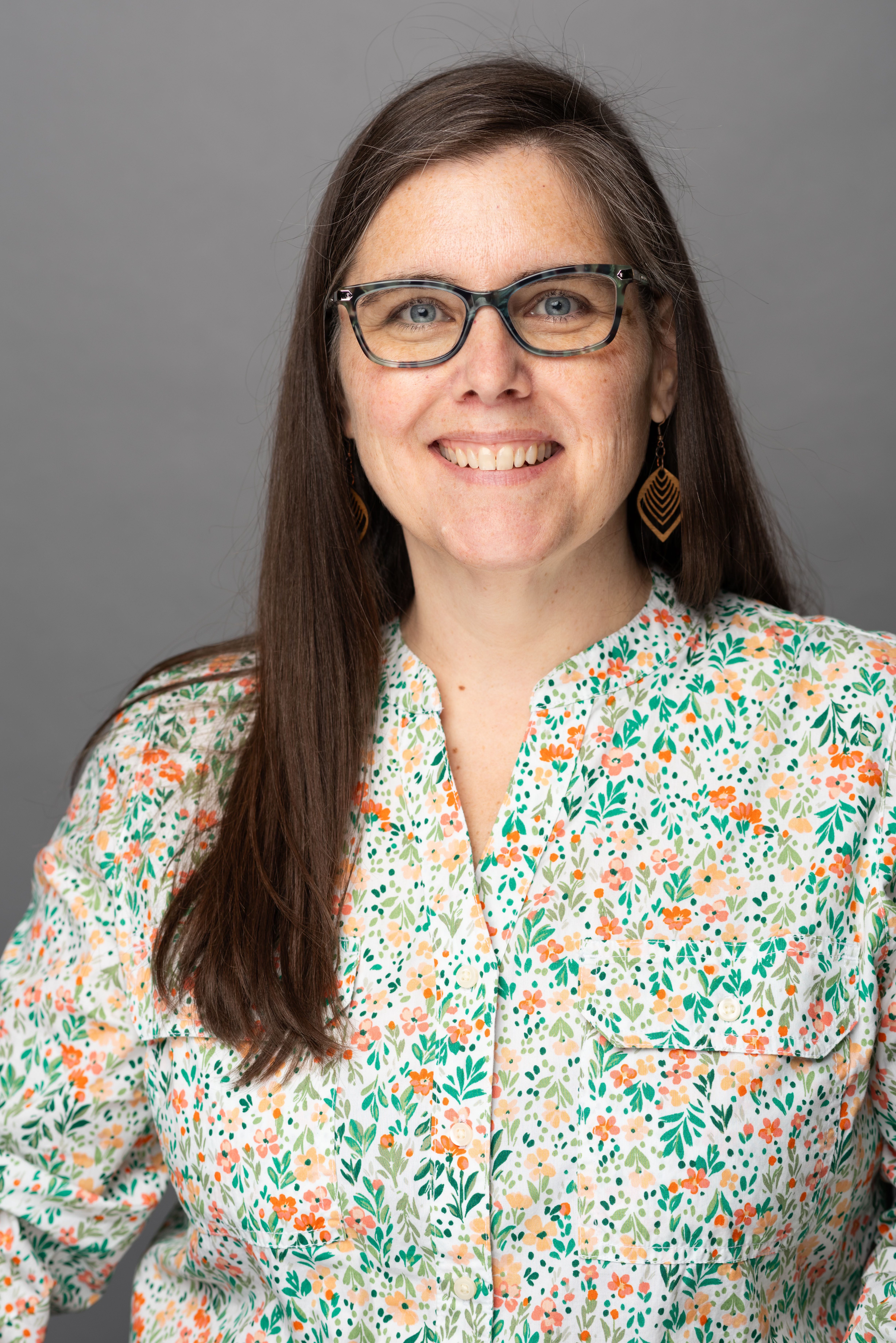
On a summer day at a camp in Abbott, Katie Richards found herself trying to answer a question that had started creeping across Maine kitchens, bait shops, town offices, and group texts: What’s actually in the water?
She assumed the answer would be easy to get. Pay for a test. Mail a sample. Wait for the results.
Instead, she ran into a wall.
At the time, Maine had already become one of the country’s focal points for PFAS contamination. Stories about polluted wells and contaminated farmland traveled fast across the state. Residents traded rumors about lakes, fish, sludge spreading, and filtration systems. Yet Richards, a homeowner willing to pay for testing herself, struggled to find a straightforward path to get it done.
That disconnect stayed with her.
“I wanted to pay for the service and I couldn’t access it,” Richards says. “That was the business opportunity, the gap in the market.”
The company that emerged from that frustration, PFAS Laboratories, now sits inside a growing national market built around environmental testing, remediation, and regulation. The lab processes samples from homeowners, industrial operators, startups developing destruction technologies, and clients spread far beyond Maine. Orders now arrive from places as distant as Alaska.
Still, the origin story feels deeply Maine. A camp. A well. A question nobody could answer quickly enough.
Richards laughs when she describes the speed at which the company came together, partly because even she seems slightly surprised by it. The idea surfaced in June of 2022. By September, she had secured commercial lab space in Norridgewock. The company hired its first employee a month later. A triple quadrupole mass spectrometer, the kind of machine that can make even seasoned founders sweat during financing conversations, arrived that December. The lab earned accreditation by February 2023.
Eight months from idea to operation.
“As soon as I decide on a goal, I figure our what steps I need to take to get there and I immediately drive toward it,” she says.
The sentence arrives with the energy of someone who has already moved on to the next ten tasks.
Richards spent years in corporate project management before becoming a founder. She speaks fluent checklist. Accreditation manuals excite her in a way most people reserve for vacations or playoff tickets. She genuinely enjoys compliance documentation.
“Give me an 80-page document and I’m happy,” she says, smiling. “I love a to-do list.”
That instinct turned into an advantage.
Early on, Richards heard whispers that some people in the industry were surprised a brand-new lab had earned accreditation so quickly. She understands the skepticism. The company was new. The equipment was new. The employees were new. The founders were entering a highly technical field with established national competitors already in place.
Richards never seemed particularly rattled by it.
“What I love about accreditation is how direct it is,” she says. “They tell you exactly what needs to happen.”
Her husband brought the analytical chemistry expertise. Richards brought operational discipline and the temperament of someone who enjoys turning chaos into systems.
Together, they built a boutique lab in central Maine that began moving far faster than many larger incumbents.
One of the company’s biggest selling points became turnaround time. While larger national labs often returned results in four to six weeks, PFAS Laboratories promised ten business days.
That speed changed who found them.
Richards initially assumed homeowners would drive much of the business. Instead, some of the earliest adopters came from other PFAS startups scattered across the country. Companies working on remediation technologies, concentration systems, and destruction methods needed fast data to validate whether their products actually worked.
Large labs often prioritized massive government contracts involving thousands of samples. Smaller innovators could end up waiting in line.
“We treated those customers like royalty,” Richards says.
Most of those early clients from 2023 still work with the lab today.
Richards has also found something in Maine that surprised her: an entrepreneurial community willing to answer the phone.
She describes the startup ecosystem as unusually accessible, especially for a founder willing to ask directly for help. One introduction led to another. A question became a referral. A cold call became a conversation.
“I felt like I got a big hug from everybody,” she says.
That embrace shaped her growth as much as the business. Richards says 2025 was a year of expansion for PFAS Laboratories, and also a year when she grew into the public role of CEO. She found mentors, funders, operators, and peers who helped her understand the company from the outside.
Maine, she says, can be a tough place to build if a company depends entirely on in-state customers. PFAS Laboratories has grown because it can serve a national market from Norridgewock. The company’s Maine base gives it credibility and community. Its customers across the country give it scale.
The growth forced Richards into the balancing act every founder eventually meets. Demand creates opportunity. Demand also creates payroll, equipment costs, operational stress, and risk.
Every new employee changes the equation.
Every new testing capability requires investment.
Every promise creates pressure.
“You’re constantly asking yourself if this is the right move,” she says. “That’s healthy.”
She says it calmly, though the underlying math sounds relentless. Labs carry heavy overhead. Scientific equipment arrives with price tags that can alter sleep patterns. Accuracy leaves little room for improvisation. Customers depend on the data to make expensive and sometimes emotional decisions about homes, treatment systems, industrial processes, and public safety.
Richards understands the weight of that responsibility. She also understands the limits of certainty.
“There’s still so much we don’t know,” she says.
That may be the most striking part of talking with her. For someone building a business in the center of a politically charged environmental issue, Richards rarely drifts into absolutism. She talks about research in progress. She talks about gray areas. She talks about data first.
For homeowners, a successful outcome can be simple. A clean result. A filter installed correctly. A clearer understanding of what comes next.
“What we deliver is the ability for people to make decisions,” she says.
That perspective has helped the company navigate a shifting regulatory landscape. Federal guidance around PFAS limits has changed repeatedly in recent years. States continue building their own patchwork of standards and requirements. Richards watches all of it closely, though she believes the broader trajectory remains clear.
More testing is coming.
Consumer awareness is coming with it.
She points to the growing number of products now labeled “PFAS free” on store shelves. To her, that label represents something larger than branding. It signals a public beginning to connect chemistry, manufacturing, and environmental impact in everyday purchasing decisions.
“A consumer sees that and starts asking questions,” she says.
Five years from now, Richards hopes PFAS Laboratories looks less like a scrappy startup and more like a mature operation running at full capacity in Norridgewock. She talks about hiring four more employees, expanding testing capabilities, and building leadership layers that allow the lab to operate smoothly without her sitting inside every daily decision.
The founder who once swore she would never own a business now sounds fully converted.
Ten years ago, she considered entrepreneurship far too unstable for her personality. She liked predictability. She liked predictable paychecks. She liked knowing exactly what the next twelve months looked like.
Then something shifted.
Maybe it was the pandemic. Maybe it was burnout. Maybe it was simply realizing that certainty can disappear whether you own the company or not.
Now she sounds almost evangelical when talking about entrepreneurship.
“If anybody has even an inkling that they want to start a business, they should go for it,” she says.
The statement lands differently coming from someone who built a scientific testing lab from scratch in under a year.
Outside the startup ecosystem, PFAS still carries the emotional weight of contamination, lawsuits, regulation, and public distrust. Inside Richards’ lab, the work feels more practical than ideological. Samples arrive. Data gets produced. Customers make decisions.
One test at a time.
Until next time, Maine Startups Insider Community, keep grinding. This is the way.
-Whit Richardson & Chris Philbrook
No posts
Comments
Nothing yet. Say the first thing.
Sign in to join the conversation.