
It’s been a big few weeks on the road.
Out west to Narromine, NSW for drought resilience planning, down to Sydney for the Easter Yearling Sales, a few days at Willow Tree for an Upper Mooki Landcare and Carbon8 workshop with Kevin Elmy, home via Newcastle.
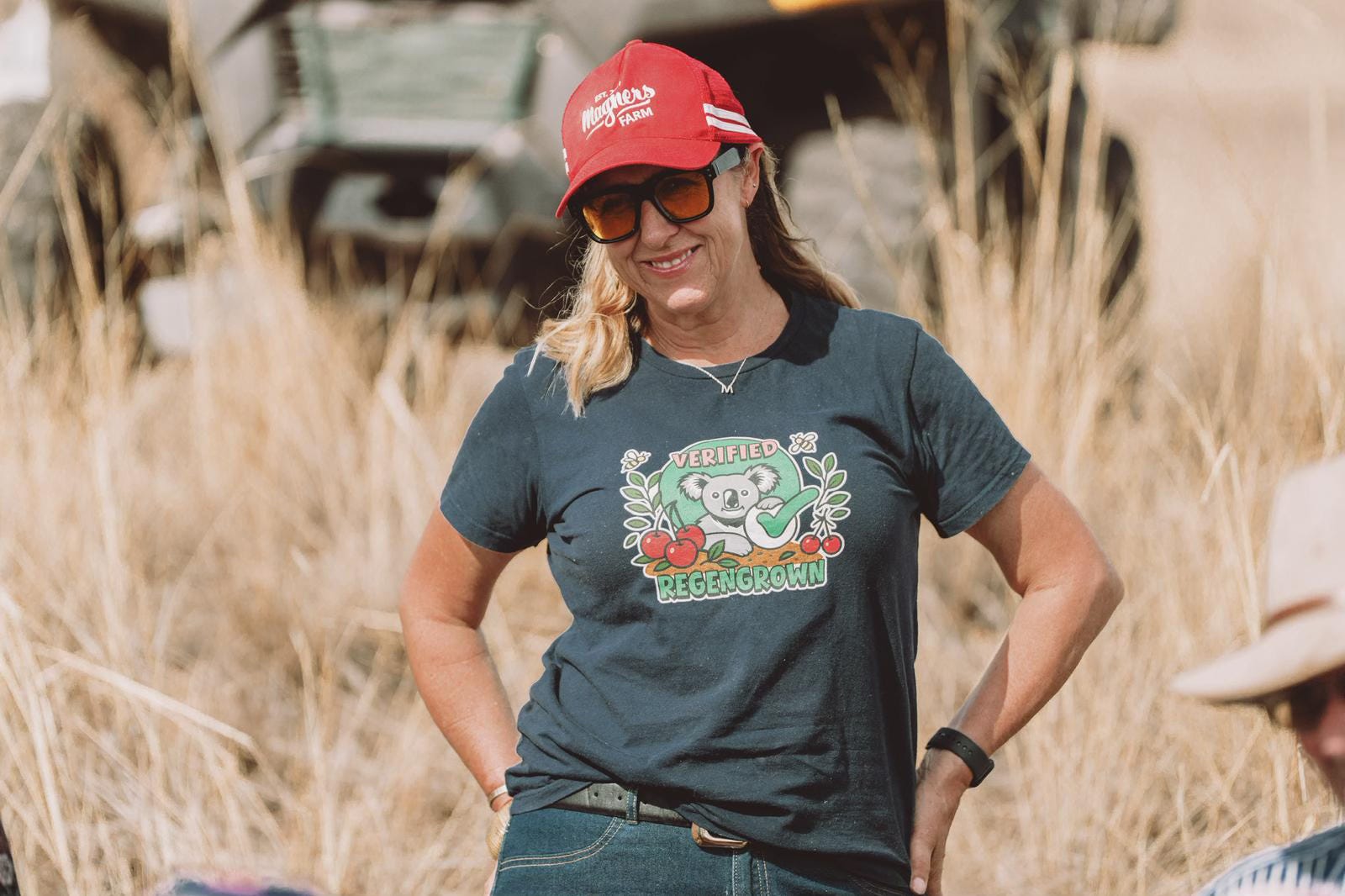
The weekend has arrived.
The shoes are off and I’m elbow deep in tomato plants that just won’t give up.
There are jobs waiting inside. Laundry to be hung out. A dishwasher in its eternal cycle of needing emptying, then filling. Accounts lurking on the computer.
It never ends.
Nobody has ever walked into my house and said, wow, I’m so glad you did that extra load of washing today.
But they do ask about the garden. What’s growing. What I’m harvesting. What I’m planting. Whether my zucchinis were as big a flop as theirs.
They ask if they can come for a cuppa and a wander. And ten minutes outside, the jobs and the responsibilities and the weight of life just fall away.
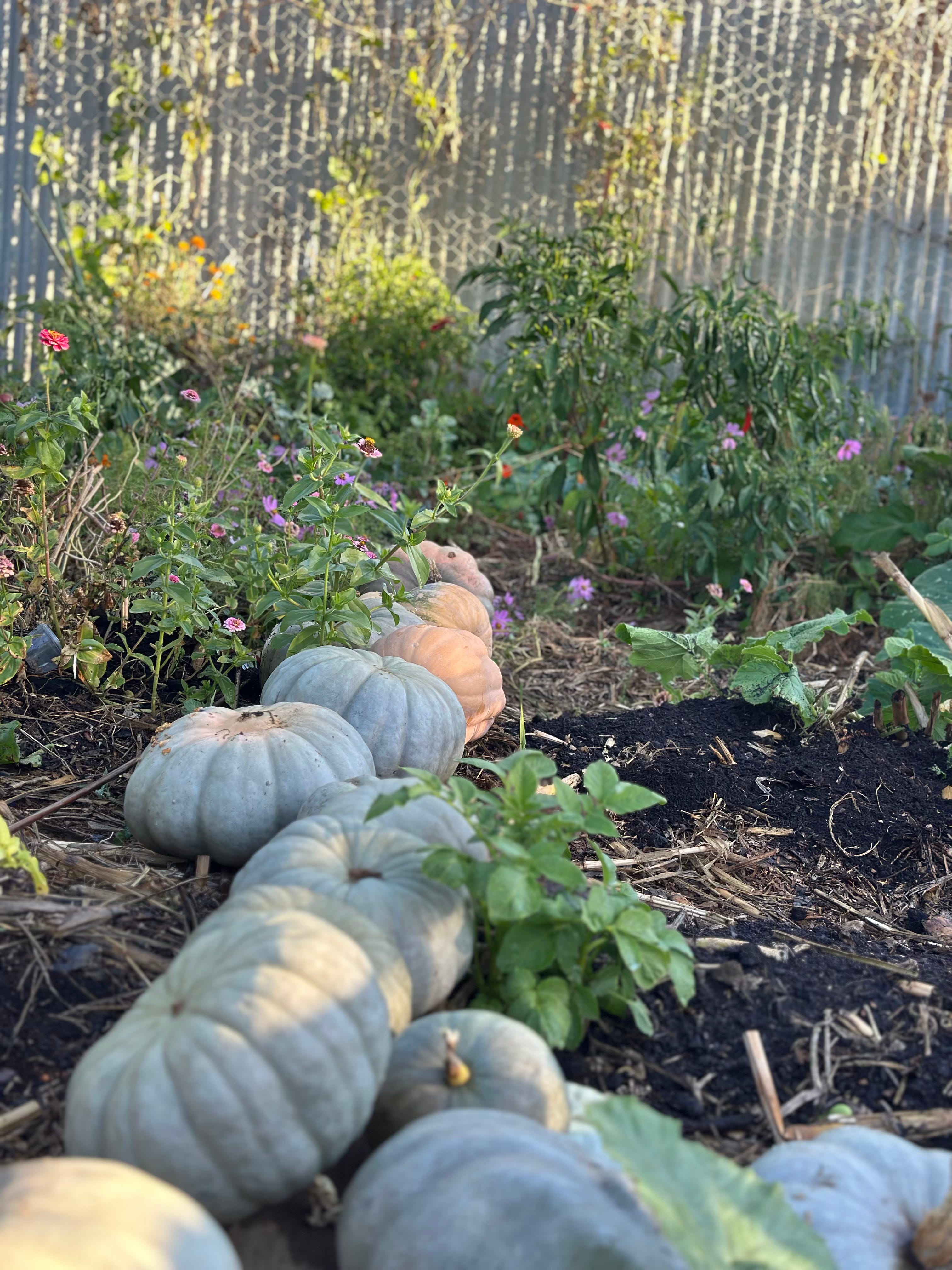
Seasonal
Lately I’ve felt myself pulling back. Not dramatically. Just a quiet shift.
The things that usually drive me such as work, ideas and conversations haven’t held the same charge.
I’ve found myself wanting to be at home. In the garden. In the kitchen. Doing small, practical things with my hands.
It’s easy to think something’s wrong when your pace changes. Especially when the responsibilities around you don’t slow down with you.
We’re moving into autumn here in the Hunter and you can feel it. The mornings are cooler. The light is softer. The garden is still producing, but differently.
With less urgency. Things aren’t stopping. They’re just not pushing as hard.
In farming, we understand cycles.
Growth, harvest, rest.
You can’t force one phase to behave like another without consequences. But in work, in business, in life, we tend to expect constant output.
Constant forward motion.
Maybe it’s worth paying attention to what’s actually working. To where energy is genuinely going, rather than where we think it should.
I’m trying to spend more time in the parts of life that feel steady. Growing food. Cooking properly. Putting waste back into the soil.
Simple things that bring everything else back into proportion.
It’s Not Us vs Them
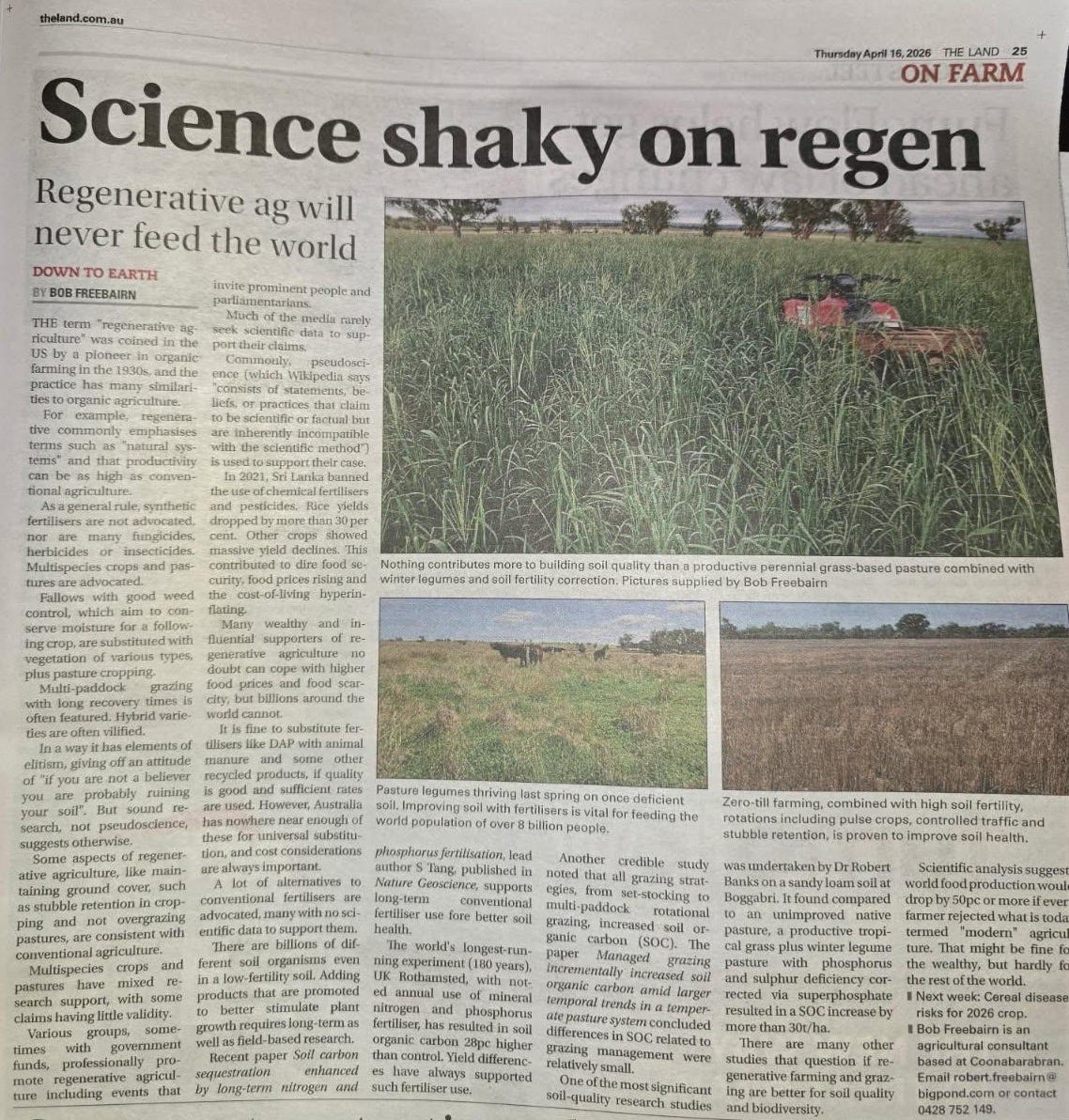
This week a friend sent me an article from The Land suggesting that the science behind regenerative agriculture is shaky, and repeating the familiar line that regen farming will never feed the world.
I’ve heard this one before.
What always strikes me at regenerative agriculture events (and I’ve been to a few now in Europe, USA and Australia) is how little it resembles a movement with something to prove. There’s no us versus them. No battle lines drawn in the soil. People are just talking about what’s working on their land. What they’ve stopped using. What’s come back.
Regenerative agriculture isn’t an ideology. It’s a direction. Reduce inputs. Keep the ground covered. Build diversity. Let livestock do some of the work. Stop disturbing the soil more than you have to. None of that is radical. Most of it is just old farming knowledge with a new name.
The “it can’t feed the world” argument tends to assume that the current system is feeding the world well.
It isn’t.
Not equitably, not sustainably, and not without significant cost to the land underneath it.
The farmers already working regeneratively aren’t waiting for permission. They’re adaptive, resourceful, and in many cases, quietly getting on with it.
There’s a European study that found yields on regenerative farms were only about 1% lower in kilocalories and protein, while synthetic nitrogen use dropped by 62% and pesticide use by 76%. I’m not interested in turning that into a debate. I just think it’s worth knowing.
(You can read the article and study here…)
The resistance, when it comes, usually stems from one of two things: a misunderstanding of what regenerative agriculture actually involves, or a sense that it threatens something already in place. That’s understandable. It’s also not a reason to stop.
Nobody’s trying to win an argument here. We just want the land to still be functioning for whoever comes next.
What’s Next
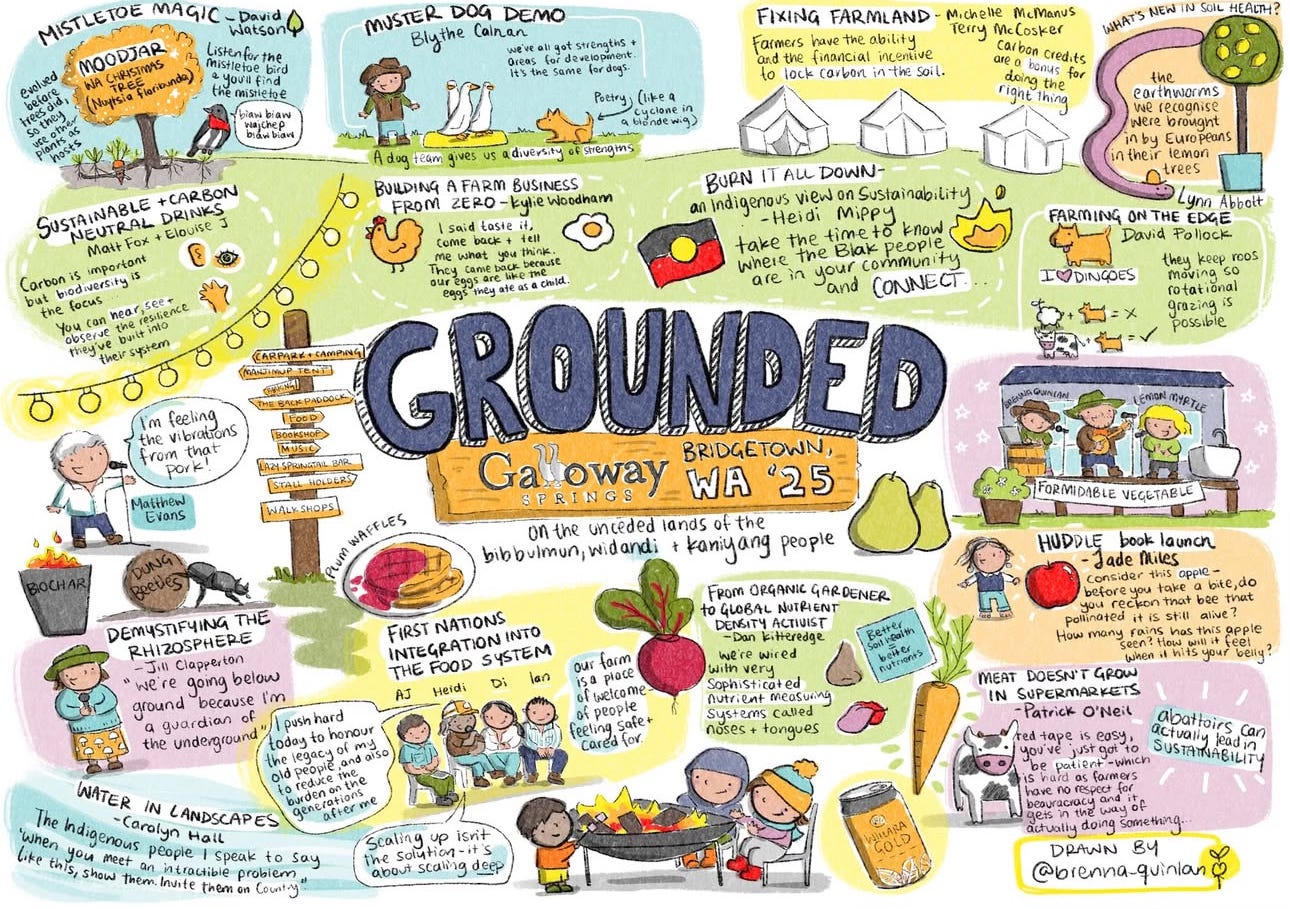
Grounded is next week and I’m already excited.
A roving farming festival, this year held in Victoria with demonstrations, talks, panel discussions, and more knowledge than you can properly absorb in a few days.
Reconnecting with friends. Connecting dots between soil, food, and human health.
It’s one of those events that leaves you wanting to lie in a dark room for a few hours just to digest everything you’ve taken in.
I’ll report back.
If you have read this far, thank you!
Kylie x
No posts
Comments
Nothing yet. Say the first thing.
Sign in to join the conversation.