
Ariana Grande has long been a tricky artist for me to situate on my pop girl matrix. Her rise to mainstream pop stardom coincided with my beginning middle school, and her short stature and history as a child actress, along with the coquettish nature of the Yours Truly visuals, made her an accessible celebrity crush for boys in my class, which, at the time, made me heartily resent her. She was decidedly everything I wasn’t: tiny, tan, adorable, blessed with a voice that was somehow as light and resonant as a bell but as rich as molten gold. Knee-high lace socks, ribbons in her hair, light pink, and tulle. You would think that something about this would resonate with me as a lifelong ballet dancer, but I read her appearance as ingenuous and frictionless. As both a middle school girl and ballet dancer, I knew that nothing about that aesthetic was that soft or easy to slip into. At thirteen, somehow my most genuinely and artificially calloused age, young Grande’s perpetual smile and ease made me grimace.
In retrospect, I can imagine how challenging it must have been for her to straddle the line between girl and woman. Grande was just twenty years old when her debut album came out, attempting to usher her Nickelodeon fanbase to iTunes, while also introducing her technical prowess to adult pop connoisseurs. In her debut single “The Way,” she wore her signature half-up, half-down hair look and donned a wardrobe that could have been obtained in any PacSun in any mall across America, flashing her dimpled smile, cheeks plump with youth. But this childishness was tempered with Mariah whistle tones and making out with single feature Mac Miller, who she would go on to date in the years to come.
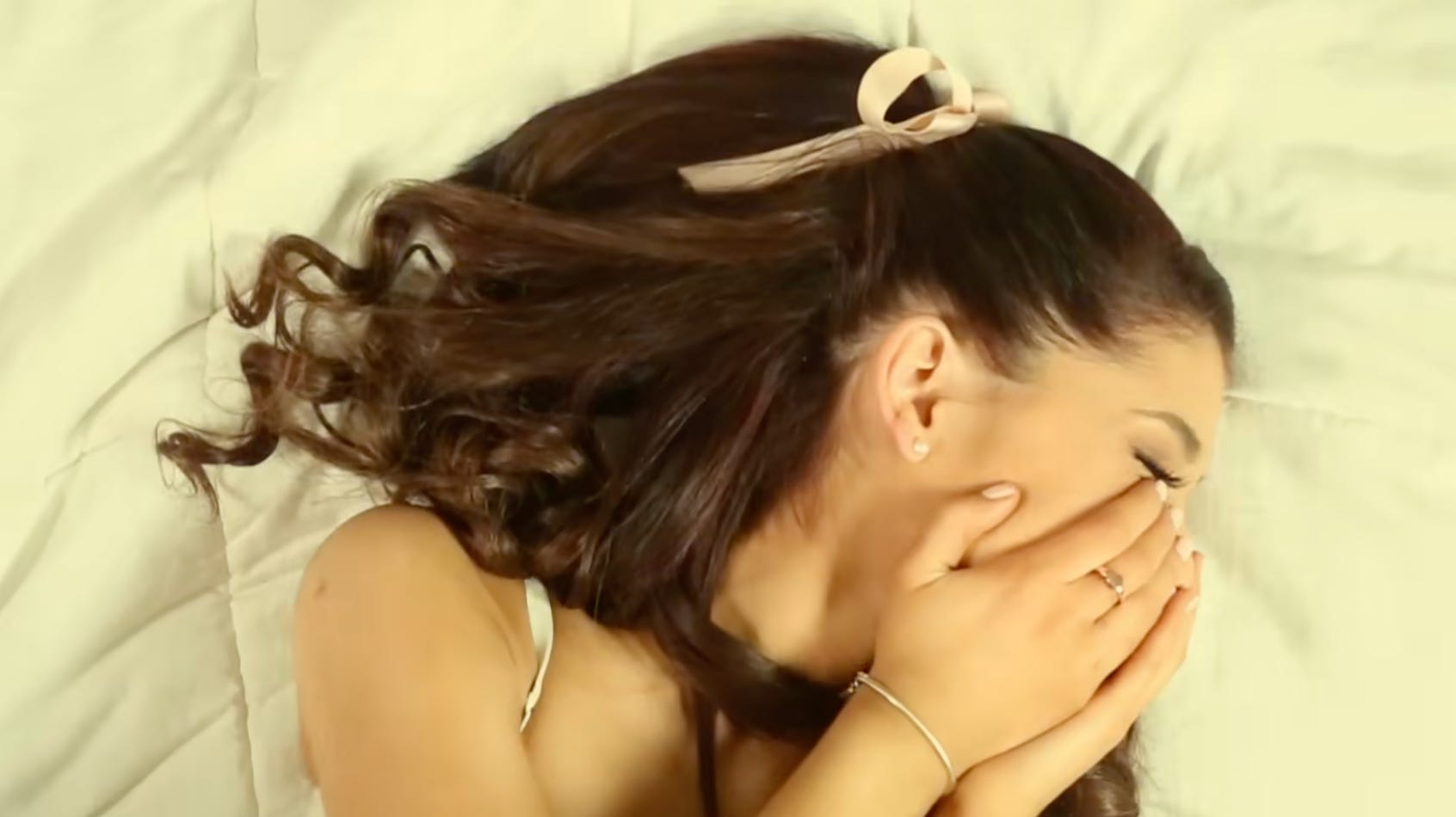
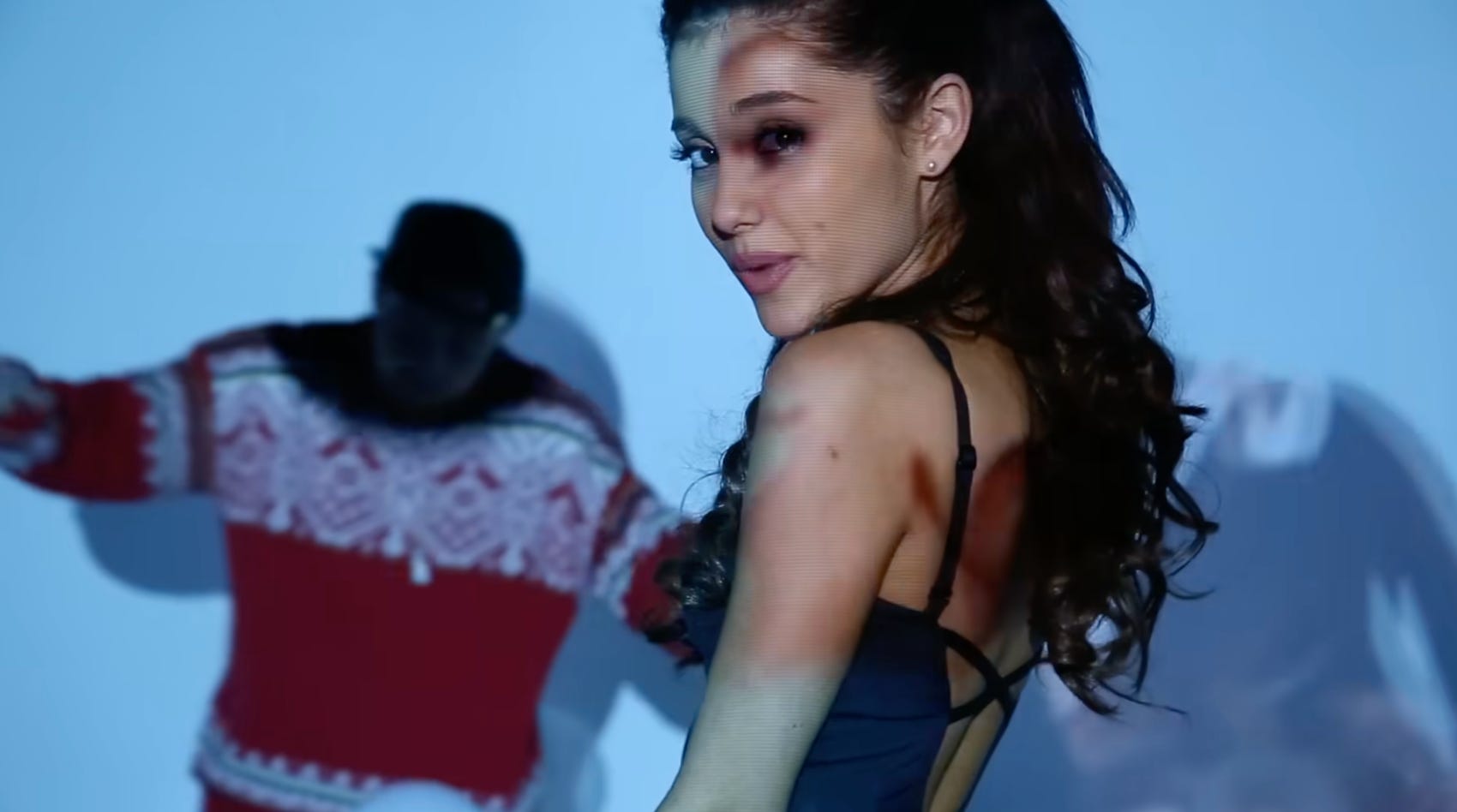
Grande’s sound gradually matured with each subsequent album, with Dangerous Woman elevating her to a full-fledged diva. She started appealing less to middle school boys and more to teenage girls and gay men, more consequential demographics for a pop star. Churning out all-timer radio hits like “Into You,” Grande hit a streak of momentum that was abruptly halted by what would be the first of several back-to-back tragedies. In 2017, a concert of hers in Manchester was bombed by a terrorist, taking twenty-three lives and injuring hundreds. I can’t imagine the sense of undue responsibility Grande likely felt in the aftermath of this catastrophe, being the reason why so many people congregated, for a site of joy to so quickly turn into a site of devastation. She held a benefit concert for the families of the victims later that year, featuring performances from Justin Bieber, Katy Perry, Coldplay, and Mac Miller.
And then, she disappeared from public view, returning in 2018 with a visual and sonic identity that was quite literally flipped upside down, unveiling what would be my favorite Grande album to date, Sweetener. Her cat ears and pink ribbons were traded for a thick ponytail, baggy hoodie, and a whole lot of yuhs. Collaborating with Pharrell Williams as a producer, Sweetener proved that Grande didn’t just belt for the radio but that she could conceive a singular sonic landscape. She became less concerned with proving her superb vocal ability and more focused on engineering a sound and feeling that felt remarkably fresh, blending pop, R&B, and dreamscape sounds with Pharrell’s quirky, Go Go Gadget-esque production.
Importantly, Sweetener marked a significant milestone in Grande’s maturation. This album is written and sung by a woman, not a girl. Grande’s gaze at the camera in music videos was much more confrontational and hardened. Lyrics on songs like “God is a woman” and “successful” served up timely woman empowerment in the midst of Donald Trump’s first term, while tracks like “get well soon” and “No Tears Left to Cry” alluded to rising from the ashes of hardship. Even the monotonous refrain on “the light is coming” had unexpected threads of vibrant hope: “The light is coming to give back everything the darkness stole.”
I was seventeen years old when Sweetener came out and was watching America slide into disorder while I listened. Every other week, it seemed, a mass shooting tore a different American community apart, and every other month, I cut class after my public high school received a new threat, my teachers shakily excusing my absence when I returned the next day. My class staged countless walkouts in support of gun control and Black Lives Matter, opposing burgeoning anti-immigration and pro-life sentiments in our blue state. When Trump got elected, I looked to so many of the adults in my life for signs of hope, and watched them wring their hands and blink away tears. As silly as it sounds, Sweetener was a liberal beacon of bright light, a shred of commercial hopefulness about the state of modern womanhood, that arrived right when my newly politically concerned self needed it.
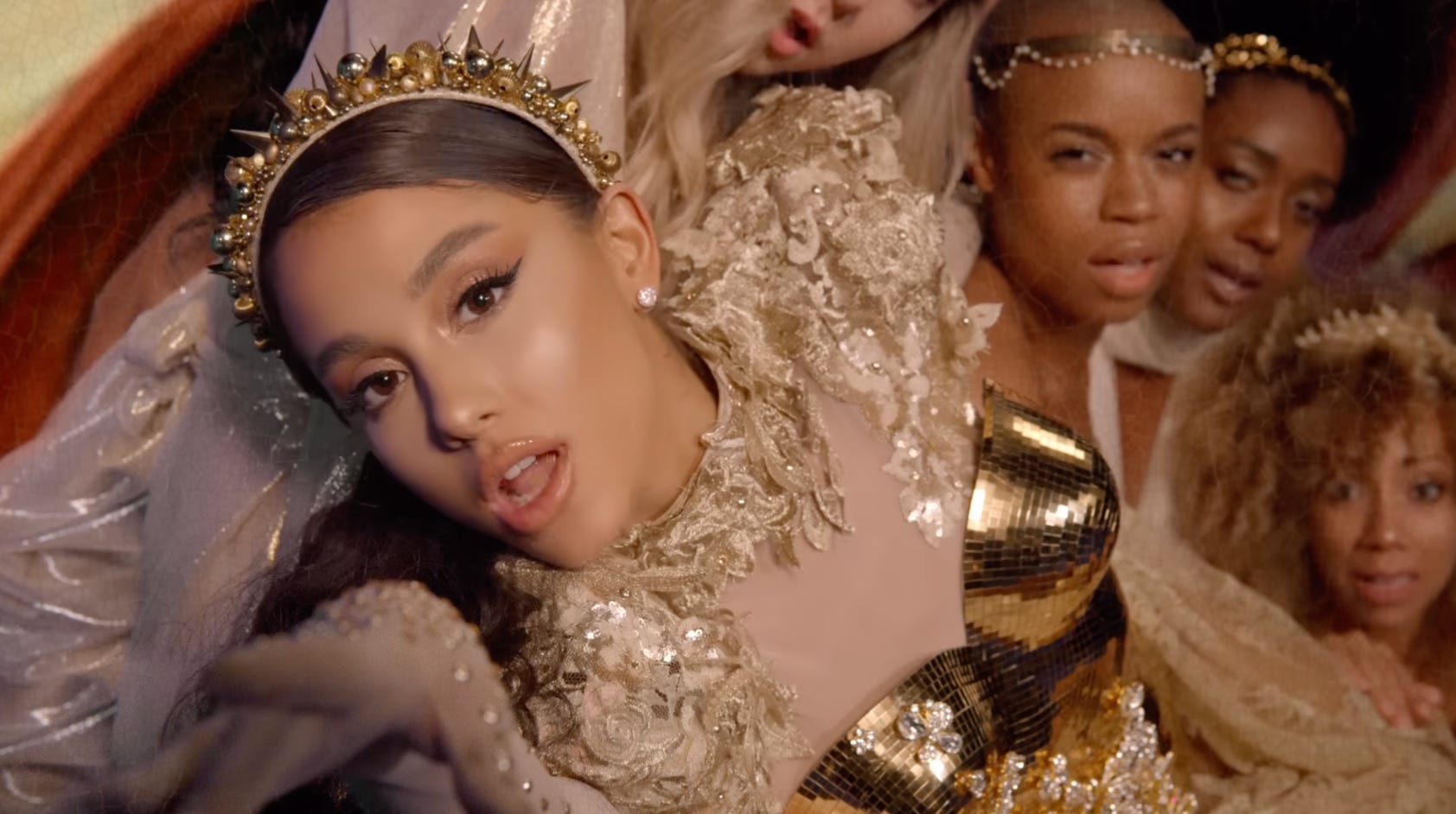
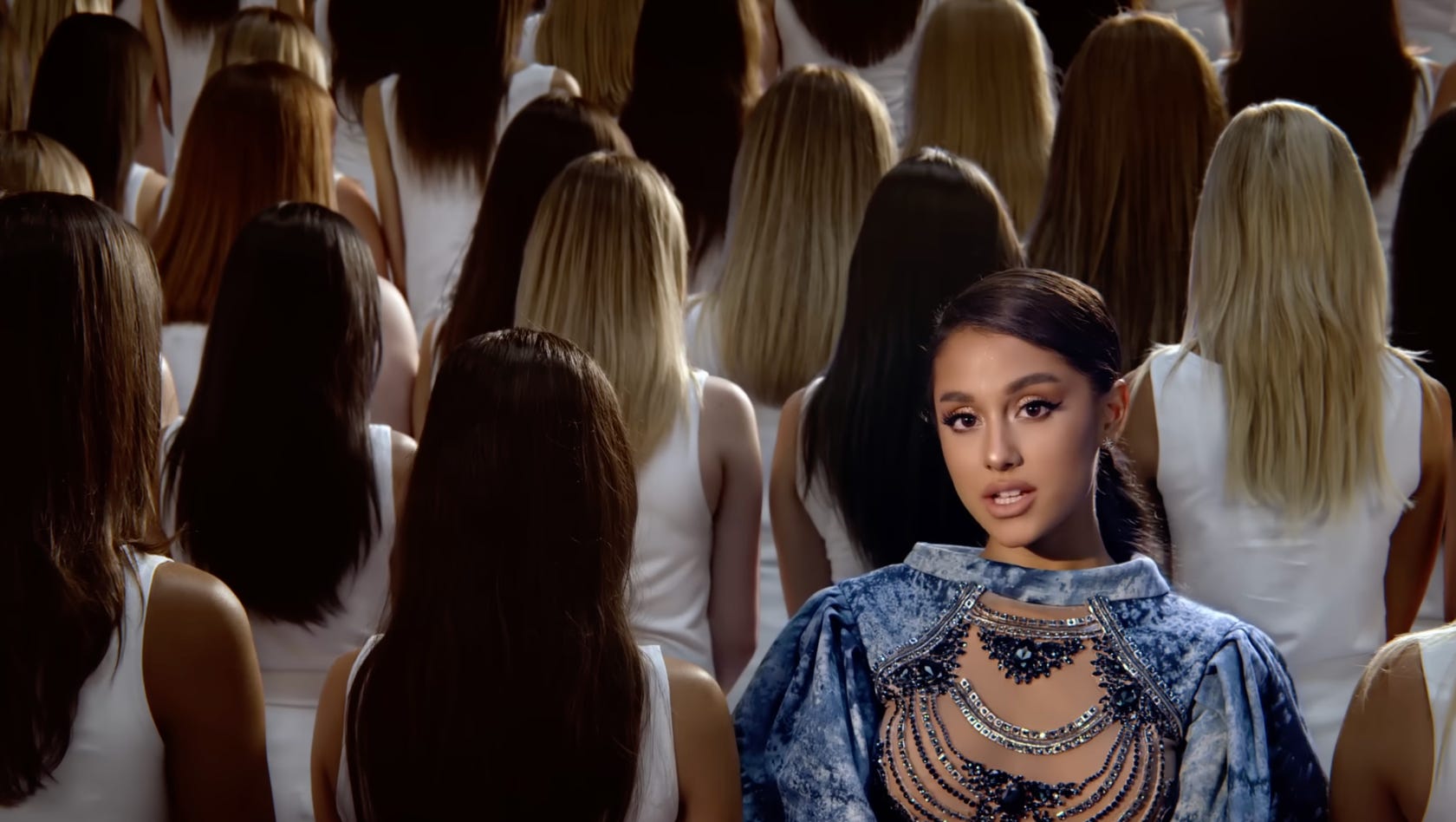
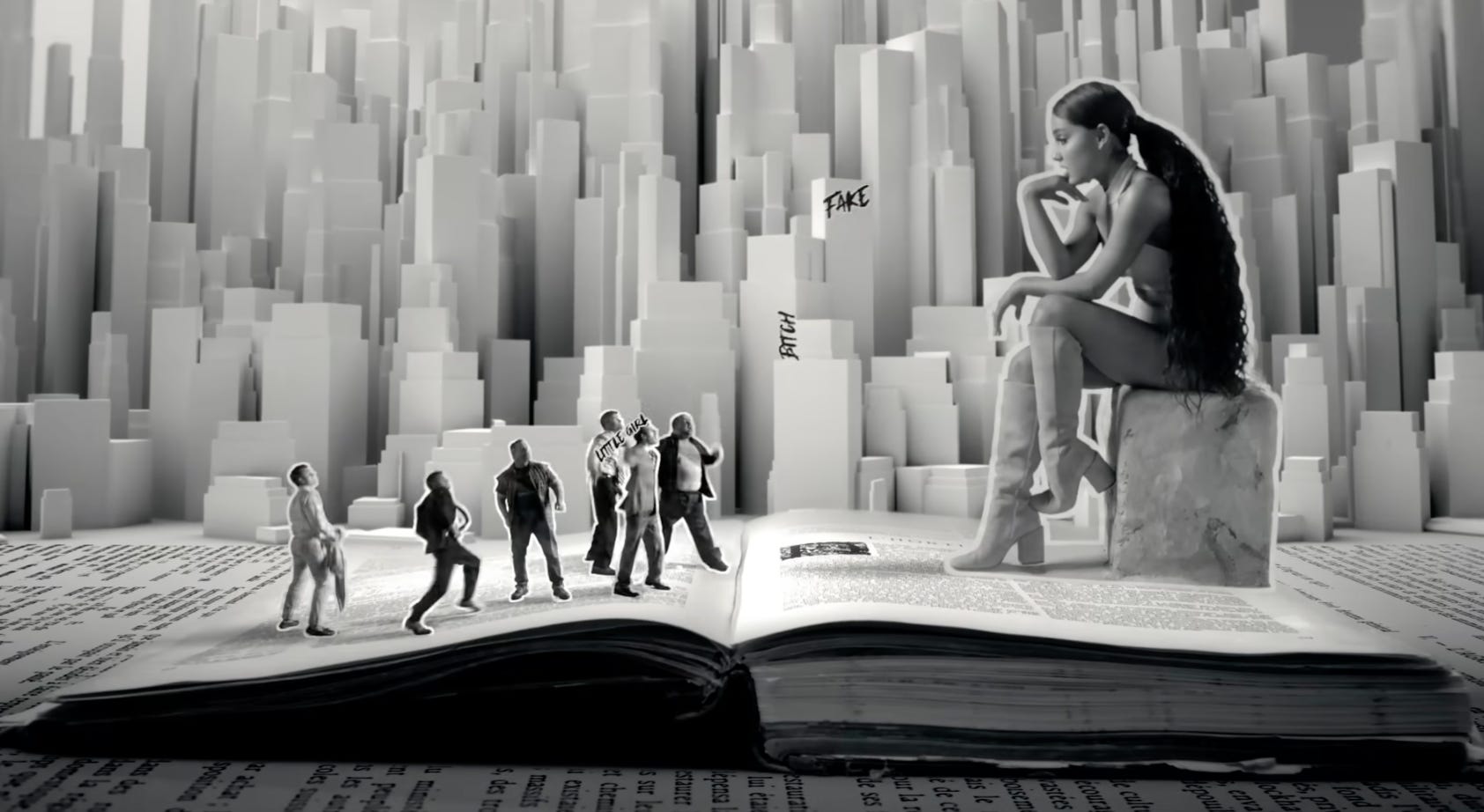
However, it’s important to note that in conjuring this image of a strident, empowered grown woman, Grande relied on co-opting the aesthetics and vocal qualities of Black women. Her foundation got much tanner, and she adopted a blaccent in plain speech. Importantly, this era in mainstream culture was also peak Awkwafina, peak white SoundCloud rap, and peak white women singing “I got hot sauce in my bag” in reference to their Sriracha keychains. A time when blackness was adopted by artists and laypeople haphazardly, without as many batting an eye. It’s only in retrospect that Ariana’s Black cosplay, or “Blackiana,” as it’s now been coined, has become widely considered offensive and embarrassing. Her drastic shift back to hyper-whiteness and coquettishness in the mid-2020s would make us realize how distant her late 2010s performance was from her actual ethnic identity.
Fast forward to 2024, and Grande would transform once again, at first, into Glinda the Good Witch for the Wicked press tour, an on- and off-screen performance that earned her an Oscar nomination. But in 2026, she’s since transformed further, Glinda being an outer shell of a nesting doll, encasing something far more glittery and “good,” but unmistakably fractured.
Today, Grande is hyperfeminine, hyper-white, and hyper-thin. The pop star was out of view once again in the early 2020s, likely due to the pandemic hindering any plans to tour her 2020 album positions. But after Wicked filming photos leaked in April 2023, many were shocked by her newly pale, emaciated appearance. She nipped the responses in the bud right away, urging people not to comment on other people’s bodies and exclaiming that she is healthier than she was five years ago. This would set off a years-long discourse about whether or not it’s okay to talk about anyone’s physical appearance, in any context.
But even when one withholds their comments on Grande’s appearance, it’s the elephant in every photo. We can see her ribcage, every garment of clothing swallows her, and we pretend not to notice out of politeness and wonder whether that’s the right thing to do. I, of course, do not know her personally, and I am not a doctor. But I can understand, on a human level, what it’s like for a string of tragedies to cause one to slip into a state of hyper-control. Since the Manchester bombings, Mac Miller died, Grande broke off an engagement, got engaged again, married, and got divorced. I’ve long avoided writing about any of this because I haven’t had anything remarkable to say about it, other than that it’s all terrible.
And I would still have nothing noteworthy to say on the matter if it weren’t for, of all things, her Instagram presence, and more specifically, her emoji choice. If she is in the throes of a disorder, she cannot change how she looks in pictures. But her social media posts showcase a desire to align with a spookily coquettish side of the internet, a desire that may be more intentional or may be more latent. I have no way of knowing.
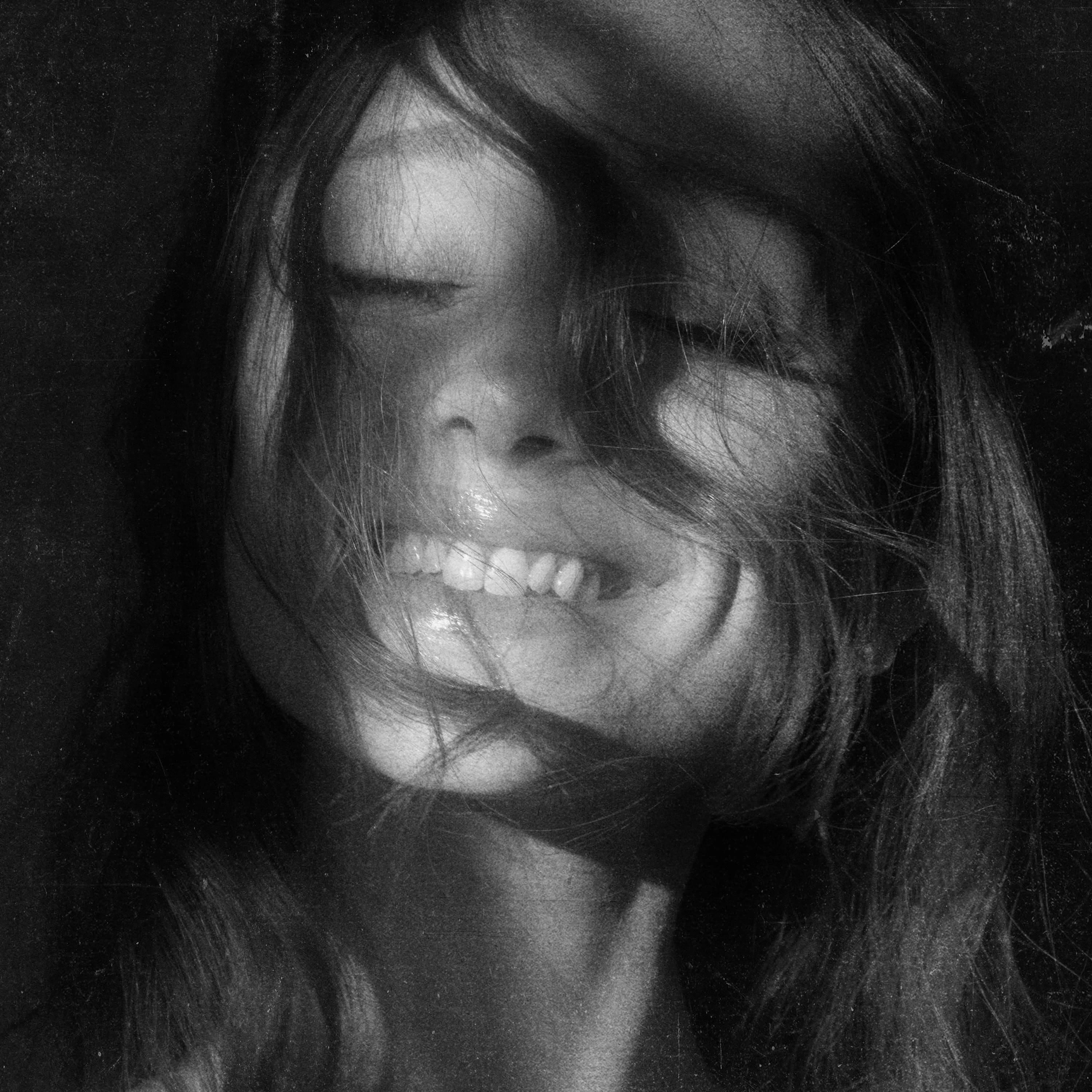
Many of the recent images she’s shared to promote her forthcoming album petal resemble images that are romanticized in online pro-ana, or pro-anorexia, communities, specifically those that proliferated on Tumblr in the early 2010s. These images are always hyper-feminine and girlish, relying on associations with childishness to romanticize child-sized adult bodies. Common themes include baby pink, ballet slippers, teddy bears, bubbles, bows, daisies, frilly socks, angel wings, and black-and-white photos, almost always featuring thin, pale white girls, often with a gauze of warped sensuality draped over it all. Girliness with a sheen of gloom, a grainy filter slapped over it, all the saturation in the colors turned down.
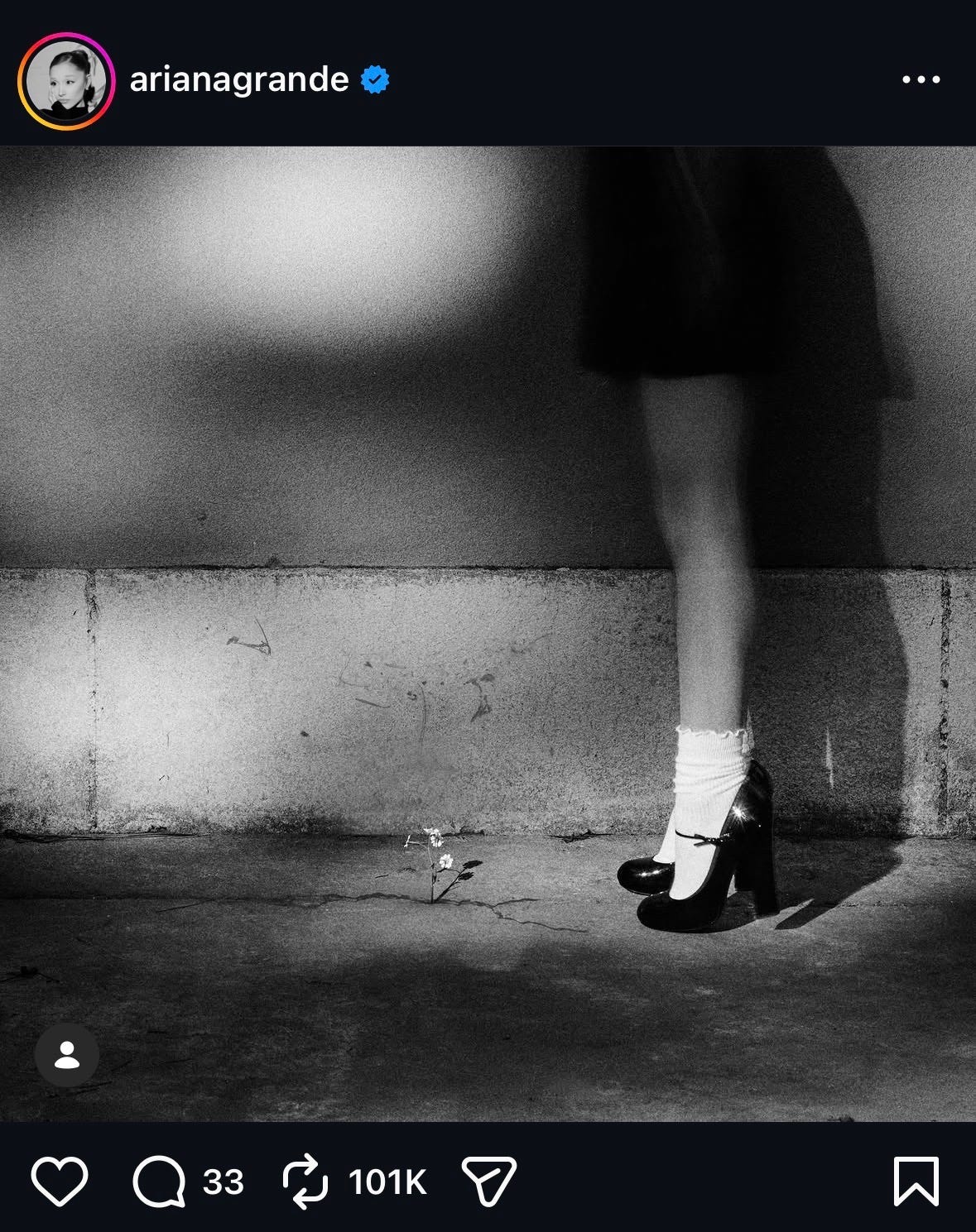
Recently, Grande has been posting images of these things and their emoji counterparts habitually. A petal visualizer previously pinned on her Instagram page showcases a black-and-white montage of daisies, grey pavement, and socks in Mary Jane shoes, all of it delicate and wispy. Several costumes she wears on The Eternal Sunshine Tour, which just began last month, include similar motifs, adorned with ballet ribbons, lace, and light pink tulle, almost a return, in some ways, to the Yours Truly era, but with a slightly murkier undercurrent. Even the album title “petal” has an air of flimsiness and fragility to it. A flower, in this context, does not read as a sign of vitality or vibrancy, but rather as something that can be crushed easily in your hand.
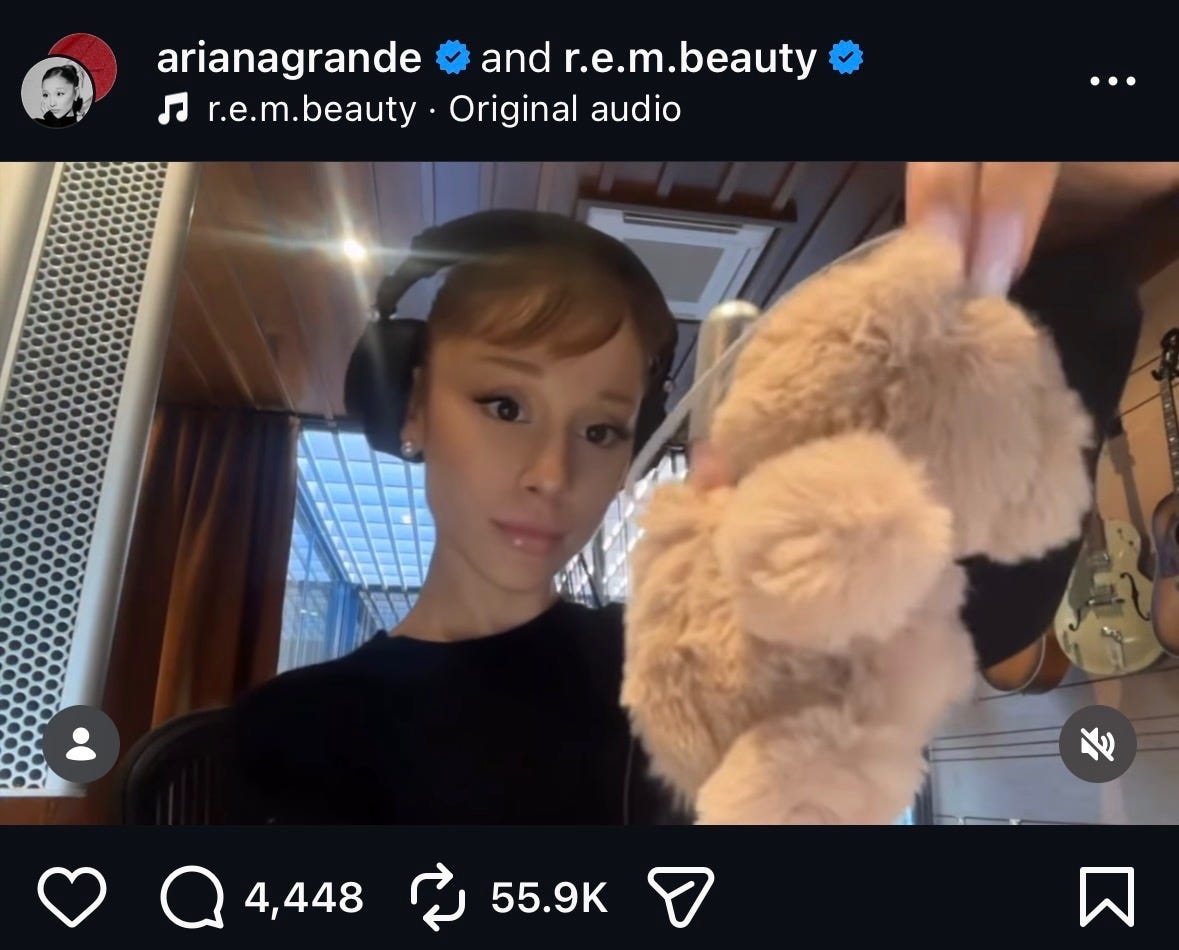
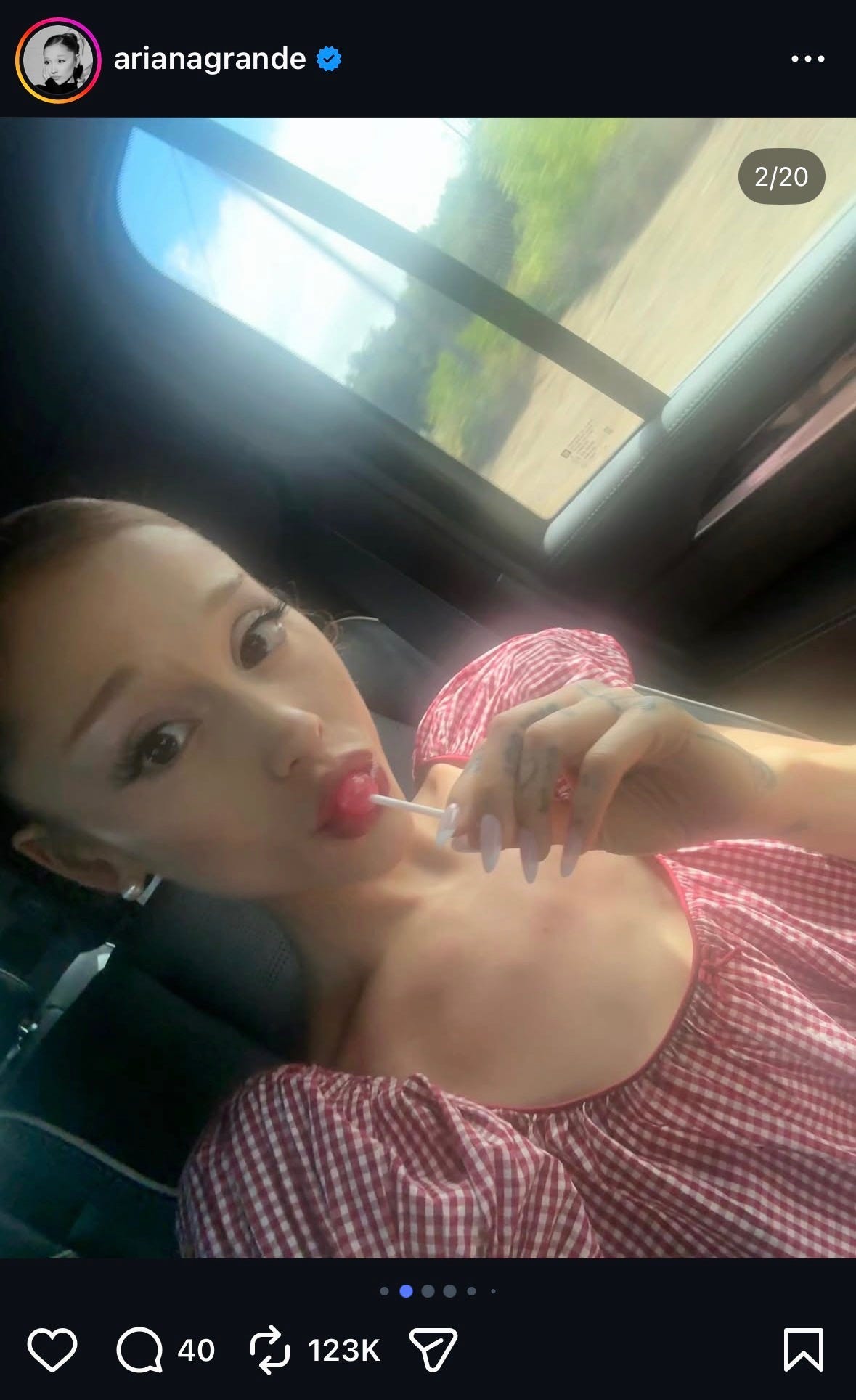
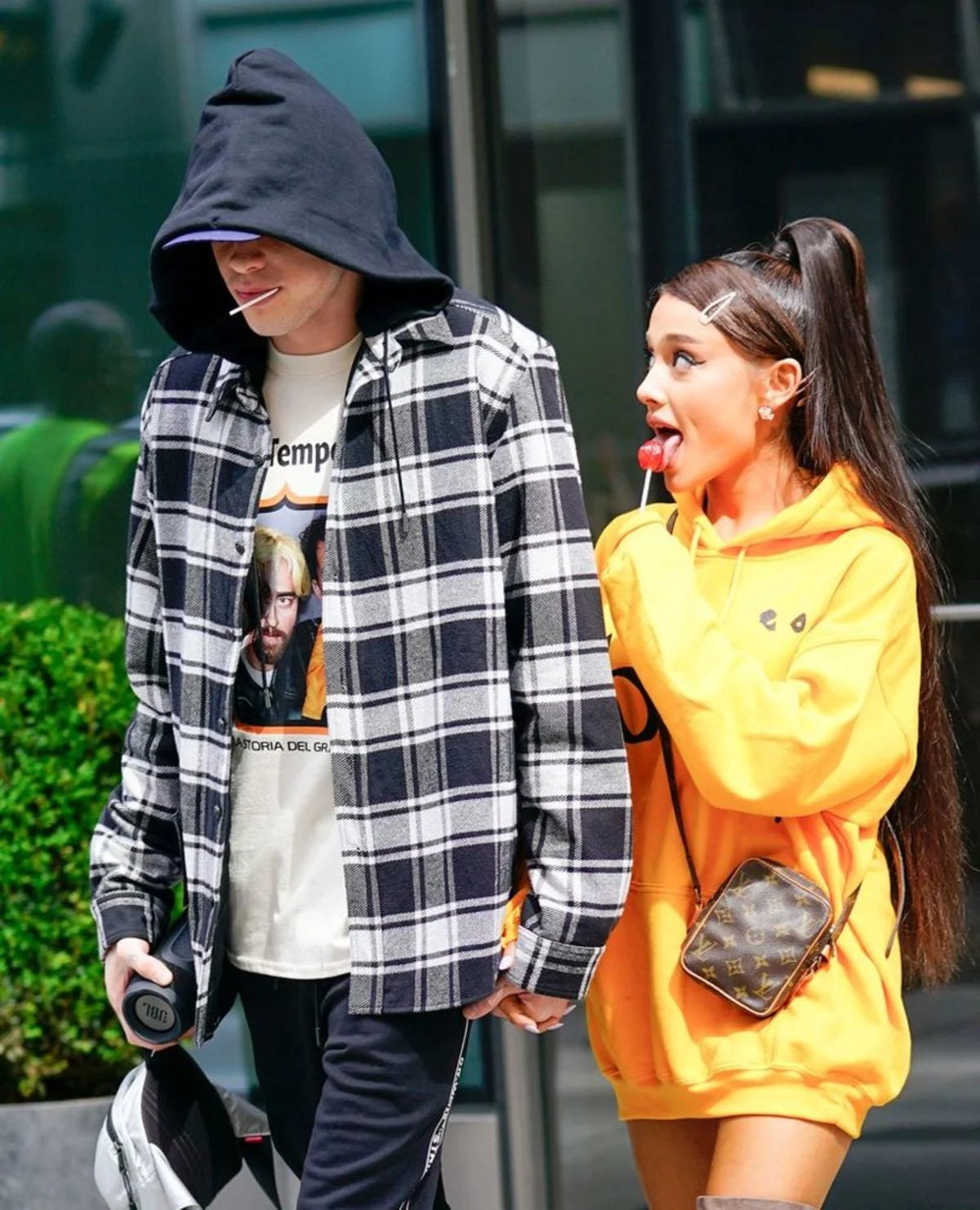
All of this came to a head for me when Grande posted a selfie in a red gingham dress, sucking on a lollipop, flashing doe eyes at the camera. With her light hair slicked back and out of view, she literally appears bald like a baby. Textbook Tumblr-Lolita imagery, so blunt in its objective that it almost feels satirical. Ironically, one of the most iconic paparazzi images of Grande also features her sucking on a near-identical lollipop and staring at ex-fiancé Pete Davidson in 2018. In the photo, she’s similarly swallowed by a hoodie, her signature sweater paws out, with barrettes clipped into her hair. Though relying on similar implications, the latter image has far more dynamism, movement, and humor attached to it, a narrative even. This sharply contrasts with the sterile, strained nature of Grande’s visuals today.
A pop musician can co-opt girlish aesthetics in a way that feels complicated, narrative-driven, and non-gratuitous. For example, Olivia Rodrigo’s visuals for her latest album, you seem pretty sad for a girl so in love, rely on a kind of insurgent coquettishness, conveying the child-like, whimsical feeling of infatuation and lovesickness, while showcasing more movement, color, and vibrancy, and lacking any explicit sexualization of girlish aesthetics. In the music video for “stupid song,” for instance, she features real ballerinas, who look physically strong, pushing one another around and getting grass stains on their tights
Pro-ana communities thrive not only by glamorizing illness, but by exerting control over fellow community members, holding others accountable to achieve certain body and dietary goals, along with oneself. The visuals in and of themselves serve as a kind of recruitment tactic, whether one is outright encouraging others to starve or not. I certainly have a bias, having been exposed to pro-ana communities at too young an age, but alongside Grande’s changing appearance and the conversation surrounding it, this new aesthetic feels like less of a lackluster means of world-building and more like a call to action. Whether that’s intentional or not, I’m not sure.
All I know is that it’s a bleak but necessary feeling to be reminded that your idols are only human. And to be reminded that much of the visual politics of 2010s pop liberalism was as fleeting as a flower sprouting in the spring and decaying by winter. But I’d venture to guess many of us would trade the gaunt, pale visuals of today’s culture for the artificially potent ones of a decade ago. I’d gladly trade a dull reality for a tantalizing delusion, in pop culture at least. But until that tide turns, I wish that everyone, pop stars, women, and America more generally, gets well with expediency.
No posts
Comments
Nothing yet. Say the first thing.
Sign in to join the conversation.