
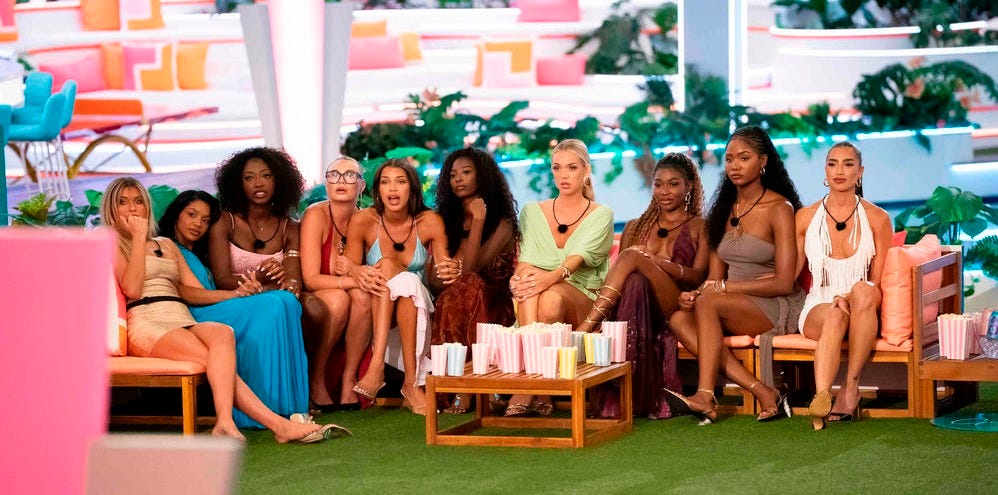
For someone who writes about gender and media, Love Island’s presence looms large every year. The show is a big, bad boogeyman that stomps into town each summer, attracting viewers of all ages and mental acuities. Some of the smartest people I know, as well as many random people on the internet, are drawn to this show under the guise of anthropological and sociological inquiry, dubbing it a modern-day “Stanford Prison Experiment” or a microcosm of the modern Western dating landscape. “Watching Love Island, but for sociological reasons” or something along those lines graces the captions of countless Reels and text messages between my friends and me, half in jest and half in all seriousness.
None of us ever quite spell out what specific answers to the universe we’re expecting this reality show to grant us because we know, deep down, it’s offering us nothing beyond a mindless distraction, a daily two-hour dose of guffawing. We revel in the novelty of watching something silly and, in many ways, regressive with a “feminist” or “psychological” lens without actually claiming a thesis statement. And there’s nothing wrong with that, really. Until there is.
The question that Love Island most acutely answers is far more specific and non-transferable than any weighty wisdom it gleans about “gender” and modern heterosexual dating: what happens when you lock a ton of hot people in a villa and film them 24/7 with CCTV cameras, coaxing them into being together for a cash prize and potentially lucrative influencing careers? This, too, was an interesting question to me for a spell. Until I realized that the answer is the same every time. It’s not that I grew tired of Love Island being stupid, per se, as I love stupid things. I grew tired of the audience’s response to the show outsizing its intentions.
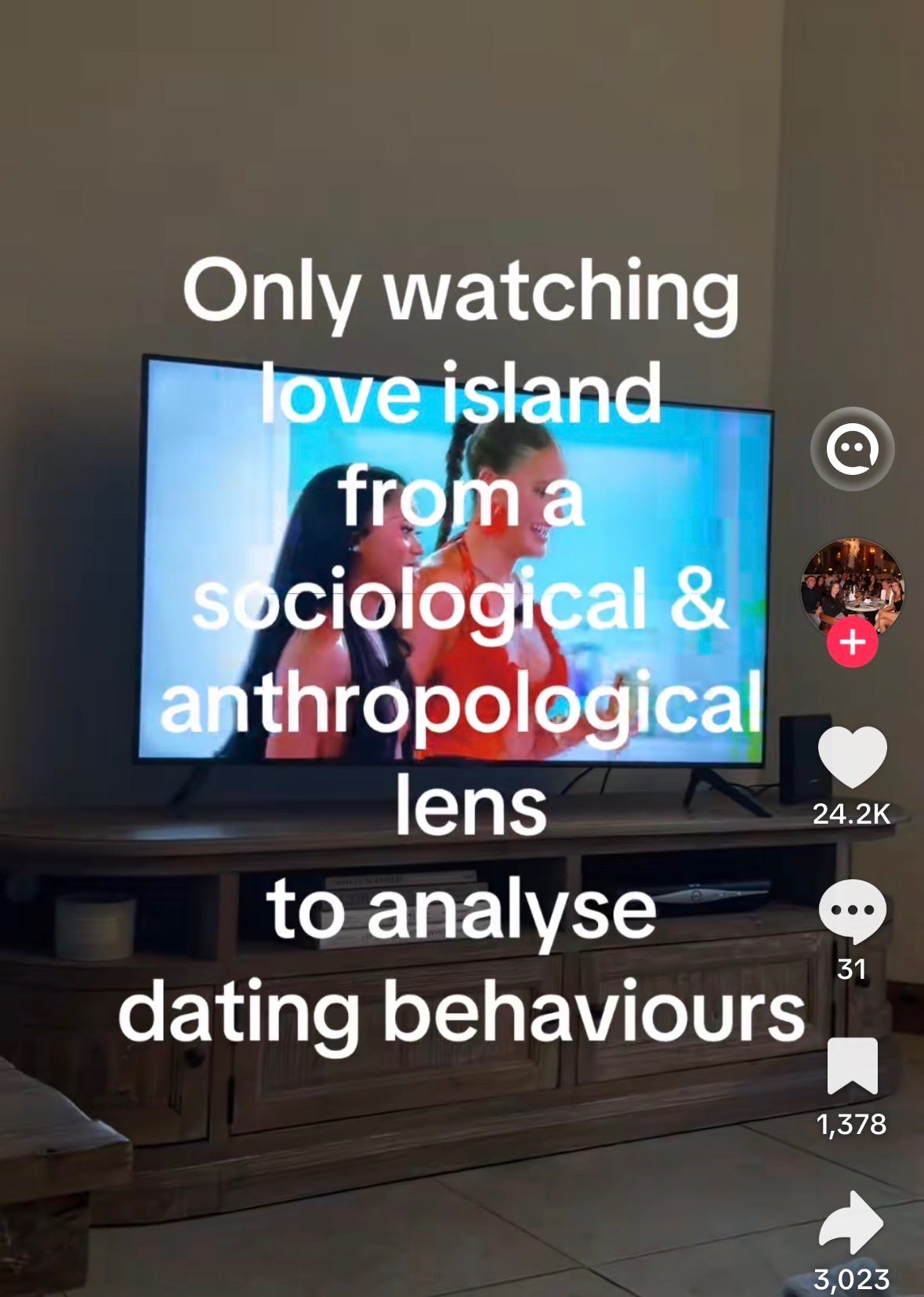
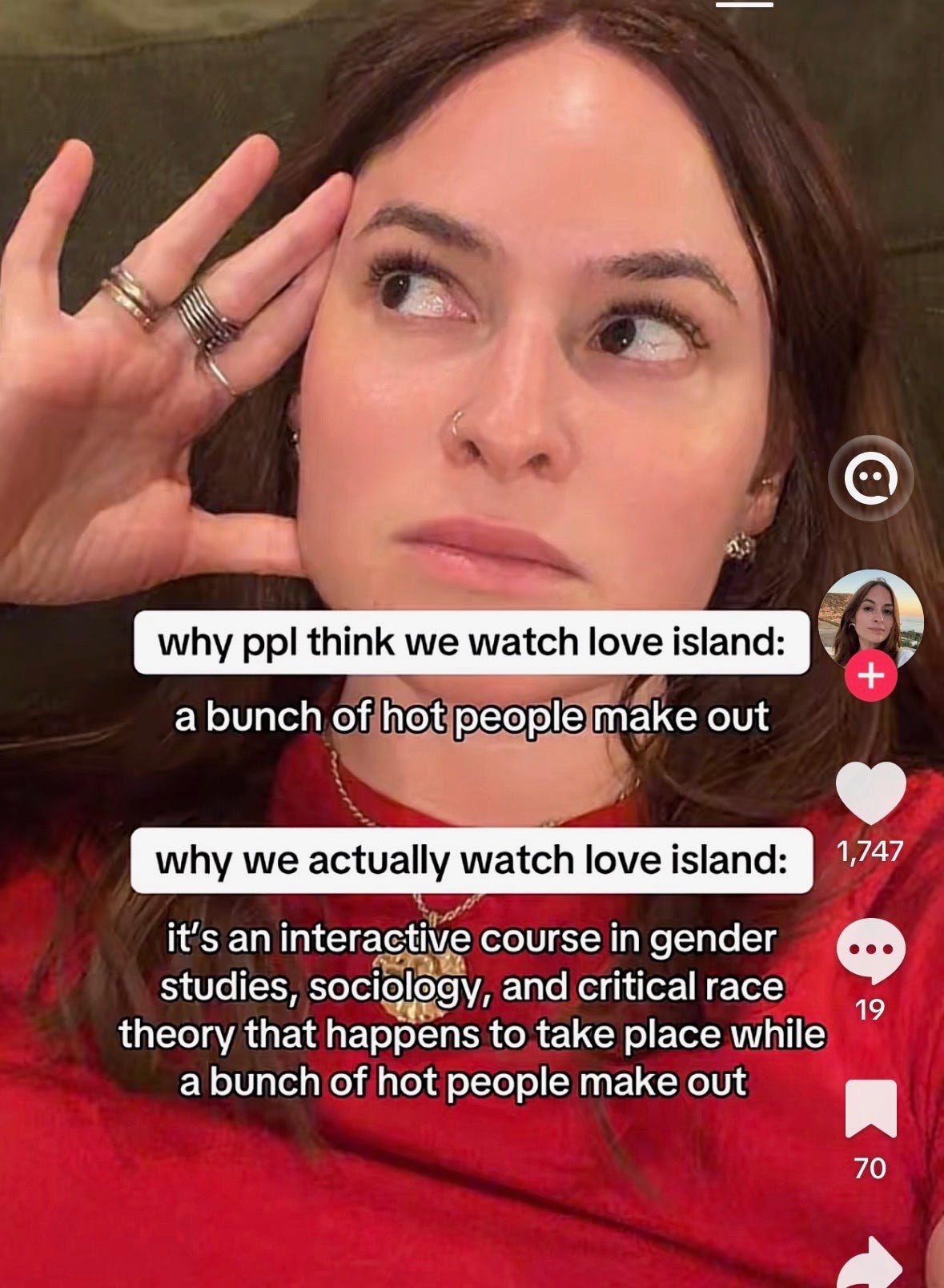
The wisdom to glean from Love Island is only useful when it’s contextualized. And the show’s context is highly distinct and more challenging to relate to typical dating situations than many people online often want to believe. For one, Love Island attracts contestants who sign up for the show under the pretext of “wanting to find love” but who truthfully just want to become famous on social media. Let’s not kid ourselves: there is no setting less conducive to getting to know someone than playing a pseudo-fictitious version of yourself on a reality show. The fame hunger comes across in the contestants’ hyperreal physiques, brash behavior, and slew of non-careers: aspiring actors, models, recent college grads, and the like. I believe that most of the contestants are actually experiencing big feelings of affection and heartbreak on the show. But these feelings are undoubtedly shaped by a desire to produce a remarkable character on a TV show, as well as the anxiety and paranoia inherent in not having total control or visibility into your edited, broadcast image.
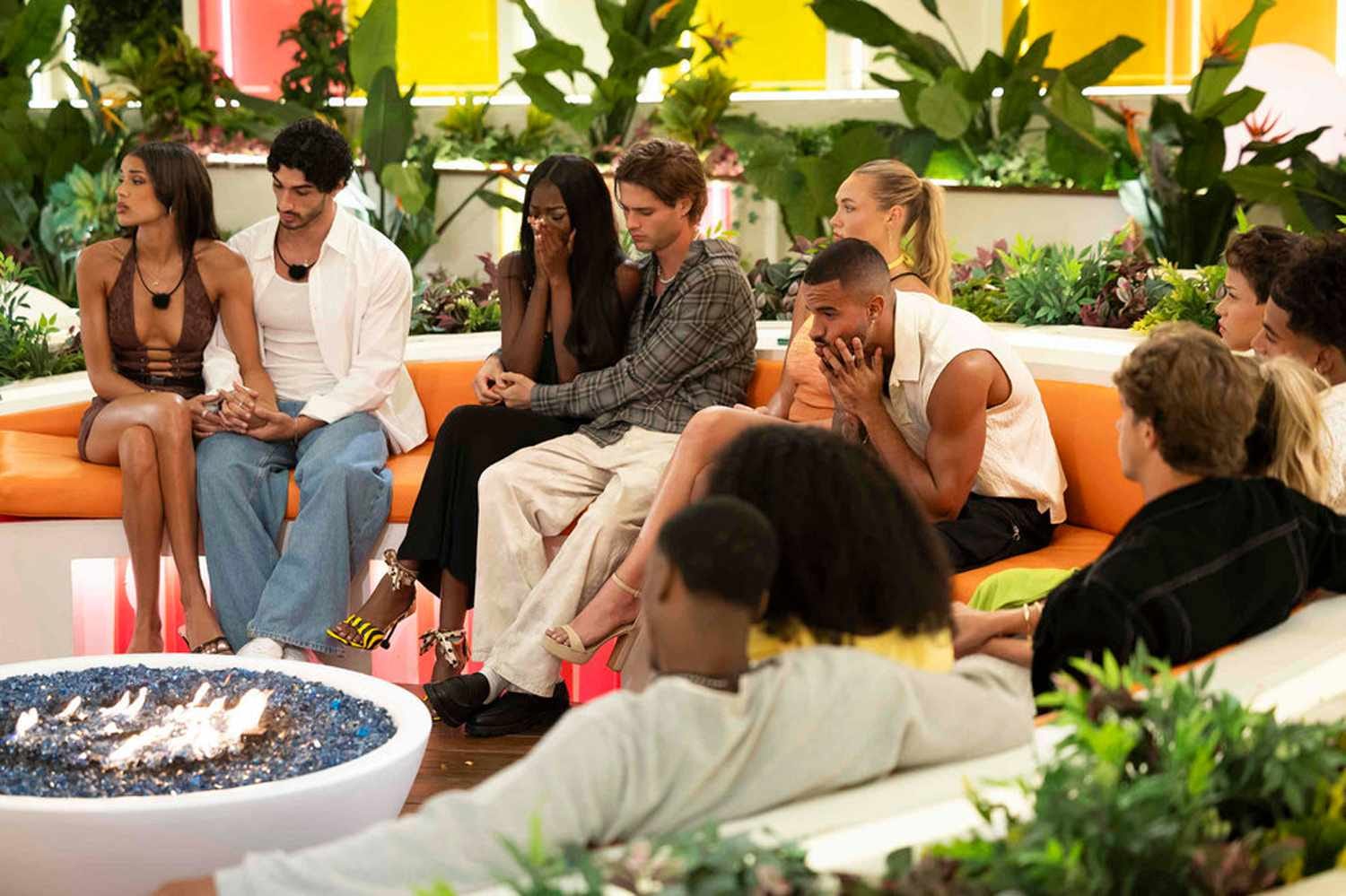
The producers of Love Island surely cast the show prioritizing contestants who have a flair for erratic behavior. If this show were truly representative of the general public, a microcosm of the Western dating landscape, if you will, it would involve far fewer confrontations, screaming matches, and group make-out contests, and far more couplings fizzling out in hushed tones or straight silence, bubbling up and cooling off into nothing but flat water. In real life, people are not this comfortable coming on this strongly to strangers, fooling around under a comforter in a bedroom of twenty people they just met, on a show that their parents and employers have access to.
The entirety of Love Island is eight weeks long. Most real-life eight-week flings that my friends have end in ghosting or well-meaning thanks-but-no-thanks messages, no declarations of love and blood-vessel-popping screams. I know these types of whirlwind summer romances and heartbreaks do exist, but anecdotally, I’ve only seen them occur as edge cases.
The overintellectualization of Love Island reminds me of some of the sentiments Rayne Fisher-Quann poignantly expressed in her recent essay “The perpetual tense,” in which she considers the “urgent tense” often used in writing about “heteropessimism” and gender dynamics, more generally. Rayne writes:
“Open Twitter or read a handful of buzzy culture pieces on Substack (or any number of more official publications), and you’re likely to find about a million claims that things are ‘increasingly’ happening, behaviors are ‘becoming normalized,’ a vague topic or idea is ‘relevant now more than ever,’ that ‘we’ as a culture are different now than how we ‘used’ to be.”
Rayne writes that even when these critics are highlighting legitimate cultural trends, things that may very well be “increasing” or “decreasing” or occurring “now more than ever,” their claims are often imprecise and not substantiated with data. I, of course, have adopted the urgent tense in much of my own writing. If you search for the term “increasingly” in my publication, you’ll find it littered haphazardly across many essays. Some of my most popular Substack essays are based around my own anecdotes and vibes-based musings about culture. But I think one grows as a person, and a writer, when one learns to temper their sweeping, glittering generalities about the present with thoughtful and thorough reflections on the past, and when one considers alternative versions of the present, realities that exist outside of what one is immediately looking at.
In a similar vein, many of the thoughts on Love Island related to gender, race, surveillance, and body image are uttered in a rather urgent and simplified manner. One person observes that season eight winner, Trinity, ending up in the most steady relationship suggests that women who hold men accountable always end up in the most loving and secure relationships, another suggests that Kenzie constantly dropping into the splits is a way for her to detach from her emotions, another discusses how “Casa Amor” provides a side-by-side comparison of matriarchal vs. patriarchal societies, and countless others give informal narcissism diagnoses to KC, Sincere, and other disloyal players within the villa.
I understand that many of these comments are made half-jokingly. As is often said, “the people yearn for community,” and watercooler television provides ample fodder for disparate individuals to organize and speculate around. But, in conjunction with this, TikTok, a forum in which Love Island discourse abounds, is also where many young people are forming their opinions and perspectives about romance and just about everything else in the world, often basing these learnings on dissections of fictitious, non-reality-reality media like Love Island.
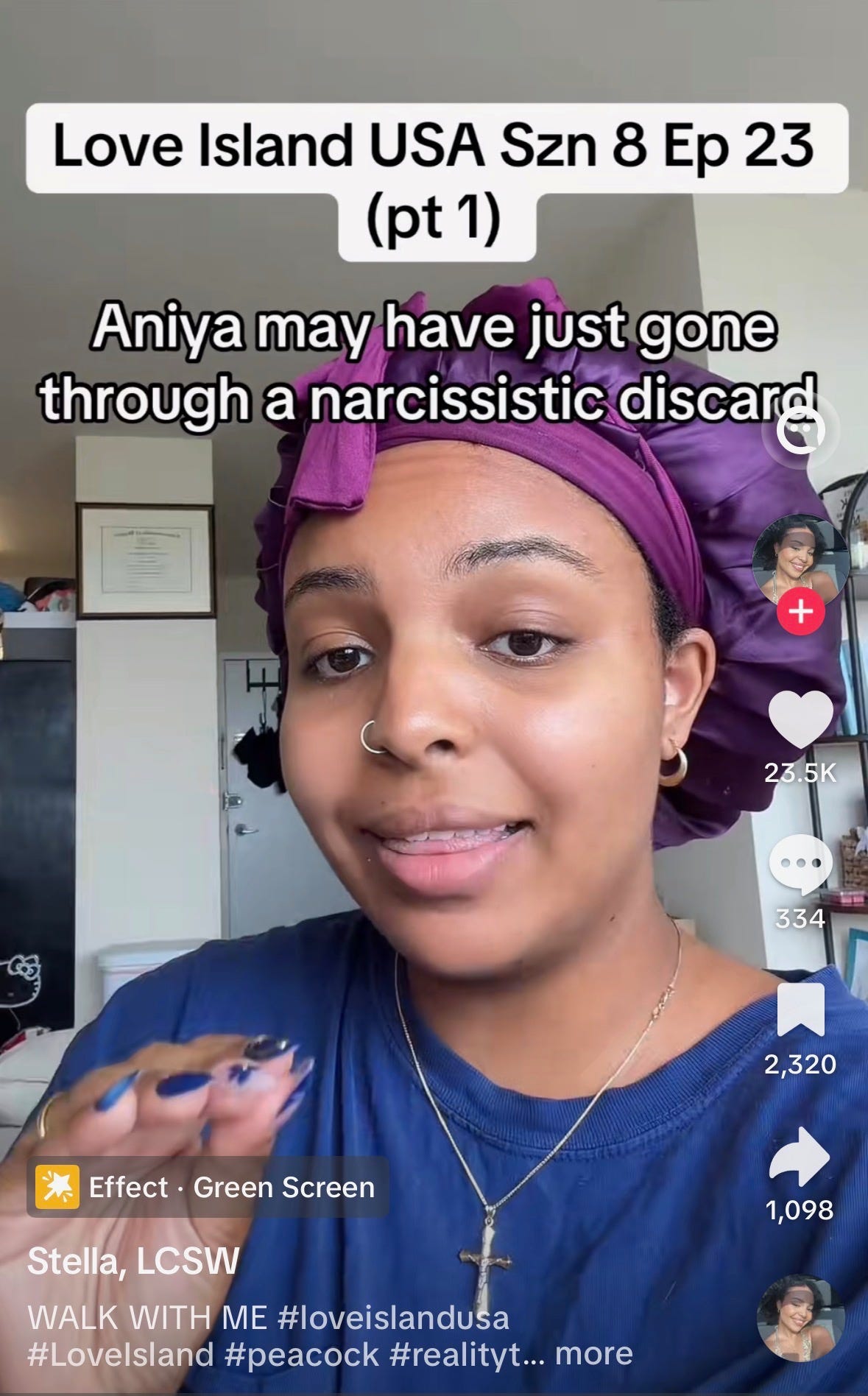
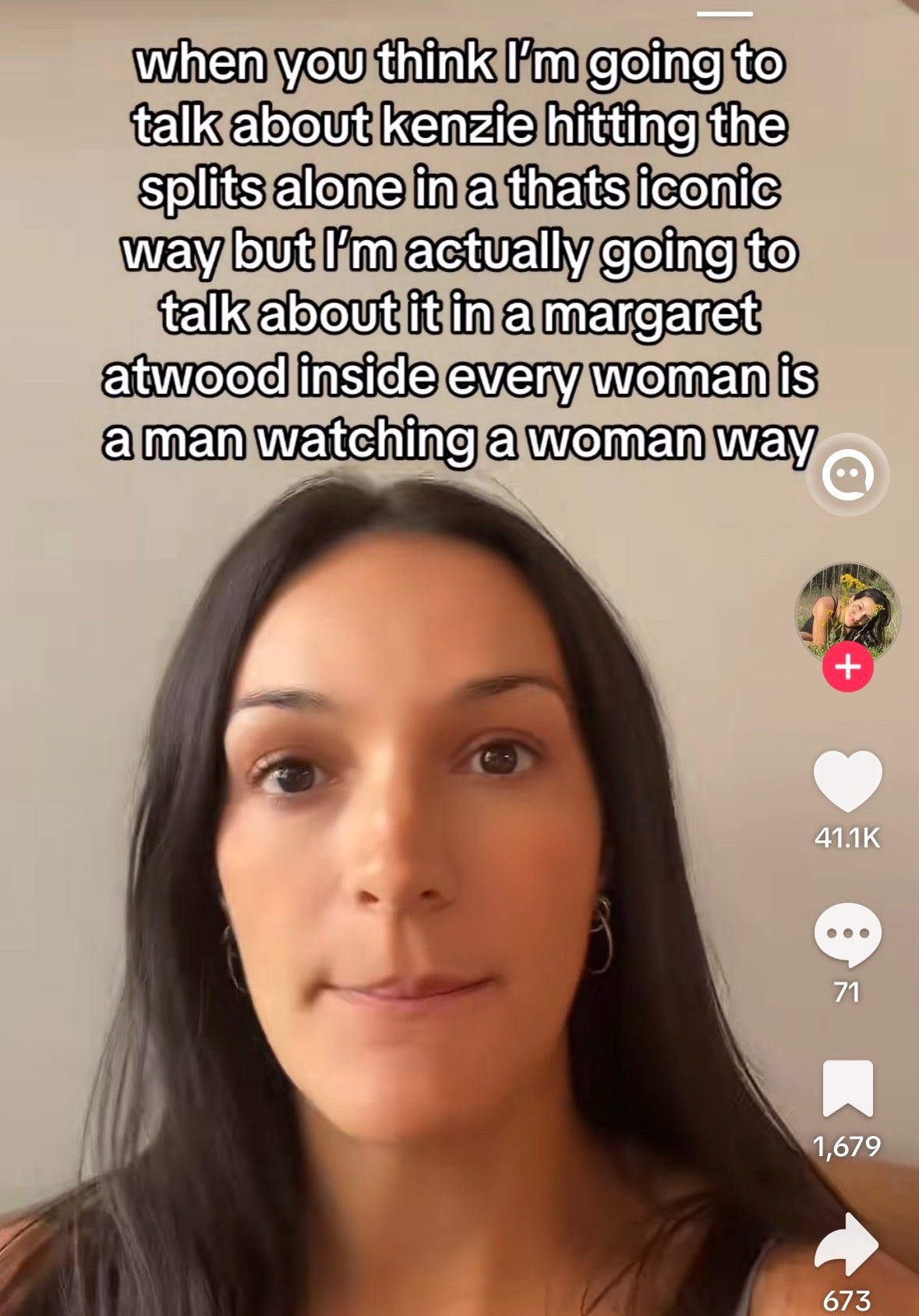
In 2023, Pew Research Center found that one in five Americans now regularly gets their news on TikTok, while another study found that one in four people rely on TikTok as their primary source of relationship advice, and almost 50% of people turn to social media for dating guidance. Not only has this led to an inundation of sensational dating influencers, who espouse advice on staunch “red flags” to avoid and ways to find “high-value” men and women, but many are also undoubtedly conflating these skewed insights with over-analyzed Love Island takes, as evidenced by the examples above. I’ve even heard many people in my own life cite their recent realizations about love and loss from situations that have taken place on Love Island and Summer House, with varying degrees of seriousness.
I personally feel like part of this falls on the fact that fewer Americans are reading books, and specifically fiction. With short-form entertainment displacing long-form entertainment in many Americans’ media diets, we find ourselves in somewhat of a fiction crisis. Instead of developing formative opinions about love and life from novels, which are written with the explicit intention to impart potent emotions and transferable learnings, many are instead leaning on fictitious, melodramatic portrayals of “reality.” This feels more dangerous than gaining all of our insights on life from fiction, as less literate minds will read these exaggerated displays of reality as real instead of what they really are, which is just dampened fiction dressed up as “real life.”
The Love Island actors are not a representative enough sample size to provide meaningful takeaways about modern romance. I do fear that when these types of overarching, therapy-speak-laced statements are taken as fact, as so much TikTok content is, our capacity to discern reality from highly stylized, skewed simulations of reality is eroded. We can analyze silly media seriously, but at the end of the day, beyond shocking audiences and eliciting laughter, it was never intended to be this consequential.
But look, I don’t judge any religious viewer of this show. I once fell victim to its bewitching qualities during season six, the season that launched snake charmer Rob Rausch to fame. It’s an absolute blast to watch with friends. I enjoy intellectualizing bald, bubblegum media as much as the next culture writer. But specifically last summer, I began to feel as though the show had reached its cerebral saturation point. We had sliced and diced it ad nauseam, to the extent that there was no further way to complicate it.
I think it’s a modern human instinct to want to extract intelligence from extreme, negative feelings, especially feelings of shock and bewilderment. And while there is much to learn from big human emotions and our reactions to extreme stimuli, I do think we eventually reach a point past beating a horse to death, when there is no longer meaning to pry out of rabid feeling.
I like to think that it’s a signifier of my emotional maturity when I sense this point of oversaturation while gossiping with my sisters. There’s nothing I love more than doubling, tripling, and even quadrupling down on a point with them, belaboring innocuous situations involving our shared enemies. But there eventually comes a point when we’ve ballooned our rage to a size that’s no longer usable for anything, when we’re so far past wringing teachable moments out of stupid, frustrating, and nonsensical interactions with irksome people. I like to think that it’s growing up to realize that big feelings can be felt for the sake of feeling, that there is not always a lesson to glean from every astonishing, shocking, or terrifying situation. Some things just are, and increasingly, Love Island is something that just is for me, and maybe something that should just be for everyone else.

No posts
Comments
Nothing yet. Say the first thing.
Sign in to join the conversation.