

It’s flu season in Singapore and I was hit last week. The virus knocked the wind out of me and forced me into rest-and-recover mode. This meant home-cooked meals, plenty of sleep, video games, and absolutely no work. I must admit, falling sick certainly has its silver linings. A week later, I feel well-rested and ready to get back to work. But all this bumming around has got me thinking about the nature of rest.
My favorite mode of rest, my guilty pleasure, is to completely immerse myself in some new thing—an exciting video game, a creative coding project, or a challenging online course. The immersion is very rewarding and is a great way to disconnect from the mundanities of life. But it often leaves me exhausted and unwilling to get back to whatever I was doing before.
Other modes of rest have very different effects. Hanging out with friends might not be as rewarding, but can be very relaxing. Playing football is physically exhausting but mentally energizing. Going on late-night walks has a surprisingly broad range of positive effects I haven’t fully grasped yet.
This mixed bag of outcomes is exemplified in video games. Certain items or actions increase one stat while decreasing another. For example, in Don’t Starve (a beautifully crafted survival game) you can eat blue-capped mushrooms to restore hunger and health at the cost of a few sanity points. Not ideal, but very handy when you’re desperately low on health or hunger. On the other hand, eating cooked green-cap mushrooms restores sanity at the cost of a few health points. Which mushrooms you choose to eat, depends on which stat you currently need the most.
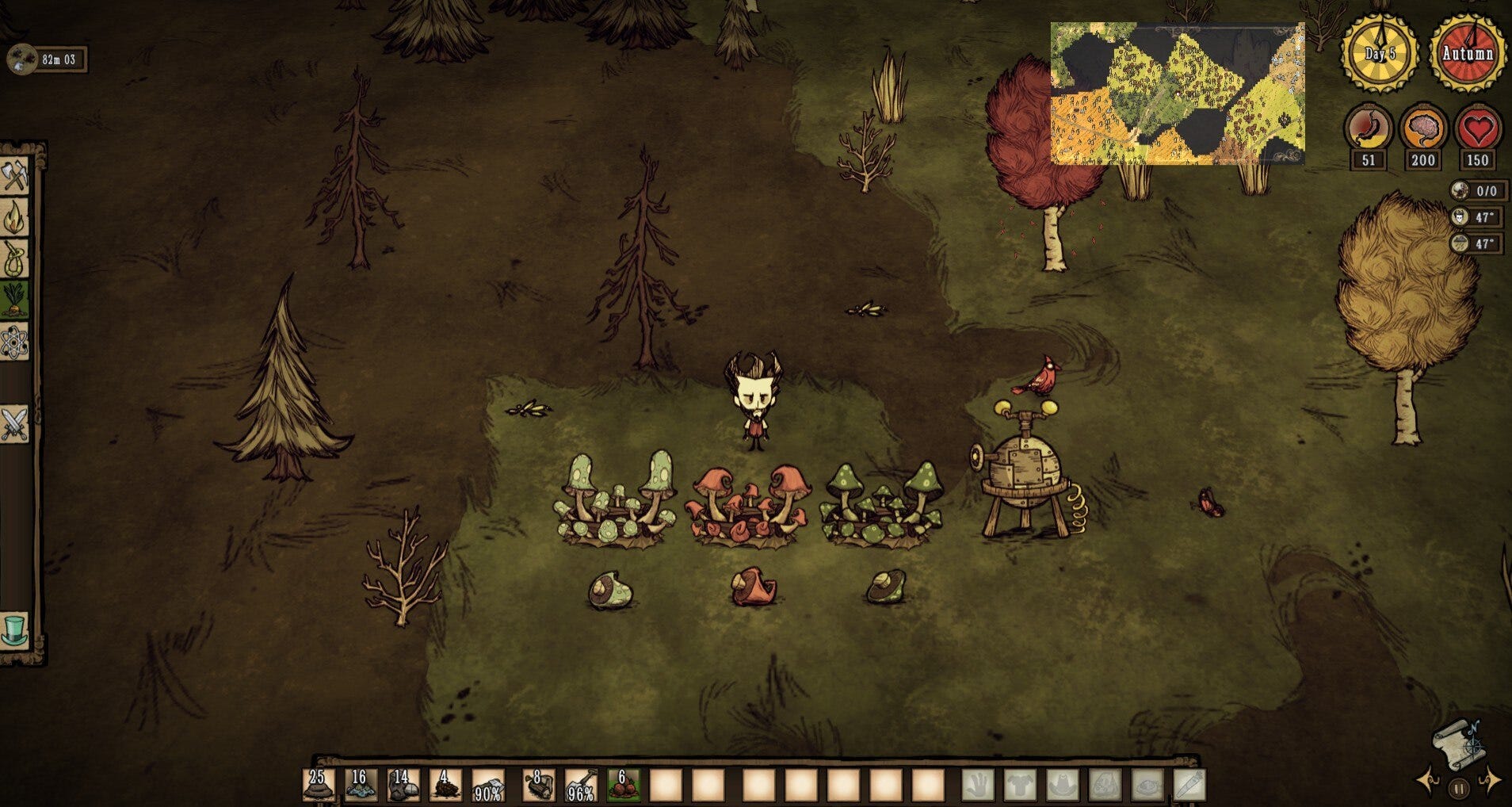
My favorite thing about this example is that the game doesn’t tell you that eating different mushrooms has these effects on you. You figure it out after you eat a few and observe your stats change. Or if you’re like me, eat too many blue-caps without noticing the drop in Sanity and die. Real life is kinda like this too. You don’t fully understand the effects of doing something until you’ve done it, and even then, you might miss it if you’re not paying close attention.
One of the most useful assets in Don’t Starve is the Status bar. It shows your current Hunger, Sanity, Health, and other attributes and warns you when they run low. Deplete any one of the stats and you die. Naturally, this is vital information that you always keep a close eye on. They guide your actions and choices throughout the game.
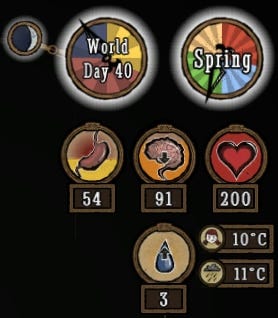
The real-life equivalent to the status bar are feelings, emotions, and intuitions. While these are unfortunately much more subtle, the information that they carry is just as vital. They are the medium through which the subconscious communicates its needs. But we tend to ignore, misinterpret, or downright deny them. A big part of growing wiser is getting better at reading your inner status bar.
The poet David Whyte calls this the Genius of Blessing. A Blessing in this context does not refer to the ordinary meaning of “wishing someone well”. Instead, he defines it as ‘the act of wishing something for someone they didn’t even know they needed themselves’. To be able to see into the center of a person and find what they have overlooked. Some people are remarkably good at this kind of blessing and as a result, are deeply treasured by everyone around them. A perceptive and timely blessing is one of the best gifts you can give and receive as a friend.
“A Blessing is the act of wishing something for someone that they didn’t even know they needed themselves”
We can also give the gift of blessing to ourselves. It’s not always easy, but it’s possible. If you could do it right now, what would the blessing be? What do you need the most? Don’t ask the hyper-rational, problem-solving, story-telling mind. It is easily confused. Tune in to the body instead. It is much wiser.
No posts
Comments
Nothing yet. Say the first thing.
Sign in to join the conversation.