
I haven’t posted for a while as I haven’t visited any museums that felt like they warranted a whole post to themselves. However, I have been to lots of really cool places that deserve a mention - so here’s a quick recap of March’s top heritage experiences!
This turned into a massive post so I have split it into 2 parts. Second part to follow soon!
Does what it says on the tin but this is a fantastic museum. Based in a once-working coal mine, Big Pit tells the history of mining from its 18th century beginnings up to the 1980s when all the mines were closed by Margaret Thatcher. We went on a tour of the mine (including going down in the cage lift) with a former miner who was an excellent tour guide. They are training younger people to do the tours to future proof the museum for when all the people who actually worked in the mines retire.
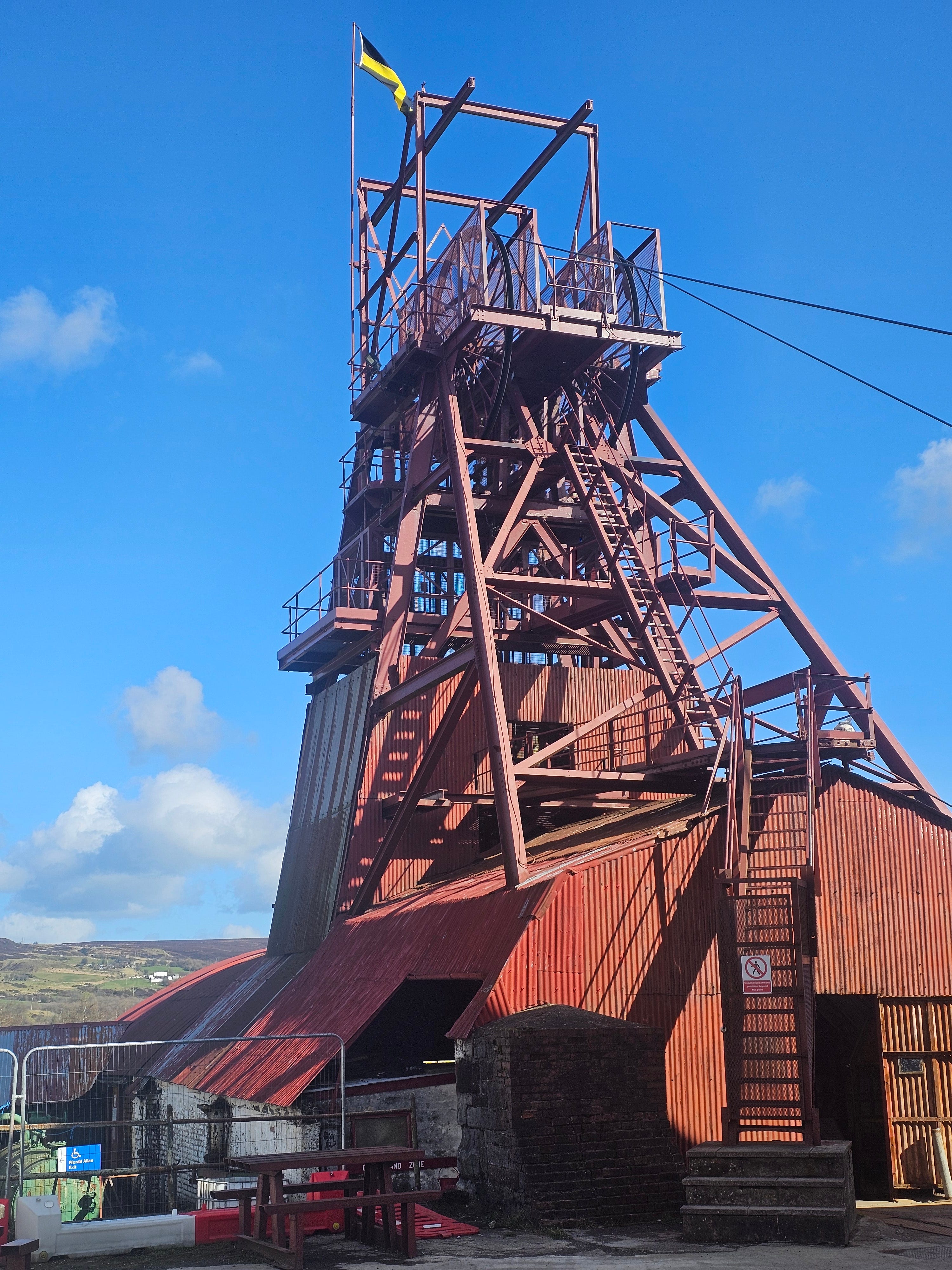
There’s a brilliant audio-visual exhibition (King Coal) with more modern mining equipment in a mocked up coal face. You can also visit the Pithead Baths which changed the lives of mining wives who no longer had to contend with their husbands coming home covered in coal dust. The mining history galleries are really poignant and left a lasting impression on me about the community that mining created, and the effect on that community when the mines were closed.
A castle ruin down a single track road in the middle of the Welsh countryside - an ideal little adventure for a sunny day. We arrived to discover we had to pay for entry at the farm next door, and were met by a dog that was miffed by our presence but not enough to do anything about it!
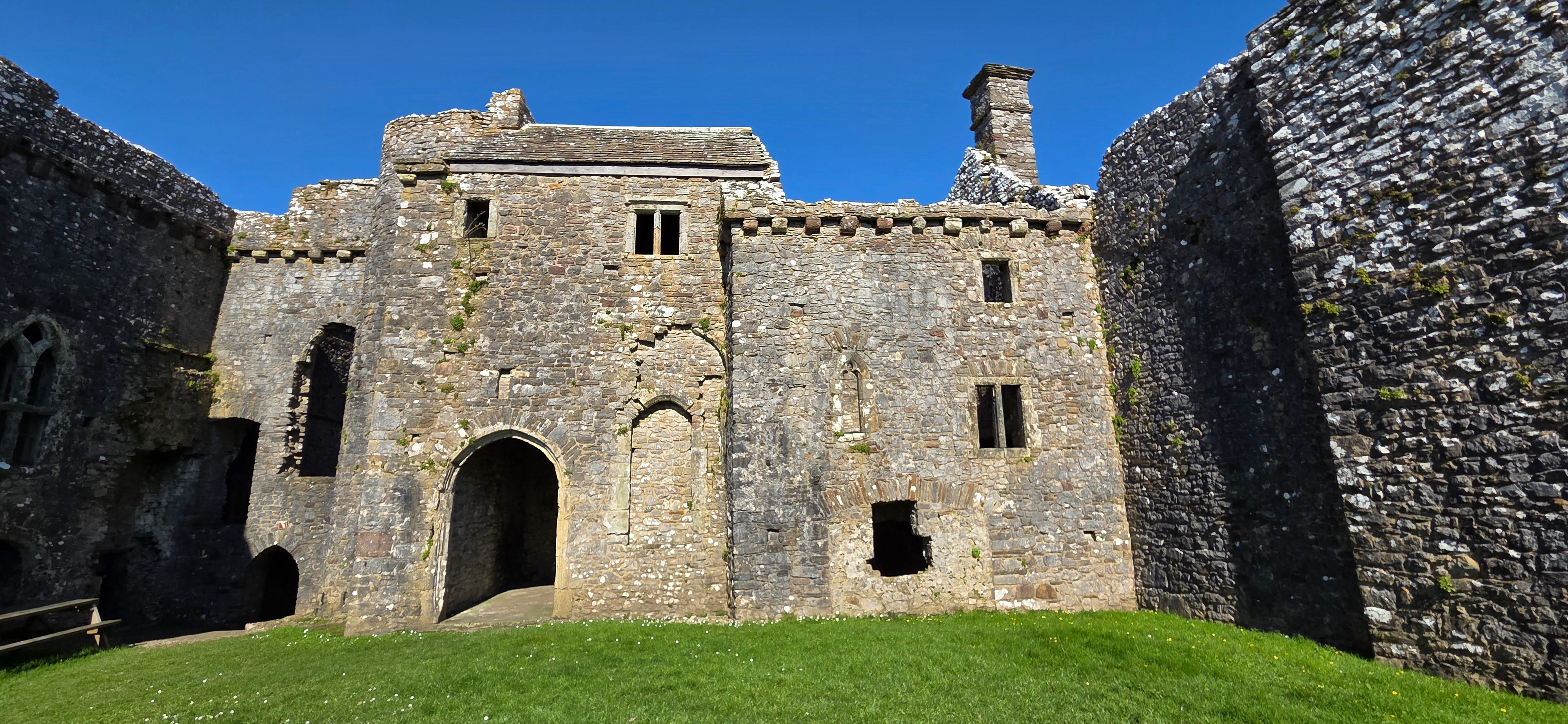
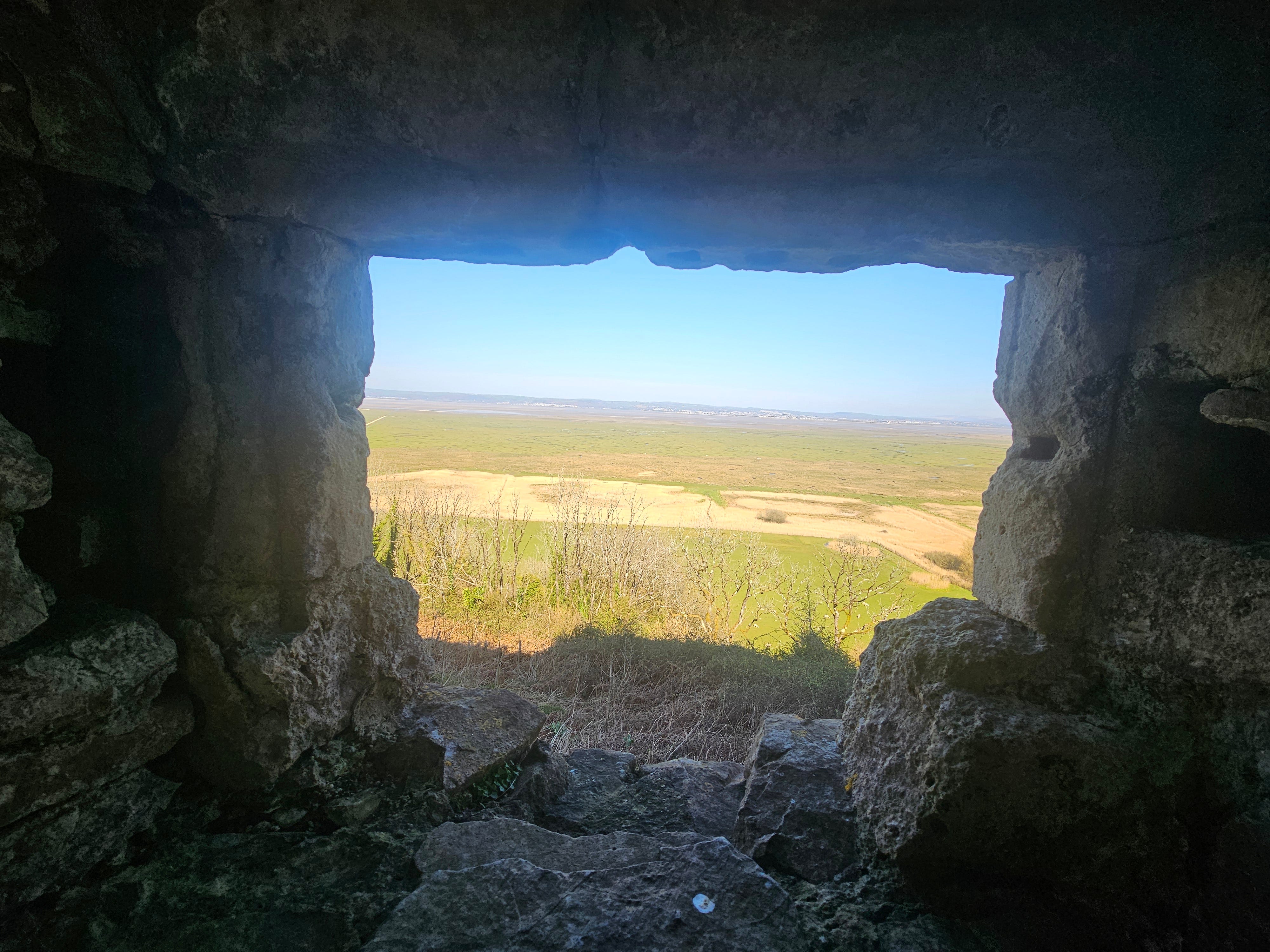
The castle itself is fun to explore but the best bit was the view across the Gower salt marshes.
We went to St David’s on the bus, which turned out to be a great way to arrive to see the Cathedral. We wandered through the town and came to the entrance to the Cathedral close, peered over the wall, and saw the Cathedral in all its glory1.
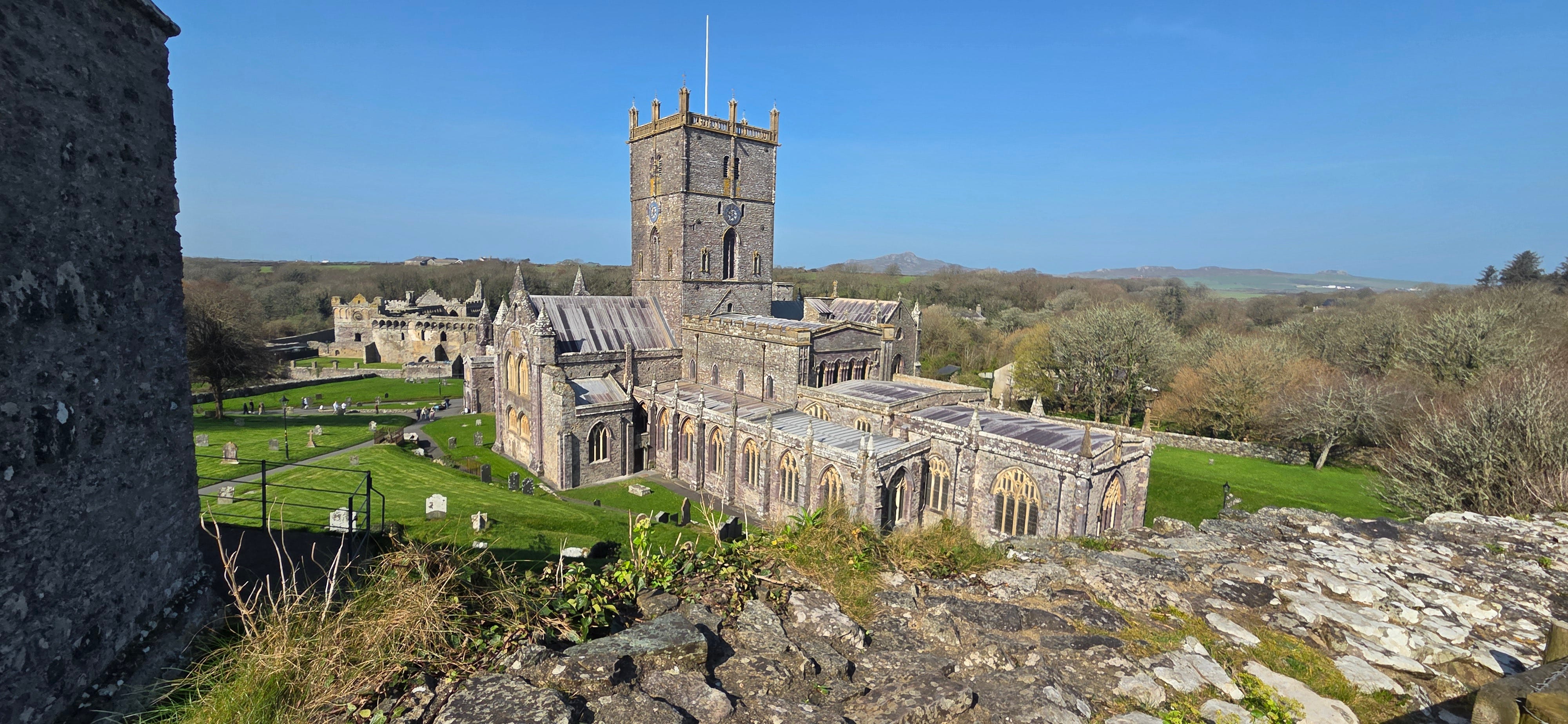
I absolutely loved this Cathedral (it’s a contender for my new favourite), but it is apparently divisive - my Dad is not a fan! I loved the 16th century carved wooden ceiling, and the William Morris designed rose window. I even loved the sloping floor caused by unstable foundations. I know a lot of the current Cathedral is from the 19th century restoration by George Gilbert Scott, but I think it has real presence.
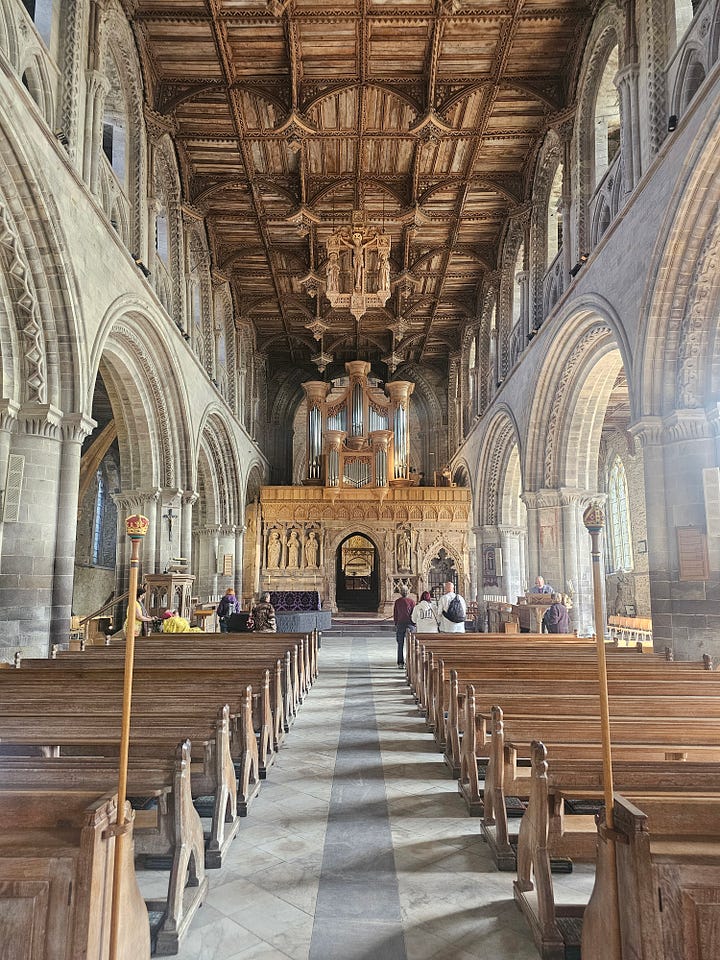
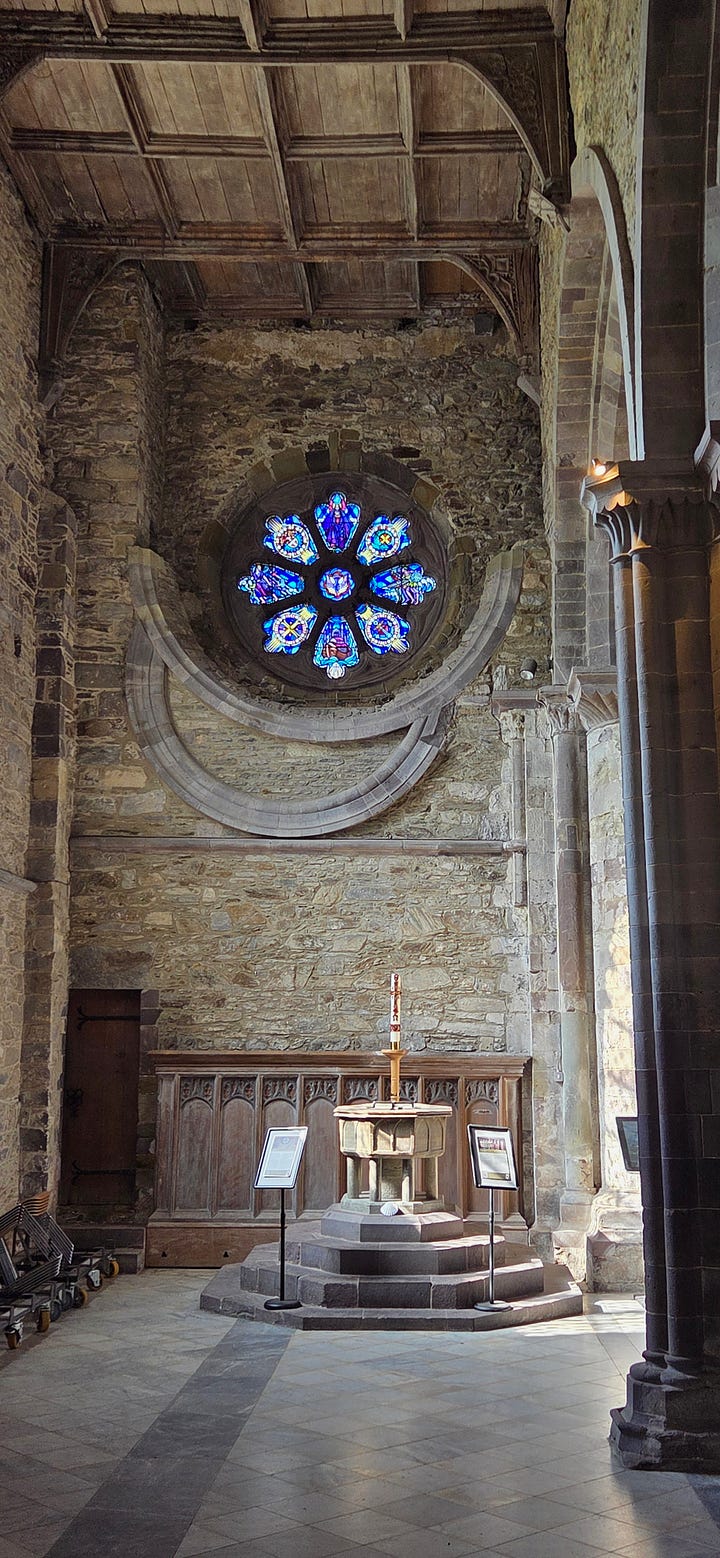
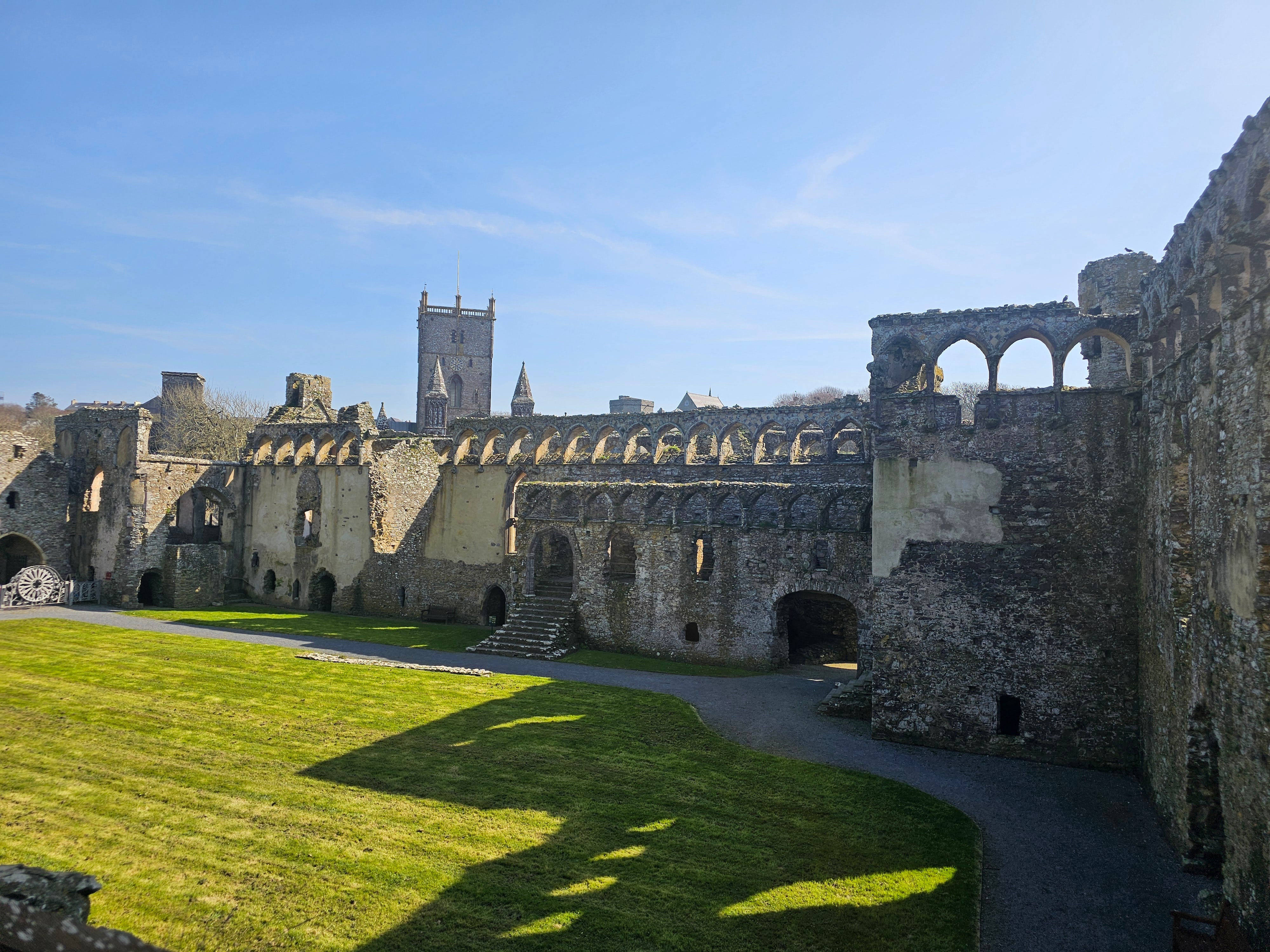
Next door is what remains of the Bishop’s Palace. This was a victim of the Reformation and the English Civil War, but the scale of it shows the status of the church before the political and religious upheavals of the early modern period.
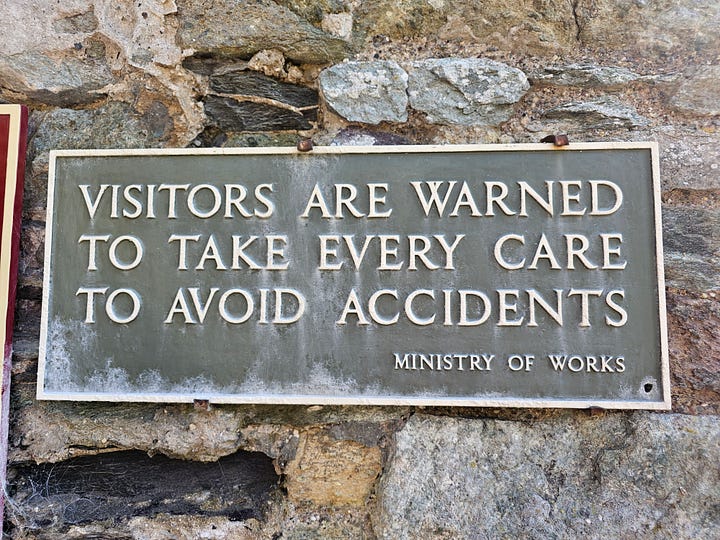
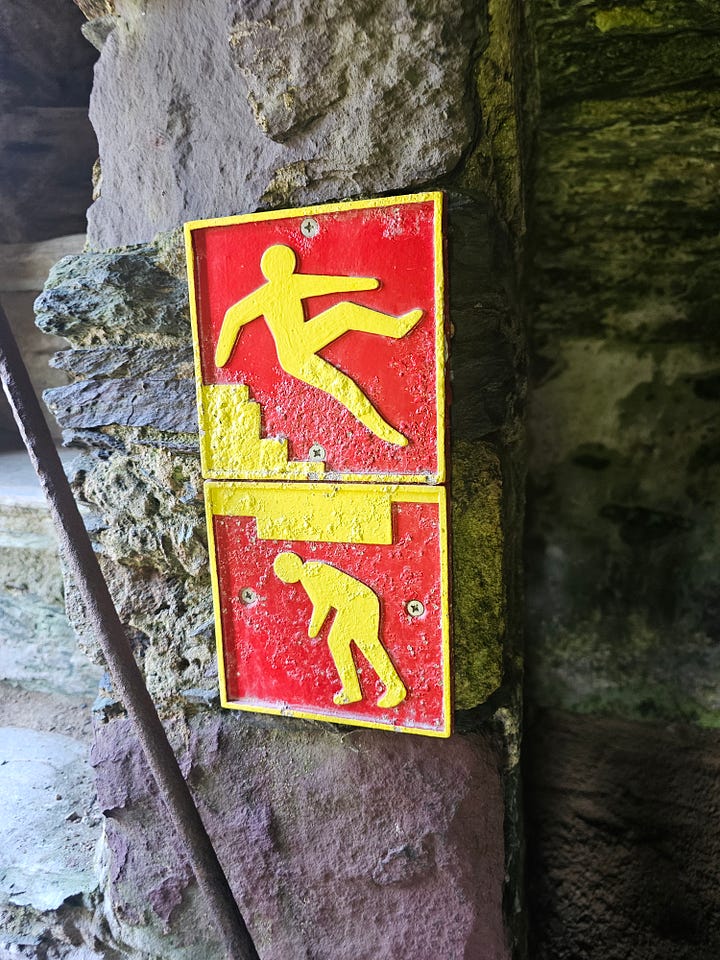
A special mention for these signs put up by CADW2 around the site. For some reason, they really make me laugh 😂.
No shade to Pembroke, but there really isn’t much to do there on a windy Tuesday in March. Thank goodness for the Castle!
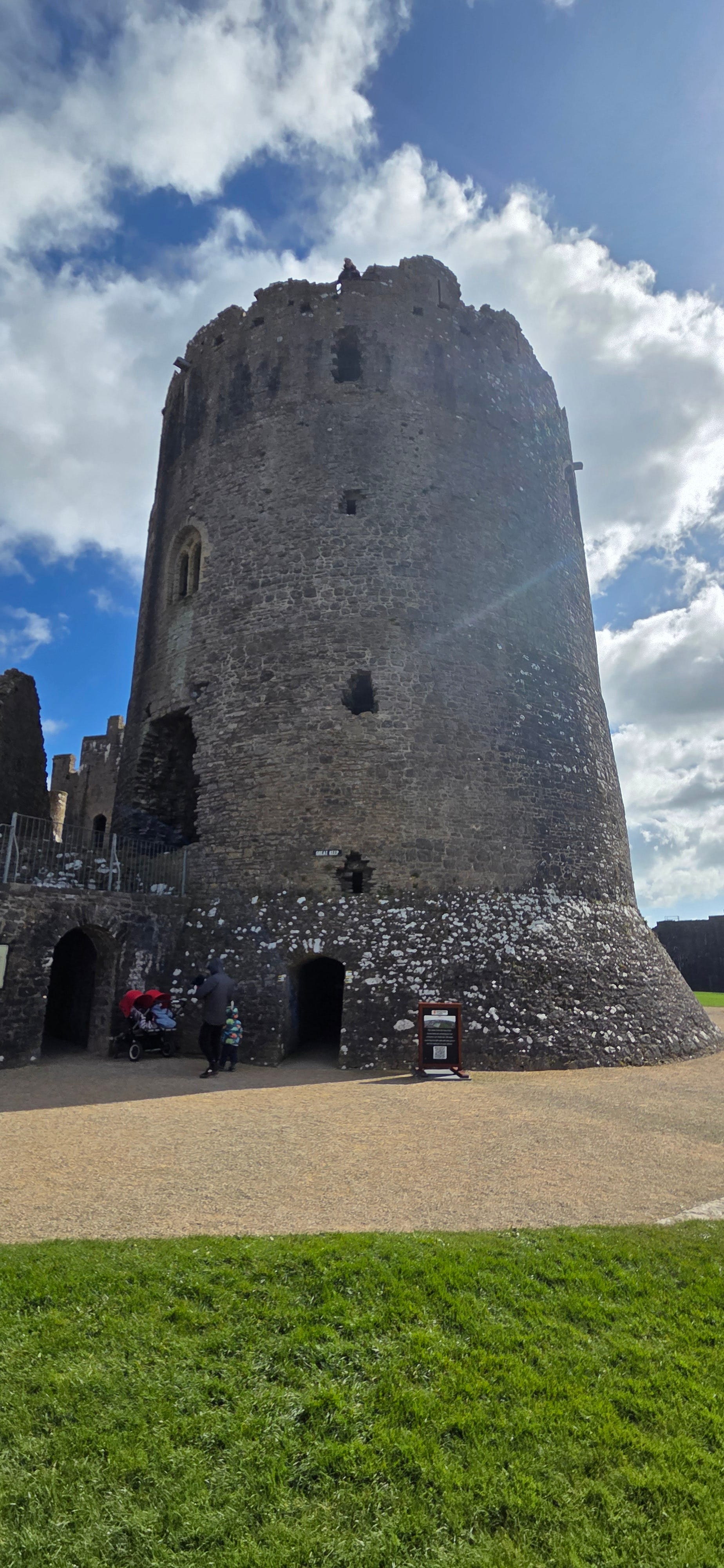
Pembroke Castle is famous as the birthplace of Henry Tudor, who would later become Henry VII. Quite a lot of it remains intact and you can wander around the castle walls and explore the exhibitions about Henry and other famous residents. We decided against going to the top of the Keep as it was seriously windy and we’d been buffeted enough for one day.
You can do a free guided tour of the Castle, which would have been great, but we couldn’t make the timings work.
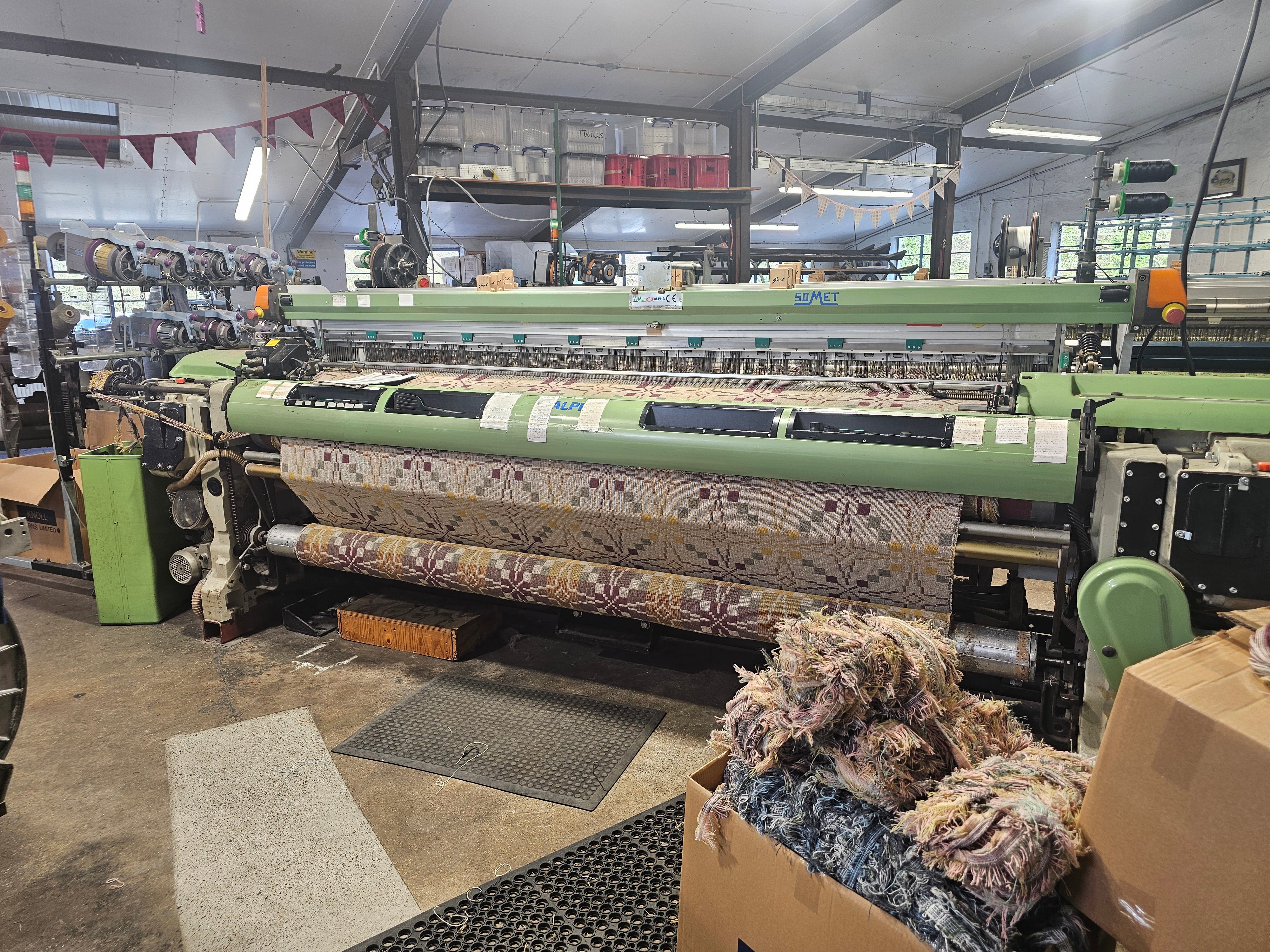
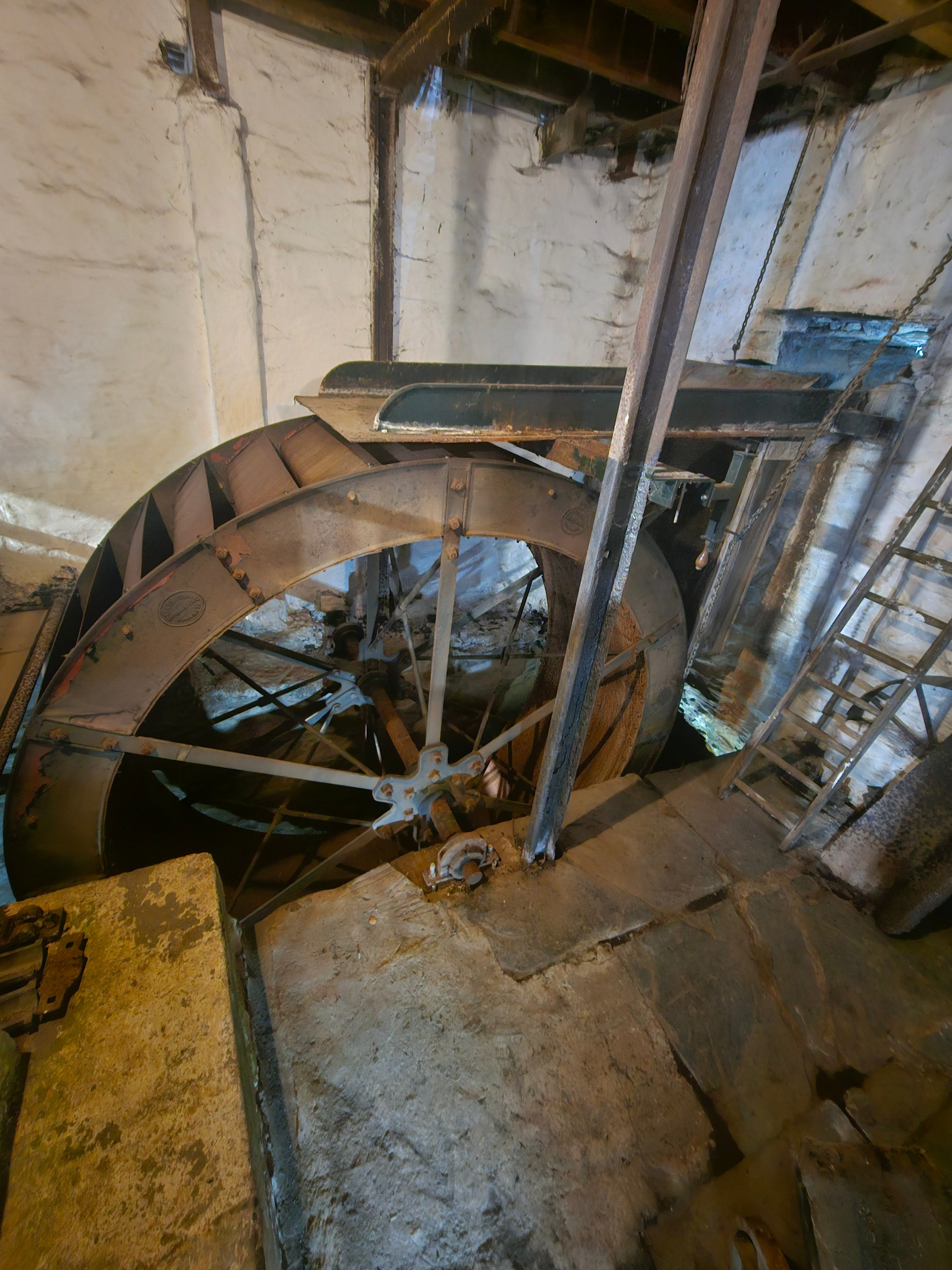
Melin Tregwynt is a woollen mill that has been in continuous operation since at least 1841. Hidden down another winding single track road (where I had to reverse slightly haphazardly to let a tractor go past), is the mill, a lovely cafe, and a shop. We were able to see the weaving machines in action and learn about the history of the mill. I may have also found myself in the shop…
That’s all for part 1. Stay tuned for part 2, coming soon!
The car park is at the bottom of the hill so you don’t get the same reveal of the Cathedral if you come by car
The Welsh Government’s historic environment service - similar to English Heritage
Comments
Nothing yet. Say the first thing.
Sign in to join the conversation.