
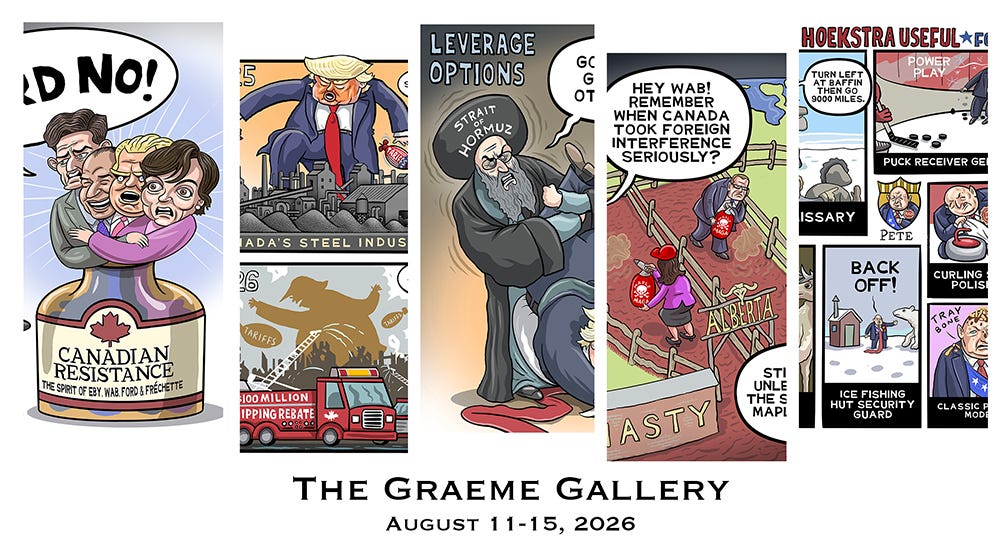
The silly season has curdled into a Canada–U.S. trade squabble ahead of August 19, 2026, after Trump - the Orange Emperor - threatened in July to impose 50% tariffs on many Canadian imports. If he does it, consumers and businesses in both countries will pay more; the impact would be uneven: roughly 13.7% of B.C.’s, 10.8% of Québec’s and 9% of Ontario’s exports to the U.S. would be exposed, while Saskatchewan and Alberta face about 1%. Rising regional protectionism and pockets of sympathy for U.S. populism are fraying Canadian unity as Ottawa braces for outcomes that could improve, worsen, or lock in prolonged brinkmanship.
Canadians are justifiably angry. I spent the past week drawing on the mood of anxiety and distrust felt north of the border toward this awful presidency. From provincial booze bans to accusations of foreign meddling, and from harsh comparisons of the administration to past U.S. excesses to the most controversial U.S. envoy in recent Canadian memory, here are five pieces in preparation for nastier headlines.
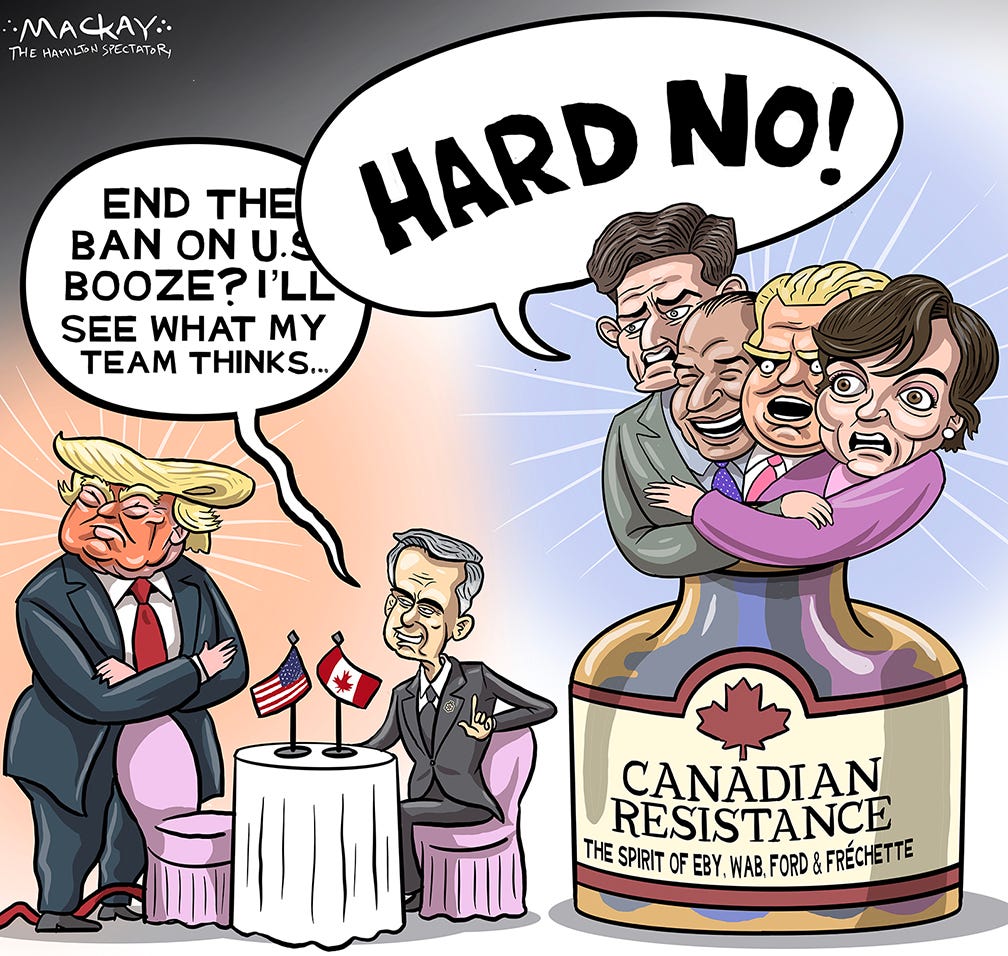
Tuesday August 11, 2026 — The Bottle of Defiance
Canada’s provincial booze ban has moved from symbolic protest to a real diplomatic constraint. Provincial leaders David Eby, Wab Kinew, Doug Ford and Christine Fréchette turned regional grievance into national leverage against rising U.S. tariffs and abrasive rhetoric from the Trump administration. Ottawa has been pushed toward harder options and may consider broader countermeasures, such as export taxes, targeted tariffs or reassessing defence cooperation, if pressure continues after the U.S. midterm elections.
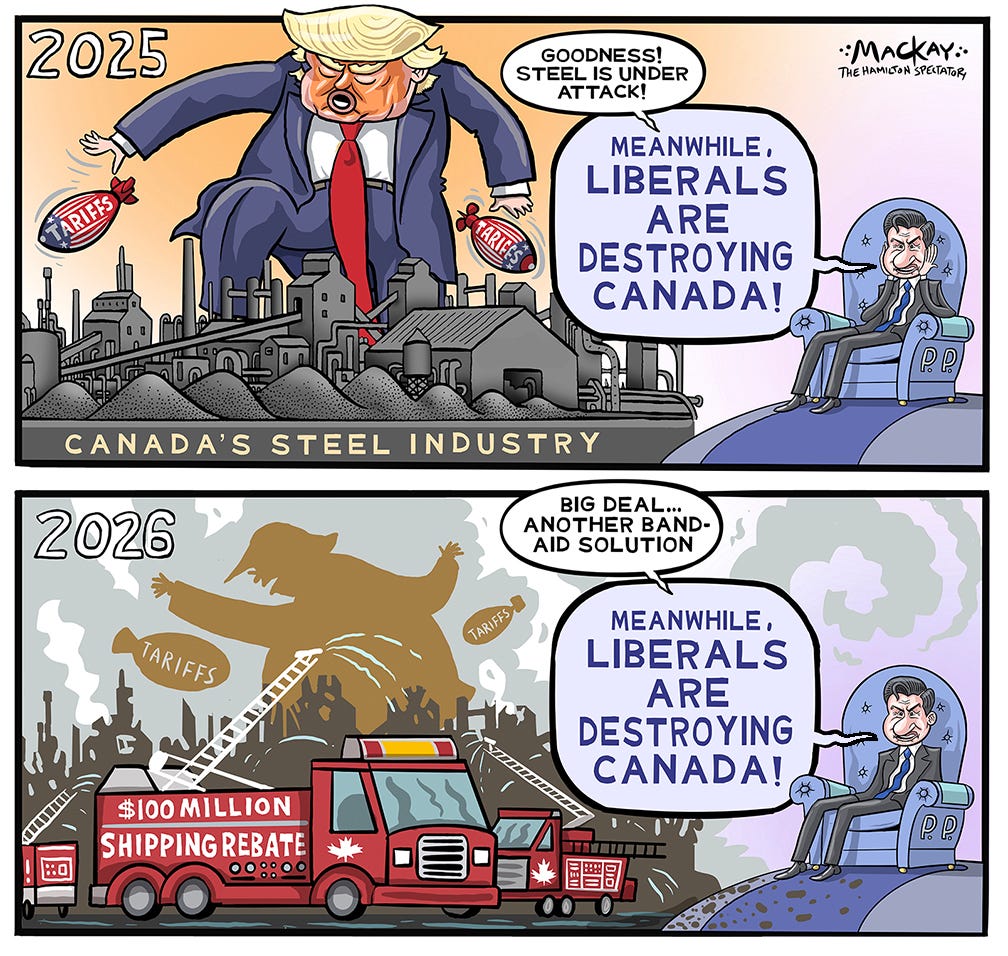
Wednesday August 12, 2026 — Tariff Bombs
In response to aggressive U.S. tariffs that have hit domestic steel producers hard, Ottawa announced a $100 million shipping rebate as short-term damage control to protect jobs, keep supply chains running and blunt cheap imports. However, the package exposes a trade-off between urgent relief and long-term competitiveness reforms, and critics calling it corporate welfare have made a unified, bipartisan response harder.
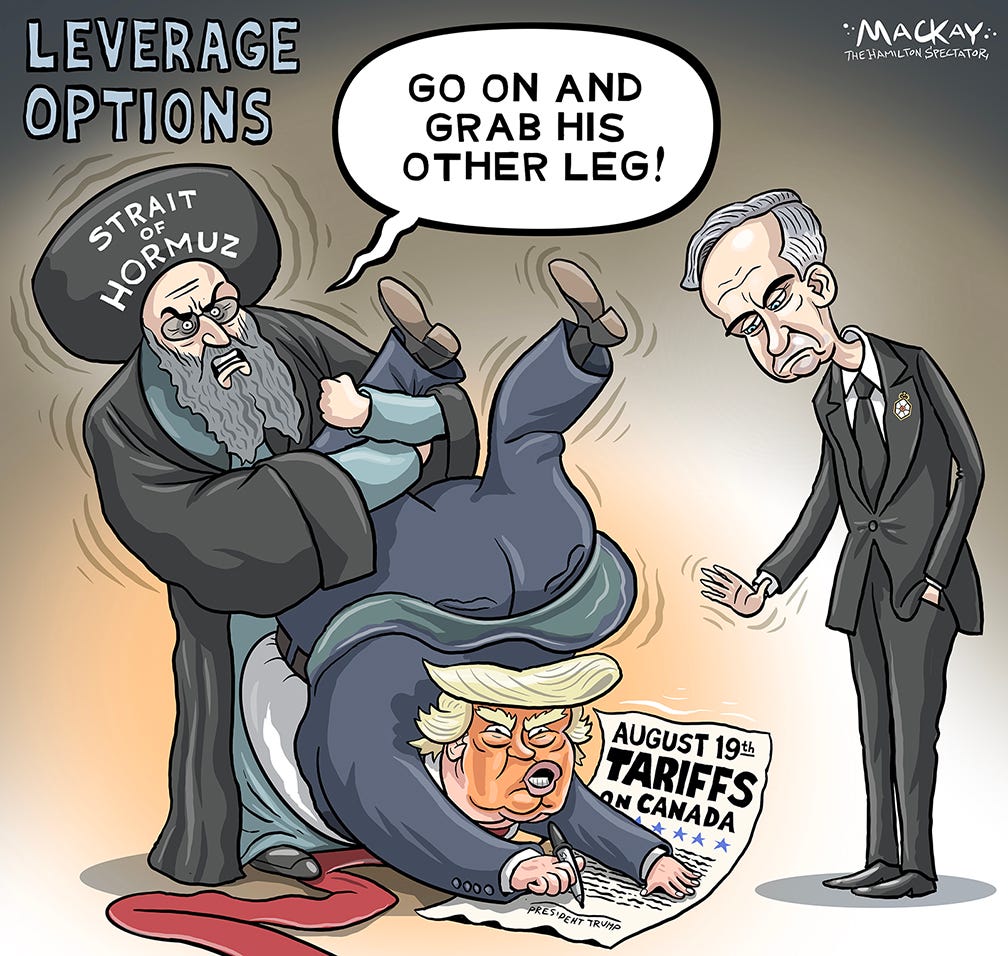
Thursday August 13, 2026 — Leverage and Counterpressure
Mark Carney should take a firm line: if Trump imposes more tariffs, Canada must respond decisively, using the two countries’ economic links to force a return to the pre-conflict situation. Canada’s patience and targeted measures can create leverage and protect national interests without escalating into a wider confrontation.
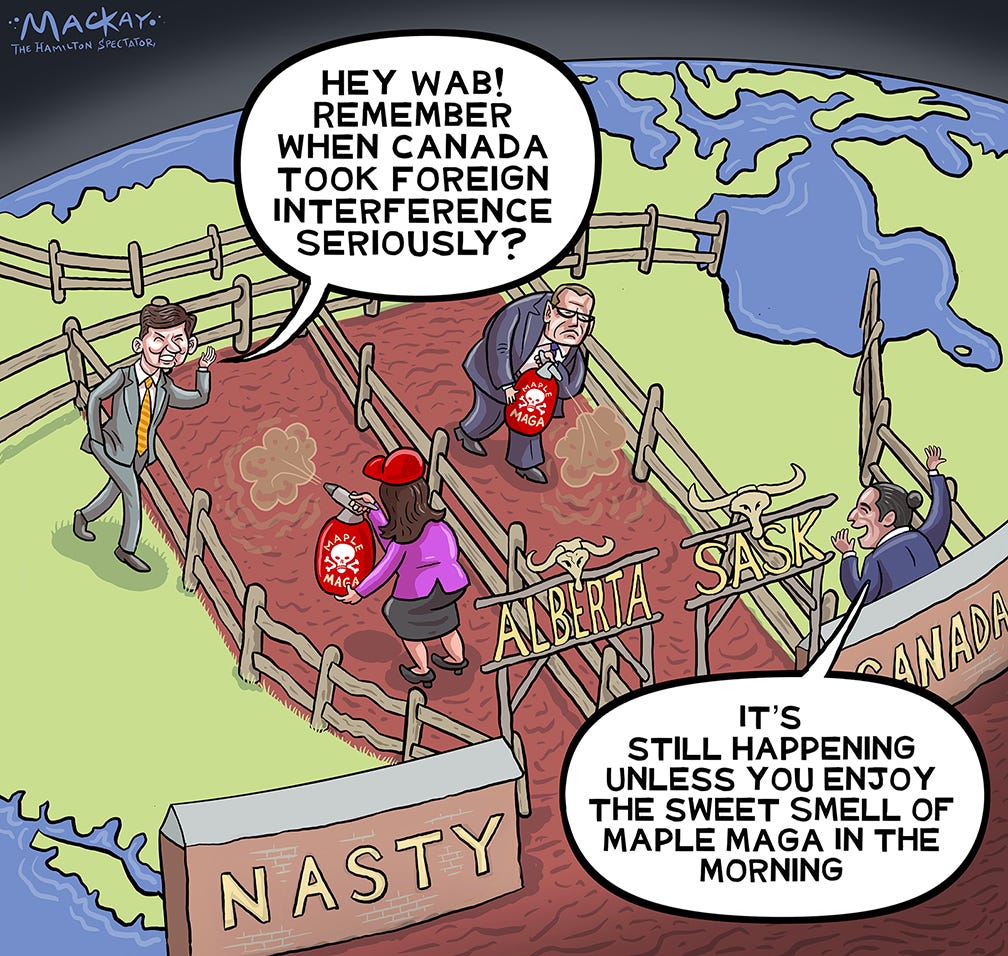
Friday August 14, 2026 — Maple MAGA gas
The U.S. has used a divide-and-conquer approach to drive wedges between provinces, aided by figures such as Danielle Smith and Scott Moe, deepening internal divisions and making past inquiries that excluded the U.S. look out of step. That pressure, combined with tariff threats from Washington, means Ottawa must rethink foreign interference priorities and respond with measured, strategic tools to protect Canadian unity and interests.
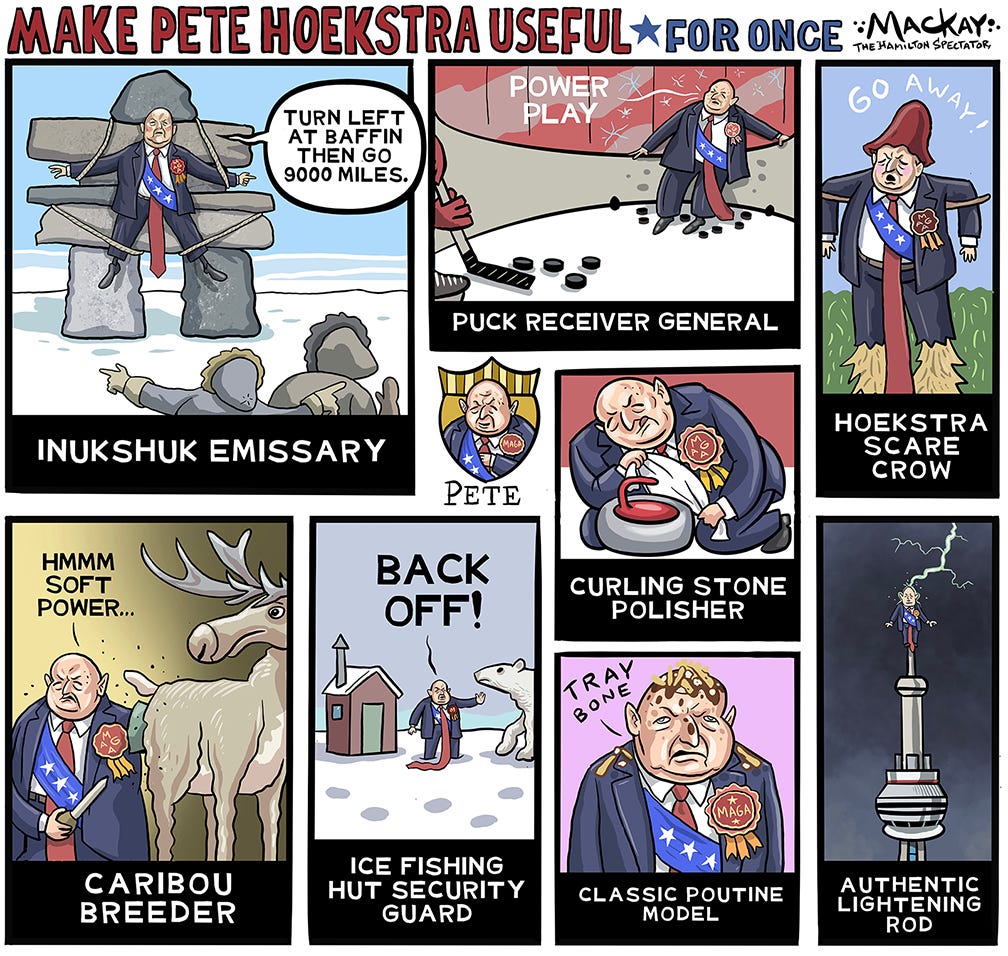
Saturday August 15, 2026 — Hoekstra Halfwit
A petition against U.S. ambassador Pete Hoekstra shows wide Canadian anger at his undiplomatic behaviour. Kicking him out would satisfy that anger but could spark dangerous diplomatic trouble. Preferable alternatives are non-escalatory and signal displeasure without severing ties: symbolic censure, clearer parliamentary oversight, and greater transparency around foreign-influence activity. Satire and public mockery help people vent; Ottawa should focus on measured steps that protect Canada’s interests while avoiding escalation. My editors balked at the inclusion of the actual lightening bolt.
So in a nutshell, it’s big week to come for Canada.
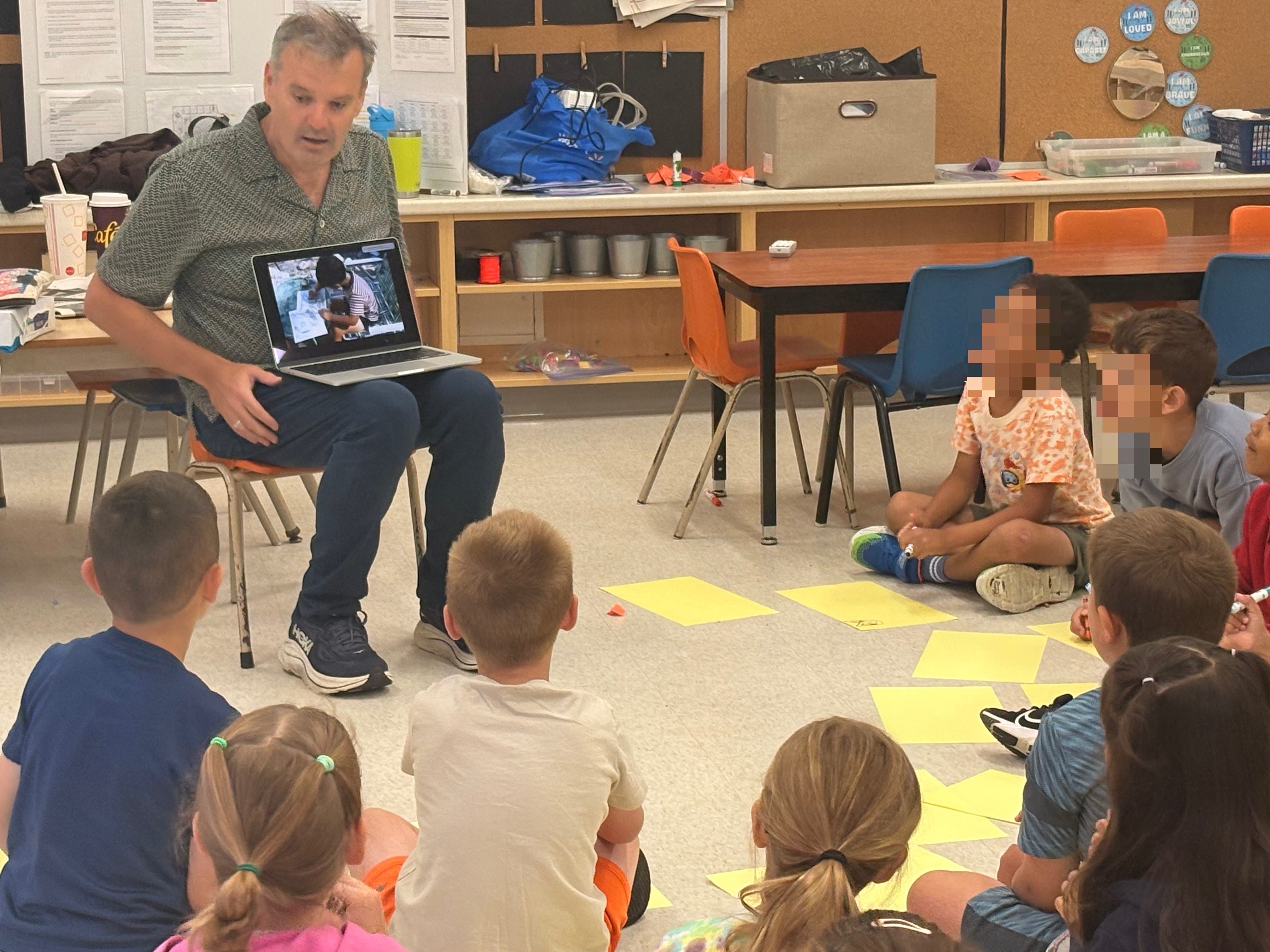
In other news, I was delighted to give a couple of cartooning workshops at a summer day camp this past week. One of the saddest comments I hear from adults is, “I can’t draw.” What’s strange is that people don’t openly utter “I can’t swim,” “I can’t drive” or “I can’t cook” without shame, but “I can’t draw” is often said with a little pride. The group I was with ranged from ages 7 to 11; none of them declared “I can’t draw.” Instead, they were eager to draw - bursting with imagination and creativity. I worry about technology shading that natural impulse, but every line a child doodles is a neural connection being forged: strengthening motor control, spatial reasoning, and critical thinking. Cultivate that passion. It won’t doom anyone to seclusion or destitution; it’s a direct investment in cognitive and emotional development. And it’s not too late for adults who admit to not being able to draw - pick up a pencil. Drawing is good for you. I leave you with this enhanced clip of me in my early career as an editorial cartoonist c1974:
The Graeme Gallery offers a weekly review of news through my editorial cartoons, delivered free via email every Saturday. I’ve been the editorial cartoonist at the Hamilton Spectator since 1997, with work also appearing in the Toronto Star. While I remain committed to print, platforms like Substack allow me to share my work online if needed. I invest deeply in these posts, driven by a long-standing passion for current events. Thank you for subscribing, and for your support—please share with others and consider subscribing, in case you haven’t.
© 2026 Graeme MacKay. All rights reserved. Reproduction requires permission. MacKaycartoons.net
No posts
Comments
Nothing yet. Say the first thing.
Sign in to join the conversation.