
Hello Fellow Quantum Dreamers,
I cannot help but plant things.
Wherever I have lived — and we have lived in a few places — there has always been a garden. From Mendocino, Fremont, & Nevada City to Las Vegas, and then Nixon, Nevada and back again, just like Frodo. Now here, on the California side of the Sierra Nevada mountains once more, in the Truckee/Tahoe Watershed, where the pine needles are thick, the wildlife is bold, the air is clean, and the warm season is gloriously, brutally short.
This is not a story that began twelve months ago. It began over seven years ago, when the vision of a bio-regional learning center was still mostly a feeling — a knowing that the land, the plants, and the people needed to be brought back into relationship with each other. We have been building toward it ever since, in every location, in every season, with whatever was available.
When last I wrote to you about this project, I shared that vision. Since then, we have found a place to begin bringing it to life. Not the permanent site. Not the full build. A living demonstration — modest in budget, fierce in intention — begun on April 28th, 2025, with a conservative budget, salvaged materials, the TARDIS, and the same philosophy that has guided every garden we have ever planted.
A street side patch in Fremont, a garden in Nevada City. A greenhouse in Las Vegas. A garden in Nixon. And now this — our most intentional demonstration yet, on a California mountainside above 5,000 feet, with a limited budget, a salvaged greenhouse, a tiny trailer we call the TARDIS. The same philosophy has guided every garden we have ever planted. All of it built while living in our 24-foot RV.
The Resiliency Quest was born from exactly this — the daily practice of growing something real from uncertain ground. If you've been following along, you already know what I mean.
Start where you are. Use what you have. Grow wild together.
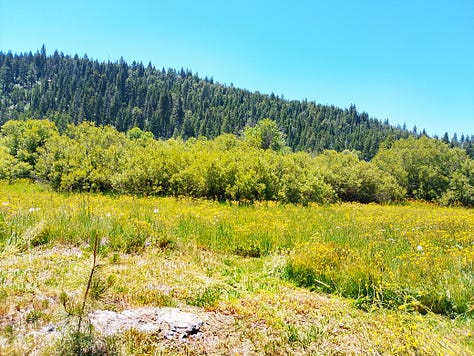
We chose California deliberately. After years of navigating the heat and conditions of Nevada, the Sierra foothills called us back. The climate, the community, the watershed, the medicine plants growing wild along the roadsides — this felt like the right soil for what we are building. Not the permanent site. Not the full vision. A living demonstration. A proof of concept grown from the ground up.
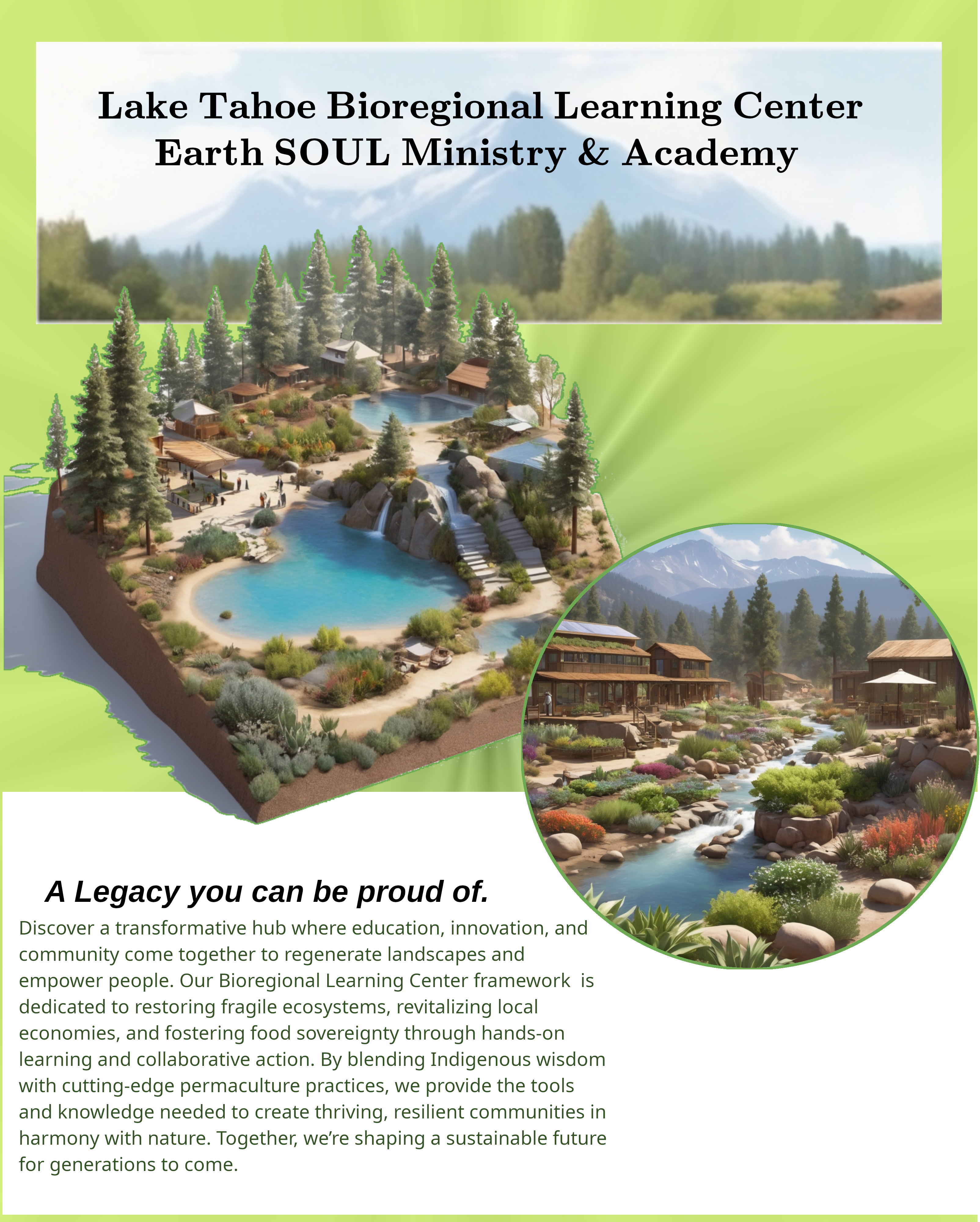
What follows is an honest account of what that actually looks like — in five steps, across one mountain season, with everything the land had to teach us.
Step 1: Discovery and Analysis
The first task in any real project is not building. It is listening.
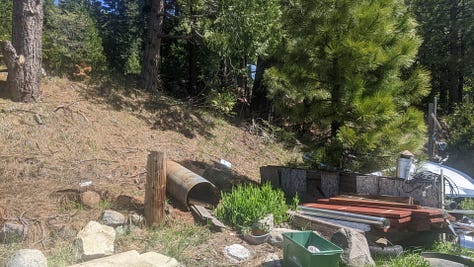
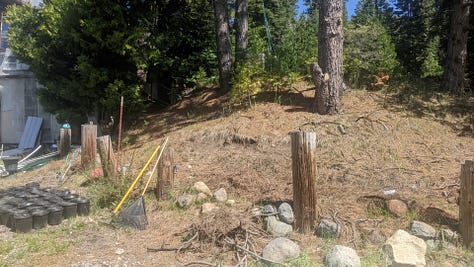
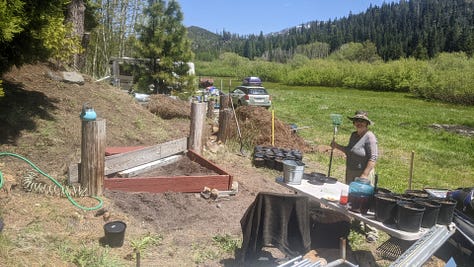
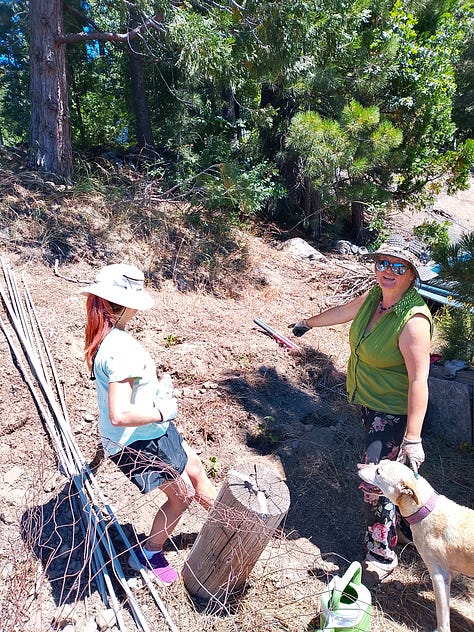
We walked the land. Assessed the terrain, the light, the drainage, the existing plant relationships. We cleared years of accumulated garbage and scraps left by others — sorting as we went, because in our methodology, nothing is waste until you decide it is. Many of those scraps became part of the build itself. This is what we call up-cycling. Not a trend. A practice. A way of seeing.
Step 2: Designing and Wire-Framing
Once the land had told us what it needed, we began preparing for plantation. This phase had more moving parts than most people imagine.
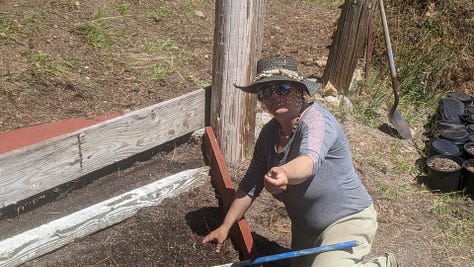
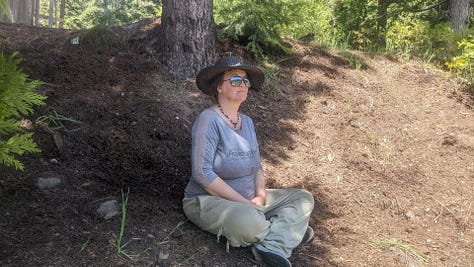
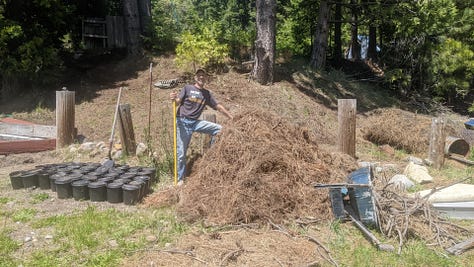
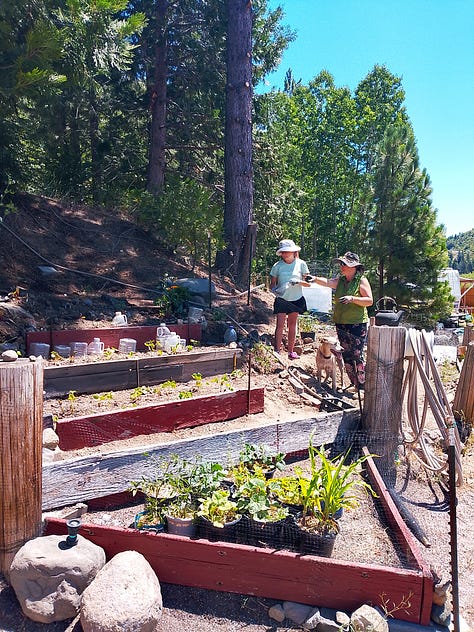
Raking years of pine needles from the mountainside. Starting seeds from scratch. Sourcing starts from local growers. Discovering wild fungus already threading through the soil — a sign of mycorrhizal health that told us the land was already trying to meet us halfway. Collecting and cleaning used pots. Clearing overgrown areas. Building planter boxes and terraces by hand. Plotting paths. Identifying future greenhouse locations.
We had our hands full. We still do. And we would not have it any other way.
Step 3: Launch and Deployment
We built our first greenhouse from what we had.
A 10’ x 10’ square tent frame. Six tin poles. Two pieces of wooden fencing salvaged from our time in Las Vegas. A little ingenuity, some sheet plastic, and hay bales to seal the base. It is not glamorous. It works. Inside it, our chard, kale, tomatoes, and pepper plants found enough warmth and shelter to grow.
The forest, however, had other ideas.
Animals are everywhere here. When we began planting seeds directly into the ground, many were consumed before they had a chance to sprout. We did not take this as a sign to stop. We adapted — rodent-proofing our most sensitive crops, choosing varieties the wildlife tends to ignore, learning which plants could defend themselves and which ones needed our protection.
This is one of the fundamental lessons of growing at elevation above 3,000 feet. The warm season is shorter than you expect. Frost can arrive without much warning. Where you plant, what you plant, and how you protect it determines everything about what you will have come harvest time. The mountain teaches you to think ahead.
Step 4: Harvest, Promotion and Distribution
We began harvesting kale, chard, and herbs in August.
The yield was more modest than we had hoped. But it was real, and it was ours, and we shared it — with neighbors, with people passing through, with anyone who wanted fresh food grown with intention in the Sierra foothills. That sharing is not separate from the mission. It is the mission.
Then September arrived with a surprise.
A hailstorm — nickel-sized stones — came through and knocked many of our tomatoes from the vine before they had ripened. We stood in the aftermath and made a decision: we would save what we could, build shelter for what remained, and keep going. That decision led directly to Step 5.
In the meantime, the forest kept giving. A few wild apple trees just down the road had fruit waiting. We collected them. As a baker, I find it almost impossible not to turn a good harvest into something you can share at a table. Spiced apple cider pie. Sourdough — I started a new starter this season. Grape-Elderberry Jam, made from wild-harvested grapes and elderberries. I also brought canned California olives I had harvested while living in North Las Vegas. They are delightful — a little piece of one chapter carried into the next.
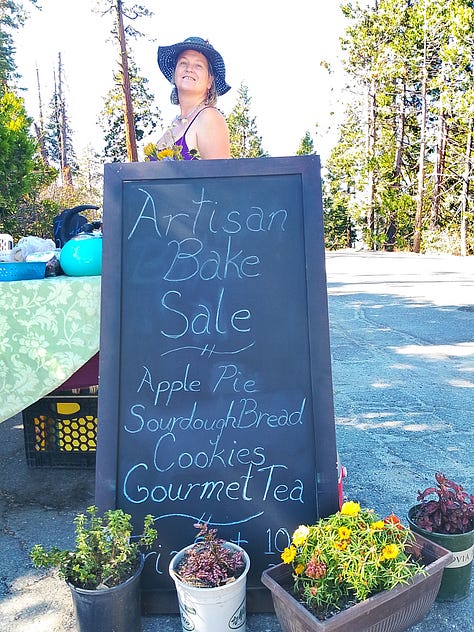
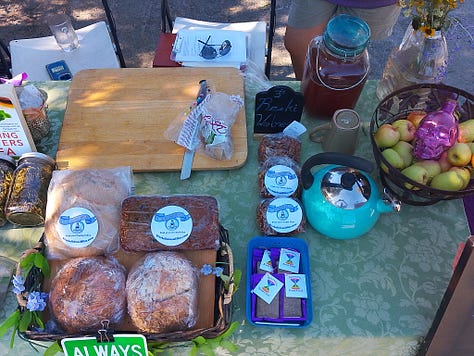
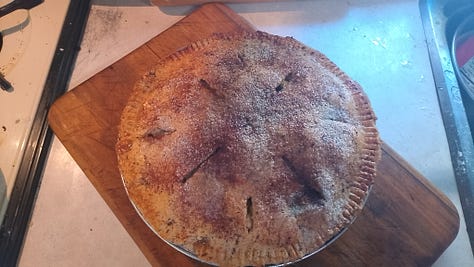
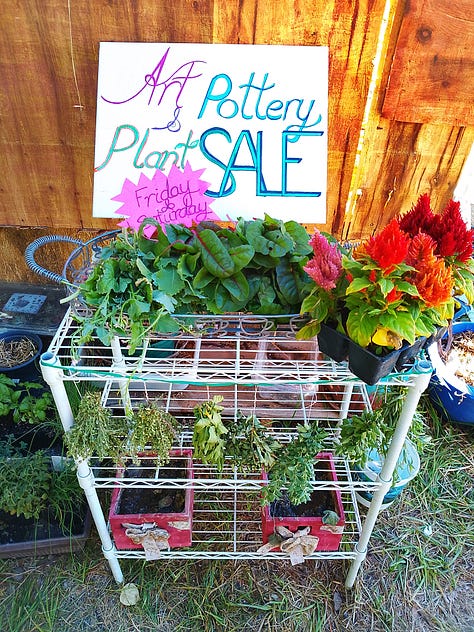
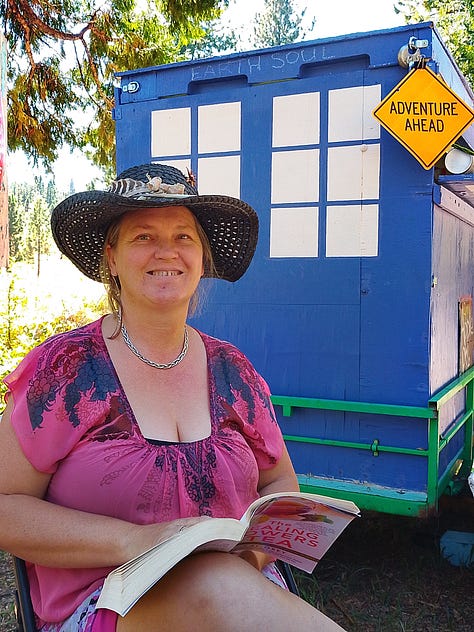
The TARDIS — our small trailer and mobile apothecary — has been parked on the street above our driveway on weekend mornings, with a table set up and items from our wild-harvesting adventures available for anyone who stopped. The community has been warm and curious. We are rebuilding the TARDIS now with a larger mobile apothecary in mind, because the vision for what it can carry has grown.
We would love for you to visit. We are close to I-80. Come sit with us. Have a cup of chai. Try the sourdough with Grape-Elderberry Jam. Watch the fall light move through the pines.
Step 5: Winterizing
Winter in the Sierra Nevada is not something you negotiate with.
You prepare, or it prepares you.
Living close to the river gave us an unexpected resource — green willow branches, flexible and strong, perfect for wild-crafting into greenhouse frames. We cut them, bent them into arcs, and covered the structures with plastic sheeting. When we remembered to cover the crops before a storm moved in, it worked. That “when” became one of our most important lessons.
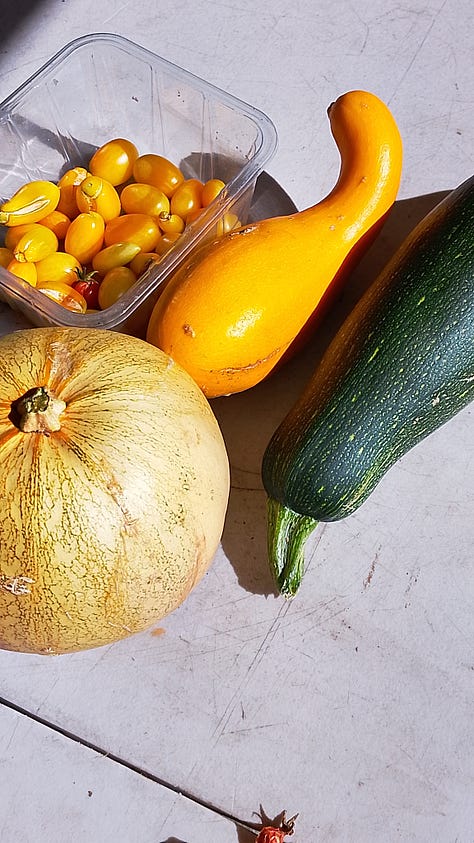
The hailstorm in early September was our first real signal that the season was turning. Nickel-sized hail. We moved quickly — erecting shelter zones for the surviving plants, prioritizing what still had a chance. By the time we were done we had managed to harvest squash, tomatoes, chard, lettuce, parsley, kale, herbs, and a cucumber or two. Not everything we planted. Enough to matter.
Herbalicious Bliss tea and product sales have been the primary funding source for this entire project. Every purchase has been a direct contribution to what is being built here — not abstractly, but literally. The supplies, the seeds, the plastic sheeting, the hay bales. This is what a community-funded demonstration looks like in practice.
We survived the winter in a small RV. Minimal casualties, as we like to say. And we have been looking — since the beginning of this project — for a more temperate location with more space to build the full vision. That search continues. So does the building.
The willow branches are waiting. There is always more to do. We would not have it any other way.
Part 2 coming soon — the snowstorm that tested everything, and what it taught us about resilience that no curriculum could.
Join us for a cup of chai and a slice of spiced apple cider pie. We're close to I-80. The fall seed swap is coming. Find the date here:
Visit the website and sign up for one of the up-coming events. We are considering hosting a fall gathering and seed swap event which will be listed in the events section of the site.
Comments
Nothing yet. Say the first thing.
Sign in to join the conversation.