
I spent nearly 9 years of my life breastfeeding or being pregnant. Both of which interfere with your hormones significantly (don’t even get me started with perimenopause - that’s for another day). I remember having a telehealth visit with a perinatal “expert” in psychology after my 4th and telling her about my intrusive thoughts, anxiety and depression. It took me 4 visits to know that we weren’t going to “click” and I needed to find someone else but because of how busy life is, I never did.
Watching Lindsay Clancy’s trial has unlocked so many feelings that were brushed under the rug. We are told that we are “so amazing” for continuously doing it ALL but never told that we don’t NEED to. We are never told how important building a community is. I cannot believe that this trial is unfolding on the internet like this and it has been very difficult to watch. One thing is very apparent to me from watching this trial and it’s that she deeply wanted to be an amazing mother. She was constantly trying to get the help she desperately needed and was failed time and time again.
All of this has me (again) thinking of what postpartum care looks like here in the United States. Postpartum care in the United States has historically been organized around a single comprehensive visit at approximately 6 weeks. The UK, Netherland, Sweden and France for example provide multiple scheduled contacts, routine midwife home visits in the first days to weeks, and universal coverage untied to employment or insurance status.
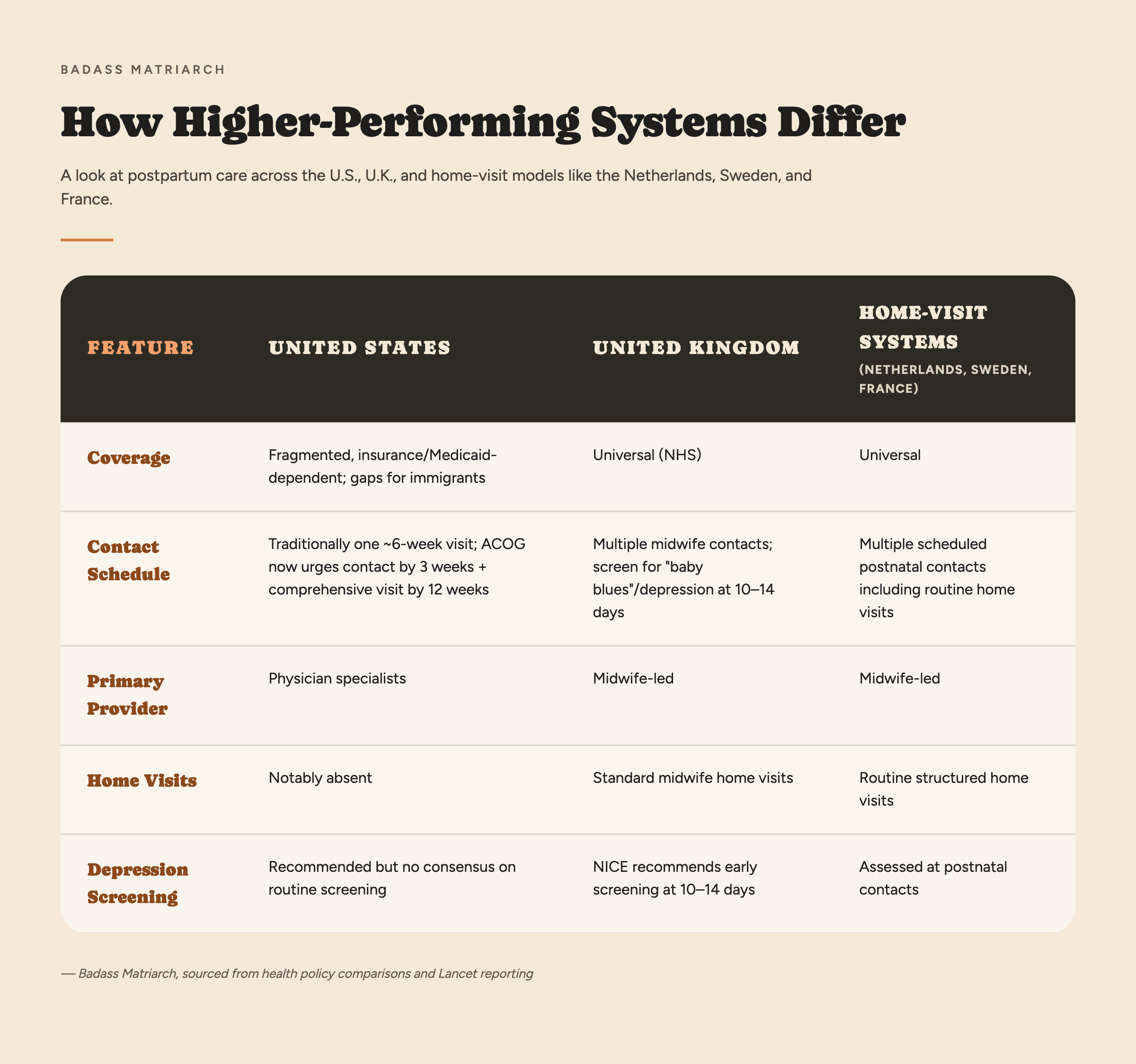
The American College of Obstetricians and Gynecologists (ACOG) states that perinatal mental health conditions (depression, anxiety disorders, and bipolar disorder) affect more than 1 in 5 perinatal individuals, making them among the most common complications of pregnancy and the first postpartum year.
Depression: Perinatal depression affects approximately 1 in 7 women (14%), with onset before pregnancy in 27%, during pregnancy in 33%, and postpartum in 40%.
Anxiety: Pregnant patients tend to be more susceptible to anxiety than postpartum patients, and perinatal anxiety is a strong predictor of perinatal depression. 28% of women with perinatal anxiety have comorbid depression, and among women with perinatal depression, 83% of their comorbid disorders are anxiety disorders.
Intrusive thoughts: ACOG emphasizes that unwanted or intrusive thoughts—including thoughts of harming the infant—are very common and can occur in the absence of any mental health condition, though they are also associated with perinatal depression, anxiety, and OCD.
There is a rising burden of perinatal disorders. Between 2006 and 2015, perinatal mood and anxiety disorders rose from 18.4 to 40.4 per 1,000 deliveries, and severe mental illness rose from 4.2 to 8.1 per 1,000 deliveries.
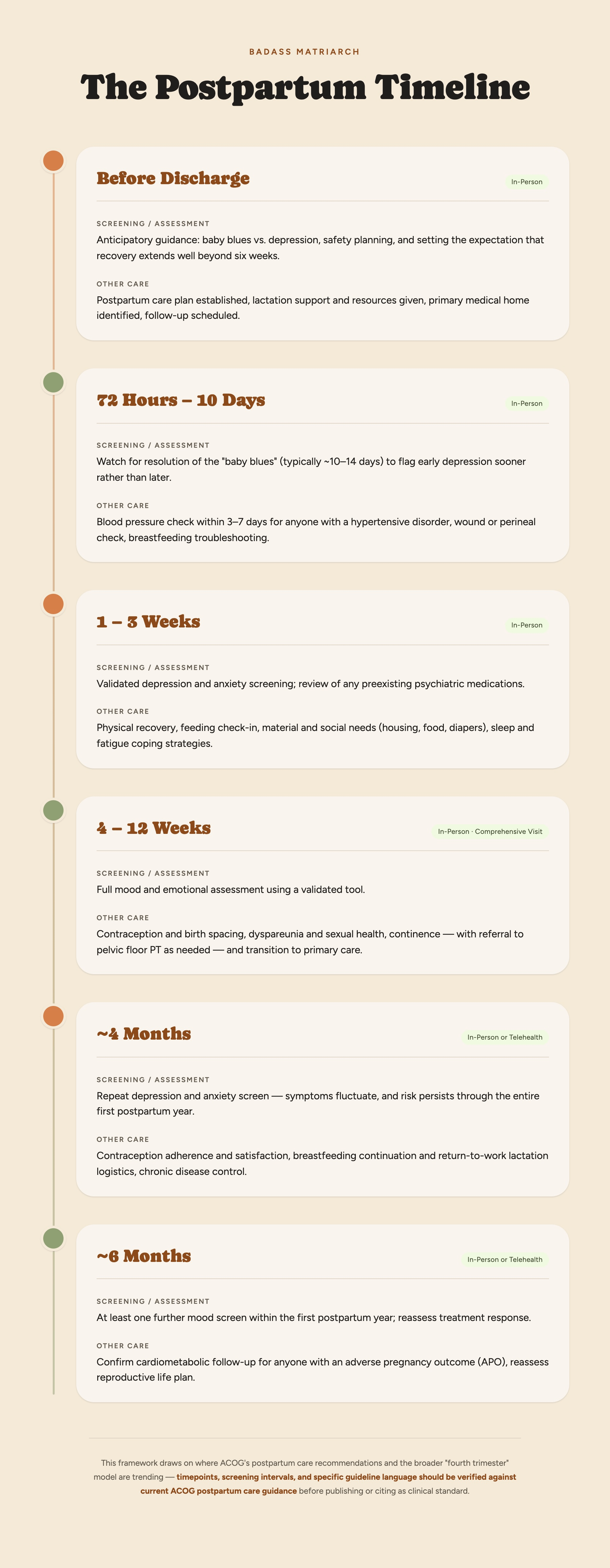
As for maternal mental health testing here in the U.S., some states have screening mandates while others do not. ACOG recommends screening all patients for both depression and anxiety using validated tools (EPDS, PHQ-9, GAD-7) at the initial prenatal visit, again later in pregnancy, and postpartum, with a required mood/emotional-wellbeing assessment at the comprehensive postpartum visit (recommended within 12 weeks of birth).
I can tell you that I was not screened once while I was pregnant. I do remember filling out a form at my 6 week postpartum visit for at least two of my pregnancies. After filling out the form, my provider took a look at it and asked no follow-up questions whatsoever. I realize that this is just my experience but I bet that it sounds similar to some of you as well…..
If I had all the power in the world to change what postpartum care is like for women here in the United States, this is what I would do:
Looking back, I cannot believe the lack of care I received. Breastfeeding felt close to impossible and I think I cried for the first four months, daily, with each of my kids, just trying to figure it out. With every baby I had a different issue — nipple fissures, “breastfeeding failure,” production issues, clogged ducts so painful I’d sit in the shower and cry into my hands. It all felt very lonely and impossible.
Here’s the part that still makes me angry: I am a medical provider. I have spent more than 18 years in emergency medicine. I know how to navigate a broken system, I know which questions to ask, I know how to advocate for myself in a way most patients don’t. And I still felt completely lost. So what happens to the mother who doesn’t have that background? Who doesn’t know a lactation consultant from a nurse who means well but has no idea what she’s looking at? Who gets sent home 48 hours after major abdominal surgery or a body-altering vaginal delivery with a pamphlet and a phone number nobody answers?
We hand a woman a baby and tell her good luck. We check her blood pressure at six weeks and call it postpartum care. Six weeks. As if the fourth trimester wraps up in a bow the moment insurance stops requiring a follow-up visit.
We need more than a checklist.
We need real follow-up, real lactation support that doesn’t cost a mortgage payment, real mental health screening that isn’t a two-question form you fill out half-asleep in a waiting room, and for goodness sakes, we need pelvic floor physical therapy referrals. We need providers who ask twice, who notice when the answer doesn’t match the eyes. We need to stop treating postpartum care like an afterthought. This is a crisis, happening quietly, in bathrooms and nurseries at 3am, to women who are too exhausted and too ashamed to say it out loud. We need to keep talking about this incessantly until there is change.
Right now, mothers are not getting enough.
We deserve better.
Thanks for reading Badass Matriarch! This post is public so feel free to share it.
Comments
Nothing yet. Say the first thing.
Sign in to join the conversation.