
For more than a decade, America’s central strategy for addressing the opioid crisis was simple: Reduce the supply of prescription opioids.
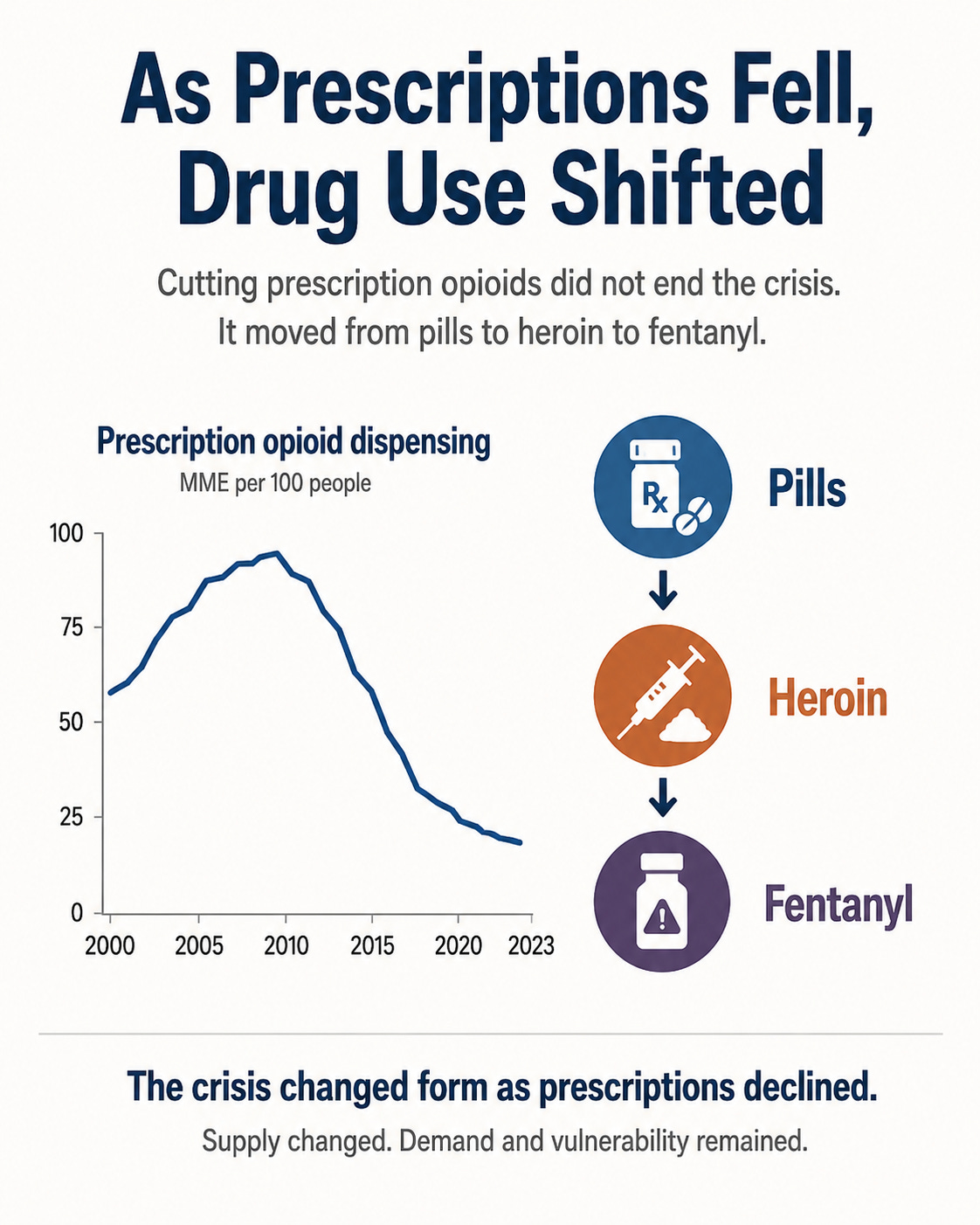
In one narrow sense, the strategy worked. Opioid prescribing fell sharply after its peak. CDC data show that national opioid dispensing declined to 35.4 prescriptions per 100 persons in 2024, far below the peak levels of the early 2010s.
But the overdose crisis did not end.
For years after prescribing declined, overdose deaths continued to rise, driven increasingly by heroin and then illicitly manufactured fentanyl. Even after the encouraging recent decline in overdose deaths, provisional CDC data still estimate 69,973 drug overdose deaths in 2025—nearly 70,000 lives lost in a single year.
That number is lower than the peak, but it remains far above where the country was when prescription opioid prescribing was at its height. In 2012, there were 41,502 drug overdose deaths in the United States.
So the question remains: Why didn’t cutting prescriptions stop the overdose crisis?
The answer is not that supply was irrelevant. Supply mattered. Pharmaceutical marketing mattered. Pill mills mattered. Medical culture changed, and prescribing increased in ways that created harm.
But a supply-only explanation was always too small.
Reducing supply does not reduce demand.
Pain does not disappear because a prescription is denied. Trauma does not resolve because a pill bottle is empty. Despair does not vanish because a physician becomes afraid to prescribe. Poverty, job loss, mental illness, unstable housing, isolation, and untreated pain do not respond to a prescription drug monitoring program.
When the medical supply was reduced, many people did not suddenly become well. Some were helped. Some were protected from unnecessary exposure. But others were abandoned, destabilized, or pushed toward a far more dangerous drug supply.
Pathways
Researchers studying pathways to illicit opioid use have documented how abrupt prescription cut-offs and loss of medical access can drive some people toward street markets, including heroin and fentanyl.
This does not mean every prescribing reduction caused harm. It means that blunt reduction, without care, treatment, tapering support, pain management, and social support, can create a predictable danger: People still seek relief, but now in an illicit market where the dose is unknown and the contents may be lethal.
That is the cruel arithmetic of the fentanyl era.
The crisis did not shrink. It mutated.
A person who once obtained pills from a clinic might later encounter counterfeit pills. A person seeking heroin might receive fentanyl. A person using cocaine or methamphetamine might be exposed to fentanyl without intending to use an opioid at all.
This is why the overdose crisis cannot be understood simply as a story of too many prescriptions. It is also a story of a changing drug supply, worsening social vulnerability, and a healthcare system that often responded to fear with abandonment.
The rise of illicit fentanyl changed the lethality of the crisis. Fentanyl is not just another opioid. Its potency, variability, and presence in counterfeit or contaminated products made accidental overdose far more likely. Supply-side victories against prescription opioids did little to protect people from an illicit market that became more toxic, more unpredictable, and more deadly.
Demand Trumps Supply
The recent decline in overdose deaths is encouraging. It deserves attention. But it should not be misread as proof that cutting prescriptions finally worked. CDC provisional data show a major decline in overdose deaths in 2025 compared with 2024, including opioid-involved deaths. But that improvement occurred years after prescription reductions had already been achieved. It likely reflects multiple factors: changes in the illicit drug supply, expanded naloxone access, shifts in drug use patterns, treatment access, harm reduction, and other local conditions.
In other words, the recent decline should deepen our analysis, not flatten it.
The most important lesson is this: overdose deaths are not driven only by what drugs are available. They are also driven by who is vulnerable, why they are vulnerable, and what supports are available before, during, and after drug use.
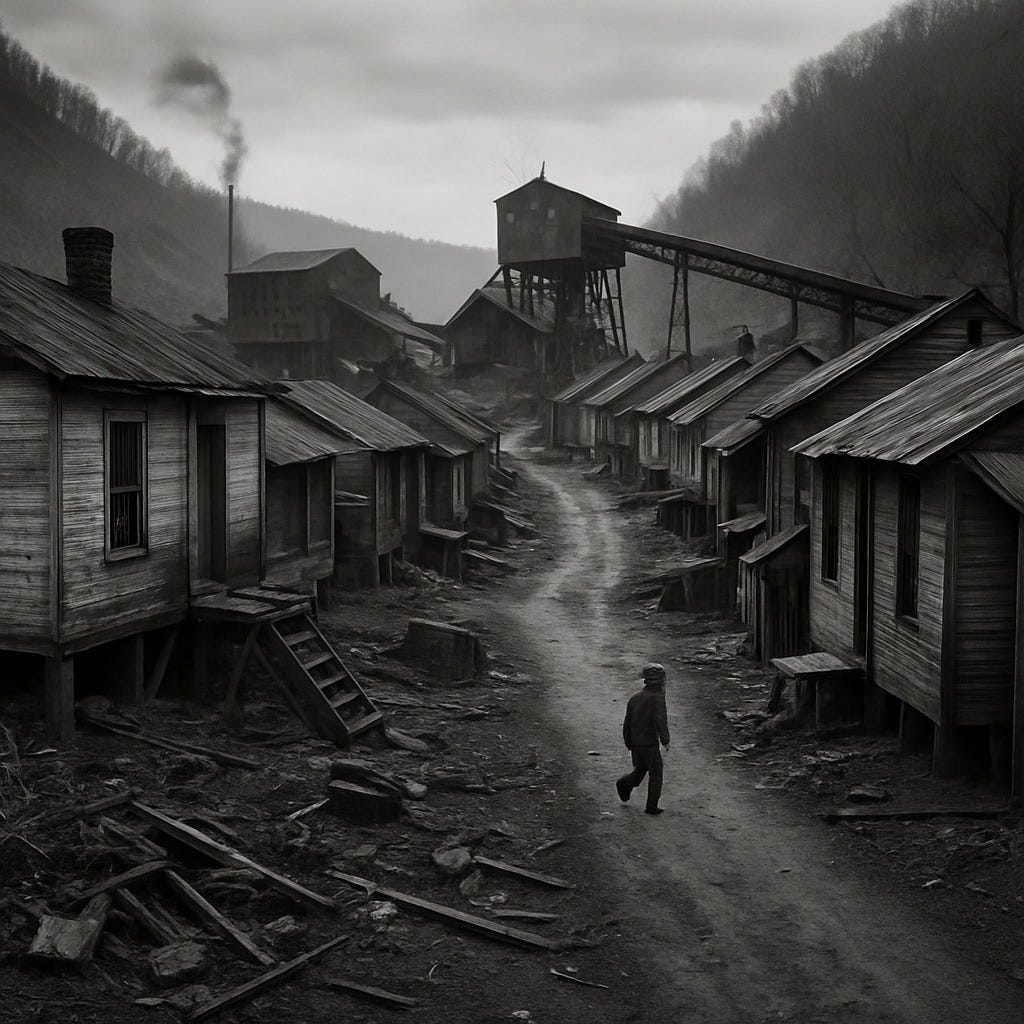
Communities hollowed out by deindustrialization did not suffer only because pills arrived. They suffered because jobs disappeared, social infrastructure eroded, healthcare was fragmented, mental health services were inadequate, and many people were left with pain—physical, emotional, and social—that had no meaningful outlet.
In that environment, drugs can become functional. They can offer temporary relief, energy, sleep, escape, belonging, or simply the ability to get through another day. That does not make drug use safe. It makes it understandable.
And if we refuse to understand demand, we will keep chasing supply from one molecule to the next.
Prescription opioids. Heroin. Fentanyl. Fentanyl mixed with stimulants. Nitazenes. Xylazine. Whatever comes next.
Each new substance will be treated as the crisis, rather than as the latest expression of a deeper crisis.
This is the central failure of the supply-only narrative. It confused the visible object with the underlying condition. It treated opioids as the cause of despair rather than asking why despair had become so widespread and why some communities were so vulnerable when opioids arrived.
None of this absolves pharmaceutical companies, irresponsible prescribers, or pill mills. They played a role. But assigning them the whole story allows policymakers to avoid harder questions.
People in Pain Are Collateral Damage
Why are so many Americans in untreated pain?
Why are evidence-based addiction treatments still inaccessible to many who need them?
Why do we tolerate housing instability, poverty, incarceration, stigma, and social isolation as if they are background conditions rather than active drivers of illness and death?
Why did we respond to chronic pain patients with suspicion rather than care?
And why did we assume that fewer prescriptions would equal fewer overdoses, when the underlying demand for relief remained untouched?
A better response would begin with humility.
Yes, reduce inappropriate prescribing. Yes, stop criminal prescribing and diversion. Yes, monitor risk. Yes, prevent unnecessary exposure.
But do not mistake those steps for a complete strategy.
A real overdose prevention strategy must also expand treatment for opioid use disorder, make naloxone widely available, support harm reduction, improve pain care, strengthen mental health services, address economic instability, and rebuild the social supports that protect people from despair.
Success is not merely the absence of drugs.
It is the presence of care.
It is the presence of housing, treatment, dignity, belonging, and hope.
Until we confront demand with the same intensity we brought to supply, we will continue fighting yesterday’s version of the crisis while tomorrow’s version is already taking shape.
Comments
Nothing yet. Say the first thing.
Sign in to join the conversation.