
Fine for me to say, having grown up in Los Angeles County where there is virtually no weather. What did I know? Orange trees, apricots, nectarines and pomegranates just seemed to pop out of the ground on their own accord and produce lovely stuff. Kids pulled the fruit off and ate it. Grandmas and Aunties baked unforgettable cobblers and pies. Moms made fruit salads year round.
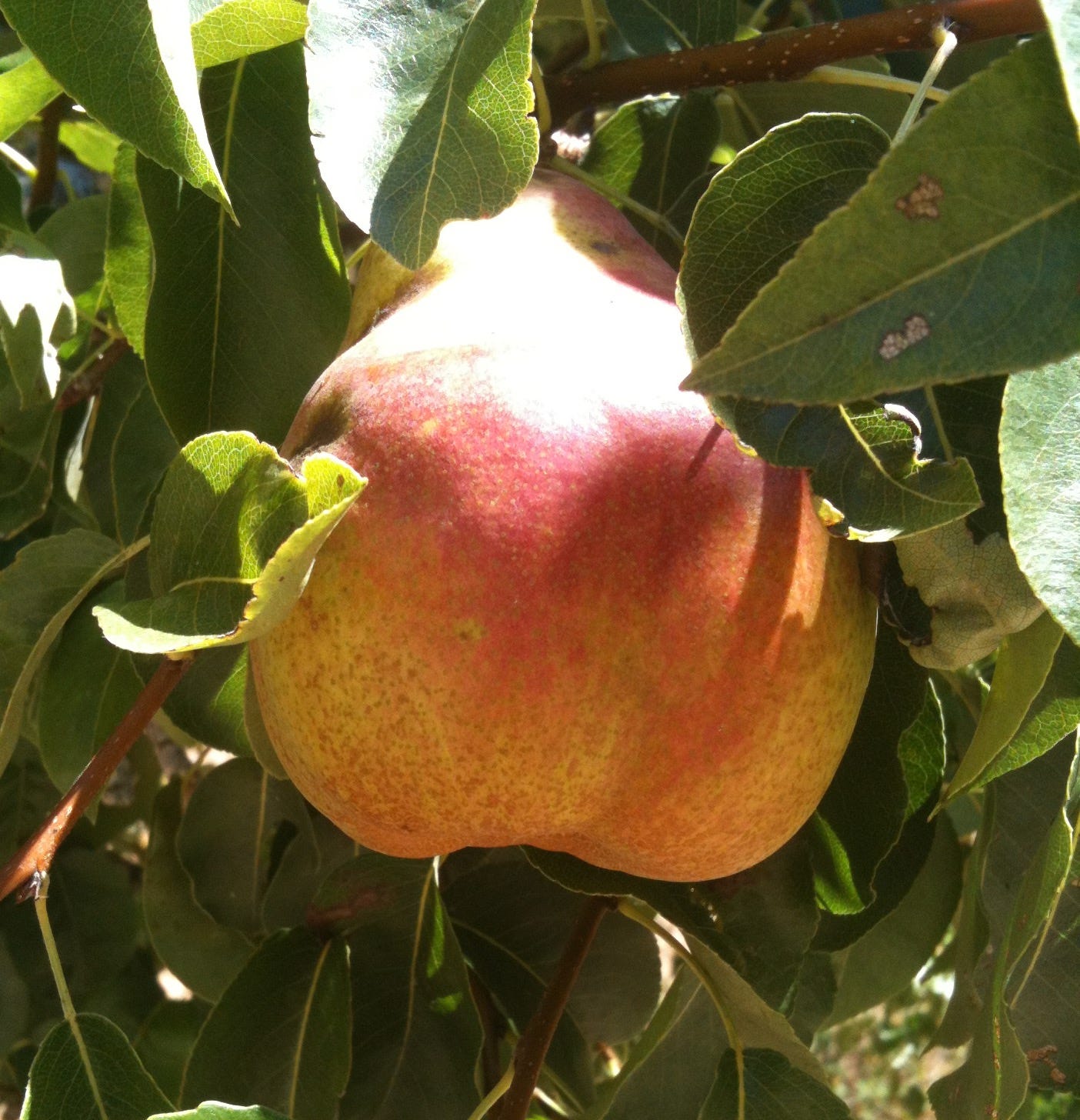
Coming up to Morgan Hill, San Jose and Milpitas to visit relatives during the summer in the fifties and early sixties meant sitting in cherry trees and gorging on the shiny beauties until we could barely walk.
Raising my own kids in San Jose, we had apricots that thrived in spite of us, and in spite of our complete ignorance of what, if anything, we were supposed to be doing for them.
Then Rodger and I fell unreasonably in love with an old money pit of a house on three acres near the coast. Along with the rotting cattle shed and chicken coop, the out-of-control Monterey pines rodent population, came two who-knows-how-old pear trees and three apple trees, also of indeterminate vintage or lineage. This, in addition to wild plums that popped up, literally, like weeds, ranging from sassy young ones to beautifully twisted older specimens, all of which spewed out gorgeous, sweet, multi-colored fruit in early spring.
We learned after a year or two that the birds were way ahead of us in the plum department.
Once the plums ripened — and it happened all at once — birds were everywhere, streaming away, beaks full, as they blew past our windows. Within a day or two, the plums were gone. Those that made it to the ground were appreciated by deer, squirrels, foxes, and who knows who else, because most of that took place at night after the birds finished and were back in their nests.
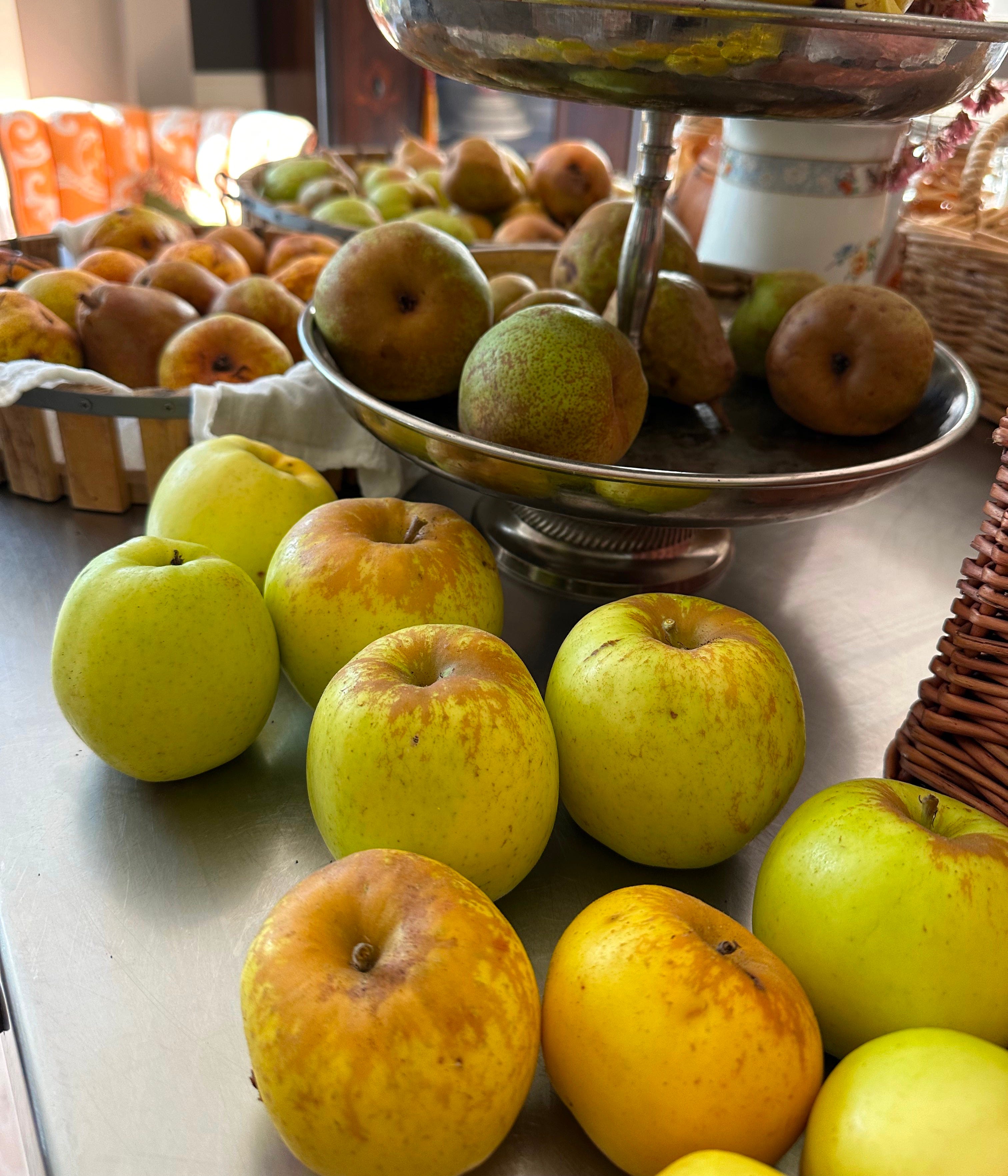
The apples start ripening in August, and the pears in September, too big for the birds to carry away. Those that dropped were pecked and chewed by every variety of critter, but there were plenty of perfect fruits left on the trees for us humans to harvest.
The pears, we learned, were a type grown before they needed to be trucked to market.
They needed to be picked green and ripen inside, where they would turn a bit yellow and become slightly soft and delicate: way too delicate to be shipped anywhere.
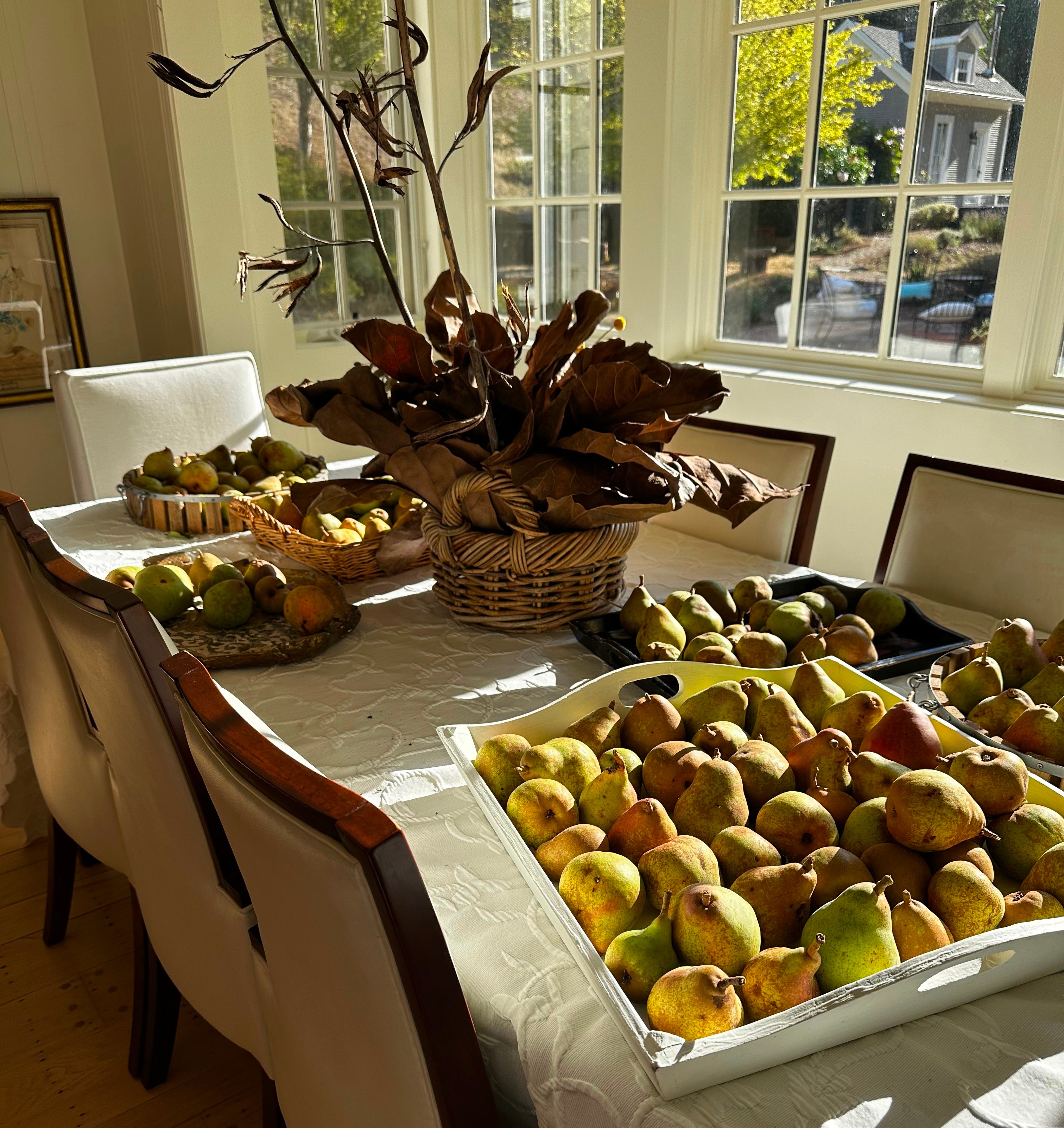
In addition to delicate, they’re the most delicious pears in the universe, I’m sure. Intensely sweet and pear-y, unlike the pears most of us have ever tasted. What kind are they? Hard to say. Something old-timey. We haven’t used any poisons on our place since we moved in 30 years ago, so the pears often have tiny black creatures of some kind around their core that we cut out and eat around. We don’t care, but it’s easy to see why these particular pears would never make it into a Safeway. Someday I’ll look it up, or see an article about it in Mother Earth Magazine, and there will be some non-poisonous way to defeat the little black bugs. But in the meantime, we cut ‘em out and eat around them.
This post is public so feel free to share it.
What do we do with all the eat-me-right-now pears during the 30 days we have them?
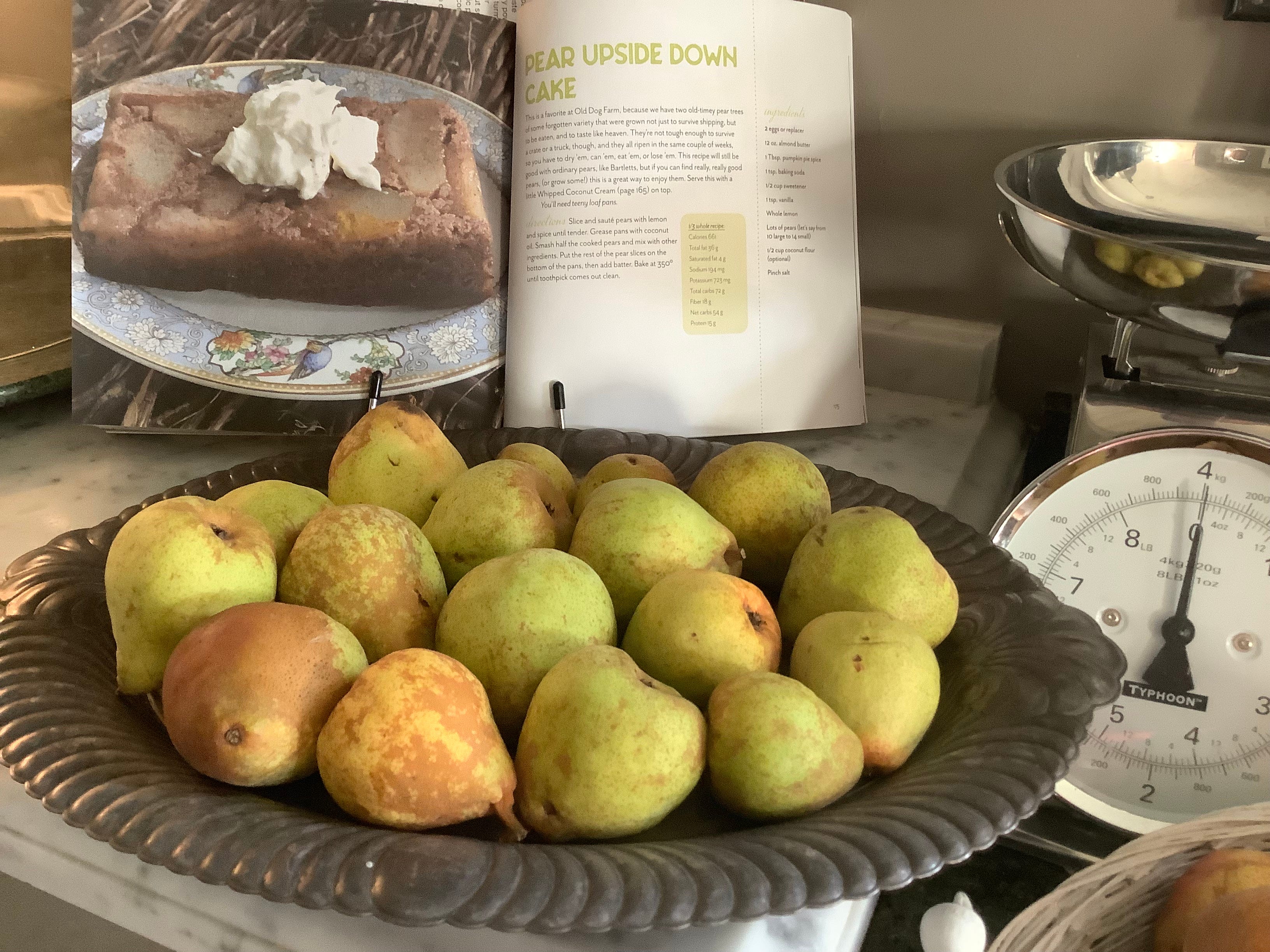
Eat them, of course. Dry some. But because they’re so tender, the apple-coring machine doesn’t work well. I make pear sauce — pears, a teeny bit of lemon, nutmeg — cooked a bit, then frozen. Then there’s Pear Upside Down Cake, pictured here, from “Brownies for Breakfast,” page 175
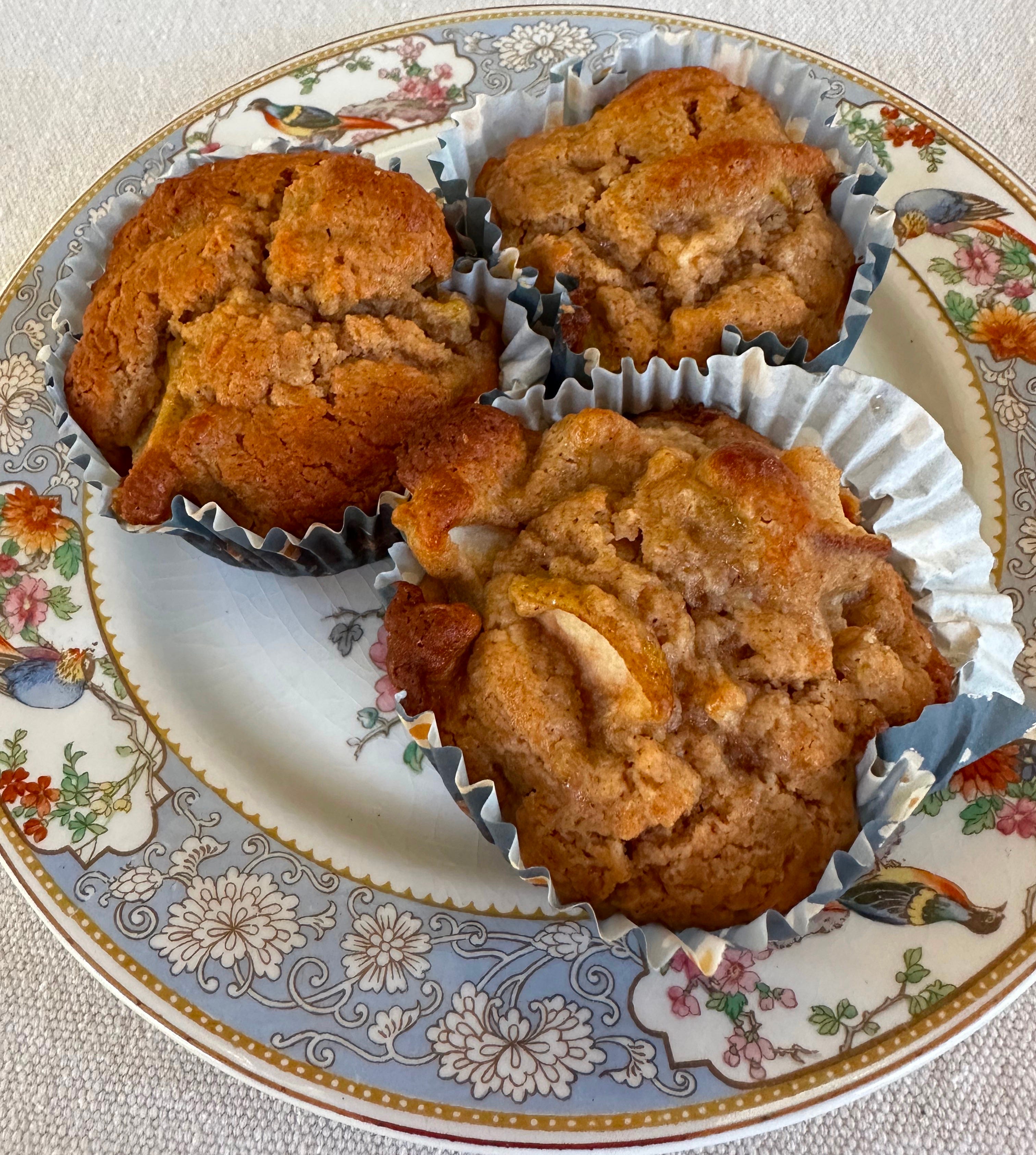
Or howbout this? Pear Cinnamon Muffins, a new creation from my neighbor and pal Aislinn.
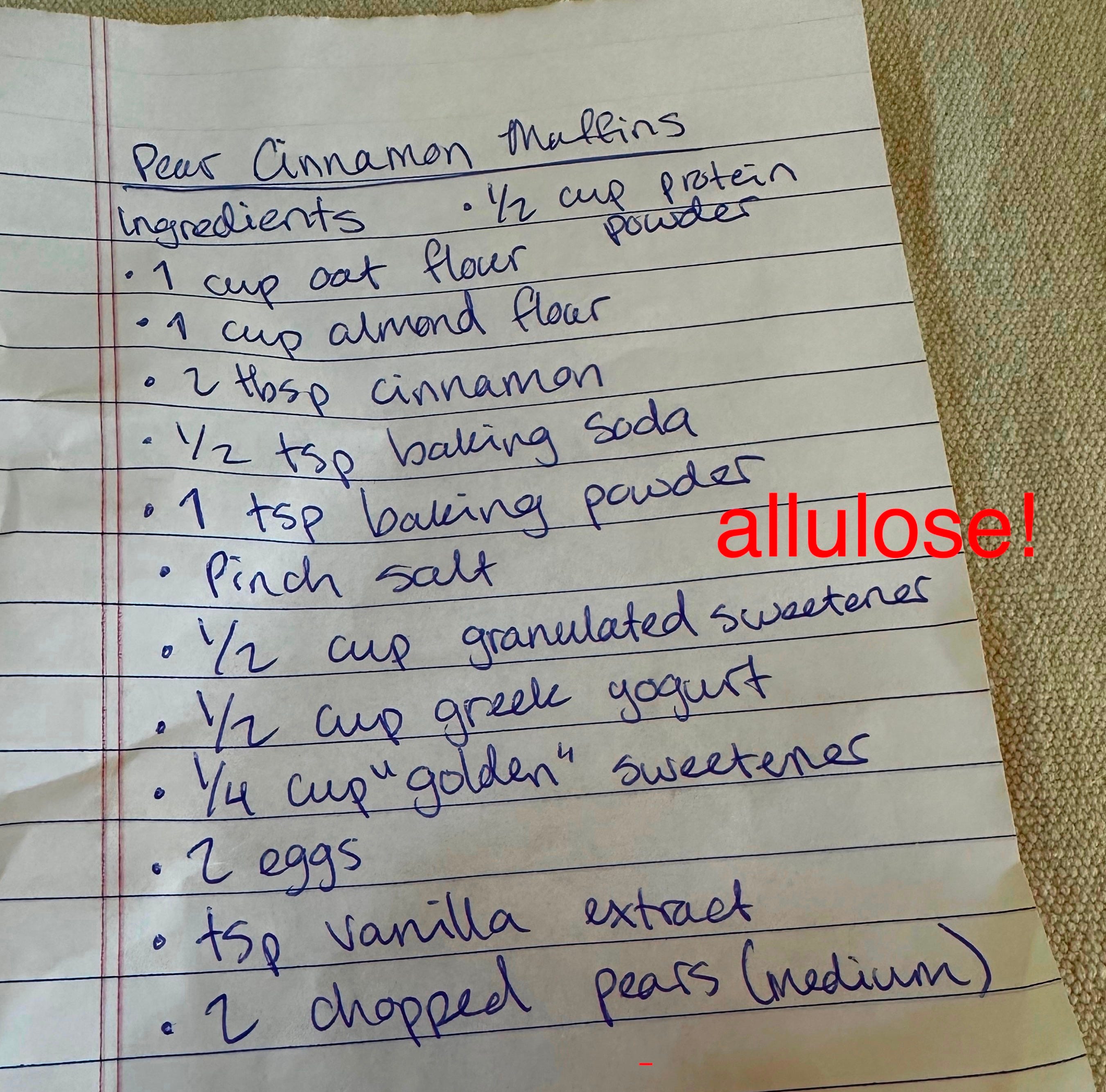
Add pears, mix it up and bake at 350 for 16-18 minutes. Assuming, of course, that you’ve been able to find really good pears.
As far as the allulose is concerned, stand by.
I’ll be talking a lot more about that in coming posts, because I’m beginning to understand that hardly anybody knows about it, and it’s literally a life saver. In the meantime, check out jacasugar.com for more info. I’ll post my recent podcast with Jacasugar founder Pete Ferrari in my next SubStack.
So what do we actually do to grow our pears?
To keep our old pear trees happy and productive? We prune them once a year, put some water on them if we think about it when the weather is dry, and feed them some kind of organic fruit tree food if and when we find some. I also stand out there with them and, yes, talk to them. I tell them how happy and lucky and grateful we are to have the most delicious pears in the universe from the most beautiful old trees. I thank them for their blossoms, and their shade, and for the way they feed so many critters. Including us, and our pals.
Please let me know how you’re doing, what you’d like to see more of, if anything. Leave a “like” to feed the algorithm; it really helps. And check out this recent podcast with Christina Daves: big fun and some good info!
Comments
Nothing yet. Say the first thing.
Sign in to join the conversation.