
Modern life comes full of uncertainty and fluidity.
Americans once spent their entire careers with one company. Now, it’s much more common to change jobs every 2-3 years. We used to enter the world, live, and die in one town. Now, you’d probably be hard-pressed to find someone who hasn’t spent at least a couple of years living in a state different from the one they were raised in. We think we’re going to dedicate our lives to one endeavor, only to see that plan vanish in the blink of an eye, whether because of technology, disaster, or simply a new set of options laid before us.
How can anyone live a life dedicated to one purpose when the circumstances keep changing?
A concept from constitutional law called “Equilibrium Adjustment” might help.
I came across this concept recently, reading “The Digital Fourth Amendment” by Orin Kerr, a constitutional scholar and professor at Stanford Law School.
His book examines how courts interpret Fourth Amendment protections against unreasonable searches and seizures in the context of our rapidly changing technological age. Previous rulings relied on concepts of physical intrusion to determine where the government needed a warrant. But because the digital world has changed how we store information, applying those same rules can lead to significant government overreach or situations where it seems no rules apply at all.
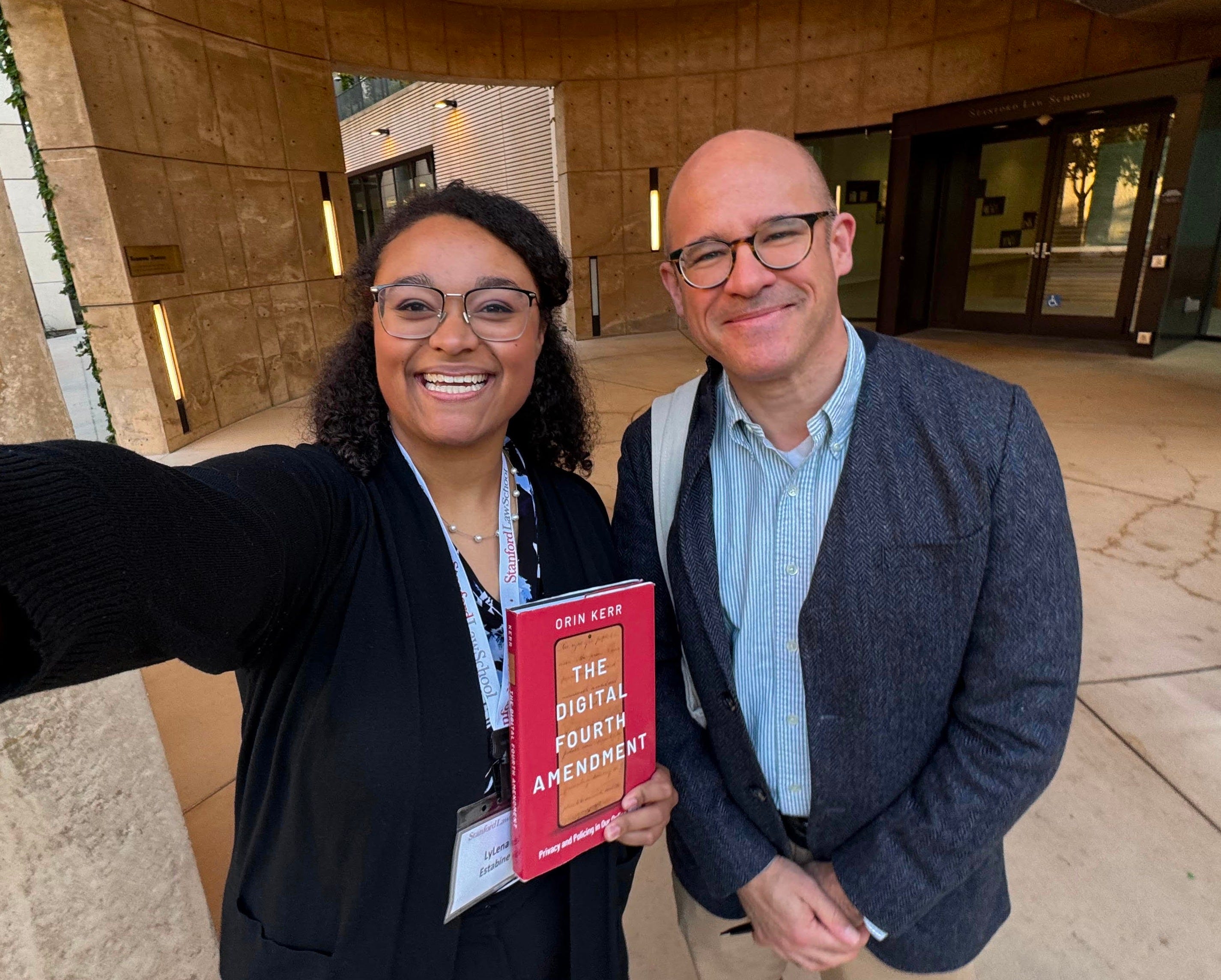
How does Kerr recommend courts defend protections in this context? By applying what he calls an “Equilibrium Adjustment.”
The details of how this process relates to the Fourth Amendment are a bit complicated (I highly recommend his book if you’re interested in exploring it), but the underlying idea is relatively simple. It requires the courts to ask what rules are needed to maintain the Fourth Amendment's intended protection in new circumstances and to apply those rules accordingly. This way, original protections can continue even when the facts become different.
Now you may be thinking, “That’s all well and good, but what does that have to do with my life?”
Well, as I was reading this book, it struck me that the key to living a purposeful life in the midst of uncertainty and major life changes is essentially applying the equilibrium adjustment to your own life.
What do you feel the deeper purpose of your life is? This shouldn’t be constrained by your title, city, friends, or status. What is the deeper through line of all that you were made to do?
This could be summarized as your life’s “why,” and I believe it stays the same through every season of your life if you are acting in alignment with your calling. Even when the circumstances change, if you take the time to get clear on your life’s “why,” you will feel connected to something higher and find meaning in every chapter.
For example, my life’s “why” is empowering people to live in freedom, purpose, and meaning. That has looked very different at various points in my life, but it has never really changed.
When I was in high school, it looked like going to libraries and elementary schools to give motivational speeches to young people about how to tell their stories. When I was in college, it included producing an encouraging musical about what it means to live in God’s love. As a policy analyst, I advocate for laws that would allow people in Chicago and Illinois to live with more freedom. As a social media creator and writer, I offer encouragement geared toward purpose and meaning.
At every turn in my life, I have felt most aligned with my mission when I have applied the equilibrium adjustment. In essence, I ask:
How does this next stage of my life connect to my life’s why?
What opportunities within my new circumstances give me the chance to live out that purpose?
How do I need to shift the way I operate in this context so that it’s clearly connected with that purpose?
These are questions I’ll be asking myself over the next six months as I transition to law school and a new neighborhood (if not a new state and time zone entirely). While I don’t know exactly where I will be or what I will do, I know that as long as I keep realigning my actions with that internal “why” compass, I will be fulfilled and on the track to leading a purposeful life.

When your circumstances shift, it’s easy to think you’re starting from scratch. But just as that’s not true in Constitutional Law, it’s also not true in your life.
All the work that you’ve done to get to know who you are and what you stand for in one season doesn’t just disappear. Instead of asking “what is my new purpose here?” an equilibrium adjustment framework asks “what am I called to do here to honor what my purpose has always been?”
That way, when titles, cities, relationships, income, and more change, you always have a fixed point around which the rest can get organized.
So the next time you face a season of transition, take comfort in knowing you don’t have to start all over.
You just need to make an adjustment.
No posts
Comments
Nothing yet. Say the first thing.
Sign in to join the conversation.