
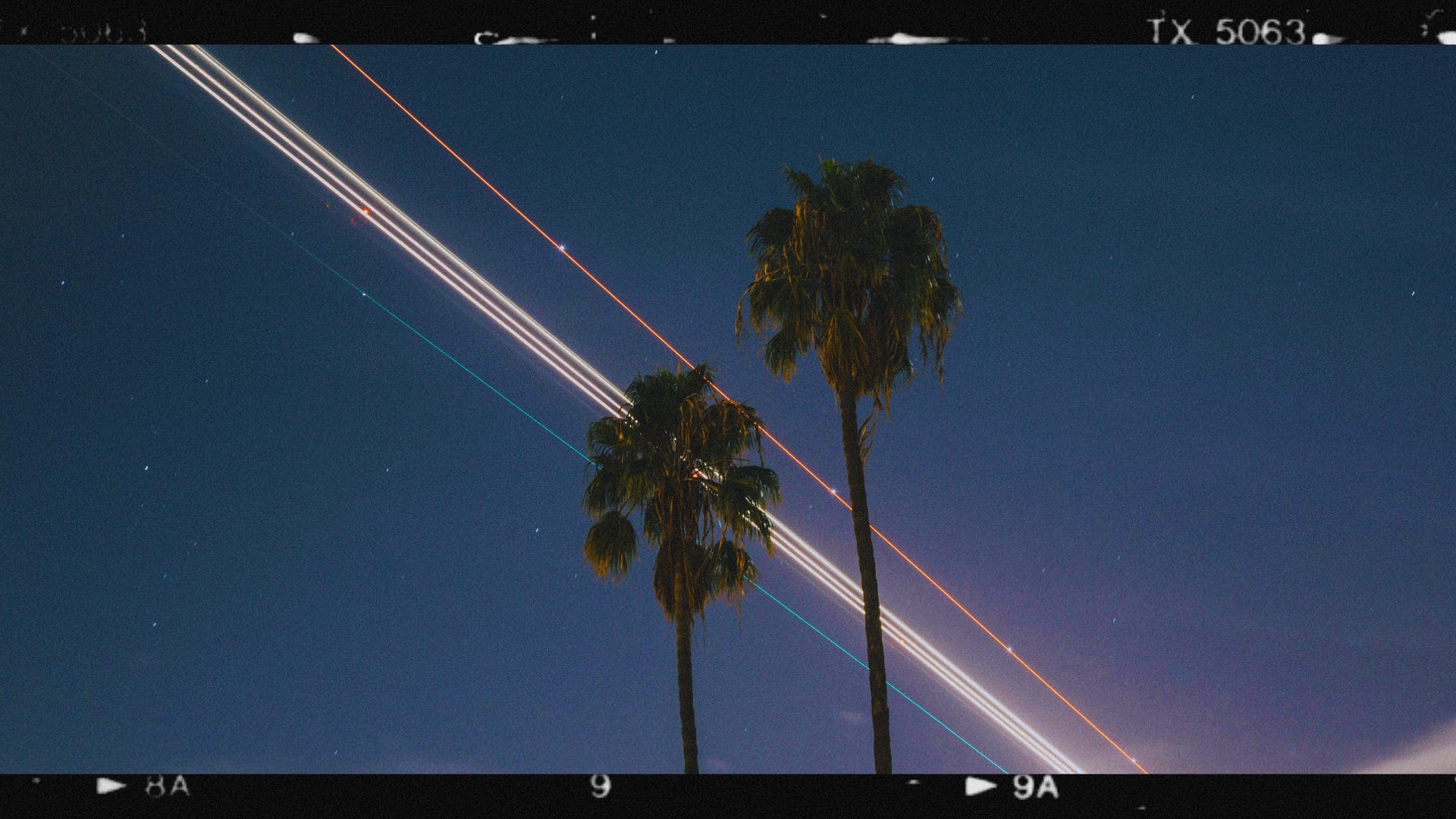
a love letter to the city of angels:
I have lived many lives
and a great many of them were lived working inside restaurants.
What does this have to do with Please Stay and filmmaking?
When you spend most of your life on the ‘outskirts’ you get really good at observing other people’s lives and connecting with different perspectives.
You also meet a lot of people living ‘on the outskirts’ too.
In fact, some of my most cherished memories aren’t in english.
or rather are surrounded by cultures and languages outside of my own.
I have a deep fondness and appreciation for the South where I was born,
but Los Angeles has my heart. It’s the city where I became.
Please Stay is as much about Los Angeles, the city, as it is the story of two strangers meeting.
And the story of the city isn’t the one that Hollywood has sold you.
It isn’t always shiny and serene,
I’ve sat next to people on bus stops shooting heroin into their veins at 2pm on a Tuesday. I’ve seen people sprawled out in the middle of streets in such a way I honestly didn’t know if they were living or dead. And I personally have taken shots with coworkers in the back kitchen just to get through another shift.
And I know what you’re thinking how in the world does Los Angeles still have your heart?!
But see underneath the griminess and the dirt is a city that is alive and it’s filled with people who continue to dare to dream dreams bigger than themselves.
And this isn’t limited to the pursuit of Hollywood and all its glossy promises but the American Dream itself that says anybody and everybody - whether you’re from here or not - has the freedom and opportunity to succeed and attain a better life.
And yes, both Hollywood and America are falling short in detrimental meteoric ways and proving themselves empty and false
but the people still dreaming those dreams -
the ones who still aspire to reach for more than our present circumstances allow -
we’re still here.
and to still dream at a time like this well I can’t think of anything more revolutionary and necessary than that.
wins of the week: (it’s been a really big week of wins ya’ll… and I’m so grateful and excited to share them with you!)
and this right here is why I love making movies:
From Diliana Deltcheva
Then there was Azat.
Taylor wrote him very specifically: a Russian-Armenian immigrant with crystal blue eyes. The character was inspired by a real-life encounter with a stranger that became a wake-up call to just how lonely she had been. She shared her touching story with me and I knew how important that character was.
With the help of our rockstar casting director, we began the search. There were good options. Interesting options. Talented options. But nobody quite felt like Azat.
Then one day I was at my five-year-old son’s gymnastics class.
As we walked out of the bathroom, there he was.
Azat.
Crystal blue eyes. Kind smile. Quiet presence.
He had been right under my nose the entire time.
His name is Artur Akopyan, a former Armenian gymnast who competed for the Russian National Team in the 1980s and won multiple medals at World Championships. It took me a couple of weeks to work up the courage to pitch him the film, but eventually we sat down for coffee.
What followed was one of those conversations that reminds you why you make movies. As Artur shared stories about immigrating to the United States, I found unexpected parallels with my own life. I came here from Bulgaria. My parents were Olympic gymnasts. Suddenly my immigrant story, my family’s gymnastics background, and this film had all collided in a single conversation.
Artur talked about working multiple jobs when he first arrived. About being exhausted but grateful. About the joy of earning enough money to buy even the smallest things for himself. We talked about what happens when highly skilled immigrants leave behind careers, credentials, and identities to start over, driving taxis, cleaning houses, doing whatever it takes to survive, and how disorienting that can be.
By the end of that conversation I was hoping he’d want to be a part of our story and he agreed!
and we are so close to being 50% funded!!!! contribute here to help bring cinema to life.

first official print release:
I have seen so many incredible photographers on this platform and so when Diliana and I were discussing possible “incentives” for people that felt both community-oriented and like something we would want to have - I immediately reached out to two photographers whose work I’d been admiring from afar to see if they’d be interested in a little collab. And they both immediately said yes. (gotta love this community.)
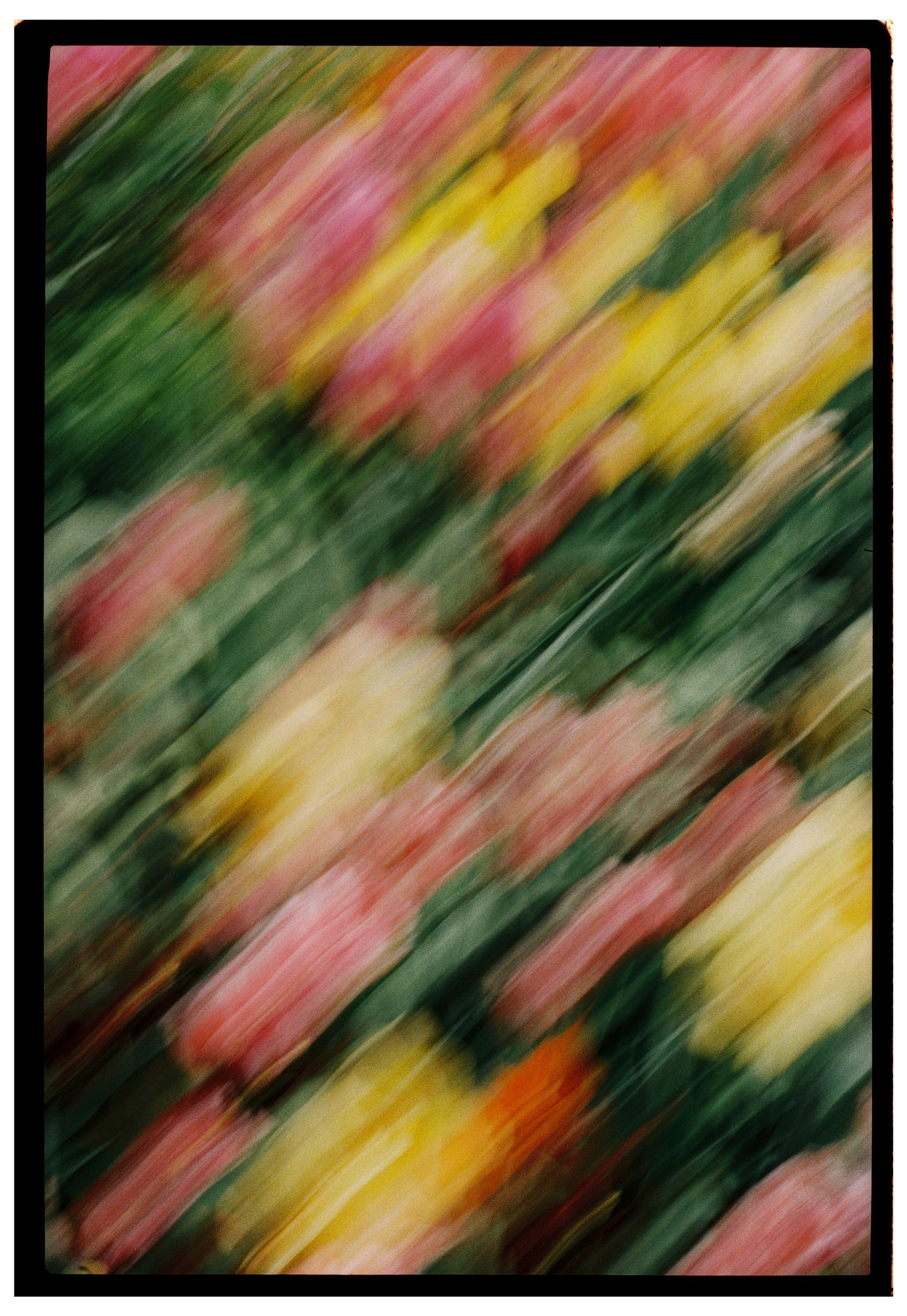
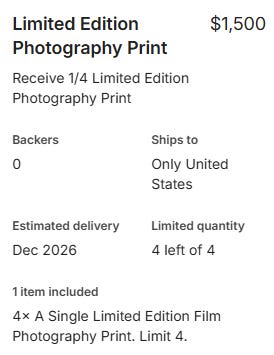
So here is the first official print release for the Please Stay campaign:
Spring Blur (Amsterdam, 2025.) Marina Liashchuk
Marina’s film photography consistently makes me feel adventurous and alive and who doesn’t want to feel those things? Along with subscribing to her substack, you can also follow her on instagram (@mari_lias) to catch more of her gorgeous work.
The print will be 16x20 in/ 40x50cm unframed.
Diliana Deltcheva’s first Kickstarter Update:
Over the past two weeks, I’ve spent a lot of time thinking about why this story resonates in today’s world.
At its core, Please Stay is about a crisis of meaning.
We live in a world that is more technologically connected than at any point in human history, yet loneliness, anxiety, and depression continue to rise, especially in young people. Researchers and mental health experts have increasingly pointed to social isolation and loneliness as major public health concerns, while studies continue to show that meaningful human connection is one of the strongest protective factors for our mental and physical well-being.
Our lives are increasingly mediated through screens, social platforms, apps, text messages, and video calls. These technologies bring enormous benefits, but they can also create the illusion of connection while leaving many people feeling unseen, disconnected, and unsure of where they belong.
That tension lives at the heart of Please Stay.
The film follows two strangers who are both struggling in different ways. One has lost sight of her purpose. The other is trying to build a life in a place that often feels indifferent to his existence. Neither has the answers. What they discover instead is something much simpler and perhaps much more powerful. The healing effect of being seen by another human being.
In a culture that increasingly encourages us to look inward, Please Stay asks what happens when we reach outward instead.
and the immediate response to Diliana’s first “Kickstarter Update:”
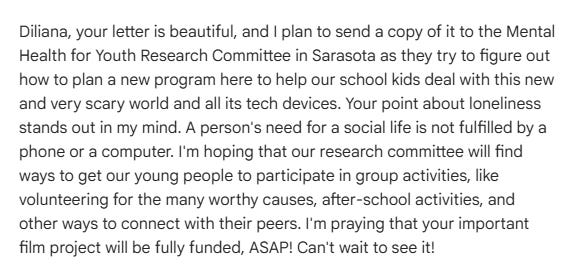
and the response from YOU:
Lastly, Contextualizing Please Stay within the Modern Film Canon:
I saw a film called Here I’m Alive was playing at Tribeca and immediately sent it to Diliana after reading the synopsis. I couldn’t believe how much it is “in the world” of the project we’re making and how the director was also looking to push the cinematic artform forward with their choices. It’s so exciting to be a part of a larger conversation that’s happening in cinema right now.
I loved the line from this breakdown by Dan Bayer:
It’s as unsentimental a love letter to the city as you can imagine, one that acknowledges the unlimited potential it offers while staying fully aware that most city residents are too plugged into their digital lives to ever wake up to the magic around them.
My dad has this habit of saying “why do you hate _____ so much” everytime I openly critique something and then list all the ways we could make it better. And my response to him is always the same, “can you not see this is love? That I am so obsessed and in love with this thing that I can see all that is wrong with it and still dream of new ways in which to make it better. New ways in which this thing I love can thrive?”
(I’m normally talking about America and its systems when he says this.)
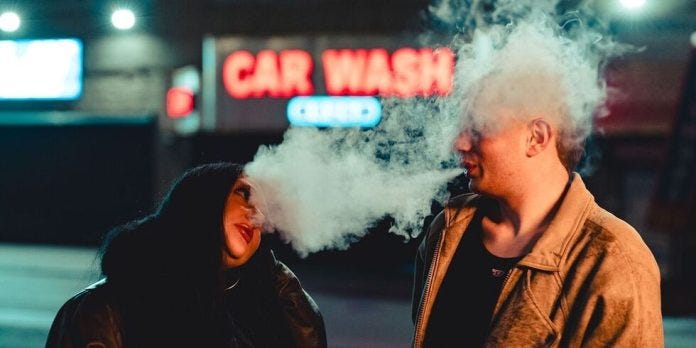
HERE I’M ALIVE
THE STORY – Over the course of a single night in New York City, a collection of migrants, sex workers, dreamers and survivors move through the city’s digital underbelly, all searching for connection in a world that keeps them at its margins. From lonely video game server rooms to lip-filler beauty parlors, these non-actor subjects hustle and hope their way through an urban landscape that is at once indifferent and electric.
THE CAST – Krystaly Figueroa, Cheyenne Gallagher, Eddie Torrenegra, Caleb Zuzga & Emira D’Spain
THE TEAM – Joshua Z Weinstein (Director/Writer) & Brian Perkins (Writer)
THE RUNNING TIME – 81 Minutes
New York City has a reputation. It’s the concrete jungle where dreams are made of; if you can make it here, you’ll make it anywhere, etc. But when you live here, it doesn’t take long to realize that, true though the city’s reputation is, it’s not the whole truth. This city is a perpetual possibility, and not everyone can convert that potential into actuality. New York is a city of strivers, of dreamers, but it’s also a city of hustlers; you have to work hard and sometimes engage in questionable activities in order to make it here, and most people find themselves stuck in some kind of limbo between their dreams and what they can achieve, creating a kind of liminal space where you’re not fully living in the city in which you live. Joshua Z Weinstein’s
“Here I’m Alive” understands this better than most films, presenting a wholly unromantic vision of the Big Apple that nonetheless is brimming with love for its collection of desperate people longing to find their place in this unrelenting world.
(…)
Reservations about the film’s structure aside, “Here I’m Alive” is as strong a cinematic city symphony as New York has seen in many a year. The sound design perfectly captures the city’s constant hum of background noise, and location shooting brings the city’s lesser-known areas to vibrant life. Set to a soundtrack of new songs by stars of the underground NYC music scene, Weinstein brings New York City nightlife to the screen in a way it never has before, getting inside the hidden, private, largely unknown sides of the city that only native New Yorkers see. It’s as unsentimental a love letter to the city as you can imagine, one that acknowledges the unlimited potential it offers while staying fully aware that most city residents are too plugged into their digital lives to ever wake up to the magic around them. By the time it reaches its final shot, New York City has come fully alive as both a setting and a character, quietly absorbing everything that we’ve just watched and incorporating it all into the soundtrack of a city that houses over 8.5 million.
Seeing this reminded me immediately of the work of two artists that were a big inspiration in creating the visual world of Please Stay:
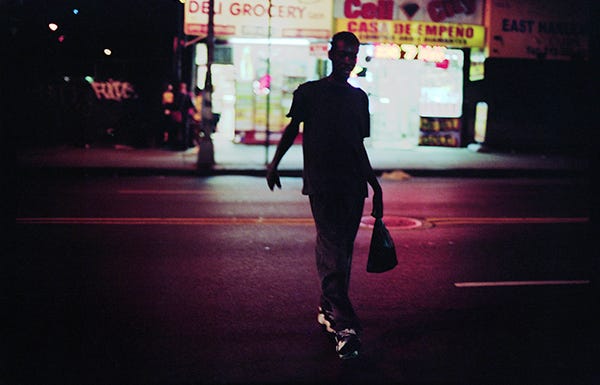
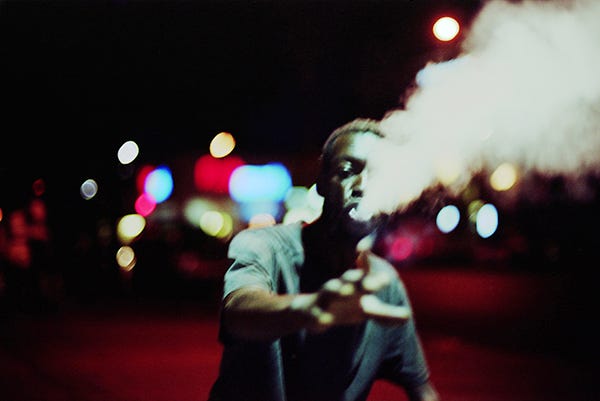
Photographer and filmmaker Khalik Allah’s Souls Against Concrete is one of my favorite photobooks of all time.
And although the pictures are from a New York corner, they remind me so much of the part of LA Please Stay exists in. And the empathy and beauty in which Khalik approaches both his subjects and their surroundings is something I consistently learn from (I have the photobook next to me as I type this.)
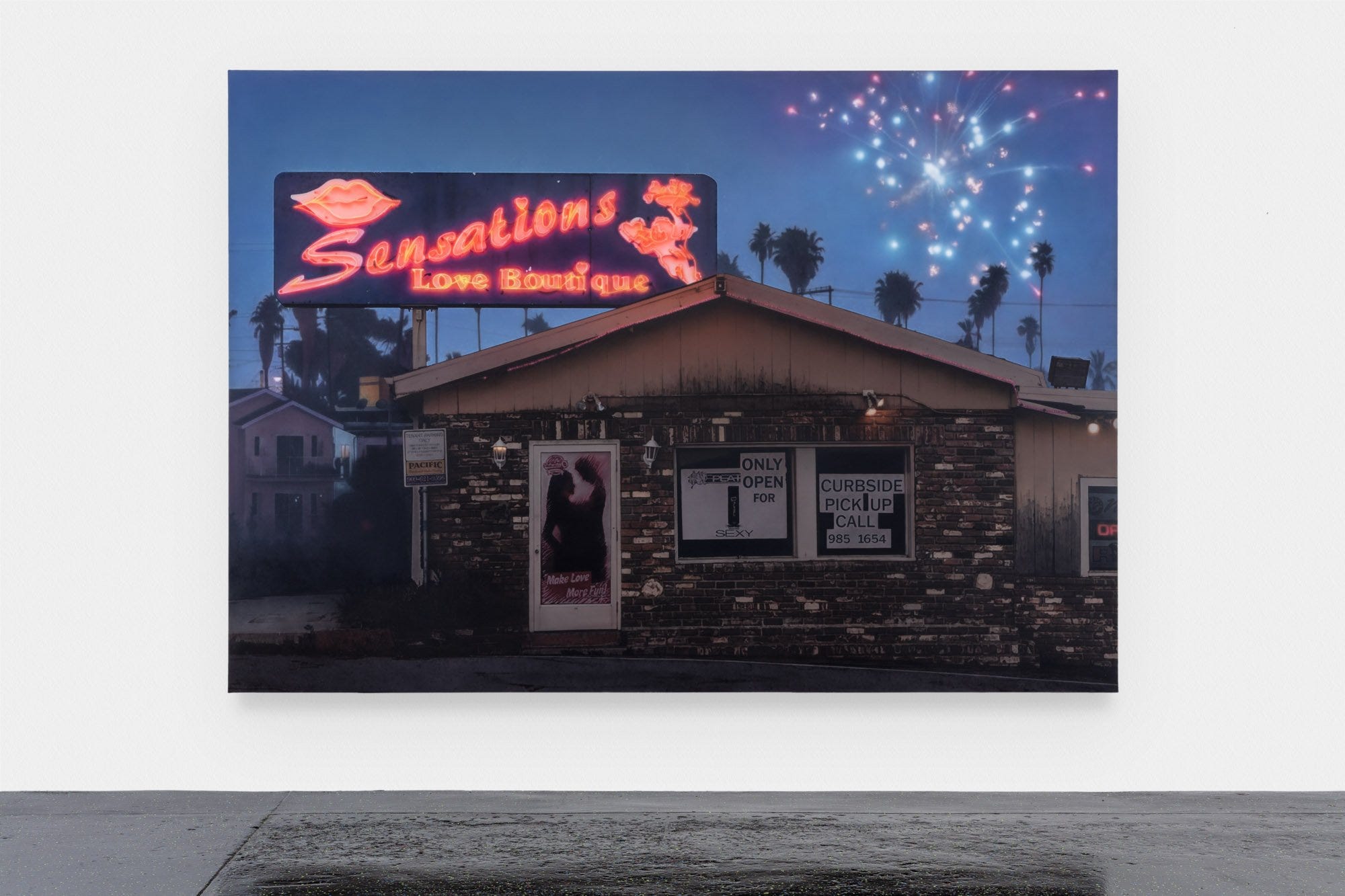
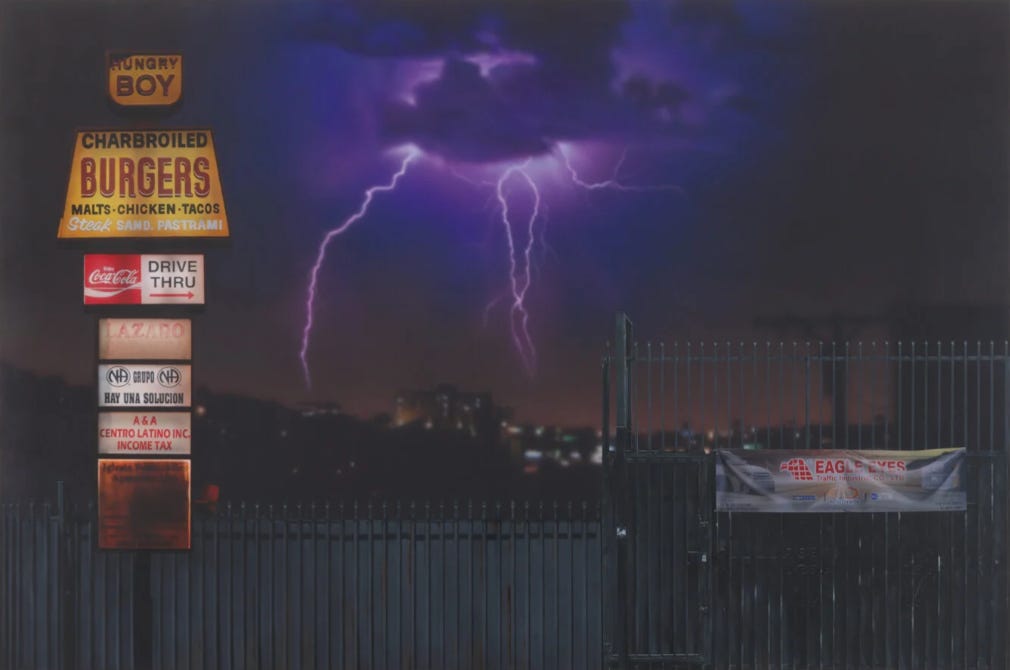
Another big inspiration in building out the visual world of Please Stay were the paintings of Sayre Gomez as best described in his exhibit True Crime at the Xavier Hufkens gallery:
His photorealistic, even hyperreal images, seem like true-to-life depictions of urban Los Angeles but are far more likely to be carefully constructed montages, an amalgam of appropriated images and the artist’s own photographs.
The works are propelled by the polarities of America’s second most populous city, whereby the eternal splendour of the natural world (sunsets, palm trees, lightning) stands in stark contrast to the dereliction of the built environment (dated signs, unhoused encampments, graffiti).
For Gomez, the city is a barometer of changing cultural and economic conditions, a deeply layered structure that is ripe for semiotic analysis, whereby it is not so much the structures themselves that are of interest but what they signify and are capable of evoking. In this respect, his paintings not only belong to the rich traditions of urban landscape painting that exist on both sides of the Atlantic, but also pushes the boundaries of the genre by challenging the viewer’s ability to differentiate between authenticity and simulation in a digital, image-saturated and screen-based world.
No posts
Comments
Nothing yet. Say the first thing.
Sign in to join the conversation.