
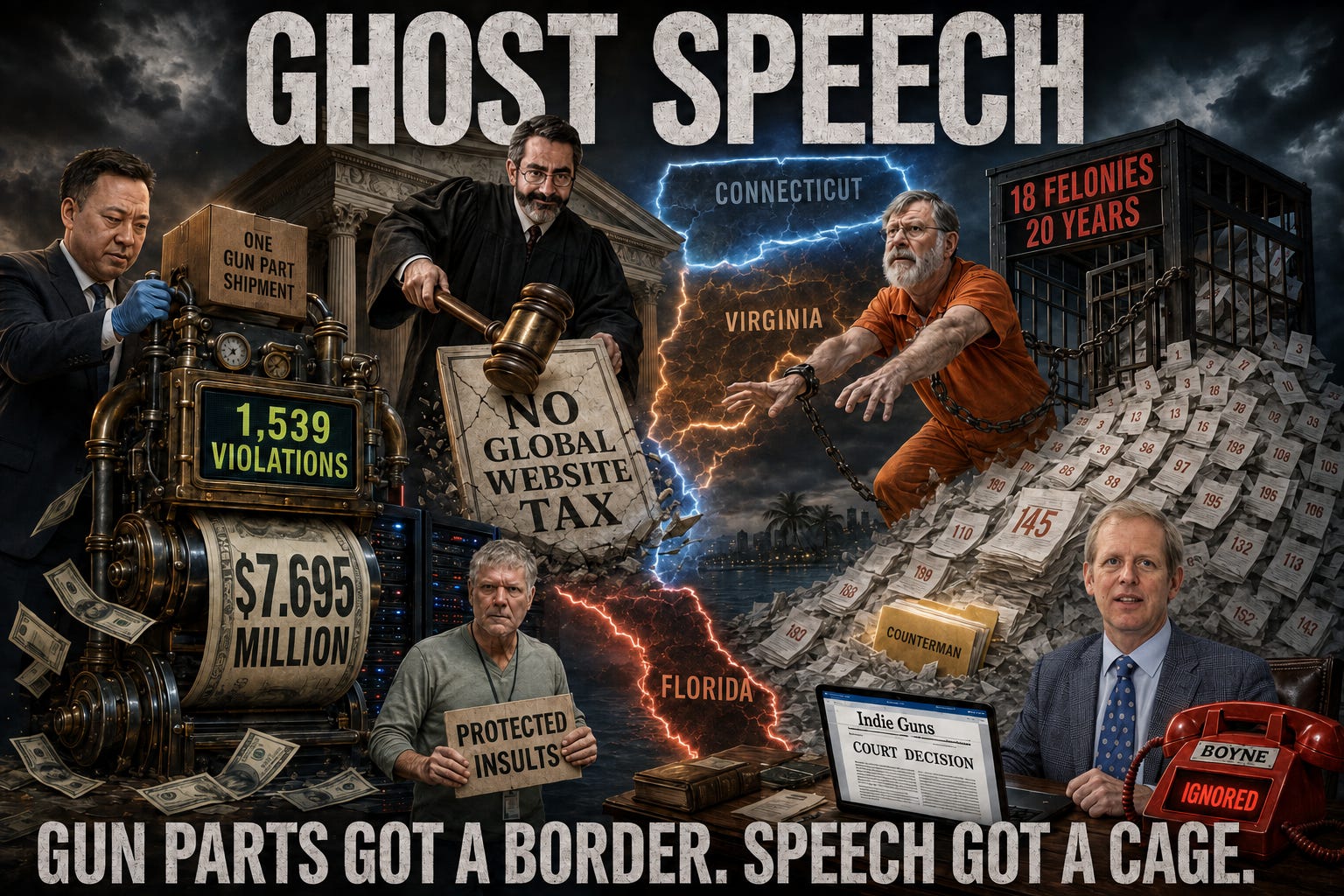
LUTHMANN NOTE: Connecticut had a proven illegal shipment from Indie Guns and could have taken the maximum $5,000 penalty. Tong’s office refused because it wanted $7.695 million for keeping a Florida website online. Judge Klau demanded proof and territorial authority. Good. Now apply that discipline to Paul Boyne. Connecticut reached into Virginia, seized a publisher, converted hateful political writing into 18 felonies, and imposed 20 years. Eugene Volokh found time for the clean Indie Guns decision but none for the Boyne constitutional disaster. Free speech means nothing when its professional defenders protect only speakers who will not cost them lunch invitations. This piece is “Ghost Speech,” written in the “classical style” of The Blog, offence intended. Reader discretion advised.
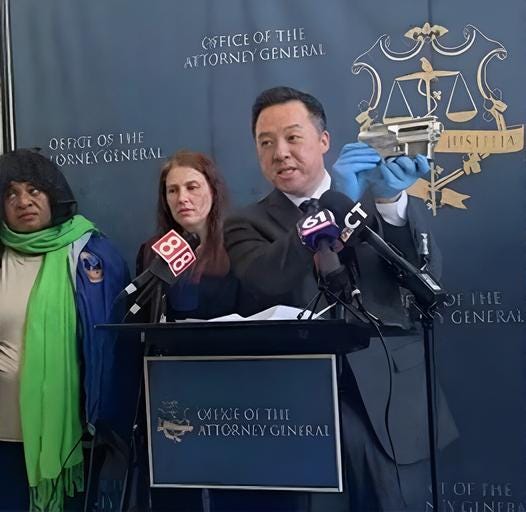
(WATERBURY, CONNECTICUT) – Connecticut discovered the state line when Attorney General William Tong tried to extract $7,695,000 from Indie Guns LLC, a Florida company whose website advertised unfinished firearm parts lawful for sale in Florida. Judge Daniel J. Klau read the statute and stopped the raid. Connecticut could punish a transaction completed inside Connecticut, but it could not annex every website visible from Hartford and call each day of publication another Nutmeg offense. The internet did not become Connecticut property because Tong’s investigator opened a browser.
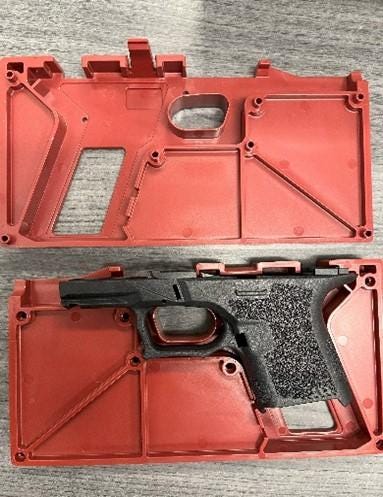
Tong did have evidence of one completed Connecticut transaction. An undercover investigator ordered an unfinished AR-15 lower receiver through the Indie Guns website using a Connecticut post office box. Five minutes later, an Indie Guns representative called because the address raised a red flag, stated that shipping the receiver into Connecticut was illegal, and asked whether the buyer was law enforcement. After receiving the investigator’s undercover identification, Indie Guns accepted payment by money order and shipped the receiver. Klau found the sale was willful and wrote that he would award the maximum $5,000 CUTPA penalty. When Klau invited them to request the lawful penalty, they declined and admitted that “the state’s case was not based on sales.” Tong had one proven violation worth $5,000 and rejected it because his lawyers were not hunting a lawful remedy. They were hunting a trophy.

“The state’s case was not based on sales,” the Attorney General’s office told Klau. Tong took one proven shipment, multiplied $5,000 by the 1,539 days that the Florida website remained online, and demanded $7.695 million. Simultaneously, the Asians disowned him for shitty math. Blog All-Star Klau refused to convert one illegal delivery into four years of imaginary Connecticut commerce and manufacture the missing 1,538 violations. The State proved that Indie Guns advertised ghost-gun components for years, but it did not prove daily sales, daily shipments, or even a second Connecticut transaction. Tong asked the court to assume more sales existed because DeStefano’s records were unavailable and his public statements displayed contempt for gun laws. Klau declined to replace proof with Tong’s “murtiprication.”
CUTPA regulates trade “in this state.” The legislature had rejected broader language that reached outside conduct affecting Connecticut residents. Tong could stop the gun part at the border. He could not move the border to Florida and send a bill. The court permanently enjoined Indie Guns from selling, delivering, or transferring unfinished frames and receivers to Connecticut residents. Still, it refused to punish website advertising that occurred outside Connecticut and violated neither Florida law, federal law, nor Connecticut’s ghost-gun statute.
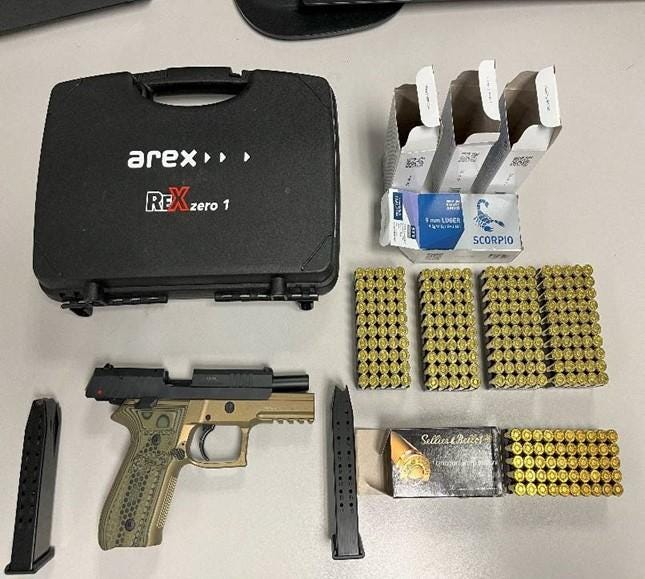
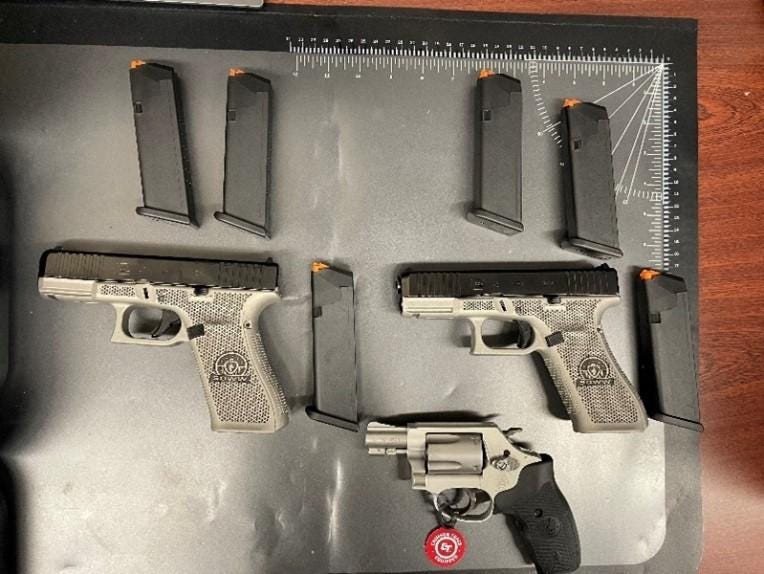
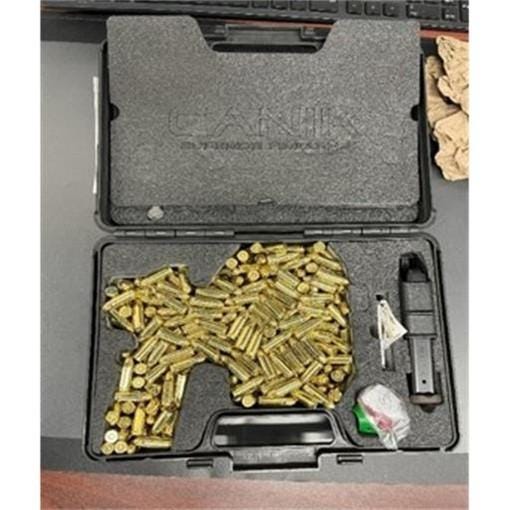
DeStefano gave Tong plenty of material for the White Christian Nationalist scrapbook. He posed beneath a sign celebrating “UNTRACEABLE, UNSERIALIZED, UNREGISTERED GHOST GUNNERS” and telling government officials they could not “DO SHIT ABOUT IT.” He promoted “extreme discretion,” refused credit cards, disclaimed keeping customer records, and mocked Tong with a video combining the Attorney General’s press conference, a Ghost Gunner demonstration, and the final gunfight from Scarface. Klau called the contempt obvious and protected it anyway. The statements supported willfulness; they did not become independent CUTPA violations. Connecticut could punish the completed shipment. It could not punish DeStefano for insulting the officials who investigated it.
Thanks for reading This is For Real.! This post is public so feel free to share it.
That ruling did not end DeStefano’s legal jeopardy. New York transported him from Florida, arraigned him in Queens, and charged him under a separate 71-count criminal indictment involving serialized firearms, a ghost-gun kit, magazines, and ammunition sent to New York during a 2025 undercover operation. The indictment contains two counts of first-degree criminal sale of a firearm, carrying a maximum sentence of 25 years on each top count. DeStefano is being prosecuted by NYAG Letitia James.
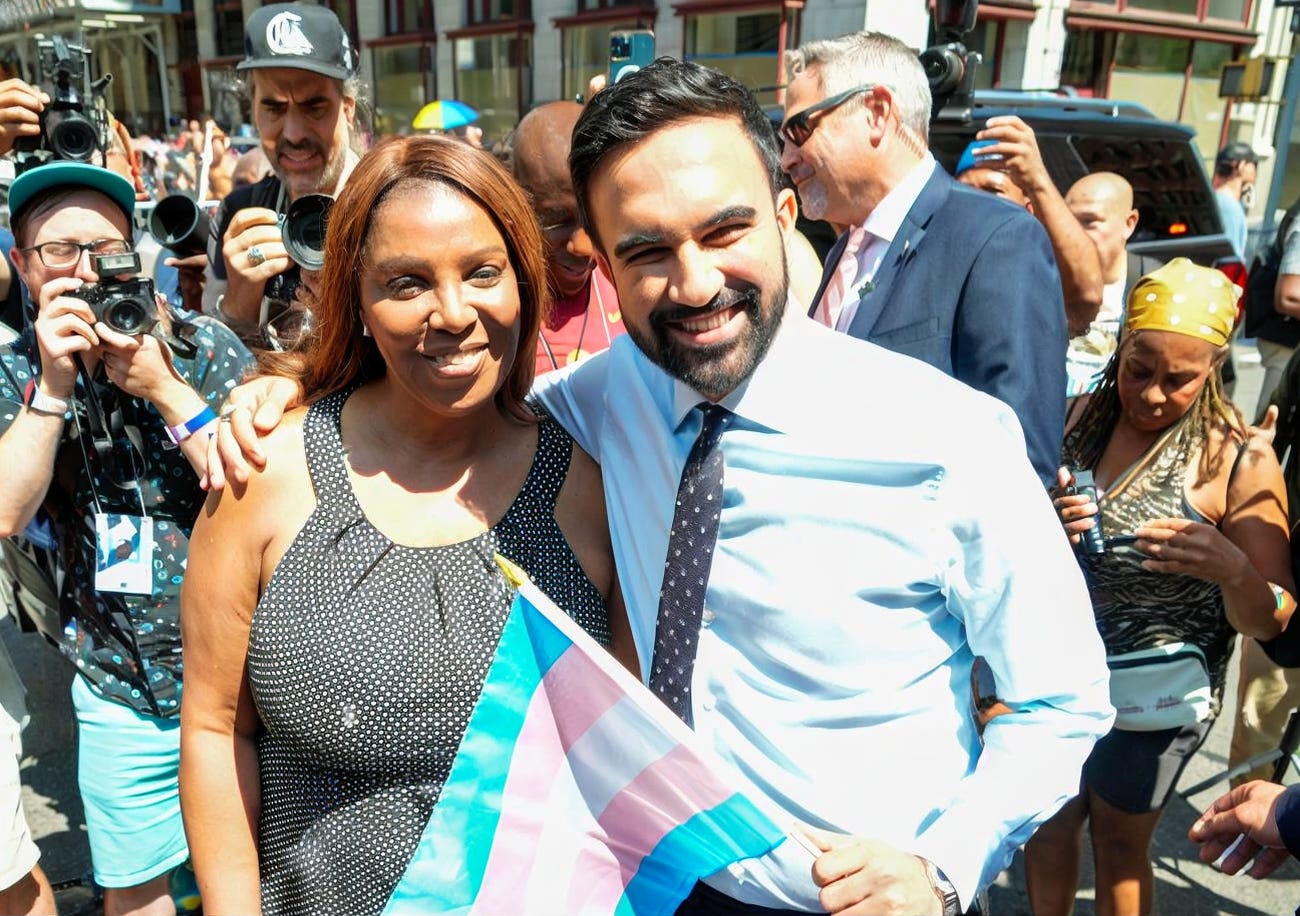
Klau’s Connecticut decision establishes a narrower proposition with broader constitutional force: Connecticut may regulate conduct occurring within its territory, but it does not acquire ownership of every foreign website, advertisement, or insult accessible through an internet connection. The Florida gun dealer received an injunction and a lecture on territorial law. Maybe Klau didn’t get the Greenblatt Memo. Paul Boyne received twenty years.
Boyne published from Virginia. His writings attacked Connecticut judges, displayed publicly available photographs and addresses, used violent imagery, and carried enough antisemitic sewage to poison the River Jordan in ways the Hajis could only dream. Connecticut called the posts true threats. Boyne called them political denunciation protected by the First and Fourteenth Amendments. The constitutional question was whether the State proved the mental state required by Counterman v. Colorado, not whether six jurors hated Boyne after Joette Katz and Jonathan Greenblatt’s hand-picked prosecutors paraded his ugliest language through the Rabbinical Court. Connecticut buried that question inside 145 pages of jury instructions, repeated the state-law machinery across eighteen counts, and obtained twelve first-degree stalking convictions and six electronic-stalking convictions after about ninety minutes of deliberation. BrownBoy in the Black Robe then imposed twenty years, ten years of special parole, and protective orders extending through 2051.
Boyne was right about the border and right about the courthouse protecting itself. Connecticut demanded proof of in-state commerce before punishing a Florida website, then treated Virginia publications as Connecticut crimes because Connecticut judges appeared in them. Gun parts received territorial analysis. Judicial criticism received extradition. DeStefano’s contempt for Tong stayed protected; Boyne’s contempt for judges became evidence that the courthouse had every right to cage him until old age. Connecticut’s Rabbinical Court converted his satire into fuel for the ovens, burning the hated White Christian Nationalist, a Southern Irish Catholic. The courthouse club prosecuted its enemy, buried the controlling First Amendment question, and now expects the public to admire the stitching on the body bag.
Then Eugene Volokh arrived to prove Boyne’s larger point about selective constitutional courage. On August 13, Volokh published the Indie Guns ruling beneath a clean headline about Connecticut’s failed $7.7 million penalty. The case cost him nothing. He could defend a Florida gun dealer against Tong’s extraterritorial shakedown, praise statutory limits, and return to lunch as Professor Free Speech. Boyne’s case presents the hard version: a hated speaker, interstate publication, true-threat doctrine, a disputed Counterman charge, eighteen felony convictions, twenty years in prison, and a publication muzzle lasting until 2051.

Volokh covers campus squabbles, pseudonymity disputes, defamation motions, lawyer discipline, and courthouse oddities, drawn from every judicial compost heap in America. He co-hosts a podcast called Free Speech Unmuted. Yet Connecticut has set the Virginia publisher’s imprisonment at two decades, and the great unmuted scholar swallowed his microphone. Boyne says Eugene’s mute button was installed by his Jewdicial Overlords. But cowardice requires no conspiracy. Volokh does not need overlords to hide from a case that might cost him friends, professional comfort, or a clean reputation among people who confuse defending constitutional rights with kosher butchering. He needs only to be a hypocrite.
That is the hypocrisy exposed by Ghost Speech. Tong wanted a global website tax until Klau made him read his own statute. BrownBoy wanted a prisoner and buried federal protection under Connecticut boilerplate. Jack Doyle turned hateful political writing into eighteen convictions. The judge club protected its members. Volokh found courage for the gun dealer and lost it when the defendant became White Christian Nationalist Paul Boyne.
The ghost gun crossed into Connecticut and received a measured legal remedy. The ghost speech never crossed the border, yet Connecticut dragged its author across and buried him alive.
The gun part threatened public safety.
Boyne threatened the Rabbinical Court’s self-image.
Connecticut only gave one sixty-five-year-old a death sentence.
Comments
Nothing yet. Say the first thing.
Sign in to join the conversation.