
August 18, 2026 · AI, AR, & the Analysts #45
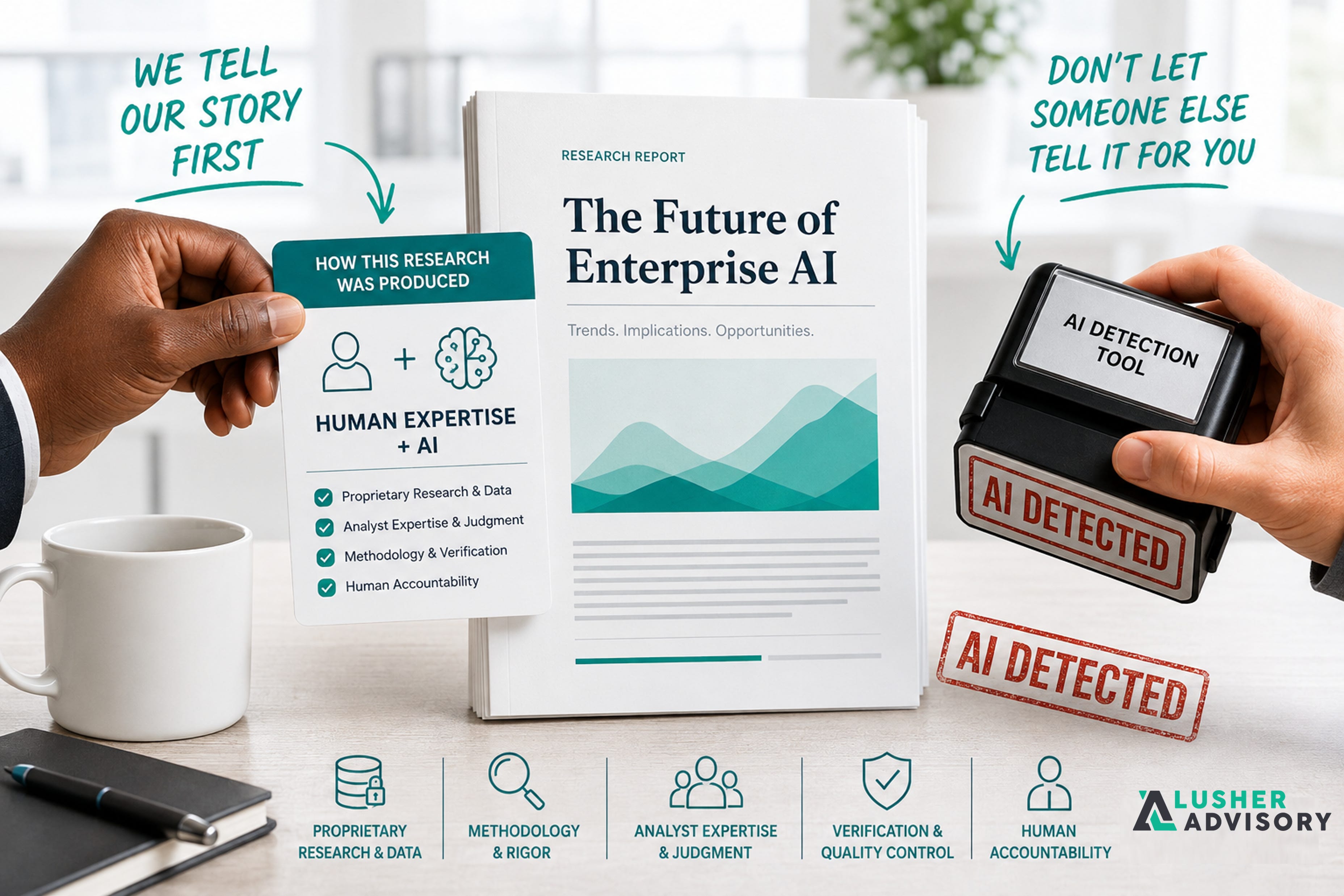
AI text detection is moving into the enterprise. Pangram — with real client traction (Substack, NewsGuard, Quora), a fresh $9M raise, and a fourth-generation model — can now flag AI-assisted writing at a claimed 1-in-10,000 false-positive rate. Anthropic just rolled out watermarking for Claude-generated text, in part to meet emerging EU disclosure requirements.
Put those together and the real story isn’t “AI writing can now be detected.” It’s this: regulation is creating a mechanism that will surface AI use in research whether firms are ready for it or not. Left unmanaged, that doesn’t settle into calm disclosure — it curdles into suspicion. A client, a competitor, or a journalist runs a note through a detector, gets a hit, and treats it as a gotcha, regardless of whether the “hit” reflects genuine AI drafting or just a detector’s false positive on tightly-styled analyst prose. The accusation lands first; the explanation comes later, if it comes at all.
That’s avoidable — but only if firms decide who answers the question first.
Why could staying quiet about AI use actually increase the risk for analyst firms?
How can firms turn AI transparency from a potential liability into a marketing opportunity?
If every analyst firm has access to the same powerful LLMs, what becomes the real moat?
What should firms tell clients before Pangram, a competitor, or someone else tells the story for them?
Comments
Nothing yet. Say the first thing.
Sign in to join the conversation.