
This time of year always has me thinking big about what I might do with all the seasonal produce coming up. Maybe I’ll finally become a jam person! Or stash away a bunch of pickles pickles, apple butter, homemade tomato sauce, or a year’s worth of dried chili flakes.
Yet I can already predict what’s going to happen: Summer will be over before I know it, and I’ll be left looking to next year to implement those grand plans.
Julia Skinner’s new book Essential Food Preserving offers a more pragmatic way to get into food preserving for overly ambitious people like me, which is to start a little smaller, but think a little broader. In other words, be realistic about what’s possible given my resources, but realize that there’s a bigger world of food preserving that doesn’t involve pressure canning.
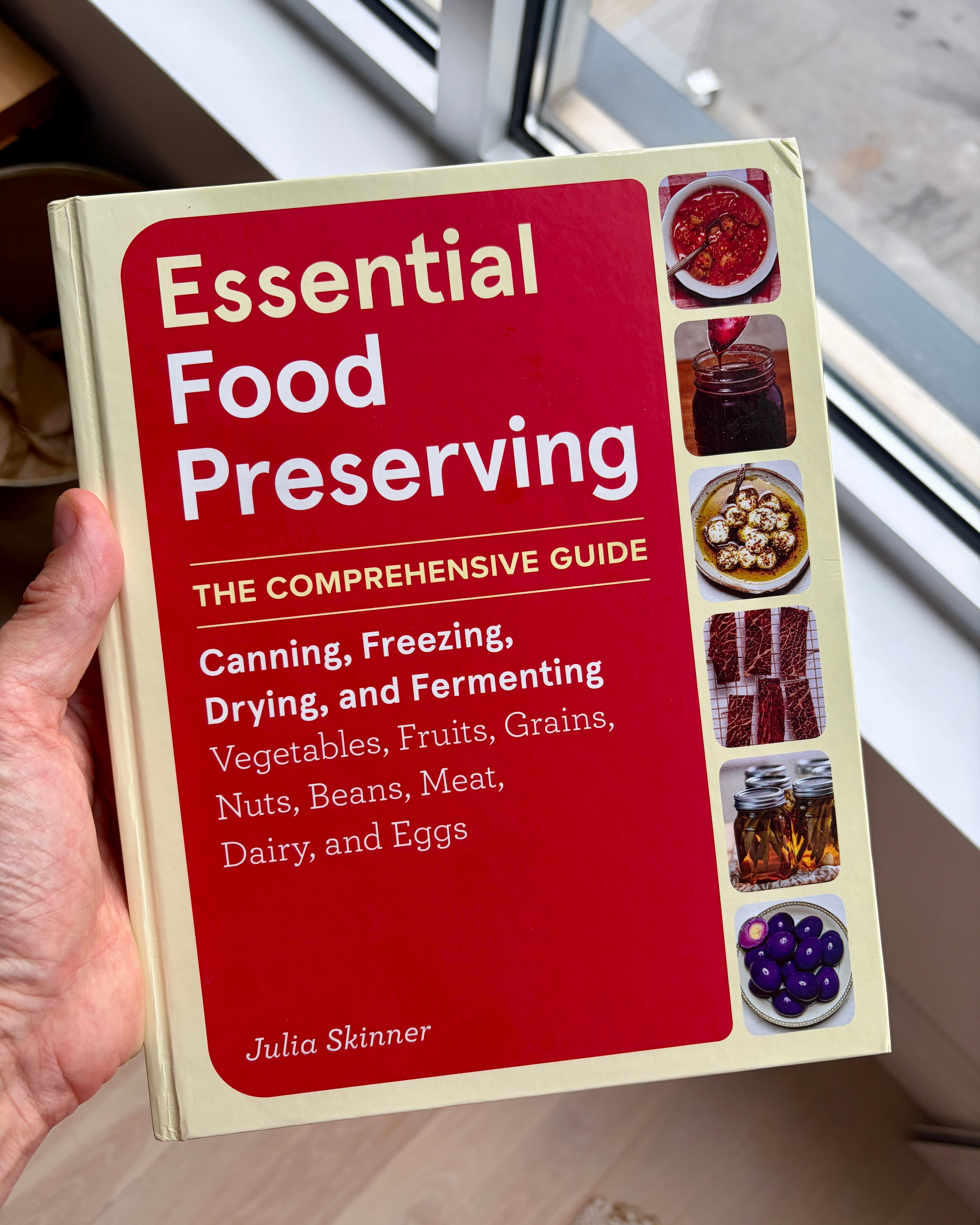
After an in-depth section on preservation techniques, the book is organized by ingredients. So when I’ve got a few extra bunches of herbs, I can flip to a chapter devoted to them to get ideas (vinegar! syrups! soda! salts! canned herbal sauce!).
If you’ve read Julia’s Our Fermented Lives or are familiar with any of her other books and work, you know that she is passionate about this topic. For her, extending the shelf life and transforming the flavors of perishable food involves much more than delicious things to eat and a well-stocked larder. So it was such a pleasure to have a quick chat with her about her new book.
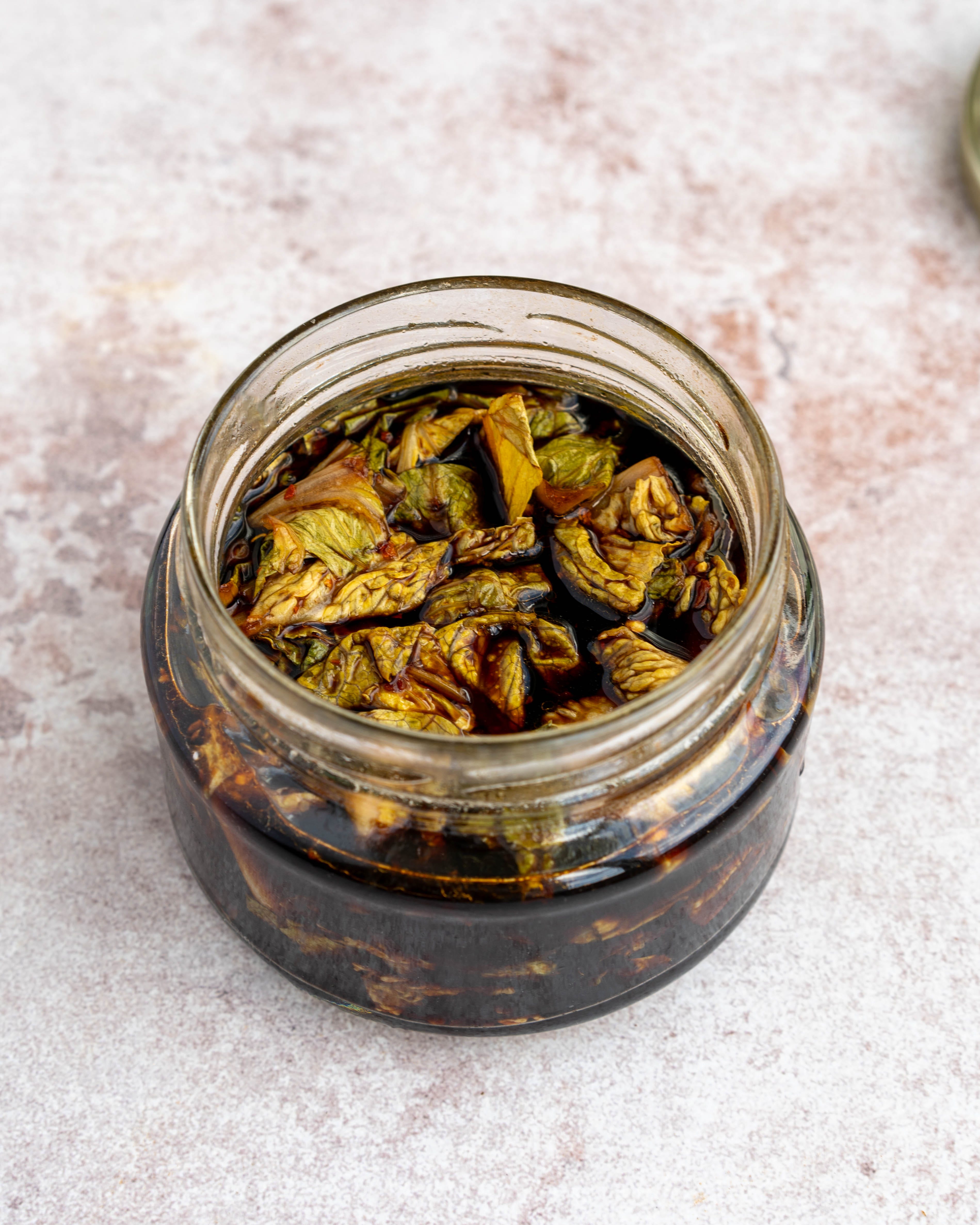
As a bonus, she’s shared her recipe for Soy-Sauce Pickled Romaine Lettuce, a simple preserve that really called out to me. I love throwing lettuce in a stir-fry, so the flavors make sense. I also thought that a pickled lettuce condiment would be a fun thing to have on hand…
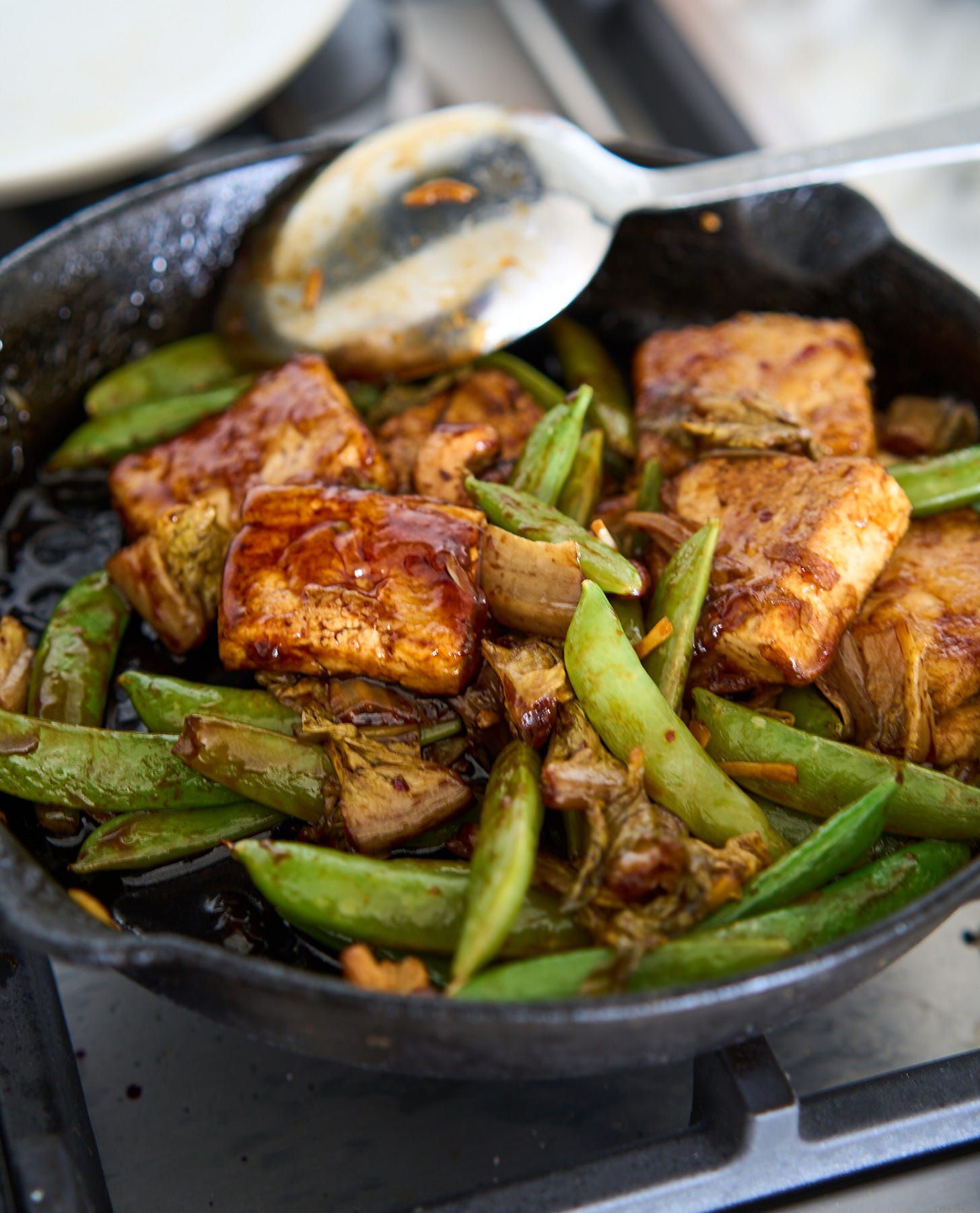
And it is! I’ve been adding it to this springy stir-fry with snap peas and tofu (paid subscribers of the newsletter have just received the recipe) but scooped over a bowl of rice with a fried egg and an assortment of odds and ends? A perfect lunch.
Scroll down for the Q&A and recipe!
More about ESSENTIAL FOOD PRESERVING
Elinor Hutton and I have been busy chatting, and here’s a rundown of episodes you might have missed!
We have a very special guest joining us for next week’s episode, so make sure you’re subscribed! Here’s a hint: We might be going deep on beans…
When I started writing this book, I had to navigate a vast world of preserving (and learn some new things, too. I hadn’t, for example, done a ton of pressure canning before I wrote this book). I decided to include the kinds of things I most wanted to know when I was starting out, and the kinds of things I get the most questions about. While the book covers meat, dairy, eggs, and seafood too, I dedicated more pages to fruits and vegetables as these are the kinds of things a home food preserver (or someone with a small farm) are more likely to have in excess. The book is meant to be practical and to give folks ways to fit preserving into their lives, however their lives look, and to help people consider preserving in its many contexts, too (historical, for food security, for community care, etc.)
My hope is that this book goes beyond being “just” recipes (the quotes are intentional there because recipes are so important!) to a treasured volume people turn to again and again.
I always tell people to start simply and grow from there. So, if you’ve never preserved before, pressure canning probably isn’t the best move. But you could make refrigerator pickles, or dry bundles of herbs in a dry place, or ferment some sauerkraut, or make a fruit syrup. The biggest thing is to decide what kinds of things you enjoy eating, as well as what ingredients you have access to, and start there.
So, for example, if I like carrots and have a lot of them, I can flip to “carrots” and explore all the different ways I can preserve them, and choose one that both sounds like a food I want to eat and fits my skill level. As you preserve more, your confidence grows, and you can keep expanding your skill set, but there’s no rush or pressure to learn everything at once.
The main lesson I’ve learned is that we make mistakes at every level of experience, and in most cases, those mistakes are just a chance to learn.
YES. I think everyone who has preserved food has. Thankfully I only had safety-related fails in canning that had to do with jars not sealing correctly (which I noticed and caught, because I check every jar every time, before disaster strikes). But most have been more flavor and texture-related fails. Like sauerkraut or full sour pickles that go mushy when I fermented them in too-hot weather (so they got mashed up and turned into marinades for other things). Once in a while I’ll neglect a ferment if I’m traveling and I’ll come back to multicolor molds on top, so I don’t eat them.
The main lesson I’ve learned is that we make mistakes at every level of experience, and in most cases (outside of safety-related concerns, hence why canning safety is so important), those mistakes are just a chance to learn (e.g. learning how long I want to ferment certain foods to get the flavor and texture I want).
I think a lot of people who aren’t familiar with preserving find it intimidating or assume it’s dangerous. And yes there are certain safety guidelines everyone needs to consider (I say “don’t can pureed squash or pumpkin butter!” about 20 times throughout the book...). But once you know the process, it’s easy to do as a matter of course.
However, this is also why I encourage learning preserving processes from people who’ve learned how to do them confidently and safely (sorry, rogue canners), because just like with anything else, that confidence and those safety-ensuring steps become automatic each time you can, or do whatever else.
Overall, preserving is safe and fun, and most of all, a flexible and versatile variety of processes that you can choose from to build a unique preserving practice all your own. If you don’t want to can food or canning scares you, for example, don’t do it! There are so many other ways to play around in this world.
A sidebar: I’m also encountering more and more people who look things up online or prompt AI (please do not do this, ESPECIALLY with food safety anything), but who don’t have a familiarity with the processes enough to tell if they’re getting good information. That’s why I included a section in the book on identifying good food preserving resources (you can see an expanded version of that section in my newsletter here). I also use the internet constantly, as we all do, so this isn’t a dig against looking things up when you have questions, but just check your sources before you dive in!
Preserving food helps us honor the many hands that went into bringing that food to our tables.
Folks who have read Our Fermented Lives will recognize this approach, since thinking about context has long been a staple part of my practice. I could talk about the contexts of food preserving for HOURS but instead of doing that, here are a few key things I think about a lot:
Food preserving (fermentation and other practices) has been around for thousands of years. We have been preserving food since we started living in permanent settlements and practicing agriculture BUT we probably knew about at least some of these techniques beforehand. Some technologies (like canning or freeze drying) are obviously much more recent, however they still fit into this same umbrella of caring for food security, preserving the flavors of the seasons, and feeding loved ones, just as every food preserving technique does.
Preserving food helps us honor the many hands that went into bringing that food to our tables: Even food you grew yourself came from seeds someone else grew at some point, plus soil amendments, water from a water source piped onto your property, etc. Food purchased from someone obviously was grown, harvested, transported, packaged, set on a store shelf, etc. by other people too. We can honor their role in feeding us by making the most of the food we eat, and preserving helps us do that. I also include the natural world as one of those ‘hands’ too, since we’re honoring the soil, sun, and all the elements that went into making food and life possible by preserving what’s in season and using each ingredient to the fullest extent.

For more information about Julia Skinner and her work, follow her on Substack:
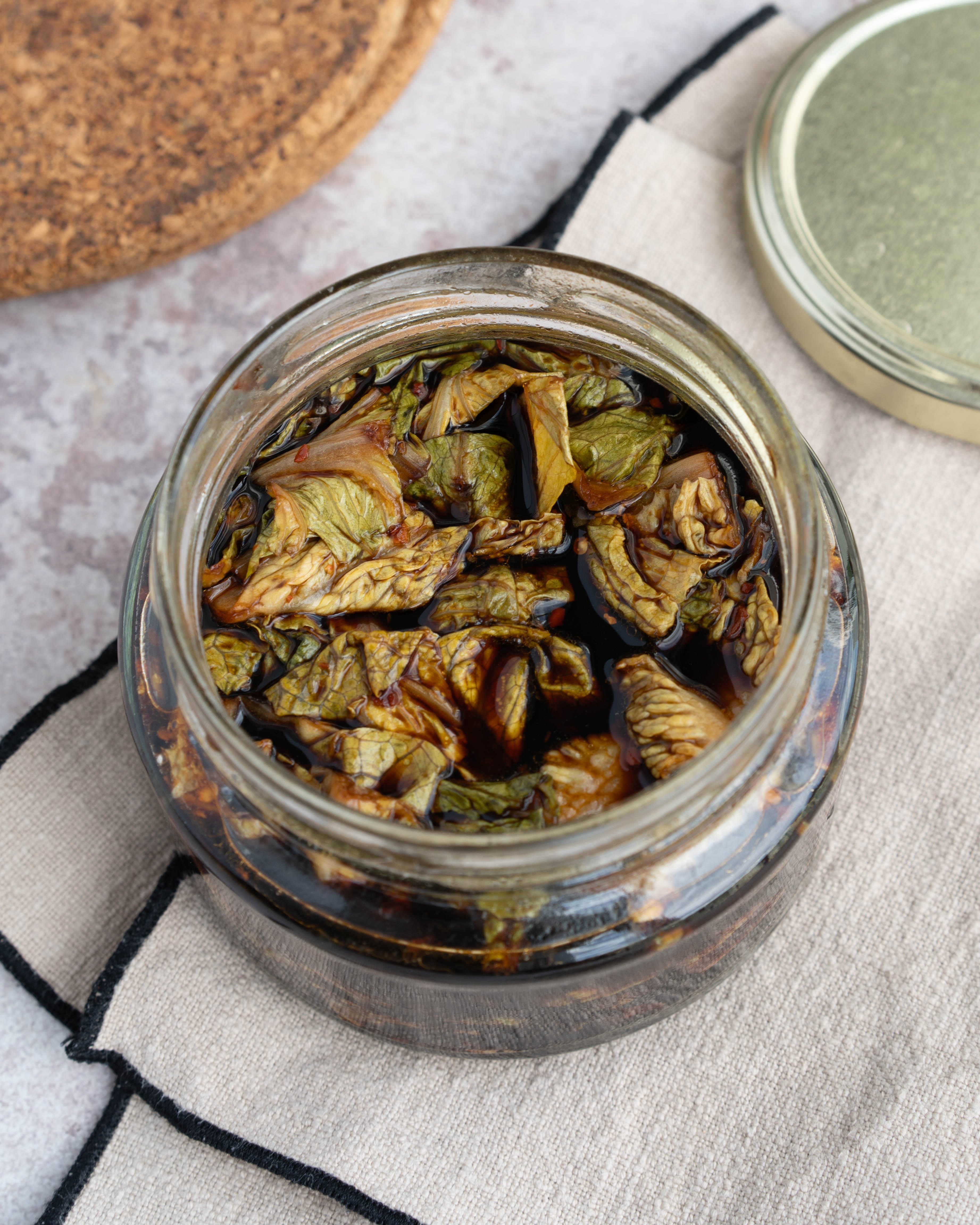
From Julia in Essential Food Preserving: “This variation is loosely based on Chinese pickled celtuce (stem lettuce) traditions. The firmer stems of celtuce help it hold up to pickling, but this recipe can work with romaine lettuce, too. Keeping the brine cool is critical for a crisp texture. Eat as a pickle or add to a stir-fry. You can substitute other vegetables for the lettuce, like celtuce or celery.”
Regarding the soy sauce: “You can totally use whatever soy sauce you have to hand, I prefer the richness of dark soy sauce, but if you've only got light, that will still be great too!”
Use the leftover brine as a marinade for tofu or any protein you’re cooking — or make another batch of pickled romaine lettuce. I think that any lettuce that has some solid crunch in the stem would work pretty well here.
Paid subscribers just received my Tofu & Snap Pea Stir-Fry with Pickled Lettuce — I think of this pickle as something of a stir-fry shortcut, because the brine is such a flavorful extra ingredient. In a stir-fry, I drain the lettuce but don’t bother squeezing out the excess brine because it just turns into sauce. But if you were to use the pickled lettuce as a sandwich, grain bowl, or salad condiment, gently squeeze it dry so that it doesn’t add sogginess.
Reprinted from Essential Food Preserving Copyright © 2026 by Julia Skinner. Published by Storey Publishing.
Yield About 2 cups | Prep time 15 minutes
1 head romaine lettuce (see LV note)
2 tablespoons sugar
1 teaspoon red pepper flakes
1 small whole star anise, or ½ to 1 teaspoon five-spice powder
½ cup dark soy sauce (see note)
½ cup brown rice or rice wine vinegar
1 tablespoon toasted sesame oil
1. Cut the lettuce into 1-inch-wide pieces and place it in a one-quart jar or divide between two pint jars.
2. Make the brine: Add the sugar, pepper flakes, star anise (if using), soy sauce, vinegar, and oil to a small bowl and whisk until the sugar is dissolved.
3. Pour the brine over the lettuce until covered, add the jar lids, and set the jars in the fridge, where the pickled lettuce will last for about 2 weeks. (LV note: The lettuce will significantly collapse within an hour and be covered by the brined; I found that after it does, you can easily top up the jar with an additional head of chopped lettuce if you’d like to increase your yield!)
No posts
Comments
Nothing yet. Say the first thing.
Sign in to join the conversation.