
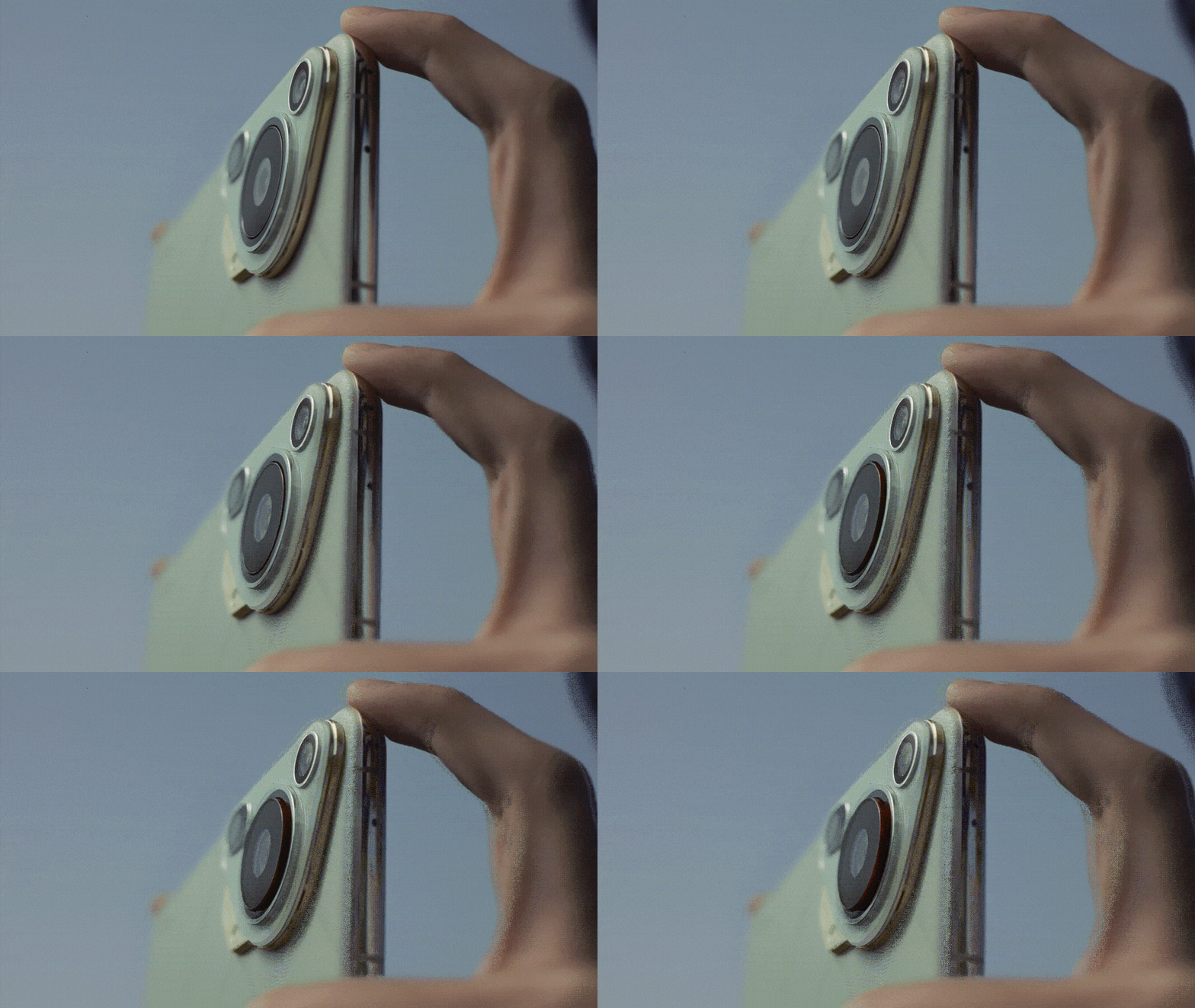
With every new launch of an iPhone comes a flood of comments saying something along the lines of “Huawei phones are so much better”.
However, they’ve most likely never even touched a Huawei phone, or any of their devices, nor will they ever on U.S. soil.
Founded in 1987, Huawei, in short, is a Chinese-based technology company.
There is no comparable American tech giant, not even Apple. Unlike the Western companies with their often-singular focus, Huawei is more of a “jack of all trades” type, the kind of business model that thrives in China.
It offers telecommunications equipment, consumer electronics, like smartphones and wearable tech, data center infrastructure, cloud services. It even produces electric vehicle self-driving systems and rooftop solar products (I might’ve even missed some).
Despite its global dominance in some aspects, like 5G, it has been pretty much outright banned in the United States since 2019. The U.S. cites fear of Chinese espionage and ties to the Chinese Communist Party.
Still, Americans yearn for a Huawei phone.
Western propaganda or national security concern?
It’s hard to say how this all happened, with millions of threads coming from the singular word “Huawei.” For years, Huawei struggled to breach the U.S. market, losing countless prospective retailers and providers year after year over political pressure. It was ousted from other foreign markets as well because of U.S. pressure.
It can’t be disputed that China is a notorious surveillance state. Yet, it remains to be seen whether or not Huawei would use its technology to conduct espionage on behalf of the CCP or just how much stake the state has in the company.
The ban of Huawei was more preemptive, rather than smoking gun. But, there are still some murky things happening at Huawei. This includes multiple patent lawsuits, unclear ownership because it doesn’t allow external audits and the founder a former member of the People’s Liberation Army.
Two things happened in May 2019 that dealt a final blow to Huawei doing business in America. Huawei was not the first, or certainly the last sacrificial lamb in the Chinese tech world (see: Tik Tok ban).
First, Donald Trump signed an executive order, banning the purchase or use of any information and communications technology “produced by entities controlled by a foreign adversary.” His administration even went as far as to declare a national emergency because of the “threat” to the U.S.
While Huawei was not specifically mentioned in the order, it was pretty obvious.
Then, Trump finally said the quiet part out loud when he added Huawei and 68 of its non-U.S. affiliates to the U.S. Department of Commerce’s Entity List a few days later.
By definition the Entity List “identifies persons or addresses of persons reasonably believed to be involved, or to pose a significant risk of being or becoming involved, in activities contrary to the national security or foreign policy interests of the United States.”
In a blog post, Huawei admitted this was a “major hurdle” for the company, one-third of its product components sourced from the U.S.
Joe Biden’s administration further tightened its restrictions on Huawei when he signed the Secure Equipment Act, which said the Federal Communications Commission can no longer review applications from companies ruled a threat, AKA Huawei (and a few others). And the U.S. has not kept its foot off Huawei’s neck even into present day.
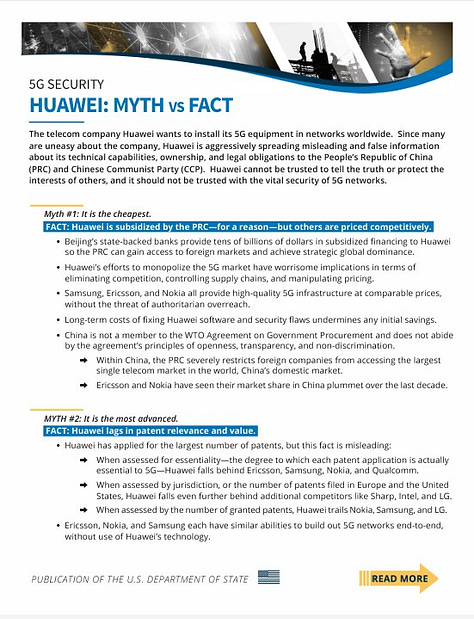
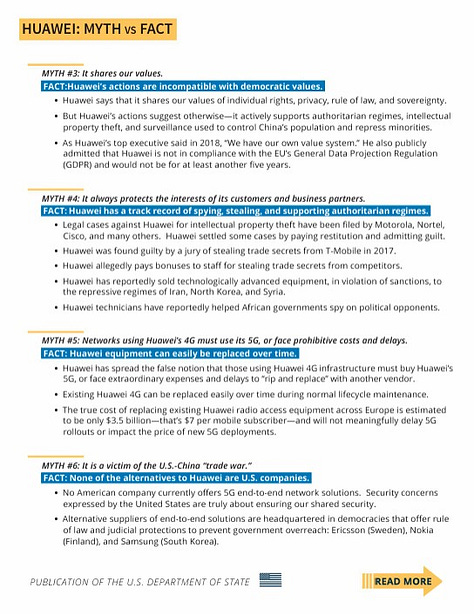
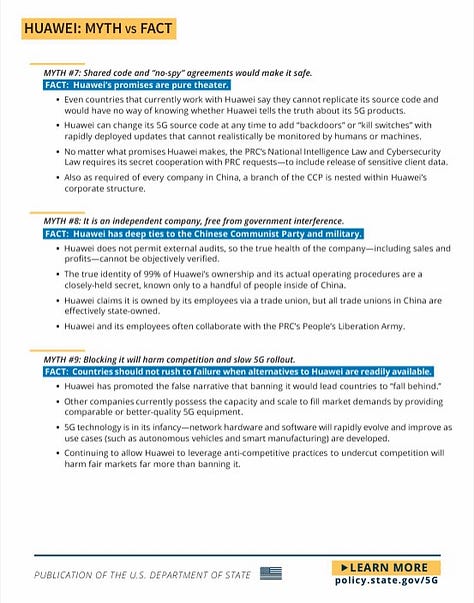
A report from the U.S. Department of State I found painted a very clear picture to consumers about why it believes Huawei should have been and was banned.
Can I still get a Huawei phone in America?
Yes, people can still get a Huawei phone in China and bring it to America, it just won’t work in the way people are used to.
The ban specifically bars American companies from working with Huawei, most notably Google.
For a while Huawei used Android’s open-source operating system, until it launched its own operating system: Harmony OS. In America, users can still slide a SIM card into the phone (from what I’ve heard it’s only T-Mobile and its subsidiaries) and make calls and such. But, there is no Google Play store.
Instead, Huawei phones are reliant on Huawei’s own “App Gallery,” which has now become the third largest app store in the world, according to this Huawei blog post (and a lot of people do enjoy not being reliant on Google and American tech giants).
This has also opened up a window in third-party markets of people selling Huawei devices on Amazon, Ebay or on other social media platforms.
But, Americans don’t care that it’s banned and they’re actually kind of jealous.
Americans want control over their tech
In a November 2025 Tik Tok, Twitch streamer and left-wing political commentator, Hasan Piker, posted a video of him at the Huawei store in Beijing.
He and his friends marveled at the foldable devices, like a phone that turns into a tablet and a tablet that turns into a computer: “this is sick!”
“This is unfortunately not allowed in our country. They won’t let it in America,” says Piker in the video.
This wasn’t entirely true, and you do hear someone correct him (See above).
The U.S. has left too much room for interpretation when it comes to its Huawei ban, creating an almost Streisand Effect when it comes to the company.
Streisand effect
/ˈstraɪ-sənd ɪˌfɛkt/
Streisand effect, phenomenon in which an attempt to censor, hide, or otherwise draw attention away from something only serves to attract more attention to it. The name derives from American singer and actress Barbra Streisand’s lawsuit against a photographer in 2003, which drew attention to the photo she was suing to have taken off the Internet.
When people travel to China, seeing a Huawei store is a new experience and marvel at the tech they don’t have. It begs the question: if Americans had access to Huawei phones would they still want one just as much?
What we do know is Apple has been creating the same desktops since its founding and brick-type phones since 2007. Every mall has an Apple store with its fluorescent lighting and floor-to-ceiling windows blinding passersby.
Not just that, look at a work laptop. It’s most likely a Dell that runs on Windows.
People aren’t surprised by new releases because it’s the same things regurgitated with new buzzwords like "liquid display.”
Many argue that this lack of competition has slowed innovation in America. But, Huawei, with its basically captive audience, has been experimenting with real innovation.
Its Mate 30 Pro and P40 and P50 Pro models have waterfall displays, something Apple users have only been faked out on. Its eyewear is sleek and discreet, compared to the clunky look of Meta glasses. The Mate XT Ultimate Design has a tri-fold design, swiftly transforming the phone into a tablet, and vice versa.
Without a smoking gun, Americans have been left to hypothesize other things about the Huawei ban. Saying the U.S. banned it because the companies here just simply can’t compete.

Rebecca Chan@RebeccaYChan
Not available in the U.S. and the rest of the West because they can’t compete.

The Urban Herald @theurbanherald
🇨🇳 Huawei's MateBook Fold is wild. An 18-inch foldable OLED that collapses into a 13-inch laptop, weighs only 1.16 kg, and hits 1,600 nits brightness. China exclusive, starting at ~$3,300. The future of laptops is here. 💻 #Huawei #FoldableLaptop #MateBookFold #FutureTech
7:38 AM · May 5, 2026 · 1.74K Views
6 Replies · 15 Reposts · 63 Likes
According to the Pew Research Center, in 2025 public trust in the government has declined drastically, with just 17 percent saying they trust the government always or most of the time.
Ergo, many Americans don’t trust the reason the government has decided to make public about why Huawei was banned. Because, despite the swaths of claims coming from the White House citing Huawei as a national security concern, Americans still want its devices.
It all ultimately ties back to control and choice when it comes to tech.
In modern day, when devices are marketed and act as companions, assistants, agents, friends, not having access to that feels like when mom says “no” to a playdate.
In true American fashion, people want, what they want, when they want it, being told “no” by Uncle Sam isn’t going to work when they’ve pushed democratic values.
Not that Huawei specifically will give people dominion over their tech, but the simple act of wanting one goes against the grain of what’s being fed to Americans about the tech over here, as opposed to the tech over there.
Without a smoking gun, Americans have been left to hypothesize other things about the Huawei ban. Saying the U.S. banned it because the companies here just simply can’t compete.
Others say that is propaganda straight from the CCP to drum up more demand.
Regardless, they don’t care that it’s from China, a place we have been told is an enemy, competitor, foreign adversary, whatever way you want to put it. More Pew Research shows the Americans’ views on China have grown “somewhat more positive in recent years.”
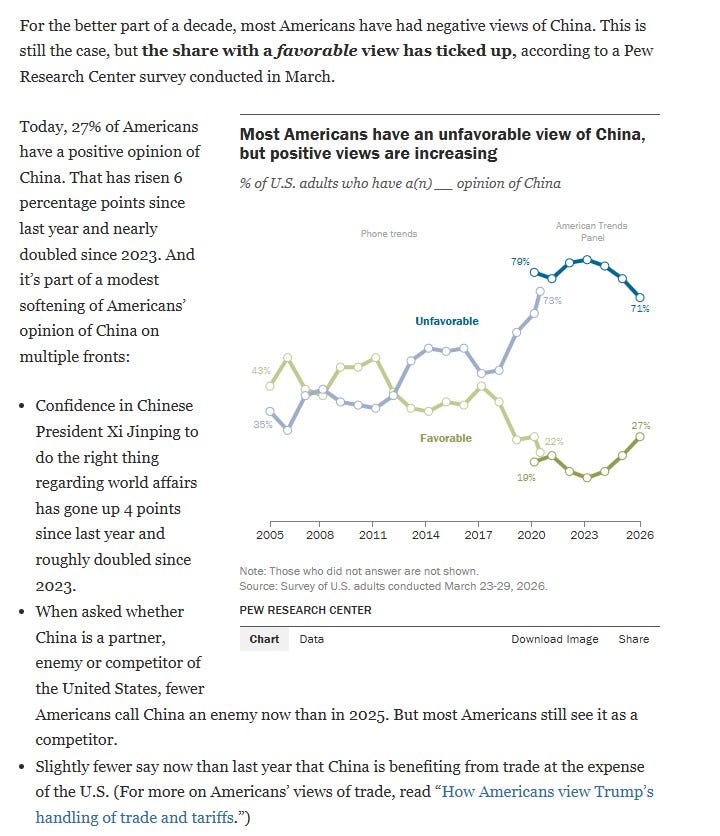
Maybe Americans don’t trust the ban because their own tech giants have had to answer for its surveillance crimes.
Or, when we’ve been fed the narrative of “if the CIA wanted to, they would.”
Or, when that skincare item you were talking about magically appears on your Instagram feed.
Maybe it’s because they have never lived in a surveillance state like China (one the U.S. has enabled, according to this AP report).
Why should Americans care about China inserting itself into Huawei’s tech when the White House says it wants to vet every AI model before they are made publicly available?
This hardly cracks the surface of the entire Huawei and Chinese tech landscape. I didn’t even talk about its chips and DeepSeek, go in-depth on its 5G tech, other countries that have Huawei banned due to U.S. pressure or Chinese cars like BYD, the Tik Tok ban, etc. etc. (hence the links below, and if you have more please share).
The American consumer opinion on Huawei makes one thing evident: people want control over their technology, in any way shape or form. If the U.S. won’t give it to them, they’ll look to other places that might.
Currently, I do not offer paywalled content. Support my work and…
Some primary sources and news stories to pick through:
How The Biden Administration Built China’s AI Industry
Huawei, Cyber-Sovereignty and Liberal Norms: China’s Challenge to the West/Democracies
China’s “National Champions”: Alibaba, Tencent, and Huawei
U.S. Restrictions on Huawei Technologies: National Security, Foreign Policy, and Economic Interests
Huawei CEO: Lack of US carrier support a big loss for you
Huawei Security Scandal: Everything You Need to Know
Huawei ban timeline: Detained CFO makes deal with US Justice Department
Who Owns Huawei? The Company Tried to Explain. It Got Complicated.
Thanks for reading LUDDITELOGS! This post is public so feel free to share it.
No posts
Comments
Nothing yet. Say the first thing.
Sign in to join the conversation.