
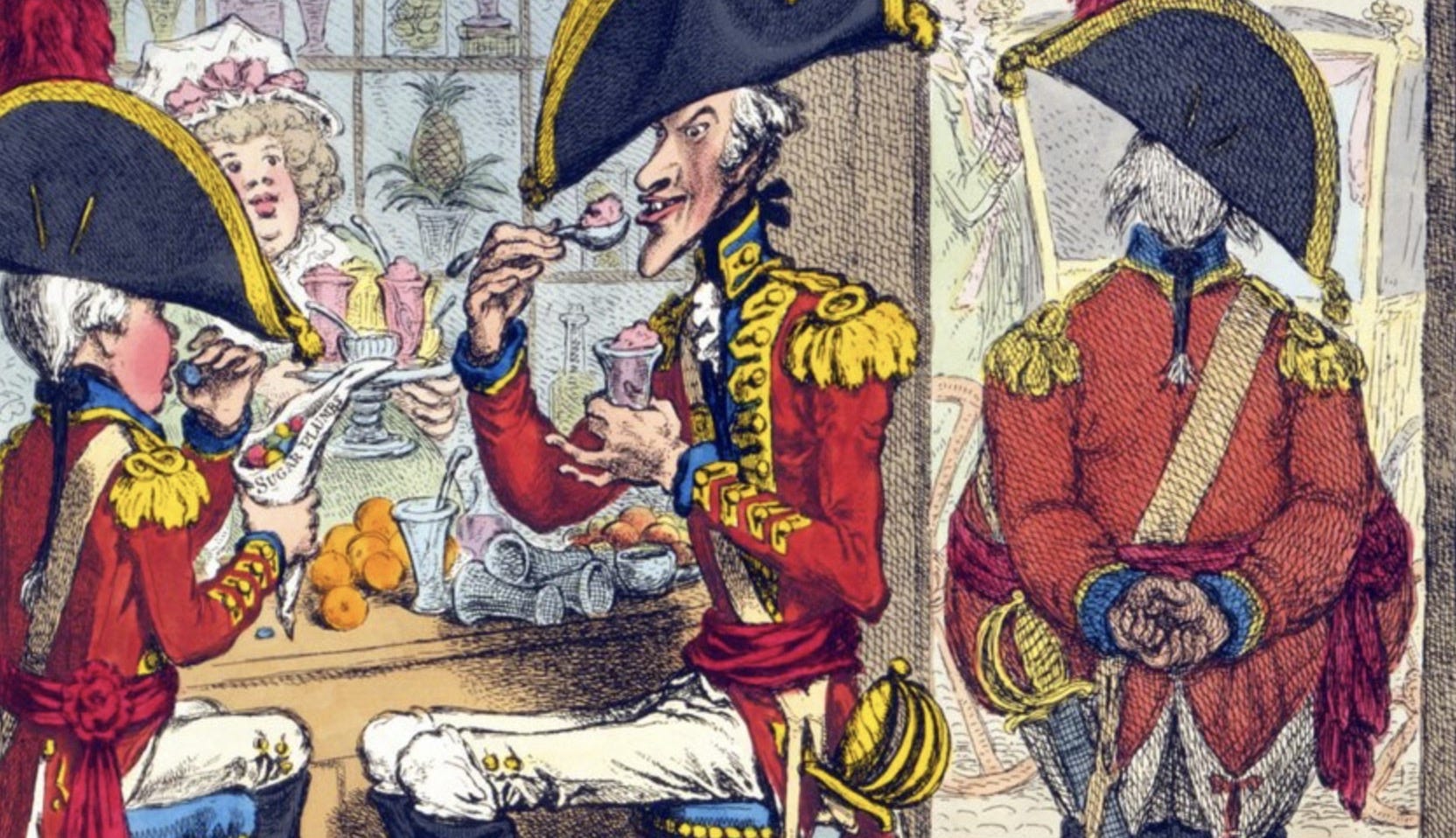
There are establishments in Georgian London dedicated entirely to the consumption of jelly.
Their customers are army officers and merchants and the occasional respectable woman, and they go there in the mornings the way we might go to a coffee shop now. They sit, they eat their jelly, they leave.
None of this, in the daytime, is remarkable.
But at night, things change.
It’s the summer sale at MY LIFE IN THE PAST! Click here for 25% off annual subscriptions.
I came across the dark side of the Georgian jelly house while we were filming in the quadrangle of the Bodleian Library last week. Suzie, the library’s head of publications, rushed out mid-shoot and pressed a copy of the latest Bodleian publication into my hands.
‘What’s that about?’ asked one of my team at lunch, finding me deep in it already.
‘Sexy jelly,’ I said.
The look on his told me everything I needed to know about what I should write this week.
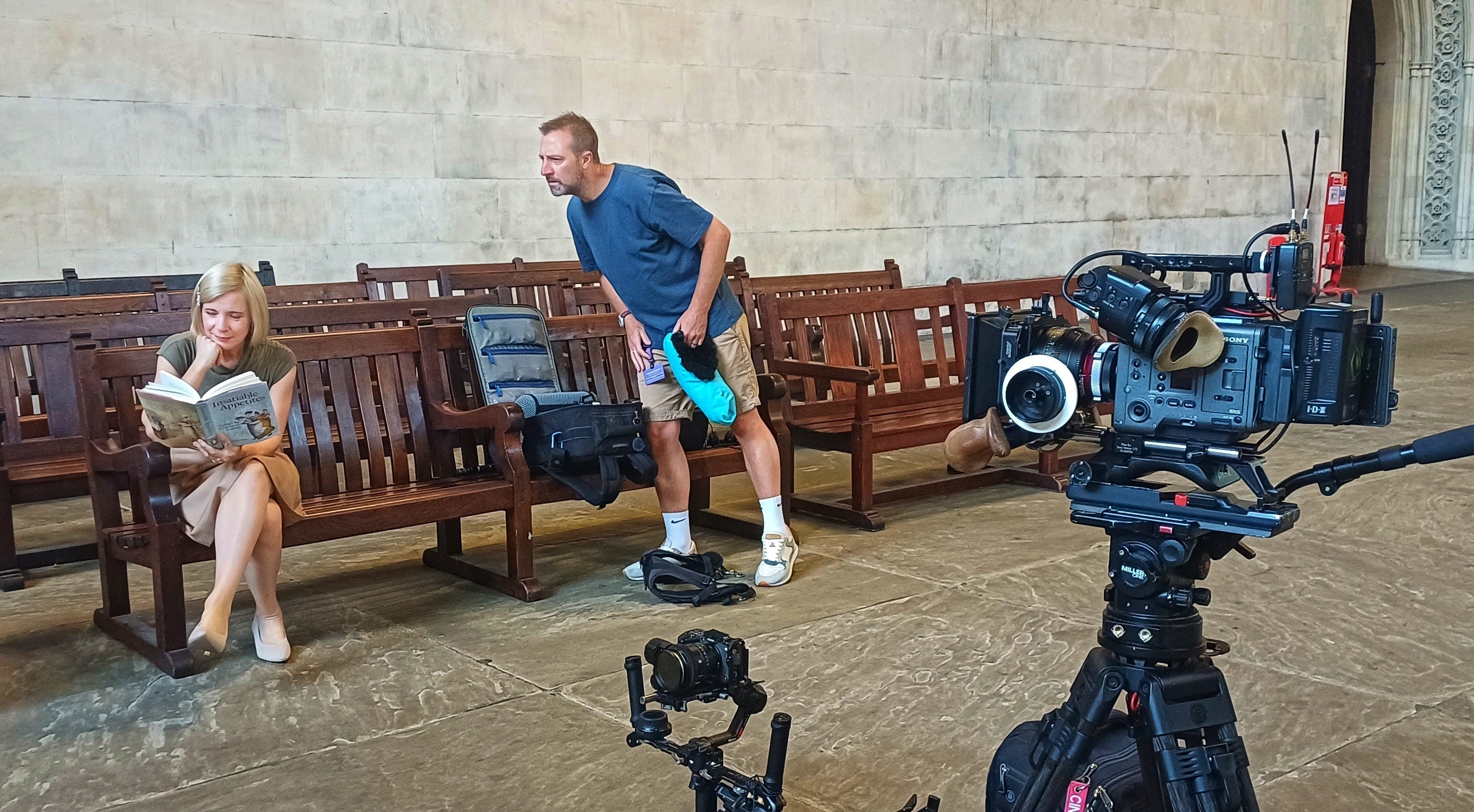
Peter Ross’s Insatiable Appetites: Eating Out in Georgian London is the book in question, and it’s one of those books full of moments that make you think ‘why did no one tell me this before?’ It’s also beautifully produced — heavy paper, wonderful illustrations, the kind of object you want to own.
But it’s the jelly chapter I’ve enjoyed the most.
Jelly houses, it turns out, which sound rather jolly in the daytime, become much murkier places at night.
I want to introduce you to William Byrd, a Virginia merchant living in London in the 1710s, who ate a late-night jelly at least once a month and seems to have recorded it each time. Byrd’s diary is the kind of document historians like me love, because he tells you everything, including things he probably shouldn’t.
In March 1718 he went to the opera, ogled a Miss Mary Smith — a woman he’d been pursuing for years in the vain hope of marriage — and afterwards went to a chocolate house and ate a jelly. A few weeks later, having read the papers at Will’s Coffee House and eaten his jelly, he picked up a woman, dined with her on chicken and asparagus, and tried (unsuccessfully) to seduce her. Some weeks after that, he went with Lord Orrery to a brothel in Queen Street, where he met a Mrs C—rt—ny, went to bed with her, “rogered her two times,” rose at ten, walked to Will’s, and ate a jelly. Then he walked home and said Lord have mercy on me.
What an evening, William. Sex, then jelly, then guilt.
Byrd wasn’t alone in making this particular connection. In 1734 a sex worker called Martha Holcomb took a drunken client to a house that rented rooms, and before they went upstairs the pair consumed a bowl of punch, a bottle of wine, and three jellies. The Midnight Spy, in 1766, describes a late-night jelly house as “the prelude to every kind of debauchery.” By the 1790s, one guide to London reported women selling sex parading outside like cattle at a market.
So why jelly, specifically?
It’s the July summer sale! It’s 25 per cent off subscriptions! Join us to read on…
Comments
Nothing yet. Say the first thing.
Sign in to join the conversation.