
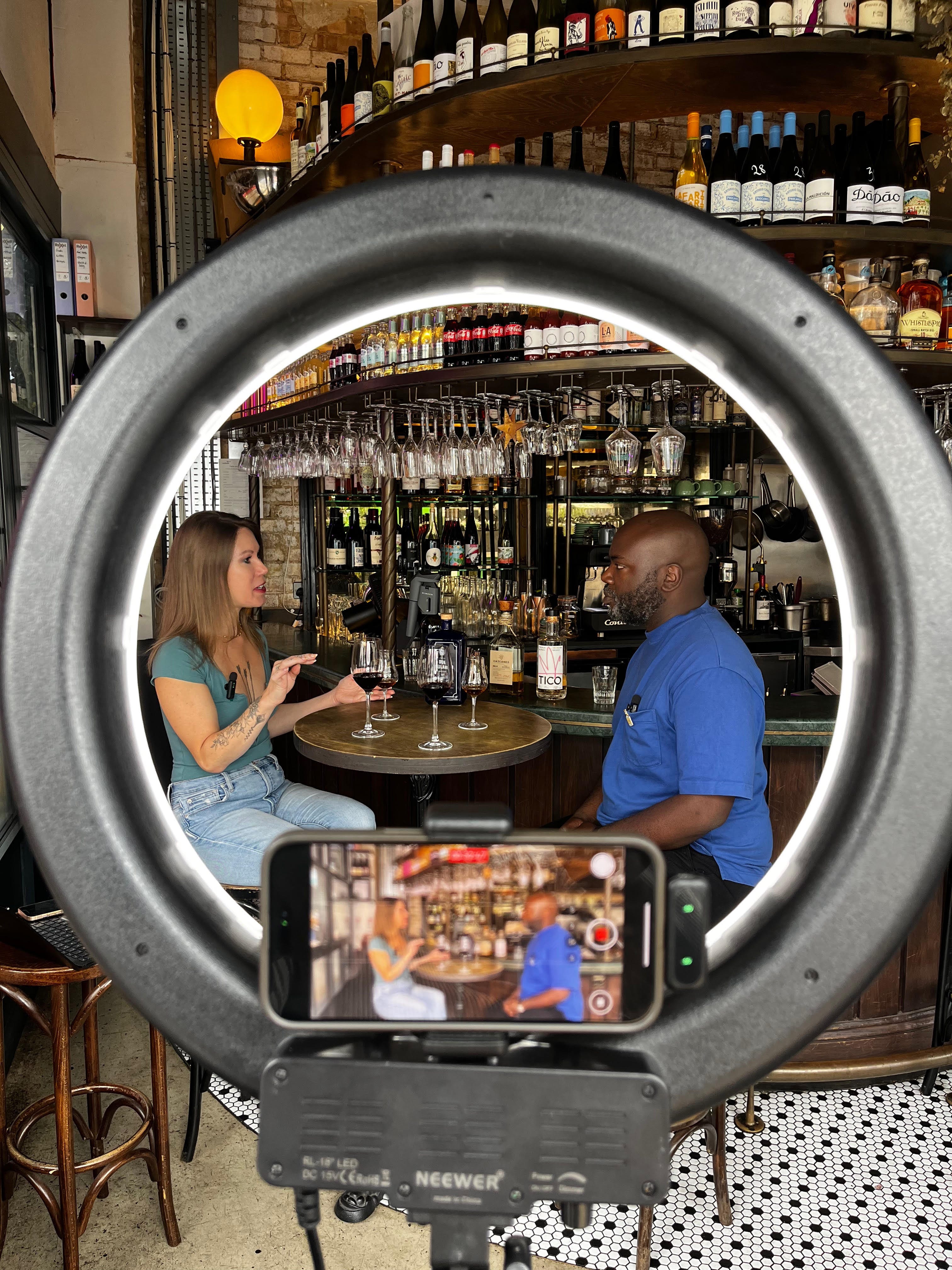
When my friend Moses told me he was starting Los Catadores de Agave, tasting events that focusing on additive free tequilas, we knew our interest in the world of libations came from a similar curiosity based in history and storytelling. A tie between what we spent our Saturday nights doing and what our ancestors did centuries ago. The Agave Chronicles is a YouTube series that aims to share stories around agave spirits via 30 minute episodes, as well as clips through TikTok and Instagram. We sat down to chat about the intersections of our work the best way we know how - tasting. Special thanks to my local Bottle + Rye for allowing us to film in their gorgeous space. 💛
What we tasted:
Tico Rosa (aged in French oak Cabernet Sauvignon barrels for 5 weeks).
Cazcanes Rosa Blanco (Cazcanes’ Still Strength Blanco (54% ABV) was placed in a Napa Valley Cabernet Sauvignon, first-fill French Oak cask from Ona Vineyards (a wine created by Cazcanes co-founder Colin Edwards). It was aged 45 days and then bottled at 50% ABV).
Parcel Series No.75 Cabernet Sauvignon, Napa Valley (their Cabernet Sauvignon comes from multiple vineyards grown at various elevations to showcase the diversity of terroir within Napa Valley, Oakville, CN, Atlas Peak, Stags Leap. It is aged on French and American oak).
Winemakers reusing barrels is a very common part of the winemaking process. You may have heard your wine retailer or somm tell you one Chardonnay was ‘aged in new oak’ vs another ‘aged in old oak’. Wine barrel aging is a magnificently fascinating topic on it’s own but much like the fresh Ghostbusters x Crocs drop, we’re going to explore a cross-over collab.
Aging spirits in used barrels is a time-honored practice that enhances their flavor, aroma, color, and smoothness, but there are soo many more reasons why barrel reuse is fascinating.
1. Sustainability and Environmental Responsibility
Oak trees take decades to mature, and each tree yields only a few barrels. Reusing barrels helps reduce the demand for new oak, preserving forests and minimizing deforestation.
Many cooperages (the art of making of barrels and casks) now follow sustainable forestry practices, such as selective cutting, reforestation, and certification programs like the Forest Stewardship Council.
Repurposing used barrels for aging other wines, beers, or spirits extends their lifecycle and reduces waste.
2. Flavor Layering and Complexity
Reused barrels impart more subtle and nuanced flavors compared to new barrels. This is key when aging things like wine, rum, and tequila - where the creator is looking to add secondary flavor notes.
The residual compounds from previous aging can add unique character to the next liquid aged in the same barrel.
3. Cost Efficiency
New oak barrels are expensive! 💸 A new 225L (59-gallon) French oak barrel currently costs around $1,050 USD, and a 53-gallon American oak barrel will run you around $425 USD. These can be massive expenses for independent wine makers and distillers, thus reusing and sharing barrels allows producers to cut costs while still benefiting from the barrel’s structural and flavor-enhancing properties.
4. Innovation in Aging Techniques
Techniques like double oak aging (transferring spirits from one barrel to another) and using hybrid barrels (combining different types of oak) are expanding the possibilities for flavor development.
Reused barrels are often part of these experimental approaches, helping producers create next-level, innovative products in regards to quality and creativity.
So now that we understand why barrels are reused, lets dive into the history. Distillers have long reused wine barrels to age spirits not just for the practicality of containment, but also as a flavor enhancer. One of my favorite examples of this is sherry x scotch. Beginning in the 1800’s sherry wine casks from Spain were widely used to mature Scotch whisky, mainly because they were abundant and inexpensive (see Cost Efficiency). Sherry was exported from Spain to the UK in barrels, and soon those empties sat readily available, primed to be filled with Scotch, the UK’s liquid gold. Spirits like scotch stored in these sherry casks absorbed some of the sherry’s rich characteristics which people came to enjoy. This trend of filling old barrels with what’s readily available and in style repeats itself throughout history. When sherry popularity started to wane, bourbon production started to boom in America. As a result, cheap ex-bourbon oak barrels flooded the market and became the standard for aging many spirits.
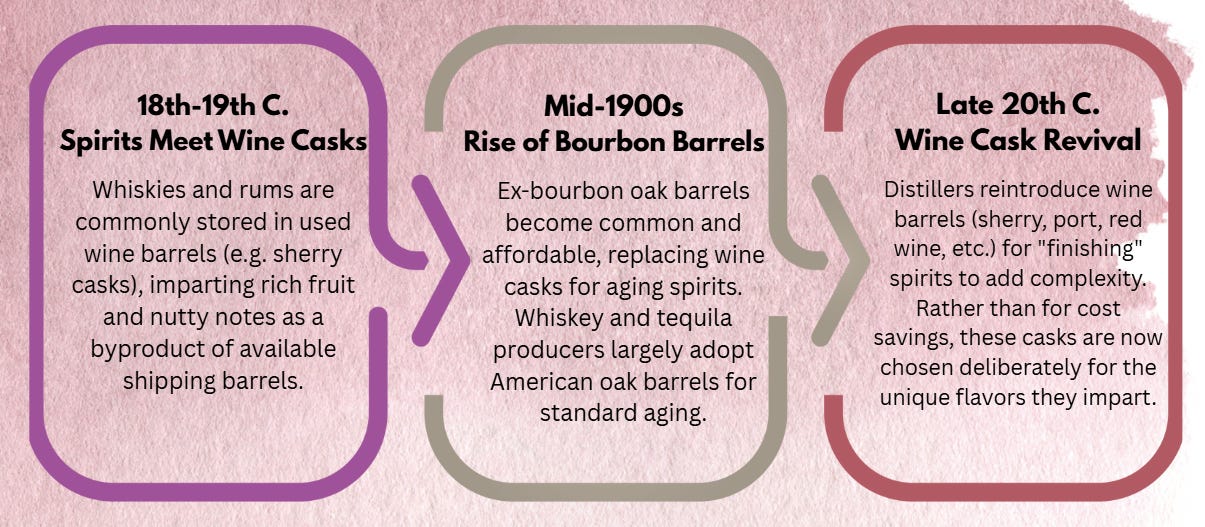
In the last few decades, there’s been a renaissance in reusing wine barrels (sherry, port, and in our tequila example here, Cabernet Sauvignon) for a secondary maturation or ‘finishing’ of spirits. Modern distillers intentionally seek out specific wine barrels much like a winemaker would seek out a specific piece of land, yeast, and fermentation vessel. In our modern times, this creative choice becomes less about practicality, and more about unearthing new complex and unique flavors in a spirit.
Like many things throughout history we’ve evolved from function to fun. While earthenware originally started out as a method to feed oneself, now colorful Le Creuset splashes aesthetic flair through kitchens across the world. Similarly, the sensory delights we gain from aging spirits in oak are vast and exciting.
Let’s start with the wood itself. Naturally different trees are compromised of different types of wood, each containing their own wood compounds. Oak (most commonly used in wine and spirits) is full of flavor compounds such as tannins, lignin, and lactones. Over time, contact with alcohol can slowly dissolve some of these compounds and inject them into the spirit. This is how we end up with notes of vanilla, caramel, coconut, spice, or even a bit of smokiness if the oak was toasted or charred. A prime example of this flavor transferring is through American white oak and bourbon, I’m a Southern gal with a sweet tooth and without those vanilla and coconut flavors, my Makers Mark just wouldn’t be the same. 🥃
Next we have oxygen, which can play an active and passive role in wine and spirit aging. Wine and oxygen are akin to your most infamous toxic relationship, a little hit is lifechanging, but too much and you end up riding home on the A train at 6 in the morning feeling exhausted, full of regret, and with that sour taste in your mouth reminiscent to a wine that’s slowly turning to vinegar on your shelf. Spirits are much the same, and allowing them mature in oak gives them the opportunity flirt with just the right amount of oxygen without getting burned. This process can be described by the romantic terminology ‘angel’s share’ (also one of my favorite cocktail bars in NYC).
Let’s break it down -
Oak barrels are porous, allowing air exchange and slow evaporation.
As the spirit ages, water and alcohol vapor escape (typically 2–5% per year depending on climate and storage conditions).
This evaporation concentrates flavors and contributes to the spirit’s maturity and complexity.
So scientifically - angel’s share refers to the portion of a spirit that evaporates through the oak barrel during aging, and whimsically we like to think it’s the lost portion taken by angels (those lush little cherubs). 😇 Much like with wine, this gentle kiss of oxygen will soften harsh alcohol edges, create new flavor compounds, and over time a once fiery spirit mellows the F out. (Note how the Cazcanes’ went from 54% to 50% ABV post time in the Cab Sauv barrels).
While we’re talking whimsy, let’s talk about visuals. It’s said that we eat first with our eyes, and the same can be said for our drinks. How else can you explain why a perfectly chilled dirty martini is the sexiest thing in the world? 🍸 Clear spirits are fine, and in fact the process of clarifying spirits is very in vogue right now. That said, coloration is a natural by-product of oak aging. A clear spirit will pick up color from oak which can range from golden to deep amber, depending on the barrel’s char/toast level as well as it’s prior contents. With tequila, it starts as a clear ‘blanco’, after 2-12 months in oak it becomes a straw-colored ‘reposado’, and with even more time (1-3 years) an amber ‘añejo’. In the case of aging in wine barrels, some of the previous wine tenant’s pigment can also tint the spirit. For Tico Tequila Rosa, that spent 5 weeks in a Cabernet Sauvignon barrel, the barrels impart a subtle rosy hue without the need for a long aging period. It’s a beautiful example of how even brief contact with a wine-soaked barrel can transform a spirit’s appearance, aroma, and flavor. The spirit’s original flavors like the blue agave notes of tequila marry with the oak-derived flavors, creating a more complex profile of cooked agave, citrus, subtle red berry and floral notes. The Tico Rose, a creatively-aged spirit ended up with layered flavors that are “greater than the sum of it’s parts”.
Now that we’ve discussed the benefits of using barrels let’s talk about choosing the actual barrel, where once again in the history of wine the French and Americans face off… just kidding, I don’t think we need another Judgement of Paris 😜. All jokes aside the type of wood the barrel is made from is a crucial decision for wine and spirit makers. Most wine barrels are made from either European oak (commonly French oak) or American oak. These two oak types have characteristics that are as different as Paris and New York City:
American Oak has a more open grain and is high in certain flavor compounds like lactones. It tends to impart bold, sweet flavors – notably strong vanilla, toffee, coconut, and baking spice notes - personally I always get dill from American Oak, but perhaps that’s because I’m pickle obsessed. Overall you’re getting ‘bigger’ flavor, think the ‘oaky’ Chardonnays and Cabs coming out of California in the 80’s - that’s American oak. On the spirit side - bourbon, that signature vanilla-caramel sweetness I mentioned earlier - American oak.
French Oak has a tighter grain and typically offers more subtle, elegant flavors. French oak tends to impart notes of spice, light vanilla, silky tannins, and hints of toasted almond, cocoa, or coffee. Since it releases it’s compounds more slowly (thanks to the tight grain), the interaction with the spirit can be more controlled and nuanced. Some wine makers prefer French oak because of this way it can integrate more delicately than American oak.
When it comes to aging wine and spirits, one type of oak is not categorically better than the other, it’s all about the result the creator is aiming for. French oak barrels can be chosen for more delicate spirits or when a softer, rounded finish is desired, while American oak barrels are chosen when bolder, sweeter flavors are the end goal. Some producers will choose to do a combination – for example, one extra-añejo tequila, Compoveda, does their initial aging in French oak then finishes it briefly in a new American oak to add a final burst of vanilla sweetness.
Along with the type of wood we’re using, we also learned with our tequilas that what was previously in the barrel really matters, and different choices lead to different flavors:
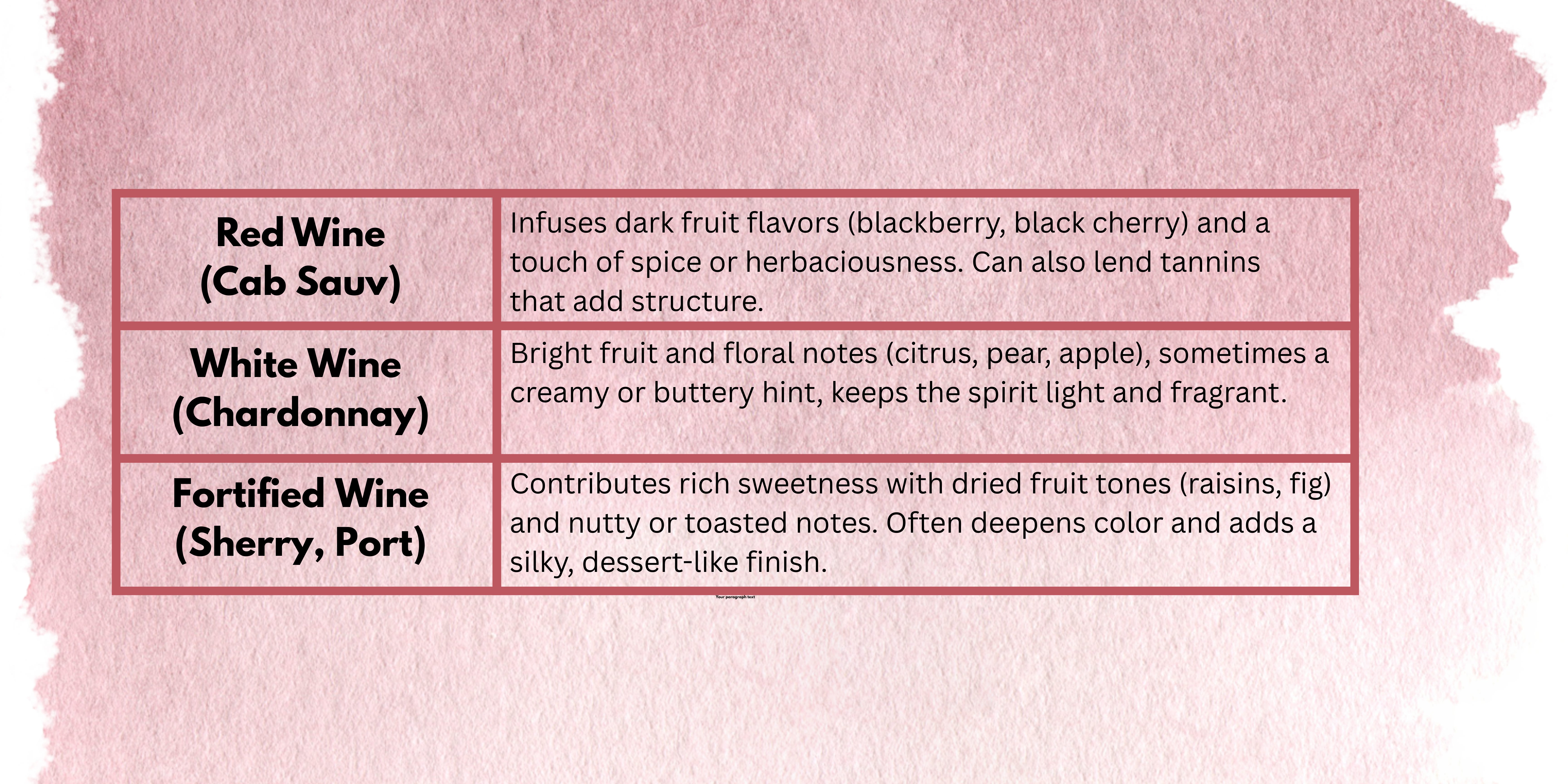
One of the most common reasons to age in a wine barrel is to introduce flavors that weren’t present before. We can go deeper than simply ‘red’ and ‘white’ grapes and talk about how individual grape varieties have differing influence. Different grapes contain different flavor compounds which in turn leave different residues in the barrel. In our tequila tasting we saw how the barrels which previously held Cabernet grapes (rich in dark fruit flavors and tannins) imparted a pink color and floral/fruity notes even from the brief 5-6 week exposure.
A final yet powerful benefit of oak aging is the additional of tannin and structure. Wine (especially reds like Cabernet Sauvignon) contain tannins – compounds that can add a drying sensation and complexity. A spirit finished in a tannic red wine barrel might pick up some of that tannic structure, giving it an extra drying grip or enhancing its body. This can lend a perception of ‘structure’ or depth to the spirit’s flavor, much like tannins do in wine.
When we initially discussed this collaboration Moses asked me ‘Do you think resting tequila in wine barrels is more about flavor or storytelling?’ I immediately knew my answer was both.
Flavor:
Aging a spirit like tequila in a wine barrel is ultimately about expanding the flavor profile of that spirit in a deliberate way. As we’ve seen, what once began as a convenient reuse of casks became a conscious technique to unlock flavors and textures that plain new oak or used whiskey barrels couldn’t provide. The barrel choice should ultimately be about complementing the spirit’s existing character. A good distiller will ask: What does my spirit taste like now, and what do I want to add or enhance? If a tequila has strong peppery agave notes, maybe a barrel that held a round, fruity red wine will add a soft sweetness to balance it💡. If a whiskey is light and grassy, maybe a richer sherry cask will give it depth. It’s important to remember that distillers aren’t trying to flavor the spirit, they’re just trying to enhance what’s already there.
Storytelling:
So here’s where we get to the more philosophical part and what really ties this collaboration all together - the barrel’s past life matters. When we put a spirit inside a used barrel, we’re not flavoring the spirit solely with wood; we’re also infusing it with particles left behind by whatever was previously stored in the barrel. Wine barrels offer a unique twofold influence: the transformative magic of oak maturation plus the trace essence of the wine that once resided in the wood. Essentially a bit of the wine’s soul is reborn into this new spirit 😉. It’s a marriage of craftsmanship between the winemaker’s barrel and the distiller’s spirit. The result can be a smoother, more complex, and unique spirit that tells a story of both agave (or grain) and grape. We find that alchemy of taste, tradition, and innovation - where each sip of such a spirit carries echoes of the vineyard, the oak forest, and the distillery simultaneously providing a drinking experience that is truly multidimensional. 🌌
No posts
Comments
Nothing yet. Say the first thing.
Sign in to join the conversation.