
Aldeia da Perpétua is a tiny hamlet that is part of a galaxy of all kinds of settlements on this peninsula. In particular, it belongs to the solar system that is Perão. Perão is made up of the ancient village of Perão Velho, a suburban dormitory sprawl called Poços de Perão, hamlets like Perpétua, and dotted around in the hills are the vineyards and estates that belong to the wealthy and the formerly wealthy. The population consists of the working classes - the farmers, shop workers, cleaners, mechanics, builders, and waiting staff; the middle classes - the teachers, vets, bank staff, middle-management, the business owners; and a sprinkling of the upper classes - the doctors, bankers, vineyard owners, and old money havers. Back then, there were only handfuls of British, German, Belgian and Dutch… across the whole peninsula their number wouldn’t even have reached 300.
The diverse groups never really had to deal with each other, unless a family of a higher class hired domestic servants from a lower class, or if a tasca had some aura of cool about it and was frequented by all. They would only ever be seen together in the supermarkets and at certain saint’s festas.
The annual saint’s festa in Aldeia da Perpétua was one of them.
The festa took place across five nights in August. For five nights the party would rage. For five nights, the music, an assortment of all the worst pimba, would be played until five in the morning, through single glazed windows of our house just 300 metres from the grounds where the festa was held. It was pointless thinking that you could do any work that week, so everybody in the village took the week off normal life.
There was nothing special about the festa, and maybe that was why it was so popular, its simplicity. There were no fireworks, no famous bands, no fair rides, no food trucks. There were just a few stalls: one for each kind of booze - beer, boxed wine, and caipirinhas - , a bifana stall, a hotdog stall, and a raffle stall. The music was a guy with a synth or an accordion, stuck for hours on a tiny stage to play us pimba music into the small hours. When he took breaks, a tape of more pimba would play.
The villagers were the ones to dance first, a very serious business, until others got really drunk and joined in. Middle aged couples, pairs of old ladies, all spruced up for the evening, dancing to the hideous music. Luckily, with enough caipirinhas in one’s system, the music became less hideous.
On the raffle stall, where the raffle tickets, the rifas, are rolled up pieces of paper, the year’s prizes would be laid out. Some of the prizes were desirable, like the whole presunto (the very top, very expensive prize), a basket of cured meats, or a case of wine, or a box of cheeses.
The rest of the prizes just looked like junk, and my second year at the festa, I realised that that’s exactly what they were. The junk, every year, went home with the rifa winners, and every year, the same junk would be donated back to the rifa stall.
Among many floral plates, there was a coffee service from the 1970s that miraculously returned every year unbroken. There was a hideous, heavy looking clock, a nasty brown glass vase, a couple of dolls that had seen better days, and a vast, floppy, stuffed creature.
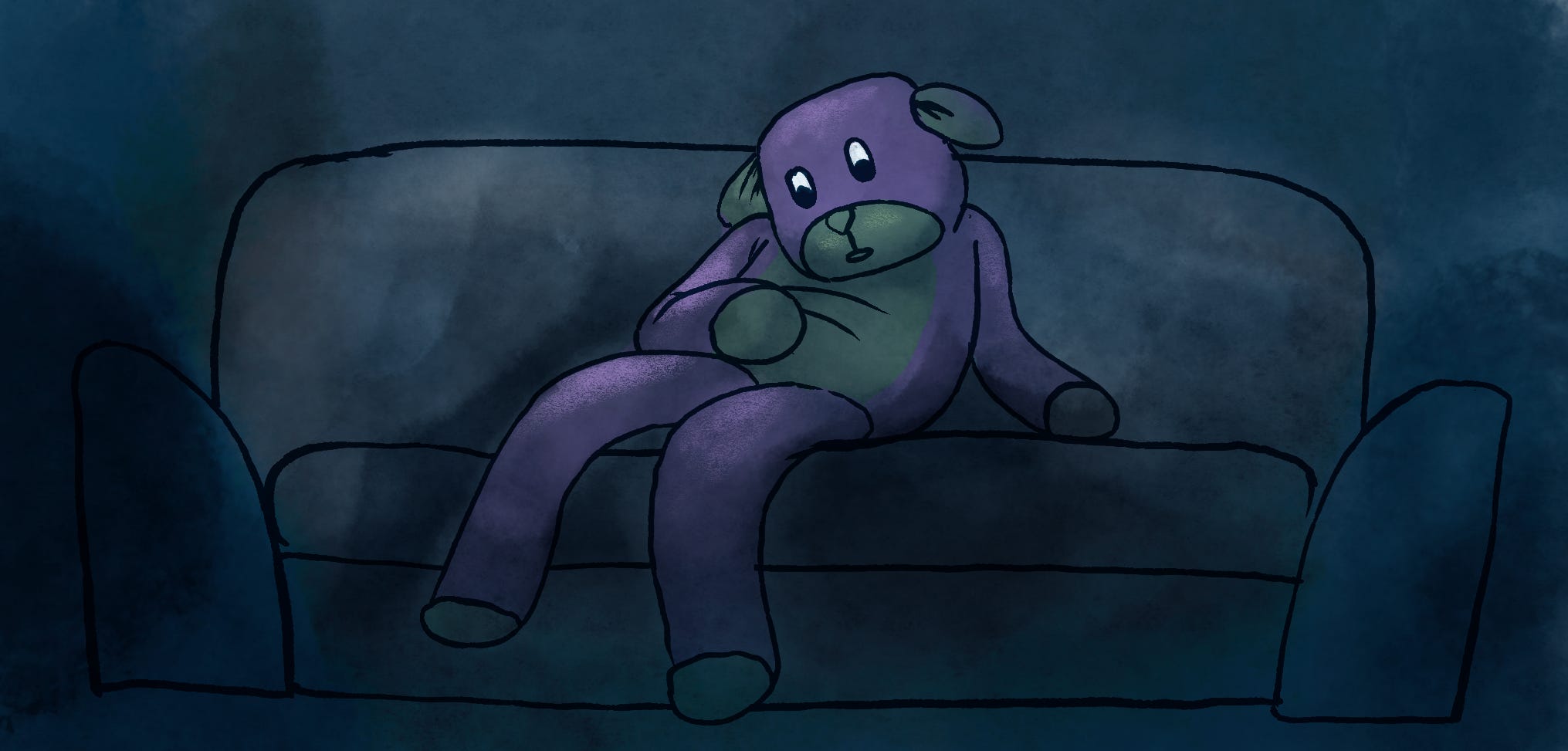
The creature was taller than me, made of the purest polyester, in pastel pink and green, made sometime in the 90s, possibly won at a fair. It might have been a bear. It might have been a dog. Nobody knew. It was hideous, and every child under the age of ten wanted it. It was the thing that probably drove most sales of rifas, with parents and grandparents giving in to their children’s demands for another bag of 20 rifas.
Each time the creature was won, it would be carried away triumphantly by its new owner, the owner’s parents looking dismayed but relieved that the begging was over.
The pink green bear dog would be back the next year, though, like clockwork, a little older, a little floppier. If it was so desirable, how could the parents re-donate the thing without their children protesting?
It was a mystery until the year that we won it. My daughters triumphantly carried it between them the 300 metres back to our house. They got it home and sat it between them on the sofa for the five minutes before they collapsed from exhaustion and went to bed.
The next morning was the first morning that they saw the thing for what it really was. They had only ever seen it at night, under the feeble lightbulbs that lit the rifa stall. In the light of day, it was a horrible, thread bare, grubby thing that nobody in their right mind could ever love. Too big for most washing machines, it had 20 years of grime ground into its seams and it smelled of must. It was promptly moved from its prime position in the middle of the sofa to the edge of the sitting room, and then migrated bit by bit to the back of the washroom.
The following August, the ladies of the parish who came to everyone’s door to collect this year’s prizes, were handed the creature after I swiftly dusted the cobwebs from its armpits. “Him again!”, they laughed, and carried it off to wherever they stored all the junk.
All the people of Perão go to the festa of Aldeia da Perpétua, squeezed together in the small chapel grounds. From a distance, you might think that they are all one. Standing in the middle of them, though, and you’ll see that nothing is different from any other day. The working classes dance to the music, and enjoy the food and each other’s company. The middle classes hang with their professional pals, enjoy the drinking, and eventually enjoy the dancing only after they are extremely drunk. The upper classes stand together to discuss business. The only thing they have in common is the desire to gossip, and all their children lured by a horrible pink green bear dog.
Comments
Nothing yet. Say the first thing.
Sign in to join the conversation.