
Dear Readers:
Sorry for the delay, I have a lot going on. For example, I wrote a lot of notes about dramatic monologue-related things I wanted to tell you, but I can’t find them anywhere or remember whether I wrote them in a notebook or on my computer or on loose pieces of paper or what.
During the hard, boring, exhausting middle part of the semester, I assigned dramatic monologues to two very different writing classes. One of these classes was here in Hyde Park1 and one was in the western suburbs, near the Broadview ICE facility, and in both, it was getting hard for students to think about anything but ICE—videos of ICE, ICE in the corner store, ICE on the local news, ICE everywhere. A student who lives in Englewood saw ICE officers yelling at people at the grocery store, and she started yelling at ICE, until the Chicago police came and made ICE leave. She wrote a dramatic monologue from Greg Bovino’s point of view. What she wrote stunned me, because it was a coldly coherent vision of Greg Bovino’s incoherent rage. She said it made her really angry to write it. The speaker of the dramatic monologue I was working one was an ICE officer who raided the apartment in South Shore, so I knew exactly what she meant. It was a dangerous, energizing thing to write, like going behind a fence at a construction site and touching a bunch of tools and wires.
I got the idea to assign dramatic monologues because I was reading Vice, by Ai (no relation). Ai basically only wrote dramatic monologues, which, I told my one of my classes, is extra interesting because she had a “fractional heritage” that readers of poetry might anticipate would serve as the basis for a lot of personal poems: she was Japanese, Choctaw, Black, and Irish. But the speakers of her poems are not an “I” that we are invited to associate with the poet and whatever we might imagine her experiences to be. Many of her speakers are evil and depraved (her first book in 1972 was titled Cruelty). They are often famous people, J. Edgar Hoover, Lenny Bruce, J. Robert Oppenheimer, RFK, Marilyn Monroe, and/evil people, a child beater, a priest accused of sexual abuse.
At first I was super into Vice, thinking (as I read these poems spoken by child molesters), this is poetry about the actual power of poetry, which poets usually turn away from or don’t even think about. They could grab this power and use it to repulse and horrify, like Ai does.
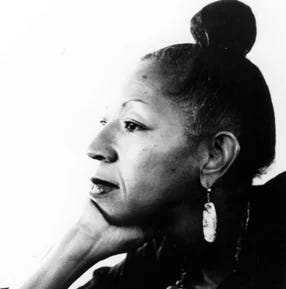
But the more I read, the less convinced I was by this idea. Vice is a new and selected, and I liked it less as it went on. The earlier poems are extremely formally beautiful and clever, and the later poem are messier and less interesting. In the earlier ones, Ai’s dramatic monologues are more often spoken by unknown, unnamed people than by infamous people. Here’s the opening of “Everything: Eloy, Arizona, 1956,” spoken by a young married mother who slips out of the house to…I’m not going to say “sex work,” that’s not in Vice’s lexus…, but, well—just read this and see how good:
Text within this block will maintain its original spacing when published
Tin shack, where my baby sleeps on his back
the way the hound taught him;
highway, black zebra, with one white stripe;
nickel in my pocket for chewing gum;
you think you're all I've got.
In the later ones, though, sometimes the speaker’s infamy is all there is to the poem, like in the multiple poems spoken by J. Edgar Hoover. There is frequent and obvious internal rhyme (“…end the so-called peaceful revolution, / but my solution…”), but otherwise these are your typical boring stanzaic free verse poems. The early poems contain both evil and really accomplished prosody. This is an unnerving combination, in a good way. I noticed that the better later poems are the rare ones that are about lesser known people, or about famous people but not spoken by them. One called “Penis Envy” is about a woman-hating killer in prison who admires Clarence Thomas. “Oops! I think I wobbled over the line / that separates fantasy from crime.” I also loved one called “Interview with a Policeman”: “You say you want this story / in my own words, / but you won’t tell it may way. / Reporters never do.” It inspired my own dramatic monologue.
There are a bunch of poems I hated at the end of the book, in the new poems section, that bear the subtitle “A fiction.” These include “False Witness,” spoken by a mother who encourages her young daughter to seduce her father, the speaker’s husband; “Sleeping Beauty,” spoken by a comatose woman bearing the child of an evil nurse’s aid. You get the idea. I started thinking about a dis Joyce Carol Oates lobs in her journal against Donald Barthelme. Oates pins on Barthelme
the development of the kind of ‘anecdotal’ short story, light-hearted surrealism…made to fit the contours of magazines that publish little fiction and then only rather short fiction—when one has written a story like this, what satisfaction is there? It fades, evaporates, it is only a tissue of words, connected by the intensity, the feverish intensity, of the writer’s will (as opposed to his imagination), a tour de force of the will, no feeling to it… (journals of JCO, 46—cannot forget this, took me forever to find)
Ai is doing something similar with her poems and their shallow investigation of evil. She’s not taking it seriously enough, because the poems aren’t prosodically intense enough. They are anecdotal, too short, buoyed by intensity rather than attention.
For the dramatic monologues in class, I gave my students this prompt, from one of my true-blue prompt books, The Practice of Poetry, edited by Robin Behn and Chase Twichell. The prompt is by David St. John, but I adapted it to be not just for a poem but for any form you want to write it in (and also, to be honest, made several adjustments for my higher level of wokeness, because this book, like Vice is from the distant 90s):
Write a dramatic monologue—a poem, speech, essay, story…—written in a voice other than your own. You could choose a speaker from another time, place, or culture; a specific historical or contemporary figure; an invented, fiction speaker. You could choose a speaker of a different gender, someone much older or younger than you. The point of the exercise is to step into the life of another person and to speak in their voice. You could experiment with saying some things you would never say in your own voice.
My western suburbs students were extra special this semester. I told them on the last day of class, don’t let them take writing away from you. There are things inside you that can only come out from writing. In my job, I get hardly any money; instead, I get to see and read those things of yours, that are only yours, not mine ever. They—I mean, like Alex Karp and people like that—don’t want you to find those things. They are telling you a computer can do for you what only you writing, from your own self, can do.
Here’s my dramatic monologue:
Interview With ICE
Text within this block will maintain its original spacing when published
You speak like you’re in charge
of me. Hell, you've already
diagnosed me. His student loans,
you say, his loneliness, his White
Male Rage. You say
take off your mask.
Why, so you can dox me? Throw in
the foamy late October
lake of what you don't know
that the building had failed
its last fifteen inspections. A good city
doesn't let people live like that.
You didn't see the sleeping bags
and sheets laid out on the piss-stained carpet
in the hall or the front doors hanging
loose like rotted teeth. The broken elevator
marooned a dude in a wheelchair
in his apartment for weeks
and weeks. And yet--when I landed
from the Blackhawk and ripped
inside, I said to my fellow officers,
my new brothers, shit,
this is nicer than some places I've lived.
Lift up any corner of my life,
you'll see the roaches crawling around.
Slam it back down again.
There's a thin blue line
among the stripes on the flag
on the bumper sticker I placed on my
sick new truck. People like you,
caution is your god,
more important even than safety. And so
you'll write me as a cautionary tale.
But when you lie awake
listening to the risky booms
the night makes, know
I'm out there. Close the window,
close the shade. You'll write
I pointed my gun
and said bang bang liberal you're dead,
but what you won't report is
I didn't start it. I didn't start
anything. I've never started anything
in my whole life. I came here, to this
cold place where only strangers live,
to finish it.
I hope you have wonderful holidays and a happy new year. I am going to write to you again next month. I mean it.
Sincerely,
Lucy
I’m not saying that as a really pretentious way of saying it was a University of Chicago class, it wasn’t. It was an Odyssey Project class that I co-teach and it was held in a completely un-University-affiliated church, so there.
No posts
Comments
Nothing yet. Say the first thing.
Sign in to join the conversation.