
Not everything I spot becomes a painting. But I'm learning to read the landscape slowly, letting it show me what it wants to teach. The more I notice, the more I want to understand: what that plant is, why the bark is marked that way, what laid that egg. This is where I record those things.
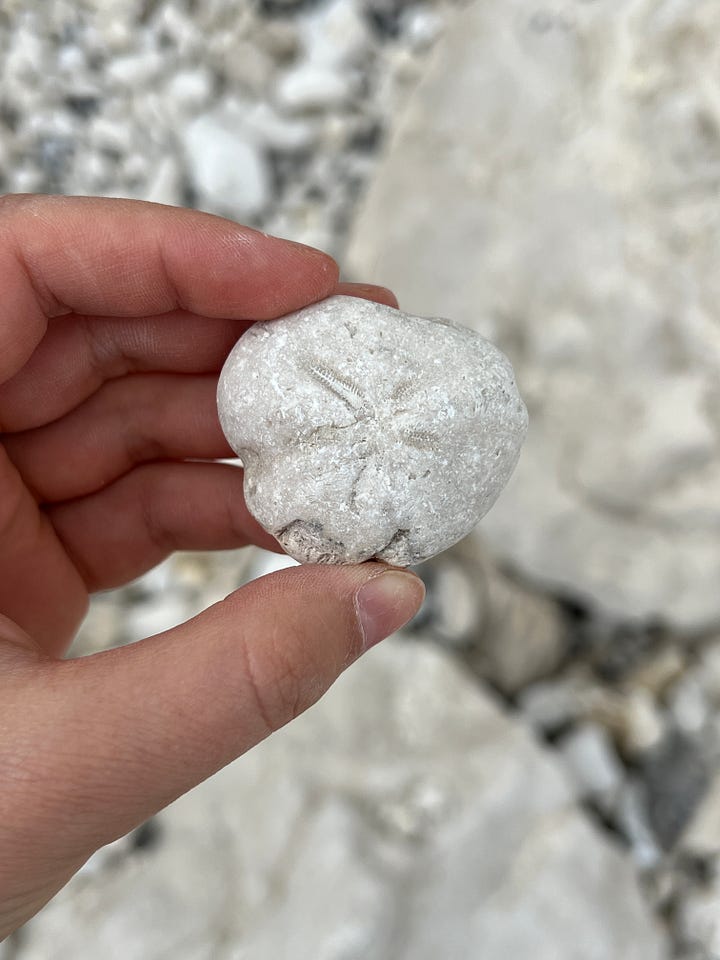
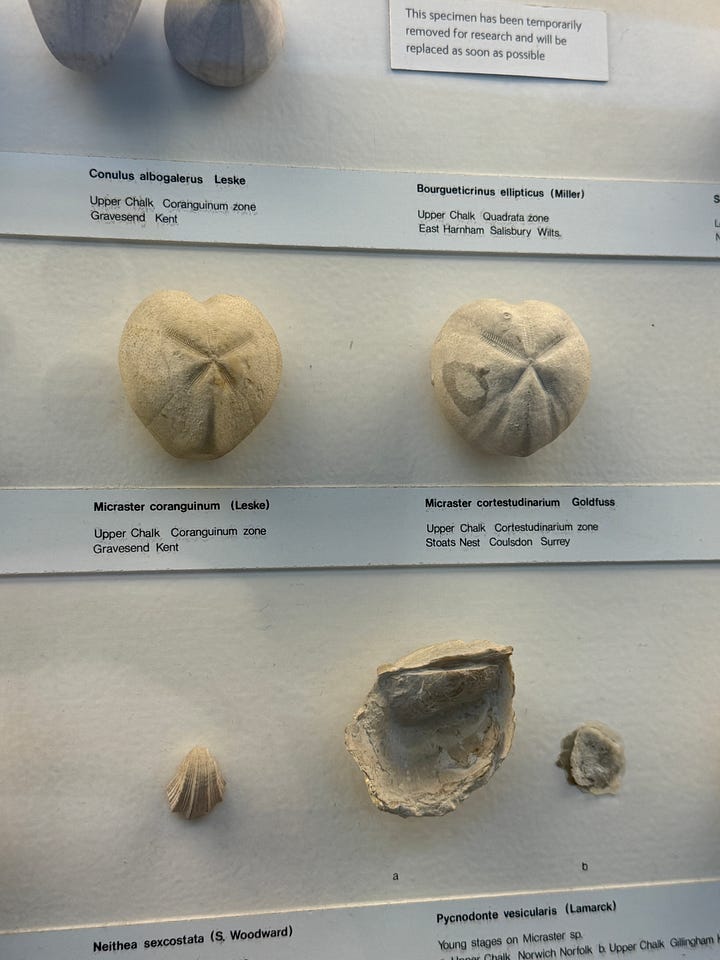
FOSSILISED SEA URCHIN
Among the stones of Stair Hole I found a beautiful fossil imbedded into stone. A few days later, wandering through the Natural History Museum, I stopped in front of a display case and found what looked remarkably like the same fossil: a Micraster, an extinct heart urchin that lived on the floor of the warm Cretaceous sea around 85–90 million years ago, when southern England lay beneath tropical waters. The chalk cliffs of Lulworth are the compressed remains of an ancient ocean, it was a beautiful connection to history that i found while creating my charred artwork depicting the different geology of the jurassic coast.
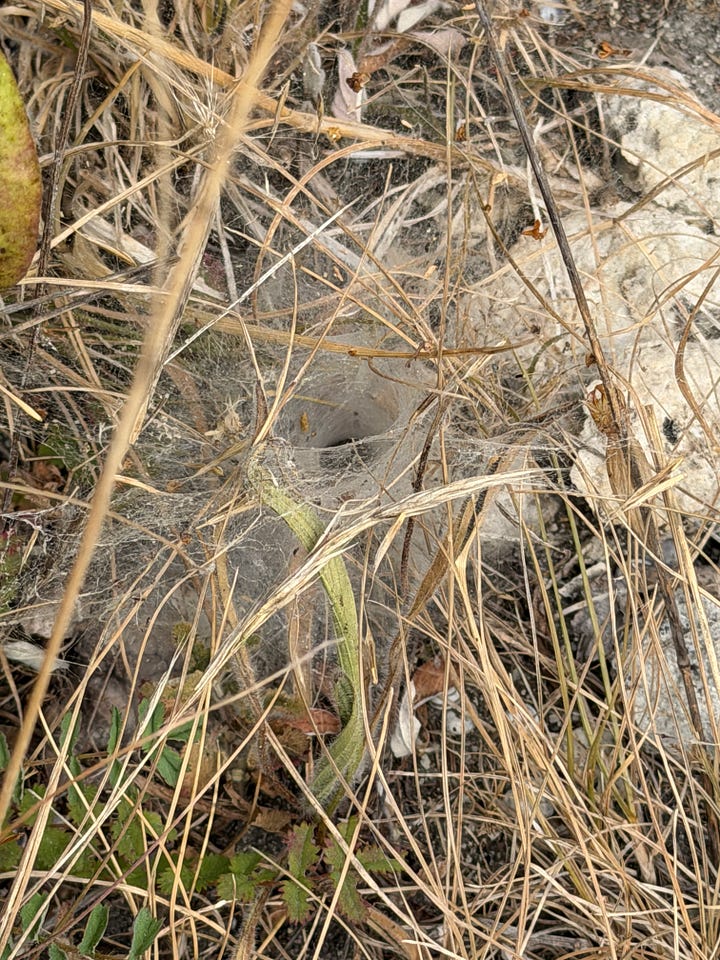
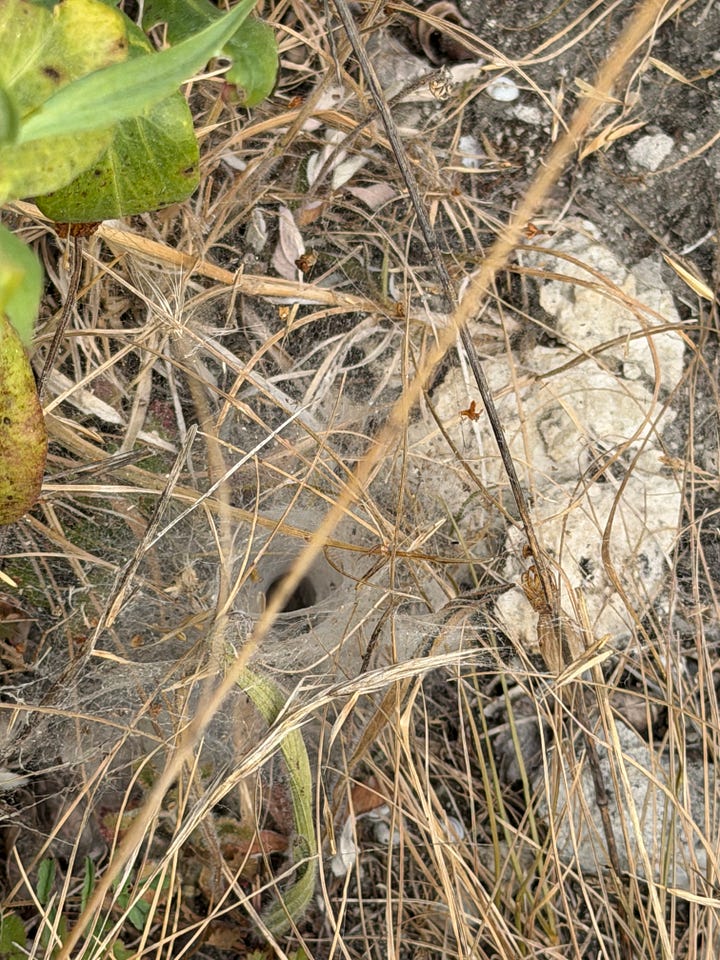
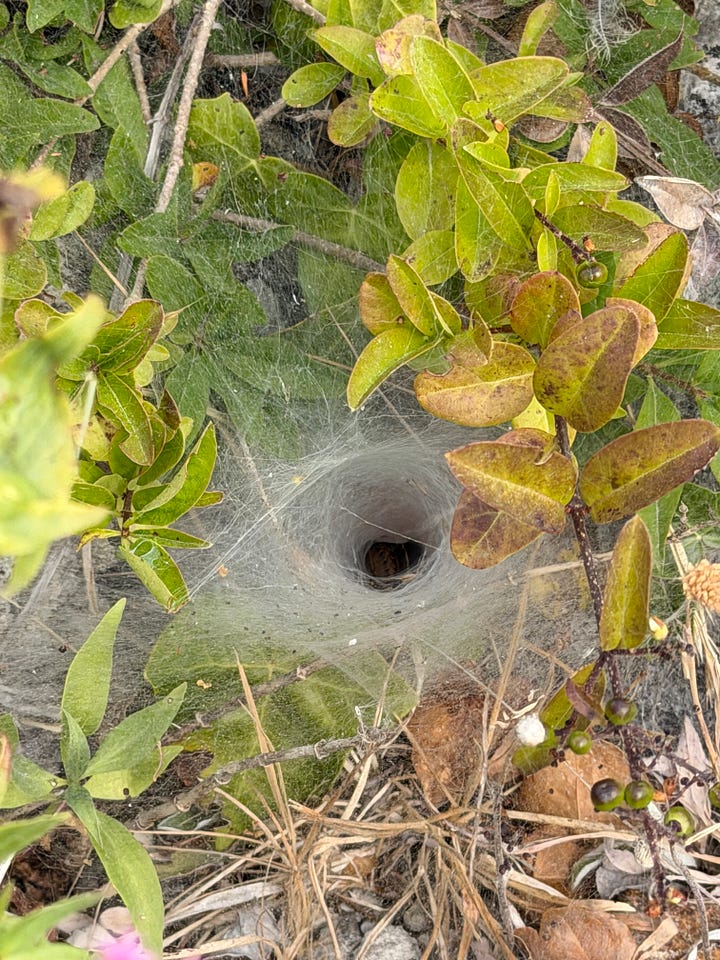
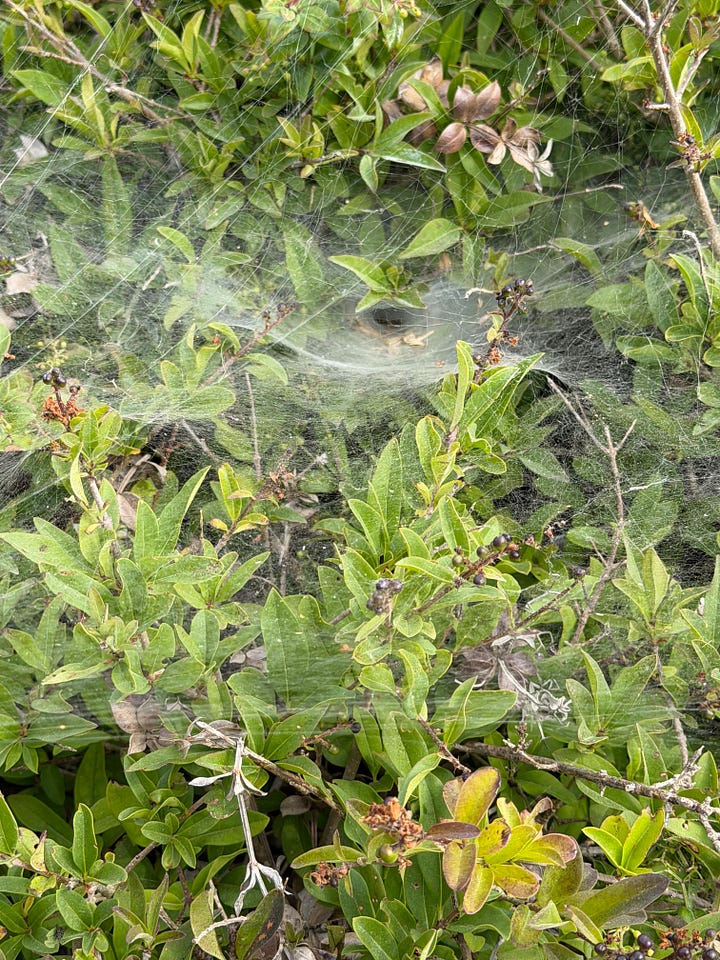
FUNNEL WEBS
Walking through Tout Quarry, I kept coming across these large webs spun like a tunnel. I later learnt they are spun by funnel-web weavers, each one leading down into a dark, tightly woven tunnel where the spider waits. Rather than spinning something sticky, these spiders build a sheet that acts like a trip-wire: the moment an insect lands, the vibration gives it away, and the spider darts out to seize it before retreating back into the funnel. I am not scared of spiders but I didn’t want to stick around to see the spider that pops out! Nature Tracking book I use.
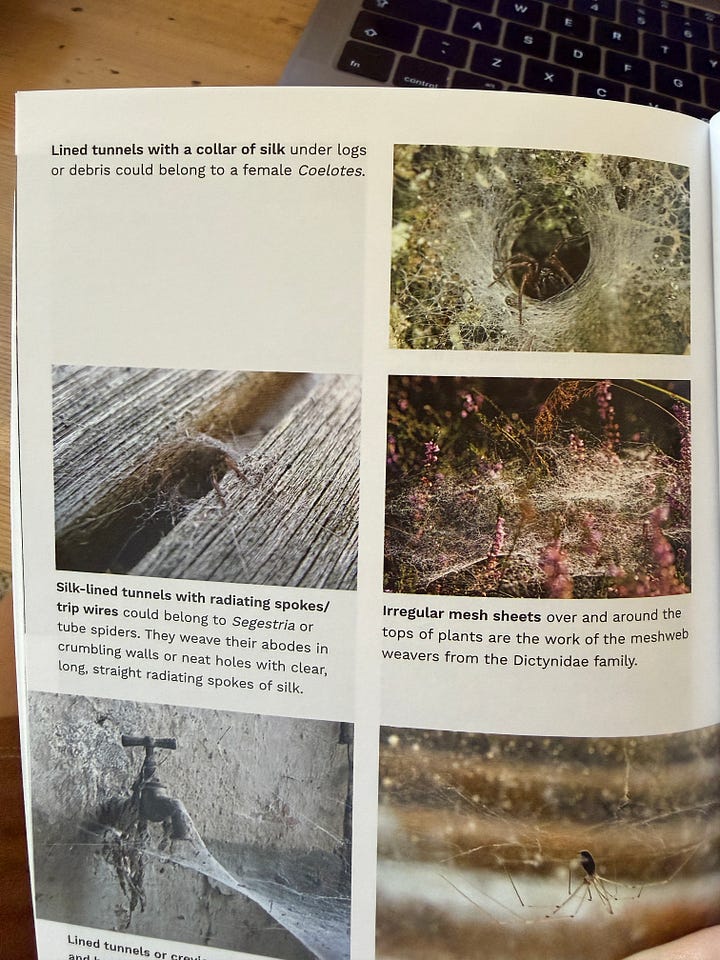
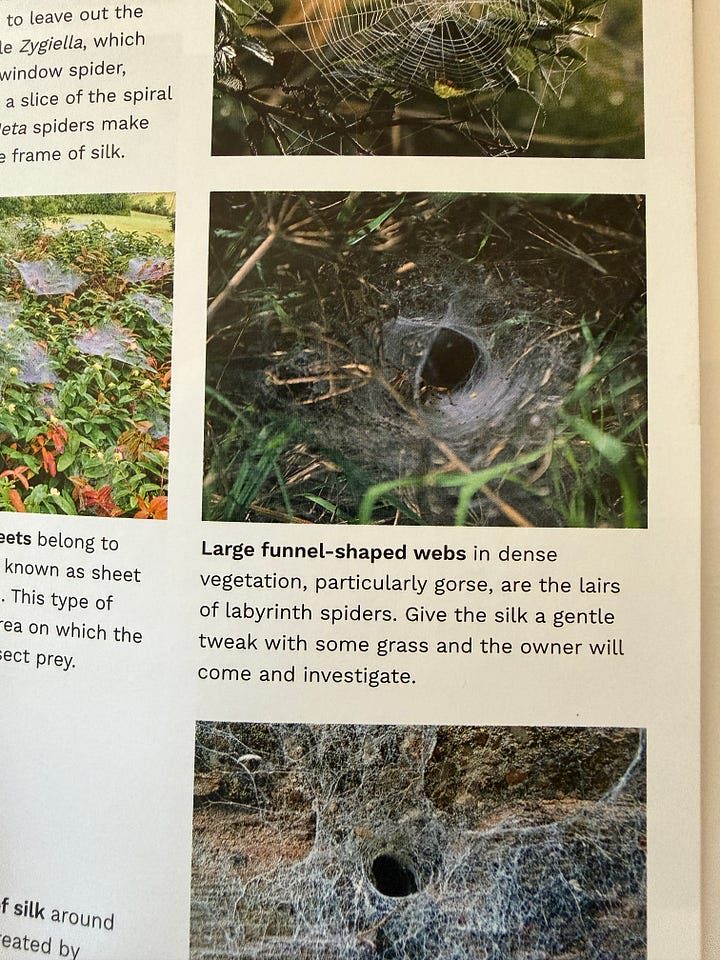
PLOUGHMAN’S SPIKENARD
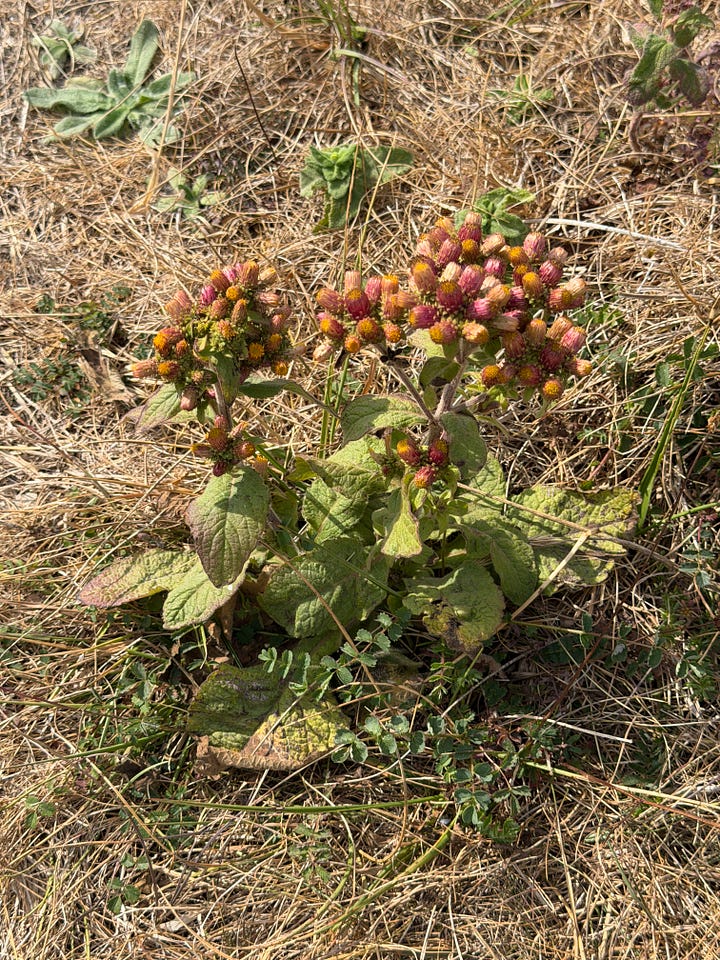
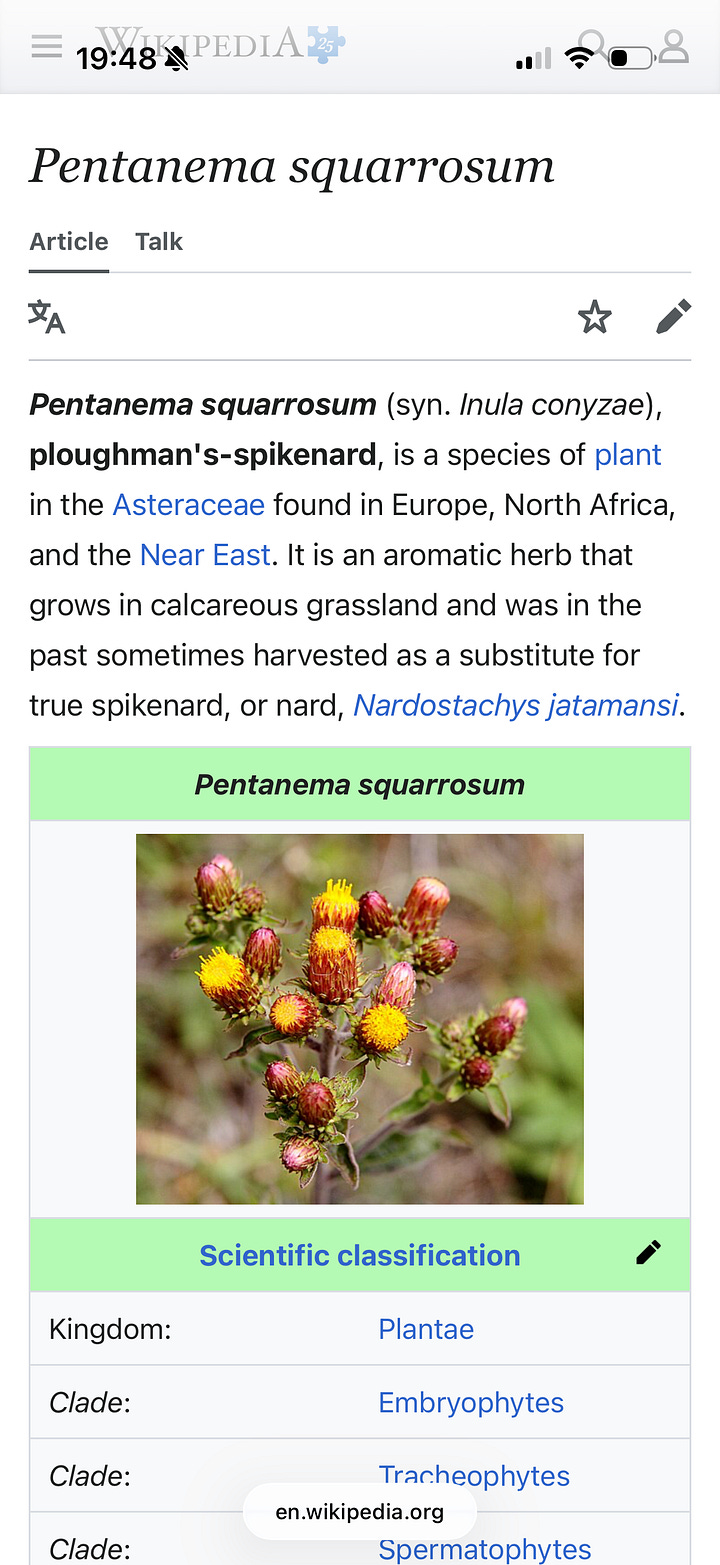
Also new to me this week: ploughman’s spikenard (Inula conyzae), found growing in the dry, rocky, calcareous ground at Tout Quarry — exactly the kind of habitat it favours. It’s a tall, softly hairy biennial with clusters of small, tightly packed yellow flowerheads and an aromatic root, which is where the name comes from — the dried, powdered root was once used as a pungent incense, giving rise to the “spikenard” part of the name, though the scent bears little resemblance to true spikenard. The “ploughman’s” is thought to nod to its more humble, homegrown status — a countryman’s version of a costly imported perfume plant. It’s widespread across England and Wales but easy to miss unless you know to look for it on chalk and limestone ground.
PINEAPPLE WEED
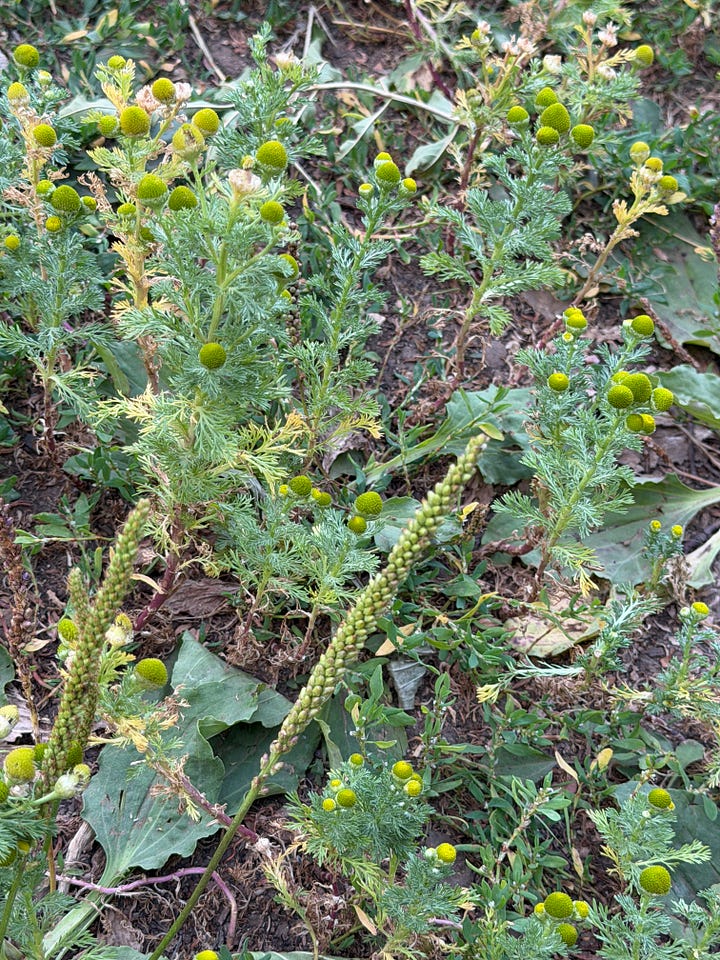
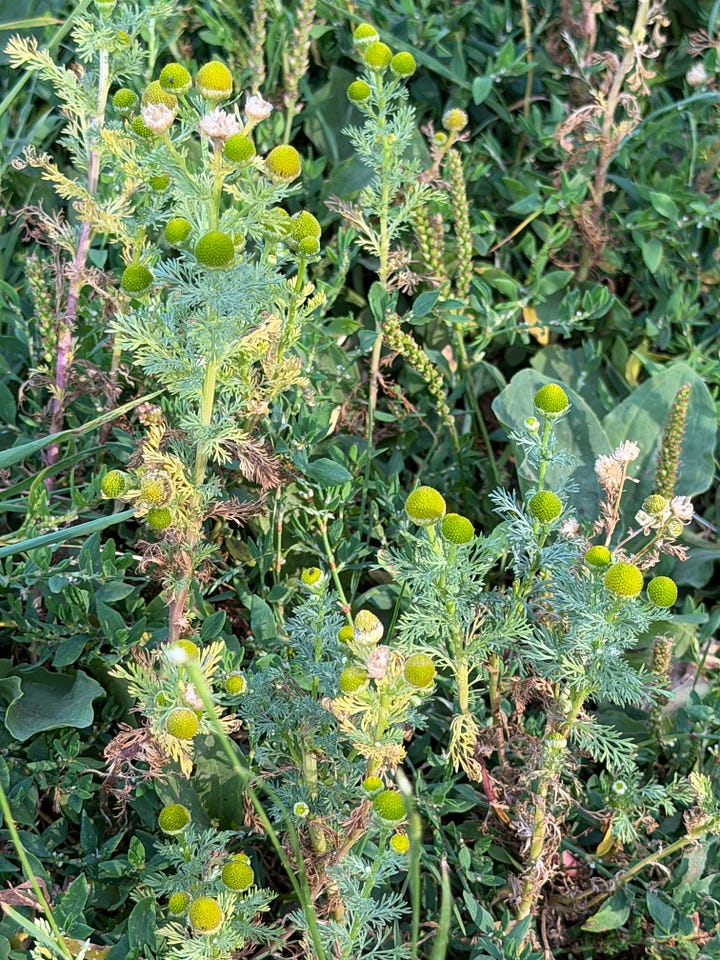
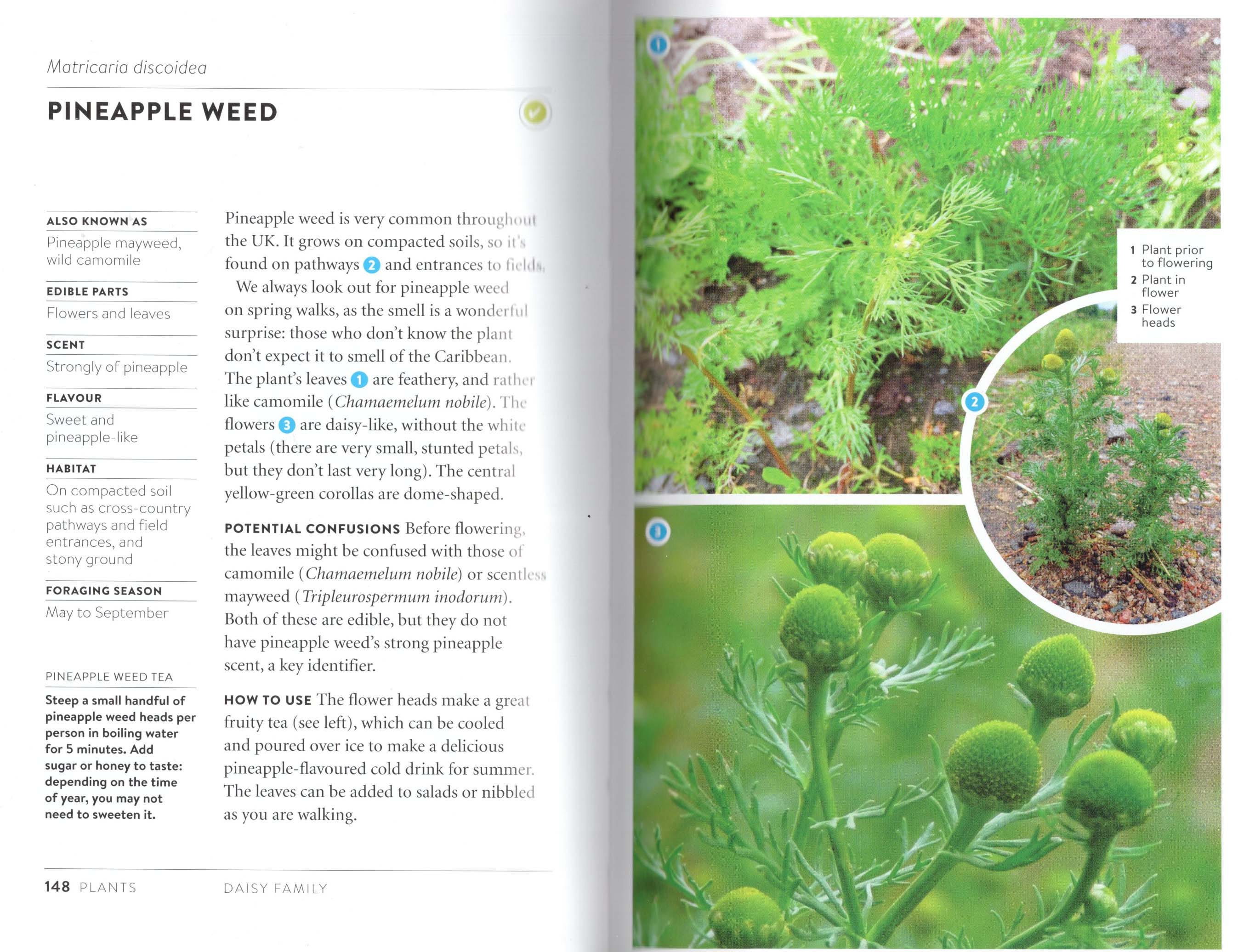
I'm yet to find pineapple weed growing anywhere that isn't a well-trodden path — and given the odds of a passing dog having got there first, I'd rather not take my chances. I first came across it as a tea at Pine, a restaurant in Northumberland that I think is the best in the UK — everything on the menu is foraged, and this was served as the tea to open the meal. Ever since, I've been keeping an eye out for a patch of my own, clean enough to pick and bring back to the studio. The below scan comes from this excellent foraging book.
CERNE ABBAS GIANT
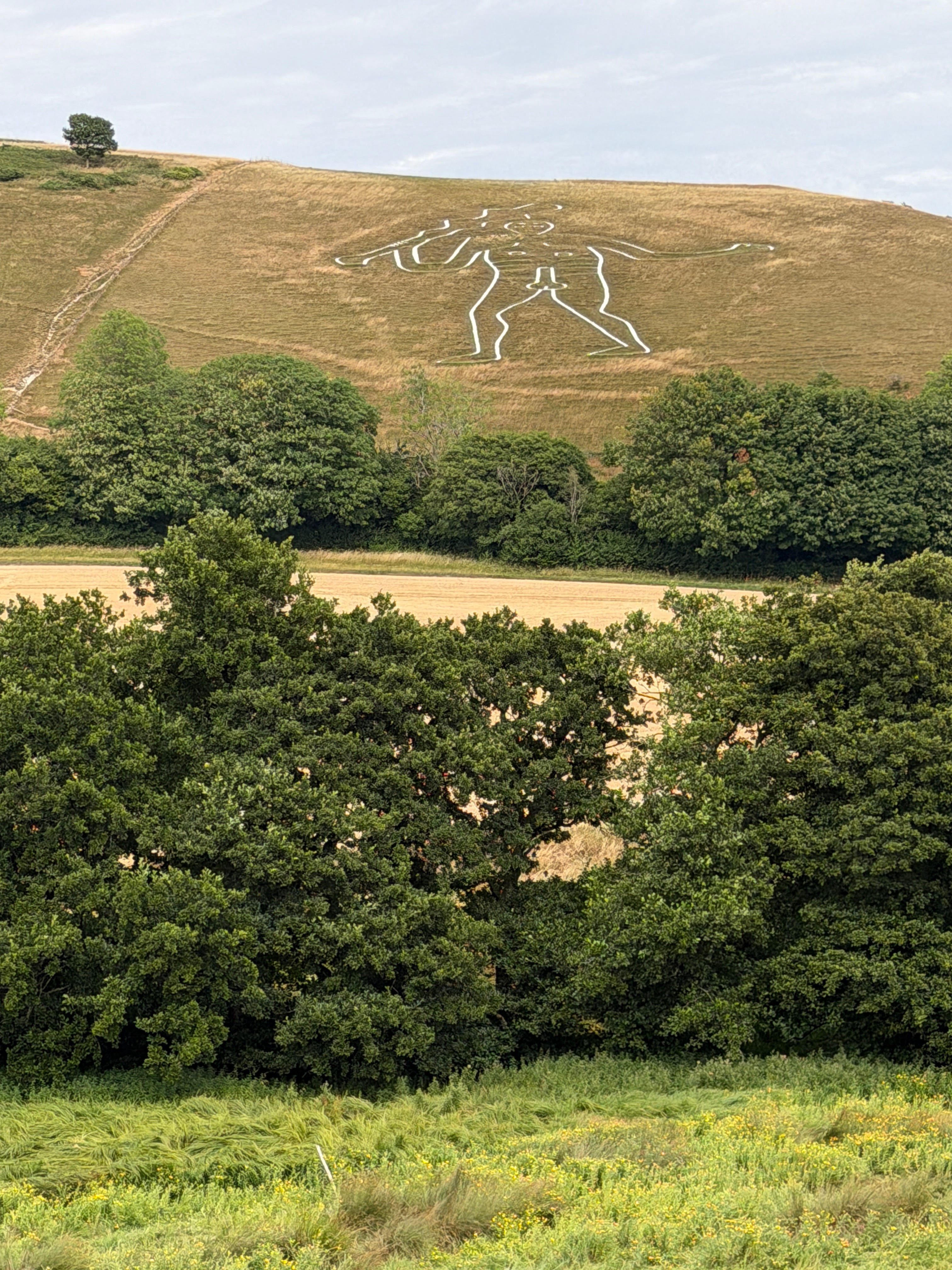
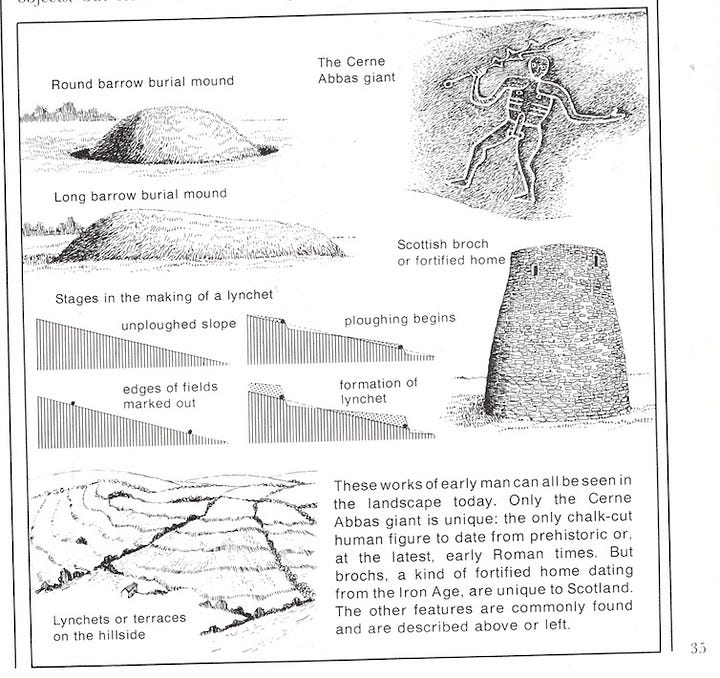
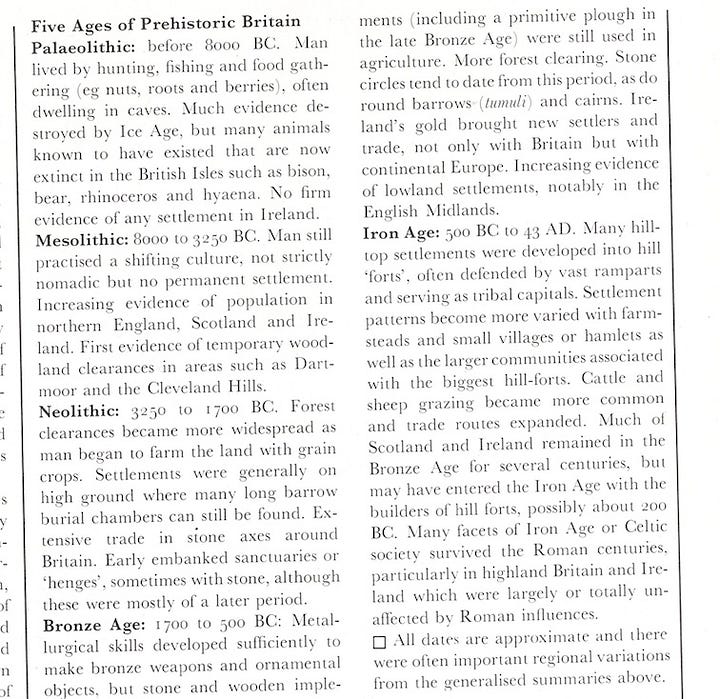
On the way back from charring works on the coast, I stopped to see the Cerne Abbas Giant in Dorset — Britain's largest chalk hill figure, standing 180ft tall on the hillside above the village. Cared for by the National Trust since 1920, the Giant has been the subject of years of research, and sediment analysis has dated his carving to sometime after 700AD, most likely the Saxon period. The best place to see him is the National Trust viewpoint, the Giant's View lay-by on the A352, where the whole figure reads clearly across the valley — from anywhere else you only catch part of him.
You can view my available artwork here. And find me on IG here
No posts
Comments
Nothing yet. Say the first thing.
Sign in to join the conversation.