
When I brought up the phrase “Did the journal factory explode?” to my therapist, she paused and asked me what it meant. And as I began to explain, I slowly realized that the true intention of this unassuming phrase is more insidious than just a “brainrot” expression.
When I was younger, mental health and openly talking about feelings in general (or, god forbid, any mention of therapy) was constantly demonized. Not just in the culture I grew up in, but also across the books and media I was engaging with. Despite this, I always had trouble with oversharing, particularly because even from a young age, I experienced a lot of big feelings that just couldn’t help but spill out.
One of those moments happened just this past week. I made a remark about my childhood, which was conceivably a little jarring because of how honest I was, and a friend responded with, “Did the journal factory explode?”
I imagine my face must have crumpled because she hugged me and apologized for her instinctive reaction. Given her comforting response, I knew that she hadn’t meant to hurt me but just gave a knee-jerk reaction. The other person in the room, however, cackled loudly at this remark, as if amplifying its sentiment.
The second time I heard this phrase spoken out loud was when a friend shared why she’s been so upset lately. After she finished talking, she paused and sighed to herself, “Did the journal factory explode?”
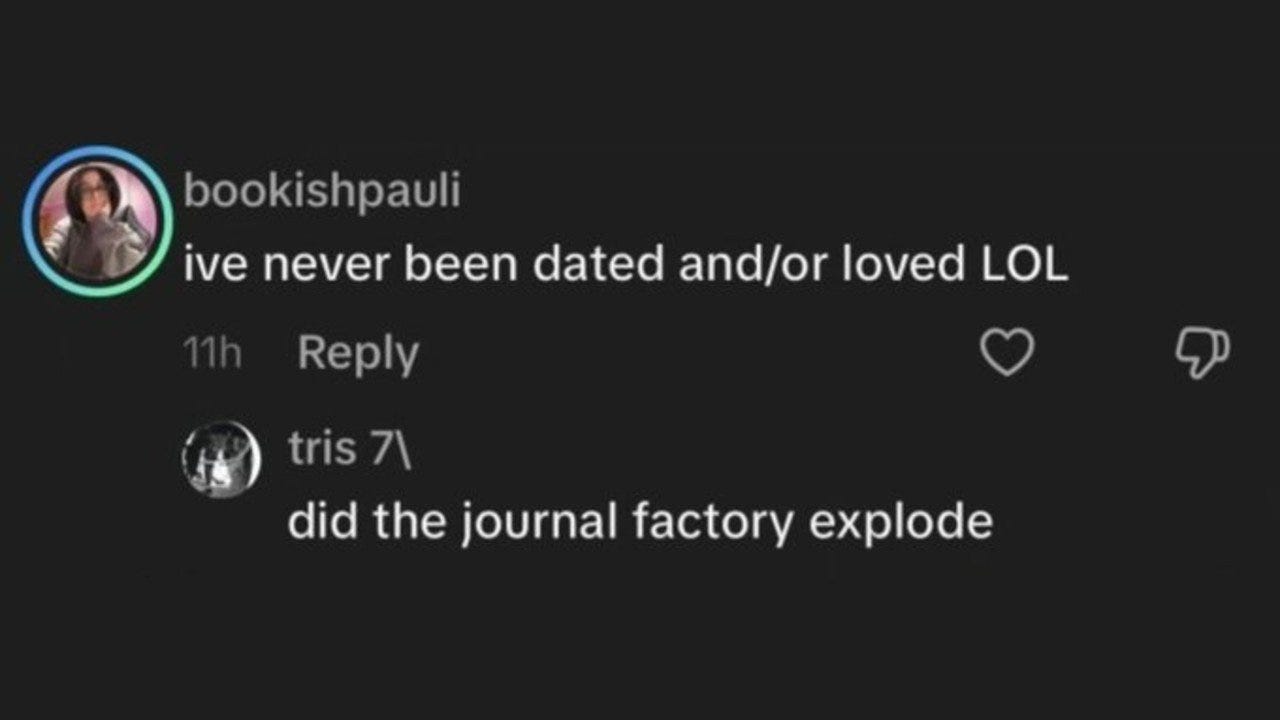
Both instances of these phrases carried a hint of cruelty: the former directed at another person, the latter at oneself. To laugh and endorse the idea that someone should go journal, and to assign a sense of shame to the idea of failing to journal, are both forms of dismissing the undeniable existence of emotions and the very human desire to share them with the ones we love.
“Did the journal factory explode?”, like all wonderful things that make our society better, originated from a TikTok comment. It was a response written to someone’s confession, which, according to “Now Your Meme,” was too “personal” and “emotionally revealing.” While the desire to set boundaries with strangers on the internet is absolutely fine, the nature of the response, of responding to a stranger with a “jab” instead of simply ignoring it, is what gives the phrase its dangerous edge.
The inherent nature of any online comment is its separation from personhood. It’s one thing to type that response to someone you don’t know online. It’s another thing to respond that way to someone with whom you’re friends. There are nuances to this, but cruelty doesn’t exactly prioritize that.
This cruelty and apathy toward other people—or even toward ourselves—aren’t new. But we’re in a digital era when everything is constantly cycled through and regurgitated through online comments until it starts seeping into our everyday language. We’re in an era where it is increasingly easy to engage in that cruelty.
Perhaps part of my response to this phrase does stem from the fact that I’m sensitive. Perhaps I feel indignant about the phrase because I “clock into the journey factory” pretty regularly and still tend to overshare. But also, perhaps it doesn’t matter whether the journal factory has exploded or not, because what really matters is how we respond to each other.
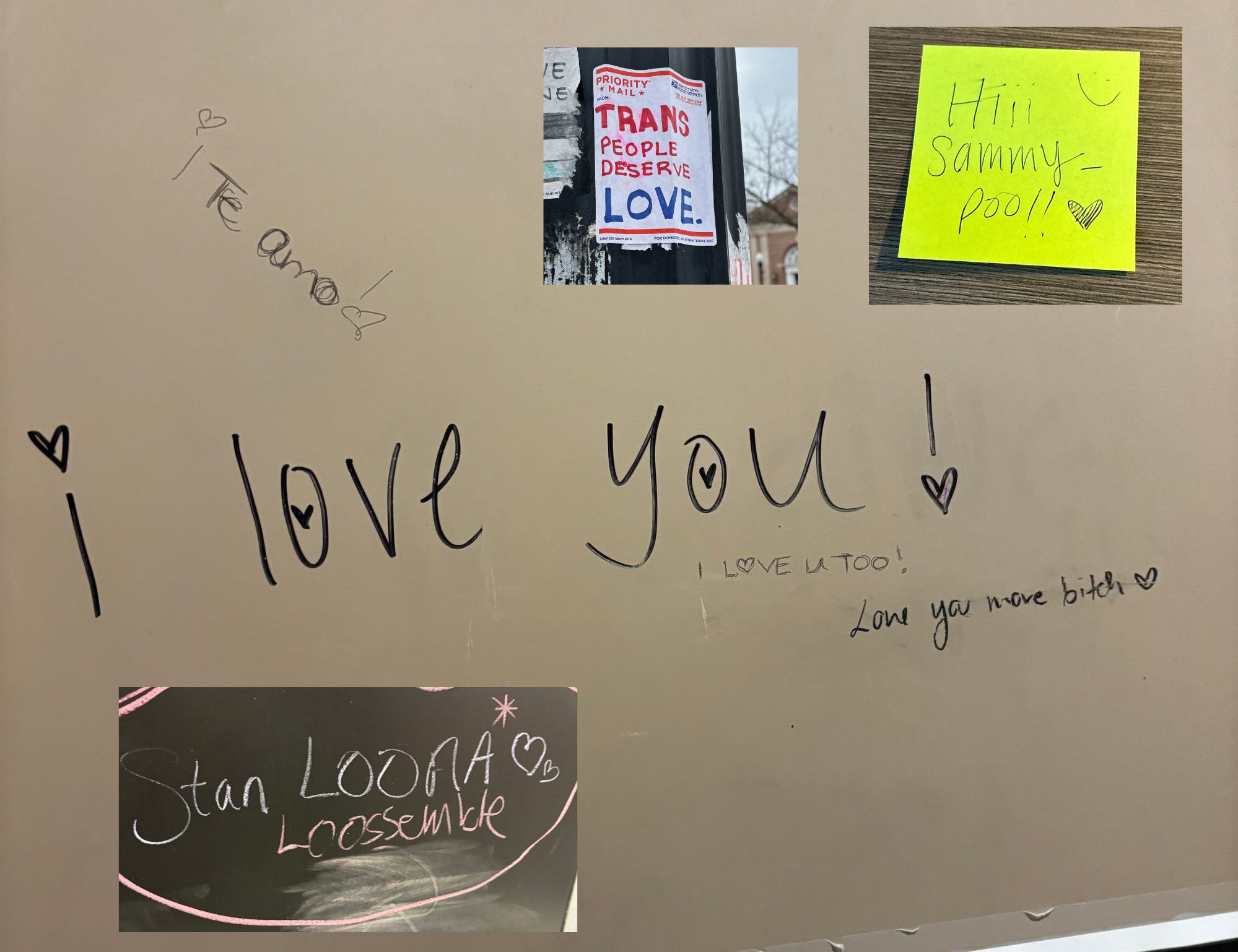
Even with my tendency to overshare, I am terrified of letting people see me. I shared a personal poem in a poetry workshop recently, and as my peers analyzed it in depth, I noticed my hands trembling and heard my heart pounding in my ears. I had given them a piece of me and was waiting for the inevitable rejection, judgment, and refusal of what I had to share. None came.
It’s so odd to desperately want people to see me, yet still want to hide myself away (Yes, I’m aware how ironic it is for me to write this on my Substack). Yet, I know for a fact that this urge isn’t something I’m alone in. In a digital era, we are all growing increasingly disconnected.
Recently, I’ve been reading Johanna Hedva’s book How to Tell When We Will Die, a fascinating, thoughtful collection of essays on disability and care. As we discussed this book, my professor brought up the thought: “How different would the world be if it were founded on the fundamental idea that we should care for one another?” In other words, what would the world be like if care were something that was not a privilege but an expectation?
I remember one summer, I had been visiting my friends in Chicago for Pride, and the combination of the sweltering weather and having a little too much to drink yielded horrible results. I had felt absolutely awful for my friends, who helped me back to their apartment and let me crash on their bed until I felt better. I kept apologizing over and over for ruining the experience, but they never once made me feel ashamed for it. That was one of the first times I experienced care. It had radically shifted my view, introducing the belief that I could receive care on a mutually understood basis.
There are many days when it feels like we are impossibly far from the proposed reality of care—the rise of the “journal factory” expression being an example. Another is the idea that “We don’t owe anything to each other.”
I’ve been thinking about this in relation to the new season of Jury Duty: Company Retreat, watching people online talk about how the “hero,” Anthony, already knew what was going on and was playing it up for airtime. Or that he was just doing what he did to get a return offer (which also shows poor critical thinking, since temps don’t typically return for full-time positions). It was disturbing to watch people respond to a show that is fundamentally about the possibility of kindness by assuming the worst in people.
There’s a thin line between being honest as needed and oversharing. It’s hard to walk that line, but also, it’s harder to do so when you’re afraid that someone will only respond with judgment and shame. Even if someone is being vulnerable to a fault, maybe the best way isn’t to respond with, “Shut up, and go journal.” After all, there is that saying, “If you don’t have anything nice to say, don’t say it at all.”
Over spring break, I visited a friend who was installing his visual art project about nihilism. He explained that he wanted to illustrate a sense of resistance to this concept, that we can still find ways to make meaning in a world many claim is meaningless. When I saw the installation, which included video footage from the time we spent together, I teared up, unbelievably overwhelmed by a sense of solace despite the doom I had felt for weeks.
It is because of people like him that I still have a foolish hope that we can work toward a society based on the fundamental idea of caring for one another, of wanting to connect with one another through all the pain, suffering, and ugly emotions across the human spectrum.
Let the journal factory explode. It’s not stupid to care about others and to treat others with kindness. It’s what makes us human.
Comments
Nothing yet. Say the first thing.
Sign in to join the conversation.