
For Ruth First (1925-1982)
El riesgo inminente de morir en cualquier momento generó altos niveles de angustia
.
(The imminent risk of death at any moment generated high levels of anxiety).
Informe de la comisión nacional de prisión política y tortura, Chile, 2005, p. 503.
The garden had been beautiful before: They brought the young here, Five bodies in a square metre of wood Helicopters travelled towards the sea. Ignacio was planting a tree, hands in mud. Yet there he stood, his boots firm in the soil, Now every plank bears witness in its grain. The garden darkens. Ignacio’s boots —————————— The line Bells, saucepans, the hum
a villa, fountains, avenues of rose,
the ordinary luxuries of shade.
Then beauty was enlisted by Dictatorship,
and every path led inward to a door
whose purpose was too ghastly for words.
names hurried through the corridors of power,
then crossed out in the ledgers of the world.
Ordinary names, Rosa Elena, Marta, but then,
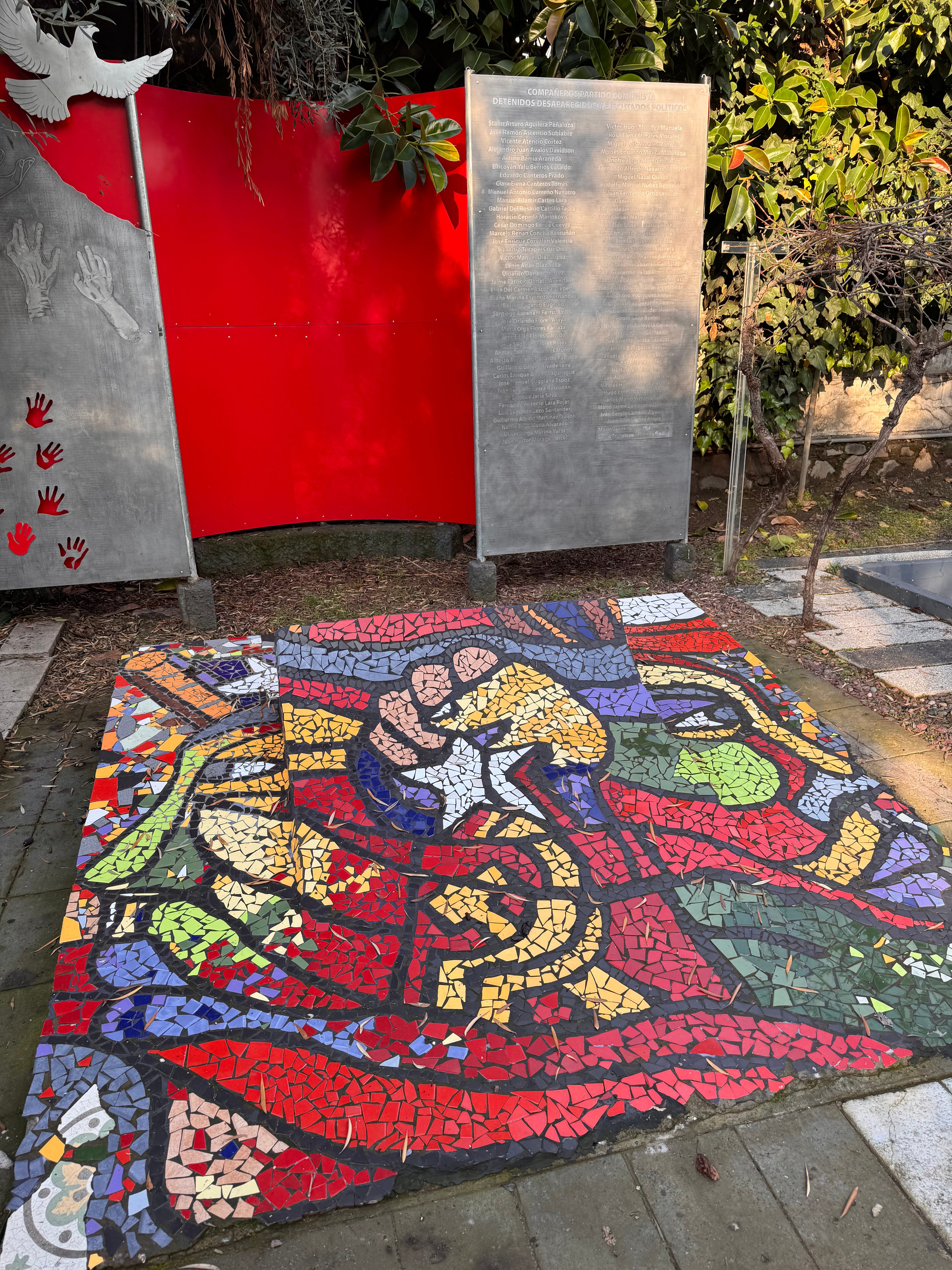
Stalin, Lenin, Victor Hugo.
learned how the living take each other’s breath.
The wood remembers what the walls deny:
the tower and the voltage and the blows,
the little cages fastened in the dark
where one by one they waited without time.
No window brought them morning.
Only birds with their own affairs.
Perhaps the worst was not the pain itself
but that long neighbourhood of coming death:
the footstep stopping somewhere on the stair,
the name called out, the engine in the yard.
To know the body soon would leave no grave,
no earth where grief could place its faithful stone.
Below them, Chile narrowed to a shore;
beyond, the cold Pacific opened wide,
He had been fifteen when the terror started.
Communist, he stood there in his boots,
beside the mural raised by his own hands
for comrades dead, for comrades disappeared –
the faces colour had returned to sight.
His name recalled the saint fed to the lions,
though history never needs the ancient beasts:
a uniform, a wire, a careful file
will serve the appetite of any age.
pressing the young tree’s roots into the earth.
He said the place was beautiful as well –
as well: not healed, not innocent, not whole.
The dead require no ugliness from us.
The disappeared are not restored by weeds.
The tower’s wood, the cabins, and the cages,
the tree that Ignacio settles in the ground:
one substance entered differently by time,
one made to hold men in, one made to grow,
one keeping what the executioner forgot.
For nothing is destroyed completely here.
The sea gives back no bodies, but their names
return in paint, in footsteps, roots, and rain.
leave two deep memories in the watered earth.
The wood remembers.
17 August 2026.
de un helicóptero revoloteando
sobre nuestras cabezas, vigilando
las calles, contemplando el estallido.
of a helicopter hovering
above our heads, patrolling
the streets, watching the explosion.
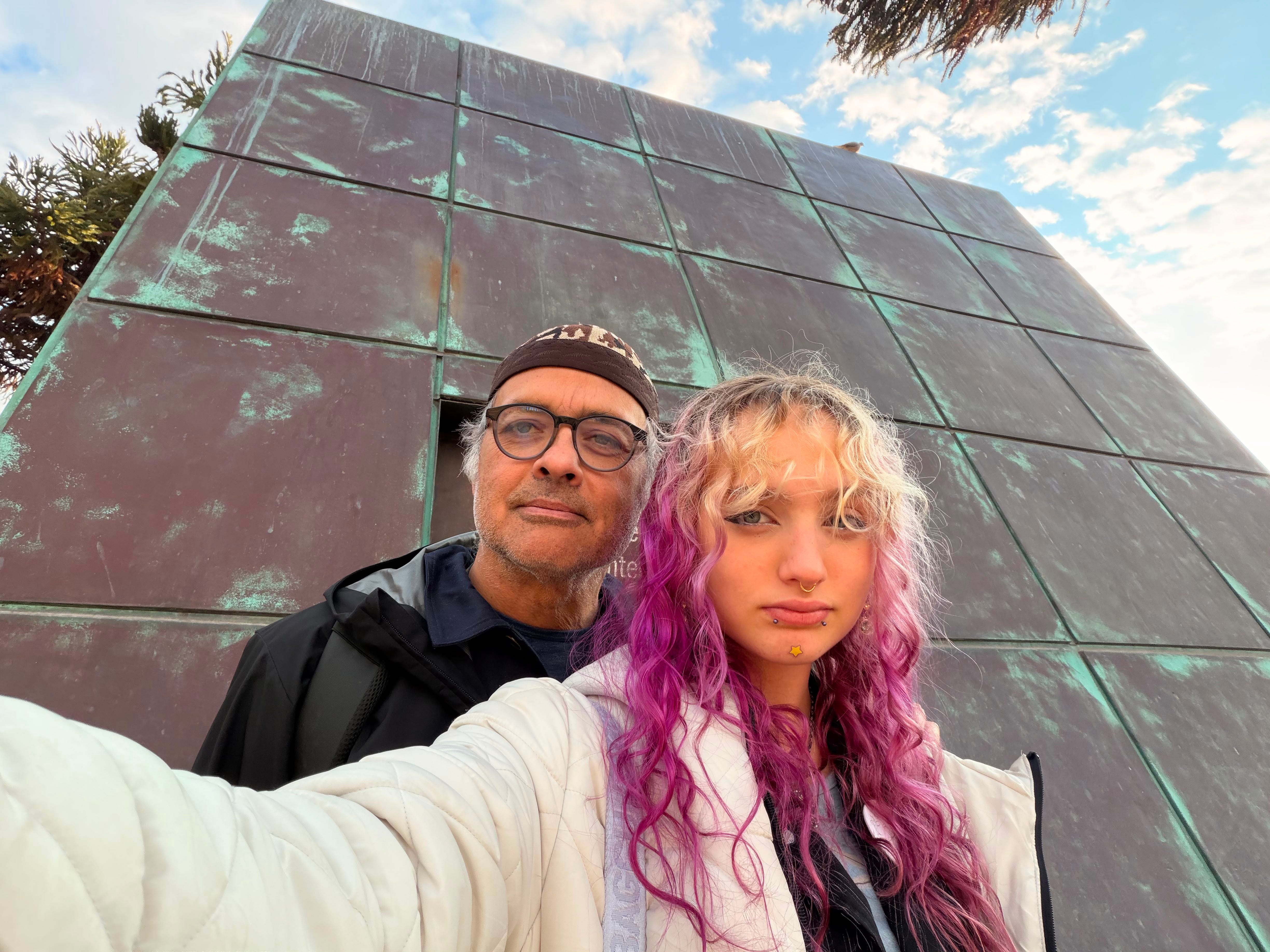
Rosa, my daughter, and I at Villa Grimaldi, 17 August 2026.
No posts
Comments
Nothing yet. Say the first thing.
Sign in to join the conversation.