
During the past few weeks, two yachts accidentally ran into reefs and sustained damage in the waters near Lizard Island just off the coast of North Queensland, Australia. They were just a short distance to the north of where David and I have been cruising for the past few months. These accidents occurred in clear weather. Each boat was equipped with working electronic navigation equipment. The reports from those incidents have not yet been publicly released. But, one skipper reportedly said, “I was momentarily distracted.”
This comment brought to mind the very first article I shared when I decided to start my substack adventure six months ago. As only a small number of people accessed that first post, and because it is now behind a paywall, I thought it would be important to repost it now. Being “momentarily distracted” can happen to any of us. It definitely happened to me. The results could have been far worse, as this story shows.
“Whatever it is you’re doing down there, forget it,” David shouts. “Be quick. You need to see this.”
Though we’d voyaged together for less than a year, I did know David well enough to realize, this is not an emergency. But still, I move quickly to turn off the burner under the soup, tighten the clamps holding it on the gimbaled stove, then put the hot loaf of fresh bread on a non-skid mat to stop it from sliding off the counter.
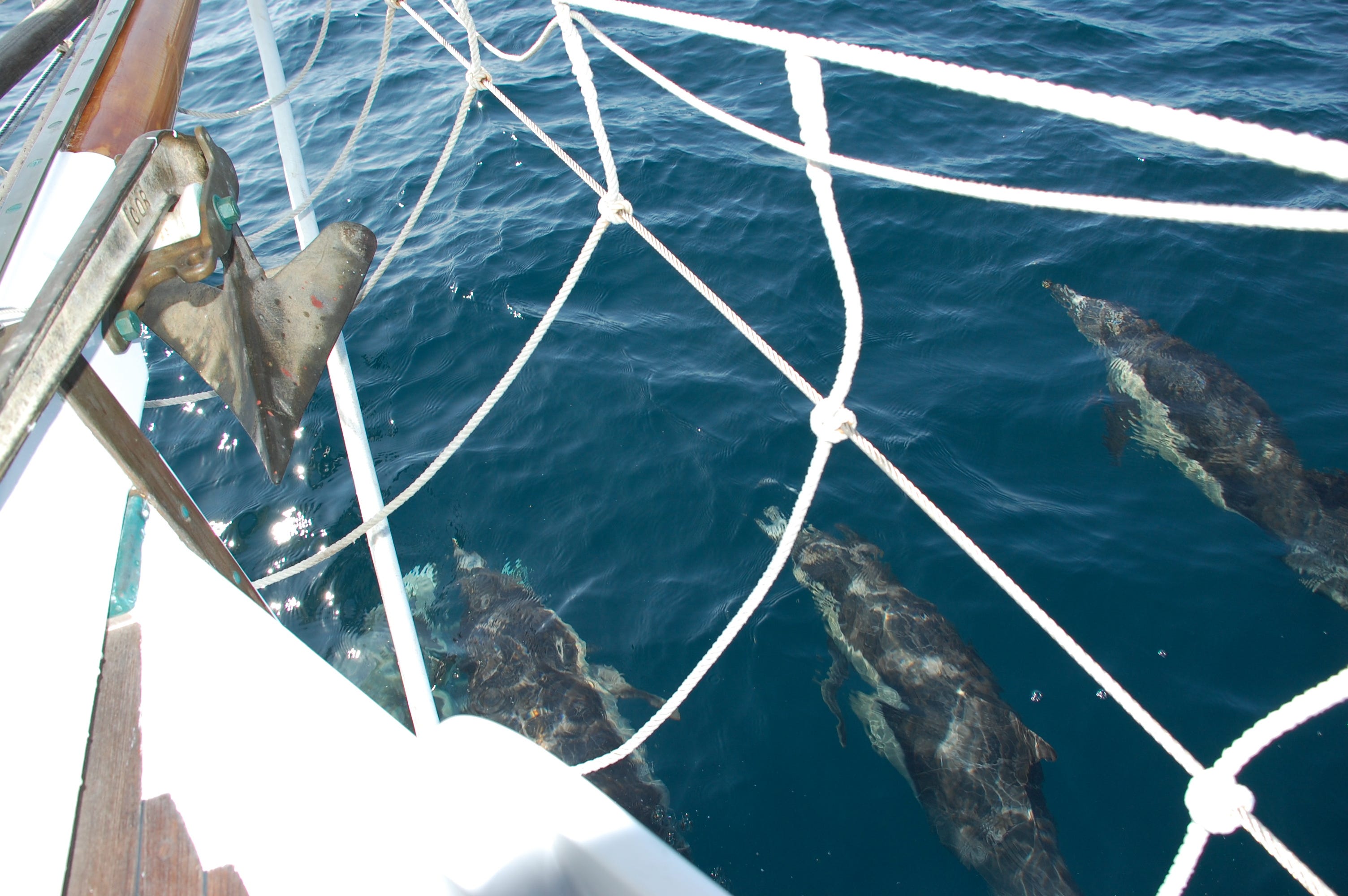
The sight that awaits me is breath-taking. A quarter mile ahead, a half dozen huge dolphins dash about in a frenzy, leaping into the air, twisting, churning the sea around them into a white froth. “Did you grab your camera?” David yells as he begins climbing out of the cockpit to get a closer look.
I marvel at the dolphins’ antics. My first thought, “what a perfect ending to a wonderful cruise.”
I don’t have time for a second thought.
A fierce wind knocks Sahula almost flat.
Laying on her beam ends, she still slices forward held on course by the self-steering vane. Dollops of salt water begin lapping over her cockpit combing.
“Run her off,” David yells over the roar of wind, the crash of rushing water. He scrambles back into the cockpit and slides across to the leeward sheet winch. I climb past the steering pedestal, grab the wheel and struggle to fight the leverage of the windvane rudder.
_ _ _ _ _ _ _ _ _ _ _ _ _
Tasmania, situated well into the “roaring 40’s,” is subject to challenging weather. No matter what the season, low pressure systems which march around the bottom of the world unhindered by any land, intensify when they run into the mountains of this rugged island. Because the lows move slower during the summer season, by keeping a flexible schedule, David and I had enjoyed almost two months of enjoyable sailing as we meandered south through the D’Entrecasteaux Channel on the eastern shore of Tasmania. As autumn approached, we’d grabbed a light weather patch to head around the southern tip of Tasmania and reach the splendid isolation of Port Davey on the wild west coast.
Larry and I had sailed here several years before, bound westward across the Australian bight toward the Indian Ocean. During this second visit on Sahula I had a sense of deja vu as David and I trekked along the shoreline where wombat tracks were the only way to get through the dense undergrowth. We took dinghy forays up river gorges. I enjoyed the solitude on board in a perfect keyhole anchorage while David scrambled over jumbles of rocks to climb Mount Rugby, the highest local peak. Little had changed in Port Davey between those two visits. Larry and I had encountered only one other visiting yacht and three commercial fisherman who shared weather information with us. Now, almost 25 years later, during our two weeks stay, David and I encountered two other yachts, but no fishermen.
As the autumn days grew ever shorter, David began monitoring the approaching weather systems using his Ham radio (no internet reception in Port Davey.) Just when we were feeling sated, the forecast promised a 15 to 20 knot northeasterly, slowly backing all day long. If the report was correct, it meant we’d have a beam reach for each of the three legs of the 55-mile trip around the bottom of Tasmania and back into the shelter of the east coast.
We were underway just at daybreak on a fresh northeaster. Sahula is at her very best with winds of 15 knots. Her windvane self-steering works wonderfully if she has two reefs in the mainsail and her large yankee set.
When we cleared Port Davey’s we found there was only a hint of the southwesterly swell that is normally a constant on this coastline. Sailing couldn’t have been better. Once we were comfortably settled in for the first 17-mile reach towards Southwest Cape I decided to cook up a hearty soup and bake some bread to go with it.
The wind soon began to back just as forecast. By the time we had to alter course to head due east around the tip of Southwest Cape, the wind was out of the north. We’d allowed for a comfortable offing. We didn’t want to be too close to shore where the steep chain of mountains lining Tasmania’s west coast might blanket our wind and leave us becalmed.
We hadn’t considered the alternative.
Now, as the wind screamed and Sahula dragged her topsides through the water, David seemed to take forever to reach the leeward side of the cockpit, though in reality it was seconds.
“Grab hold of the sheet,” he yelled as he pulled it out of the self-tailer Before I could steady myself enough to reach over and grab the sheet, it pulled loose from the winch and the sail began to flog madly. The sound was almost overwhelming; the shaking of the boat transmitted right through my arms as I struggled to steer her off. The wind continued to scream at gale force. But now, without the pressure of the headsail I was able to overcome the power of Sahula’s self-steering rudder. She slowly bore away and came more onto an even keel, rushing downwind at 7 knots with only the double reefed mainsail driving her.
David scrambled to the windward side of the cockpit and grabbed the headsail furling line, got it around the sheet winch and began cranking. Forgotten were the dolphin which now leaped and gallivanted just feet away from us. All that filled my mind was the terrible sound of the flailing headsail. It felt like a horrendously long time until David was able to furl the yankee. And seconds after it furled, the gale force wind, the noise, the white water and the dolphin left us.
We sat shaken and becalmed. Neither of us moved or said anything for several minutes, even after the wind settled back into a 15-knot northerly.
As David once again unfurled the yankee and got it pulling, I went below to pick up the loaf of bread that had leapt off the counter and re-light the fire under the soup. Then we began dissecting the mistakes we’d made.
We’d both spent time sailing close to steep mountains, in the fiords of Norway, in Patagonia, in New Zealand’s Fiordland. There we’d constantly been on watch for williwaws. Southwest Cape is sheer sided, just like the mountains of those fiords, yet we’d never considered the possibilities of williwaws here.
When the williwaw hit, I hadn’t thought to let the headsail fly – I could have, should have. I was right next to the winch when we got knocked almost flat.
The list kept growing.
Then, as we began to sail onward, we both looked back to where the dolphins still cavorted. Our real mistake became obvious. In our delight at the dolphins’ antics, we’d missed the information nature was providing. The churning white caps had nothing to do with the dolpin, that white water was the warning of a full-fledged williwaw. We might have been out in the cockpit looking around, but we definitely were not “On Watch.”
Thanks for reading Lin Pardey - Go Now!! This post is public so feel free to share it.
No posts
Comments
Nothing yet. Say the first thing.
Sign in to join the conversation.