
A safari is the trip that changes how you think about travel. I say that not to be dramatic, but because it’s true for almost everyone who does it — you come home and every future vacation gets measured against the morning you watched a lion pride wake up fifteen feet from your vehicle.
It’s also a trip that most clients are least comfortable booking on their own (for good reason), and many people seem to underestimate what the cost of a luxury safari may come out to. It is expensive, it’s far, and there’s a hundred small decisions between “I want to go on safari” and actually being there. So consider this your one-stop guide (or at least the one to start getting you to think about many things before booking). Bookmark it, come back to it, send it to the friend who keeps saying “someday.”
A quick note before we dive in: safari tourism is bigger than it’s ever been — roughly 74 million travelers visited Africa last year, That growth is a good thing when it’s done right. In Kenya alone, more than 230 conservancies now protect over a tenth of the country’s land and nearly two-thirds of its wildlife — and most of them exist because of tourism dollars. More on how to make sure your trip is one of the good ones a little further down.
Africa is warm and sunny basically year-round, so “best time” really means “best time for what you’re after.”
Dry season (roughly June through October) is peak safari season across East and Southern Africa. Vegetation thins out, water sources shrink, and animals cluster around what’s left — which means easier, more dramatic sightings. This is also when you’ll catch the Great Migration’s river crossings, as the herds move through the Serengeti and into the Masai Mara between July and October.
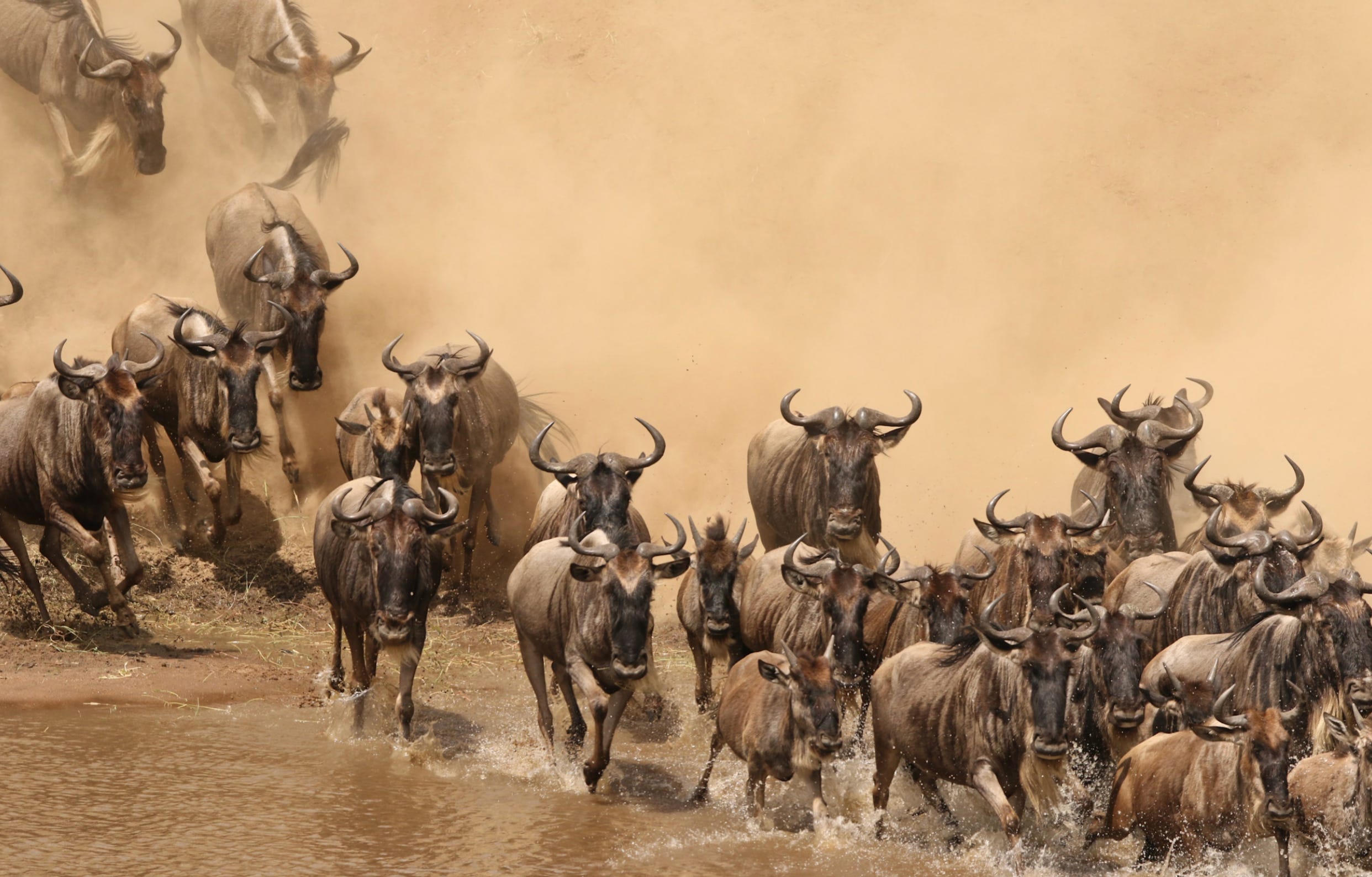
Photo courtesy of Singita
Green season (November through April) is the quieter, lusher, cheaper alternative. Newborn animals, migratory birds, dramatic skies, and rates that drop noticeably. The tradeoff is more rain and slightly harder viewing since the bush is thicker.
Gorilla trekking in Uganda and Rwanda is doable year-round, but the drier stretches (roughly June to September and December to February) make the hike in considerably more pleasant.
Calving season in the southern Serengeti falls around January through March, if newborn wildlife is what you’re chasing rather than crossings. This is also when you might see more predator action because unfortunately those babies are low hanging fruit.
Big cats and sheer volume of wildlife: Kenya’s Masai Mara and its surrounding private conservancies, or Tanzania’s Serengeti.
The Great Migration: Tanzania and Kenya, timed to the season above.
The Big Five in one relatively compact area: South Africa’s Kruger region and its private reserves.
Water-based safari — boats, mokoro canoes, elephants wading past your tent, hippos: Botswana’s Okavango Delta.
Desert-adapted wildlife and otherworldly landscapes: Namibia.
Mountain gorillas, up close and on foot: Uganda or Rwanda.
A dramatic add-on to any of the above: Victoria Falls, straddling Zambia and Zimbabwe.
Here’s the rhythm you can expect, wherever you end up:
You’ll wake before the sun — think 5 or 5:30am — because the hour after sunrise is when animals are most active and the light is unbeatable for photos. Coffee or tea gets pressed into your hands before you’re even fully upright, and then you’re out for a three-hour morning game drive, usually with a stop for coffee or a full bush breakfast somewhere scenic.
Midday is for rest. You’re back at camp by late morning, there’s brunch, and then a long stretch of downtime through the heat of the day — pool, nap, spa treatment, or just a book on your veranda while you watch the bush go about its business.
Late afternoon, you’re out again for a second three-hour game drive, timed around golden hour and ending with sundowners — a drink in hand, watching the sky do something spectacular over the plains. Dinner is often outdoors, under more stars than you knew existed, and you’re in bed early because tomorrow starts before dawn again.
Six-plus hours on game drives sounds like a lot on paper. In practice, it flies by — there’s always something to spot, your guide is a walking encyclopedia, and the coffee breaks and sundowners keep it from ever feeling like a slog.
This is the question I get most, and the honest answer is: it varies a lot by region, season, what experiences you want (hot air balloon?), and how private you want your experience to be. Here’s the general shape of it, in per-person, per-night terms for luxury-tier properties:
East Africa (Kenya & Tanzania)
Upper 4-star: roughly $1,200–$1,500
4-star luxury: roughly $1,800–$2,400
5-star luxury: roughly $2,500–$3,800
Southern Africa
South Africa is the relative value play, at roughly $900–$1,200
Botswana runs considerably higher, roughly $1,650–$5,000, reflecting its low-density, exclusive-camp model
Zambia sits around $1,100–$2,500
Victoria Falls can range widely, roughly $400–$1,800, since it’s often a shorter add-on rather than a full safari base
Gorilla Trekking
Uganda is more accessible, roughly $770–$2,000. Uganda’s trails are renowned for being steep, overgrown, and very rugged.
Rwanda runs higher, roughly $1,400–$3,400. The trails in Rwanda are generally better defined and less overgrown. However, you are hiking up the open, sloping sides of volcanic mountains, which can be a strenuous and sustained upward climb.
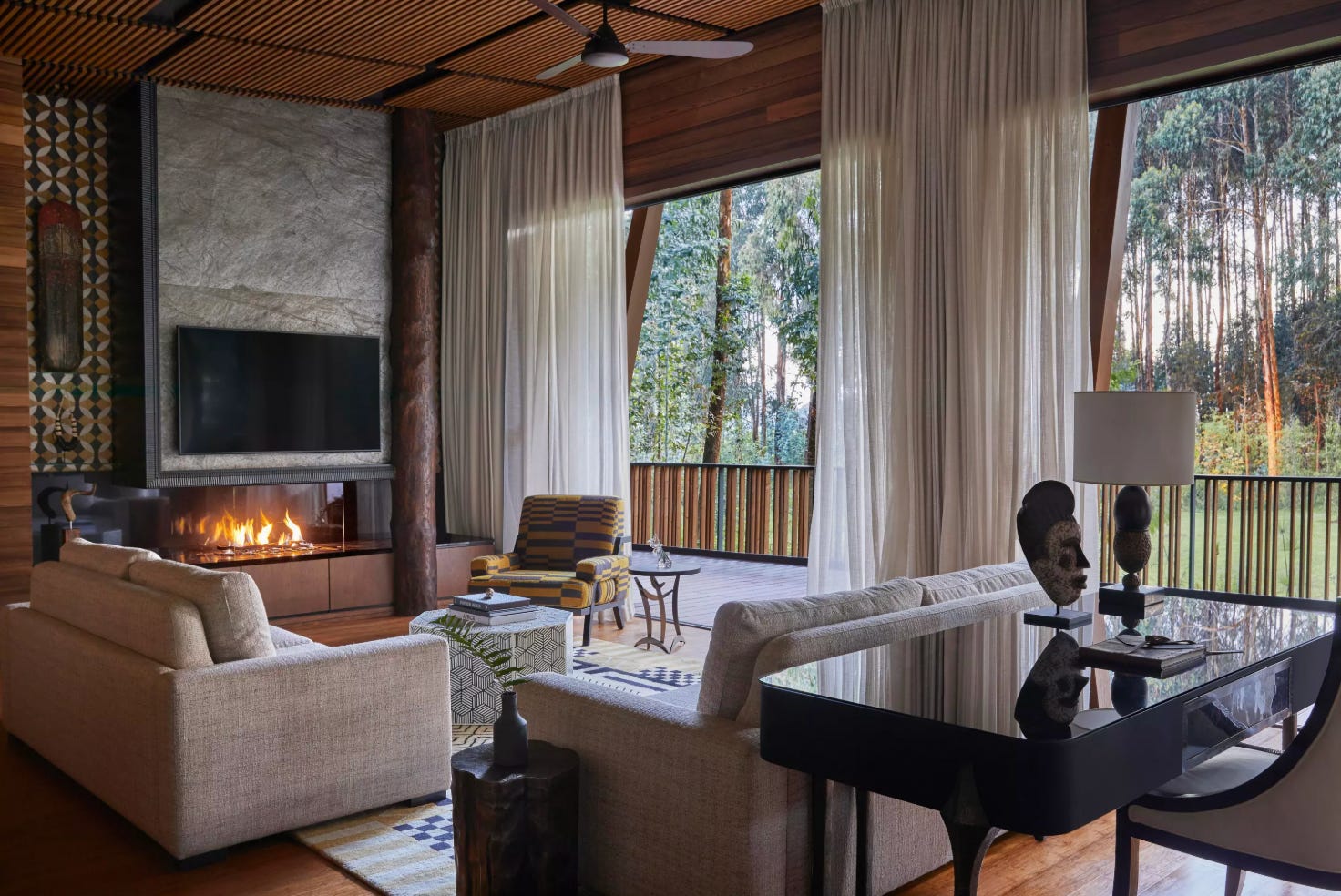
One & Only Gorilla’s Nest, one of the best luxury lodges in Rwanda for Gorilla Trekking
Those numbers typically exclude international flights, travel insurance, visas, gratuities, premium alcohol, and — for gorilla trekking specifically — the trekking permit itself, which is a separate and non-negotiable fee that funds conservation directly. Prices typically do include accommodation, three daily gourmet meals, expert-led game drives, park conservation fees, local airstrip transfers, and laundry in many luxury lodges or camps.
A standard Uganda gorilla trekking permit costs $800 USD per person per day for foreign non-residents. A standard Rwanda gorilla trekking permit costs $1,500 USD per person per day for international visitors. This grants you a guided trek in Volcanoes National Park and exactly one hour with the mountain gorillas.
Private vs. group: If you want to privatize your game viewing vehicle, plane, lodge, etc that of course will add to the cost. I’ve had clients buy extra seats on bush planes just so they can pack more clothes/stuff due to the weight limitations per seat.
Why DIY isn’t the shortcut it looks like: I know the instinct — book your own flights, rent a car, wing the lodges. This isn’t Italy. In most of these destinations, that’s not necessarily cheaper, and depending on where you’re headed, it may not even be possible. Many private conservancies and gorilla-trekking permits require booking through registered channels, remote airstrips only connect via small charter flights, and the on-the-ground logistics — permits, transfers, park fees — are genuinely easier to get wrong than right without someone coordinating it. The value of working with someone who knows the terrain isn’t a luxury tax. It’s what keeps your one shot at this trip from going sideways over something avoidable. Also—you can do all the research you want if you get off on that, but let someone who knows what they’re doing handle it all for you.
One easy way to soften the cost: this is exactly where your points and miles strategy earns its keep. The ground portion of a safari is what it is, but flying your international leg in business or first class on miles can offset thousands of dollars — freeing up more of your actual budget for camp nights instead of airfare. If you haven’t built that strategy yet, that’s precisely what First Class Travel, Economy Budget is for.
Quick but important detour: not every safari dollar does the same amount of good, and it’s worth asking a few questions before you book anywhere.
Look for operators who are locally owned or locally accountable — camps on community or family-owned conservancy land tend to funnel more of your spend directly back into the people and wildlife around you, compared to some larger-scale, high-volume operations.
Ask about guest density — how many vehicles show up per sighting, how many beds are on the property relative to the size of the land. Lower density isn’t just a more exclusive experience for you; research has actually linked high-traffic tourism areas to measurable stress in wildlife, from lower cub survival rates to elevated stress hormones in elephants during high-visitor months.
And look for proof, not just promises. Recent, specific impact reporting — not a vague “we support the community” line — or third-party accreditation (B Corp and similar conservation certifications are a good signal) tells you an operator is actually accountable to something beyond their own marketing copy.
None of this needs to complicate your planning. It just means asking one or two extra questions before you book.
Start with what you actually want to feel, not just see. Want the classic, wide-open, big-cat-dense plains experience? East Africa. Want a more intimate, water-based, slower-paced trip? Botswana. Want to combine safari with a beach finale or a wine country stopover? South Africa makes that easy. Want something once-in-a-lifetime and physically active? Gorilla trekking.
Budget and season matter too — if you’re traveling in the shoulder or green season, some destinations offer noticeably better value without a huge sacrifice in sightings.
My rule of thumb: plan for at least three nights per camp, minimum. Fewer than that and you spend too much of your trip in transit relative to time actually in the bush.
For a single-country safari, six to ten days is the sweet spot for first-timers — enough time to settle into the rhythm, see multiple ecosystems if your itinerary includes more than one camp, and not feel rushed. If you’re combining a safari with gorilla trekking or a beach add-on, tack on another four to seven days depending on how much decompression time you want (and you’ll want some — more on that below).
If this is your first safari, these are the places that consistently deliver:
Kenya — the Masai Mara and its private conservancies
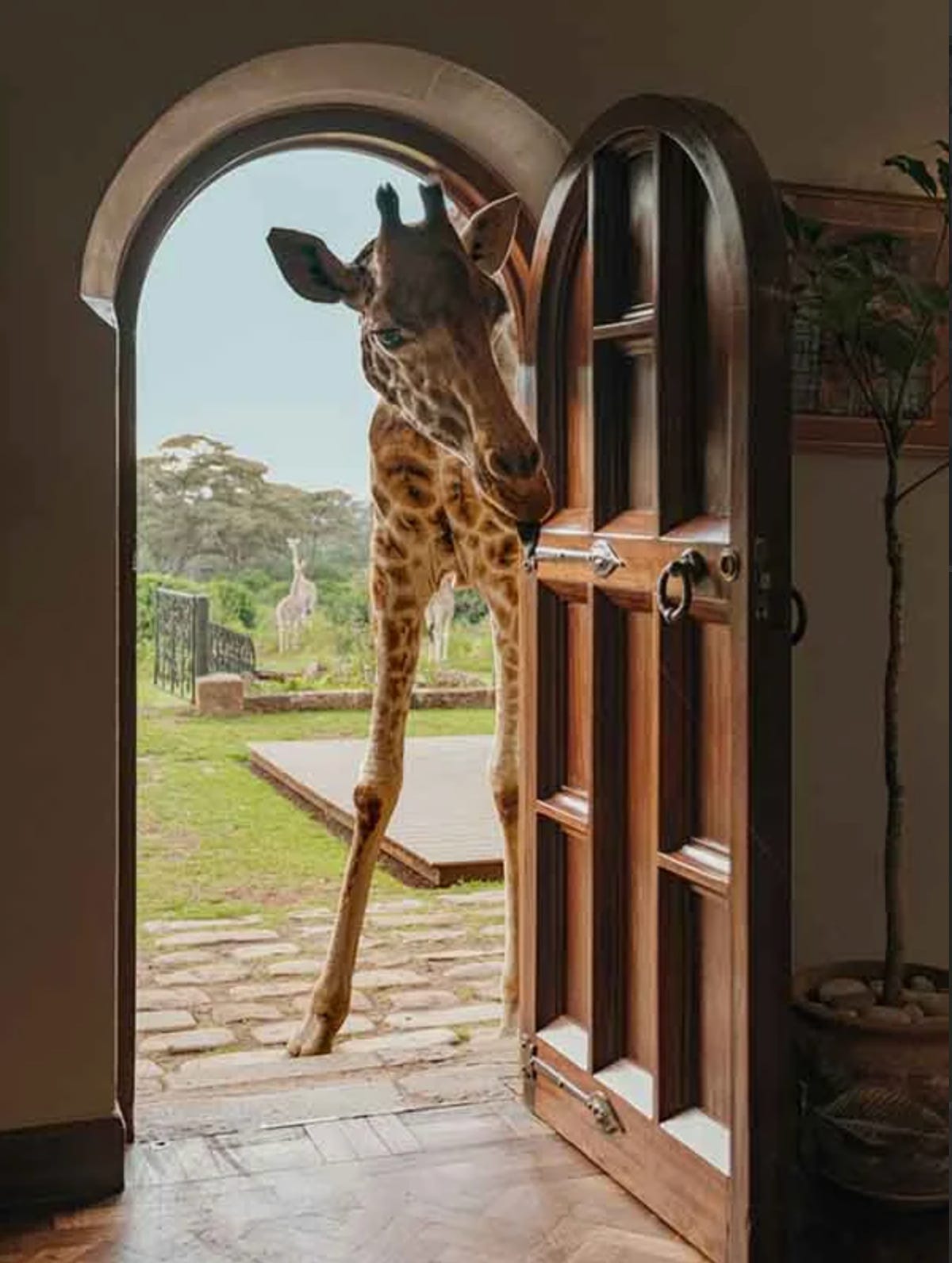
Giraffe Manor is a magical place to stay pre or post Safari in Kenya
Tanzania — the Serengeti and its private conservancies
South Africa — Kruger and the private reserves that border it
Victoria Falls — an easy, dramatic add-on from either Zambia or Zimbabwe
If gorilla trekking is on your list, Uganda or Rwanda slot in beautifully as an extension.
Once you’ve done the classic first safari, or you’re a rebel and march to the beat of your own drum, here’s where to go:
Botswana’s Okavango Delta — water-based game viewing unlike anywhere else on the continent
Zambia — walking safaris and a wilder, less-trafficked feel
Zimbabwe — dramatic scenery and some of the best guiding on the continent
Namibia — otherworldly desert landscapes and desert-adapted wildlife (this is high on my bucket list)
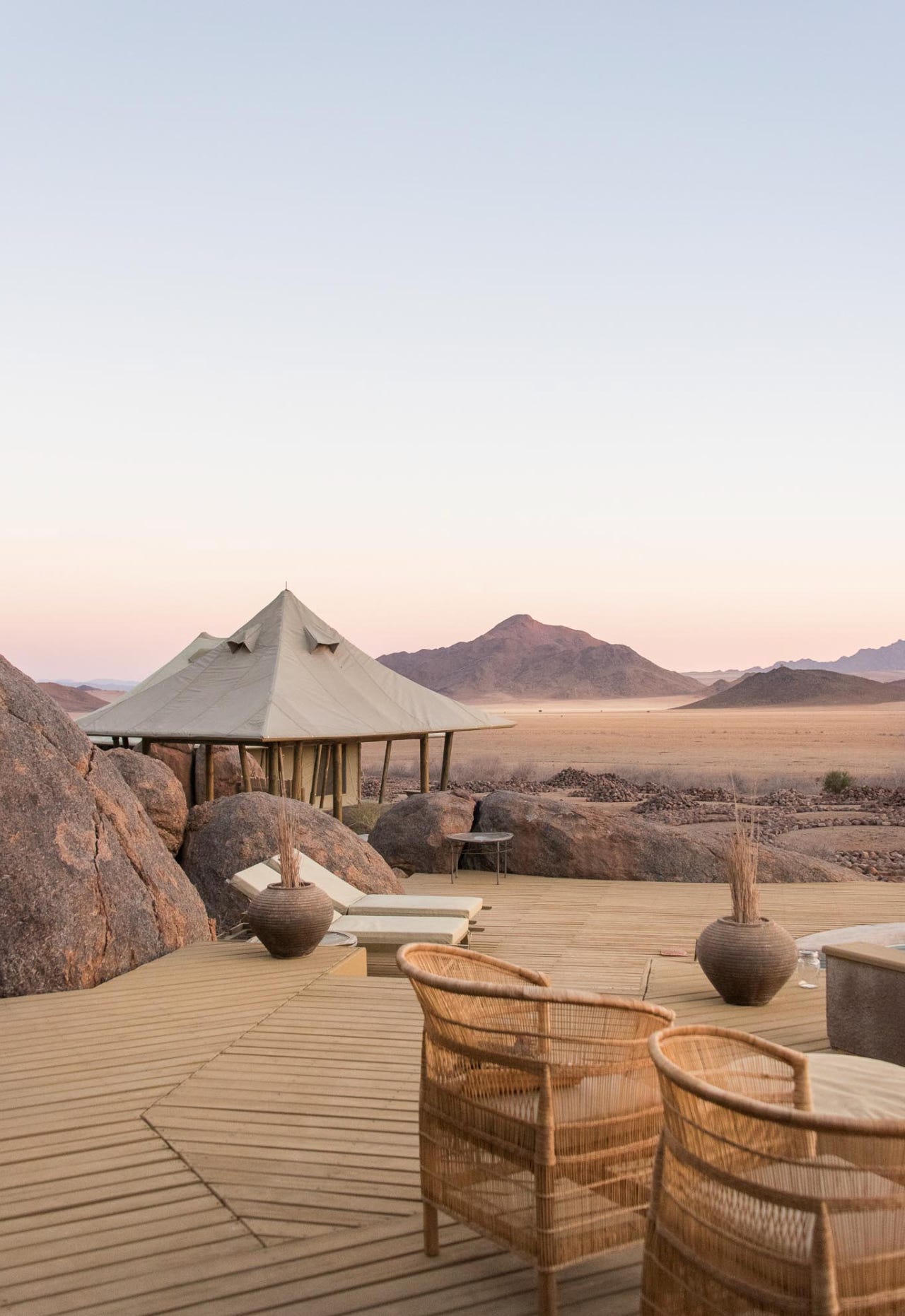
Photo courtesy of The Nomadic Couple, Wolwedans Boulders Safari Camp
These tend to be quieter, more remote, and honestly a little more special once you already know what you’re doing.
I figured this required a whole post on its own, so if you want to get tips on what to pack for safari, check out this post. It’s a take on my viral Europe packing method, but specifically designed for Safari (includes packing list).
I pulled these from real first-time safari-goers, because the best advice always comes from people who just did the thing. Here’s what many safari goers wish they knew before their first safari:
Comments
Nothing yet. Say the first thing.
Sign in to join the conversation.